






















![Te explico "DAS MAN" 🕺 [el UNO / la IMPROPIEDAD] según SER Y TIEMPO!! 👥 [Diccionario HEIDEGGER]](https://i.ytimg.com/vi_webp/TgzP3VTOCwU/maxresdefault.webp)




Jean-Paul Sartre's concept of bad faith (mauvaise foi) describes two forms of self-deception: first, denying one's transcendence/freedom by imagining oneself as a fixed object like a jar of water, and second, denying one's facticity by dissociating from one's body and claiming to be nothing but pure freedom; both forms involve lying to oneself by affirming something while simultaneously failing to recognize it, as bad faith never truly works but represents a permanent temptation for human consciousness.
Sartre's Bad Faith Explained: Being and Nothingness
Added:The core tenet of existentialism that 'existence precedes essence', which posits that humans are not born with a predefined purpose and must define themselves through actions.
Sartre's ontological distinction between 'Being-in-itself' (the static, non-conscious existence of objects) and 'Being-for-itself' (the dynamic, conscious, and free existence of human beings).
The concept of radical human freedom and the existential 'anguish' or anxiety that arises when individuals realize they are entirely responsible for their own choices.
The fundamentals of phenomenology, specifically how consciousness acts as a 'nothingness' or a gap that allows for negation and self-reflection.
Sartre's concept of 'Authenticity', which serves as the ethical alternative to bad faith and describes how one can live genuinely while acknowledging their radical freedom.
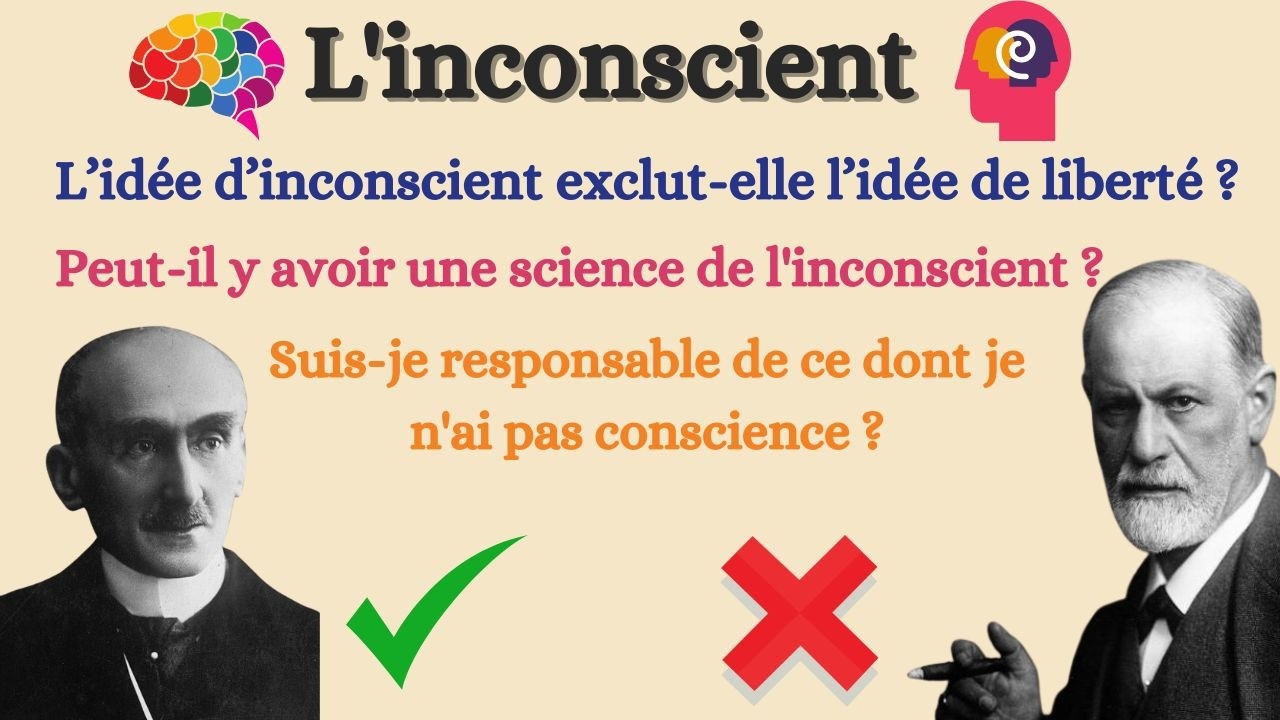
Sartre's critique of Freudian psychoanalysis, where he uses the theory of bad faith to argue against the existence of the unconscious mind, asserting instead that self-deception is conscious.
Simone de Beauvoir's expansion of existentialist ethics in 'The Ethics of Ambiguity', which applies these concepts to social, political, and gendered situations.
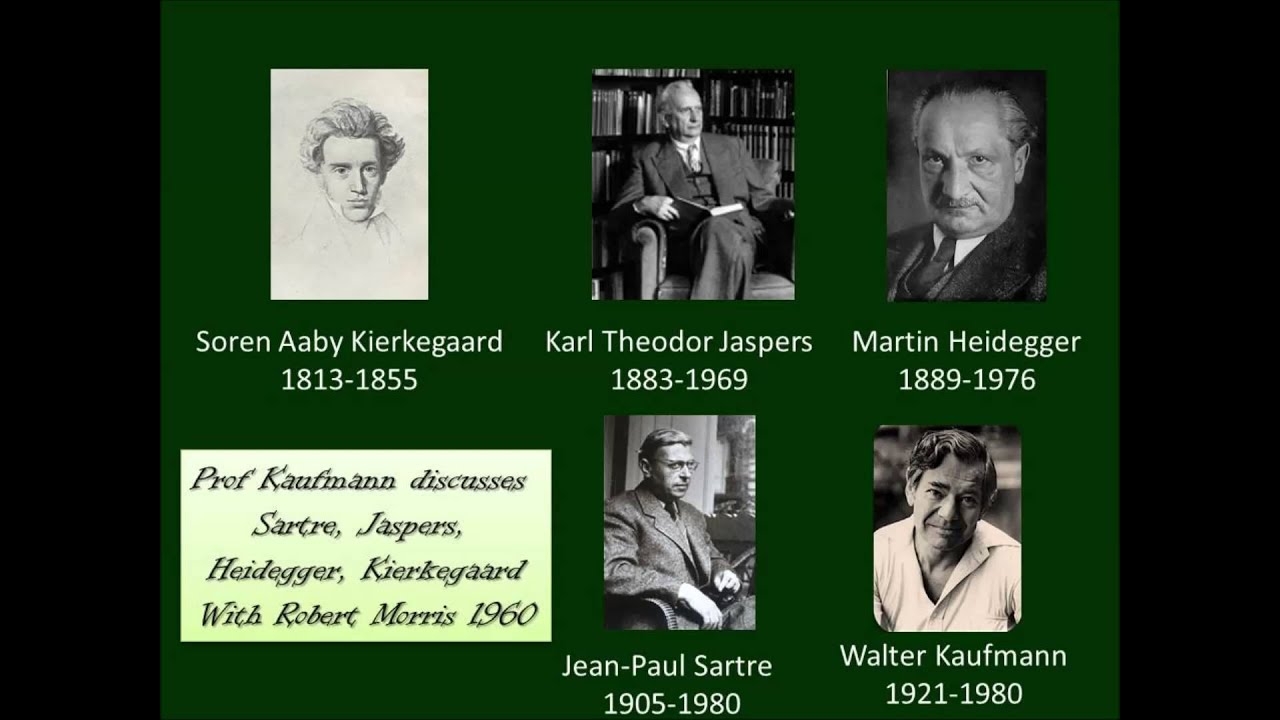
A comparative analysis of Heidegger's concept of 'inauthenticity' (das Man) and Kierkegaard's 'despair' to see how other existentialists conceptualize self-deception.
The application of bad faith to modern sociological and psychological phenomena, such as how social media personas or occupational roles lead individuals to perform identity rather than live authentically.
109K views4.4Klikes11:38Original Release: 2022-04-29
Hi, all.
Before I get started talking about Sartre, I want to shout out my podcast, Overthink.
If you're interested in taking a deeper dive into some of the thinkers that I address in these videos, we often discuss them on our show.
I co-host it with my dear friend, David Pena- Guzman, who teaches philosophy as well.
And you can find us anywhere you listen to your podcasts, including at the link below.
Today, I'd like to introduce Jean- Paul Sartre's concept of bad faith, or mauvaise foi in French.
Bad faith is a form of lying to oneself by being dishonest about the true nature of one's human condition.
For Sartre, there are two sides of the human condition.
Really two sides of the same coin, if we want to put it metaphorically.
The first is our facticity.
Our facticity is comprised of our embodiment, our personality traits, the way that we show up for others in the world.
Although that's a bit more of a complicated story, which you can find out more about in my video on Sartre's concept of the look and,really the features of ourselves that we find situated within the environment.
Another place to look here is my video on Beauvoir's concept of ambiguity, she has a pretty similar ontology in this respect.
So for Sartre, facticity is kind of the ground from which we act on the world, but our actual activity within the world, uh, transforms facticity and that speaks to another side of the human condition, which is transcendence or freedom.
For Sartre, humans are characterized by this power of negating the surrounding world that we have in order to invent something new, our power to transcend a given situation.
Transcendence refers to myself as a subject, not characterized by the features of myself that are noticeable in the outside world, or even to myself, when I take myself to be an object, but really have to do with the felt sense of my subjectivity.
This is my being for itself.
For Sartre, humans are fundamentally free, such that we are always transcending our given situations.
We're always making free choices, even when we think that we're not.
Even when we think we're just having a sort of mechanical response to the situation around us, but this felt sense of our own freedom can be really overwhelming.
It's so hard to have to take up responsibility for oneself in the world.
When we feel our own freedom, we find ourselves caught within anxiety, which start as well as a number of other existentialists use to describe this felt sense of our own freedom.
And so one very tempting response to our own freedom is to deny it.
This is the primary mode of bad faith.
I deny my freedom and I affirm only my facticity.
I do this when I imagine that I don't have any control over a given situation or my response to it.
It's comforting to flee my own freedom, to imagine that I don't have any power to change myself or my situation, to make myself be something other than I am already.
So when I'm caught in this form of bad faith, I imagine that I am a fixed thing in the world in the same way that, say, this jar filled with water is a fixed thing in the world.
Like, oh yeah.
I'm just like that type of thing.
But for Sartre, we are fundamentally different from the jar of water, because we are free.
And so if I imagine that I am like this jar of water, I am lying to myself.
I'm imagining that I have an essence that exceeds my existence or that precedes my existence, that I am a determined entity.
So it gives the very famous example of a waiter in a cafe.
And he says the waiter is not a waiter like the inkwell is an inkwell.
So, to go back to my example from a moment ago, I am not like the jar of water.
The waiter is not like an inkwell.
In a certain sense, of course the waiter is a waiter, right?
But the waiter is not encapsulated by his function of a waiter and Sartre thinks that we could extend this to really any facet of our lives.
We are never defined by a given facet of who we are.
You might imagine a waiter who falls completely into the role of being a waiter.
They define their identity entirely by this job.
And as they're acting out their daily duties of being a waiter, they are so embodying the role that they imagine that every movement is determined in concert.
You pick up the plate, you bring the plate to the kitchen, you drop it off.
And nothing about that suggests that you are more than a waiter.
Sartre actually suggests that the very nature of work inclines us to bad faith because we are encouraged by our trade to wholly be our job.
He says, and I'm reading here from page 102 of the Hazel Barnes translation of Being and Nothingness, "their condition is wholly one of ceremony, the public demands of them that they realize it as a ceremony.
There is the dance of the,grocer of the tailor, of the auctioneer, by which they endeavor to persuade their clientele, that they are nothing, but a grocer, an auctioneer, a tailor.
A grocer who dreams is offensive to the buyer because such a grocer is not wholly a grocer.
Society demands that he limit himself to his function as a grocer."
So the social conditions in which we find ourselves encourage us to identify ourselves with our job, but for Sartre, this is a misguided way of thinking, because it encourages us to identify ourselves with our facticity and to deny our transcendence.
So this is really the main form of bad faith, which is fleeing our freedom.
Some think that this is the only form of bad faith in Sartre, but this is in fact not the case.
Because, just as we can deny our transcendence, we can also deny our facticity.
And when we do this, we wholeheartedly associate ourselves with our transcendence.
So it's really the inverse of this form of bad faith that we've been discussing so far.
Now we're going to think about a form of bad faith that involves denying one's facticity and identifying only with transcendence.
When I deny my facticity, I feel fundamentally misunderstood by any feature of my personality, my job, the way others perceive me or my environment.
I'm like, no, I'm more than all of this.
I'm actually none of that.
I'm not a waiter.
I'm not a grocer.
I'm not a teenager.
I'm not.
And so on.
And Sartre thinks that this is a form of bad faith because indeed we are at least in part defined by those features.
We're defined by them inasmuch as they comprise our,facticity and our facticity is what our transcendence is always responding to by negating, by moving beyond.
One of the really common ways that we deny our facticity is by denying our embodiment and imagining that we are some kind of disembodied minds in the world.
And Sartre uses an example of a woman on a date to illustrate this.
This example has often been taken up by philosophers, especially feminist philosophers, as highly problematic, because some think that it leads to something like victim blaming.
I actually don't think this at all.
I think the example of the woman on a date that Sartre gives is really more straightforwardly, a case of mixed feelings that manifest in bad faith.
And so what he says about the woman on a date is that she has agreed to go on a date with a man and they're hanging out on this date.
And the man keeps making advances that the woman knows are advances, but refuses to acknowledge as such.
So let's say he moves his hand towards hers, or even puts his hand on top of hers.
She sees her body as separate from her subjectivity, uh, separate from her freedom.
And so she refuses to acknowledge that his activity actually means anything for her.
He says that the woman on the date that "she contemplates [her body] as though from above as a passive object to which events can happen."
So she's really dissociating herself from her body.
She feels alienated from it.
She's fleeing from it.
She's fleeing from her facticity.
She doesn't want to recognize herself as a body.
She recognizes that she has one, but as sort of an alienated appendage from herself.
Uh, from her transcendence.
And Sartre says that there's actually a kind of unity among the different forms of bad faith inasmuch as they all involve contradictory concepts.
And these contradictory concepts are one that exist within the self as a form of lying to oneself.
We have on the one hand, the basic idea that we are human, that we are transcendence and facticity.
And then on the other hand, a denial of one of those aspects of our human culture.
So bad faith seeks to affirm the identity of both of those concepts, but they're of course contradictory.
And so I've been describing bad faith as a way of denying either our transcendence or our facticity.
But as we're thinking about this, We have to specify that it's a peculiar kind of denial because it involves on one level actually affirming or recognizing something while on another level failing to.
And the use of the word levels here isn't even particularly good because it implies that there are different, uh, levels of the psyche and Sartre doesn't think that, he thinks these are different ways of relating to our human condition, but just for the purposes of an introduction to this concept, I think that might be a little bit helpful.
Um, and so the woman recognizes that she has a body, but she doesn't see this as coordinating with her transcendence.
So she only affirms the transcendent side, but it's important to keep in mind here that if we're lying to ourselves, at least on Sartre's view, there's not a duality between the deceiver and the deceived.
They're the same person.
We can't deliberately lie to ourselves because if we do, then we're aware of the lie, and then it doesn't work as a lie.
Ultimately, bad faith never really works.
Sartre says that it oscillates between good faith and cynicism.
But it's a permanent risk for consciousness, he believes.
Because there's a temptation to flee.
There's really a temptation to flee or freedom for so many of us at so many times, but there's also a temptation to flee our facticity.
And to think that we're just full freedom, undetermined by anything.
For more on this, read Sartre's section on bad faith in Being and Nothingness.
And I'd also highly recommend checking out the work of Lewis Gordon, who's written both a short article on bad faith, as well as a book on bad faith and so much more, really one of the primary scholars working with the concept of bad faith today.
Although there's lots of great literature out there as well.
Up Next
3:38
Sartre's Bad Faith: The Philosophy of Self-Deception and Authenticity (60 chars)
@theschooloflifetv
693.8K views•2015-10-30

164:01
John of Damascus on Holy Images: A Theological Defense
@BannedBooks
139 views•2026-04-25

12:38
Merleau-Ponty: Phenomenology of Perception Explained
@OverthinkPodcastPhilosophy
204.2K views•2022-06-10
4:57
The Myth of Sisyphus: A Greek Legend of Eternal Punishment
@TEDEd
8.6M views•2018-11-13
Related Study Plans & Knowledge Roadmaps
Structured learning paths in Philosophy
philosophy
Frankfurt School: Critical Theory & Culture
01Foundations of the Frankfurt School and Critical Theory
02Horkheimer & Adorno: The Critique of Instrumental Reason
03The Culture Industry and Mass Deception
+ 2 more learning modules
12h5 modules
Explore Roadmap
philosophy
Philosophy of Language: From Frege to Austin
01The Linguistic Turn: An Introduction to Language in Philosophy
02Gottlob Frege: Sense and Reference
03Early Wittgenstein: The Picture Theory of Meaning
+ 3 more learning modules
15h6 modules
Explore Roadmap
philosophy
Feminist Epistemology: Standpoint & Injustice
01Introduction to Epistemology and Feminist Critiques
02Sandra Harding and Standpoint Theory
03Donna Haraway and Situated Knowledges
+ 2 more learning modules
12h5 modules
Explore Roadmap
philosophy
Environmental Philosophy: Ethics & Deep Ecology
01Foundations of Environmental Ethics & Anthropocentrism
02Biocentric Individualism and Animal Liberation
03Ecocentric Holism and Deep Ecology
+ 1 more learning modules
10h4 modules
Explore Roadmap