


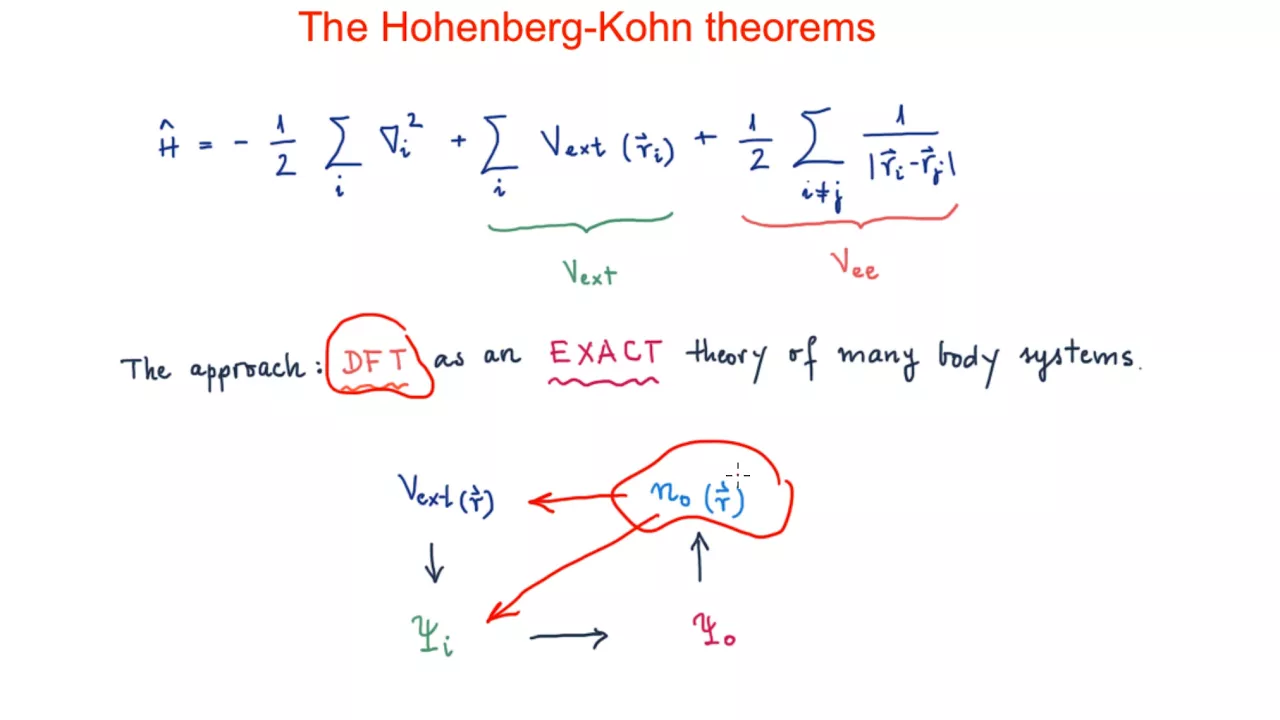






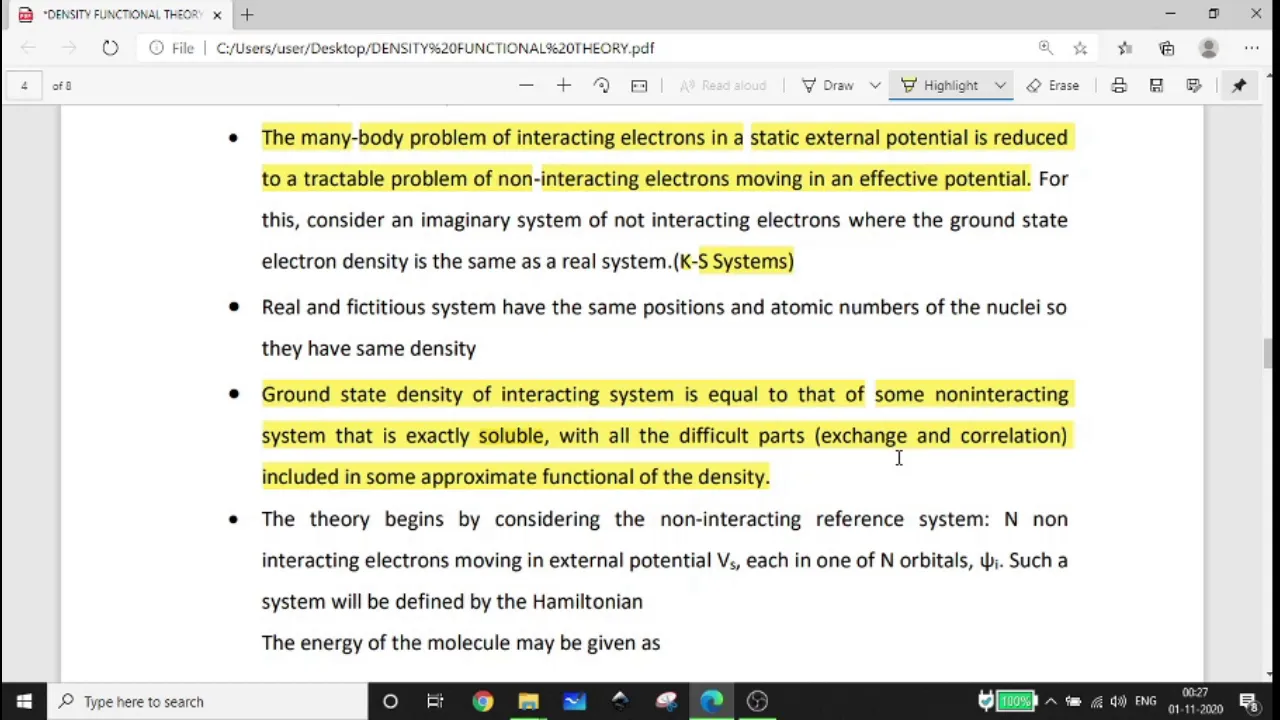
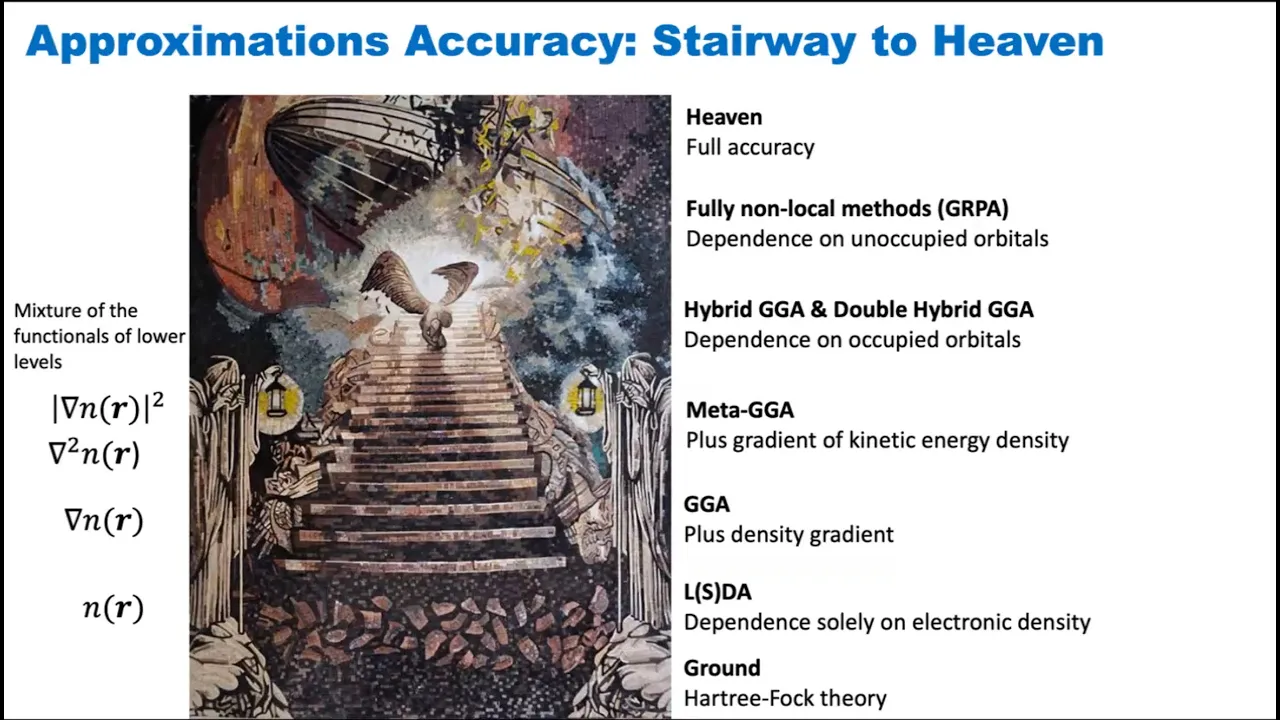


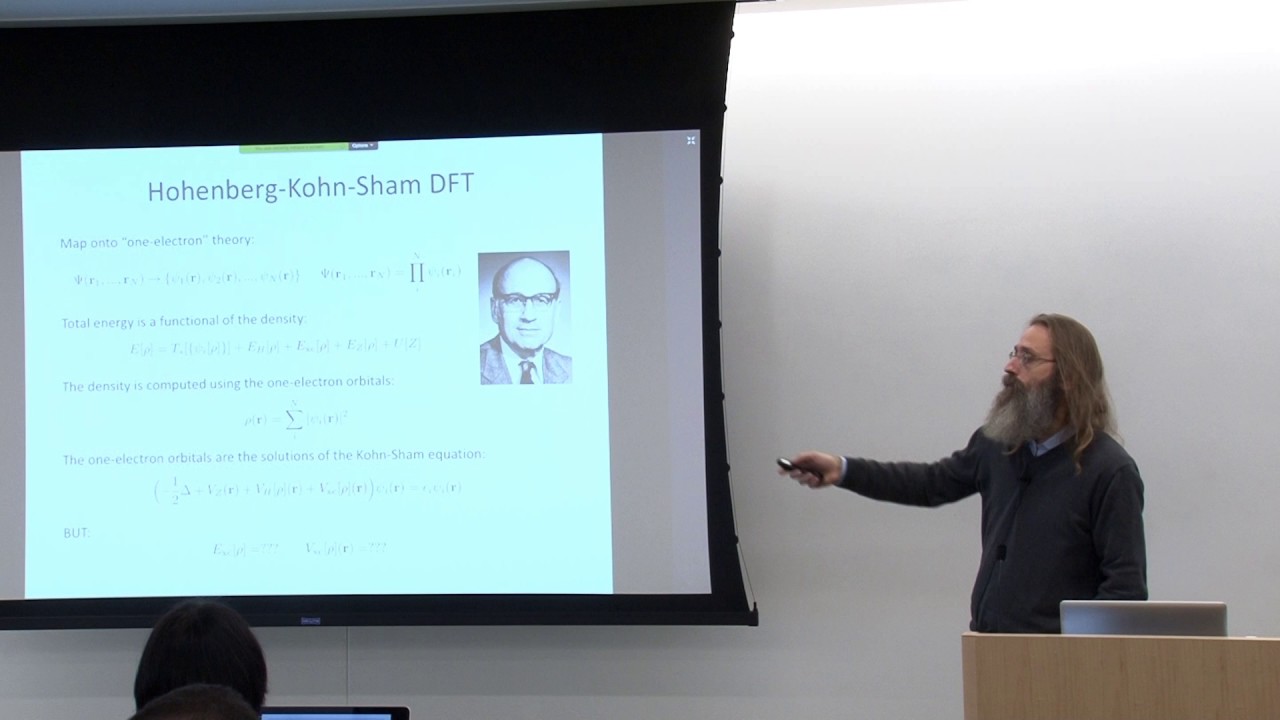





The Kohn-Sham equations transform the many-body electron problem into a single-particle problem by introducing a fictitious system of non-interacting electrons that share the same ground state density as the real interacting system. The kinetic energy of these non-interacting electrons is expressed as T_s[n] plus a correction term E_xc[n], which encapsulates all electron correlation effects. The exchange-correlation energy E_xc[n] is defined as the difference between the exact kinetic energy and the Hartree energy, and it decomposes into exchange and correlation components. The self-consistent field procedure iteratively solves these equations to predict ground state energy and density, making DFT computationally tractable while maintaining accuracy for most chemical applications.
Kohn-Sham Equations Explained | DFT Theory Tutorial
Added:[Music] so this I know it took about 45 minutes to an hour but this is all that now said as far as I'm concerned right now your Hamiltonian has the three pieces kinetic electron-electron repulsion and the one body piece going to find at the function of the density minimize D pieces over all walked away from yielding identity minimum I think you could have mentioned is overall normal I like symmetric wave function ah then we'll be like to see you correct normalizing unit and then a grant state energy if you knew that because we got them from this principle here right any minimizes F overall density and this is much the word search your own searching over densities not weight options and if only you you take another have one more line to that before I start from here on equations which is that if you want to find that minimum you learn through the Euler equation which is that the functional derivative of that respective identity are ours for vectors plus BD Ilan will zero we we differentiate this time a different day that guy and now I haven't growth written in anything like a chemical potential because if we keep the number of particles fixed then with the constant of this minimization is arbitrary so I just choose it to be zero so and that is how we will find the F and in the old Thomas we're hearing they write down as an approximation for X and then they solve this equation and so this is going to be a function of the density and only if you have the exact map only the exact ground state density will satisfy this equation we put any different densities and only one will give you exactly the potential as I started with them sighs have you find it then you go backwards and you take that the solution to that and feed it in here to get the ground state energy I'm doing this functional derivative using think of it roughly like doing a derivative over a mobile remote function of many variables not quite the same but it's cool okay so that that's all ah in the sort of overtone theorem and the constraint search formulation uh now we're going to do is the compound equations which King lectures these are actually used in practice for almost all modern applications and to to well in a certain sense for most of the rival postulate them so you imagine fictitious fictitious non-interacting electrons with the same danger around state density at the real system and in a sense that that is that's not almost everything right everything that follows is is just Falls from that starting point ah so as you have if they're not interacting electrons then they will satisfy a non-interacting surely their equation sorry money ah but they're still electrons they still satisfy the Paola principle so you occupy them in the order and their entity relations some of the lowest sum of the squares of lowest occupy most cochem orbitals up to a and when you define this system so that its density is the same Graham's identity as the originals assuming it exists now the most important part here is going to be identifying what this coherent potential is and how we're going to do that is we're going to use the Euler equation and we're going to apply the order equation to our non-interacting electrons so we're going to write that the kinetic energy of these electrons on candy squares ah so that's their kinetic energy you just differentiate them take the square and raise it by by 2 we put an X to indicate something that's been calculated on the cold channel system not on wheels ah and then we're going to write it as a TN r plus some correction which will turn out to be of the milder object but for now we just call it eh XC and then we say well the cone travel I promise that satisfies our equation muscle must be solving corresponding Euler equation so when we break it down this way and we know also that they satisfy their Euler equation we see that this guy is minus V Bar this guy is minus V at the bar so this tells us the line - yes arm plus we'll call it BH exceed our two peoples the alarm for yes mark beyond 215 h XE h XE of our functional derivative oh what will turn out is a heart rate exchange correlation energy so they add let me write it in most familiar form well define our tree energy to solve all of you so the archery energy is the classical electrostatic self energy of discharged entity so that's not the electron-electron repulsion that's a in the platform of magnetic sense crude approximation huge and then it's potential so if you can possibly differentiate that down we get not almost any yet people has a head at the back explaining how to do functional derivatives so we almost always separate this event so we write e 833 to do but piensas now this is all the exchange calling in energy reason to active and then we get famous result the Coulomb potential is the original potential hardly piece and exchange relationships and what vital about this is so these guys are functional decidin entire functional defective what it tells you is if if you know the HX e px is as a function of N and in differentiate and the cold jam equations are a self-consistent and sold to get prediction of our ground state Eve n so this closes the equations so just that one piece of knowledge right gives you the self-consistent seven gradients DX is a functional of n and so you may get spread the density solve your compound equations it gives you a news entity usually licks in on some of the view density with the old entity and so on again and do it again and again until it stops changing and you get a prediction for grant state energy and density now in the special case where you use the exact object the exact exchange correlation energy when you define by this difference right so we've written it here let's write it down so we had F so now it showed us how to define F using an insane search so absolutely TS but you but you can see so you can we use that as the definition of the exchange correlation energy right it's the difference between the science kinetic energy and the exact electron-electron repulsion - yes - you yes you oh eh eh eh whatever well yes just for shorthand so that was the Hartree of exchange our questions so I'm admitting except where you related the single computer non-american energy with both compiled reacts in chakra centers I didn't okay right I said if I have a set of orbitals right and I know how to write down their kinetic energy so that was my definition of the non interacting kinetic energy ah and then I simply wrote Xie side since I know the kinetic energy like home chance electronics and it turns out we'll see it's a big part of X I'm going to just write an F as that part plus a correction I guess in your Excel coalition so you have to add a component of your draft energy I just didn't see that equations ah so that is been a net right so you can see how does that build into it by definition right I will say we'll pull it out a little bit so but it's always it's all in there right so I haven't I've done nothing with them anybody problem except rearrange furniture right I've simply taken what we have for meld lecture and said if I have a fixed set of electrons a same density can i go backwards saw them and turn that all I need to know this little conciliator so what is there a losing dish is not interacting with ground state okay so I'm going to list some of the things the point about this and I'd assumes that al exists but I did this because there are certainly densities you can write down where this is pretending for example it will behave and say that it doesn't exist yes that doesn't mean that the density of any many buddy problems that feature so so I've assumed what we call a non interacting League represent ability as a practical matter most of the time it's very rare that you run into actual aces or something not does not have a compound potential but there are we know cases we may construct cases on purpose where it doesn't exist or it is a little bad ugh okay good so now so let's see one of the things so I'm going to use as an example of real numbers neon atom and we immediately see some of the advantages of the program system why you think you might think so I look at T V and B T is a hundred and twenty eight point nine for arteries Vee is fifty three point two four and the one the external potential is minus three hundred and one well this is always marked rings so these are large numbers right there's 27 electron volts in an artery so these are tens of thousands of electron volts so the electronic energies are very large themselves what really matters is energy differences like the difference between molecule and separate animals or maybe the difference between an atom on its iron and they tend to be a lot smaller so these are the energies and this is TA is the cold and kinetic energy they're trying to turn out to be one hundred twenty eight point six one so it's very close to the true kinetic energy so so what that tells you is that since you're only going to approximate this part we're going to be approximating a much smaller energy well let au you is sixty six point zero six and BAC there's going to be minus twelve point nine so in the bowl Thomas Fermi theory you make proclamations where these guys are function of the density so that goes to hundred hard during security going to approximate thirteen art arteries so by writing things this way you have to make approximation for much smaller mass of the energy so this is why typically one of the ways of thinking about my coal gem calculations tend to be much more accurate and Thomas Burkitt calculations because you're not trying to approximate all of that you're just trying to rough lately small distraction of it so now let's go a little bit ask the small fraction when I was a little bit find a couple of things we will define 5n to be the cold channel wavefunction for 10 to the N and it will taste slime and complete anybody people yes and right in here will issue you always not mine is a single is a single player returns home can orbitals you don't have to do that but it makes the last alert and it's typical case so then we can say that our kinetic energy is just the kinetics operator acting on this many button wave function right that will be give me the same answer when I feed it in a single Slater determines if I pull this later determined and I will just get why won't be for us this pops crab so just put in a Slater determinant there just get the kinetic energy of your work okay and then we can also ask what is the expectation value of V EE so the electron-electron repulsion again an expectation value on the comb can play box now in this case because this is a two-body operator you get two contributions these are fermions you get a what's called a direct piece I would sure that to be nothing other than the Hartree Plus out what's called we exchange pieces and the exchange why would have is when you evaluate the true body operator prefer beyond is a piece where you swap the indices that survive and it's just so just over the occupied orbitals now in home chat and cone sham density functional area we define e^x on the cold shower orbital which is slightly different from traditional fun chemistry where the decline of the hartree-fock orbitals and I don't know quite generators is talking about Oh Edie in that we'll talk a little bit and in practice these energies tend to be very very similar okay so this is the exchange energy and then what's left the last little piece of difference is called correlation energy and we can write the correlation energy you see that's just the difference between the Hamiltonian for given that stood evidently functional for given density the Hamiltonian on the many-body wave function - an Italian oh yeah and as we follow the pieces that we have this is just going to be t + b ee + a1 one of these but the one body piece is going to be the same because because it's identity very very hard it's fine to be the same and then this thing here is going to be minus u minus V execute ah oh ah yes - you - reacts that's the kinetics that is like I like our ocean and so we can group those pieces is this this is called TC is called you see so this is a kinetic piece called kinetic correlation and potential garbage so we see exquisitely others two contributions to the correlation energy one from the difference in the kinetic energies and one from the difference in potential and the Norwegian energy is much smaller yes especially from there you've all been bought the principal and only sorry we need was the to help point you so this is the main body weight volume and this is the comb can you say welcome oh yes it's the it's the amazonian of it yes g plus B plus B right and so here you see that explicitly that the kana radiant energy is always negative from the men from the variational principle since I minimize the energy of the pilot omean this guy cast different wave function so attached to these are same one get zero otherwise that's negative so if you define these things in the sequence that I did you can deduce lot for simple properties of them right you can see while you see explicitly that U is always positive because it's a positive in the role and then ah you can show that the exchange going negative unless let's look at this piece here some you know where exactly ah digs our lead this is the breakdown of the exchange correlation so we see that typically most of the exchange correlation energy is exchanged and only a very small amount is correlation and you can prove that TC is always positive and then you see is always negative and more negative than TC so we see is always an interesting they were weakly correlated system TC is usually roughly equal to minus EC but not quite right now you can prove that too so ah so the correlation energy is a very small fraction of the total right so the total energy ah is actually minus on from 28.9 for for an abundance of varial theorem and then the correlation energy is less than one percent here as a percentage size however right the correlation energy is terribly important and the way you know that is so long before DFC became popular lots of chemists would solve the hartree-fock equations and although they're very good for giving you some sense of how chemistry works see the energy differences in Arkansas are typically really bad you really can't do energetically meaningful quantum chemistry with Arkansas most of the time ah and the only difference between that and and what we have here is the correlation energy right so even though that correlation energy is very small and vital it's sort of so when you look at an energy difference for example one great the bond about something like half the dissociation to the the change in the exchange car and the exchange correlation energy might be something like same as about half the bond dissociation energy because a lot of the big energies don't change much at all so well I have neon here but it has nitrogenous the numbers will be similar to right but a lot of the kinetic energy and all those other energies are before and that is going to change when you drag the ball at all so it's much so the exchanging correlation play a big role I mean juice energy differences within countries well the correlation energy defined it the difference between that energy yes is it in tendency okay so the almost but not quite so so since this is defined on the Cohen charm orbitals of a given density in hartree-fock you minimize over all possible orbitals so you get to a slightly very very likely lower energy in our tree box theory but but the room area is almost and then it can at this definition physically they relate other system come up throughout the week so for lots of ground state properties it hardly matters but once you look at anything outside the ground state that matters a lot because the gap and hard to fall calculation is much larger typically ventral champion so so that so there's the crucial difference is that the orbitals are all from a single multiplicative potential in contract theory whereas you not you allow the ovals be free the potential in Arkansas calculations and on the order that doesn't happen come more questions it is typically a single flavored procurement but it is always a single flavor right because you've been arranged cases where isn't then I guess it's always like so when well so certainly typically for weekly cardigan systems it is but if I take the four for electron ion series so starting with beryllium and I increase these by the time I get to somewhere about 28 I think the number is I find that if you look at the exact many buddy density for Z equals 28 but only for electrons ah that'd be the minimizing wave function for that density is a combination of for slater determinants and what is happen is that the gap between the 2s and 2p that's become very small and it turns out that mixing in some of the to be minimized makes the kinetic energy lower but again that isn't a calculation that many people do in practice right that's I think perhaps the most physical one I know but that don't happen and it's been verified that they can he went exactly exactly so then there's a sort of difference between the interacting and the non interacting systems and there are lots of interesting papers that people have studied these cases again in practice they don't come up so much okay so so now we see again right the beauty of this goal jams feeling where is the number you're going to approximate so you're only going to make an approximation for the exchange correlation energy and that's what's going on in those most of those very bad papers okay ah so a few more things now Carolyn when did I start I can expire at 11 right I started 1036 right so so what is that long so yeah let's see the program oh yes so 1121 let's go after the exchange correlation correction okay so a bit more so so this contract essential so you can define it exactly so exact compound potential now so if I take a helium out this is the one I always show ah I'll make a cut its religious and the true one body potential is minus two over our atomic units right that's the external potential 240 volts true and what over are for strong attraction now my friends site or some regards I have a gun so exactly the the many buddy problem for a helium atom with quantum Monte Carlo and they well actually turns out that the helium atom is symmetric around the origin it's just my drawing that looks bad right so they give the exact density exact and our of course it's numerical so but just one much more accurate than anything that's typical VFD calculation will give you and then it turns out in two lines you can induce the formula for the exact tone transcendental on brought it with the dashed line so this is e s of R and what does that mean it means that in my foot I take the one s orbital of this potential here and I EE off by it so this one s orbital is that - 0.93 hartrees and i put two electrons into that one s orbital non-interacting electrons i get exactly that density under to it it's just all you have to do is write down the non interacting Schrodinger equation and reverse given identity that's what potential for single WL by torgul this is that density and it's a little differential equation and you can solve it and you get the exact command central for the heliumite w by that guy and I get the exact bit if you want to make your head hurt a little and it's not so early in the morning anymore you can ask yourself one of my favorite questions as ask yourself what does the comb chairman wait is the coach an wavefunction correlated or not and the answer is yes because if you think it's the coach on system right these are non-interacting electrons and the comb Jam wave function is just the W occupied Louis orbital that's clearly not correlated on the other hand that coherent wave function if we think about for since it gives you the exact grouse thing that's with the interactive billion problem has all the correlations all the many one correlation of the ground state of this mangani problem both occasions are true and this is one of the subtleties with DSC right you have two people in mind okay so few more Carter doesn't believe me so that important point Wow so the behavior of the cold confidential one of the critical things that have come up over and over again so you improve the exactions density the gain constant times the power of our times an explanation ah an elevator is equal to the square of 2 times the ionization potential so i2 equal an ionization potential so this is e of n minus 1 minus human for your system data finite system a lot with R goes to infinity this is how the entity Brigades well the business of exact density decays this is also how the density in the cold sharing system the case comes by definition is the same so if you have non-interacting particles electrons well when you go ahead very far they'll be dominated by the highest occupied orbital so the same statement is going to be that alpha is going to be fight the ionization energy of non-interacting electrons but that's just going to be twice the homo eigenvalue that's the difference between N and n minus 1 was going to be just the eigenvalue of the highest occupied so we find that the ionization potential that F let me write this way absolute homo it was my son and then this so this is true for the exact coherent system most of the approximations nakladal violating this quite badly and we'll see why when it's important and why to do ah but but the exact home jamb potential satisfies this condition okay one special case that's worth checking that always is the case of one electron so one electron returns there is not such a difficult many-body problem to solve because there's only one electron one electron yes it is going to be exactly - you and see the exactly zero ah you can change if you put in just one orbital in here you get exactly - the heart free energy therefore the carbon to nuts to zero and you know that because Vee is equal to zero right there is no electron electron interactions is only one electron so then from this condition right so large R again as we go out to very large distances the comb jamming system will be dominated by the highest occupied molecular orbital there's only one of them so PA will go like - the Hartree so that's minus 1 over R and E see it turns out you can show goes like minus 4 1 X this is yellow this is Angelica if not I'm just using the one am I talking to argue quieted right and this alpha n minus 1 is the dipole polarizability is fluoride of n minus 1 electrons in the same potential ah ok ok n minus 1 will be 0 it's a little bit is this this is for one electron tables for any electrons or any number I just wanted to put in the 1 electron there to make the argument that this must go like minus 1 over R and then my little picture you see this is minus 2 over R or like half of it Oh large R okay so that's the end of the lecture he becomes a question now he's out buying the shooting Platt was insane like the photoresist intended swine's could know out here having ended religion this is another n minus one okay that is totally differently different how people use the same letter for both and like it but after was so sweet but yet I started but I didn't see why very accurate yes we just a little but of course we are comes from Oregon the other old does not have to do like I definitely why Mike Weisman so if you're essentially not a real moment relief okay you know why we have fifteen minutes right oh yes Wow every I will ah so ah so well well so the reason that this is only true for the hormone is because that's the only one I get isolated food in this way right okay so I'm going to try to iterate this argument right and then let you should see what happens so let's say I start with with me on right so it's going to be true for the 2p electrons and beyond let's sit to that and this will be exactly true so then I'll take away those to be electrons but what happens is of course my system relaxes so when I take away those six the four remaining ones interact with each other and change when I got to look at the list it was harder for children so cool mr. Berman and hartree-fock is that this is approximately true if you would go on relaxation right so so the difference here is a vicious in this case exactly true this is the term and incense and we'll also be approximately true if you ignore relaxation what actually happens in practice is so each shell each sort of shell so has this roughly true but the butter there's an error that's different for each shell or inner shell attendants the remaining resurrected yeah but it is only exactly true for the last one master comfortable animals coming in restorative development at the highest but not the highest at the highest optical energy is - I was first thing the TPL to think yes and then the question of whether the chain carbon and - vanishes it contain you could use them as kind of tail of the exiting to say get as you can the data to talk to that with it really you're assuming that I do so many voices infinity I think the best we could give I - the I believe equals minus five my record analogy or my recycling theory freshmen or yes and then you see a start-up became to show a little of you and Trinity it can be another proletarian assuming he hasn't irritated well what you generated will get you can direct through both legs right ah then exact a discussion come on you can click post laughing oh it works right input know the correlation why on that you mean to sort of study so the exactly include the subtitle inflation for fornix large our behavior so it's more complicated collateral correlation means I'm at work but broken yeah well the good place to find a good reference is the Aligarh and gamma one is it's 1994 paper for the helium work helium coach a potential and they were to wanted to prove that I think it was when they the whole farm bark and some of the el agua thank you humble talking about mark right in that paper ah and in fact cyrus and savage on with us or pre-war with calculations on each - in order to see this behavior so this is a very very tiny effect because the reason Corrections exchange that are clearer than that so that takes a lot work for that matter so another point I want to make that I rather make is a crucial crucial thing that confuses a lot of people is when you solve the coach and equations you take the density and you put it back into your original expression the energy of your system is not the sum of the comb China orbitals and we can even write that you can write it in terms of the bones and orbitals so you take the co-channel orbital energy so then you can see there are explicit Corrections when we take the cell phone camera there are collections that turn it into the many bugs and the crucial thing to always keep in mind in fact when you do one of these state systems is one electron take pictures of what is going on you don't the energy is not but some of the going in turn orbble however the cold chair particles are so powerful for interpreting what is happening that five and all like a 90% of the five papers they it's where true and even also zero that in many processes this number although it's a finite number doesn't change much when you go from say a molecules or the atoms that is why even it often ignore that effect when the system is strongly correlated you can't ignore that effect anymore that's one of the differences between strong halogen and these products more questions yeah you have is before the eye moving attention so that one can send attention on materials yes by definition yes so the tie meaning only five away from here for a long time isn't that how long it's possible that it's not critical I am staring you are misreading so for thermal densities and in fact we even have examples of the densities for form anybody problems the the lowest energy so one way what it is is that so if we put together the bits of technology that we have since this is X equal to this guy I can write the kinetic energy right I turn off the interaction here that all I have is kinetic energy minimum over all possible not well it's still the minimum over work sorry all washable wait buttons I'll just the kinetic energy so the so the fact that is the minimum this tells you that the TC is always positive because the coal sham kinetic energy minimizes the kinetic energy operator for the given danger but this doesn't say later determines right this is over all possible wave functions so usually that is the simulator journals it doesn't have to be let me see what's the best way to say it or I I don't know love this reason for left on first in fact is I eat is item or is onto a non-interacting this in itself is a variant including the apron every fraction or any that no this is this is it this is this definition says nothing about attraction right this is the definition of not a drunken indicator expect us we forget where we got that into the clock doesn't matter where that came from you give me any density this is my definition yet right so not so definitely you have to get videos one you took from an interacting system right so usually so usually the result of this minimization is a single player determine but that's nothing here as a proxy now I think report an think about density matrixes later in the week and this will come up I don't select the exact from college I think our popularity of the eugenics today through the change I've been avoiding using the word ensemble still a try this you can do it in your lecture this one but it's not the example here not one way of using them to talk about interacting systems I know I know but I'm nothing to do okay spending a little bit real question about when people to talk and you've read it all that it just chain pay attention yes or the exactly became like that yes it's a mess for this specific example when you do know that it would be balanced a crystal zero so so this is okay so the wording is this is for there's our dairy group of finite list right so if I have a finite system I can always go outside I can go far away right now you can think of a crystal as being very a very big molecule right and it's to go outside and this is all correct now there aren't a little bigger things avenge you know if you go along a certain direction the horrible way of the last would use in that direction and then there's slight technical complications but other than that this is true for any finite system so when you come if you want to do a periodic boundary calculation then you have to check that these things are still true and you can't prove it in exactly yup and in this way if your calculations be right but that doesn't mean it's not true right now let us relevant to what Mel was wrong whether or not you're going to use this condition from at this last point in the period to the other stronger it's a non question wescorp ionization potential requested and on this especially to be able to take a webinar why energy it's only periodic it's just not fun you need a deletion service it sort of that's one way back about friends I smell that you can you know start the other way around this there are many ways okay then thank you John for adventure
Up Next

Find Chemical Reaction Transition States with ORCA Tools
@kateboyd1989
26.5K views•2020-12-21

Biocatalysis and Catalysis in Islatravir Synthesis | Merck Webinar
@SCIwheresciencemeetsbusiness
675 views•2020-10-08
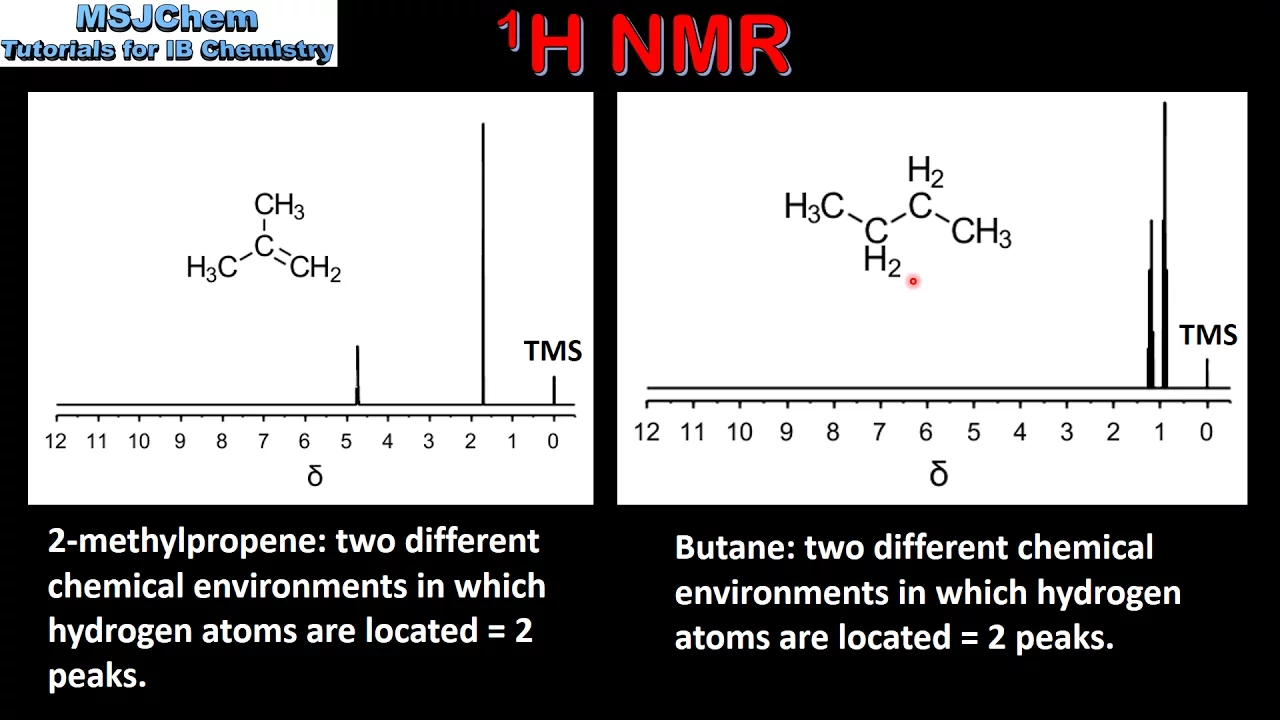
1H NMR: Determining Number of Peaks from Structure
@MSJChem
59.2K views•2017-04-06

Edible Water Bottles: A DIY Guide to Sodium Alginate Spherification
@ryan
10.5M views•2019-06-21
Related Study Plans & Knowledge Roadmaps
Structured learning paths in Chemistry