![Dr. em Neurociências: Como Começa o Alzheimer - Dr. Eduardo Zimmer [Ep. 101]](https://i.ytimg.com/vi_webp/fOjs_h48orA/maxresdefault.webp)




![[방송 다시보기] 720회(20.01.01) 신년기획 시간을 거스른 사람들, 슈퍼에이저](https://i.ytimg.com/vi/FOO2Tq6zSB8/maxresdefault.jpg)

















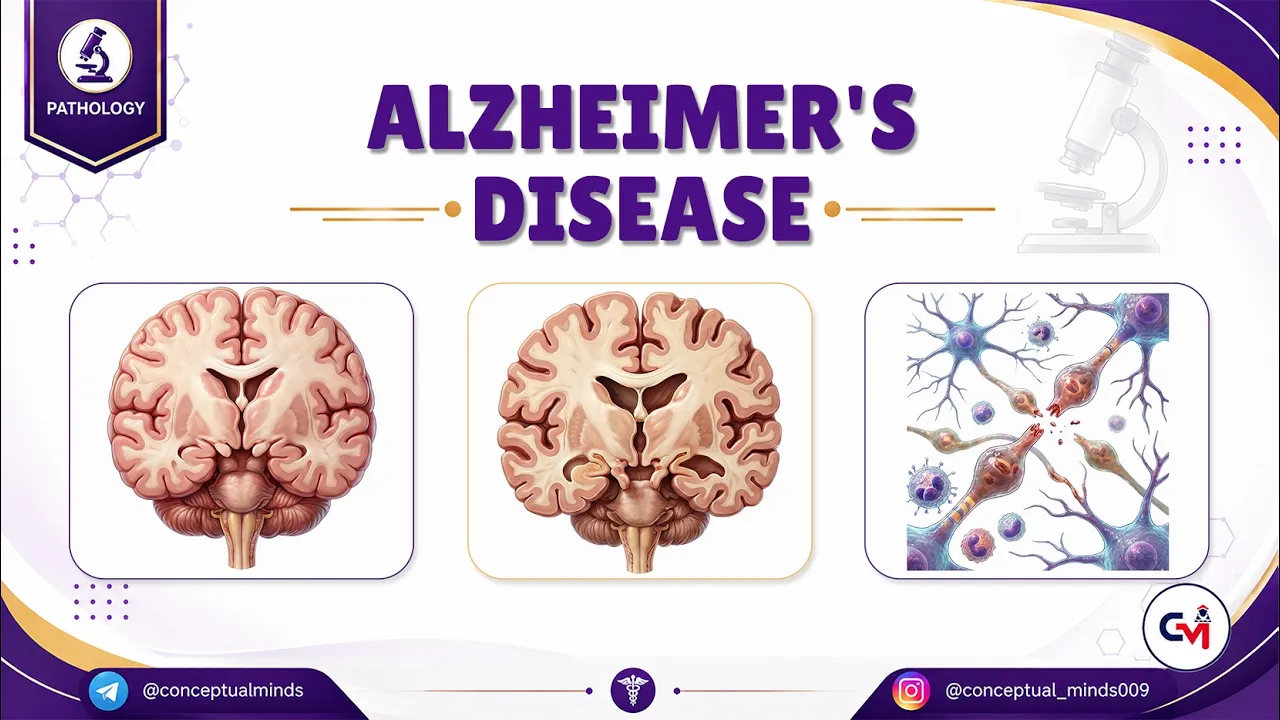
Alzheimer's disease involves two key neuropathological lesions—amyloid plaques and tau tangles—that accumulate progressively over decades before clinical symptoms appear. Resistance refers to having lower-than-expected amyloid/tau pathology, while resilience refers to maintaining cognitive function despite higher-than-expected pathology. Modifiable risk factors such as physical activity, cognitive engagement, and sleep quality can enhance both resistance and resilience through mechanisms including improved neural efficiency, enhanced glymphatic clearance, and reduced neuroinflammation. Approximately 40% of dementia risk is potentially modifiable through lifestyle interventions targeting these factors.
Resistance and Resilience in Alzheimer's Disease: Mechanisms
Added:Understanding the primary neuropathology of Alzheimer's Disease, specifically the accumulation of amyloid-beta plaques and hyperphosphorylated tau tangles.
The concept of cognitive reserve, neuroplasticity, and how the brain can compensate for structural damage to maintain function.
The distinction between modifiable risk factors (such as diet, physical activity, and sleep hygiene) and non-modifiable risk factors (such as age and genetics like the APOE-ε4 allele).
Basic knowledge of the glymphatic system and its role in metabolic waste clearance from the brain during sleep.
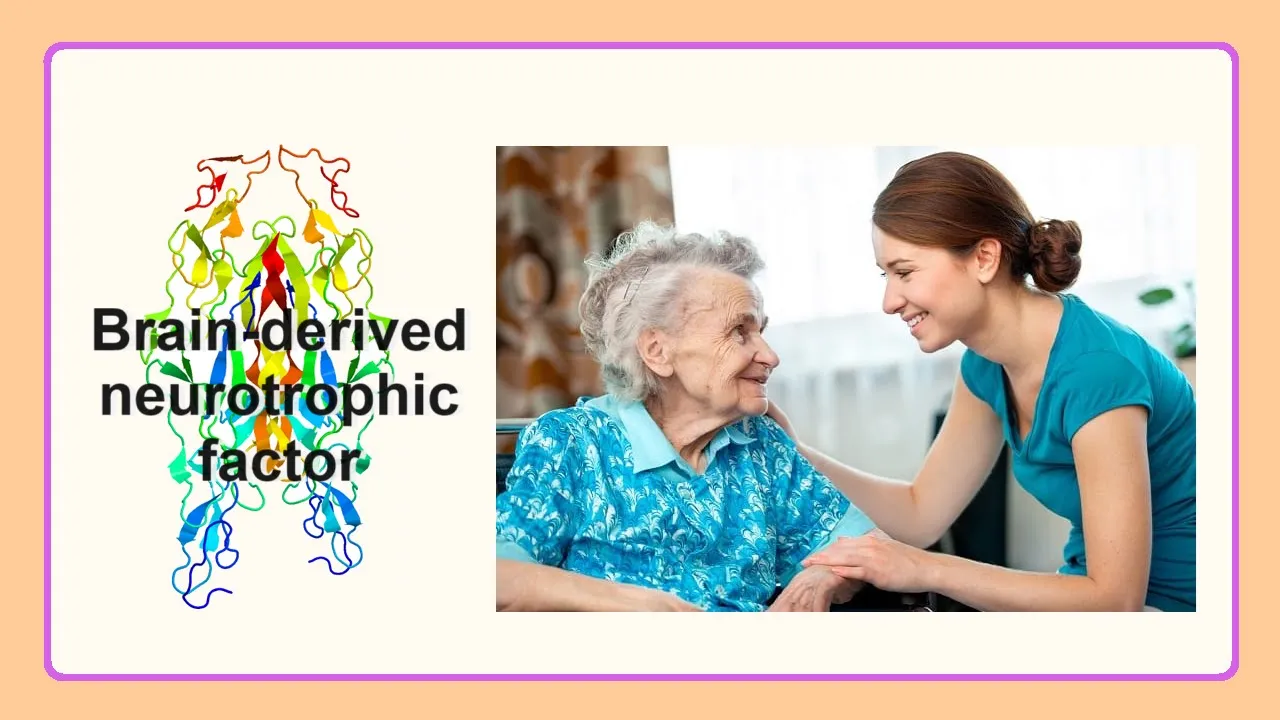
Advanced molecular mechanisms of cognitive resilience, including the upregulation of neurotrophic factors like BDNF and neuroinflammatory pathways.
Evaluating multi-domain lifestyle intervention trials, such as the FINGER (Finnish Geriatric Intervention Study to Prevent Cognitive Impairment and Disability) study.
The clinical application of biomarkers (PET imaging and cerebrospinal fluid assays) to quantify pathological load versus clinical cognitive performance.
Exploring the physiological links between metabolic health (e.g., insulin resistance/Type 3 diabetes) and the acceleration of neurodegenerative diseases.
158 views3likes25:56Original Release: 2023-03-24
good morning everybody and good morning to everyone on zoom lens thanks for being here my name is Soren I'm a third year Master's student here at the Douglas so we'll be moderating the talk today and I'm really happy to introduce Dr Valentine Lee who's going to be giving our CSA lecture this morning um so Dr Louis completed his BSC in biology and MSC neuroscience at the University of cayenne France he then completed his PhD in Psychology also at the University of Canada supervised by Dr Gail shetela and Dr Geraldine walks where he worked on the effects of lifestyle and sleep and cognitive brain alterations in aging and pre-clinical Alzheimer's so the talk today is going to be about modifiable risk factors that can potentially help to halt's development of Alzheimer's disease and so yeah we're very happy happy to welcome Dr rui here to tell us all about resistance and resilience to Alzheimer's disease so reminded everybody if you have questions if you're in the room just say them all right thank you very much for the introduction I'm very pleased to be here and just want to say thank you for the organization and for the augmentation uh so thank you very much all right so let's start I will talk about resistance and resilience towards the Mercedes here so we will start with some basic knowledge on Alzheimer's disease and then move on to resistance and resilience and then how we can measure them next I will show you some individual plate Imaging evidence suggesting resistance and resilience in proclinical Ultimate diseases and finally I will talk about some underlying biological mechanisms and how we can boost resistance and resilience so let's start with Alzheimer's disease which was first discovered by Dr Alois eisimer 1906 with his first Passion August this disease is the most common cause of dementia around 60 to 80 percent of curses and it is characterized by a progressive cognitive decline with memory problems until a loss of autonomy it is also characterized by two neuropathological lesions amylode Plex between neurons which are composed of a beta protein and nerve February Tangles inside neurons which are composed of hyper phosphorylated top desolations and its topography I mean their progression have been well characterized by the neuropathologist Echo and Eva brech in 1991.
starts to accumulate in the frontal temporal area and extend to the operator lab until the rest of the cortex foreign to limbic area until the rest of the cortex and then there's two lesions leads to a neuronal and synaptic lust which finally conduct to cognitive impairment since 1952 the narrating Hera started with the invention of MRI and with this great tool we were able to observe gray matter atrophy but also one marathrophy with diffusion barrier at the temporal and until the rest of the cortex in Alzheimer's disease profile and also using fmri functional MRI we can observe functional disconnection between brain regions but I will not detect here and then PET Imaging has been invented in 70 to quantify a Target protein in brain so I mean tracers have been a virgin in 2004 and the third tricer has been animated in 2013.
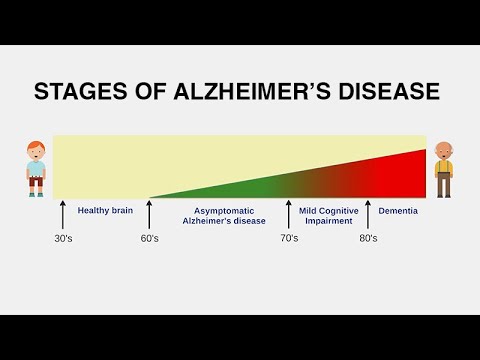
and we were able to match deletions described by the neuropathologists with a real Advantage the passion is still alive and we can follow the progression of the disease all right so with all this neuropathology and or imagine data a theoretical model for Alzheimer's disease progression has been proposed so amyloid in red start to accumulate following by atone blue there and then neural degeneration and condition match the progression of the clinical stages of the disease so from American Chief impairment so MCI to ID dementia and what is very interesting here is the preclinical stage because the physio pathology of the disease starts a decade before the clinical symptoms so if we can modify the Alzheimer's disease pathology we should logically delay the clinical symptoms which is not so simple in reality okay let's move on to the resistance and resilience Concepts I would like to come back many years ago in 1968 with a really hot City so you can see it with the quality of the graph here so they performed brenotypes in Alzheimer's disease patients but also in cognitively normal other adults and it was really hard to justify to have brain autopsy on normal people at this date and they observed a typical Alzheimer's disease lesions in C subjects here on the graph without cognitive impairment so it was really surprising and visited what the first one suggesting a razor of capacity of the brain to tolerate deflations then 20 years after the study there is another one that confirmed this person with 10 other subjects so without cognitive impairment but the proposed an explanation here so they say that the unexpected funding in the subjects were higher brand weights and greater number of neurons as compared to unless people may have an incipient Alzheimer's disease that escaped a loss of large neurons or alternatively started with larger brains and more large neurons and they say this they talk about greater razor here and from this point we discovered many genetic calendar environmentals I can build Reserve so from this previous evidence and further Walks from Dr Yakov Stern he proposed a theoretical Reserve model in 2002 with a few updates until 2018.
so here you will have the theoretical cognitive trajectory with Alzheimer's disease pathology in individuals with high Reserve in red and low reserved in blue and you can notice that individuals with high Reserve are able to maintain their cognition and start to decline later compared to low Reserve individuals so in other words they are able to tolerate much more isomer disease pathology recently a few years ago in 2018 Dr avinazarus and doctor of Emery proposed Pathways a complement Monterey Dell derived from the reserve model so the resistance and the resilience pathway so resistance is defined by avogading isomerthesis pathology so where individuals have an absence or lower than expected pathology what a resilience is defined by coping with Alzheimer's disease pathology so you have pathology in brain so individuals have higher than expected pathology so in other words they can tolerate more pathology in the brain so which is important here is why and how individuals mere resists are being enthus disease pathology and we evidentify some contributing factors such as lifestyle enlargement vascular risk sleep sex and genetics here so there are multiple risk factors and also non-modifiable risk factors and how about the brain mechanism that I will detail here so here is the resistant terrorism Frameworks across aging and pathological aging which is also possible to be resistant and resist resilient to aging so from normalizing you can resist to a Citizens brain changes here and being resilient to this brain changing regarding the definition from Alzheimer's this is the perspective you can resist to the Pathology accumulation amyloid and Tau and being resilient to them regarding the condition and then you have contributing factors that can impact resistance and resilience and then how can we measure resistance and resilience in practice so for resistance you will need to have brain features new models such as enzymers disease pathology for example then you want to explain pathology by factors such as multiple risk factors here and then depending of your sample you may you may have a u-shape Association so you may have a negative session in pre-clinical Alzheimer's disease so at very early stage meaning that particular factors help to reduce pathology but you may have a positive Association in atomic disease patients meaning that protective factors help to tolerate more pathology at later stage for resilience which is more complex to assess you really need cognition in addition to this features then you can access how factors can mitigate the link between pathology and cognition all right so in practice for instance you can use linear regression model basically for resilience you may have much more options so you can either use residuals I will take here moderation or interaction model or also controlling model with different model here results model have become quite popular over here as you can see here there is an increase of duplication for residuals here so basically the resistance is you try to explain the error of linear or nonlinear regression model so between brain features for example and condition here and a residual is the difference between your observation or the prompt and your model and here individuals in red have positive values so cognition is higher than expected so they are resilient there and they are non-resident here and a resident work from element and colleagues have point out the issues of residuals that I recommend you if you would like to use original residuals so the main issue is the fact that residuals could be highly correlative to your cognitive measure so it may explain cognition instead of resilience so be careful about that and I really recommend to read this paper about that so now I will show you individual pet image ingredients for resistance and resilience in proclinical isomers disease so in individuals without cognitive impairment so I will review some modificable risk factors such as productivity or sleep that could be interesting for a non-pharmaceutical interventions for improving the resistance and resilience in private clinical Alzheimer's disease and in the top right of each next slide we'll have a summary of the factor so a and t represents resistance to amyloid Tau and R resilience and the white line means that there is evidence with the factor in the Regulatory and the Gray Line no or not enough evidence so you will add the summary here all right so let's start with unreached mental activities which could be education or cognitive activity so for resistance there is a strong evidence in the literature on the link between this factor and amylate burden but less evidence for Tau as you can see here individuals with higher education here are initial activity have lower amelior burden so here you see that there is a decrease in family burden when you are more educated thought well the defending seems quite similar but less evidence however it is done in the Multiverse analysis here so it includes much more factors than just educational according to activity foreign there's also a strong evidence in the literature which enriched mental activities mitigate the effects of Alzheimer's disease pathology and cognition so individuals with enriched mental activities can maintain that condition much longer than individuals with low mental activities so for example here as you can see in the middle graph individuals with higher education in yellow at the rate much more aminoid burden and can maintain their cognition much higher than people with low education in green here for productivity there is mixed evidence for resistance to amyloid however it is pretty clear for services amyl and there is a trend between high and low of physical activity regarding amyloid here but for two this is a very interesting study looking the physical activity and toe in paired twins so what they did is they calculated the the physical activity and third differences between pair twins so they control genetic aspects in their analysis and then they correlate these differences and showed that higher physical activity was associated with lower turbulence so controlling for the genetical aspect concerning resilience there is a moderate evidence that physical activity mitigate the effect of personal disease pathology and cognition and here as you can see and us with high physical activity can tolerate much more pathology so you will have high amid burden in blue and a low amulet burden in red and here is his lower physical activity duels and higher physical activity individuals and as you can see here there is an effect of the pathology and connection here but when you are Physically Active there is no effect of autology and conditioning here then moving to sleep there are many sleep features that have been investigated such as sleep time sleep fragmentation slow up sleep amount so for resistance there is a strong evidence on the link between sleep and a male burden but very limited dividends for top burden so here he is a very nice review from Andre and colleagues showing the slings between within and regions here and to my knowledge there is no setup as investigated resilience here for cardiovascular risk factors such as hypertension for example so there is a moderate evidence and the link between cardiovascular risk factors especially in midlife and Amir Albert Burton but it's really a mixed for our burden there is no evidence in late life because it could be possible that medication May mask the real blood pressure and in addition it is possible that cardiovascular risk may have an independent or synergistic effect here also it is possible to have vascular disease which is more relative to vascular dementia instead of Alzheimer's disease or pure Alzheimer's disease dementia uh in a viewer in the view of all of this there is also a mixed evidence for resilience here then for an obstetric symptoms there is no evidence for resistance to amylodental so here is a nice review from Dennis King and colleagues showing no reasons between anxiety and a Miller and tropet in the forest plot so you will have the effects there is also really nice longitudinal studies showing knowling between the symptoms and amyloid and Tall burden as well so it could be explained by the fact that nerve sketch symptoms are difficult to measure it could be more important in midlife or it could reflect more the consequence than the cause of the disease and there is no evidence for residents here um then move on to personality threat so and then if this Factor are not always considered as modifiable some studies suggest that it could be interesting for future interventions and it could be modifiable so anyway for resistance there is a moderate civilians on the link between personality traits and ameloid burden Auto burden much more formula than talk to be honest and it was summarized in this very nice review with the first plot is the effect size and there is no evidence for a resilience all right so let's move to the next Parts uh so what are the underlying biological mechanisms and how can we boost resistance and resilience so how can we resist to this pathology so we can either reduce the pathology prediction or improve the pathologic clearance so but first we need to understand how Alzheimer's pathology May produce so here you will have the chairman is a schematic illustration of Alzheimer's disease pathology production in a glutamatergic tripartite synapse so with two neurons here and here one astrocyte and one microglia here so in healthy conditions so there is a normal neural activity here that leads to Trellis which is row captured by touch those rights there and then there is a control a beta secretion throughs the app cleavage which is also involved in synaptic plasticity here and then so there is a recapture of the the ebitda protein by the macro microglia here with the help of different transport protein the hypo he or the crystalline here then if we move to the pathological conditions so there is higher neural activity so very reduced neural efficiency a network here that leads to more intense glutamide release and then there is uncontrolled embeda secretion so excessive expression with excessive app cleavage and at the same time if the individual is apoe for career so which is a risk for Alzheimer's disease so the transport protein will not work and the ebitda recapture will not function here and then you will have accumulation of a beta into a beta fibril and then amyl deposition in the network it is still unclear how many favor risk factors might help resistance pathology or it can impact the prediction of Alzheimer's disease pathology so there is some evidence to just that individuals with higher physical activity have higher functional networks efficiency and lower AMOLED burden compared to an adult with lower physical activity and exactly the same with enriched material activities and there are a lot of animals model with a very controlled environment showing that if you push the the animal with high intense environment you will have less amyloid in the brain and then this evidence can support the better neural efficiency at the end with a decreasable prediction in the good part individuals with depression anxiety or noticings a trait May engage in chronic repetitive negative thinking thinking such as rumination so it is put possibly explained their increased increase neural activities especially in the the prefrontal and circulate where there is Emily accumulation as well and then this increased activity might decrease the neural efficiency and increase the better secretion at the end but a brief work in the the natural curve can decrease both rumination and neural activity so it could be it could be nice to to have a work let's then talk to Alzheimer's disease pathology clearance so the second mechanism here so again this is a shematic illustration of Alzheimer's disease separating clearance so it is the schematic illustration as you can imagine it is more complex but complex attitude is so you will have here two systems for the programs so the graphatic systems which is on overall system and very local system which is the iPad system a very early name which is the intramural peri-arietal drainage here so in healthy conditions so start with the problem one you will have arterial pulsation here and aquaporin 4 which is a water channel protein here that help to make a flow in the brain so the S2 system facilitates the flow here of the liquid in the brain and give a cognitive flow here in the parenchyma in the brain and then it helps to move the vast protein so here diabeta and top protein in the brain to the the venue system truth the astrocyte here um then if we move to the pathological condition here so there is break of the arterial Precision perhaps here and also a break of the the aquapoint for a protein which is which are non-polarized here so there is no convective flow here and then you will have no clearance of the West in the brain so you will have accumulation of these proteins in particular evidence here so here there are a lot of animals model that suggest an impact of modiformis factors on the clearance system but there is no human City here because it's difficult to capture the clearance in human but fortunately there are like a few Imaging in development using MRI and pet as well so deep sleep stages have been assisted to higher graphic system efficiency so of course Sleep Quality is a major contributor of the the clearance system here also the physical activity plays several levels here it could favor deep sleep it could also reduce inflammation and increase aquapoint for expression the weather channel protein that help the flow of the the the the protein in brain in the Contour part cardiovascular condition Theory lifestyle stress or unsymonical arter the clearance system here so both system the glyphatic and the iPad system and so it will turn into decreased ideology clearance so you will have accumulation of protein in brain yeah this is what I told early on saying that it is only done on animals modern and there is few sequence remember that could be very promising to capture the clearance here then move on to the last mechanism here how resilience works so again this is the the trip naps here with the two neurons as an astrostatic logical so so from pathological conditions with Alzheimer's disease pathology and neural inflammation for microglia and astrocities as well individuals with I mean resilient individuals may have tuitions so the first one is to stay in the same network to perform the task so they will increase their neural activity within so the same networks while maintaining a very low neural inflammation here but at the end technology will accumulate more and more in this network and it will die at the end and the second option is the networks within healthy networks without azamers this is pathology and with normal normal activity and inflammation the thing is is we don't really know how it works how it could go to the the first option or the second option here a little about the multiple risk factors so regular cognitive and physical activities are known to be a beneficial for brain active Integrity by increasing for example neurogenesis hypocampal volume or neurotrophic factors and it will also decrease neural inflammation such as a microglia inflammation oxidative stress toxicity in brain and it has been a recently shown that these activities haven't performed at the age could increase hypo neurogenesis so the production of and then it will help for the the the madness and the compassion composition enzyme that I previously show you this is the summary of the factors that I mentioned here so we'll have the time here and we will have all the factors here linking to resistance or resilience with the underlying mechanisms here so some of them such as physical activity and black lab for example seems to be very interesting for an intervention because it may be well involved in the physio pathology mechanisms of Alzheimer's disease so it could be very interesting to to look on this Factor and in addition to the factor the time of the intervention and the targeting population may also matter so you will investigate or doing International and very vulnerable individuals so without for example physical activity to to to [Music] to have something significant in this population um I will conclude then by saying that improved the the understanding of this model so the specific modified structures working with the pathophysiological mechanisms of Alzheimer's disease will help to design a therapeutic interventions just a few last words to say that there are much more modifiable factors that are just presented here and that could be very interesting as well and in fact there is 40 percent of dementia risk that could be removed if we manage the the multipurpose risk factor all right I would like to mention and Dr Sylvia which is my current Pi here and also Dr Argyle State lab and her Labs thank you all for your attention I will be happy to discuss with you and answer your questions thank you very much that's great thank you so much Dr Ruiz thanks everybody for coming thanks for tuning in on zoom and thank you to Drury for for a really interesting presentation then congratulations again thank you very much
Up Next

125:41
Sleep Expert Matthew Walker on the 6 Science-Backed Sleep Hacks You Need
@TheDiaryOfACEO
6.4M views•2023-03-09

48:47
Graphic Medicine: Comics for Collaborative Healthcare Communication
@nationalpatientadvocate
189 views•2023-12-04

10:28
Neuroanatomy: Central and Peripheral Nervous System Divisions Explained
@AKLECTURES
136.2K views•2014-09-20
3:05
Stages of Labor and Vaginal Birth | Childbirth Animation
@nucleusmedicalmedia
52.1M views•2017-08-18
Related Study Plans & Knowledge Roadmaps
Structured learning paths in Medicine
medicine
Abnormal LFTs: Diagnostic Workup & Pathology
01Liver Anatomy and Basic Physiology
02Introduction to Liver Function Tests (LFTs)
03Hepatocellular vs. Cholestatic Patterns
+ 3 more learning modules
12h6 modules
Explore Roadmap
medicine
Analyzing Blood Smears: RBC, WBC & Platelets
01Introduction to Blood Components & Smear Preparation
02Normal Morphology of Blood Cells
03Erythrocyte Pathologies & Morphological Variants
+ 2 more learning modules
12h5 modules
Explore Roadmap
medicine
Mechanical Ventilation: Waveforms & Alarms
01Anatomy and Physiology of Breathing
02Introduction to Mechanical Ventilation & Core Modes
03Ventilator Settings and Waveform Interpretation
+ 2 more learning modules
12h5 modules
Explore Roadmap
medicine
Neuro Exam: Localization & Stroke Syndromes
01Foundations of Neuroanatomy and Vascular Supply
02The Neurological Examination: Step-by-Step
03Principles of Neurological Localization
+ 3 more learning modules
18h6 modules
Explore Roadmap