


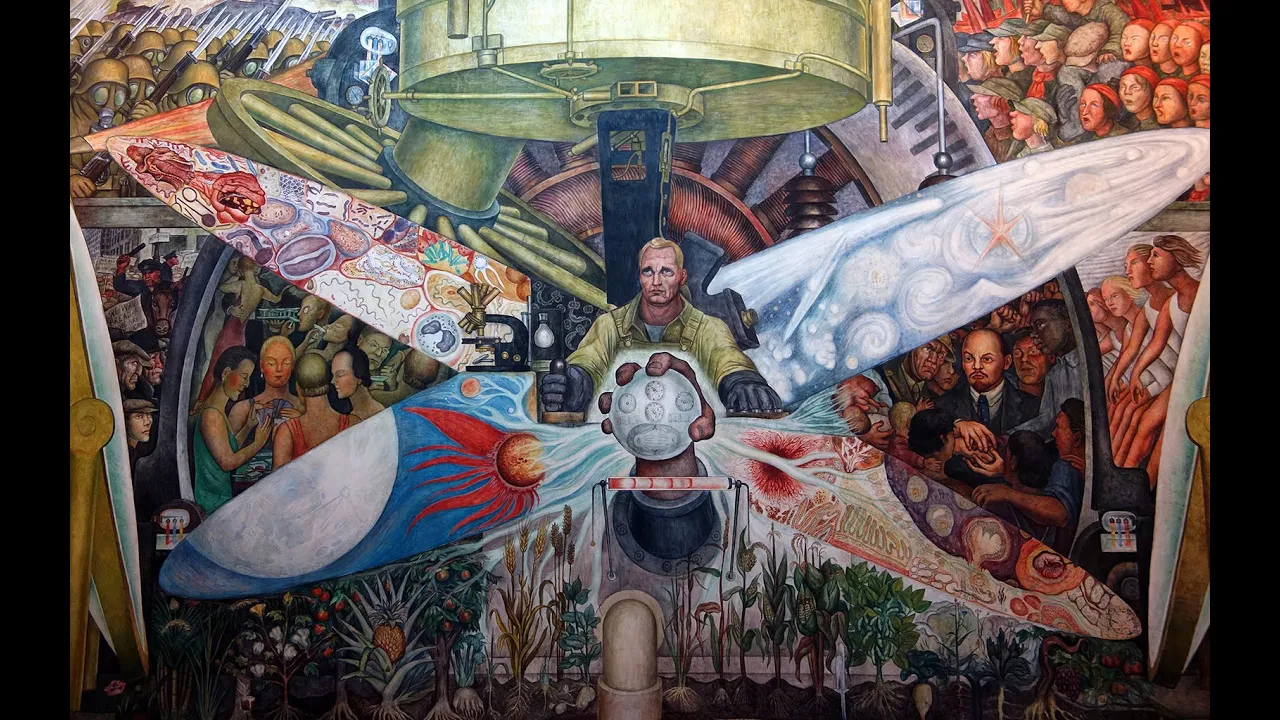












Diego Rivera's monumental fresco mural 'The History of Mexico' at the National Palace in Mexico City spans 544 meters across three walls, depicting over 2,300 years of Mexican history from ancient Mesoamerican civilizations through the Mexican Revolution, with particular emphasis on the last 700 years; the artwork, painted from 1929-1935, chronologically presents key historical events including the Spanish Conquest, Mexican Independence (1810-1821), the 1910 Mexican Revolution, and Rivera's socialist vision for Mexico's future, featuring 230 historical figures and serving as a powerful visual narrative of Mexican national identity and social transformation.
Diego Rivera's Epic History of Mexico Mural Explained
Added:Overview of the Mexican Revolution (1910–1920) and the post-revolutionary push for a unified national identity.
The core tenets of the Mexican Muralism movement, specifically its goal of creating public, accessible art for the masses.
Basic history of pre-Columbian civilizations (such as the Aztecs) and the Spanish Conquest of Mexico.
Diego Rivera’s political ideology, particularly his Marxist beliefs and how they influenced his view of class struggle and history.
A comparative study of the 'Big Three' muralists (Diego Rivera, José Clemente Orozco, and David Alfaro Siqueiros) and their distinct styles.
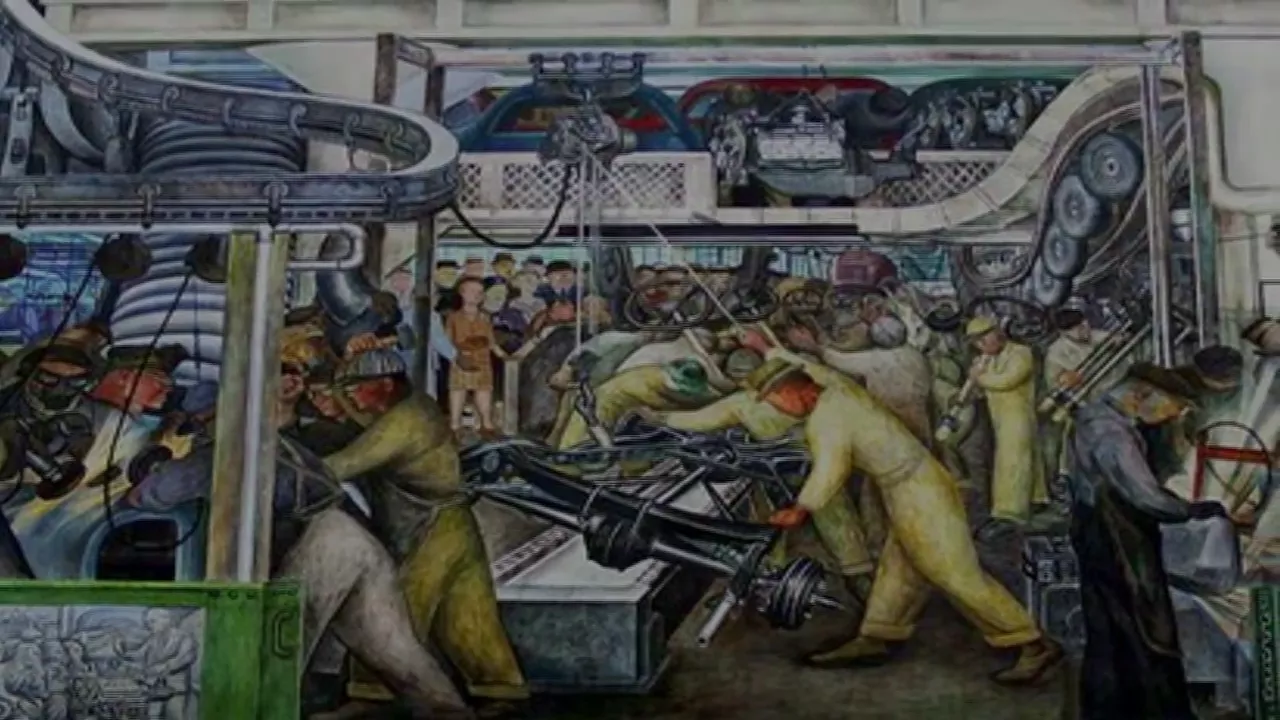
Analysis of Rivera's controversial international works, such as the 'Detroit Industry Murals' and the destroyed 'Man at the Crossroads' in New York.
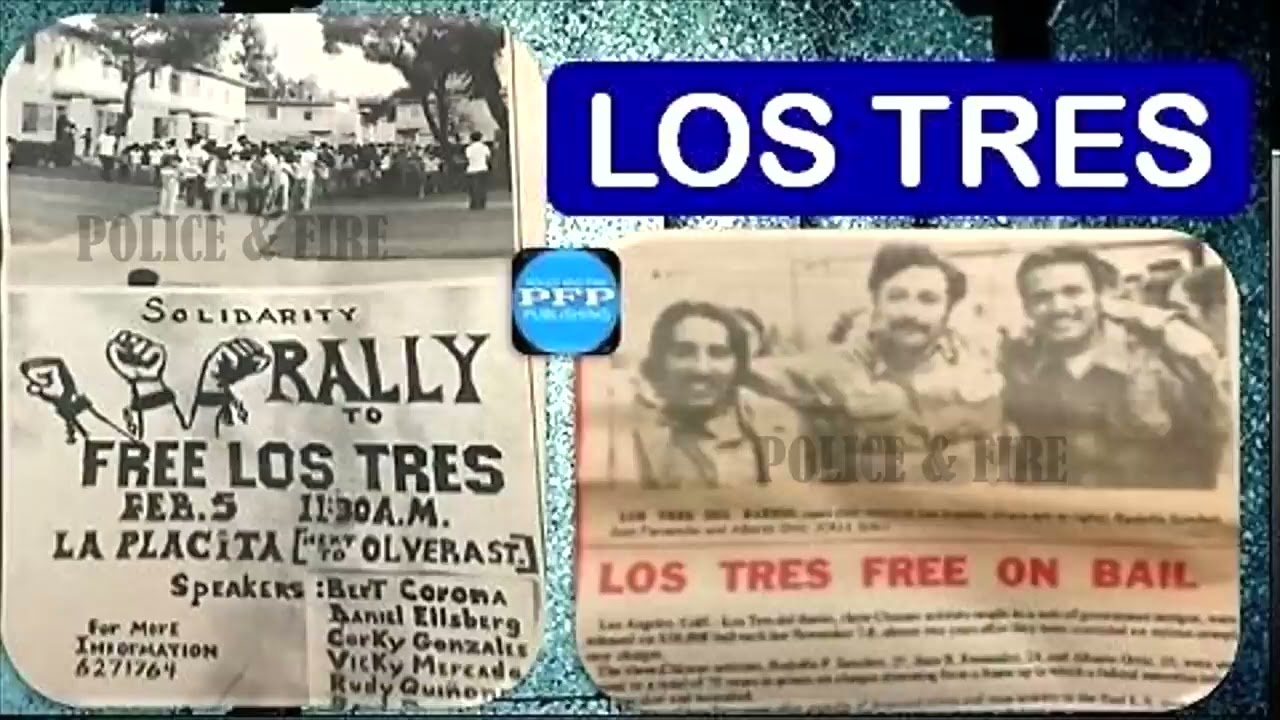
The influence of Mexican Muralism on the Chicano Art Movement in the United States during the mid-to-late 20th century.
An exploration of how modern Mexican national identity and indigenous representation have evolved since the creation of the mural.
8.8K views187likes48:20Original Release: 2023-07-25
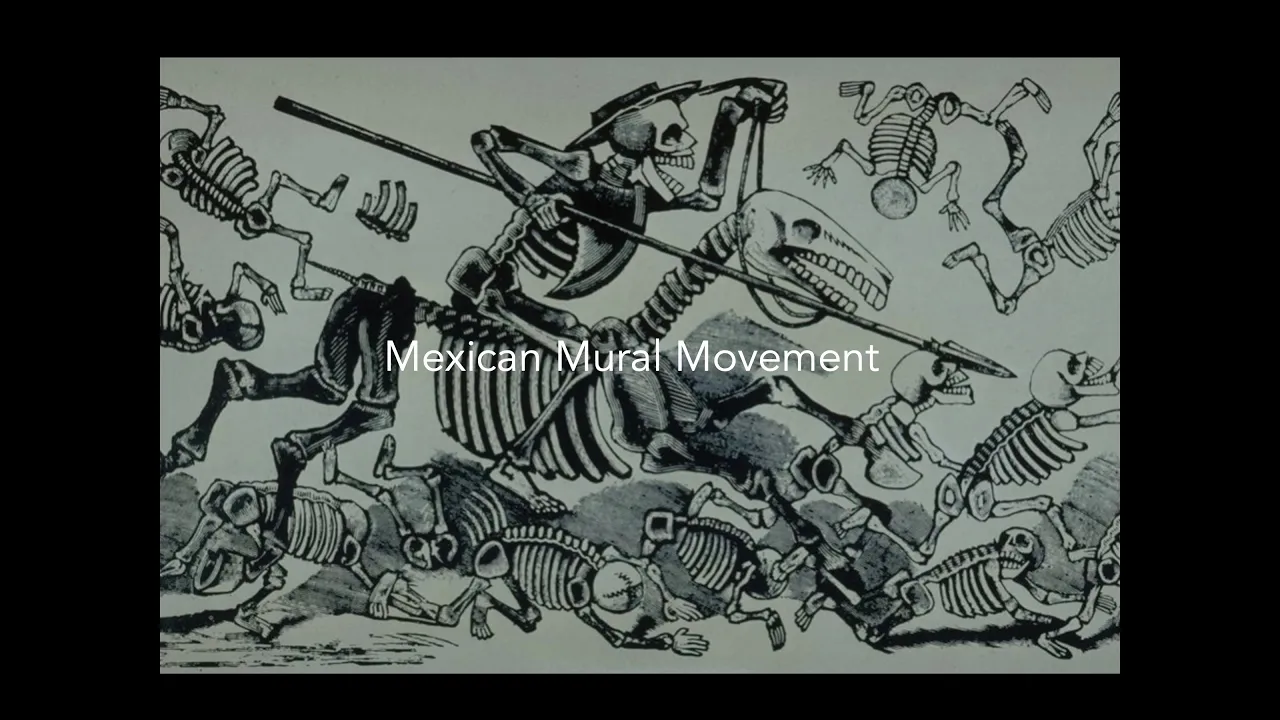
Diego Rivera’s, “The History of Mexico: An Epic of the Mexican People,” is one of his masterpieces. The fresco mural tells more than 2,000 years of Mexican History…… from Mesoamerica to the present. But there’s an emphasis on the last 700 years of Mexican History. Commissioned by the Mexican Government. The mural was painted from May 1929 and finished in November, 1935. Here’s the incredible preliminary sketches. And the transformation to the masterpiece. The mural takes up 544 meters. It’s divided into three large historical sections. And painted on three separate walls within the awkward stairwell at the National Palace in Mexico City. With the left side of the mural painted on the South wall, the center is north and the West Wall is the section farthest on the right. The Entire North wall is called From the Conquest to 1930… covering about 400 years of Mexican History. Here’s a closer look at the mural…. Emphasizing the double stairwell. Within these awkward confines…Diego painted over 2,000 years of History. And here’s the masterpiece. From right to left in mostly chronological order: Ancient Mexico details the extraordinary cultures of Mesoamerica. The brutal Spanish Conquest & Colonization is next. Farther left is the Mexican Reform movements. The center space is reserved for the history of Mexico’s Independence struggles from 1810-1821. The section to its left tells the story of the 1910 Mexican Revolution. French intervention, which happened several times, including 1861-67… is the next section. And the last section painted was “Mexico: Today & Tomorrow.” In the foreground, the Aztec-Spanish War is played out in 1521. It’s worth noting, that the Title: The “History of Mexico,” was NOT the official title given by Diego Rivera, but it’s a common title most people know the mural by. In fact, the only title actually given by Diego Rivera was for the far-left section: “Mexico Today and Tomorrow.” Here’s a few more looks of the mural on the double stairwell. The section, “Ancient America,” was the first segment painted; it takes up more than 132 meters of wall space. Let’s break it down. Quetzalcoatl sits center stage and is a symbol of wisdom in ancient Mexico for millennia, most notable in Teotihuacan (as the feathered serpent) and to the Mexica (better known as the Aztecs): he’s called: Quetzalcoatl. He’s a Mesoamerican deity (which he was) and also the name of a ruler for nations like the Toltecs (which he also was) and Quetzalcoatl was also associated with the arts and sciences. He’s portrayed here with light skin, a fancy quetzal feathered headdress, with a conch on his chest, the symbol of the God of Wind: Quetzalcoatl- Ehecatl (which he also was). He appears to be holding a Xiuhcoatl, the most potent weapon in the Aztec world. Teotihuacan’s Pyramids of the Sun and Moon stand in the valley behind Quetzalcoatl. Teotihuacan was one of the largest and greatest urban centers in Mesoamerica, especially northern Mesoamerica, but its influence spread as far as Central America. The mural also appears to shows the Valley of Anahuac (in central Mexico), where the Mexica ruled. In the top left, the head of the Plumed Serpent- Quetzalcoatl- is erupting from the volcano, likely a reference when Quetzalcoatl immolated himself. The Inverted Sun represents the premonition of Ancient Mexico’s destruction… YES… Native sources suggests they knew of their eventual destruction. And there is Quetzalcoatl’s departure. After being disgraced while drunk…. he transformed into the Star, or planet, Venus. To the left are Mexicans that represent the four elements: water, earth, wind, and fire AND/ OR could represent the crucial four cardinal points, which is sacred in Mesoamerica. To the far right is a religious celebration… using elements like corn, maguey, tobacco, and other plants… they’re also making music. The bottom right… are fine cotton producers… And here are Farmers planting corn with a coa, a long-handled spade, which was extremely common. Remember, it was Mexicans scientists that invented corn after crossbreeding wild grasses for generations. And here are Mexican artists… probably an Amantecatl, or feather workers. Feathers were one of the most revered precious elements in the ancient world. Here are Mexican stone sculptors and another artisan working on a pitcher for liquids. Right next to him is a Tlacuilto, a scribe drawing a codex using pictographic writing, which was prevalent in Mesoamerica….. Yes... Ancient Americans wrote books. Libraries full of books. And here’s a jeweler working with gold. And here’s someone working on ceramics. Tamemes… were the principle method of moving heavy goods in Mesoamerica. In the top left are Mexica Warriors… one of them appears to be an Eagle Warrior, one of the highest ranks in the Mexica army. A prisoner of War. And at the bottom is a dissident denouncing powerful nations like the Mexica… It’s an Uprising!!! And the ensuing Battle…. Where local natives fight back. Diego Rivera was fascinated with Mesoamerican History and personally collected over 60,000 Mexican artifacts. And here’s all the data for the 1st section: Ancient America. Let’s continue with the foreground narrative, entitled: “From the conquest to 1930.” Painted from 1929-1931, and taking up 288.58 meters. Here’s the capitalist & mass murderer Hernan Cortes who lead Natives in arms against the Mexica, killing tens of thousands of non-combatants. And in one case he forced Native women and children to watch as 1,000s of people were killed in public under his order. He stands above a massive cannon killing Mexicans. Just above are native Mexicans, forced to tear down Mexican buildings in order to build Spanish ones. Spanish horses worked liked medieval tanks and slaughtered many Native Mexicans. To the left, Vasco de Quiroga was a missionary who helped Natives, earning him the nickname, “Tato Vasco.” He also taught arts, trades, and was the first bishop of Michoacán. Fray Pedro de Gante was a Flemish Franciscan and one of the first missionaries who arrived in Mexico where he spent nearly 50 years evangelizing Native Mexicans. Here’s a nun that specifically supported the catechizing of Mexican girls. Fray Bartolome de las Casas, was a theologian, a Spanish Dominican missionary, and bishop of Chiapas. He is best known for protecting Native Americans in the Caribbean and Mexico, partly by speaking up and writing critically against the Church in works such as “History of the Indes.” Destroying Native religion was paramount and as you can see, forced conversions were a key strategy. In some cases, missionaries baptized as many as 40,000 people in one day… although the conversion to Christianity wasn’t thorough by any stretch of the imagination, Mexico developed a syncretic or hybrid version of Christianity. In the center is the Mexican eagle holding the atl-tlachinolli, the Aztec sign for war (water and fire). The eagle, probably represents their patron deity Huitzilopochtli, rests on a nopal tree on top of a solar disc. Here is Cuauhtemoc, the last Aztec leader, heading the defense of Tenochtitlan against the Spanish. He’s using an Aztec sling that can fire projectiles 149 mph. And here is Cuitlahuac, brother of Moctezuma the II (yes, that Moctezuma, that you probably know as Montezuma), he lead the Noche Triste battle that kicked the Spanish out of Tenochtitlan, but later died of smallpox. Here’s an Aztec priest holding up a sacrificial heart (which is the LEAST common type of “sacrifice” in the Aztec world). Hernan Cortes again… leading the Spanish siege of Tenochtitlan that killed tens of thousands of women and children. Here is a Tlaxcalteca warrior, who was allied with the Spanish… and thus holds a Spanish sword. And you can see the raging battle between the Aztecs and their allies … and the Spanish and their allies. Fray Bernardino de Sahagun destroyed many Native codices, but also studied and wrote Mexican histories, most notably in “Historia general de las cosas de la Nueva España” in 1540. Pedro Moya de Contreras, was the first Inquisitor, 3rd archbishop, and Viceroy of Mexico. Juan de Mendoza was the Archbishop and Inquisitor with immense authority in Mexico under New Spain’s Inquisition system that tortured and killed many. Here are Spaniards aided by Tlaxcala warriors, their most fervid and numerous ally. Here, Diego shows the rape of a Native Mexican women by conquistadores. Here’s Hernan Cortes for a 3rd time, this time with his concubine / translator La Malinche (Cortes was actually legally married by the Church at that time; his wife was back in Spain). Their pictured with Martin, their mestizo son, who she never saw after Martin was born. And here she is: Malintzin or Malinali more commonly known as La Malinche and baptized: Doña Marina. She was probably 13 or 14, & was part of a group of 20 girls given to the Spanish as a gift. Although Cortes originally gave her to one of his captains, he took her back. Yes, she was an interpreter, but there are many examples where she acted on her own accord, essentially not just translating but going out of her to way to help the Spanish. That’s partly why, to this day, her name is synonymous with traitor: Malinchista. For centuries The Spanish invested lots of time and money in destroying Mexico’s past… here is Fray Juan de Zumarraga burning codices in Texcoco. And Fray Diego de Landa burned Mayan manuscripts… only about 13 codices painted before 1492 remain. Here are unfortunate people tortured then killed during the Spanish Inquisition. Here is a friar burning Mexican books (codices). Pedro de Alvarado was one of Cortes’ most trusted lieutenants and is seen here branding Mexicans on the face with a red-hot iron so they can be sold as slaves. And you can see the brand if you look closely, it’s the G for Guerra – Prisoner of War- with lines and dots. Alvarado also led the massacre during the Aztec Festival of Toxcatl, killing hundreds of defenseless dancers and patrons. And Rivera paints Natives forced to destroy their buildings and use the same stones to build Spanish buildings, which include the National Palace, the Metropolitan Cathedral in the Zocalo, Cortes’ Palace, the Church at Tlateloco… and many more. We’ve covered most of the foreground, so let’s go to the top right section of the mural. On the top right, is Nicolas Bravo, standing with his sword. He was a Mexican politician who served as interim President of Mexico on two occasions. And when the United States invaded Mexico, he was the General defending Chapultepec, in Mexico City. He stands by Military Cadets defending Chapultepec from the U.S. Invaders. The eagle hovering is holding a symbol for war. The next section is Reform. Near the top is Juan Alvarez, a Federalist & Republican leader who defeated the centralist government of Santa Anna and proclaimed the Ayutla Plan. He was also President from 1855-86. Jose Santos Degollado is to his right. He was a Mexican soldier and politician…. He fought in support of the Benito Juarez government and was a member of Juarez’s cabinet and Constitution Congress of 1857. To his right, is Luis Ghilandi……. Who was an Italian soldier and republican activist. In Mexico, he supported the Ayutla Plan…. He also took part in the siege of Puebla in 1863, he was later captured and shot by imperialists. Manuel de la Barcena, who’s just below, was born in Spain but was rector of the Valladolid seminary in Morelia and governor of the Prelacy of Michoacan. He signed the Act of Independence in 1821. Miguel Miramon is to his right. He was a student of the Chapultepec Military Academy as a youth. Diego paints him brandishing a broken sword as a sign of betrayal for his support of the invading French on Mexican soil. He was executed by firing squad. Lazaro de la Garza y Ballesteros is to his right. First a priest, he became Bishop of Sonora in 1837. By 1850 he became the Archbishop of Mexico. But as a result of his attacks on the Reform Laws, he was exiled by President Juarez. Pelagio Antonio de Labastida y Davalos was a priest, lawyer and doctor. He was Archbishop of Mexico from 1863-1891. He was active with Maximilian, but expelled because of his differences with the French regarding the rights of the church in Mexico. Here is Antonio Lopez de Santa Ana, the infamous President of Mexico on 11 different occasions…. That’s right…. Eleven. While President, Americans stole Texas from Mexico, Yes, the Alamo was in Mexico. Then the U.S. invaded Mexico on separate occasions, including the U.S. Mexican war and took 55% of Mexico’s land. His constant intervening in politics eventually led to his exile. To his right is Pedro Espinoza. Bishop of Guadalajara and head of the Colegio de San Ildefonso. Archbishop Pelagio Antonio de Labastida is next. Known as a defender of the Church’s properties and privileges. In the top left is Melchor Ocampo…. Who was a liberal politician who was exiled due to his opposition of Santa Anna. In the U.S., he met Juarez & later was part of the 1857 Constituent Congress & became minister under Juarez. Ignacio Ramirez “The Necromancer”…. His thesis for entrance into the Academy of San Juan de Letran was: “God does not exist, natural beings sustain themselves,”…. His critical and questioning journalism earned him several prison sentences. He served as magistrate of the Supreme Court of Justice until his death. Benito Juarez…. The 1st Indigenous President of Mexico. He led the 1857 Constitution and the Reform Laws that separated the Church & State. Above him are men with picks and shovels destroying churches, symbol of the importance of his mandate;…. The all seeing eye is an allusion to the 33rd degree that Juarez attained as a free mason. Ignacio Manuel Altamirano was a journalist, teacher, and liberal politician. He was elected Deputy to the Constitutional Congress where he was a great orator. After the Republic was restored, he devoted himself to the arts, and was renown, holding public positions, but living in poverty. Moving to the far left, Jose Maria Iglesias was a distinguished Mexican politician, jurist, and writer. During the Juarez administration, he was minister on five occasions (Justice, the Treasury, and Interior), and later served as President of the Supreme Court of Justice. In 1876, he also declared himself Constitutional President. Just below, Ponciano Arriaga was a liberal ideologist and reformer, banished by Santa Anna. In the United States, he met popular liberals and after the Ayutla revolution, he came back to Mexico. He became a deputy in the Constitutional Congress and largely responsible for drafting the Mexican Constitution. Jose Maria Mata was head of civilian militias in Jalapa and fought against the U.S. invaders in Cerro Gordo and was sent to New Orleans as a Prisoner of War. After he was freed, he fought against Santa Anna, who exiled him. After the Ayutla Revolution, he joined Juarez and was elected deputy to the Constitutional Congress. He served as Minister of the Treasury under Juarez & years later, as Minister of Relations under Porfirio Diaz. Ignacio Comonfort was a colonel with the Acapulco militias and elected deputy to Congress on several occasions. He was also interim President of Mexico from 1855-1857. He was elected again, but General Zuloaga rose up in arms against him, which led Commonfort to resign and Benito Juarez, President of the Supreme Court of Justice, assumed the Presidency. In 1863, Juarez named him general-in-chief of his forces in the struggle against the French. Valentin Gomez Farias… studied medicine at the University of Guadalajara in 1807, but went into politics and in 1821 joined the Iguala Plan….. He later approved the coronation of Agustin de Iturbide. He also acted as Interim president on 5 occasions during the Santa Anna on-and-off-reign. The next section is The Independence of 1810. Looking at the top centered vines…. Miguel Hidalgo increased the cultivation of vines, which had been reduced by repeated prohibitions by Spain in order to promote Spanish Wine instead of Mexican. Hidalgo also established the silk worm in Mexico by planting eighty mulberry trees. Martin Cortes is to the right is, known as “El mestizo,” the son of Hernan Cortes and essentially enslaved concubine and translator, Dona Marina, also known as “La Malinche.” Born in Mexico, he was educated in Spain… when he returned to Mexico he allegedly took part in a conspiracy in 1565. He was tried under the Inquisition, and was permanently exiled from the Americas. Ignacio Allende was an officer in the Queen’s Dragoons… and a main conspirator in Valladolid in 1809 and 10. He was a crucial part of Mexican Independence with Father Hidalgo. He was an important organizer of the insurgent military and was appointed Field Marshall. But he was betrayed in Chihuahua, tried, and executed for his part in Mexico’s Independence movement from Spain. After he was executed, his head was put on display at the corner of Alhondiga de Granaditas. Father Miguel Hidalgo was the most famous spark in Mexico’s Independence movement which started in 1810. Hidalgo was a parish priest in the Dolores, Guanajuato. In 1809 he joined a group aimed at riding Spain from their 300-year tyranny of Mexico. On the night of September/ early morning of September 16, Hidalgo carried the banner of the Virgen de Guadalupe & pronounced the now famous: Grito de Dolores, which was the final spark for revolution. His army had initial success, but he was captured, defrocked, then tried and executed. Spain also put his head on display in Guanajuato. Jose Maria Morelos y Pavon was also a priest and fought in the war of Independence. On September 13 he convened the Congresso Nacional Constituyete in Chilpancingo, and proclaimed Independence. After fighting many battles, he was captured in 1815 and killed by Spain. Hermenegildo Galeana was a Mexican soldier. In 1810 he joined a pro-independence army in Morelos, carrying with him a little gun called “El Nino.” In 1811 he defeated loyalist in Tixtla, captured Taxco, and entered Cuernavaca. In 1813 he fought bravely during the Capture of Acapulco castle, but later died in the battle of Coyuca, Guerrero. Mariano Matamoros y Guridi was a liberal Mexican priest who joined Morelos in 1811 fighting for independence, fighting in important battles in Oaxaca, and Tenancingo. He manufactured weapons and led troops. He was also captured and killed in the main square of Valladolid. Francisco Javier Mina was the General Commander of Navarre during Mexico’s Independence War. He Fought against the Monarchy of Ferdinand VII. He recruited officers from Europe and the U.S. and landed at Soto La Mariana on April 15, 1817. He fought and earned many victories but was also captured and shot. Guadalupe Victoria was the 1st President of the Republic in 1824, who also fought for Independence under Morelos. He was opposed to Iturbide, Mexico’s 1st emperor, backed the military revolution of Santa Anna in 1822. He ordered the abolition of slavery and the expulsion of the Spaniards… and solidified international relations with Great Britain, the U.S., Central American and Simon Bolivar’s: Gran Colombia. Nicolas Bravo was supreme leader near the end of the Independence War, working with Morelos. He was captured and held prisoner for 3 years. He helped depose Iturbide and on two occasions, although briefly, he was President. In 1847, he defended Chapultepec castle from the invading Americans and later was poisoned. Jose Mariano Jimenez settled in Guanajuato, joining Hidalgo with 3,000 men, fighting many battles. Captured like many before, he was shot with Allende and Aldama and his head was also put on display by the Spanish.
Juan Aldama was Captain in the cavalry of Queen Isabel II at the start of the Independence War. But he fought with Allende in many battles until both were captured and killed; and his severed head was put on display. Josefa Ortiz de Dominguez was nicknamed the “la Corregidora,” (the female magistrate). She was married to the magistrate of Queretaro and backed independence and was arrested. Vicente Guerrero was an Insurgent leader in Morelos’s army and joined the Plan de Iguala in 1821. He fought in many battles and later tried to depose Iturbide. He was President for only months in 1829 and shot in 1831. Mariano Abasolo was a Mexican soldier and fought with Allende and Aldama, and was even with Hidalgo and Allende on September 15 (the start of Independence Wars). He was captured, but his life was saved due to his wealthy wife, but died in 1816 after sentenced to life in prison. This is the Banner of the 3 Guarantees under which the triumphant Trigarante army entered Mexico City, achieving Independence on September 27, 1821. Leona Vicario was a hero of the Mexican War of Independence. She used her personal fortune to manufacture weapons and led a postal service. She also paid for the welfare of captured freedom fighters. She was captured and tried in 1813, but was rescued from prison & continued to spread Independence ideals with her husband, Quintana Roo. Born in Merida, Andres Quintana Roo was a member of parliament in Puebla, who signed the Act of Independence in 1813. He drafted the Apatzingan constitution. Later he was a Supreme Court judge and helped defined the borders with the US. and defeated the bid for Yucatan independence. Manuel Gomez Pedraza was a royalist soldier…. But later became president of Mexico, but withdrew because of opposition. Exiled until 1832, he returned after another presidential run that failed; he was a member of Iturbide’s imperial household. Agustin de Iturbide was a scion and resisted Independence freedom fighters, in 1821 he convened the Plan de Iguala. After Independence in 1821 he was crowned Emperor, but his royal reign lasted only 10 months. He was exiled as the traitor he was, returned and was shot. The next figures are more associated with the Mexican Revolution, but Rivera includes them here…. Jose de Leon Toral is known for assassinating General Obregon. He was executed on February 9. Concepcion Acevedo de la Llata, better known as “Mother Conchita,” was tried for instigating Obregon’s murder and imprisoned. Luis Morones was the leader of CROM, The Regional Confederation of Mexican Workers. With great Political power, he became Minister of industry in the Calles government. And was exiled for following Calles. Alvaro Obregon fought against Villa and Zapata, but eventually changed sides. He was elected President between 1920 and 1924, helping to stabilize the country, disbanded most of the army, re-established international relations, and helped the economy. He created the Secretaria de Educacion Publicia, aka, the Ministry of Education. He was re-elected in 1928, but was assassinated before taking office. Plutarco Elias Calles was a general, serving under President Carranza, later rebelling against him. He was Minister of the Interior during Obregon’s administration and later elected President of Mexico between 1924 and 1928. During his rule, he promoted agrarian reform, modernized the army, and constructed roadways. In 1926, he expelled all foreign clergy, closed the churches, and established rules for the Church. The Church was in uproar, and helped foster an armed rebellion known as the “Cristero War.” He was later expelled and his time in power is known as the “Maximato.” Felipe Carrillo Puerto was the Governor of Yucatan, a progressive, and known as the “Apostle of the Mayan Race.” He founded the Southeast Socialist Party. He was later shot during the de la Huerta rebellion. Jose Guadalupe Rodriguez was an agrarian leader, a socialist he favored land distribution to the people. He knew Diego Rivera and was later assassinated during the wave of repression. Emiliano Zapata is one of the most famous figures of the Mexican Revolution, and known as a Mexican agrarian revolutionary leader, especially in Southern Mexico. Based in Morelos, his slogan was “Tierra Y Libertidad,” and he supported peasant workers. He supported the agrarian Ayala Plan and was later betrayed and assassinated. The next section: “The Revolution of 1910.” Here Rivera shows the Church still holds immense power in national politics. Carmen Romero Rubio de Diaz, was the daughter of Manuel Romero Rubio and Agustina Castello; She was married at only 12 years old to General Porfirio Diaz, the dictator. General Porfirio Diaz is Mexico’s most famous dictator which lasted nearly four decades. Born in Oaxaca, he became President in 1877 until 1911. His corruption spawned the Mexican Revolution. He was anti-media, anti-democracy, he was racist, attacked anyone who spoke out against him, favored big business and foreigners, and enacted laws that helped the elite but hurt most Mexicans. Jose Yves Limantour was Minister of the Treasury during Diaz’s presidency…. During his tenure many Mexicans starved. Victoriano Huerta was part of a group that assassinated Francisco Madero, in the National Palace. He was Mexican President from Feb. 1913 to July 1914 with typical Mexican oppression. General Manuel Mondragon was opposed to Madero and collaborated with Huerta in the military uprising. Manuel Romero Rubio was exiled for his liberal ideals; He served as a judge and served with Benito Juarez and was Secretary of the interior under the Diaz dictatorship. Ignacio Mariscal was a liberal Oaxacan lawyer. Mariscal served in the Three Year War and served in Juarez’s government. Carlos Pacheco was a liberal who fought against imperialism; He was the Governor of Morelos, leader of the Federal District and Minister of Trade and Industry during the Porfiriato. Manuel Gonzalez Cosio served as Minister of Communications and Public Works, Minister of the Interior, Trade and Industry, and War and the Navy during the Diaz dictatorship. Sostenes Rocha first opposed the Ayutla Plan, but later joined Juarez against French intervention. He was the director of the military school under Diaz, known for writing military books. Sebastian Lerdo de Tejada was Interim President, started another political party, and was President in 1872. Justo Sierra was Minister of Education from 1905 to 1911, nicknamed “Teacher of America.” Gabino Barreda was a scientist and educator who collaborated with Benito Juarez in improving the country’s educational system. He drew the plans for the National Preparatory School and directed it for 10 years. Guillermo Prieto saved Benito Juarez’s life by standing in front of Juarez and rebel troops in Guadalajara. Esteban Baca Calderon was a leader of the Cananea Strike, one of the last sparks that started the Mexican Revolution. He was imprisoned in San Juan de Ulua and later fought against Huerta. Camilo Arriaga was a defender of the Reform Laws during the Porfiriato, helped found the Ponciano Arriaga Liberal Club, was arrested with them, but found refuge in the United States with the Flores Magon brothers. Antonio Diaz Soto y Gama was a liberal lawyer, Zapatista supporter, defender of the Ayala Plan and founded the National Agrarian Party. He was also a Professor of Agrarian Law and Mexican History at UNAM, the University of Mexico. Felipe Angeles was a career soldier. He was also a Carranza dissident, but still served with him in the Constitutionalist Army. He also supported Pancho Villa, who named him delegate to the Convention of Aguascalientes. Emiliano Zapata is one of the most famous figures of the Mexican Revolution, known as the Mexican agrarian revolutionary leader, especially in Southern Mexico. Based in Morelos, his slogan was “Tierra Y Libertidad.” and supported peasant workers. Otilio Montano was a teacher and one of Zapata’s main advisors and generals. He’s also credited with drafting the Ayala Plan. Like Zapata, he was killed during the Revolution. Juan Sarabia was a lawyer and fought against Diaz under the Mexican Liberal Party. He worked with anti-reelectionist publications against Diaz and was supported by the Flores Magon brothers and was consequently imprisoned in San Juan de Ulua. He was also a Senator for the Federal District in Mexico City. Carmen Serdan was a liberal woman who embraced the revolution. During the initial shooting in her house, in Puebla, she was wounded and taken prisoner. She worked as a nurse during the revolution. Aquiles Serdan worked against Diaz too and after meeting Francisco Madero offered to start the revolution in Puebla, which did happen. Once the Diaz dictatorship learned of the revolution the federal government surrounded his house and he was killed in a fire fight. General Pascual Orozco was also Anti Diaz and initially Madero’s ally, later acting on his own account. He fought with Huerta and sacked Leon, Guanajuato. Jose Garibaldi was an Italian Lieutenant Colonel that arrived in Mexico in 1911 & fought alongside Madero & took part in the attack on Casa Grandes, Chihuahua. Pancho Villa. His real name was Doroteo Arango… was probably the most famous Revolutionary leader in the North… for a brief time he fought alongside Zapata and against Carranza and like Zapata was assassinated. Juan Sanchez Azcona, was an anti-re-electionist journalist, and close collaborator of Madero. And had several government positions with Carranza & Huerta General Lucio Blanco fought under Carranza and Obregon. In Tamaulipas, he carried out the first division of land in northern Mexico, and was in the Convention of Aguascalientes; he was later assassinated. Jose Maria-Pino Suarez was Vice-President under Madero. And was assassinated with Madero on the orders of Victoriano Huerta y Angeles Felix during the “ten tragic days.” Francisco Madero was jailed by President Diaz and later called for the Revolution to begin on November 20, 1910. He then exiled Diaz, & became President of Mexico. Madero was assassinated by orders of Huerta, who betrayed him. Abraham Gonzalez, with Madero, was the co-founder of the Anti-Re-electionist Party, & was Minister of the Interior during Madero’s rule; he was later assassinated. Manuel Dieguez was a worker in the Cananea Consolidated Copper Company. He helped organize the Union Liberal Humanidad and the famous strike on, June 1906. He was jailed in San Juan de Ulua & freed by revolutionaries in 1911. He was eventually shot for being anti Huerta. Jose Guadalupe Posada, was one of the greatest Mexican artists that ever lived. Most famous for an engraver and lithographs printed in countless publications, his images defined the era. He was most famous for his skulls, like La Catrina which are still incredibly famous today and in Dia de Los Muertos celebrations. Jose Vasconcelos was the Minister of Public Education from, 1921-24, and probably most famous for his essay: “The Cosmic Race,” & for the mural program that covered the country in murals from artists like Diego Rivera, Siqueiros, y Orozco. Ricardo Flores Magon was pro-democracy, and co-founded the newspaper: Regeneracion. Due to his pro democracy & Anti-Diaz dictatorship, he was attacked and fled to the U.S. where he continued to write. Venustiano Carranza was President and successor to Huerta, known as the 1st Leader of the Constitutionalist Army. Pancho Villa and Zapata were originally on his side, but later became his main adversary. He was called a traitor to the Revolution. Luis Cabrera was the Minister of the Treasury under Carranza, and defended agrarian rights and influenced the constitution, especially Article 27……. Land Reform and distribution. The second to the last section moving leftward is: “French Intervention.” Here are the Forts of Loreto & Guadalupe, the bastions of the defense of Puebla & also the scene of the Mexican victory over Napoleon III’s army in 1862. This eagle represents the Hapsburgs, which is also flying toward Europe after the execution of Maximilian. Tomas Mejia was a soldier who defended the country during the United States invasion. He was executed with the Hapsburg Maximilian and General Miramon on the Cerro de las Campanas. Maximilian of the House of Hapsburg….. Was an Austrian Archduke whom the Mexican conservatives asked to reign over Mexico, while Benito Juarez was constitutional president. He moved to Mexico and established himself as emperor. When France withdrew its military support, he was captured and shot on the Cerro de las Campanas along with his generals Miguel Miramon and Tomas Mejia. Mariano Escobedo fought against the U.S. Invasion. In 1854, he defended the Ayutla Plan, which eventually ended the Santa Anna dictatorship. Here’s Benito Juarez, again… the Ignacio Zaragoza was the Minister of War and the Navy under Juarez. As a commander in chief of the Army of the East, he lead the defense of Puebla, winning the Battle of Puebla on Cinco de Mayo, 1862. He died 4 months later in Mexico City Miguel Negrete Novoa was a distinguished Mexican officer during the war with France. He defended Loreto during the Cinco de Mayo battle against the French. And here is the last section: Mexico today and tomorrow. Painted in 1934, which takes up 132.8 meters. Near the center, Rivera paints a police force protecting the interests of the rich and elite, attacking the people they are sworn to protect who are engaging in peaceful protest. Here you see “golden shirt” aggressors, purportedly anti-Communists and a symbol of the reactionary right wing, a member of the Catholic organization, the Knights of Columbus, wearing the cross of the Maquis. Rivera was a well-known communist. And to the far right, conservative police murder poor people who want change. At the bottom, Mexicans peasants are reaping wheat. They are exploited by landowners and you also see exploited industrial workers… who Rivera uses to show oppression of the people by the corrupt Mexican elite. Here, his wife Frida Kahlo and her sister, Cristina Kahlo, are portrayed as Socialist educators. To Frida’s left…. You see a money-making machine under the altar of the Virgin of Guadalupe, an exploitative friar, a peasant, & the idiotic bourgeoisie. These contributed to the immense power and riches of the Church. On either side of the Virgen de Guadalupe image, hang several flags, including the U.S. flag and the flag of, Christ the King. To the left is an image of corrupt clergy having sexual sins with a female congregate. Just above are images of United States bourgeoisie, from left to right: John D. Rockefeller, Jr., Harry Sinclair, William Durant, John Pierpont Morgan, Cornelius Vanderbilt, and Andrew Mellon. Here, Army officers, fat capitalists, and ecclesiastics: which are represented by politicians including Calles, Moronees, Ortiz Rubio, Abelardo Rodriguez, and corrupt members of the clergy. They have grown rich by exploiting the masses. Here are exploited workers and laborers. Just above is Fernando Ocaranza Carmona, the former rector of the National University, teaching students the doctrines of Mexican Socialism. Far left: The images represent the two facets of public education: the people, represented by students at the Workers’ University with Marx’s ‘Das Kapital’ under their arms…… and the education of the ruling classes. Near the top, but positioned near the center, a strong Mexican worker haranguing the masses under the Soviet flag…. You also see soldiers with gas masks, and the City of Mexico in flames during the Proletarian revolution. On top…. is Karl Marx, with a caption from his “Communist Manifesto” showing the revolutionary trinity (soldier, laborer, and peasant). The new progressive society that will result from Mexico’s socialist revolution, founded on industry, agriculture, and science. To his left, Marx points to the proletarian struggle and the Utopia of a Socialist and just future. And there we have it. Diego Rivera’s epic… masterpiece…. The History of Mexico… which covers more than 2,000 years… and details 230 historical figures & historical events within these 554 meters at the national palace… one of the greatest historical murals ever. Thanks so much for watching. Viva Mexico.
Up Next

10:15
David Alfaro Siqueiros: Murals as Political Resistance in Mexico and LA
@MexicoNewsDailyTV
429 views•2026-01-08

114:18
Christian Iconography: History, Theology, and Meaning | Fr. Panayiotis Papageorgiou
@Trisagionfilms
58.8K views•2020-02-21
7:48
Ukiyo-e Art: History, Woodblock Printing & Influence
@japanathand
6.3K views•2023-06-08

16:34
Earliest Depictions of Jesus in Art: 10 Ancient Images Explained
@UsefulCharts
5.9M views•2022-06-03
Related Study Plans & Knowledge Roadmaps
Structured learning paths in Art History
art-history
Gothic Cathedrals: Engineering, Light & Society
01The Birth of the Gothic: Romanesque to Suger's Vision
02The Structural Triad: Pointed Arches, Ribbed Vaults, and Flying Buttresses
03Theology of Light: Lux Nova and Sacred Geometry
+ 2 more learning modules
14h5 modules
Explore Roadmap
art-history
Pre-Raphaelites: Realism, Symbolism & Critique
01The Victorian Art Establishment and Academic Formula
02The Founding of the PRB and Radical Realism
03Medieval Revivalism and Literary Symbolism
+ 1 more learning modules
8h4 modules
Explore Roadmap
art-history
Street Art: From Subways to Art Market
01Subcultural Origins in Philadelphia and New York (1970s)
02The Subway Era and Style Wars (Late 1970s - 1980s)
03The East Village Scene and Early Gallery Crossover
+ 2 more learning modules
10h5 modules
Explore Roadmap
art-history
Classic Maya Art: Iconography, Glyphs & Ritual
01Foundations of Classic Maya Visual Culture
02Deciphering Maya Hieroglyphs & Text-Image Integration
03Sacred Geography and Cosmological Architecture
+ 2 more learning modules
14h5 modules
Explore Roadmap