








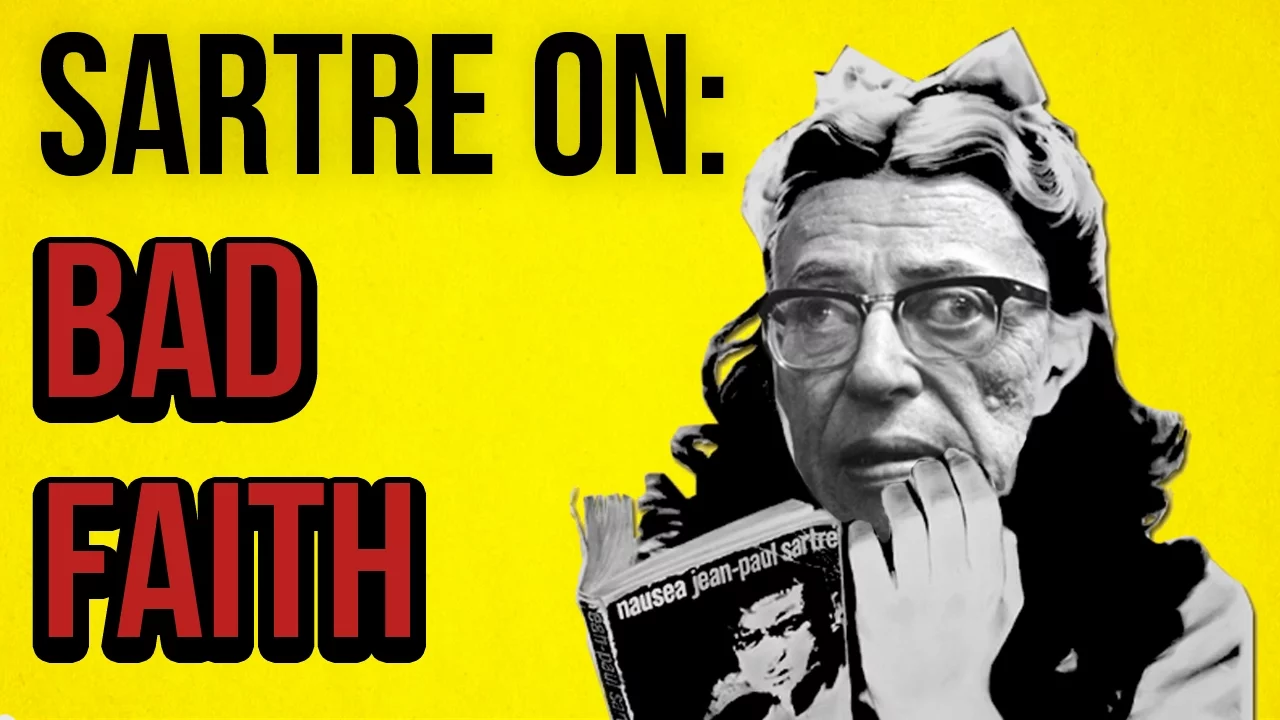







In Sartre's existentialism, bad faith is the fundamental human tendency to evade our radical freedom by making excuses and pretending we are not free, which is paradoxically itself an exercise of our freedom; this occurs because the condition of freedom is inherently dizzying and nauseating, as we are condemned to be free and bear full responsibility for the quality of our lives, which most people avoid by pinning their circumstances on external factors rather than owning their choices.
Sartre's Bad Faith and the Horror of Freedom Explained
Added:The fundamental existentialist principle of 'existence precedes essence' and its implications for human identity.
Sartre's ontological distinction between 'being-in-itself' (l'en-soi) and 'being-for-itself' (le pour-soi).
The philosophical debate of free will versus determinism, specifically how radical freedom rejects external determinism.
The basics of existential dread or anxiety (angst) as introduced by earlier philosophers like Søren Kierkegaard.
Sartre's concept of 'authenticity' and how one can actively live an authentic life without falling into bad faith.
The social dimension of existentialism, specifically Sartre's theory of 'The Look' (Le Regard) and how 'the Other' impacts our freedom.
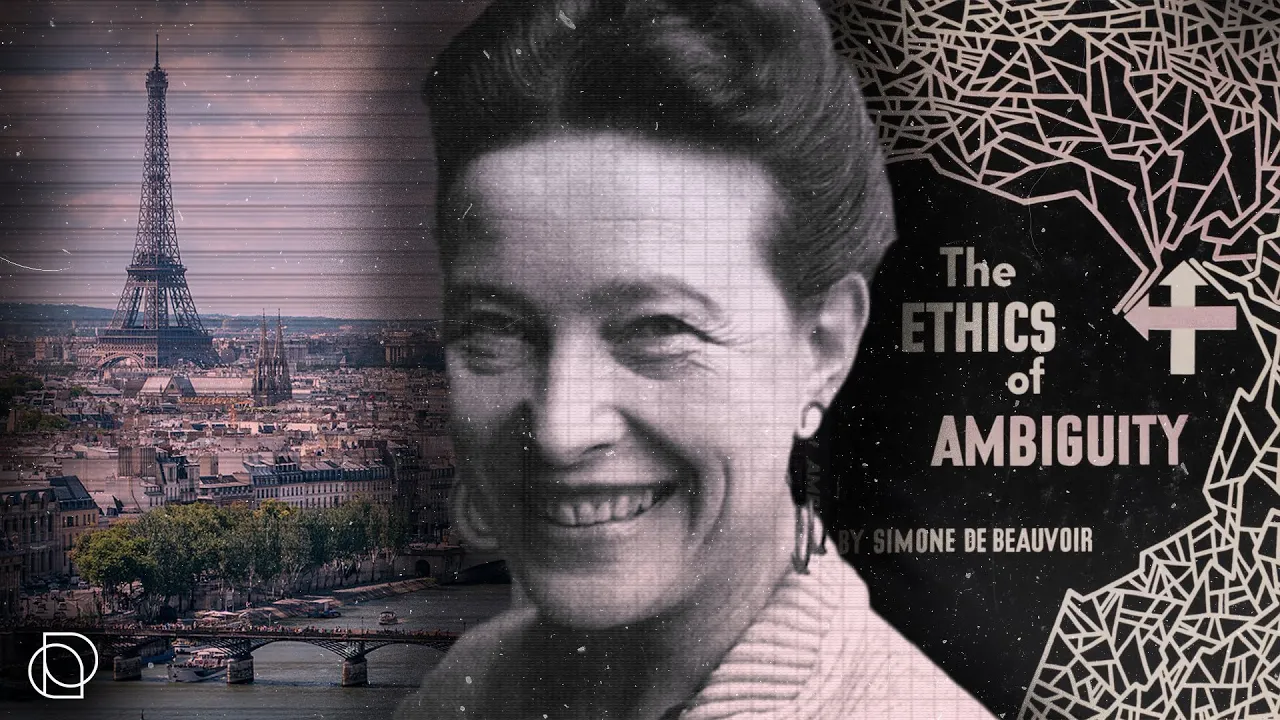
Simone de Beauvoir's 'The Ethics of Ambiguity', which builds an ethical framework on Sartrean radical freedom.
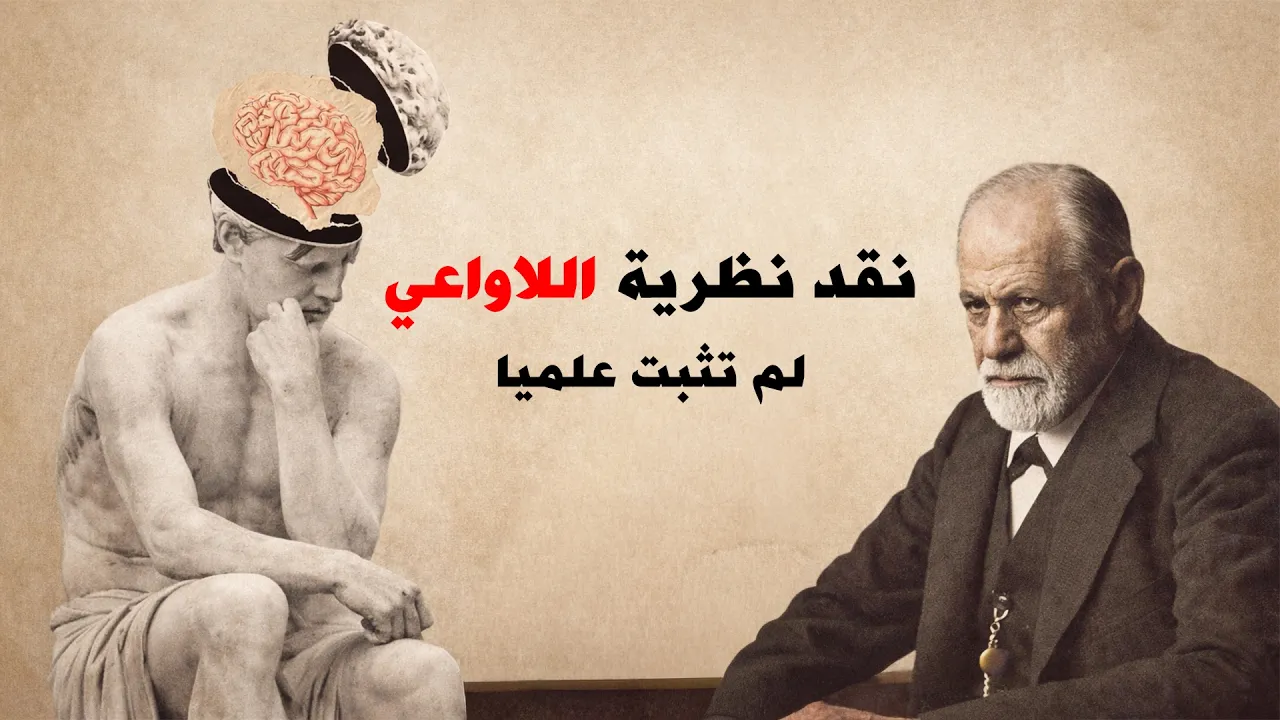
The critique of Freudian psychoanalysis through Sartre's rejection of the unconscious, which he argued was a form of bad faith.
A comparative study of Sartre's existentialism and Albert Camus's Absurdism regarding how humans should construct meaning.
28.3K views909likes26:31Original Release: 2020-04-12
hi welcome back to existential psychology here at the University of West Georgia this video is going to be the second video in a series in which we'll be exploring the phenomenological ontology of jean-paul sartre famous French existentialist okay so in the first video we look basically at two themes the first of which had to do with his idea that existence precedes essence in other words that were in the world first and only on that basis do we come to some understanding about what that means for instance why is it that we well not we but many of us believe in God well from the point of view of Sartre phenomenology we end up believing in God as the ultimate creator of life the universe and everything including our own human nature because we experience the world in a particular way and because we experience the world in a particular way it makes it easy and inviting for us to choose to believe in God so it's not as though God is actually the AA priori thing that somehow out there transcended to the world that has created us and created our nature - it's more like that we experience life in a particular way and because we experience life in a particular way we end up believing in God same is true of the empirical sciences and the truths and principles of the empirical sciences we end up believing in those ultimately because we experience the world as we do and because we experience the world as we do and because it's shaped and conditioned by things like the Western cultural and historical trajectory we end up believing in force equals mass times acceleration or e equals mc-squared or PV equals NRT that's the ideal gas law from chemistry but it's only on the basis of our subjectively experiencing things as we do that we end up believing in some kind of objective scientific account of reality so in a way our belief in God is not that different in principle from our belief in a secular scientific cosmology and maybe that second one is a little tougher to see so maybe let's remember back maybe when you took chemistry at some point in your life and you were investigating the equation PV equals NRT the ideal gas law and because most chemistry programs end up putting you in a laboratory situation not because they think that you'll discover some new chemical principle but they want you to enter the spirit of empirical inquiry and see for yourself whether PV does indeed equal NRT so they set you up in a laboratory and you conduct experiments and hopefully your experiments or you do them correctly and they end up confirming whatever principle it is you're interested in confirming well the thing about those laboratory situations whether they're in your class or whether you're on the cutting edge of science is this that they're always based upon the phenomenon of observation in order to investigate reality scientifically you're always going to have to be observing something that's at the soul and it's the animating spirit of empirical inquiry in the first place you don't just base your assertions upon your opinion or what you feel like that particular day instead you go into the laboratory and observe things and only on that basis do you end up asserting scientific principles well the thing about doing all that is that it's based upon the phenomenon of observing things but when you think about it the process of observing things is itself a very subjective thing ultimately in one way or another it's based upon the subjective experience perceiving things as we do hence observing things as we do so the whole edifice of the Natural Sciences ultimately is based upon a foundation if you want to use that word of a subjective experience that they're two like we're in the world first we experience the world first as we do and only then do we end up thinking things like well PV really does equal NRT or E really does equal MC squared F really does equal MA you know you probably can tell that I've had a scientific background at some point I started out as by chem major and then did a couple degrees in computer science and mathematics along the way so I have contact with that way of seeing things but you know it's a sort of startling insight if you're just sort of a a fervent believer in a kind of you know cyano lithic scientific monism as an explanation of life the universe and everything to realize that well underneath our entire vision of what objectivity is is this layer or this this what like the substratum of subjective experience in the form of observation all right so that's a way I guess of elaborating on the idea of existence preceding essence and then in the last video we also looked at fact achill freedom so the idea there was that well all the things that we do not choose are always how we experience those things and how we live those sorts of elements of our lives are always interwoven with our choices okay so there's no such thing as a bare facticity like it's always up to you how you experience the facticity of being in your particular body let's say with all of its attributes and strengths and weaknesses and so on like the fact that you cannot just with a snap of your fingers just choose to be in someone else's body doesn't mean that you're not free okay so freedom what we choose and what we do not choose are always inter woven with each other and I glossed that in the last video by quoting Sartre and saying freedom is what we do with what's been done to us okay so which i think is a fairly pithy way of getting at that idea of fact achill freedom okay so that's all stuff from the last video those of you who are my students are probably familiar with the fact that I usually spend the first few minutes of every lecture summarizing some main points from the previous one so for you guys that sort of business as usual but let's get to some new stuff okay so I'm cycling forward through your notes a little bit to page what page is this I think it's page 3 of your notes and okay all right so we may not have the latitude to choose what cards deep life deals us but how we play them is completely up to us once again this is a description of fact achill freedom so not even God or our own quote human nature nor the happen stances of life determine us we really are radically free and remember in the last video I glossed that word radically as to the route and that's from the Latinate etymology of the word consequently he says man or humanity we could update the gender language I suppose a little bit humanity is nothing else but what it makes of himself our lives are nothing else but what we make of them such is the first principle of existentialism that's on page 36 of your book okay now here's the real new stuff most of the choices we make most of the way our freedom expresses itself in our lives is pre reflective in nature okay so this is going to be a very important point so most of our choices most of the things we choose were not aware of choosing okay's before we reflect before we're aware of practicing our freedom the vast majority of our choices in this life are like that and I gave you a little example in your notes it's like you know you drive home let's say after class suppose theoretically you're not in a corona lockdown quarantine situation and so after class excuse me after class you decide to drive home and you probably do it like I do in a fairly automatic fashion you just sort of you know you remember your cars you walk to your car you put your stuff in the car you just start the car you start driving and probably you drive if you're like me you probably tried the same way home pretty much every time and really on it doesn't seem like you're choosing any of that it seems like you're sort of on autopilot in a sense you know but the fact of the matter is when you reflect on that experience the fact of the matter is that well at any and all points you could have chosen to take a different way home at any and all points in fact as you were walking to your car at any and you're walking to your car you've decided you could have decided you're not gonna take their car at all you could decide you're gonna call a taxi or you could decide you're gonna walk home instead of you know driving and okay like the distance between my house and the university's seven miles but I can walk seven miles you know that's not I'm an old runner from way back when so that's not that big a deal for me and probably not for you either because most of you are young and strong and tough and all of that kind of stuff so Wow I guess in what seemed to be a very automatic process where I was not aware of making choices insofar as I could have picked other things but I didn't I must have been at some level choosing even if I wasn't consciously aware of choosing at the time and when you think about it Wow you know like that applies to probably ninety-nine point seven percent of our choices in life are sort of like that that were really just it seems like in the moment we're just moving through the moments of our lives but actually when you reflect back upon it we could have done that in any number of different ways we could have different attitude toward it we could have feel felt different things if we decided we're going to feel it in a different way we could have trained our perceptual field or focused our perceptual field in a somewhat different way as we were moving through that entire process and insofar as there was actually a very broad range of options of breath very broad range of different possible ways we could have moved through the moments of our lives at some level even if we weren't aware of it we must have been choosing the particular way that we did so to select one out of a range of options means that at some level we were making choices even if we were not reflectively aware of doing so so the vast majority of our choices are pre reflective in nature in other words what you should be inferring is that whether something qualifies as a choice or not in our lives is not dependent on our being consciously aware of it as a choice in our lives see this is a mistake that a lot of people make when they start getting into an analysis of freedom like this they look at the instances of freedom that they're consciously aware of as choices as if that were the entire range of our freedom well from the point of view of Sarkar's phenomenological analysis not only is that not true but actually the choices that were aware of constitute just a tiny tiny fraction of all of our choices because the fact the matter is we're always choosing even in this moment now if you're watching this video well the fact of the matter is that you could have decided to click onto another video at any and all points but if you're listening now that means you've made it up to this point and you know even if you weren't aware of well I guess I'm choosing to continue to watch this video to get to this point in the in the lecture the fact of the matter is insofar as at any point along here you could have decided to turn this video off or turn on some other video I don't know Justin Beiber whatever your sort of thing is your taste that wouldn't be my particular choice but it could be yours but the fact that matters I could what decide to watch a Justin Bieber at any point when I could decide to bring up Justin Bieber in the middle of a SART for a lecture for that matter oh wait a minute I just did even though I wasn't consciously aware of choosing to do that you see how it illustrates the point you get it so freedom turns out to be and choosing turns out to be like way more pervasive way more permeating the moments of our lives than it seems like at first so freedom is everywhere all the time you're always choosing at least you're choosing your attitude toward your facticity zatt every each and every moment so Sartre writes a little quote students love it when you connect what you're saying with quotes from the books oh man okay once again a little bit of the antiquated language but man will be what he will have planned to be not what he will want to be in other words sometimes your choices are at odds with what you think you want in life okay so this is another point that yeah a lot of the time we think that our freedom is about choosing what we want well the fact of the matter is some fraction of the time we choose exactly what we do not want and this might remind you of Dostoyevsky's analysis of our most Advan tage advantage from notes of the underground we covered that some lectures ago I can't remember how many that maybe 8 or 10 lectures ago so similar sort of point we find here in Sartre so let's read that again man will be what he will have planned to be in other words when he says plan that's a little bit of a I think an in felicitous choice of word words so by that what he means is what you pre reflectively choose to be not which isn't necessarily what you want to be all right so we can choose things in fact we often choose things that are odds with what we think we want in life because by the word will we generally mean a conscious decision which is subsequent to what we have already made of ourselves ok so that may seem like a little abstract but if you think about it in terms of this business of pre reflective choice I better I bet it'll start to make sense to you because by the word will we generally mean a conscious decision decisions that were actually aware of as decisions which is subsequent to in other words it comes after what we've already made of ourselves in other words most of our choices are pre reflective and when we think that we're aware of what we're choosing in a way the pre reflective choices have already come before that ok so I think that's enough on choice and hence freedom being mostly pre reflective freedom is something that for the most part were not aware of in in the form of its daily practice in the moments of our lives now the next bit is also important and very famous so the next segment of your notes has to do with something called bad faith and nausea or nausea perhaps in French so so the main the main point here has to do with what we mostly do with our freedom what we do what do we mostly do with the fact that we are radically free and responsibility and responsible in this way and Sartre is answer to that is the main thing we do with our freedom is tend like we're not free the main thing we do with our freedom is choose to believe that we're not free and I'm slowing down on that so you can hear sort of the weird loop in that there's a sort of paradoxical twist in that to choose to believe to choose means that we're exercising our freedom to believe that we're not free so hopefully you're hearing the paradox that as an exercise of our freedom a way of using our freedom the main way we use our freedom is to act like we're not free but that itself is a choice so we don't get out of the condition of freedom by pretending or more accurately by choosing to pretend like we're not free but that's the main thing we do now he calls this bit of theatre if you're getting the sense that wow there's something theatrical about this or something dishonest about this if we're choosing to pretend like we're not free he calls this bad faith okay so this is a very important phrase and idea in Sartre the phenomenology so the main thing we do with our freedom is we act like we're not free and the other manifestation of bad faith that maybe we should talk about for a second is we make excuses for ourselves making excuses for ourselves is a way of pretending or at least diminishing our particular role in the role of our particular choices in the quality of life as we experience it all right so bad faith means making excuses for ourselves generating a kind of theater for ourselves and the point of that theater is to distract ourselves and help us believe that we're not actually as free as we really are okay so the main thing we do with our freedom is run away from our freedom and I'm saying the same thing about five times in a row because I think it needs to be said about five times in a row because this is so much running against the grain of our prevailing social practices and ethos 21st century time which is all about I think all about making excuses for ourselves and trying to find justifications for why we feel like victims and trying to get the world to make us happy in some sense when the deeper reality is if we're happy it comes out of our own particular practice of freedom in our own particular way of owning responsibility for the quality of our lives the world will continue to be the world whether we like it or not if we make the world and what the world does the source of our happiness odds are we're not going to be very happy or if we are it'll be just sort of a random event that occurs every now and then to really be happy we really need to take the reigns of the quality of our lives but that's about the last thing that our world encourages us to do these days so I think it needs to be said a whole bunch of times in order to get it across so the one bit of facticity that we do not choose with regard to our freedom is the condition of freedom itself ok so the condition of being free one way of thinking about it is it's an element of facticity into which we are thrown ok this is a little bit of high daguerreian language but it's very apt for describing Sarkar's ideas - so where here's his phrase his way of saying it is we're condemned to freedom and this might remind you a little bit of some language that we saw in Camus where the element of condemnation and the condemnation of Sisyphus more specifically the proletarian of gods is of the gods as Camus call Sisyphus is of course means that well if Sisyphus is condemnation is in so many ways a lot like our own and we went into a lot of detail about that in previous videos but this theme of condemnation we find again in canoes contemporary Sartre so it's a sort of a recurrent theme to an extent in existential thinking so freedom is something were condemned to now maybe at this point your question is well why would he say it in such a sort of dark dismal somewhat morbid way why wouldn't he say well you know freedom is a picnic like the wonderful joyous picnic that we get to you know get to eat wonderful food and play frisbee at or something like that why is it a condemnation well the reason why he thinks of it as a condemnation there's a couple reasons is that when it comes down to it there's something very dizzying and even nauseating about the condition of our freedom and probably not in this video but the next one what I want to do is go through a whole bunch of analyses that hopefully give you a sense for the actually nauseating character of our freedom so part of the reason why we engage in bad faith so much and try to evade the reality of our freedom and make excuses for ourselves it all turns and try to regard ourselves as victims rather than free agents is because there's something just disorienting and excessive and nauseating about the condition of our free freedom itself now this is a little bit counterintuitive with respect to especially American values because we love to extol the virtues of freedom and speak the language of freedom and the word Liberty is on all of our money in case you haven't noticed by the way if you want to know what your cultures central values are or at least the values that are supposedly your culture central values look at the money look at the money so our money has the word Liberty on it and okay so Liberty is not exactly the same thing as freedom but they definitely overlap to an extent so from an American point of view we like to talk the language of freedom and liberty and all of that kind of stuff but the fact of the matter is that we pretty much try to evade it at each and every point like we want to be free but not that free you getting it like we want a certain range of freedom and latitude opportunities to choose and options and so on and so forth but what we do not want is that deep powerful radical range of freedom that is actually our existential human birthright that is something that we find and rightly so dizzying nauseating vertiginous and so on you know so o4 to genus maybe that's a vocabulary word for you so a vertiginous means to produce vertigo okay so it's sort of the adjective form of the word vertigo all right so that's the first reason why we avoid owning our freedom is because the nausea in character the second one's going to be the owner is necessity okay that our responsibility for our choices and for the quality of our lives is way deeper and way weightier than most of us are comfortable with okay so the dizzying character of freedom motivates bad faith motivates the perfect the ongoing production of this kind of theater whose purpose is to deceive ourselves about the real fundamental nature of how free we really are and consequently how responsible for the quality of our lives we really are like we're so damn eager I think especially in the 21st century to pin the quality of our lives on to something other than ourselves like social dynamics power dynamics privilege dynamics any number of factors you know but the last person will attribute the quality of our lives to is ourselves but the fact of the matter is if we want if we really want to be empowered and not just sort of you know sort of shift our power on to more or less arbitrary more or less random happenings within the world we have to start to own our freedom and we have to start to own our fundamental responsibility for the quality of our life so here again I'd like to throw out this thought experiment to you in the spirit of Sartre analysis what if the quality of life is you experience that the main variable in that complex equation that determines the quality of life as you know it is mostly about your choices and your ability to assume responsibility for the quality of your life suppose that were the main variable in the complex equation there are many variables in that equation a lot of them fact to call a lot of them you don't necessarily have you can choose by Fiat you know but suppose that the main variable the main determinant of whether your life feels like it's a high quality life or a low quality life is your actual choices and your ability to assume as much responsibility for your life as possible suppose you're way more powerful than you think you are suppose you're way more powerful than you even want to be okay so well interesting sort of thing but the the good comes with the bad as with most things in life and so too with our freedom and the bad is if you're gonna assume your rightful power in your life you're going to have to learn to deal with a certain measure of disorientation nausea anxiety and so on and you're going to have to learn to carry weights that are heavier than maybe what you think you can carry the weight more specifically of assuming responsibility for your life but then again you can always choose because your fact eclis free not to be powerful you can always choose to act like a puppet or a robot you know and that's what we do most of the time that's what bad faith is about and it's a way of being dishonest with ourselves dishonest with each other and so on but the fact that there's something dishonest and fundamentally theatrical about it does not mean that we don't do it in fact just the opposite all right so let's see see maybe that'll I sort of want to do the next chunk in its own video so let's end this video here okay so I hope you're having a great day we're supposed to get a bunch of storms here in Georgia and possibly tornadoes so if there's a big gap between this video and the next one you know you'll possibly know the reason why okay but in any case have a great day and enjoy your tornadoes and enjoy your corona apocalypse and your encampment in a state of quarantine all right have a great day bye
Up Next

11:38
Sartre's Bad Faith Explained: Being and Nothingness
@OverthinkPodcastPhilosophy
109K views•2022-04-29

164:01
John of Damascus on Holy Images: A Theological Defense
@BannedBooks
139 views•2026-04-25

68:32
Should We Destroy the Machines? Big Tech Surveillance Critique
@TheStoriesWeTell303
167.9K views•2025-11-30
4:57
The Myth of Sisyphus: A Greek Legend of Eternal Punishment
@TEDEd
8.6M views•2018-11-13
Related Study Plans & Knowledge Roadmaps
Structured learning paths in Philosophy
philosophy
Frankfurt School: Critical Theory & Culture
01Foundations of the Frankfurt School and Critical Theory
02Horkheimer & Adorno: The Critique of Instrumental Reason
03The Culture Industry and Mass Deception
+ 2 more learning modules
12h5 modules
Explore Roadmap
philosophy
Philosophy of Language: From Frege to Austin
01The Linguistic Turn: An Introduction to Language in Philosophy
02Gottlob Frege: Sense and Reference
03Early Wittgenstein: The Picture Theory of Meaning
+ 3 more learning modules
15h6 modules
Explore Roadmap
philosophy
Feminist Epistemology: Standpoint & Injustice
01Introduction to Epistemology and Feminist Critiques
02Sandra Harding and Standpoint Theory
03Donna Haraway and Situated Knowledges
+ 2 more learning modules
12h5 modules
Explore Roadmap
philosophy
Environmental Philosophy: Ethics & Deep Ecology
01Foundations of Environmental Ethics & Anthropocentrism
02Biocentric Individualism and Animal Liberation
03Ecocentric Holism and Deep Ecology
+ 1 more learning modules
10h4 modules
Explore Roadmap