




![[1] re: David Benatar on how to think about feelings ...part 1 of 2](https://i.ytimg.com/vi/r7RwErKDGXM/sddefault.jpg?sqp=-oaymwEmCIAFEOAD8quKqQMa8AEB-AHUBoAC4AOKAgwIABABGGUgVChKMA8=&rs=AOn4CLB8g3DE90bhBb_6knHdpwEaG1cD7Q)








![15. Stewardship: Restoration [Environmental Ethics]](https://i.ytimg.com/vi/13dxQpoOY4g/maxresdefault.jpg)




![[생활과 윤리 강의-33강] 환경윤리 | 생명중심주의(슈바이처, 테일러) | 테일러 우선성의 원리](https://i.ytimg.com/vi/euqiDF-0vIw/maxresdefault.jpg)


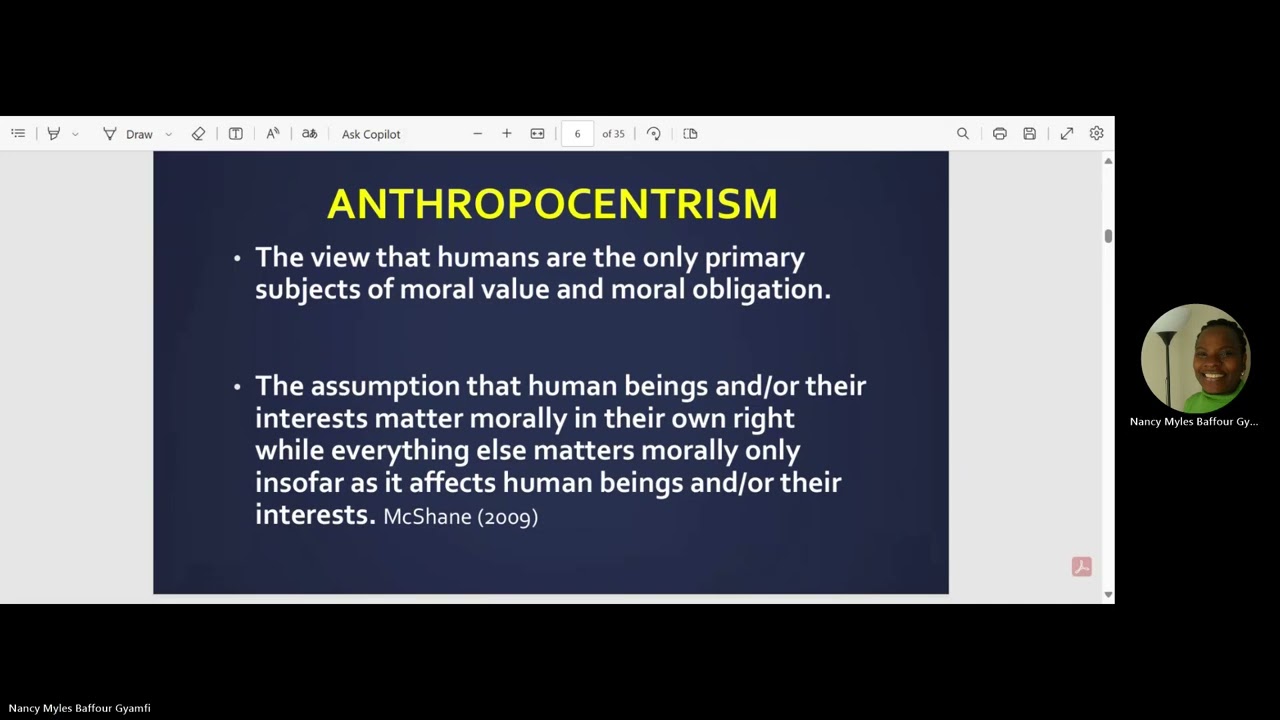
Biocentric ethics, as articulated by philosopher Paul Taylor, holds that all living beings possess intrinsic worth and should be respected equally, with humans being members of Earth's community of life rather than inherently superior rulers. This approach emphasizes four key principles: humans as equal members of the biotic community, the interdependence of all species, each organism having its own good, and rejecting human exceptionalism. However, critics argue this framework contains inherent contradictions, particularly regarding human rationality and capacity for moral judgment, and may lead to extreme positions like those found in deep ecology movements that advocate for reducing human population to protect non-human life.
Biocentric Ethic | Environmental Ethics & Christian Perspective
Added:Understanding the distinction between anthropocentric (human-centered) and non-anthropocentric approaches in environmental philosophy.
Familiarity with the core concepts of Christian creation theology, particularly the theological debate between human 'dominion' and 'stewardship'.
Basic knowledge of moral considerability—the philosophical criteria used to determine which entities deserve moral concern (e.g., sentience vs. being alive).
An introductory understanding of Paul Taylor's 'Respect for Nature' and his concept of living things as 'teleological centers of life'.
Exploring Ecocentrism and Aldo Leopold's 'Land Ethic' as holistic alternatives to Taylor's individualistic biocentrism.
Analyzing how biocentric ethics and Christian stewardship translate into practical environmental policy, conservation laws, and sustainability initiatives.
Investigating the broader field of Ecotheology, comparing Christian stewardship with ecological perspectives in other major world religions and Indigenous traditions.
Critically evaluating the implementation challenges of biocentrism, such as Taylor's 'priority rules' for resolving conflicts between human and non-human interests.
12K views60likes18:30Original Release: 2011-04-23
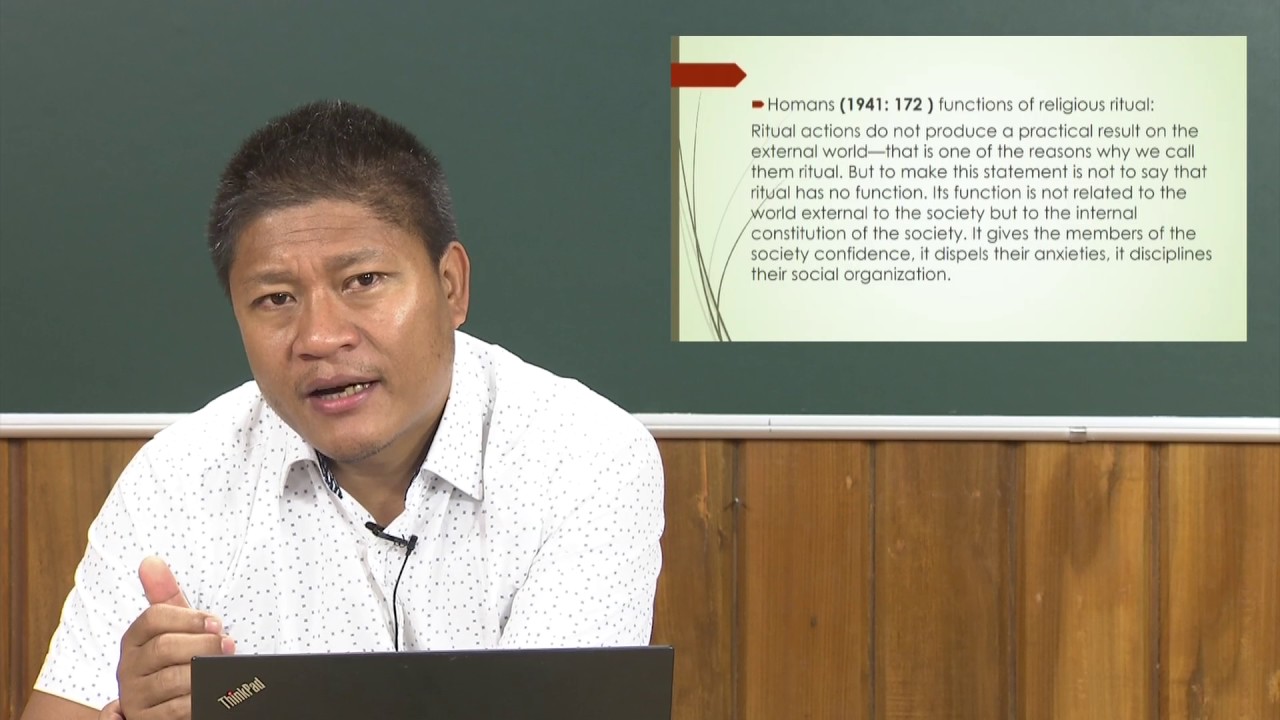
okay the second approach to environmental ethics is based on a general respect for life we could call it a biocentric ethic there's a u one author I'll be referring to primarily here a guy named Paul Taylor but this is a this position is well represented it's a general respect for all kinds of life yet without going uh as far as an Eastern uh jism for example or some forms of Buddhism of deifying nature it would be the attitude perhaps expressed uh by theer rki here a poet from the University of Washington many arrivals make us live the tree becoming green a bird tripping the topmost bow a seed pushing itself Beyond itself the mole making its way through darkest ground the worm Intrepid scholar of the soil did these analogies perplex a sky with clouds the motion of the Moon and waves that play a sea wind pausing in a summer tree what does what it should do needs nothing more the body moves though slowly towards desire we come to something without knowing why re what what reki is expressing here in his own way is a respect for the natural movements uh the Natural Things Ju Just a deep respect uh for life for nature is that sufficient to ground an environmental ethic Paul Taylor describes what he calls the biocentric Outlook anthropocentric would be focused on human beings anthropos theocentric focused on God Theos biocentric focused on bios on life four primary parts of the biocentric Outlook first of all humans are members of the Earth's community of life in the same sense and on the same terms as other members of that community members of the community of life in the same sense and on the same terms as other members of that Community now we're all living things of course uh we all metabolize all of us have DNA that's the same you know from from the smallest fungi to to the largest mammals cells are structured on DNA and so in that sense perhaps we're on members of the body community in the same on the same terms are in the same sense but Taylor means something more than that he wants to say that humans are not special in any sense but he does it this way he says we do not deny the differences between ourselves and other species anymore than we deny the differences among the species themselves rather we put aside those differences and focus our attention Upon Our Nature's biological creatures but look what Taylor is doing when he says that he is asking human beings to use what makes us different in order to put aside our difference if we were not able to think rationally imaginatively to abstract ourselves out of our natural environment in other words if we were not able to use human rationality we could not put aside human rationality therefore we cannot be members of the body community in the same sense and on the same terms it's a self-defeating claim now beyond that Common Sense tells us that human energy uh the ability to significantly alter our environment both locally and globally necessarily puts us members of the body Community or the community of Life on different terms beavers build dams that change the courses of streams they they they turn streams into marshes and the marshes fill up with Aspens and then the pine and the spruce creep in uh what was the meadow becomes a forest and then the beavers have to move Upstream they they build lodges termites build in some parts of the world tremendous houses birds build nests but only human beings can change the environment massively and globally just imagine if bref and Nixon had pushed the button and nuclear war had ensued how different the world would be we have that capacity since we have that capacity as humans it becomes very difficult to know what it means to say we are members of the community of life on the same terms in the same sense we have to use the differences to manage those differences second he says all species including humans are integral elements in a system of interdependence well I have no quirrel with that um we breathe out carbon dioxide the plants use carbon dioxide in their metabolism we eat things in the lower in the food chain you it's it's part of the process we're we're members of the community of life and a system of Independence I can't Corel with that third each organism has its own good which it pursues in its own way he says everything that is alive can correctly be said to have a good that one might farewell or poorly be benefited or harmed achieve or fail to achieve one's own good these things so Central to the meaning of our everyday existence can be asserted literally and without Distortion about animals and plants as well as ourselves well so far yes I know what it is for sheep to have a good I know what it is for palm trees to have certain environments uh that are good for them that they flourish but difficulties lurk in the neighborhood one of these difficulties is the fact that what's good for one organism might be bad for another uh we think for example of of Predator prey relations what's good for the great white shark may not be good for a whole lot of other things or cases of parasitism um in the Rocky Mountains many of the big horn sheep suffer from lungworm disease now the big horn sheep are really good for the lungworm but the lungworm is really bad for the Sheep so to make a a claim that each organism has its own good which it pursues it own way to make that a basis of a moral claim it just isn't going to work Taylor needs to say more he needs to pay more attention to those differences and finally his fourth claim the central claim of his theory is that humans are not inherently Superior to other living things this is the most crucial belief he says it consists in the total rejection of the idea that humans are inherently Superior now we could take this claim in two ways as a simple claim it can simply refer to human abilities I can't run as fast as a cheetah I can't jump as high as many creatures nor can you you might jump much higher than me um I can't climb as fast as a lemur I can't dive as deep as a back whale can't hold my breath as long as an elephant seal so many creatures have different capacities and I'm not Superior to them but that's not what Taylor means he believes that a genuine biocentric Outlook must deny any superiority of value to humans we're not Superior in any sense to any other species to claim that we are is speciesism now we ought to reject racism we ought to reject sexism we ought to reject speciesism the thought that our species is better than the others well notice what he's done he has said that we have the special ability to make moral judgments and we ought to use that special ability to make a moral judgment to deny that we're special we have the ability to make a moral judgment and we ought to use that ability to say that we're not Superior we had that we have different values now suppose I'm picking a a pet for my children it certainly seems appropriate for me to look at the different qualities of different animals a golden retrievers have certain properties that an iguana doesn't or a kakatu and so or a boa constrictor so I might try and push my kids towards getting a golden retriever instead of one of the other animals for a pet and it's legitimate to look at the different properties and make judgments based on the different qualities Taylor says we cannot use the human quality of being able to engage in rational moral thinking to say there's any difference between us and other animals but we do that all the time I I do that when I choose a pet for my children I do that when I look at myself with respect to the rest of creation certainly when it comes to plants Taylor happens himself to be a vegan but he eats plants so he's judging some differences there ultimately the problem here is theological he has a bad anthropology his view of what human beings are is contrary to the view that God has of what human beings are he says for example the biocentric Outlook provides a comprehensive view that leaves out nothing important or relevant it gives us a total philosophical perspective on the whole realm of life and nature on Earth it is fully it is a fully adequate worldview regarding the domain of reality it is intended to cover and he means all of reality but on the face of it that's just faults because the biocentric worldview doesn't give us any ability to make aesthetic judgments about beauty ugliness about Justice or Injustice it doesn't give us any basis for developing religion or philosophy and these seem essential to what it is to be [Music] human it's a reductionist view of human nature that is he's reducting reducing human nature to merely biological nature and if that was all there was to it he'd be right but as Christians we have to say there's more to humans than that as creatures made in the image of God there's a whole lot more as members of a species the nature of which was assumed by our Lord Jesus Christ we are members of the species on which the Incarnation is conferred infinite value far beyond that of a big horn sheep or great white whale great white shark great blue whale whatever you see my point it's a theological problem in that he doesn't look at humans with a theological perspective Now The Fringe of this biocentric view would be found in Earth First you may think this is just a crackpot Arie nass was a Norwegian philosopher one of the prime proponents of a philosophy called deep ecology um he sure liked to become one with nature and it's out of Ernie NASA's writings that the Earth First and and uh these kinds of radical environmentalist movements have come and Paul Taylor has been worried about that but he can find no legitimate way in his ethical system to keep it from going to be where The Fringe is rather he he invoked something like social contract uh to keep us from blowing up Hummer dealerships as Earth First would do the deep ecology people talk about these principles they claim the flourishing of human life life is compatible with a substantial decrease of the human population the flourishing of non-human life requires such a decrease now I'm not making this up this is out of textbooks and you need to realize that there is a you already do I'm just reinforcing how wacko the wacko environmental Fringe is human life is compatible with decrease non-human life requires s a decrease in the human population present human interference with the non-human world is excessive and the situation is worsening policies must be changed in view of the present ecological crisis these policies affect basic economic technological and ideological structures the resulting state of human Affairs will be greatly different than they are in the present once the deep ecology platform is in place finally those who accept these points have an obligation to try to contribute directly to the implementation of the necessary changes this is what underwrites eot terrorism the problem is no one who subscribes to this volunteers to be part of the decrease there's a I lived in Boulder for a number of years in the mountains above Boulder Boulder abortion Clinic Dr Warren Hearn is one of the few abortion providers in the country who still does late term abortions right up until delivery um actually I met my colleague Dave her picketing in front of his Clinic before either of us came out here Warren Hearn gave a a speech a few years back at the American Association for the advancement of Science in which he described Humanity in terms that oncologists use to describe Cancers and and his claim was abortion is perfectly acceptable because we're helping prevent the spread of the cancer of humanity but you see if that were true an oncologist doesn't simply want to stop the spread he wants to get rid of the cancer and her not a volunteer but of course he doesn't um but it's scary when you hear this this kind of rhetoric from these groups yes I read recently been in a couple of weeks there are people who Advocate that the human population should be reduced to a billion people one billion people one billion wow I don't know how they come up with that number but I wouldn't it wouldn't surprise me that's a lot of reduction some of the consequences of this kind of deep ecology a Thro biocentric Outlook bar calicott who doesn't subscribe to this but he presents it this way it's not only morally permissible but from the point of view of the land ethic morally required that members of a certain species be abandoned to predation or even called if that's true how can we consistently exempt ourselves from similar Draconian regimes we too are only plain members or citizens of the biotic Community do you get that we ought to allow ourselves to be have our population cold to make ourselves available for predation I suppose that would mean don't use mosquito Nets in malaria areas uh stop taking uh shots you know doway penicillin I don't know what he's talking about here another example massive human diebacks would be good it is our duty to cause them it is our species Duty relative to the whole to eliminate 90% of our numbers it's close to the 1 billion right it's our duty but no one who writes this volunteers well it's pretty clear that this biocentric Outlook has some deep flaws especially if it allows you to go to these extremes uh and doesn't have anything more than social contract to say we're not going to go that far Biola University offers a variety of biblically centered degree programs ranging from business to Ministry to the Arts and Sciences visit biola.edu to find out how Biola could make a difference in your life [Music]
Up Next
16:08
Deep Ecology Explained: Inherent Value of All Life
@kristina_lynn
28K views•2018-09-10

164:01
John of Damascus on Holy Images: A Theological Defense
@BannedBooks
139 views•2026-04-25

68:32
Should We Destroy the Machines? Big Tech Surveillance Critique
@TheStoriesWeTell303
167.9K views•2025-11-30
4:57
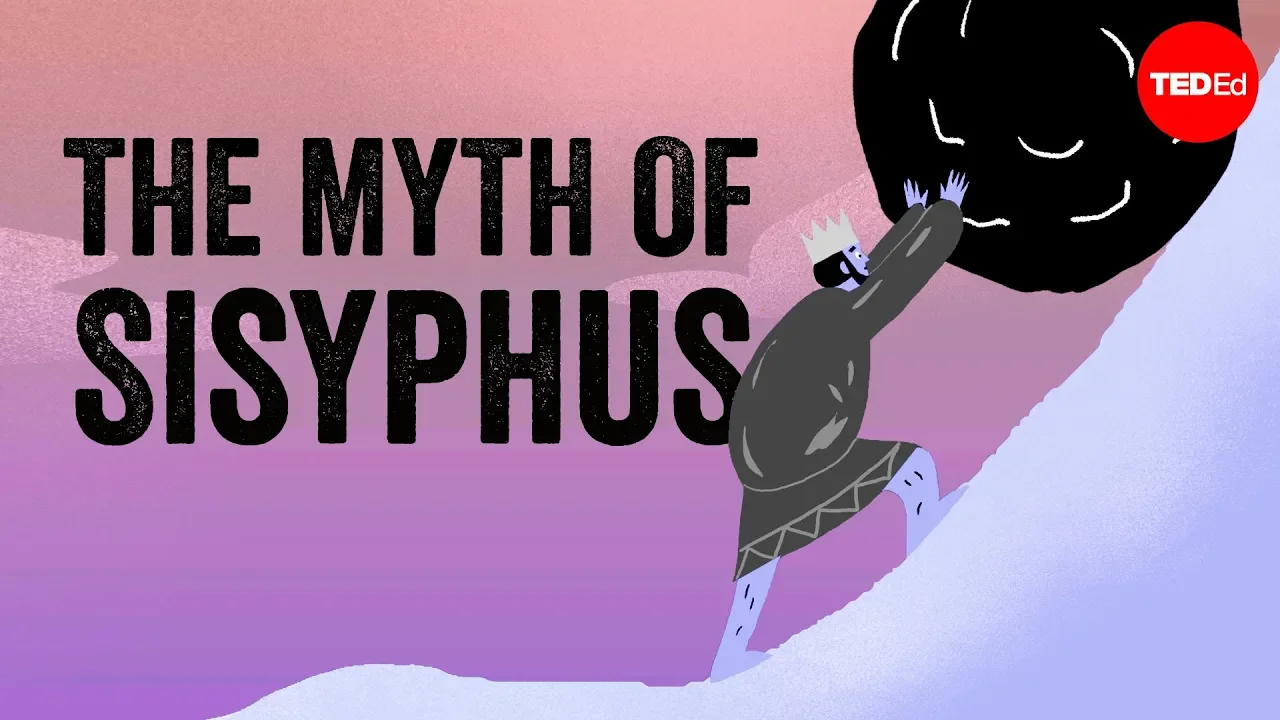
The Myth of Sisyphus: A Greek Legend of Eternal Punishment
@TEDEd
8.6M views•2018-11-13
Related Study Plans & Knowledge Roadmaps
Structured learning paths in Philosophy
philosophy
Frankfurt School: Critical Theory & Culture
01Foundations of the Frankfurt School and Critical Theory
02Horkheimer & Adorno: The Critique of Instrumental Reason
03The Culture Industry and Mass Deception
+ 2 more learning modules
12h5 modules
Explore Roadmap
philosophy
Philosophy of Language: From Frege to Austin
01The Linguistic Turn: An Introduction to Language in Philosophy
02Gottlob Frege: Sense and Reference
03Early Wittgenstein: The Picture Theory of Meaning
+ 3 more learning modules
15h6 modules
Explore Roadmap
philosophy
Feminist Epistemology: Standpoint & Injustice
01Introduction to Epistemology and Feminist Critiques
02Sandra Harding and Standpoint Theory
03Donna Haraway and Situated Knowledges
+ 2 more learning modules
12h5 modules
Explore Roadmap
philosophy
Environmental Philosophy: Ethics & Deep Ecology
01Foundations of Environmental Ethics & Anthropocentrism
02Biocentric Individualism and Animal Liberation
03Ecocentric Holism and Deep Ecology
+ 1 more learning modules
10h4 modules
Explore Roadmap