




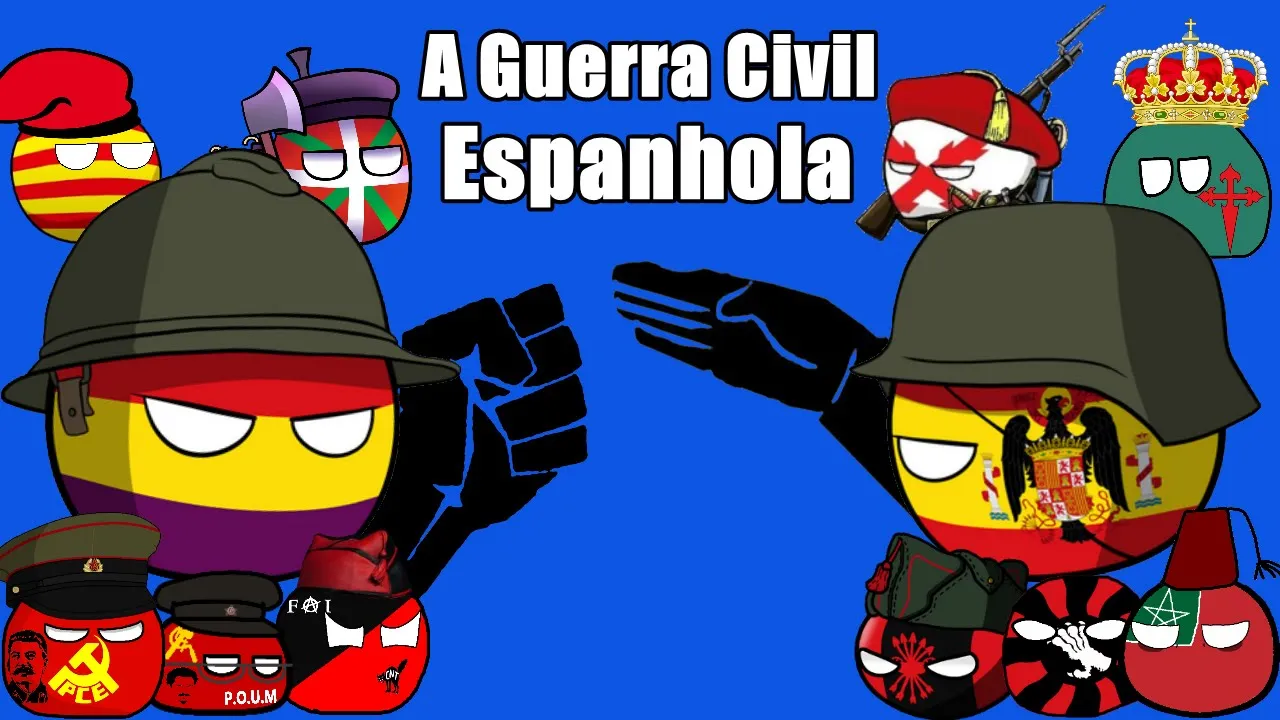


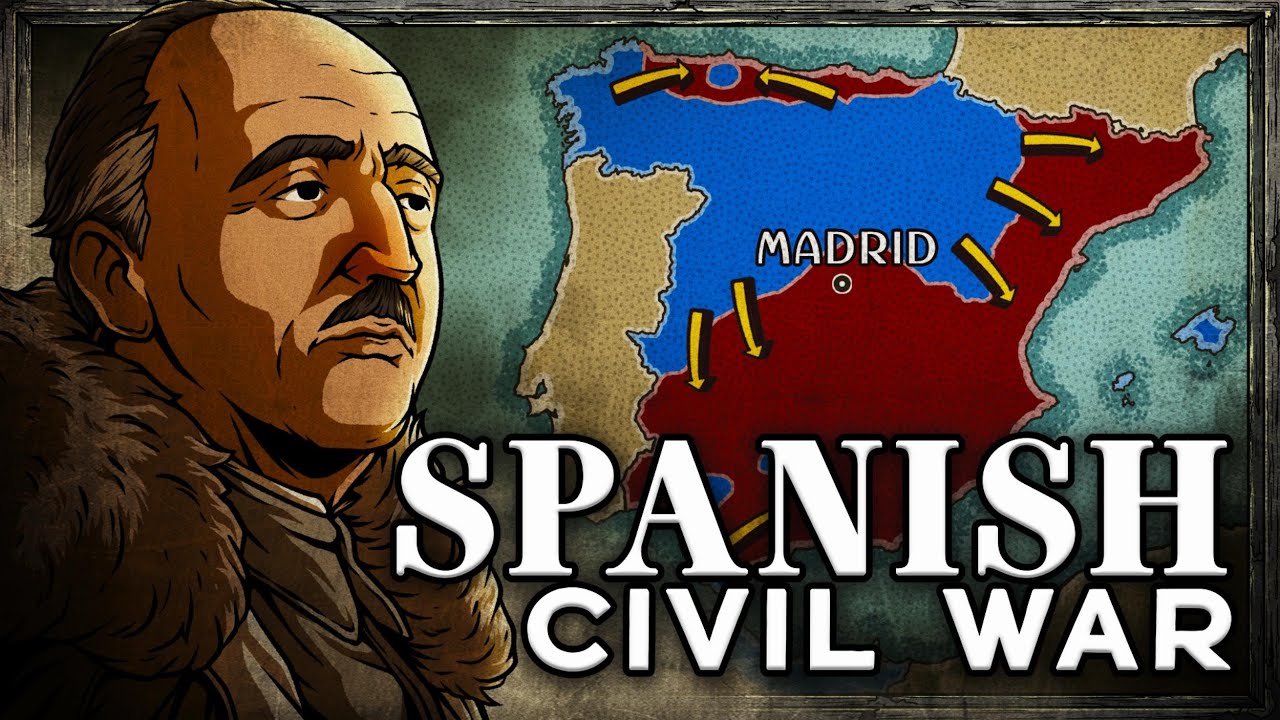




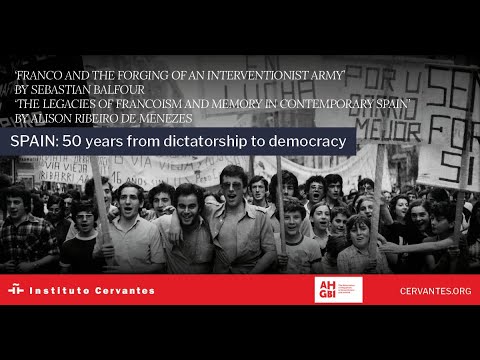



The Battle of the Ebro (July-November 1938) was the largest and bloodiest battle of the Spanish Civil War, where Republican forces launched a massive offensive across the Ebro River hoping to turn the tide of the conflict against Nationalist forces led by Francisco Franco; despite initial successes and establishing bridgeheads, the Republicans ultimately failed due to strategic missteps, lack of air support, and overwhelming Nationalist counterattacks, resulting in approximately 12,000-20,000 Republican casualties compared to 5,000 Nationalist casualties, and effectively ending the Republic's ability to mount major offensives while straining their already limited resources.
The Battle of the Ebro: Decisive Clash of the Spanish Civil War
Added:The political factions of the Spanish Civil War, specifically the ideologies and composition of the Second Spanish Republic (Republicans) versus the Nationalist rebels led by Francisco Franco.
The role of foreign intervention in the conflict, including the military support of Nazi Germany and Fascist Italy to the Nationalists, and the Soviet Union and International Brigades to the Republicans.
The strategic military situation in Spain by early 1938, particularly how the Nationalist forces successfully split the Republican-held territory in two by reaching the Mediterranean Sea.
Basic principles of military tactics, specifically the logistical challenges of amphibious river-crossing operations and the nature of war of attrition.
The immediate aftermath of the Republican defeat at the Ebro, including the Nationalist offensive in Catalonia and the eventual fall of Barcelona and Madrid.
The historical analysis of the Spanish Civil War as a tactical and technological testing ground (or 'dress rehearsal') for major military powers prior to World War II.
The establishment and characteristics of the Francoist dictatorship in Spain, which lasted from the end of the civil war in 1939 until Franco's death in 1975.
The modern historiography and memory politics in Spain, including current debates surrounding the Law of Democratic Memory and the exhumation of mass graves.
2.1K views39likes26:05Original Release: 2020-08-08
[Music] election day people are on edge in the streets in the plazas in their homes security is tight and in mass someone suspects their neighbor gave their vote for the other party by the end the day they might find themselves mugged in an alleyway or worse to be timid in your opinions is both survival and death this is a nation on the cuffs of imploding this was the rapidly dissolving second republic of spain being pulled apart at the strings pooled by its own citizens the unfretting had gradually occurred over the centuries other countries expanded and prospered at the expense of the spanish when 16 year old king alfonso the 13th takes the throne the nation was still recuperated from the loss of the caribbean and the filipina islands as a remainder of the world seemed to flourish economically old traditions of a powerful church in largest states dominated spanish alive opposition to the monarchy began to pop up particularly in the northeast and catalonia the revolts were dealt with by swift police and militant forces to quell the chaos a military dictatorship was allowed to take over in 1923 but by the start of the next decade that dictatorship had collapsed from unpopularity from all factions and the king was forced to abdicate now a power struggle took hold in spain the republic favored the ambitions of the liberal-leaning policies popular among the poorer classes those still with remaining values on the conservative and began to tighten their ranks the catholic church was seen as a symbol of the old monarchist ways and became stripped of much of its power by the republic with cathedrals still standing socialist mobs took matters in their own hands to destroy what remain the republic did nothing out of fear of the violence conservatives began adopting elements of fascism and formed groups such as the confederation espanol de tarrantis nationalists saw communism as the absolute problem in spain and mobs began attacking anyone believing support of the unions armed anarchists met them in the streets the republic did nothing nationalists were denied cabinet positions by the republic while minor strike and austrian turns into a full-on uprising from the socialist parties in the state of catalonia the military led by francisco franco quails the revolt with blood landowners of large farmers and other industries clamp down on their laborers as cruel as possible heading into 1936 the various unions and societies of revolutionary workers united into their own party the popular front at the polls on february 16th the popular front narrowly wins seats over sata some suspect the election is rigged confrontation on the streets is a common occurrence the nationalists claim the left-leaning republicans bring nothing more than anarchy the anarchists refuse to be permanently attached with the socialist parties revolution is on the mind of the republicans who fear the nationalists preparing to stage a coup with the military these fears are not wrong on july 17 national soldiers in morocco took up arms and executed their republican leaders the fallen day rebellions erupt throughout spain republicans armed themselves and managed to delay much of the military uprising the spanish civil war had begun the nationalists move their army of africa to the mainland and fight their way to connect with other forces francisco franco's appointed general and targets madrid months bleed into years as the republicans put up a stout defense the nationalists did not plan for the nationalist rebels catches the attention of nazi germany who agree along with italy to support the upstart fascist nation allowing hitler to demonstrate the power of the luftwaffe to the world the republicans find aid in the form of the soviet union wanting to check fascism but this alliance costs the republicans direct aid from the rest of europe and north america unwilling to support communism and get tangled into a proxy war with germany nevertheless thousands volunteer from around the world to join the international brigades to fight on both sides of the conflict predominantly on behalf of the republicans but infighting is constant among the various militant groups mostly famously with an anarchist revolt in barcelona that forces republican troops to be shifted into catalonia by 1938 the nationals turn their sights from madrid toward these turbulent grounds in the east a rapid offensive reaches the coast by summer cutting a republican too those unable to break south to the temporary capital of valencia dig in along the banks of the ebro river a blessing came to the republicans in way of france temporarily reopening trade brigand desperately needed food and weaponry but in order to maintain lifelines like this the republic had to be reunited doing so would require a massive coordinated strike pushing resources of the republicans to their very breaking point the nationalist attention was drawn upon valencia whose defenders were holding out upon what became known as the xyz line only a few divisions were left behind to defend the lower basin of the ebro it would be here that the republicans would attempt to break out with influence by soviet advisers the republican high command collaborated the strategy for their gamble an initial crossing would establish bridgeheads on an 80 kilometer front they would then move off into the initial heights and secure the various crossroads moving as quickly west as they could the task fell upon the newly formed army of the ebro and an amalgamation of two army corps under command of juan goito leon better known as juan modesto his appointment was one of several given to various communist figures throughout 1938 making anarchist-leaning factions increasingly leery of the republic modesto however brought with them a popular reputation of fighting experience in the foreign legion prior to the civil war as well as his decisions being swift and sometimes brutal modesto's army of the ebro would eventually have two additional army cool to pull from for reinforcements bringing 80 000 troops to bear on the republican side of the river unfortunately for modesto its command was supplied increasingly eroding artillery and had little to no air cover regardless of the drawbacks republican high command issued the orders to attack on july 22nd there would be noting turning back while the italian air force had observed the republican build-up throughout july intelligence such as this was largely ignored by franco and nationalist high command more recent research indicates franco purposely was keeping the bulk of his force concealed by the various rugged mountains nevertheless the riverbanks were only defended by thin ranks of spotters of the 50th and 105th divisions of the moroccan army corps occupying hastily constructed bunkers along the riverbank just past midnight on july 25th the republican attack commenced iron a cover of a moonless sky hundreds of boats silently crossed the ebro the crossing parties aimed their landing sites away from strong points planning to instead surround their initial targets from behind the 226 brigade spearheaded by the 42nd division assaulted into the ox swinging south to take fey on nationalists in this region scaled back into the mountain range and managed to keep the roadway running north under their control for over 24 hours following the landings the third division aimed to cut off the nationalists around flicks which sat within a hairpin bend in the river being delayed only by nationals artillery which quickly retired deeper into the mountains the 35th division comprising of the international brigades crossed from venera so quickly they managed to capture a nationalist colonel before he had the chance to relocate his headquarters further south things were not going as well for the fifth corps while the 11th and 46th divisions had managed to cross the ebro all crossings beyond zerto were pushed back republicans would later claim these movements were merely diversionary that the main thrust was centered upon ganesa it nevertheless shrunk the hole punched into the nationalist by half word quickly reached the commander of the nationalist army fidel david and franco himself and several divisions were quickly mobilized and rushed to the hebrew front some units however were being called from as far away from the other side the country and would take a few days to arrive in mass in the meantime orders were given at 11 am to open up the barcelona reservoir to flood the ebro nationalist allied aircraft was on the scene by midday including newly constructed stukas of the luftwaffe though quickly began bombing the temporary cork footbridges the first wave had established severing communications supply lines but only temporarily the engineers were already hard at work on establishing permanent iron bridges at places such as flicks able to partially withstand some of the bombing runs by nightfall the 45th division had moved into the valley between the cavals and farter ellis as far west as corbeira the third division had secured parts of the foothills of atar ellis and threatened vilba de los arcs the 11th and 46th divisions had pushed their nationalist opponents deep into the pendles and awaited reinforcements to continue the job however the armor of the 16th division was not allowed to cross this first day per reverse decisions by republican high command this would have a grave impact on future operations as nationalist armor with several additional divisions were speeding toward gandessa and avatar ellis the community of guandesa was renowned for its various wineries in the surrounding hills war was brought to the county seat of terra alta in april of 1938 as the 15th international brigade used the town to delay the nationalist advance into catalonia now the residents of gandessa found themselves under nationalist occupation which civilians being pulled into the workforce to barricade every passage into town the major roadway running north to south between velva de arcos into the pandolas had become the new defensive line with the shadow remains of the 50th division ordered to hold out at all costs the republican assault begins on the 26th of july initially moving down from the lafa torellis and attempting to cure the eastern side of the ville alba but without any tank support they are pinned within a cemetery that's open to nationals machine gun nest line in every window upon the road the assault on gandessa is marred with delays and the international brigades were not able to move until 4 pm and even with their newly arrived armor divisions they were unable to pierce the defenses around the town the attacks resumed on the 27th the focus shifts upon a hill to the east of town named pogba alga known militarily as hill 481 whoever held this hill would have the dominated view of the surrounding area the republican 15th international brigade originally occupied it with british volunteers comedically dubbing it the pimple but after the sixth bandera managed to overtake the heights the destructive counter attacks by the republicans fiddling named it death hill by july 30th little was being gained with the isolated attacks modesto ordered for an assault across the entire front beginning on august 1st while elements of the 11th division managed to secure new footholds within the pandols the 16th and 35th divisions were unable to break through gandessa modesso broke off the assault allowing for the opposing sides to settle into their lines with nationalist aircraft bombard in the deplorable republican artillery august rolled in with only the murmurs of doling artillery the nationals had been shaken by the swift push from the ebro river but it managed to stall this new offensive within the treacherous mountain ranges of southwestern catalonia and aragon the republicans had managed to save valencia for the time being but that meant to the very might of franco's national forces were now steamrolling north to flatten the den punched in their lines the fifth corps of the ibro army were earned command of enrique enrique lister although his impulsive nature had cost him a multitude of careers prior to the war he was unwilling to give ground to the enemy no matter the cost of the defense his men entrenched within the pandols a mountain range of steep peaks crescent 600 meters deep caves for cover and sheer cliffs making it a nightmare for any assaulting force still needing time to formulate a strategy to take the pandols the nationalist command instead set their sights upon the right flank of the republican line the 42nd division were isolated from the remainder of the army sitting within the otts mountains north of the village of feyon tank groups that included recently arrived panzer ones and captured t26 rolled into the odds with the 82nd division by august 7th they had quickly secured this mountain range the 42nd quickly retreated back across the ebro leaving nearly 2000 their numbers stranded over 800 were slaughtered with remaining fouls and taken prisoners along their rifles machine guns and armor republican high command later claimed the fey on pocket was yet an error distraction meant to buy time for lister's defense the nationalists hoped to bypass the pendle's defense altogether instead trying to carve a road to connect the southern and central sectors together a republican artillery obscured by the peaks around the santa magnolina hermitage checked their progress the nationals responded early on august 10th with 24 batteries of artillery that concentrate on hills 671 698 705 and 666.
the initial strikes toward hill 698 were viciously repulsed by the timely arrival of companies for the 9th mixed brigade it would not be until august 11th that the flanders battalion secured the peak and now had to fight across swells in terrain toward hills 671 and 705. it's believed that over half of the final casualties reported by the fourth nationals division were accumulated in the fight over these two peaks the defenders of the heights suffered even worse as hundreds of bodies were later reported being left behind at last on august 14th the republicans begrudgingly conceded hill 705 to the nationalists with hill 698 being vacated shortly thereafter the fourth division were fatigued and unable to take hill 666 which was now being occupied by the 35th division it would not be until mid-august that figures from the nationalist high command were at last in direct view of the battlefield with general davila arrive in the takeover command of the army of the north it was clear to him that the pandolas were at this point nearly impossible to completely break through and shifted priority to striking the republican right flank and the photerellas here the republicans had quickly carved out an intricate network of trenches that were in some cases only throwing distance away looking over the headlogs the nationals could see a tightness of machine guns protected by thick beams and earthworks dug out in the vicinity known as targa it was all necessary in order to maintain control of the vital crossroads in the area that led from the mountains toward gandessa this frontal assault called for their use of resources from three different divisions prior to the plane attack the nationalists busted open more floodgates to swelled the ebro nationalist aircraft managed to destroy three of the bridges over 40 nationalist batteries opened fire upon the fotorellas at noon on august 19th the 74th division stepped off toward the trenches with the 82nd and 13 divisions providing support anti-tank guns neutralized much of the nationalist armor machine guns in the foothills cut down the initial waves but by 2 pm on the fallen day the tarragon nest had been overran reopening the critical corridor from the villa to candesa to zerta the 27th republican division rushed to provide aid to the 60th hastily trying to carve out new positions in the dominating peak known as la guella the ground here could only be dug down a few meters only small growth provided cover for either side for free days the republicans poured a non-stop blades on the nationalist scale on the side of the hill it would not be until the 22nd of august that the rebels secured lagueita but only budged their lines forward by three kilometers once more the events stalled their republican defenses restabilized deeper in the mountains although la gaeta gave the nationalist her foothold back upon the patarellas the road ahead traversed multiple deep swells and valleys the region reminded some italian advisors of the horrors of the treacherous ground on the isonzo front during the great war before any new assault could be made the national army of north had to be reorganized divisions were exchanged to form the may strasgow corps while the moroccan corps had their ranks tightened to the north national side command wished to strike on all fronts with as much fire power as they could muster the moroccan court would renew the assault toward la foterella while the may strawsko corps hoped to dislodge the republican fifth corps which still held out in much of the pandols after numerous bloody assaults the two court's priorities were divided by the road running to the community of campus signs on september 3rd some 350 pieces of artillery poured hell upon the republican line the advance off of la gaeta toward the next line of hilltops was devastating for both sides the 27th division dug in their hills trying desperately to keep the right flank from coming back toward the river seeing the 27th melt away from continual fire modesto ordered for the 11th international brigade to break off to secure the flank the 16th division were also shipped 12th international game plugging a hole left behind when several units were just passed north to try and retake bayonne this left the 35th division weekend forced to give up corbeira by the 5th of september the first division rode high on a new wave of morale and veer off the road to attempt and destroyed the 35th division over 20 tanks were hurried into the valley pounding the flanks of the nationalists attempting to storm the heights of the cabals the fighting here peaked by september 11th being called an inferno of fire and explosions the diversion into the cavals had formed a salient in the nationals line which modesto ordered to be attacked at all costs elements of the 13th and 82nd divisions were rushed into the salient trying to push for camposites if the crossroads there could be control the army of the evo would be split in two it took over a week for the nationals to crawl their way up the valley being harassed from both sides losses continued to soar with at least two of the most experienced commanders from the tabar italians being killed in action by september 20th they had yet to take campus signs but had the knowledge they had dealt enough punishment to destroy much of the ranks of the prized international brigades while the nationals tore apart the republicans from the front international politics carved out their spine a crisis had grown centered upon czechoslovakia the next country if in the crosshairs of hitler's expansion of the third reich british prime minister neville chamberlain worked continually with the hope he would stop the expansion of fascism for peaceful legislature this became known as the munich agreement concluded on the 30th of september hitler was allowed to enact a portion of czechslovakia in exchange for being its final territorial claim a byproduct of these negotiations involved pulling foreign volunteers on both sides out of spade the republicans had removed their international brigades from the front lines but by the time they were pulled from the ebro front there was little left of their original ranks the republic hoped that this offensive would bring in further aid had disintegrated september 21st marked the last day for the international brigades on the front line a day so desperate the soldiers were forced to stave off the encroaching nationalist armor with just grenades and molotov cocktails on october 4th elements of the 1st and 13th divisions crept into campus signs the republican center was now being pressed to implode the nationalist artillery and aircraft never eased up on delivering round after round of explosives into the mountains where the republicans still held out a day longer they managed to hold the rocky peaks a day longer the republic lived on franco had come to realize just how defined his adversary was and wanted to annihilate them once and for all during a meeting on october 23rd the plan for the annihilation republic was laid out several nationalist divisions would push with all their might toward asco while the assaults upon the mountains were renewed once at asco the nationalists would fan out and attack what republican troops remain in the mountains surrounding and destroying the army of the ebro like all previous counter-attacks it began with an artillery bombardment on october 30th over nine thousand tons of artillery shells were fired into the cavals nasa aircraft swooped in dropping another 8 000 tons of bombs unlike the previous disorganized pushes into the mountains the first division often instead for small tight columns it was this combination of relentless artillery bombing and swift injury advances that alas captured much of the cabals by november 3rd by similar time the republicans lost hill 666.
like a lake pouring out of a broken dam the entire fifth court caved in without hesitation the 74th division snatched away any erotic counter-attack by capturing pannell a defending the crossroads of tanks the 11th and 44th divisions had no choice but begin to retreat back across the evil even against these insurmountable odds the republican right flank was still managing to buy time for the rest of the army to regroup but by november 11th republican high command knew there was no chance of remaining on the ebro front their artillery had already been sent back across the river and now it was time to evacuate as many soldiers as they could the 42nd and 44th divisions managed to perform a defiant rearguard action for two days around asco allowing much of the surviving army to pull across the bridges further north in an orderly manner a fog rolled in during the final days of the battle further aid in the retreat the remains of the 45th division were the last across the bridge in the early morning of november 16th the bridge were blown up by day's end after nearly four months of fighting the largest battle of the spanish civil war was finally over the republicans had gambled and lost their chances to turn the tide were gone but franco had also failed in his aims of entire annihilation of the republic's army the battle lines returned to where they had been in late july this time of far fewer numbers the butcher's bill has been debated by soldiers commanders journalists and historians it's most likely that over 5 000 nationalists were killed with 45 000 wounded missing or captured the republicans had suffered far worse with anywhere from seven to fifteen thousand killed or somewhere around forty thousand wounded missing or captured the offensive also led to the republic losing highly valuable equipment some 18 soviet tanks were captured with another 17 destroyed as well as much of the artillery used by modesto's army being destroyed beyond repair the battle of the ebro had indeed managed to stop franco's national spain but only by a few months the offensive had strained the resources of the republic to their limit they had little strength to stop the nationals offensive into catalonia with barcelona falling on january 26 1939 the united kingdom and france recognized franco's regime shortly thereafter the final days of the republic were just like the first with various factions pulling the strings of the nation finner and finner until nothing remained believing the republic had grown increasingly communistic and realizing there was no chances of stopping franco the existing government was overthrown by the national defense council a committee representing the labor unions the socialists the anarchists and other groups a civil war within a civil war erupted with the council's hope of surrendering to the rebels and returned to their life as it had been before the republic did nothing [Music] [Applause] you
Up Next
6:31
Franco's Spain: Dictatorship and Legacy (1939–1975)
@historyofspain
73K views•2021-02-03

33:02
The Great Schism of 1054: Causes and Consequences
@SacredCathedrals
113.5K views•2026-02-19
91:57
The Geopolitics of the Ukraine War and the Rise of Global Autocracy
@JordanHarbingerShow
468K views•2025-04-19

17:05
Understanding the Cold War: Superpower Conflicts and the Road to Détente
@OverSimplified
46.1M views•2019-01-24
Related Study Plans & Knowledge Roadmaps
Structured learning paths in History
history
Byzantine Iconoclasm: Theology, Art & Politics
01Foundations of Byzantium and Early Christian Images
02The First Iconoclasm: Leo III and the Crisis of Images
03Empress Irene, Nicaea II, and the Second Iconoclasm
+ 2 more learning modules
9h5 modules
Explore Roadmap
history
Iranian Revolution (Causes, Events & Legacy)
01The Pahlavi Dynasty and the Roots of Discontent
02The Spark of Rebellion and the Rise of Khomeini
031979: The Fall of the Shah and the Climax of the Revolution
+ 2 more learning modules
8h5 modules
Explore Roadmap
history
Mali Empire: Mansa Musa, Trade & Timbuktu
01Foundations of the Mali Empire
02The Trans-Saharan Gold and Salt Trade
03The Reign and Pilgrimage of Mansa Musa
+ 1 more learning modules
6h4 modules
Explore Roadmap
history
1947 Partition: Politics, Borders & Legacies
01Foundations of British India and the Divide
02The Political Negotiations and the Mountbatten Plan
03Drawing the Boundary: The Radcliffe Line
+ 2 more learning modules
8h5 modules
Explore Roadmap