


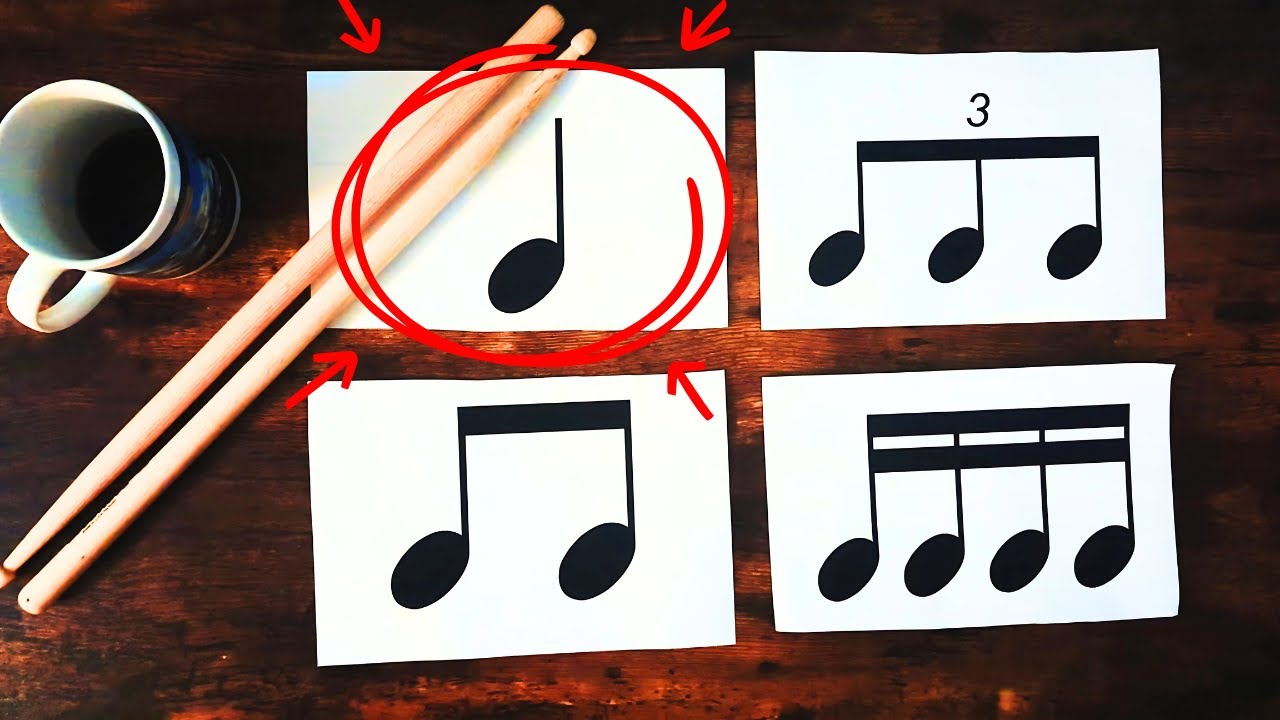
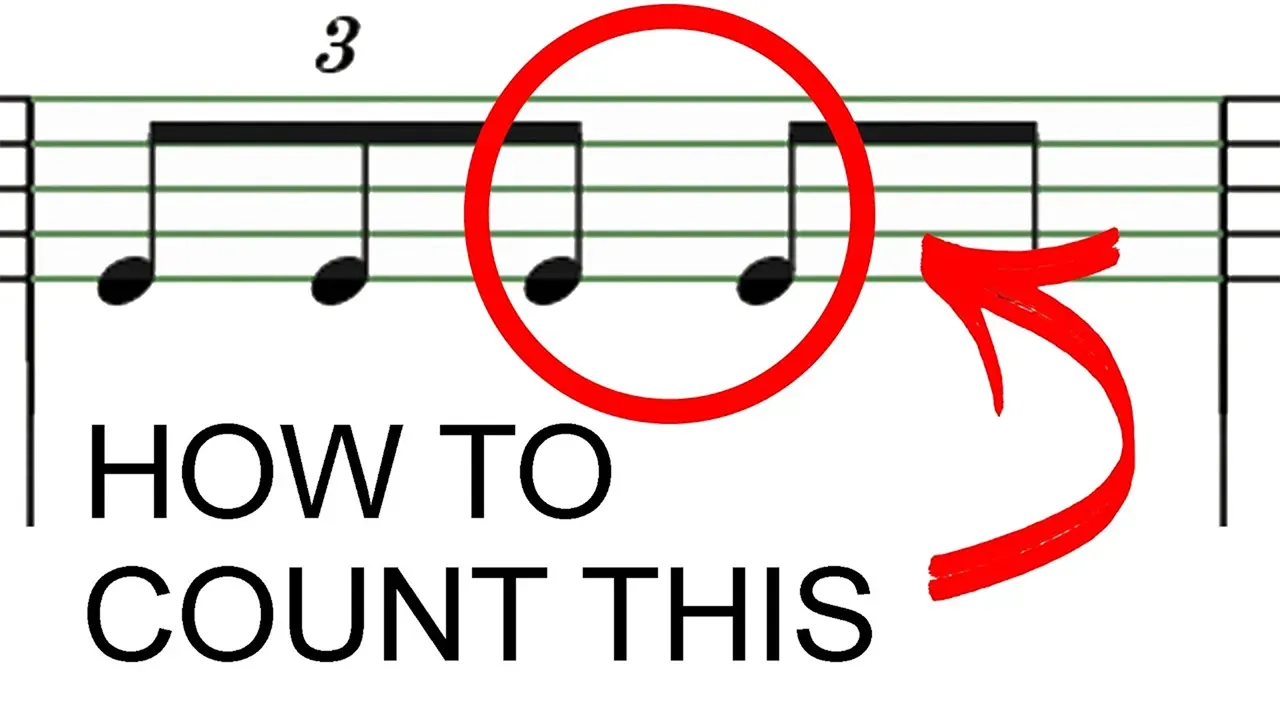


















A 3:4 polyrhythm occurs when two rhythmic patterns divide the same time duration into 3 and 4 equal parts respectively, creating a complex interlocking rhythm where beats don't align until the 12th note (the least common multiple of 3 and 4). This polyrhythm can be practiced using verbal phrases like 'pass the stinking butter' (for dominant 3-beat) or 'pass butter to the left' (for dominant 4-beat), then converted to musical counting by treating 12 notes as either sixteenth notes in 3/4 time or eighth-note triplets in 4/4 time. The key skill is being able to perceive and count both the 3-beat and 4-beat simultaneously, which transforms basic musical elements like chord progressions into more interesting and complex arrangements.
Mastering 3:4 and 4:3 Polyrhythms: Music Theory Guide
Added:Familiarity with basic time signatures, specifically 3/4 and 4/4 meter.
Understanding of basic rhythmic subdivisions, including quarter notes, eighth notes, and sixteenth notes.
The ability to maintain a steady pulse and count beats reliably, ideally with a metronome.
Introduction to simpler cross-rhythms, such as the 2:3 polyrhythm (hemiola).
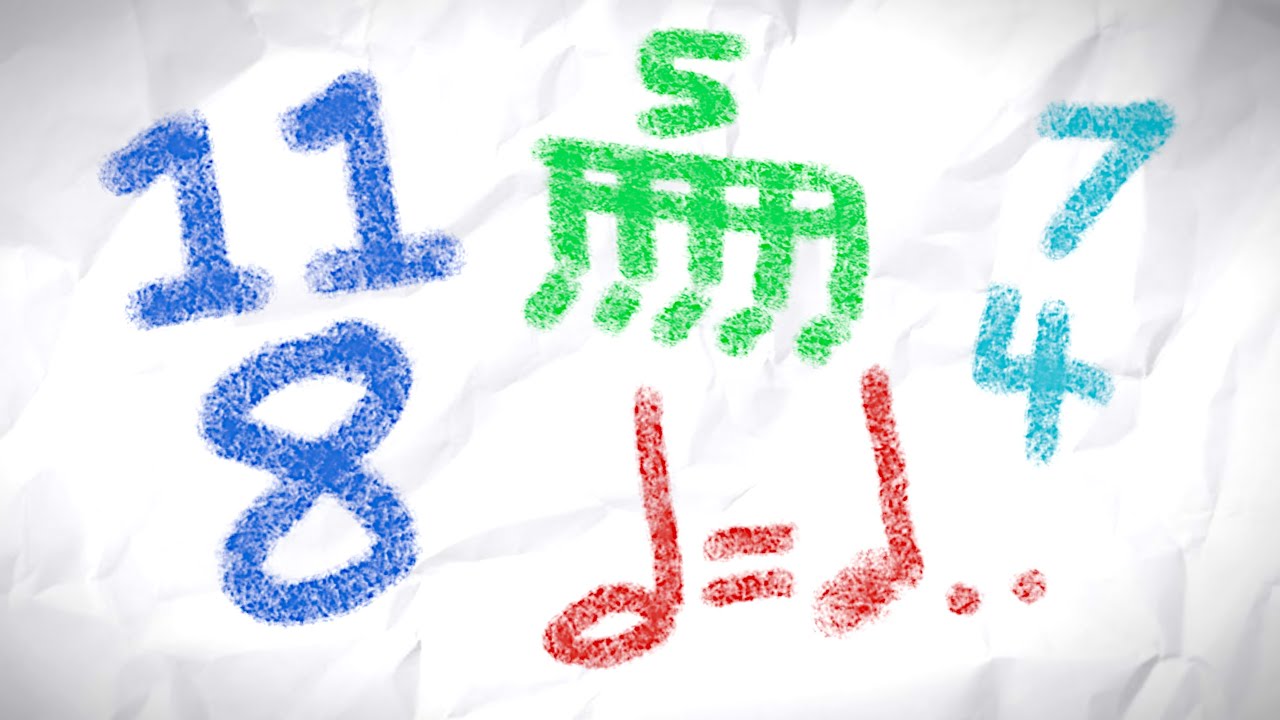
Exploring more complex polyrhythmic ratios, such as 5:4, 7:4, or 5:3.
Understanding the distinction between polyrhythms (multiple rhythms in one meter) and polymeters (overlapping meters).
Studying metric modulation, which uses polyrhythmic subdivisions to smoothly shift the tempo of a piece.
Applying polyrhythmic concepts to syncopated genres such as modern progressive metal, math rock, Afro-Cuban jazz, and West African drum ensembles.
Developing advanced physical coordination and limb independence for drummers, or finger/hand independence for keyboardists and guitarists.
983.9K views44.9Klikes13:58Original Release: 2019-01-23
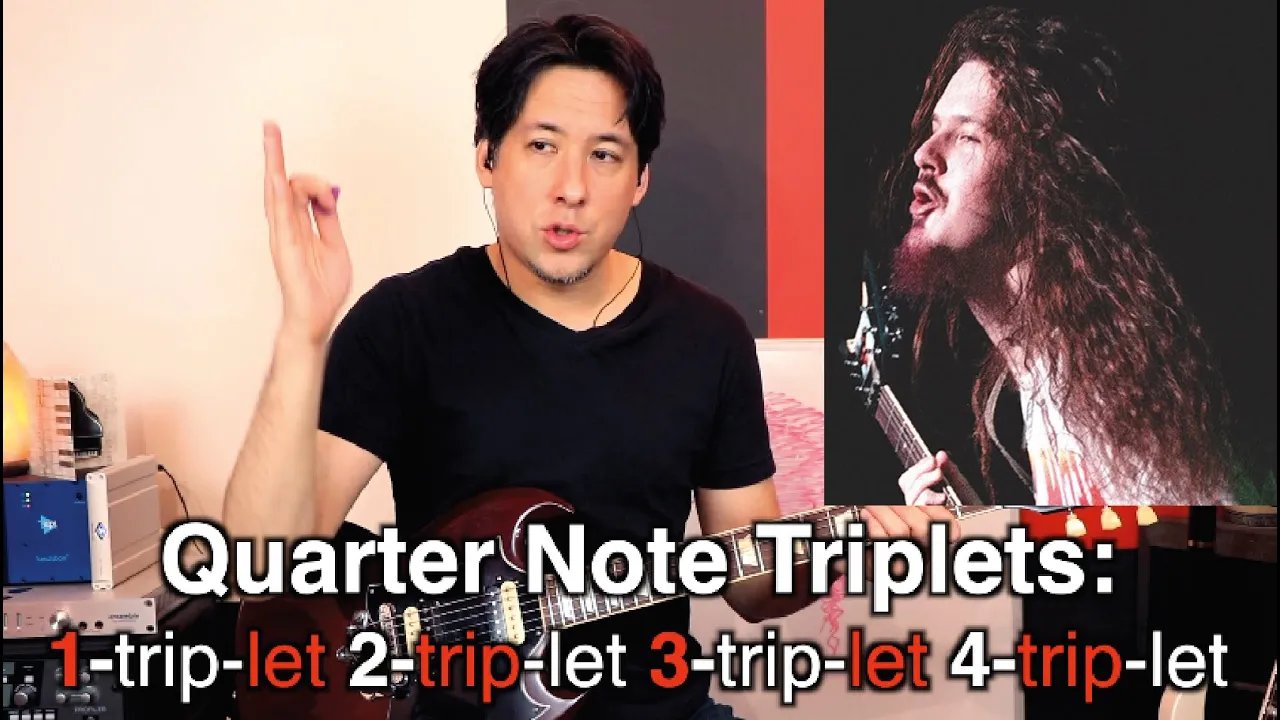
when I first discovered polyrhythm it was like somebody showed me a brand new spatial dimension I didn't even know that stuff was possible much less playable and it took me many years to fully digest this topic and what I'm gonna try and do here in this short video has compressed all that information into a nice little tutorial so you can learn to practice perform and apply the three to four polyrhythm and it's inverse the four 2:3 polyrhythm first let's take a look at what a polyrhythm actually is this line will represent a section of time let's say it's two seconds long every 1/2 seconds we will play the note G and then repeat back from the beginning this divides our section of time evenly by 4 beats if we want to divide this length of time into 3 even beats we'd have to play a note every 2/3 of a second let's use the note B now if we play these both together at the same time we have a three to four polyrhythm for even beats taking up the same space as three even beats an important characteristic of polyrhythm is that the beats don't line up until the polyrhythm repeats this happens because we are using two numbers that don't divide into one another 3 & 4 2 & 4 would not constitute a polyrhythm since the numbers share a common factor the even divisions within one measure cause our beats to line up eliminating that polyrhythmic sound so a polyrhythm can be any two numbers that don't divide into one another like 7 - 4 or 11 & 3 now as you can hear some of those Pali rhythms aren't very musical and in fact some of them are just downright offensive to the ear but I do think the three to four polyrhythm is common enough and interesting enough and easy enough to make it worth our time to practice and master so how do we actually perform this rhythm our first step is to memorize the resultant rhythm or the composite rhythm that forms within a three to four polyrhythm right now my polyrhythm is being performed on two different voices or notes but if I combine both rhythms together into one voicing so that every note is G the polyrhythm disappears to memorize this rhythm students are often taught one of several verbal phrases I'll refrain from using the more vulgar options and instead opt for this family-friendly alternative past the stinking butter pass the stinking gutter pass the stinking got to memorizing this phrase and pulsing is the first step to being able to play the polyrhythm the second step is to assign one of our hands to play each word on the word pass we hit both hands together on the stink game we go left right left and then last for butter we go right left so putting it together we have pass the stinking but pass stinking much faster you can do this you're actually playing a three to four polyrhythm right now but just because you're playing it doesn't necessarily mean you understand it right what I want you to try doing once you've got the hang of this is to take a look at your right hand and try to count what your right hand is doing your right hand is playing an even three beats like this 1 2 3 1 2 3 1 2 3 but then I want you to try and look at your left hand and try to come out what your left hand is doing and you might have some problems 1 2 3 4 1 2 3 4 1 2 3 4 so what's going on there why are you able to play this rhythm so easily and be able to count one half of it fairly easily but the second half of it your brain just turns to mush the reason is that phrase that we selected pass the stinking butter has 3 naturally strong syllables that divide the phrase into 3 even beats Pass stink but the parts of the phrase were the 4 aligns to our the weak syllables past the king and those syllables really are not easy to stress now let's face it this isn't a very musically correct way to be counting rhythms and unfortunately this is where many musicians just leave this topic completely but if we really want to understand what we're doing here we need to be able to convert this all into musical language any time I want to make a polyrhythm I just multiply the two numbers together to find out what they both divide into 3 times 4 is 12 so let's just start with 12 notes our polyrhythm occurs when one voicing plays every three notes and another voicing plays every four notes so let's find a convenient musical way to notate this these twelve notes could be twelve quarter notes three measures of 4/4 or they could be eighth notes in a measure of twelve eight but let's try to write them as sixteenth notes then it can be treated as a measure of 3/4 when you count three four like this we get one E and a two E and A three E and a one E and a two E and A three E Enda counting every fourth note gives us an even three beats one two three one two three while counting every three beats puts us on the notes one aa and E these counts are the musical counterparts to pass the stinking butter if we count the resultant rhythm produced by these two we are left with a count of one A two and three E 1 a 2 and 3 E which has the same stressed syllables as past the stinking butter now that we understand a little bit more about this rhythm we can start practicing it more accurately we'll start that just by clapping three steady quarter notes and counting two three one two three one two three now start counting your sixteenth notes one E and a two E and A three E and a one E and a two E and A three E Enda begin accenting every third count one E and a two E Anna 3 N one E and uh Tanith Jana lastly just get rid of your unaccented notes and you're gonna be left with one up and E one uh aunt E lastly get rid of that weird counting and just replace it with a steady one two three four so you've got one two three four one two three four one now that we've practiced up this way it should be fairly easy to apply in an actual musical setting for example imagine your drummer is playing in 3/4 with a steady three quarter notes and you want an overlay a steady for underneath that same three all we have to do is count our quarter notes one two three one two three then we count the sixteenth notes one Enda do we have it ready yet a one E and a two E and A three E Anna now accent every third count one of us who we have a three Ana Juanita bunch of Anna Maria now replace those with one two three four one two three four one two three four [Music] note that this rhythm can easily be notated as a repeating pattern of dotted eighth notes dotted eighth notes are worth three sixteenth notes and a quarter note is worth four sixteenth notes so anytime you're playing dotted eighth notes against quarter notes in succession you're creating a three to four polyrhythm so at this point you've successfully learned how to play one half of a three to four polyrhythm but I think it's extremely important to be able to do this entire process all over again treating the four beat as our dominant pulse in my opinion this is the most commonly overlooked aspect of polyrhythm is that people only learn it with one dominant beat in mind but if you can shift your perspective and feel the other beat is dominant it really completely transforms the rhythm so let's go back to our resultant rhythm before we use the phrase pass the stinking butter which had three strong syllables in it we need to find a phrase that has before strong evenly divided syllables in it now I don't know of a traditional rhythm that is taught to teach this so I'm using my own pass butter to the left pass butter to the left pass butter to the left so just like before let's assign our hands to each syllable on the word pass we hit both hands on butter - we do left right left and then the left is right left put it all together pass plucker to the left both left right left left left now we're doing the exact same pattern we did before the exact same rhythm but the four pulse feels like the dominant pulse one two three four one two three four butter left pass butter to the left now what's really mind-blowing to me is this is the exact same thing as past the stinking butter that's the sinking butter past butter to the left past butter to the left you hear as I just switch the phrase that Dobbin and beat comes out to you and you start to hear what the the dominant three sounds like versus the dominant four and the fact that both of those are all in that same rhythm and that I can only keep track of one at the same time it's really mind-blowing to me it's very similar to the yanny and Laurel phenomenon you really can't hear both at the same time your brain just kind of switches from one to the other or like the solution of the spinning woman you can really only interpret it as going clockwise or counterclockwise but your brain just can't maintain both interpretations at the exact same moment now let's take the silly phrase and convert this into musical language so we can start applying this in actual scenarios before we treated these 12 notes like sixteenth notes but instead this time we're gonna treat them like eighth note triplets in 4/4 this could be counted 1 triplet 2 triplet 3 triplet 4 triplet our steady 4 beat occurs on every three counts on the one two three four and every fourth count will provide us our even 3 beat these counts match up with our new phrase pass butter to the left one to trip 3 left 4 now we can practice this just like before we'll clap a steady for this time though instead 1 2 3 4 then we start counting eighth note triplets 1 triplet 2 triplet 3 triplet 4 triplet then you accent every 4th of those counts 1 triplet triplet triplet 4 triplet leave away the unaccented notes one trip let one trip let lastly get rid of that weird counting and just call it 1 2 3 in step 1 2 3 1 2 3 1 now that you practice this both ways interpreting it as a strong 3 beat vs. interpreting it as a strong 4 beat you should be able to play the rhythm and count each hand so here's my phrase pass the stinking butter pass the stinking butter or pass butter to the left pass butter to the left and I'm gonna try and count each hand my left hand right now is giving the 3 beat which is 1 2 3 1 2 3 1 2 3 my right hand is doing the 4 1 2 3 1 2 3 4 1 2 3 and that's the goal here is to be able to keep track of them both at the same time now this is crazy stuff pretty nutty and it might seem pretty impractical and in future videos I really want to talk about you know what can we do to make this stuff listenable and why do I care so much about this right now I'm gonna give you a little insight on to how magical and how transformative this stuff really is in making basic concepts sound way more interesting let's take an extremely simple chord progression I'm gonna use D major D sus 4 D sus 2 and back to D that's something you've heard a million times before and what I want to do is let's play each chord three times so three quarter notes on D three quarter notes on DSS floor three quarter notes one piece us two three quarter notes on D now right now my thumb is playing every basement right but what if I want to instead of every three quarter notes what if I wanted to cram em in four notes on top of every three coordinates right to do that what I want to do is let's just start by counting my steady three which is one two three one two three then I can count my sixteenth notes one E and a two E and A three E and a one E and a two E and A three E and let's accent every third count wanting to cut to an e/m one two three Nats what my thumb did check it out one two three now let's continue with my progression [Music] and you can hear out more interesting that very boring progression is just by adding some rhythmic interest to the baseline there what if my base was instead of just playing D I had my base alternate between D and a alright so we've got [Music] far more interesting that will we started off with we could go even crazier we could have the bass even though the bass is playing a steady four beats what if the bass was playing Pali metrically so it's going one two three four one two three four one two three four that would get kind of nutty let me give it a try [Music] so I mean it's your call if you decide that that's musical or chaotic it's interesting in my opinion or certainly transformed our basic little chord progressions of a de sus 4 into D it's far more interesting than it was before whether you like it or not well that's up to personal taste so in the future I want to do a lot more with polyrhythm and it was such a difficult concept for me to absorb I'm hoping that this video gets the basic point across as quickly as I can teach it so hopefully enjoy this video hope you learned something from it if you did enjoy this video you can thank my patreon supporters for making these videos possible I will see you again next time [Music]
Up Next

14:55
Deconstructing Meshuggah Clockworks: Twos, Threes & Subdivision in 4/4 | In-Depth Analysis
@YogevGabay
324K views•2021-02-09

51:08
Simon Rattle on Early 20th-Century Music: Tonality's Decline
@theclandestinum
18.3K views•2012-06-16
12:40
Musical Intervals Explained: Music Theory Fundamentals Guide
@SignalsMusicStudio
71.9K views•2024-08-28
10:49
Understanding John Coltrane's Giant Steps: A Music Theory Analysis
@Vox
10.4M views•2018-11-12
Related Study Plans & Knowledge Roadmaps
Structured learning paths in Music Theory
music-theory
Tintinnabuli: Pärt's Counterpoint & Composition
01Music Theory Foundations: Intervals and Triads
02Fundamentals of Counterpoint and Voice Leading
03Arvo Pärt and the Spirit of Holy Minimalism
+ 2 more learning modules
16h5 modules
Explore Roadmap
music-theory
Composing Galant Music: Partimento & Schemata
01Foundations of Figured Bass and Keyboard Harmony
02The Rule of the Octave (Regola dell'Ottava)
03Galant Schemata: The Building Blocks of Form
+ 2 more learning modules
30h5 modules
Explore Roadmap
music-theory
Decoding Overtone Series: Tuning & Drone Music
01Acoustic Foundations: The Physics of the Overtone Series
02Tuning Systems: Equal Temperament vs. Just Intonation
03Microtonality and Spectralism: Beyond Standard Pitches
+ 2 more learning modules
24h5 modules
Explore Roadmap
music-theory
Impressionist Harmony: Scales, Planing & RPGs
01Foundational Music Theory: Keys, Intervals, and Seventh Chords
02Impressionist Color: Chord Planing and Parallel Harmony
03Whimsical Textures: Pentatonic Cascades and Whole-Tone Scales
+ 1 more learning modules
14h4 modules
Explore Roadmap