




![[ARTHISTORY] Art of the North (Northern Renaissance)](https://i.ytimg.com/vi/QzgZacudd5g/maxresdefault.jpg)















This video explores how Northern Renaissance artists like Dürer, Grünewald, Cranach, and Holbein responded to the Protestant Reformation (1500-1550), examining how religious upheaval transformed artistic themes from religious devotion to secular subjects, with artists using vanitas symbolism, moral allegories, and innovative techniques to address questions of faith, mortality, and human identity during this period of profound religious and cultural change in Europe.
Reformation Art in Germany and England: Dürer, Cranach, Holbein
Added:Understanding of the Protestant Reformation, specifically Martin Luther's theological critiques of the Catholic Church and the split in Western Christianity.
Familiarity with the distinct characteristics of the Northern Renaissance compared to the Italian Renaissance, such as an emphasis on empirical detail, realism, and printmaking.
Knowledge of traditional Catholic visual culture, including the devotional use of religious imagery, altarpieces, and the veneration of saints.
Basic awareness of early modern printmaking technologies (woodcuts and engravings) and their role in mass communication.
Investigation of Protestant Iconoclasm (the destruction of religious images) and its profound impact on the physical landscape of Northern European churches.
Analysis of the rise of secular art genres, such as portraiture, landscape, and genre painting, which emerged as ecclesiastical commissions declined.
Study of the Catholic Counter-Reformation and the Council of Trent's decrees on art, which sought to revitalize and regulate Catholic visual culture.
An in-depth look at Tudor court portraiture, exploring how Hans Holbein the Younger shaped the visual identity and political propaganda of Henry VIII's regime.
33.2K views659likes1:06:07Original Release: 2023-01-24
[Music] foreign [Music] [Applause] [Music] including the artists that challenged that dichotomy by synthesizing elements from both Traditions like Sebastiano Del piambo Titian and of course dearer the great printmaker from Nuremberg this time will follow durr's trajectory in Nuremberg to experience the Protestant Reformation and its aftermath foreign [Music] foreign ER brings back to his native Nuremberg a highly italianette style of painting and yet he never once Strays from his underlying German Roots the distinctly German portrayal of figure the retainment of line and definition even after several trips to Venice but one of his most compelling words and I think one of his most unique is actually located on the Verso the reverse of a portrait that's now in the coonsta storages Museum in Vienna it shows an old woman with very wrinkled skin and only two teeth it's a very arresting portrait the face is symmetrical not somebody whom traditional society would consider attractive and she's holding a bag of coins smirking greedily she represents avarice greed one of the seven deadly sins endure here is commenting on the idea of value the idea that money and material wealth is ultimately of little value so this portrait is an invitation to consider what's valuable I think in your eyes as opposed to the often greedy eyes of a society that places utmost importance on material wealth and indeed uses it to evaluate character it's a reminder of the Frailty of human life too of the inevitability of death in the the advanced age of our woman and in this sense it's a vanitas painting a work that encourages contemplation of mortality and by extension introspection and really consideration of what matters what's valuable I'm showing avarice not only because it's a very unique Portrait by doer but also because it gives us a good foundation for looking at the work of the Reformation for understanding the psychology of not only these artists but also many of their patrons in this period tourist avarice is also interesting because it's connected to another haunting work a work by the Venetian Master Giorgione whose work doer would have seen in Venice and it's a very similar work in its moralizing message A Portrait of an old woman holding a slip of paper inscribed coal tempo with time foreign is more distant from us she's separated from us by a parapet a stone Ledge in the foreground which became a sort of visual device to establish distance and so georginae establishes a different effect we might instinctively want to Mark dura's greedy old lady but not so with LA vetia who is a very straightforward depiction warning us of the transience of life foreign it's difficult to know which came first dating is approximate but I think it's very compelling to think that the two artists certainly but I think it's compelling to think that these two artists certainly exerted an influence on one another that it was a two-way dialogue this type of work may seem morbid but actually it was considered quite honorable and respectable to ponder your mortality to recognize that time passes quickly and that nothing can be taken for granted durers Fame and influence peaked in the 1510s when he produced three key prints that would become known as his maestershire master Prince and they really constitute the culmination of his printmaking and painting careers they show off his Mastery of chiarosuro his ability to achieve the naturalistic effects of an oil painting in the print medium I'm showing you here the most famous of the three foreign [Music] Ed woman perhaps amused gazes hopelessly into the distance surrounded by a curious assortment of objects the Implements of a carpenter and mathematician lying around our nails a balance an hourglass a doorbell a solid sphere at her feet a malnourished dog and a strange polyhedron now known as dura's solid and above the figure we see a magic square a square whose rows columns diagonals quadrants and actually Corners all add to the number 34 and we're unsure of its exact significance but clearly here Dura is incorporating hidden symbolism a bat is holding up a scroll whose text gives the print its name Melancholia one is it an allegory of melancholy and grief that's what its name suggests dura's Mother after all had died just before its creation but so far there is no consensus on its meaning Dura has given us an intellectual puzzle to solve foreign to Venice and the port cities in the low countries Europe had another very important Maritime gateway to the world the age of Discovery was on and European powers raced to reach and reap the resources of Asia and the new world leading in that effort were Spain under the Catholic monarchs with the Colombian voyages and Portugal known particularly for its domination of the spice trade Portuguese Merchants established themselves in the East Indies the the Indian subcontinent where spices abound and in 1515 the governor of Portuguese India sent to Lisbon in Indian rhinoceros as a gift to the king this curious animal immediately fascinated audiences including dearer who never saw it firsthand but saw drawings upon which he based his own woodcut of the Rhinoceros it's an imaginative work it looks rather like a steel reconstruction but Juris print captures the rough essence of the animal proving incredibly popular it was widely distributed and for centuries it was used throughout Europe actually as a textbook example of a rhinoceros eventually other Indian animals also arrived in Europe including Hano the white elephant who lived at the Vatican and became the favorite pet of Pope Leo the 10th okay dear's interest in nature and and the creative products of that Curiosity certainly helped to define the course of the Renaissance but his italianate and naturalistic style was certainly not shared by all of his contemporaries a Bavarian painter in from what is now uh South Central Germany would completely reject durers Progressive approach to painting and yet ironically historically his work was confused with that of doer and now we look at them and they couldn't be more antithetical in style Matthias grunavold is known for his highly unsettling and unrealistic pictures which would serve as inspiration for the German expressionists of the early 20th century grunewald was something of a disturbed man himself his wife was hospitalized allegedly for demonic possession ending that unhappy marriage and he died a poor and Wretched Man but other than that almost no biographical details are known uh many of his Works were lost at sea but the ones that remain surely sent chills down the spines of generations of audiences [Music] grindelwald's small crucifixion is a disturbing image the arms of the lifeless emaciated Christ are twisted and item at us spinder's claw like his weight apparently causing the cross itself to bend y wounds dot his chest and torso this body horror is complemented by a deeply disconcerting palette of saturated and unnatural colors the hellish landscape that looks polluted and diseased Mary Magdalene cries out in anguish at the foot of the cross the entire scene appears otherworldly the only realistic inspiration perhaps is the solar eclipse brunewald saw in 1502 which he's shown at the top right although this was probably a private commission grunewald has succeeded in producing a devotional Aid with such visual impact that even the most undevoted and Unfaithful of Christian viewers would pray for their salvation [Music] the sickly color palette and grizzly treatment of the crucifixion is magnified and refined in grunifold's Masterpiece a multi-layered Altarpiece for the hospital of izenheim in alzas here he's painted it for a hospital facility specializing in the treatment of ergotism a type of poisoning resulting from eating rye bread infected with fungus a depiction of Christ's suffering would have then resonated with the patience Christ's body is swollen in places and bleeding in others he's flanked by Saints and a pallid virgin who is fainted in again a completely lifeless landscape the wings feature Saints Sebastian the patron saint of plague and Anthony the patron saint of skin diseases which of course includes ergotism the central panel can be opened actually to [Music] and what's fascinating about this Altarpiece is that the central panel can be opened to reveal a second set of scenes from The Life of Christ with the back of that Central panel now serving as the wings we've now opened it to the second configuration and these are just as unnatural as the front showing the enunciation price birth and his resurrection and the pieta in the predala so summary of Christ's life and really the resurrection is combined with the imagery of the Transfiguration it's truly imaginative with a fanciful and unusual orange glow emanating from the Risen Christ not red orange is from the pigment Vermilion but the central panel can be opened once more to reveal a sculpted portion of the Altarpiece done by another artist in a style that could not be any more different it's a very standard depiction of Three Saints and this combination of painting and sculpture was a common practice north of the Alps the wings here are then the backs of the central panel that we just opened and initially they're cool color palette seems to be a relief from the very warm colors of the second configuration but upon examination we find that the subjects are equally if not more disturbing than the previous panels on the left hand Wing Saints Anthony and Paul both hermit Saints living in solitude in the desert Converse in a destitute landscape but what's truly spine chilling is the right hand Wing where Saint Anthony endures a frightening attack by satanic monsters with a lot of physical violence the creatures here are just nightmarish Grindelwald has allowed his imagination to run wild producing a hallucinatory landscape with shockingly Hideous composite forms in the bottom left he quite realistically depicts a victim of ergotism his head bent over in absolute eye to his skin I mean almost turning blue it is blue almost rotting with the ulcers characteristic of the Dreadful disease the hospitalized would have identified with his pain and suffering the isenheim Altarpiece then has three layers the crucifixion the scenes from The Life of Christ and a box of sculpted Saints and with its disturbing ghastly imagery Matthias grunavold the painter and hydraulic engineer would establish himself in the animals of art history as the ultimate master of the macabre what grindelwald's style also reflects is the increasing unease and religious tension in northern Europe on the eve of the Protestant Reformation gaining traction alongside durers Renaissance was a much larger movement one that would append the religious power structure in Europe led by priests and theologians who were increasingly dissatisfied and concerned with the conduct of the Roman Catholic Church they're especially vexed with the sale of plenary indulgences documents that once granted would lessen one's punishment in the afterlife in purgatory for committing sins during one's lifetime usually indulgences would only be given after you performed charitable activities or some kind of good deed but abuses began to run rampant by the later Middle Ages and at that point indulgences really became transactions that could be bought and sold implying that one could buy themselves out of punishment and notably indulgences were sold by Pope Julius II to raise money for the rebuilding of Saint Peter's Basilica which further angered those who thought the church had left its moral values behind to pursue material wealth and splendor things came to a head on the 31st of October 1517 when a German priest and Professor named Martin Luther a vocal critic of indulgences nailed a list of 95 controversial propositions for theological debate onto the door of a church in Wittenberg where he lived and taught theology these propositions became known as the 95 Theses and they were rapidly reproduced and distributed all across Europe thanks to the printing press most prominently the VCS suggested that plenary indulgences were counterproductive to proper devotion that their issuance discouraged repenting for sins that they gave individuals a simple external pardon for their sins when the correct resolution should have been careful pensive reflection and repentance indulgences Luther thought completely took away the spiritual aspect of that reflection making the process deeply impersonal and wrong his preaching the Bible to be the only source of divine knowledge was a further blow to the power and legitimacy of papal teachings in 1520 Pope Leo the 10th issued a Papal bowl or decree declaring the portion of the 95 Theses to be heretical and threatened to excommunicate Luther from the church if he failed to recognize wrongdoing Luther's response publicly burning the ball he called balls so to speak then Luther was excommunicated in 1521 when his teachings were formally banned but Luther's ideas had gained far more publicity and popularity than the papacy imagined firmly taking root in northern Europe his followers were called lutherans and he wasn't the only priest taking issue with the Catholic Church many contemporaries like John Calvin were Calvinism shared some beliefs but had differing theologies and collectively these dissenters are known as Protestants now Martin Luther also had other forces working in his favor he received the protection of the electorate of Saxony the state in which he lived and preached an electorate was a state ruled by a high-ranking prince called an elector in this case Frederick the wise with the ability to elect the Holy Roman Emperor Frederick was a Catholic but secretly held Protestant beliefs he protected Luther from both the pope and the Holy Roman Emperor and successfully hid Luther in a castle for his safety and there having disappeared from public view Luther translated the Bible into German he later advocated for literacy and compulsory public education for everyone to read and interpret the Bible for themselves a further blow to the papacy and the distribution of his Bible was again enabled by gutenberg's printing press to artists to Frederick was Lucas Cradock the Elder himself a friend of Luther krana would play a key role in advancing the Protestant movement by providing illustrations designed to educate the illiterate supplementing Luther's writings with images that greatly increased the accessibility of his teachings chronic's patrons too were lutherans many of them as Frederick had actually managed to make satsumi exempt from the regulations that prohibited Protestant teachings how well he was an elector and thus held political leverage over the Holy Roman emperor who granted him the exemption some Protestant reformers believed art to be part of the problem with Catholic institutions that commissioning and appreciating religious art exemplified the wealth and Corruption of the church but Luther applied the philosophy of didacticism the idea that art should be instructional he believed that art could hold meaningful theological value Luther encouraged chronic's work and provided advice for the religious content of his propositions cradock's law and gospel is a visual representation of Lutheran theology in Luther's own words the law is the word in which God teaches and tells us who we are to do and not to do the other word of God is Not law or commandment after the first word that of the law has done this work in distressful misery and poverty have been produced in the heart God comes and offers his lovely Living Word and Promises pledges and obligates himself to give Grace and help that we may get out of this misery and that all sins not only be forgiven but also blotted out see this Divine promise of his grace and of the forgiveness of sin is properly called gospel from Luther's sermons [Music] chronic's panel is divided into two it's a bipartite composition with the left half being based on the Old Testament depicting Moses receiving God's ten commandments or his law on Mount Sinai and Adam and Eve about to taste the forbidden fruit on the right half we see scenes from the New Testament the resurrected Christ who has risen triumphant above the devil and the crucified Christ reminding of his sacrifice in between the two figures is the Lamb of God symbolic of salvation it illustrates the Lutheran distinction between law and gospel with an act of Devotion to Christ was necessary for salvation and many prints of this image were made making for rapid and easy dissemination further popularizing Lutheran ideas very quickly in addition to theological Works Crown act did paint mythologies and allegories in which he conveys moralizing messages and these were for more of a court audience during his tenure as court painter to the electors of Saxony here he shows Cupid complaining to his mother Venus a scene inspired by an ancient Greek poem inscribed on the upper right corner of the painting and it reads as Cupid was stealing honey from The Hive a bee stung the thief on the finger and so do we seek transitory and dangerous Pleasures that are mixed with sadness and bring us pain and therein lies the moral of this visual narrative that pleasure often comes with pain but Venus here isn't responding to Cupid's cry for help the poor child she's completely ignorant of his issue rather she's looking out at us quite seductively nude safe for a Saxon headdress and the inclusion of contemporary fashion implies that this is chronic's way of simultaneously imparting another message that the poem and his message applies particularly to sexual pleasures he's reminding us of the dangers of lust notice that chronic Source material is a Greek poem classical literature which reflects a new development in northern European art and that's the introduction of Italian Renaissance humanism with the dissemination of humanist tets in Italian literature into Germany again made possible by the printing press this influx of humanist ideas occurs in the late 15th century and from that point on the cultural blossoming in northern Europe is formerly is formally called the northern Renaissance [Music] now Germans were largely reluctant to accept the tenets of humanism rigorous Scholars and German universities didn't appreciate a philosophy developed by what they thought were morally corrupt Italians picachos the de Cameron for example was translated into German and immediately criticized for its immorality many Italians also looked down upon Germans for their lifestyle choices their drinking habits so it became much more difficult for humanism to develop to Northern Europe to the extent that it did in Italy but northern humanist Scholars would not yield to this challenging and complex environment rather they entered religious conversations and Theological disputations still gaining considerable prominence and we'll look at an example in a second reformers also built up quite a significant following in the low countries in Belgium and the Netherlands but in addition to the religious movement the early netherlandish School of painting would undergo a major Reformation for much of the 15th century cultural and Commercial activity in the low countries had been centered at Bruges and Brussels Port of Bruges had been filling up with silt sand stirred up from the ocean and that prevented ships from entering efficiently and so the harbor and bite sentient trade began to decline adding on to this difficulty was that the granddaughter of the Duke of burgundy Philip the good who had once ruled over the low countries had just married the Holy Roman Emperor Maximilian the first and in so doing she had married into the hobsburg family changing the fate of the family line in a necessary move to prevent French encroachment but In Bruges there was resistance the presence of the habsburgs which immediately led the city to lose Royal favor the cultural Nexus then moved Eastward from Bruges to Antwerp then still a developing City there artists had to restart reform in the sense of regroup at the Forefront of this new art scene in Antwerp was Quinton masses whose work reflects a trend toward the more secular or at least less overtly religious subject in northern Renaissance painting although still unquestionably geared toward a Christian audience and Reformation ideology plays a key role here in its discouragement of commissioning religious pictures the necessity of devotional AIDS were also decreasing due to the increasing literacy of the population reading the Bible surely would help you better understand it than a translation of those narratives into a painting the emphasis was on personal interpretation of the Bible's words protestantism after all Advocates a personal approach to biblical exegesis representations of the virgin in particular decreased due to the discouragement of Marian devotions many thought that reverence to Mary should be redirected toward Christ so here matsus offers us a window into the life of a Bourgeois husband and wife he's a money changer whose job was to exchange currency which became a popular occupation much in demand due to not only the growth of Commerce but also the influx of immigrants seeking Refuge from the religious persecution during the Spanish Inquisition and she's interrupted at her reading perhaps her own Bible the genre that Quentin metsace established rests on the border of genre painting and satirical painting the genre that Matt says established leans toward genre painting which depicts people simply doing what they do casual everyday portrayals of the bourgeoisie and the laboring class would become a Hallmark of northern European painting Quentin Matt says ugly Duchess is an arresting Portrait by all accounts she's not truly a duchess she was once one half of a portrait dick dick or a two-paddle piece but she is a lady past her Prime and sometimes she's known by the rather demoralizing title A grotesque old woman and yet her eyes I think are still full of life her expression conveys a certain degree of Vitality but she holds in her hand a flower that isn't even in bloom a woman said to be in her prime would be expected to offer a prospective Suitor a beautiful fresh open Rose but our duchess's flower Bud looks rather droopy and sad matsus may have been inspired by a satirical book criticizing the Catholic church called In Praise of folly written by humanists from Rotterdam Erasmus in its Erasmus mocks women who quote cannot tear themselves away from their mirrors who do not hesitate to exhibit their repulsive withered breasts end quote so Matt says must have taken interest and here he offers us a visualization of that line her physical characteristics reflect Paget's disease of bone the facial structure is deformed the bones elongated in Parts elongated in parts and too densely together in others the skull cap is abnormally shaped she has a rather severe case Matt says here is making a social statement he's deriding aging people who cling on to youth who try to mask their aging with material wealth and fashion our Duchess has on aristocratic dress she wears an estofione A type of headdress that was uh that Noble women wore but in the 15th century so it's way out of date and it doesn't necessarily make her any more beautiful perhaps Matt says is encouraging us to refrain from imposing fashionable quote-unquote standards of beauty onto the aging body to recognize a point in life after which one must leave vanity behind after which one should accept the fact of age and move on [Music] we know Matt says to have personally corresponded with Leonardo who is equally fascinated by these types of grotesque heads and sketched a faithful copy we don't exactly know which one came first but we think that Matt says gave Leonardo this idea rather than the other way around and some people might know this head from The Duchess in Lewis Carroll's Alice's Adventures in Wonderland which again was inspired by this duchess foreign which inspired this Cree this composition in the first place Erasmus was the foremost northern European humanist of his day and uh famously also in response to Pope Julius II selling indulgences for Saint Peter's he wrote Julius excluded from Heaven a very influential dialogue and Julius at that point had just died so it was about him trying to gain entry to heaven and threatening to excommunicate Saint Peter who holds the keys to heaven and refuses him entry um now Erasmus was quite popular all over Europe and at this point in time it was very difficult for people who lived far away to see each other's faces so Erasmus commissioned the budding young German artist Hans Holbein the younger to paint a number of portraits like this one to send to his friends and in this sense portraiture served a new public relations purpose it became a supplementary form of communication now who buying himself is an artist with a fascinating career trajectory he became quite close to Rasmus but he needed permanent employment he needed to sustain his family he had a wife and two daughters so he began to seek portraitous positions at the courts of Europe he was from Basel what is now Switzerland he visited France but that market was fairly saturated so where were the Arts in high demand well Erasmus suggested England where his powerful humanist friend Sir Thomas Moore was a member of Parliament and a high-ranking Statesman Erasmus recommended holbein's services to more and the ambitious Holbein then seized this critical opportunity and moved across the English Channel but really it wasn't until a decade later that Holbein would gain access to the insulated Royal Circle having gained the recognition of the king's chief minister Thomas Cromwell who was looking for a diplomatic and propagandistic artist in an effort to legitimize the power of the royal regime we do need some historical context 16th century England was ruled by the House of Tudor whom I think are quite well known the tutors had risen to power following the victory of Henry VII Henry Tudor in the wars of the roses and the struggle for the English Throne the Wars ended the male lines of both the houses of York and Lancaster the Rival branches who were vying for the throne and Henry Henry VII's marriage Elizabeth of York United the yorkist and lancastrian houses and causes establishing the new Tudor dynasty this velvet textile from the Met was commissioned by Henry VII as a wall hanging from Florence which was then a center of weaving and textile craftsmanship and would have demonstrated how wealthy and International in a sense England was textiles themselves were incredibly expensive and luxurious objects and transportation from Italy to England would have been quite costly we see these pomegranate motifs and these flowers these roses now it's unlikely that Henry specifically asked for these elements they were more generic motifs often reused by Florentine Weavers we see the same iconography in this cope a kind of cloak worn by the clergy from the end of the 15th century but it's compelling to think that there's a very interesting connection here to the Tudor arose that Henry was perhaps inspired by the Roses here to develop his own emblem the emblem of the Tudor dynasty the Tudor Rose the combination of the red rose of the House of Lancaster and the white rose of the House of York both designs his tutor Rose and the Florentine Weaver's roses are bipartite flowers two layers of petals but the colors are reversed now this is a velvet made from silk either imported from the Levant or the Balkans or grown locally in Italy and the silk threads have been wrapped in thin wires of gold making this a cloth of gold a type of textile adored both by the Tudors and their great rival the French King Francois premiere the red dye used to produce the rich Crimson here is Carmine derived from carminic Acid a defensive compound produced by a cactus dwelling scale insect called cochineal native to the Americas you can see them congregated at the heads of that Cactus there in the image and that would have been again quite expensive to procure especially in such large quantities we can also see these dots of gold these looped threads poking out from the Crimson can see those little thoughts of gold and that's an effect called Aloo gelato from the Italian for Firefly which I think captures that effect so well it's just exquisite there was a lot of Guild regulation of textile and dye production in the Renaissance because these were top secret recipes and trades that were key to the continued economic success of cities like Florence and Luca so techniques for textile weaving were closely guarded so that these cities could maintain their Monopoly in the industry so now that we have that context we'll look at the time that Holbein was active in England in the 1530s when the King was Henry VII's son Henry VII with his court near London and it was a rather chaotic time Henry's wife Anne Berlin his second one had just been beheaded nominally because she had cheated but actually because she had given birth to a female child Elizabeth the First and also because Henry now liked another woman now Henry the eighth I think is a rather Infamous historical figure his first marriage rather the end to it had initiated the English Reformation divorces in Henry's day required people approval to the belief due to the belief that marriages were divine unions and Henry could not secure the Pope's agreement for his marriage to be annulled or canceled and that was an issue for Henry who was a very defiant and strong-willed King and in a fit of rage he fired his advisor the Lord chancellor wozi who failed to negotiate the annulment and proceeded to break away from the Roman Catholic Church to establish his own church the church of England or the Anglican Church in order for him to annul his marriage so now he was both head of religion and head of state and Henry actually married a total of six times he would sometimes be invested in the marriage early on but his irritability often led to bouts of Fury in many cases really a consequence of his own insecurity and his way of lashing out was either canceling the marriage divorce or beheading justifying it with accusations of Witchcraft and treason against each wife a rhyme describing the fates of his Six Wives goes divorced beheaded died divorced beheaded survived and that's only because his last wife outlived him so the span of just one decade Henry had invalidated his first marriage and established his own church as a consequence beheaded his second wife and his third wife died in child's birth and now he was on the search for a fourth now Thomas Cromwell after seeking out potential mail order brides commissioned Holbein to provide portraits for this occasion and that was one of holbein's jobs as a core painter to prepare portraits of candidate wives he would go on diplomatic trips capturing the Essences of princesses and Noble women all around Europe bringing back portraits for Henry to choose from and if Henry saw a lady he liked he chose her as his wife and that placed a great amount of responsibility on holbein's shoulders we know Henry was particularly taken by this portrait of the princess Christina of Denmark who was only 16 but already a widow hence her black robes but Christina and her family knew better than to marry somebody with three failed marriages even if he was the King of England so instead Holbein picked Anne of Cleves for political reasons to establish a Protestant alliance with her brother and Cromwell thought this was a brilliant idea it's also rumored that Holbein glorified her appearance just a little bit which led to Henry's choice but that's uh probably apocryphal Cromwell would later find out that Henry had actually fallen for another woman and was no longer really interested in this Arrangement but Adam please had conveniently also already arrived in England now there was a test to see if any so-called true love was present at their first meeting if the man the groom disguised himself as a masked unrecognizable Common Man and went to meet his Fiancee and was received favorably then yes true love was said to exist so Henry tried this he dressed up as a common man and went to meet Anne who by the way didn't speak any English and it went very badly and was predictably horrified seeing this masked suspicious individual making advances and she swatted him away not knowing that he was the King of England that was embarrassing for everyone involved to add on to that mess the moment Henry saw Anne he was apparently shocked by her ugliness even though others reported her to be attractive at once he announced I like her not he refused to consummate the marriage and it was annulled soon afterwards so you can see the dates there Anna Cleaves was Queen concert of England for about six months in any event the image of Henry etched into her Minds today is the one that Holbein produced and the original is now destroyed this is a copy after Holbein it's one of an intimidating ruler who had to get what he wanted his feet are shoulder width apart his gaze is confidently forward [Music] and it suggests his apparent Fitness to lead but this is quite modest for a royal portrait Henry isn't wearing his full Royal Guard he's not enthroned there's no lavish gold it's a false pretense of modesty a departure from the typical likeness of a king Holbein is highlighting Henry's masculinity and virility especially with that Cod piece which he popularized uh Holbein is highlighting Henry's masculinity and virility with that Cod piece which Henry popularized rather than his wealth perhaps compensating for Henry's own insecurities about his impotence in fact he was known to have encountered issues in bed and uh promptly blamed it on the woman but I think there is still a monumentality and just sheer confidence to it that makes this portrait still very intimidating we've discussed with the Henry VII Furnishing that textiles and especially tapestries were highly highly regarded across Europe and the Renaissance but they were much more expensive than other art forms in fact I think Henry viiii owned over 2 000. but the problem is that now most are lost so we don't see as much of them as we do paintings but Grand large-scale Royal tapestry commissions were often the most imposing and Monumental works of art in the Renaissance and they served extremely powerful propagandizing purposes they were massive shows of wealth and authority and money mentality such was the case with a series of tapestries made for Henry VIII by the Brussels weaving Workshop of Willem de panamacher the leading Weaver probably in all of Europe at this time certainly well remembered today uh after designs by the renowned artist Peter kruka funnelst and tapestry designers essentially prepared painted cartoons of the image to be translated into thread and so they also worked as painters and or printmakers as was the case with Kuka I've selected this particular one from that series on the story of Abraham which by the way remains in situ at Hampton Court Palace because it shows a Biblical narrative that roughly parallels Henry's own experience with trying to produce the male Heir there's a bit of a complicated backstory for this scene but essentially it's about a lady who's just conceived a son which would have been quite fitting for Henry because his son Edward VI had been born in 1537. so it's a wonderful example of him commemorating this event quite implicitly and yet simultaneously overtly promoting the fact that he now has a male heir with this Majestic set of luxurious tapestries that would have been hung in great reception halls to impress and intimidate guests and thick durable tapestries by the way were great for keeping a palace or Castle warm in the wintry months of bonus this portrait from the National Gallery of Art shows Edward VI the only son of Henry VIII and the heir to the throne in absolutely Majestic dress and a red hat adorned by an ostrich feather already evoking a very kingly image very Regal and almost intimidating iconography that would certainly reaffirm the idea that he was The Heir Apparent notable is the inscription at the bottom it reads little one emulate thy father and be the heir of his virtue the world contains nothing greater Heaven and Earth could scarcely produce a son whose Glory would surpass that of such a father do thou but equal the Deeds of thy parents and men can ask no more shuts thou surpass him thou Hast outstripped all the kings the world has revered in ages past that's very ironic considering that uh Edward did become king at the age of nine but little did everybody know that he would die after six years on the throne from most likely tuberculosis so the only male heir of Henry VII was now dead and his half-sisters Mary and Elizabeth Edwards half-sisters would eventually rule as Queens with this being the third and last generation of Tudor monarchs now holbein's most accomplished and most celebrated portrait from his English period today was not for royalty in fact it took a while for people to figure out who these two very well-dressed Aristocrats actually were immediately were drawn not to the figures but to a massive oblong object it takes Center Stage robbing the attention from the two figures imagine yourself walking in front of this strange picture trying to grasp what it is and you move to the extreme right of the painting viewing it at an oblique angle at about a three-quarter view slightly below three o'clock position and you discover what it is a human skull this is painted with a curious Distortion called anamorphosis meaning that this object forms a correct image only when seen from a very specific vantage point and we're still not sure how Holbein achieved this we know of other artists at the time who were interested in the technique and we think that they might have used a sort of grid to accomplish this tour de force but already that tells you that this is a portrait that hides many Secrets not least this unsettling skull it's not as peaceful and composed As It Seems there's a loot with a broken string a lack of Harmony just behind a Lutheran book of hymns perhaps a reference to the Reformation there's a book on arithmetic open to a page discussing division again alluding to religious division there's a hidden crucifix that catches the light behind the curtain the very upper left Edge alluding to Redemption the hope of Salvation which relates to death to the skull in the foreground the Shelf is adorned by an oriental carpet this is an example from the Anatolian Peninsula with the same Medallion motifs and carpets like this one would have been exported to Europe where they found immense popularity among merchants and Aristocrats and became status symbols and the upper shelf sitting on this uh carpet are a plethora of astronomical instruments there's a tortitum for the conversion of celestial measurements there are several types of sundials to tell time you can just see below the torikita there's a polyhedral sundial and there's a Celestial globe and I'm showing here an absolutely breathtaking Celestial Globe from later in the century that once belonged to the Holy Roman Emperor at his court in Vienna these types of scientific instruments served as maps of the constellations allowing one to chart the constellations [Music] thank you this is silver and Brass gilding oftentimes scientific instruments were also masterpieces of metal work and decorative Arts now in holbein's ambassadors the celestial Globe is displaying a very specific time a time that is rendered with such Precision that we can still read based on the constellations it's 2 40 p.m on 12 July on the lower shelf is a terrestrial globe and on it we actually see several places identified one of those is policy a small French town and this fits with the proposal that the leftmost figure is the French ambassador to Henry the eighth hence the name who was from policy with a bishop on the right identified by digging into the archival documentation these are two Aristocrats who both visited London in around 1533 and had contact with the Royals and it seems that their trip was certainly related to the events surrounding the Reformation at the time what Holbein does so well and what he's rightfully recognized for is giving his subject such individual personality he follows no formulas he incorporates symbolic attributes and inventive Expressions he really crafts an image unique to each sitter and situation with protestantism spreading like fire across northern Europe concern grew in Rome the Pope Paul III at the time thought it necessary to call a general counsel of church authorities to discuss the worsening divide and clarify Catholic Doctrine but the overall atmosphere was awful Rome had been sacked in 1527 by the Holy Roman Emperor who himself was Catholic religious polarization prevented compromise things were just too tumultuous for any agreement to form so this general counsel the Council of Trent named for the northern Italian Syria which was held was delayed and delayed again until 1545.
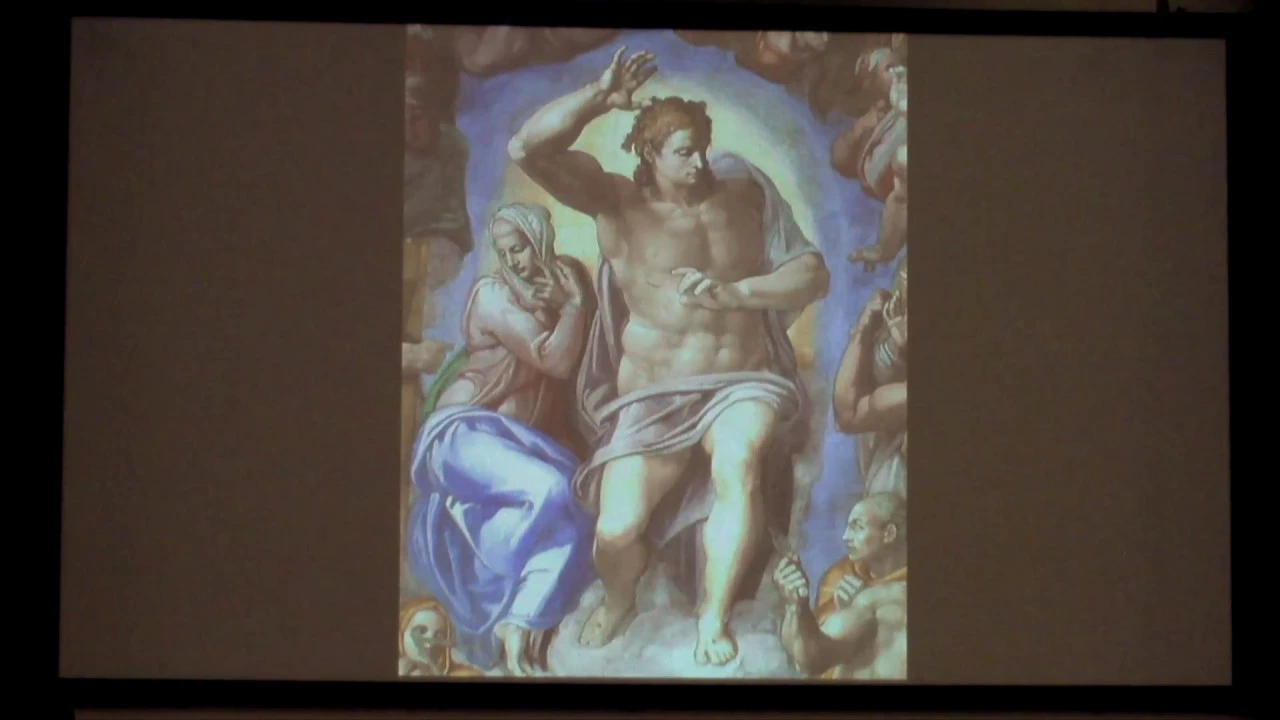
but over the next 18 years it would reaffirm the idea that Protestant teachings were heretical um and uphold the sale of indulgences in marrying devotions it did promise to reform these practices steps would be taken the council said to prevent abuses but where it permanently and rigidly departed from protestantism was this absolute insistence that the teachings of the church and the pope were equal in authority to the Bible that official Church biblical interpretation was the superior interpretation that solidified the ideological split there was no chance of reconciliation religious art was also impacted Art became held to higher moral standards as part of these reforms especially art for a church setting [Music] almost three decades after his sustained ceiling Michelangelo was called back to the Sistine Chapel to paint the altar wall and previously this wall had also been decorated with 1480s there are frescoes but he was commissioned to paint a new massive scene of the last judgment Christ as the judge decides whether Mortals Ascend to Heaven as the Blessed or descend to hell as the Damned the general idea is that the souls of the bless that are leaving their mortal bodies on The Greenery of the left hand side with Angels Above blowing trumpets to wake those souls and the damned are meanwhile shamefully casts into the fiery pits of Hell on the right it's a fresco of jaw-dropping scale just magnificent but while the composition is as Grand as awe-inspiring as you would expect from Michelangelo there's something wrong with the figures if you look closely they're unrealistically muscular and the anatomical proportions are objectively incorrect torsos and lower extremities are disproportionately large compared to heads this dense composition reflects anxiety more than anything it's confusing to the eye immediately after its completion the last judgment Drew criticism from church authorities who censured the nudity in the fresco it was exactly this indecency that Catholic reforms sought to eliminate in new art So eventually many of the nude Figures were covered up by other artists you'll see drapery covering up the genitalia of many of the figures who had once been nude but Michelangelo himself was having something of a spiritual and religious crisis alongside all of this he includes a ghastly self-portrait on the skin held by Saint Bartholomew who was flayed to death that his skin was peeled off his body and he's holding that skin um notably the self-portrait on the skin is on the side of the Damned Michelangelo was apprehensive of his own fate of how his soul would be judged and that unease reveals itself in The Irregular anatomical forms a very far cry from the ideal classical Nudes on the ceiling which surely haunted him as he painted the altar wall evidently influenced by counter-reformation ideology toward the end of his life Michelangelo started believing that he should have been more Pious and he should have been uh more dedicated to religious devotion rather than painting or sculpture he writes in a sonnet and I quote the course of my life has brought me now through a stormy sea in a fragile boat to the common Port where Landing we account for every deed wretched or holy so I now fully recognize how wrong the fond illusion was that made art my idol and my king leading me to want what harmed me what will now become of my former thoughts of Love empty happy if I'm now approaching two deaths of one I am quite certain and the other threatens me neither painting nor sculpting can any longer quieten my soul turn now to that Divine love who to embrace us opened his arms upon the cross sonnet 65.
on a religious level and on a moral level and definitely on an artistic level values or changing from durers avarice to Chronic stupid complaining to Venus to holbein's ambassadors we see artists reacting to this sense of unease and discontent with existing interpretations of religion and interpretations of moral values on the conflict between Splendor and devotion whether there was a conflict at all next time we'll discuss the emerging genres of landscape painting and genre painting both responses to the Protestant discouragement of religious artwork genre painter specialized in depicting the daily life of the bourgeoisie something that we see Matt says developing towards and both landscape and genre would go on to Define later northern European art thank you for watching this episode of a narrative art history of the Renaissance I hope to see you next time in chapter 4.
thank you
Up Next

67:06
Iconoclasm in Art History: Ethics & Destruction
@UAZMuseumofArt
334 views•2024-06-04

114:18
Christian Iconography: History, Theology, and Meaning | Fr. Panayiotis Papageorgiou
@Trisagionfilms
58.8K views•2020-02-21
7:48
Ukiyo-e Art: History, Woodblock Printing & Influence
@japanathand
6.3K views•2023-06-08

16:34
Earliest Depictions of Jesus in Art: 10 Ancient Images Explained
@UsefulCharts
5.9M views•2022-06-03
Related Study Plans & Knowledge Roadmaps
Structured learning paths in Art History
art-history
Gothic Cathedrals: Engineering, Light & Society
01The Birth of the Gothic: Romanesque to Suger's Vision
02The Structural Triad: Pointed Arches, Ribbed Vaults, and Flying Buttresses
03Theology of Light: Lux Nova and Sacred Geometry
+ 2 more learning modules
14h5 modules
Explore Roadmap
art-history
Pre-Raphaelites: Realism, Symbolism & Critique
01The Victorian Art Establishment and Academic Formula
02The Founding of the PRB and Radical Realism
03Medieval Revivalism and Literary Symbolism
+ 1 more learning modules
8h4 modules
Explore Roadmap
art-history
Street Art: From Subways to Art Market
01Subcultural Origins in Philadelphia and New York (1970s)
02The Subway Era and Style Wars (Late 1970s - 1980s)
03The East Village Scene and Early Gallery Crossover
+ 2 more learning modules
10h5 modules
Explore Roadmap
art-history
Classic Maya Art: Iconography, Glyphs & Ritual
01Foundations of Classic Maya Visual Culture
02Deciphering Maya Hieroglyphs & Text-Image Integration
03Sacred Geography and Cosmological Architecture
+ 2 more learning modules
14h5 modules
Explore Roadmap