![[Modos Gregos] Parte 3 - Contexto, características e aplicação dos modos](https://i.ytimg.com/vi_webp/8O7dZSDv_QQ/maxresdefault.webp)







![6 Ways To Use Modes On Bass [Finally know what to do!]](https://i.ytimg.com/vi_webp/gUVMbs7CUt8/maxresdefault.webp)






![Pollaco - Aplicação de Escalas - Video Aula [ RARO]](https://i.ytimg.com/vi/UNO9sTape-s/hqdefault.jpg?sqp=-oaymwEmCOADEOgC8quKqQMa8AEB-AHeA4AC4AOKAgwIABABGH8gGSgWMA8=&rs=AOn4CLDpcjYY3XfdAaxVrTJb5Q3yYhP7-w)
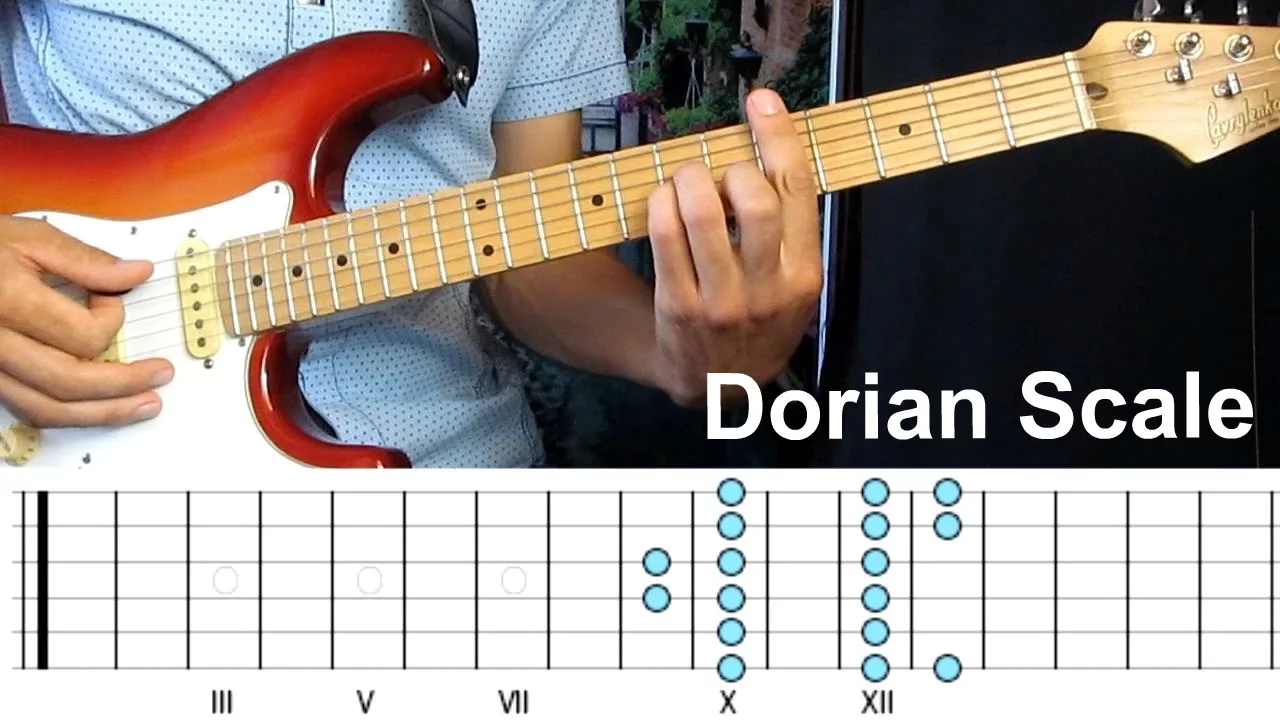
The Dorian mode is the 2nd mode of the major scale, built by starting on the second degree of a major scale (e.g., A Dorian uses the notes from G major: A B C D E F# G); it features a minor quality with a raised sixth note compared to natural minor, creating a distinctive 'smoky' sound that sits between major and minor, making it ideal for jam band music and Santana-style playing, with characteristic chord progressions like i-IV (A minor 7 to D7).
Dorian Scale Explained: The Second Mode of Major | Guitar Theory
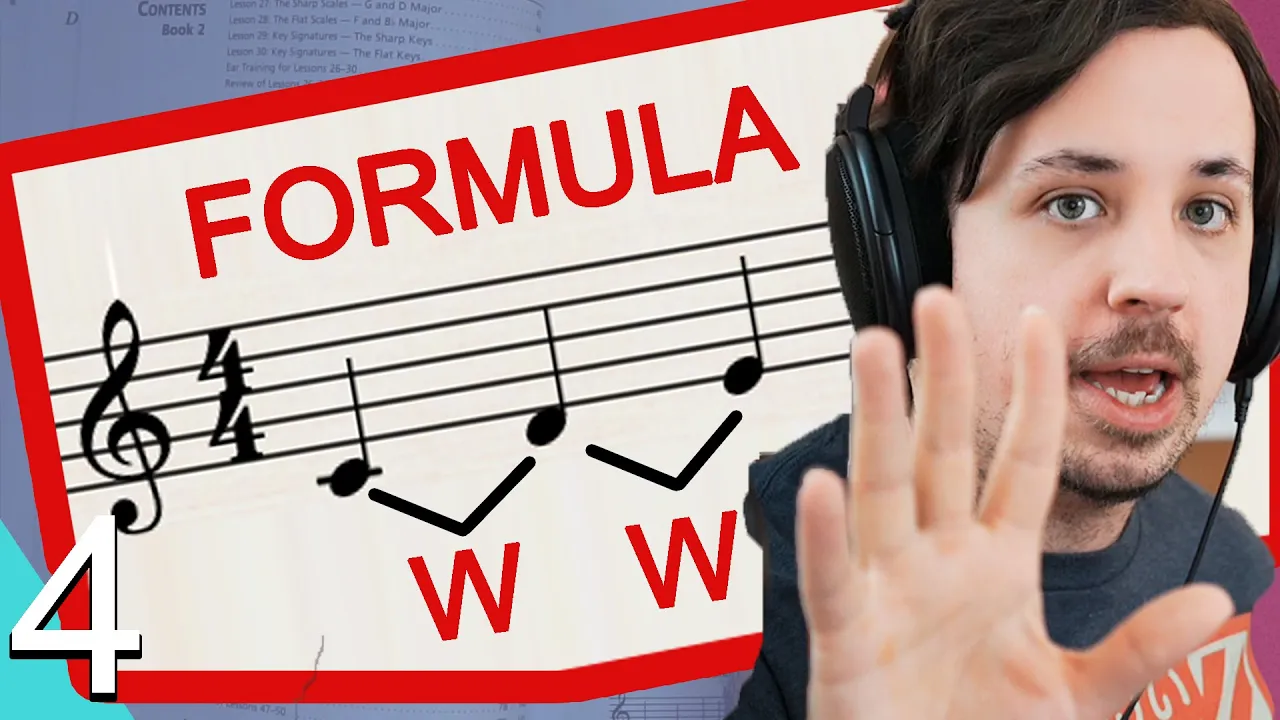
Added:Understanding the construction of the Major Scale (Ionian mode), including its step pattern (W-W-H-W-W-W-H).
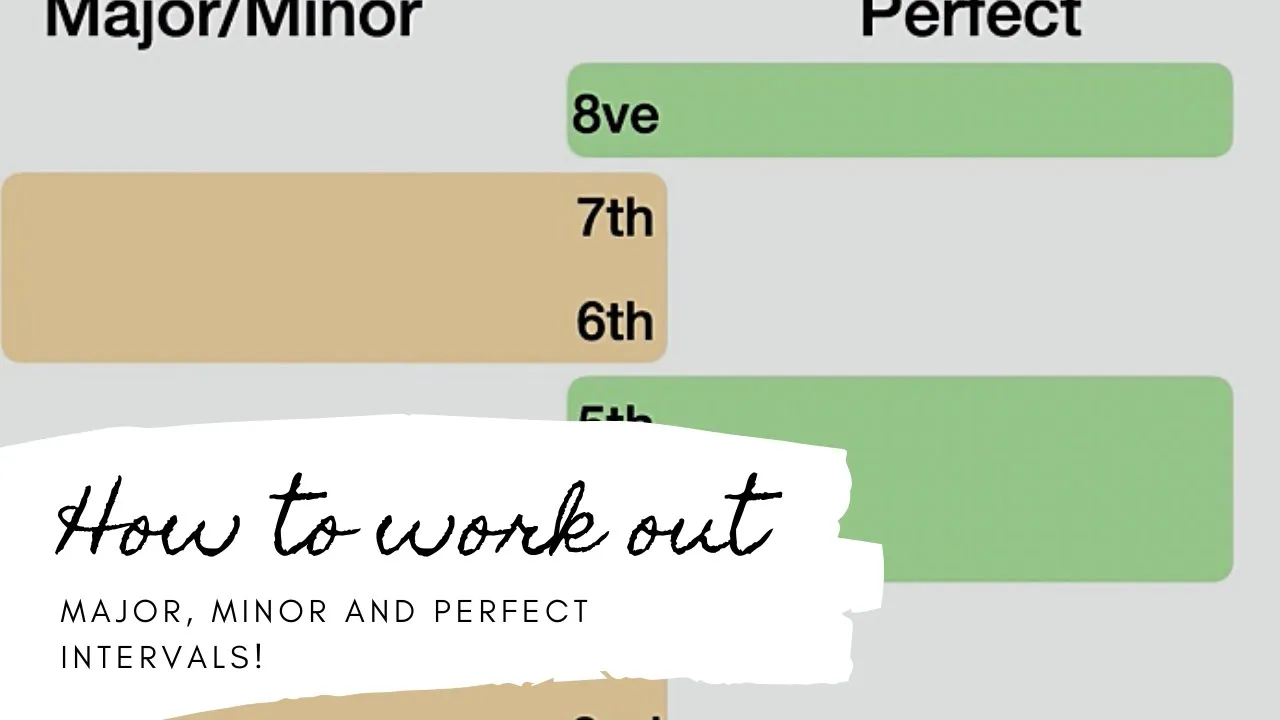
Basic music theory intervals, particularly the difference between major, minor, and perfect intervals.
Familiarity with diatonic chord scale degrees (triads and seventh chords) in a major key, specifically the 'ii' chord.
Basic guitar fretboard navigation, including how to read fretboard diagrams and locate root notes.
Exploring the remaining diatonic modes of the major scale, such as Phrygian, Lydian, and Mixolydian.
Applying the Dorian scale in improvisation over classic modal progressions, such as the 'ii-V' progression in jazz or minor-key blues.
Understanding modal interchange and how to borrow chords from the parallel Dorian key in songwriting.
Studying Dorian chord extensions and voicings, such as minor 7th, minor 9th, and minor 11th chords, to highlight the characteristic major 6th interval.
372.9K views17.4Klikes10:49Original Release: 2018-09-08
hey welcome back to another lesson I'm Jake Lizzio and in this video I want to talk to you about the Dorian scale me personally the Dorian scale was a really hard scale to wrap my head around I couldn't really put an identity on it I didn't have a good idea in my head of what it sounded like whereas certain scales like harmonic minor were extremely easy for me to identify and kind of you know label dorian was always mysterious to me that might be because i don't have a really strong jazz background but regardless in this video what i want to do is teach you what the dorian scale is why is it a mode of the major scale i want to help you big figure out the chords of the dorian scale and then i want to talk to you about what is the deal with dorian what does it sound like what does it feel like how can we use it and where do we hear it in actual music the only prerequisite for this video is understanding the major scale and major scale degrees so if you're uncomfortable with those topics i've linked to two videos in the description check those out before you dive into this video so let's get started a Dorian scale can be built by using these scale degrees and today I'm going to build them all starting on a so a will be my 1 a will be my root and from there I just have to play a two on flat 3 a 4 a 5 a 6 flat 7 and then I can go back to my room so those notes ABCDE F sharp G and a are the notes of an A Dorian state that's all fine and dandy but let's talk about the chords I think that's a little bit more interesting and to figure out the chords here's all we have to do is start on your first note a and start skipping notes a C and E those three notes a C and E that's an a minor chord so my first chord that I'm allowed to play is a minor today though I want to go a step further I normally just stop at the triad let's add another note to my a minor chord so let's skip another note AC e let's skip to G and let's add that note to my a minor chord that will give me an a minor seven which is a more it's a variation of your minor chord and I think it's got a little bit more color to it and what I'm working in Dorian I really enjoy using the extended chords as opposed to just using the majors and minors so in this video I'm not just gonna be showing you these triads like I normally do I want to show you these extended chords so by performing this operation of just skipping notes starting on the first note I got an a minor seven chord if I do that again I can starting on the 2nd note I'll get my second chord which is B minor 7 if I do it again starting on the 3rd note I get the notes of a C major 7 chord that's my 3 chord my fourth chord would be a D 7 dominant 7th chord by doing that starting on the 4th note fifth note is e minor 7 sixth chord is f sharp half diminished or F sharp minor 7 flat 5 and then the last chord here that we be allowed to play major seven and then finally I'm allowed to come back to Arizona now when I did that didn't this G major seven kind of feel like that's where I should have stopped didn't that feel like we're finally home and it's because we were I mean we are in a mode of major which basically means that every note I played for you every chord I played from you it all came from a major scale and specifically it came from the G major scale but we weren't thinking about G until I finally play you that chord and that's the whole idea of working with Moses we're using a major scale but we're kind of concealing the tonal center of the original major scale today what we're gonna be doing is saying forget about G forget about that notes let's focus on a let's use the notes of G major let's use the chords of G major but let's focus on the second note of G major which is a we call that a Dorian by doing that I create the Dorian feel we can hear a little bit of Dorian just by me playing an a minor seven chord and doing a little bit of improvising using the eight let's see what that sounds [Music] so you can hear it's got this kind of smoky flavor to it it's not really dark and violence like my turkeys but it's got a little bit of optimism to it and a little bit of flair that I really like this is the kind of thing you hear Carlos Santana do a lot and a lot of different jam bands they like Dorian because it's got the the chilled out versions it's got all that relaxing part of minor but it's got a little bit of energy to it more so than the minor scale normally does now that's what the Dorian scale sounds like just as a lead device but to me Dorian chord progressions are really fun personally the one to for a change in a Dorian is the only jam you'll ever need if you want to play in a jam band so our one chord was a minor 7 our 4 chord is d7 and just by putting those two chords together you get a wonderful little 2 chord Jam that just absolutely rocks in a band center and that d7 you could extend it into a d9 you could play it just as a D major you know there's a lot of options there and there's you know different inversions are gonna give you different sounds but check it out just a toque or jam a minor 7 and d7 gives you this wonderful Dorian flare [Music] now that 4-port really is the heart of all things dorian in my opinion so if i wanted to drop the extended chords for a while and I just wanted to go into my regular cowboy chords my a minor chord would be my 1 chord in the key of a Dorian this strum a little bit of a minor I can go to that 3 chord which is C which is nice but I'm allowed to do that in the key of a minor there's nothing unique about that C major right there's nothing that makes the C major all of a sudden this doesn't put me into the key of a doing I'm still I could be in the key of a minor but as soon as I play a D major triad that D major triad really kind of kicks ass into Dorian immediately you're not allowed to play an F sharp in the key but in the key of a durian you're allowed to play the no net shot and guess what there isn't that DNA jerk or there's an f-sharp right G here so to me you might be able to hear that this durian foreign progressions kind of wistful I think of like Bob Seger music you know I think of lots of Pink Floyd and I'll give you a few Pink Floyd examples right away the first example I'll give you from Pink Floyd is the wall it's mainly D minor but eventually for those verses we go over to a D major which is going to be the major four chord also in breathe breathe is a famous knee minor a major so that would be the key of a Doria where I've got a minor one chord and I've got a major four chord also in any color you like we've just got a minor one chord to a major four chord [Music] now I just want to make some generalizations about the Dorian mode and how it relates to the other stuff that I work with to me Dorian is great if you want something that's kind of dark in murrow's like minor but minors just too much minor can be very dark and it can be very sad and sometimes you want something that's like not that depressing you really don't want to bum people out or scare them and I feel like Dorian is a good middle ground it's not as bright as major and it's certainly not as dark as minor so I find it's that good you know happy medium between the two I also find like I said it works great for Santana asking music you know oh yay komova is just a minor one to a major four that's pretty much the entire song [Music] so we've looked at how the scale looks all on its own starting at on a we've also looked at how it relates to G major but now I want you to compare a durian to a minor because these two are very very similar if you look at the notes of the a minor scale and if you look at the notes of the a Dorian scale you'll see the only difference is that sixth note in a minor I would have a natural F right but in a Dorian I get that F sharp so it's a raised sixth and that's really one of the ways I think about Dorian I say oh it's just a minor scale but I've raised the sixth note I have a natural sixth in my minor scale and it's an easy way to kind of think of things and also is a lead player I know that I want to be highlighting that sixth note if I want to create a Dorian flavor I mean for example if my jam is just one chord if the band is just playing a minor 7 then there's nothing that makes that Dorian you know this could be a lot of keys right now this could be a freakin all these notes are in a fridge this could be the key of a-minor right but there's the only thing that would make a Dorian is if somebody comes in and starts playing north notes from the Dorian scale and I could do that as a lead player by playing just that sixth that natural six note and surrounding it by some of the other notes of a vaild Oregon us guitar players we love the pentatonic minor scale AC deg AC deg and all of those notes are in dorian so i really get access to that awesome rockin pentatonic shape with all those cool bends and all the things where's practice I get access to that when I'm jamming Andorian and then seamlessly I can just kind of infuse those Dorian notes whenever I want to and I get a little bit of that Dorian flavor on top of my jamming so I really hope this helps you out in understanding what is the Dorian scale and more importantly understanding modes modes are one of those topics there is just an endless amount of confusion on and I was reading some comments on the Internet today and I heard somebody talking about how guitar players make it even worse so I really apologize if this is making things more confusing but I only know from my experience that I learned the modes in a week ok it took me one week to learn him but it took me like literally three years to understand them I just kept thinking oh you start the major scale on the second note this whole idea of tonal Center just was completely beyond me so I hope that the body's using these demonstrations it's kind of helping you see these scales in different lights and I really don't want you to see it in just one light for me it was by looking at these things from different angles where finally the light bulb came on and I was finally able to start working seamlessly between these modes yet relatively and in parallel so if you liked this video please subscribe like comment share all that stuff really helps me out and if you really like this video then you can check out my patreon page where you can support these lessons going forward thanks for watching [Music] you
Up Next

17:15
Modes in Music Theory Explained: A Composer's Guide
@ChristopherSiu
2K views•2020-07-17

10:20
Mozart's Musical Dice Game Explained: History, Rules, & Fun
@webpianoacademy
5K views•2023-03-13
9:57
Phrygian Mode Explained: Third Mode of Major Scale Theory
@SignalsMusicStudio
625.9K views•2018-10-03
10:49
Understanding John Coltrane's Giant Steps: A Music Theory Analysis
@Vox
10.4M views•2018-11-12
Related Study Plans & Knowledge Roadmaps
Structured learning paths in Music Theory
music-theory
Composing Galant Music: Partimento & Schemata
01Foundations of Figured Bass and Keyboard Harmony
02The Rule of the Octave (Regola dell'Ottava)
03Galant Schemata: The Building Blocks of Form
+ 2 more learning modules
30h5 modules
Explore Roadmap
music-theory
Decoding Overtone Series: Tuning & Drone Music
01Acoustic Foundations: The Physics of the Overtone Series
02Tuning Systems: Equal Temperament vs. Just Intonation
03Microtonality and Spectralism: Beyond Standard Pitches
+ 2 more learning modules
24h5 modules
Explore Roadmap
music-theory
Impressionist Harmony: Scales, Planing & RPGs
01Foundational Music Theory: Keys, Intervals, and Seventh Chords
02Impressionist Color: Chord Planing and Parallel Harmony
03Whimsical Textures: Pentatonic Cascades and Whole-Tone Scales
+ 1 more learning modules
14h4 modules
Explore Roadmap
music-theory
Negative Harmony: Axis Reflection in Indie Pop
01Music Theory Foundations: Scales, Intervals, and Triads
02Functional Harmony and the Circle of Fifths
03Demystifying the Negative Harmony Axis Reflection
+ 2 more learning modules
16h5 modules
Explore Roadmap