![[#2] SISTEMA NERVOSO AUTÔNOMO PARASSIMPÁTICO E SIMPÁTICO: Diferenças funcionais | MK Fisiologia](https://i.ytimg.com/vi/2KURC6_WA5g/maxresdefault.jpg)
![[#1] SISTEMA NERVOSO AUTÔNOMO PARASSIMPÁTICO E SIMPÁTICO: Diferenças anatômicas | MK Fisiologia](https://i.ytimg.com/vi/7OIIYv2oXJw/maxresdefault.jpg)

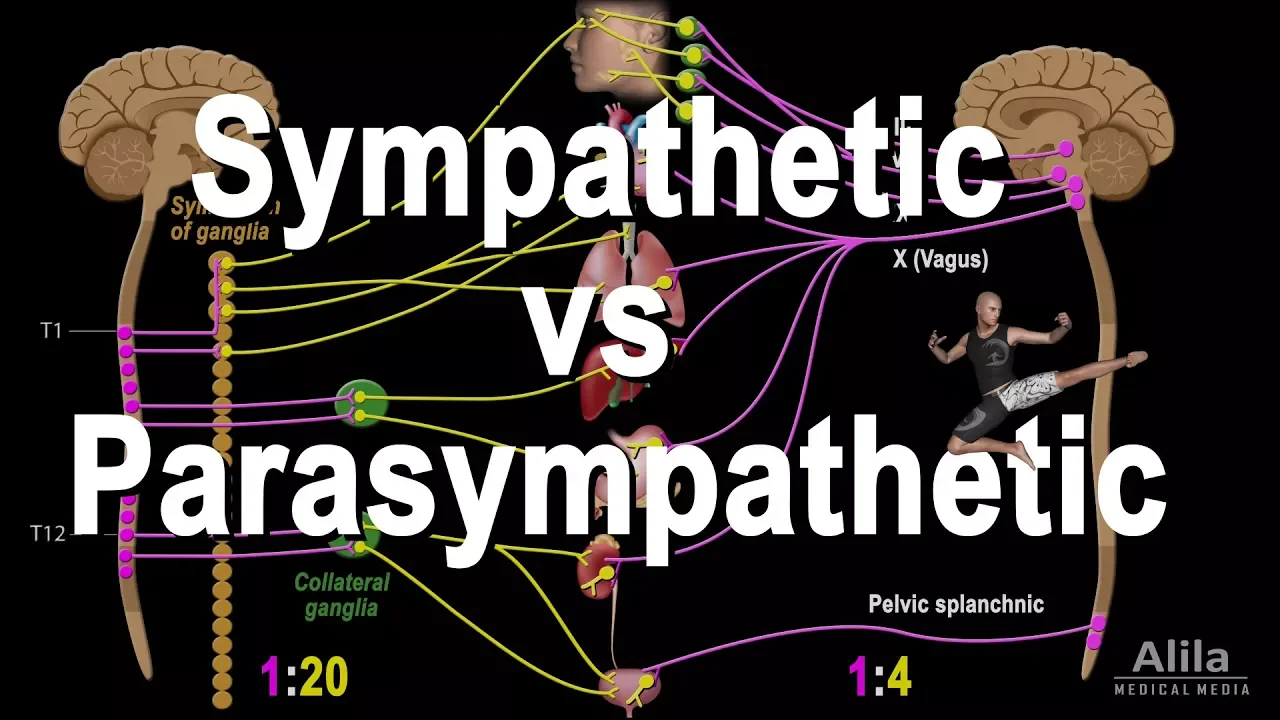


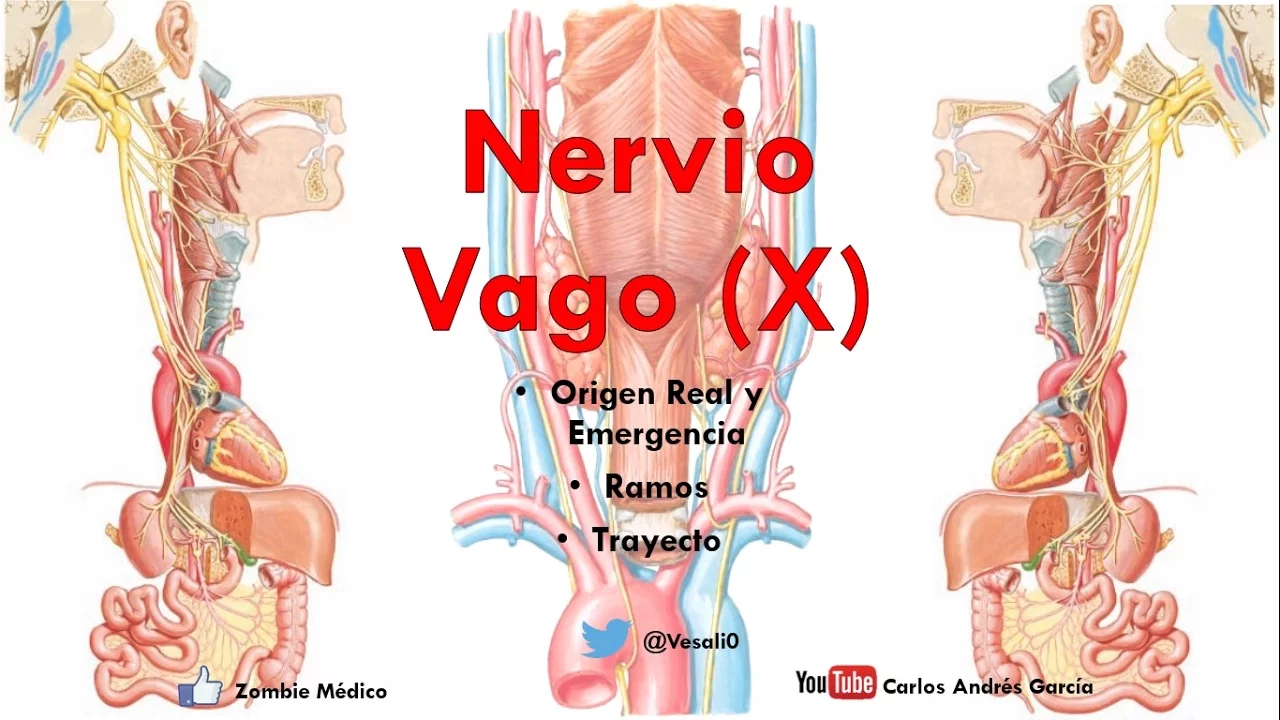




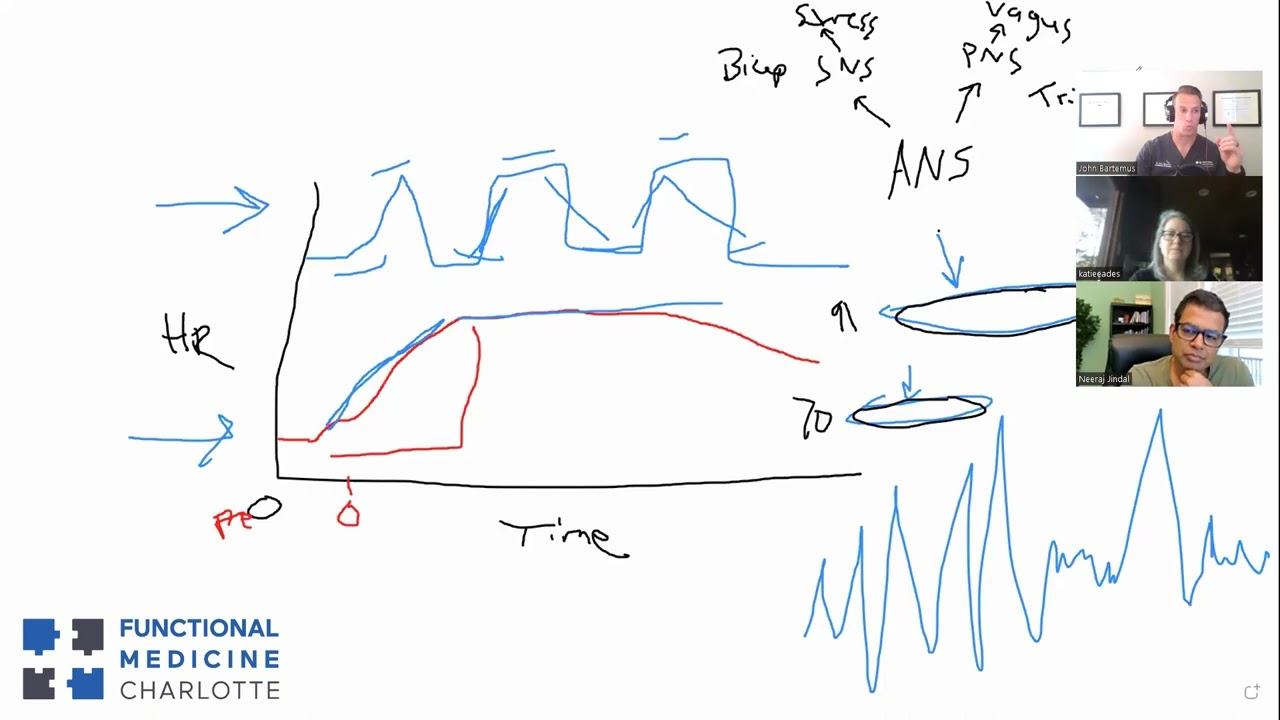

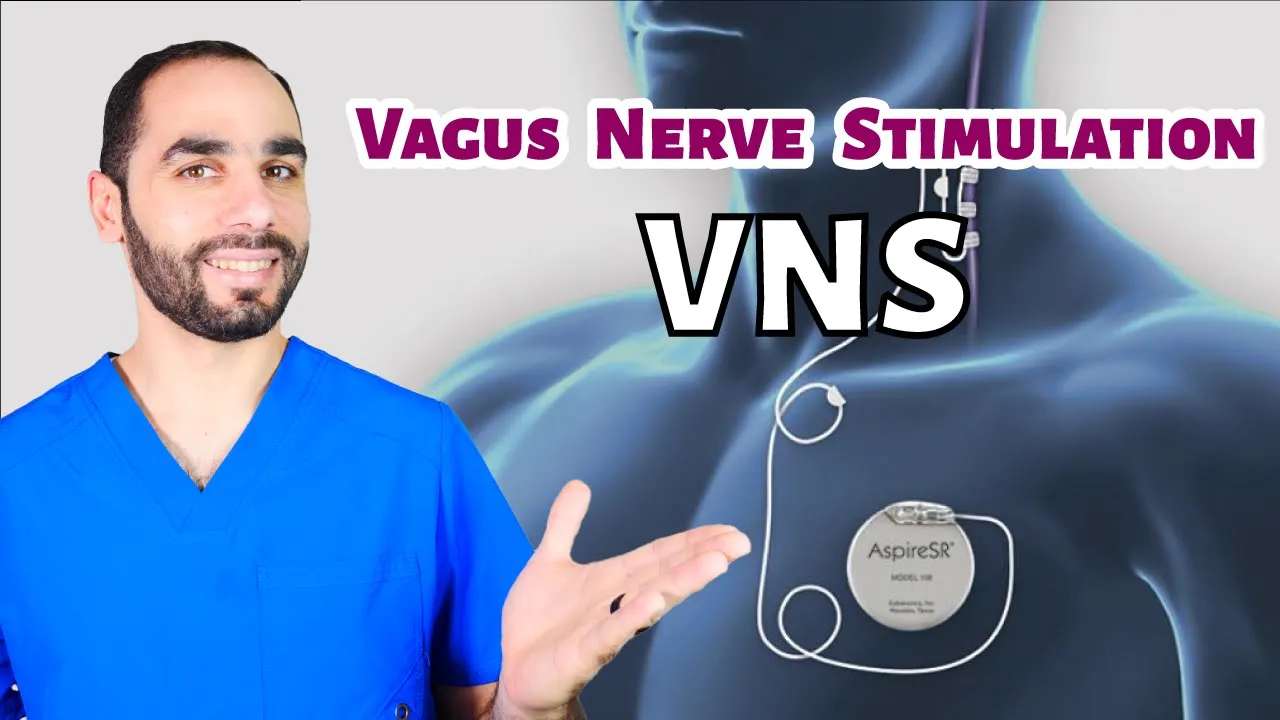
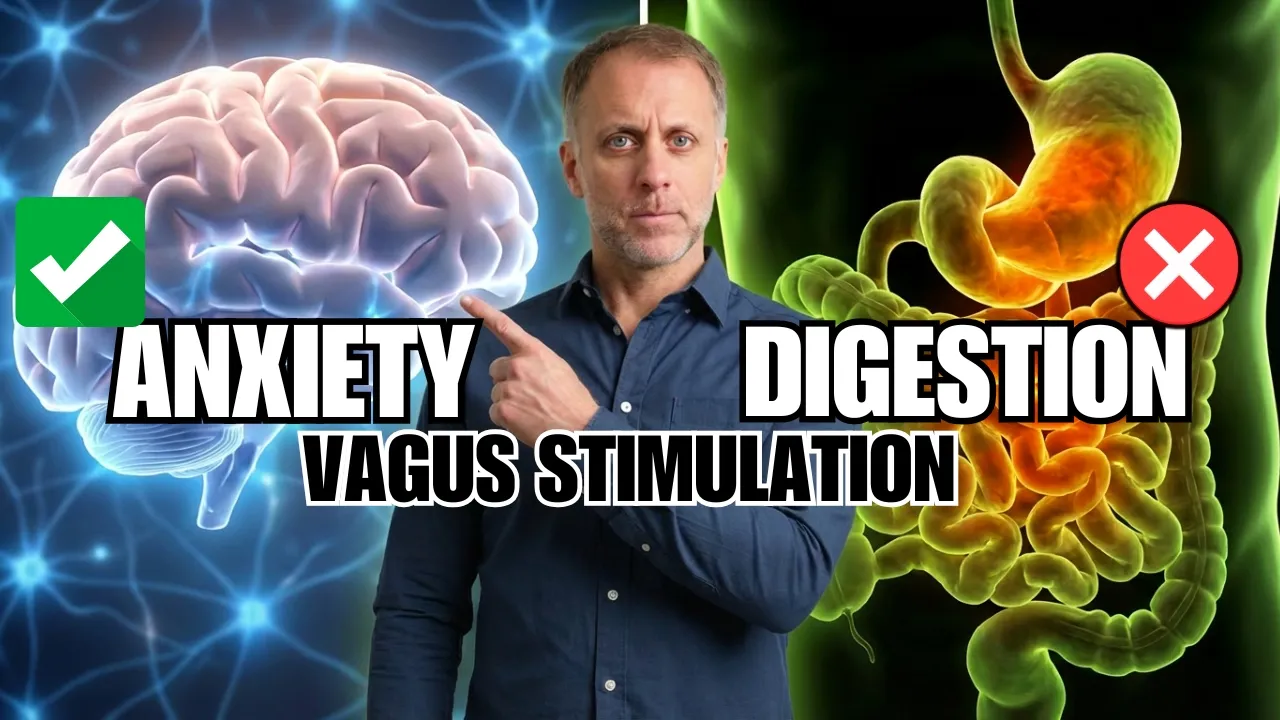












The vagus nerve (10th cranial nerve) is the body's primary inflammatory control system and parasympathetic regulator, with 80% of its fibers being afferent (carrying sensory information from organs to the brain) and 15% being efferent (sending parasympathetic signals to organs). Dysfunction of this nerve is linked to chronic inflammatory conditions, gut disorders like SIBO, mental health issues including anxiety and depression, and conditions such as POTS. Vagus nerve function can be assessed through heart rate variability (HRV), which measures the milliseconds between heartbeats—greater variance indicates better autonomic balance. Optimization strategies include diaphragmatic breathing with longer exhales, choline supplementation, electrical stimulation of the cervical vagus nerve trunk, and addressing four categories of stressors: daily emotional stress, physical stress (injuries, sedentary lifestyle), biochemical stress (leaky gut, nutritional deficiencies), and psychological stress (trauma).
Vagus Nerve Function: Assessment & Optimization with Dr. Navaz Habib
Added:[Music] conversations for health dedicated to engaging discussions with industry experts exploring evidence-based cuttingedge research and practical tips our mission is to empower you with knowledge debunk myths and provide you with clinical insights this podcast is provided as an educational resource for healthcare practitioners only this podcast represents the views and opinions of the host and their guests and does not present the views or opinions of designs for health Inc this podcast does not constitute medical advice the statements contained in this podcast have not been evaluated by the Food and Drug Administration any products mentioned are not intended to diagnose treat cure or prevent any disease now let's embark on a journey towards optimal well-being one conversation at a time here's your host Evelyn [Music] lamra welcome to conversations for health I'm your host Evelyn Lamere and today I'm joined by Dr Naas khabib to talk all about the Vegas nerve what it is how we assess Vegas nerve function and tools to optimize Vegas nerve Health in your patients or clients Nas welcome to the show it's my absolute pleasure being here thank you so much for having me thank you Dr Naas khabib is the bestselling author of activate your Vegas nerve and the newly released upgrade your Vegas nerve he's also the host of the health upgrade podcast after after graduating as class valedictorian from Canadian Memorial Chiropractic College in 2010 he went on to practice traditional Chiropractic for years until he utilized the power of functional medicine to transform his own health Dr khib is the founder of Health upgraded an online Functional Health Consulting Clinic supporting Optimal Health by elevating the awareness and function of the Vegas nerve so let's start with an overview first what is the Vegas nerve and what do practitioners need to know about it a great question and most practitioners are aware of the Vegas nerve I think that's that's a pretty simple question to answer it's the 10th cranial nerve it is the parasympathetic control system for the body but I think we've underrepresented how important the Vegas nerve is to health and I think this is where practitioners can really gain some definite benefit to how they approach their patients Health by utilizing strategies that have proven to improve Vegas nerve function in the first place and from a practitioner standpoint um we we often just kind of learned about the Vegas nerve one time in class doesn't matter if you were in medical school or naturopathy or Cairo or whatever uh form of like holistic nutrition whatever it was that you you practiced or whatever you were taught from it was a very brief uh overview of this particular nerve what's unique about it is that it does not follow any of the same patterns as any of the other nerves in the body it is the only cranial nerve to leave the cranial cavity okay which is the head area it's the only cranial nerve that travels with the cored artery and the jugular vein in the neck and it's the only nerve that connects to essentially every visceral organ that we have from the heart and the lungs and the thorax to the stomach the abdomen or any abdominal viscera to the pancreas to the liver gallbladder to the intestines you name it there's a connection directly to those organs from the Vegas nerve and I think what's happened broadly in the educational sense is we haven't been given this importance to what the Vegas nerve really truly does within the body and it is the inflammatory control system within the body and you're actually the first uh talk that I'm doing since a new article just came out in nature talking about this particular body brain connection that regulates inflammation and they literally break down the neuron types that are involved in inflammatory control all being located within the Vegas nerve and Vegas nerve control centers I definitely want to get into that and talk more about inflammation I'm also curious Nas you personally you know in your bio it said you had your own transformation and I'm curious how did you get into specializing in the Vegas nerve was it because of your own health Journey or was that separate it's a bit of both my story from my health Journey was that I uh when I was in Chiropractic College I weighed 250 pounds high blood pressure borderline diabetes sleep apnea in my 20s like pretty significant challenges for anybody to suffer from but I was doing it in my 20s and I had not learned how to take care of myself at all I had no real understanding of the practical nature of what I was learning in Chiropractic College and how to apply it to my real life and it was um a chance encounter with a fellow functional medicine practitioner and mentor and wonderful friend of mine Sachin Patel that really introduced me to this concept of functional medicine the concept of true holistic health and what it really meant to show up and be present and be healthy every single day and so it was that Journey that brought me into the functional medicine world but that said I've always been uniquely interested in the Vegas nerve it's stuck out as just being different or special or unique in my entire Journey so when I was in Chiropractic College I remember first day canav anatomy lab I was there early I was the the Keener for the anatomy side of things and very much so on the neuros side so the brain anatomy really was my uh my calling but how the brain connects to the body and how it controls and perceives what's happening in those areas was always of interest to me and it turns out that the Vegas Nerf plays a very important role in that particular piece and so it was through my journey while I was learning about inflammation while I was learning about gut brain axis while I was learning about all of the connections that are built there it turned into the Vegas nerve is this uniting force between the body the brain and how the brain then signals to the body again and that's really what Drew my interest to the Vegas nerve as being this really important one for us to not only look into but really work to optimize great thank you so much and thank you for sharing that story I'm curious about the body brain connection a little bit more so the Vegas nerve has both afferent and eer fibers right can you explain that more and how many and or what percentage this is one of the really important things to understand we we often think Vegas nerve is sending parasympathetic signals brain to body and that's just essentially it but 80% that's four fifths of the fibers on the vegus nerve are afferent meaning they're coming from the organs the signals are coming from the organs up to the brain what that means is all of the status updates of what's happening within the microbiome and the gut what's happening within the liver what's happening in the kidneys what's happening in the lungs and the heart all need to make their way up to the brain and the way that they do that is through these vagal afren fibers and so the only reason that our brain knows what's happening in the heart with our heartbeat or in the blood vessels with our aortic Arch barer receptors and cored barrer receptors that come through the Vagas nerve and what's happening in the lungs and all of these areas in terms of an inflammatory signature inflammatory cytokine activity that's present there is simply because the Vegas nerve is able to send those signals up and so you can imagine if that signaler if that pathway is hindered in any way is not functional or becomes dysfunctional in any way those signals are going to be less likely to make their way up or less effective in making their way up to the brain and so the brain doesn't have good information as to then what to do about it or what signals to send through all of the other nerves or any nerves to those organs to say okay cool let's let's chill out the inflammation or let's go into more of a sympathetic State we don't know and so when we don't know we tend to overreact and that seems to be the pattern that's occurring within the body so 80% of the information on the vegus nerve is affrant coming up 15% 15% of the information on Vegas nerve is from the brain stem to those same organs and so that's the affector function that's the we're going to send a signal to the cells that are present in those particular organs and we can get into the cell type that I'm looking at specifically but that's the signal that we know is parasympathetic but that only makes up the 15% of information on the Vegas nerve for the math people there's about 5% missing there so that means about 4% is actually motor and that goes to the lenal and Fingal muscles through the branches the Fingal and Lal branches of the Vegas nerve so that goes to keep Airway patent good motor control of the airway of the uh vocal cords through the LNG gal muscles so that allows for us to have pitch and tone in our voice so the reason I can go really really low or really really high with my voice is because I have that uh constrictor control through the LNG geio branches and that's the 99% that one last per that's available is actually from the skin of the Oracle of the ear in a certain area uh inside the cona of the ear so it's kind of uh the skin overlying not the outside of the Oracle but on the inside of the Oracle of the ear that is a branch of the Vegas nerve called the ecular nerve or the ecular branch of Vegas very interesting thank you for sharing that and it's just fascinating right like how much of that communication goes up not the other way around um you mentioned the sympathetic Nerf of system how does the vagus nerve influence the balance between the sympathetic and parasympathetic the simplest analogy that I've been able to come up with on this is simply the analogy of the accelerator and Brakes in a car and so when we have a car we have these two pedals we used to have a lot more with three pedals but we'll just go with the two because it simplifies it so we've got the accelerator and we've got the brakes and the accelerator is this get up and go driver and that's the sympathetic nervous system in our body right when we need to engage when we need to move we push the accelerator and that's great because without an accelerator a car is sitting there as a piece of junk in the garage it's not doing anything not going anywhere it's useless in order to go we need to be able to push that accelerator effectively and that's the job of the sympathetic nervous system in our bodies as we are going there's going to be incidents or times when we need to slow down where we need to back off stop sign red light pedestrians Crossing kids running whatever it is we need to learn to push the brakes during those moments and so we push the brakes to slow the car down and to ensure that there's safety in what we're doing and we're not constantly just pushing on the accelerator in a go fashion so having this counterbalance of sympathetic accelerator and parasympathetic breaks is the real analogy that I find works the best because it's a very Dynamic process it's not like it's a seesaw that one is up and one is down both can be pushed at the same time but it's not effective to do so and a lot of people are pushing both at the same time even unknowingly so this analogy is really easy for me to explain to my patients to my clients and I find that a lot of practitioners love this because they can then share what they're talking about is saying your brakes are a little burnt out they're not working as well as we want them to the Vagas nerve for whatever reason is dysfunctional and it's just because you've got a ton of bricks sitting on your accelerator pushing you in this sympathetic go Direction which we don't want to be in all the time so this is an important way to analogize and to share that with clients yeah great analogy thank you so what are some of the common conditions and symptoms that can be linked to veg nerve dysfunction and then sort of weaving in there another question which you may answer at some point because I have so many questions for you but is the Vegas nerve the problem or is it a symptom and maybe I'm thinking about this like too simplistically or I I I don't know but this is something I've been pondering I don't think you have it wrong by any means I think there's a curiosity into understanding that well if this is dysfunctional it must be the problem in reality for me the Vagas nerve is a thing that needs to be working effectively and when it's not working effectively the problems occur because the control piece is gone I love this analogy I love this um this concept I'm I'm a big fan of the Matrix and there was um a line in The Matrix where Neo was speaking to one of the members of the council in the city of Zion it was in the second movie I believe and he talked about how the city of Zion functions with the use of these machines and there's machines that are out there trying to kill or keep humans as their batteries and then there's the machines that are being used by the city of Zion to keep the city of Zion running and the answer that or the question that Neo asked was well what's the difference between these machines out here that are keeping us alive and the ones out there that are trying to kill us or to use us and the answer was control we have control over these second set of machines we can shut them off if we ever need to and this is the concept of what the Vegas nerve does is it senses what's going on and determines if it needs a shut off or senses what controlling signal needs to be sent does it need to be pushed into a sympathetic State and so if if need be then the Vegas nerve can back off on its signaling but if it needs to be pushed into a parasympathetic rest digest and recover and repair State then the vegus nerve can be turned on so the vus nerve is not the problem but I would rather say that the vagus nerve is being dysfunctional is the problem and the most common problem that I see because what we're then having is inflammatory control issues we are not able to truly control the inflammatory process because the Crux or the Lynch pin to that inflammatory control signal is the function of the Vegas nerve okay I hope that kind of makes sense there yeah so what are some of the common conditions or symptoms that you see related to that conditions wise anything inflammatory anything chronic is really telling me that there's something inflammatory that's not being controlled so I'm looking at autoimmune conditions often I'm looking at gut dysfunction being a huge issue here obviously any sibo is a huge issue like any small intestinal bacterial overgrowth often we'll we'll find that practitioners are providing herbal remedies which as they should be these hermal remedies are great these therapeutic tools to help kill off any bacteria that should not be present but the missing piece often is motility and that motility piece is driven by that vagus nerve signal into the gut to say yeah turn on your peristaltic motion let's get that food or that Bolis moving further down into the large intestine where it should be located or ilocal valve tone right when that valve is dysfunctional things can flow backwards from the large intestine the ascending colon back into the small intestine where it should not be it should be unidirectional flow with a good strong valve to stop the back flow of whatever is happening and so when vagus nerve is dysfunctional things like sibo really pop up um other conditions that are directly associated with vagus nerve dysfunction pots for example postal orthostatic tachicardia syndrome just disautonomia uh as it's been referred to which literally means dysfunctional autonomic control meaning that you have involuntary control over the the automatic processes of your body and so we don't have great overall autonomic function and that's that balance between sympathetic and parasympathetic but I the most common ones that I'm working with in my practice no question have some gut issue included within them and have then resulted in some other inflammatory condition like a fibromyalgia sibo mecfs things like like that so we're looking at that whole chronic inflammatory pathway as being the more common challenges that Vegas nerve is involved with uh at its depth and do you find that those patients who have the gut issues also have mental emotional issues like more so than stress and mood issues but more complicated conditions yeah as we know as practitioners now it's the the percentages of uh serotonin dopamine production norepinephrine production in the gut are heavily associated with this and so one of the more common things that pops up is patients feeling very anxious or actually dealing with anxiety depression serious mental health issues that have popped up not only because of the health conditions but associated with them and so what I'm seeing very often are with regards to mental health struggles some sort of dysfunctional gut uh motility piece or gut bacterial piece and so the use of herbal strategies to help manage those in addition to the Vegas Nerf strategies tend to work really well but the correlation between vagus nerve dysfunction low HRV findings low findings on on vagal tone overall are heavily heavily linked to every single mental health condition you can ask for anything from uh depression anxiety to PTSD and uh other just major traumatic stress type incidents thank you I mean it just seems like this is kind of the missing piece right and we don't always implement it because we're not always thinking about it so super interesting so what causes the Vegas Nerf to become dysfunctional in the first place it's a great question and so the answer is what causes the brakes in a car to break down right we have to start asking the question of why would the brakes wear out in a car in the first place well either you're pushing them too hard because you're driving too fast and you need to put on the brakes real hard or there's an actual breakdown in the system occurring so the more common ones there's four different types of challenges that push us so hard on the accelerator side that I've broken it down to that will have a real effect on the ability for the parasympathetic nervous system and for the vagus nerve to do its job of controlling that stress and so these are four areas of distress that I think we need to look at as practitioners to ensure that we're supporting our patients number one daily SL emotional stress these are the day-to-day challenges Financial challenges dealing with kids relationships what's what's going on on a day-to-day basis and these stressors tend to chip away a little bit they push the accelerator just a little bit more and on occasion it can be more than we want them to be but they chip away and they have kind of a compounding or um growing effect as they go if they're not dealt with Reg regularly with some sort of Stress Management strategy the next area is physical stress physical stressors are things that we tend not to look at as practitioners and something that I think we have as lwh hanging fruit has the patient never had a car accident a concussion some sort of slip and fall injury were they ever the physical victim of like a crime or something that caused a physical dysfunction in them was there some sort of traumatic incident that had a physical nature to it that needed to be addressed second one this one we're pretty good at is are they moving enough are they too sedentary are they not moving are they not exercising are they walking are they sitting all day going from car to office to car and not having those movement patterns optimized are they moving too much potentially as well often this is more on the athlet side of things are they overdoing it are they pushing themselves to a point where recovery is not being optimized so we need to get into that balancing point with regards to the amount of physical movement on the third category here is biochemical stress biochemical stress can be too much of a bad thing or too little of a good thing so too much of the bad thing we're looking at things like lipopolysaccharide how leaky is their gut do they have uh mold in their environment do they have potential lyme disease do they have potential biochemical uh dysfunction due to external factors that have penetrated and entered the body in some fashion and then on the lack of good things what's their nutrition Lake are they getting enough macronutrients are they getting enough micronutrients what's happening with their vitamin and mineral levels what's happening with their choline levels what's happening with all of these different important micronutrients and are they getting enough of them overall and as we know the vast majority of people that are dealing with or eating like a standard American diet they're very nutrient depleted very calorically dense and nutrient poor and so that is on the biochemical side what we need to look at and then the last area and this is a really important one to really dig into is psychological stress and psychological stress is um I like to put it to those challenges that have occurred in the past that we can construe as trauma that may have blurred or scuffed the lenses through which we see the world okay and so what this then does is it creates new perceptions and new challenges and what often happens here in these psychological stressors I've had numerous patients that had like the loss of a child or loss of a loved one or some sort of major trauma with the family member or some sort of incident where they were the victim of a crime for example these psychological stressors take us out of a feeling of safety and safety is the major driver from an emotional and psychological standpoint into biological control of inflammation this is huge this is literally the concept of the poly vagal theory if you've ever heard of this or if anybody has poly vagel theory was developed by Dr Steven pores a well-renowned PHD psychologist and this entire concept of the poly vagal Theory comes down to we have these different states that we can be in the state that we want to spend the majority of our time in is when the brakes are pushed when we're doing well when we feel like we're recuperating and recovering from stressors that state is called ventral vagal State and from a psychological standpoint we can only be in that state when we are feeling safety psychological safety this can be construed as biochemical and physical and emotional safety as well but on the psychological safety side of things that's what drives us to be in that ventral vagal State and that is where the emotional and and inflammatory control piece really kicks in then we have a state above this uh ventral vle called called sympathetic which is the engaged State when we want it to be when we're able to engage ourselves to do something push into a a situation that's a little bit more challenging but at the top end of that state is where we get into fear and worry and areas where our bodies go into a sympathetic state for a prolonged period of time and that's where it can be really challenging to have biochemical function at a very great level there is a level Above This which is not a very common one that we see as functional medicine practitioners but if we're talking to psychologists they see it all the time and that's a state called Freeze and that is the dorsal vagal state so where body goes into a physical shutdown or a bio a physiological shutdown excuse me and that physical shutdown basically looks like Vegas nerve is working but it's emotionally we're like a deer in the headlights we just don't know what to do and these patients that are in this freeze state are dealing with severe depression severe anxiety potentially PTSD potential major traumatic incidents so often it's these psychological incidents that take us out of that feeling of safety and push us into sympathetic or into this dorsal vagal freeze state that are driving these physiological changes to then occur and take us out of a state where we're able to fully control and take care of ourselves poly vagel Theory I think is is uh one of the greatest findings of our time the greatest kind of understanding how our feelings and what happens around us psychologically impact us and have a physiological impact on how we then function so that's a really important piece I dig into that quite a bit in the second book awesome thank you for sharing that I've always been fascinated by it since I learned about it a couple years ago and I think it's actually not that uncommon but we do talk more about fight or flight and not as much about the phrase part so yeah I'm curious what are some of the best ways or the ways that you use to actually assess Vegas nerve function like is there a test there's a bunch of tests um I go you've got the old book which is awesome um the older book The activate your Vegas nerve is more of a beginner book and there's some tests in there things like the bowel Transit time test is a great one to implement with patients um I've got the uh Palatine Arch test the say test in there as well these are great ways to assess kind of at a low level but there's no question the single best way to assess Vegas nerve and autonomic nervous system function is through HRV heart rate variability that marker is for me the gold standard it's the one that we now with all the wearable devices that we have available to us can actually look at on a daily basis to see where we stand stand are we recovering well are we in more of a sympathetic state did we take uh did we have a good sleep last night that then is keeping us in a situation where we're able to push ourselves today and this is a tool that's been utilized a lot by athletes over the last many years but it's it's something that needs to be looked at um pretty intensely so what HRV is is different than heart rate heart rate looks at the number of beats in a minute counting literally the number of our spikes that are occurring in that minute time period heart rate variability it's looking at the number of milliseconds between beats of the heart so the RR Spike interval that's what we're looking at and then we're comparing those intervals o uh time o averaged over a period of time that is how we calculate heart rate variability and what we're looking for is variance we're looking for a greater variance we don't want heartbeat to look like a metronome because when it does when it's looking like a metronome what telling us is that our heartbeats are close enough together and so rhythmic that we're likely just pushing the accelerator just pushing the sympathetic nervous system to be on we're not slowing things down because as we push the accelerator heartbeats come closer together and as we push the brakes the heartbeats spread apart and so what we want is variability we want to go closer and then further and closer and further and that's a good sign of variability and a good sign of autonomic balance that both the accelerator and brakes can be pushed effectively when they can't if the brakes are not working really well we tend to have very low variability because those beats are staying rhythmically a certain number of milliseconds apart and so that's a sign that we can then use so any patients that have apple watches aura rings Loop bands polar h10 chest straps bio straps you name it they're all available Garmin Fitbit all of these things are available now utilize that that data point because that's one that they're interested in that's one that they are utilizing on a day-to-day basis and if you can tell them I want to see this number a little bit higher than it was the last few days or higher than your average then that's a day you can push yourself but when you see it lower don't push yourself give yourself a chance to recover and that way you can teach your patients on a on their own to really take control of what they're doing or how they're pushing themselves that particular day like if they wake up one morning and their HRV sitting at 22 and their average is 40 don't exercise don't push yourself don't strain yourself go for a gentle walk recuperate and the next day I guarantee that number will pop up because you've taken a day to allow your body to recover properly because you haven't overstrained yourself but on a day when you're in the 80s wonderful push yourself as hard as you want go for a heavy workout because your body has recuperation and Recovery capacity and that's really what HRV is signaling if we have the ability to push the brakes we have the ability to recover and that's really important to understand I'm curious about HRV measurements so I think you're wearing an aura ring I just got one in January it's seems to be pretty low compared to say what Apple Health tells me and I'm Cur I've read that other people have had the same experience with aura and so I'm curious is Aura your favorite do you find that something else is better and do you have any ranges I'm sure it depends on age and all these things but curious about that there are so many variables to incorporate here so Apple held Apple watch um cool oring cool I'm not going to put one above the other at all there's no better device than anything else these are not the gold standard of measurement none of these wearables are the gold standard of measurement what they are is a trend marker look at them only for the trend that you're seeing am I above my average or am I below my average because each of these wearable devices has a different algorithm has a different sensor type has a different area that they're looking at to help understand what's going on there's different ways of even measuring uh HRV there's rmssd data there's time domain variance there's frequency variants there's different ways to do it and all of these technology tools have very different things so literally comparing an aura ring to an Apple Watch or to a Fitbit or to a whooop band is off limits like I would I would say Do not compare device to device period the other thing don't compare ranges find out what your average is it usually takes about a month for any of your data points to become really uh standard to understand what your average tends to look like and then the goal is try to be above your average as often as possible and then over time try to raise your average that's it I'm never going to say your number needs to be 78 milliseconds no not at all we don't have specific numbers because there's too many variables to consider when we're looking at what these numbers are there are averages there are ranges but again it's very very different for each individual so I would never ever look at a range and say you're too low you're going to die like that's not the way that this works it's not a heart rate marker heart rate is very um in a box you want to be in a certain range and if you're outside of this range it's a sign of real dysfunction what we're seeing here is recovery capacity and what we want is increased recovery capacity compared to previous days that's the goal that's very helpful thank you so how can we improve heart rate variability and therefore Vegas nerve function so there's a few areas that we can really dig into here obviously the number one is eliminating the number of stressors that are pushing on the accelerator in the first place particularly those that are uh unconsciously pushing on the accelerator so these can be the things like lipopolysaccharide and leaky gut that are driving uh internal imbalance so this is where I would utilize tools like herbals uh I I'm a big fan of dfh products so I use things like oil of oregano and GI microbic all the time to help eliminate gut issues and eliminate the bacteria that might be driving these opportun IC challenges I'm a big fan of floramyces as a wonderful probiotic using the sacy bardi product to help push out the bad bacteria or any excess bacteria that are present there these are wonderful tools so helping to engage that gut function and get it optimized from a microbiome standpoint that's a massive win because we're able to take that brick that seems to be sitting on the accelerator off or at least lift it off a little bit what that does is it gives us a little bit more capacity to push on the brakes and Let The Brak start to work more effectively on the psychological side of things honestly talk therapy is huge having the opportunity to just listen to what people are suffering from or listen to their story about what they went through and for people just to be able to get their stress off their chest can provide that closure that's required for them to be able to not use that as an excuse or as a challenge for what's holding them back from taking really uh the next steps in their psychological health so talk therapy some form of therapeutic communication is going to be really helpful on the psychological side of things physically good exercise good recovery wonderful if they've had some form of concussion brain injury Whiplash getting some sort of therapeutic uh Chiropractic physio theapy naturopathy care to help to manage the inflammation physically is going to be of very high value look into like past physical trauma as well don't just think of recency bias here because something that happened 20 years ago and their challenges started 19 and a half years ago likely that physical trauma played an important role in the pathological process that occurred here in in that breakdown process that occurred so look at timelines look at what that basis is but then if you say well what can I do about it there are therapies that are Prov to improve uh those physical breakdowns that occurred even if it was years ago so things like vegus nerve stimulation electrical Vegas nerve stimulation one of my absolute favorites I'm a big fan of uh electrically stimulating the cervical trunk of the Vegas nerve I've had some phenomenal results with my patients that I'm combining Vegas nerve stem with a lot of the other therapeutic tools that I'm talking about here with you today so that's big and then supporting the emotional and psychological day-to-day a stressors so genetically I'm not great with dopamine right I tend to break down my dopamine very quickly genetically I've I've tested for this and so things like dopa boost are my absolute favorite like I'll use these for myself and I use them with my clients as well so these are great tools to help support the daytoday biochemical and neurochemical uh tools that need to be optimized and so this is where we can look at things like organic acid testing or genetic testing to provide um tools on how to manage those day-to-day stressors those four are the big areas that I would talk to great and then we will dive into some more specific ways that practitioners can recommend patients also stimulate or activate the vegus nerve but you talked about the Electric electrical stimulation how does that actually work like what is it doing when you apply that stimulation what is happening so there is different frequencies that have been tested for to see what the effect would be on the cervical trunk and the best data that's come out of this is particular frequencies of uh 25 Hertz pulsed uh sorry 500 HZ pulsed at 25 Hertz so it's a very specific electrical frequency that you have the ability to increase the intensity of or manage the intensity of tends to increase the function of the a Delta fibers in the vagus nerve allowing it to have a very strong afferent effect so it increases the stimulation in the nucleus tractus solitarius and the dorsal motor nucleus of Vegas those are the two main nuclei of the Vegas nerve the parasympathetic nuclei they're located in the brain stem so there was fmri Data showing this activation in those particular neuronal tracts and those particular nuclei and then a secondary biphasic response that occurs in the cerebrum actually shifting our state what seems to be very sympathetic to parasympathetic shift so it activates the thalamus which allows for us to get into sleep and arousal and mood and feeling and calm and emotion regulation being the big piece here so what's happening is an electrical Pulse Field is physically activating the vagus nerve to become stronger and stimulate further activating those brain areas that are required for regulatory processing essentially we're we're supplementing the brake lines of the body and allowing the brakes to do the job far more effectively when we do so so tools like the the true Vega for example I'm a big fan of um there's options out there like petto or ve relief these are all great Vegas nerve stimulators where I would put my attention is where has the research been done and who has kind of pioneered this because knowing what they're doing and having actually research their tools is probably the best way to uh know that you're getting a good therapeutic device with a good research backing yeah thank you for sharing that and that's actually how we met was through an electrocore event so I feel like for practitioners wondering you know what the devic is uh true Vega versus gamma cor do you want to explain that really quick they're very similar the true Vega device is a held Wellness uh cervical stem device my gamma core device I've got in my back back here so these are the two options so one is more of a wellness device that's the true Vega and that's pretty much brand new it connects via Bluetooth to your phone it's um a great device for clients to kind of own and take this is more of a therapeutic version which is gamma course Sapphire and this guy is great for practitioners to prescribe in a therapeutic setting to their clients so this has um specifically FDA clearances for migraine cluster headache hemra a continua um and recently PTSD um as well it did have a breakthrough designation for covid as well for breathing issues so it's been shown to have really positive effects in so many different conditions because it's not necessarily the therapy is not a cure for any particular Condition it's a tool to facilitate that shift from sympathetic to parasympathetic and get the brakes working again really effectively yeah I know a couple doctors who use it in San Diego more than a couple quite a few doctors who use it in San Diego and you know really really like it I'm curious in your practice uh just if you have any stories to share specifically on the mental health piece with using a device like this um where maybe you weren't doing other things I mean I know in functional medicine we're always like working on all the areas at the same time but do you have any where you just attribute the use of electrical stimulation to Improvement yeah I'll say there was a really good one I was working with a very high- performing former World figure skating Champion um years ago and this was when I first I I hadn't even utilized it I hadn't really been introduced to the technology very much at all at that time um and we we started doing some Vegas nerve exercises with this patient we we affect did gut health and and did a lot of particular things but we really hit a plateau after about a month and a half where she just was not experiencing any of the positives that I would be looking for um and generally was getting with a lot of the other clients with this particular client we then added in the Vegas nerve stimulation piece I believe it was at month three or month four of her therapy and the results just automatically started happening again we really shifted and what was really important about her case to look into was she had um multiple concussions so she was a figure skating Champion which means that she was a figure skater and this was in the 80s so she had multiple falls on the ice that were not well diagnosed and well treated as concussion it was one of those dust yourself off and get going and not realizing that there was an effect so she actually had somewhere between eight and 12 concussions previous to um any of her health struggles really kicking off in addition to this a huge piece to her issues was body image challenges because she had to present herself on the ice looking a certain way and so there was a lot of anorexia and bulimia as a part of her um struggle and so this was a major piece to her journey and I think that's where a lot of mental health issues obviously will show up in that physical form and the last area the last major stressor that she had experienced that caused quite a bit of uh anxiety and depression in her case she actually had lost a child as well she had a set of twins and only one made it unfortunately and so there was some unresolved psychological trauma and there was some emotional guilt and uh depression linked to that and with that particular case it was this therapy that really pushed us over the edge to getting things uh resolving in a very positive way I've had tons of wonderful case studies um one that literally today told me that she had these benign tumors present on her liver uh for years after her daughters were born and then the year prior to versus the year after getting started on a physical uh Vegas nerve therapy plan with stem and a few other strategies because as you said we can't do one thing as functional medicine practitioners her tumor has literally shrunk down to where not being able to be seen on ultrasound she had two of them and they both shrunk down they literally have been unable to relocate these tumors on her liver which was crazy as well so yeah these were cool ones that I've I'm happy to share with you as well that's really interesting and we talk so much about the gut brain connection but I don't hear much about the liver brain connection or all the other organs right totally that the liver pieces I I feel is heavily overlooked it's we know there's 500 to a thousand different functions that the liver is performing at any given time it has a ton of nutrients in it it's constantly filtering out the blood from the intestines through the portal veins it's producing bile it's eliminating toxins the bile uh synthesis piece and the uh subsequent gallbladder function and gallbladder control of sending out the bile into the intestinal tract is heavily modulated by Vegas nerve and one of the more common things that I hear is I had my gallbladder taken out I had gall stones I had this type of issue well it was a smooth muscle of the gallbladder that was unable to be pushed because your vagus nerve likely didn't send signal strong enough and that allowed for the gallbladder to remain in a dormant looking State and so the bio salts that were present crystallized and became bile salts and bile stones and these gall stones then Lodge themselves in the bile duct and that was the source of the challenge and so cystectomy is a major major surgical process that I think is a direct sign of vagus nerve dysfunction because if you're not able to send that signal to the gallbladder to pump out the bile effectively you're not eliminating toxins you're not producing the bile and allowing for the absorption of fat effectively and so that's going to have a massive effect on the gut health piece so how all of these pieces unite and work together in such an important synergistic environment and and just it's almost like a symphony with one or two pieces that are not working well it's going to throw the entire Symphony off we can't just say that it's one area that's not working it's that uniting force that is not working in this particular case and so I'm I'm a big fan of looking at every single area but detoxification and liver function being very high on the list super interesting interesting my brain is churning now um I have another question that I'm sure people are wondering about we just talked about the electrical stimulation but there are also things that patients can do at home to improve heart rate variability to improve Vegas nerve function what are your say top three or four that people can do that don't take a lot of time that are easy to implement everything Vegas nerve related in terms of proving its function comes down to your breath the breath is the key to Vegas nerve optimization period end of statements and end of sentence end of the the book on the topic it comes down to are you breathing effectively so the breath needs to be diaphragmatic it needs to be slow and it needs to be focused on the exhale it also needs to go through the nose nose is our breathing tube mouth is our eating tube and we have backup if we need it but it should not be utilized effective all the time so we should be breathing through our nose a shorter but deeper inhale feel free to do a bit of a a breath hold and then a longer exhale everything diaphragmatic breathing into the belly letting that air come into the areas where um we're getting full filling of the lungs allowing for the diaphragm to do its job we often think of the DI diaphragm as simply being this muscle that allows for the vacuuming uh effect to bring air into the lungs the diaphragm is intimately connected to the abdominal region as well and so when the diaphragm is doing its job of creating that vacuum above in the thorax it's also creating a massaging movement in the abdominal walls and the abdominal organs and so that is a major trigger for that peristaltic motion to occur it's a major trigger for liver detoxification and pumping action to occur we've been taught not to show our bellies we've been taught and trained that when we take a deep breath we do it with our chest right we all have these tight upper back muscles and terrible posture because of our cell phones and laptops but what we've been taught is entirely incorrect we should be breathing primarily with our diaphragm in our belly as the major driver simply watch a baby breathe you'll never ever see their chest Rising you'll always see their belly rising and falling that's natural breathing we've actually trained ourselves out of that and so when we teach ourselves to breathe effectively again through our nose through our using our diaphragm and longer exhales we're actually then going to implement vus nerve activation that's huge to this entire puzzle as we breathe in we actually are bringing our heartbeats closer together so an inhale is actually a very sympathetic activation you can imagine a cold shower hitting you on the back of your neck you're like oh my God what's happening you tighten up you take a breath in right that's a sympathetic reaction that occurs when we breathe out we often say take a deep breath we take that sighing calming breath that exhale is driving a parasympathetic uh push so we're constantly doing this dimmer switch up and down up and down up and down if we can pull that dimmer switch slightly down a little bit further because we're in that exhale phase for longer we're then going to on average be in that more parasympathetic State more regularly and we're going to be more regulated able to come into that parasympathetic State more easily as well so that's uh number one it comes down to your breathing patterns and your breath control being number one number two nutrition piece not just about taking in enough nutrients and not bringing in the toxins but really looking at a couple of those narrowed down areas of nutrition we are heav deficient in choline in the North American diet choline does not make its way in and acetal choline is the neurotransmitter utilized by the vegus nerve in order to produce acetyl choline we need choline and we need acetal COA acetyl COA is driven by mitochondrial function mitochondrial optimization so as a mitochondria function well because we have enough B vitamins because we have the the co-actors that are required like the carnitine and lipoic acid and B1 and B3 in particular getting those nutrients in to ensure that we can go along that pathway of glycolysis and crab cycle allowing the mitochondria to do their job we're going to have enough acetyl COA being produced to allow for mitochondrial function and for acetyl COA production and then choline 90% of our diets are deficient in so getting that choline in through some dietary or supplemental Source allowing for that combination to then be present within our bodies and for acetal choline to then be able to go out and do its job through the V nerve is of utmost importance so I would highly recommend diets be looked at and that we have certain foods and supplemental tools to address that phospha tile choline in particular I would avoid the choline salts the choline bitartrate or the choline citrate avoid those two simply because they do increase tmao markers in the gut which is linked to cardiovascular disease not causitive but correlated so definitely one that I would stick away from but phospha tial choline or CDP choline are great options for getting that choline level up without having that tmao effect in the gut okay and then the last one number three uh adding in some sort of stress management or biohacking tool that's linked around the breath so yoga for example is a great tool because it's difficult postures while working on your breath in that moment or cold plunges if people don't have rain odess or some sort of other challenge a cold plunge is wonderful because you get in and you're in a you're putting yourself physically into a tougher position to breathe effectively but you're teaching yourself to breathe effectively while under stress so a parasympathetic breath while in a sympathetic dominant State it's a great way to help uh teach yourself to do that but again it all comes down to the breath and that's key to everything Vegas nerve related it's not just about stimulating and moving on it's not just about an an inflammatory diet and moving on teaching ourselves to breathe something that we do something between 18 and 30,000 times per day doing that efficiently doing that effectively that's what we need to focus on because that's the real needle mover when it comes to HRV and Vegas nerve function super helpful thank you so much what about things that I hear about like humming or gargling are fan of those yeah these are great humming gargling chanting singing auditory listening therapy something that's very heavily linked to the poly vagel Theory uh in a really cool way all of them come down to breath and breath control um so I get into a lot more of them in the new book um with some science backing but with humming chanting gargling singing what we're doing is we're activating the lenal and fenal muscles at the same time which allows for motor control Plus all of those things humming chanting gargling singing happen on a long prolonged exhale so the breath control is a massive piece so combining the breath control with the motor activation of the Lal and Fingal muscles gargling humming chanting singing will have exactly that effect so um that's what m is built around the um the tradition of humming om and that frequency of vibration with the long prolonged exhale that is actually linked on a physiological basis to calming and to vagus nerve activation without having been known to be linked to vus nerve activation but Gregorian chance very similar tool that's been used um in a very similar pattern every religious practice has some form of humming chanting uh hymns things like that that are involved in creating that vibration piece in the throat that is going to link with long or prolonged exhale and together that's going to have a very calming emotional effect so that's uh definitely an area that I would put into practice with different people and for different people it's going to be different things like for my kids I've got two kids one that's seven one that's three it's chaos before dinner time I want them to get into a rest and digest State before we go and sit down for dinner we're often rushing around got this activity or that activity or the kids are just running around outside what we want to do is get them into a state where they can actually digest their food effectively and so humming before a meal for example gets everybody laughing calms everybody down really wonderful tool so we pretend that we're bees and we Buzz around like bees for 30 seconds before the meal starts and everybody's laughing by the end of it it's wonderful that's so cool it's interesting what you said about different religions and how they do this even before you said that I was thinking we've always known haven't we as humans we've always known what to do we've just gotten away from that um I'm curious too you said with the humming like a bee or buzzing like a be you do it for a certain amount of time but with these practices do you recommend doing it multiple times a day once a day multiple times a week what's the research on that I'm personally a fan of daily practices I think for a lot of people that tend to have really good health they've implemented these on a multiple times per day basis they'll often catch themselves and take a breath by themselves or be able to know um internally that they're disregulated and make a change accordingly they've trained themselves to be able to do this and so it's it's something that we have to train our clients to have to do on a more regular basis so um even something like a basic 478 breadth of 4 second inhale 7sec hold 8C exhale breath is a great tool for anybody who's feeling anxious in the moment to be implemented on an as needed basis doing between four and eight of those in a situation that's a really wonderful and very very strong anxiety reducer it's a great tool for just overall mental health something like that can be implemented literally six times a day if it needs to be so right depends on the practice as long as there's some level of regularity but it should be a daily practice is at the very minimum my requirement great and before we wrap I just have one more question since you mentioned that nature article can you tell us a little bit more about it and just some of the advances in vagus nerve research and I'm particularly interested in the inflammation piece especially because now finally I mean we've known about like the psychon neuroendocrine Immunology for a long time right when we're in this field but I feel like now people are realizing more and more that some mental health issues are based on inflammation it's not the only thing but can you talk more about that yeah it's the role of the vagus nerve is to communicate with the immune system and the immune cells that are present in each of the organs that it connects to and so what needs to happen is those immune cells are actually the prime Connecting Point to the external world right so we're sensing the presence of lipopolysaccharide or other toxins that are entering the body and those immune cells are the ones that are doing it it's primarily these tissue resident macres that are present in each of these organs so in the liver it's the cuper cells in the skin it's the lunger hun cells the brain it's the microa in the gut it's the intestinal macrofagos or the gut Associated lymphoid tissue they these cells are sensing what's happening and then sending a status update through the vagus nerve what this nature article goes into is identifying the exact neuronal type and the connection that it has to send those inflammatory signals up to the brain to actually have that information processed and sent down I'm still deciphering quite a bit of it because I haven't fully released the article it was like a pre-print release that they did but it's a very in-depth one that said they've identified specific neuronal types specific um neurons in the nucleus tractus solitarius nucleus of the solitary tract which is the afren branch that 80% of Vegas nerve that comes up specific neurons that are constantly uh taking in that inflammatory signature information and allowing for that processing to occur so then it can send appropriate signals down through the Vegas n this is uh a revelation finally in the research to prove that this is working and how this process works so I'm I'm definitely going to be digging into this one quite a bit more awesome and we'll link to it in the show notes I just have three more questions for you just quickly that we ask everybody what are are your three favorite supplements that you like to take personally I mentioned one already the dopa boost is uh no-brainer for me keeps me driven keeps me working um I also do take I've got it sitting here with me my tce daily multi which I love as my daily go-to and I use a nitric oxide supplement to help with resilience and blood flow as well um I know vasinox is a great one as well so these are uh my top three personally and then a couple other ones probiotics and and Omega-3s as well awesome and I think I know the answer but what are your top health practices to keep you healthy and resilient and balanced number one is going to be like a regular breathing practice generally practice before I go to bed um helps me get into a a state where I can relax after the chaos of you know running a business and having a family and the day-to-day life that that one that's in my situation tends to live so that is a huge one I will either go to the gym and do some weight training or ride my bike about three to four times a week Outdoors depending on the weather I'm not in wonderful San Diego so I'm little jealous of your your weather patterns I'm in Toronto so we have like a five or six month window in which I can actually go outside and enjoy that bike time so um I will I will do my best to do that but regular exercise regular movement are massive when it comes to mental health function and just keeping myself uh stated and then um I'm at a standing desk that I'm not currently standing at but I try to use that on a daily basis as well not to sit on my butt for too many hours per day so those are kind of my big three for sure wonderful and Naas what is something that you've changed your mind about through all of your years in practice I think the biggest thing that I've changed my mind about is that the breath matters more than even diet does what's interesting is we've like food is sexy right we talk about food all the time we talk about nutrients all the time and like follow this diet follow that diet it's got to be carnivore or keto or vegan or paleo whatever it is right we've talked about that and there's been so much debate on the the which diet you have to follow which set of rules it is that you have to follow and like who's talked about breathing patterns who's talked about breathing practices and becoming efficient and effective there and something that we do not three times a day or four times a day but 30,000 times a day great point something that we need to really focus on so for me it's the importance of the bread is what I've changed my mind on for sure over the last little bit awesome thank you for sharing that and thank you for all of the amazing information I really enjoyed our conversation today where can practitioners find more about you um you can check me out on uh social any social platform Dr Naas khabib and then check out the book upgrade your Vegas nerve it's available everywhere I'm at conferences all the time so you might be able to pick one up but I'm all over the place so um wherever you see uh anything Vegas ner related I'm usually not far behind amazing thank you so much for tuning into conversations for health thank you again Nas this was wonderful check out the show notes for any resources from our conversation today please share this podcast with your colleagues follow rate or leave a review wherever you listen and thank you for designing a well world with us this is conversations for health with Evelyn lambre dedicated to engaging discussions with industry experts exploring evidence-based cuttingedge research and practical tips
Up Next
Anato-Bee 7: GI System Anatomy, Histology & Embryology (2025)
@Anato-Bee
564 views•2024-12-02
Bacterial Communication: Quorum Sensing and Biofilm Formation Explained
@JHUAAP
12.6K views•2011-06-28

Enteric Nervous System Explained: The Gut's Brain | Neurobiology Lecture
@alumniu6029
438 views•2018-09-12

Bacteriophages: Earth's Deadliest Killers and Future Antibiotics
@kurzgesagt
34.6M views•2018-05-13
Related Study Plans & Knowledge Roadmaps
Structured learning paths in Biology