














![Kerbal Space Program [1.1.2] - Ep 17 - To The Mun! - Let's Play](https://i.ytimg.com/vi/l_uPNR2Jwv0/maxresdefault.jpg)
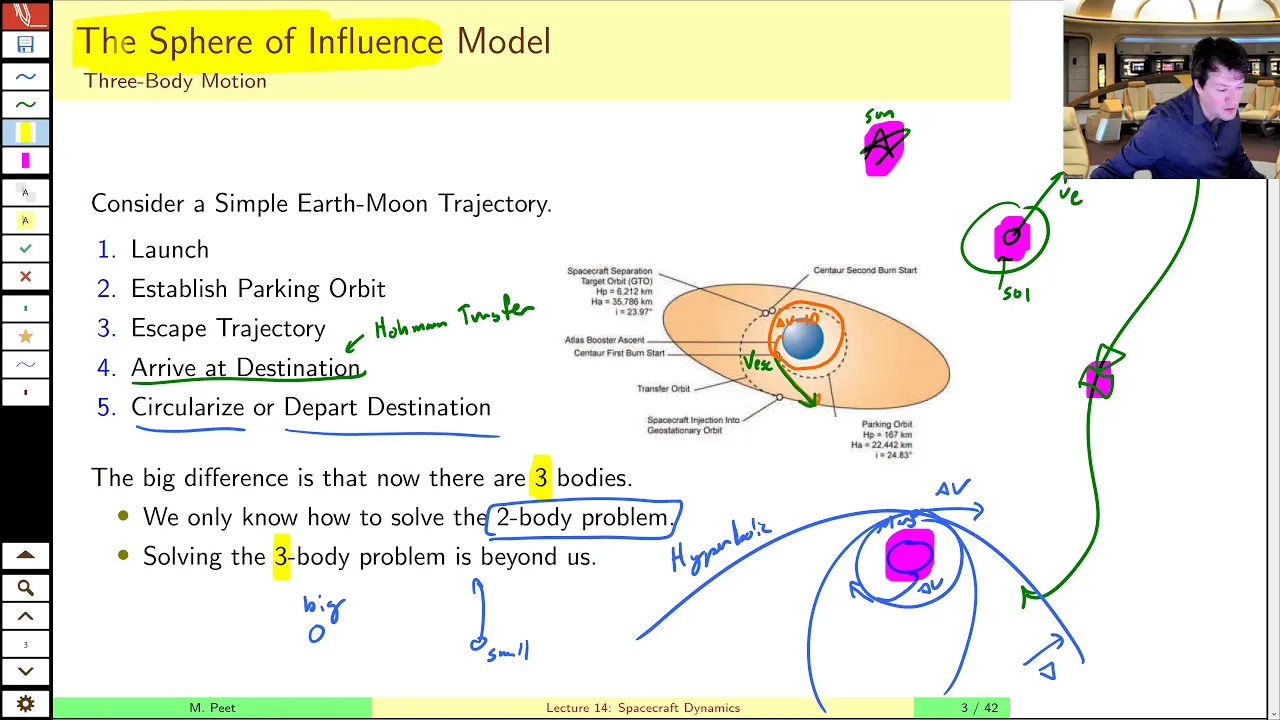
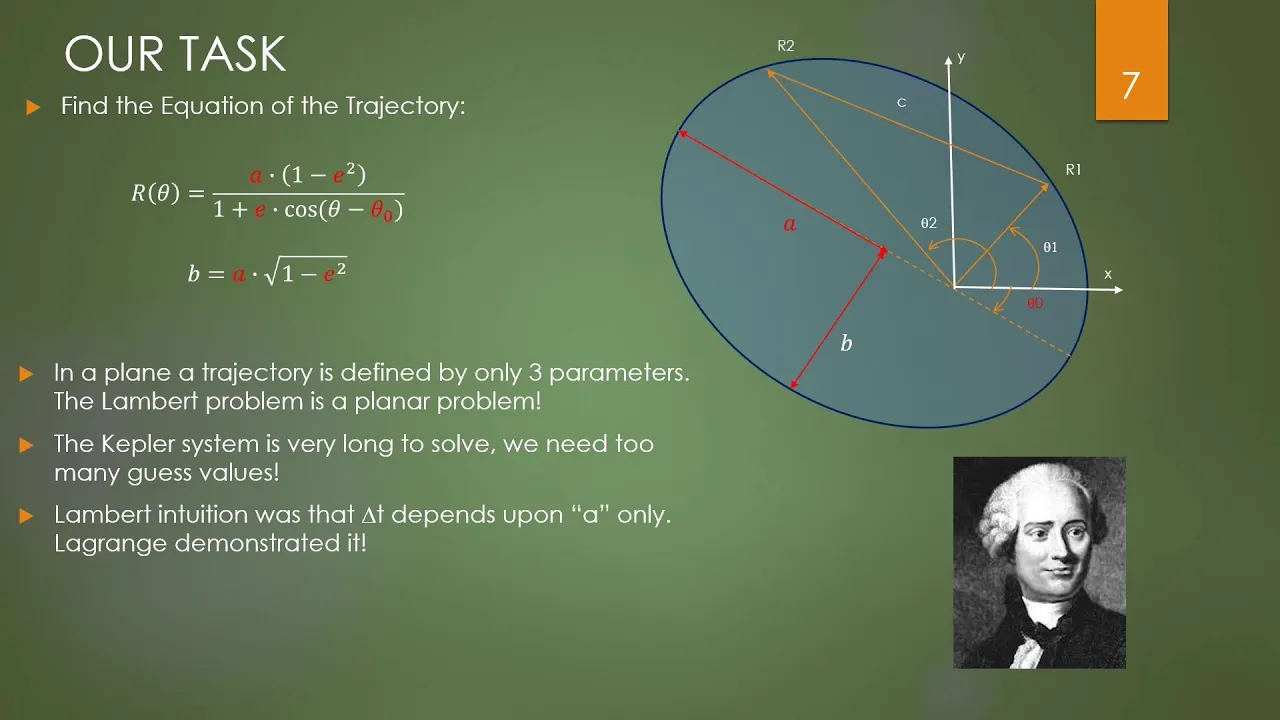







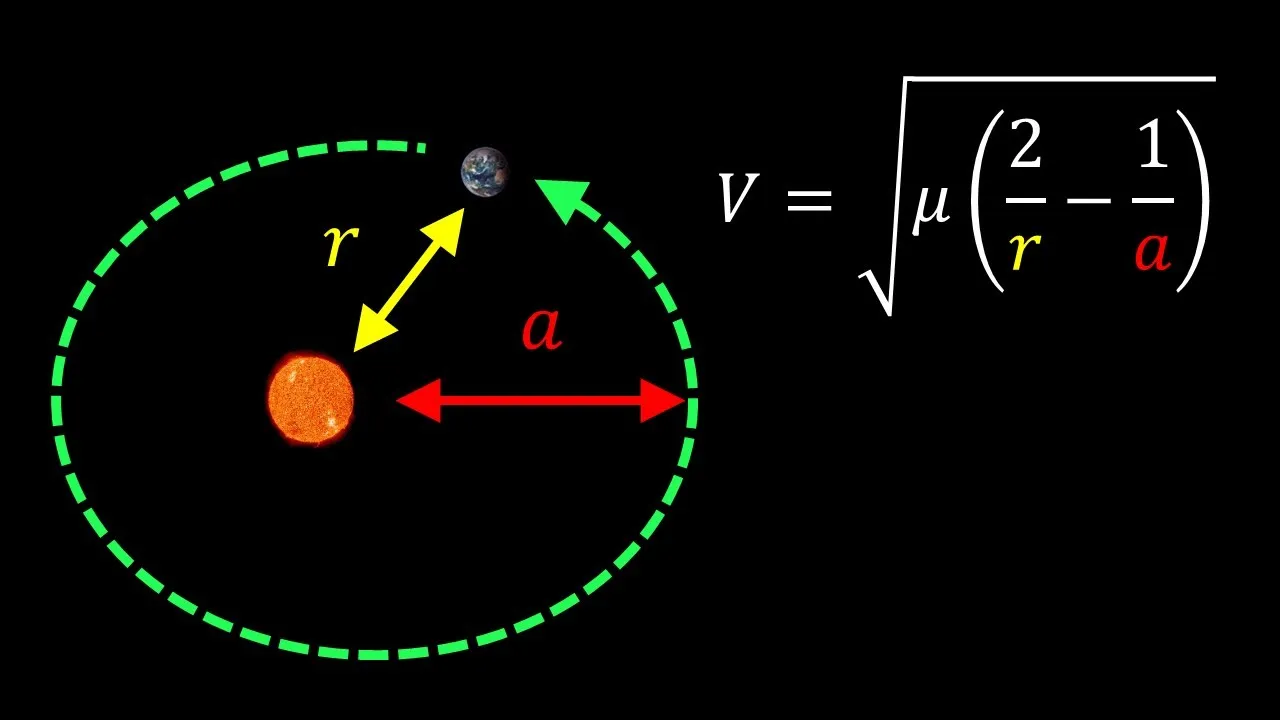
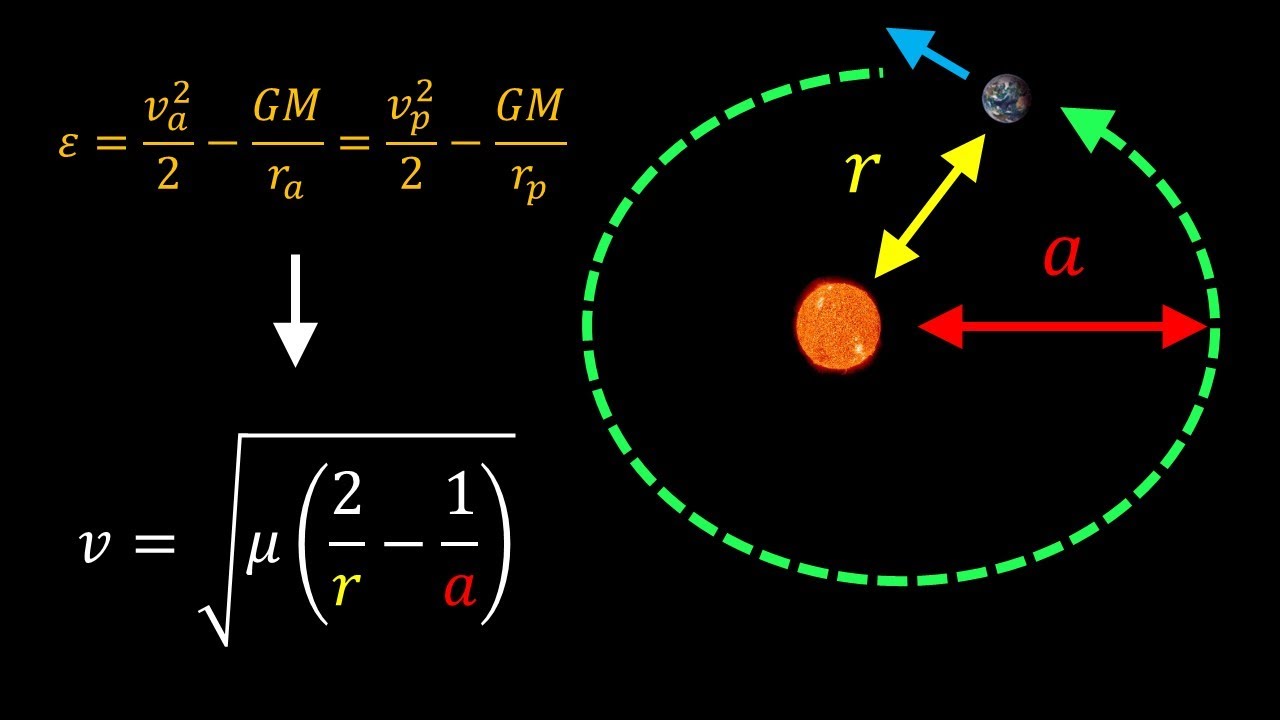
Hohmann transfers are the most efficient two-impulse method for transferring between two circular orbits around a central body, where the spacecraft performs two velocity changes (delta-V burns) at specific points in its trajectory; for orbit-raising transfers like Earth to Mars, both burns increase velocity in the direction of motion, while for orbit-lowering transfers like Earth to Venus, both burns decrease velocity opposite to motion; the calculations involve determining the semi-major axis of the transfer orbit as the average of the two planetary distances, computing velocities using the vis-viva equation v² = μ(2/r - 1/a), and finding the time of flight as half the orbital period π√(a³/μ); however, this analysis assumes two-body dynamics and ignores gravitational perturbations from other planets, requiring more sophisticated methods like Lambert's problem and patch conics for higher fidelity simulations.
Hohmann Transfer Calculations: Earth to Mars and Venus | Orbital Mechanics with Python
Added:this video will be going over two examples of interplanetary home and transfers one for an earth to mars transfer as is the animation on the right and another for an earth to venus transfer as a scene on the left now notice that homo transfers can be used to either transfer to a larger orbit in the case of earth to mars or smaller orbit in the case of earth to venus i'll be going over all the necessary calculations to do this type of analysis including delta v semi-major axis and time-of-flight calculations and how to plug these into python and i'll also be going over all the simplifying assumptions that are made in this types of analysis and the next steps required for higher fidelity simulations to the 36th video in the series and this one i'm going to be going over interplanetary home and transfers now i already have two videos on home and transfers that go farther into the details of them and i'll have links in the description but i'll give a quick review on the slide so home and transfers are the most efficient two impulse transfer between two circular orbits and note that it's two impulse because in some cases a by elliptical transfer with three impulses costs less delta v than homo transfers so let's go over the differences between homo transfers that lower and raise in orbit so on the left we have the earth to venus transfer where the goal is to go from earth's orbit around the sun to venus's orbit in this case we are decreasing the semi-major axis of the spacecraft so when departing from earth the thrust needs to be in the opposite direction of the velocity so the spacecraft slows down its orbit around the sun and that's denoted here in the diagram and once the spacecraft arrives at venus in my major axis it must again thrust opposite direction of its velocity to decrease the semi-major axis when it gets there so as it's leaving earth it needs to thrust opposite of its velocity vector to slow down and then once it gets over here to venus it needs to once again thrust in the upward direction which is opposite to its velocity to get into the venous orbit now to raise the orbit is an opposite idea so when departing from earth and needing to get into mars orbit the spacecraft must increase its helocentric velocity and the thrust must be in the direction of the velocity vector so that's shown here where initially the spacecraft's at earth needs to increase its velocity so thrust in the velocity direction to raise its orbit and once again when it gets to mars it needs to thrust in the direction of its velocity again to raise the orbit to match mars so first we need to know the velocities of the planets and the velocity of the spacecraft in its transfer orbit when it is departing earth and arriving at venus or mars now since we're assuming that the planets are in circular orbits we can find their constant velocities the simple equation of circular orbits which is shown here that the velocity of a circular orbit at any time because it's uniform constant because it's a circular motion is equal to the square root of mu where mu is the gravitational parameter of the central body in this case that would be the sun over r where r is the distance from the sun to the planet and that is constant because it's in circular motion now the transfer orbit is elliptical so its velocity is changing as its distance from the sun is changing so the farther away it is the slower that it goes but we can calculate the transfer orbit velocity as a function of its distance from the sun with the v's viva equation so that's shown here where the velocity of an elliptical orbit squared is equal to mu gravitational parameter in this case would be the sun 2 over r where r is its current distance so how far is it at the very moment that you want to know its velocity from the sun minus 1 over a where a is a semi-major axis of the transfer orbit and then you can really quickly solve for that just take the square root of both sides to get that the velocity of an elliptical orbit is equal to this so that's going to be the velocity we're going to want to know the velocity here when it departs earth and here when it arrives at mars now we also need to calculate the semi-major axis of the transfer orbit which is actually a very simple calculation so say my major axis of the transfer orbit is simply equal to the average of the two planets so in the case that we're going to mars as i've shown in this diagram it's just how far away is the earth from the sun plus how far away mars is from the sun over two very simple and then the same case for venus with this information we can now calculate the delta v values for the mars transfer so the first delta v is equal to the velocity of the transfer orbit when it leaves earth minus the earth's velocity in its circular orbit and since we know the semi-major axis of the transfer orbit we can plug that into the equation and calculate the delta v so when you're here and the spacecraft is leaving earth the earth has some velocity which is this blue arrow and the spacecraft needs this purple arrow that amount of velocity to escape and get on its home and transfer so that's going to be equal to and the necessary delta v in order to get that is going to be equal to the elliptical velocity minus the circuit velocity which is given from the v's vivo equation where you plug in the semi-major axis of the transfer orbit and for the r value it's r of earth because it's currently leaving earth and then you subtract the square root of mu of the sun over r of earth which is equal to the velocity of the earth and the second delta v value is equal to the circular velocity of mars minus the velocity of the transfer orbit when it gets to mars to my major axis so again here mars has a greater velocity when it gets to here as is denoted in the red arrow versus the elliptical orbit when it arrives so it needs to make up that velocity by thrusting in its velocity direction and that amount is equal to the circular velocity at mars minus the elliptical orbit velocity which is equal to the square root of the sun over r mars how far mars is away from the sun minus again the vivo equation where you plug in the semi-major axis of the transfer orbit and the distance that mars is away from the sun and again notice that mars velocity is greater here than transfer orbit so it needs to raise its velocity again now the time of flight of the spacecraft to get from one planet to another is equal to half of the transfer orbit period and you can see this intuitively the diagram where the transfer orbit goes to half of its period so it starts here goes 180 degrees and true anomaly and it ends up over here and we know the semi-major axis of the transfer orbit and that's pretty much all we need in order to be able to calculate the period of the orbit and then we're just going to divide it by 2 so that's going to be equal to pi times the square root of the semi-major axis cubed over the gravitational parameter of the sun now plugging all these equations into python we get the following results for the earth to mars transfer we're here i'm denoting a as a's this is my major axis but it's the same thing as r as i've been showing in the equation since it since it's a circular orbit is equal to this value the distance from mars to the sun is equal to this value you find the semi-major axis of the spacecraft the transfer orbit you find the eccentricity of the transfer orbit that didn't go over but you don't need it to do the calculations that i'm showing that's for other calculations to make the animations and then the time of transfer is equal to that equation we get the velocity of earth velocity of the spacecraft when it's departing earth when it's arriving at mars the velocity of mars and the delta v required for each of the two burns and then printing it all out we had the results that the velocity of earth would be 29.7 kilometers per second and you need about 2.94 more kilometers per second to get into that transfer orbit and the same thing is that when you get to mars you need about 2.64 more kilometers per second to get into the orbit and that would take roughly 260 days and here is a gravitational parameter of the sun if you wanted to plug this in yourself and see the numbers there's a lot of simplifying assumptions that were made for this analysis and if you'd like to go deeper into what it takes to do an earth to mars transfer here are some things that you need to consider so the first thing is that all this analysis was done using two body dynamics so just we're just looking at orbits that are taking place around the sun so there's no consideration of the other planet's gravity so say when you're leaving earth the earth is still pulling on you and this analysis didn't consider that and there's also no consideration of the final orbit that you want to get to so in this case we're just thinking we want to match an orbit that is equal to mars orbit around the sun but in reality if you want to go to mars you need to capture into mars orbit and that's going to be dependent on what semi-major axis that you want in mars orbit and one way to do this would be through patch conics so that means when you're leaving earth you get on a hyperbolic flyby trajectory so you give yourself enough velocity to escape and once you get far enough to the edge of the sphere of influence of earth then you switch that you're now considering a heliocentric orbit versus a hype that's an elliptical heliocentric orbit versus a hyperbolic earth orbit there's also n-body dynamics so say when you're out in between the planets the other planets are actually going to pull on you with their gravity so say jupiter is going to pull on you it's going to change your trajectory you also have to consider the escape direction so you need to actually make sure that you're pointed in the right direction when you escape earth in order to be able to reach where you want to go and also this isn't the only type of solution that you can get because home and transfer just considers the most efficient way in the delta v sense but there's other things that you must consider when doing space missions say time of flight so you can do a lambert solution and you can create a pork chop plot of different i want to leave i want to have a window where i can leave through these dates say a year and i want to arrive at these states so you can take a look at how your delta v is going to be affected by the time of flight and depends which one matters more for you and i've also done videos on lambert solution which i'll have a link in the description too if you're curious about that so that's pretty much it for this video uh be sure to hit like and subscribe if you like the video and the comment that what you thought to help me out with the youtube algorithm and for the next videos as far as the orbital mechanics of python series i have a bunch of different ideas um and there are no particular order so if you have an interest in seeing one of these topics just go ahead and let me know i'm kind of thinking about graveyard orbits because they're kind of an interesting topic but yeah just let me know if there's any interest in any of these because there's a lot and currently i'm working through a numerical method series as a prereq i'm doing a lot of prereqs for it so i'll be doing a principal axis rotation euler angles and quaternions and then i'm going to go ahead and start with the spacecraft attitude control series so let me know also how much their interest there is in that
Up Next

Interplanetary Trajectory Astrodynamics | Patched Conic Approximation
@tingdong2263
135 views•2021-09-02

21cm Hyperfine Transition in Neutral Hydrogen: Radio Astronomy Basics
@AaronRobertParsons
12.4K views•2011-10-13
Gravitational Sphere of Influence | Orbital Mechanics with Python
@alfonsogonzalez-astrodynam2207
3.6K views•2021-05-02

Entropy and the Second Law of Thermodynamics Explained
@veritasium
27.5M views•2023-07-01
Related Study Plans & Knowledge Roadmaps
Structured learning paths in Physics