


![[에듀마켓] 2022년 군무원 국어 오훈T의 소설의 이해](https://i.ytimg.com/vi/EdehLzjTVnE/maxresdefault.jpg)












In film, perspective refers to how viewers experience events through the lens of characters or external observation; subjective perspective immerses audiences in a character's sensory and emotional experience (like hearing sounds only they can hear or seeing the world from their physical viewpoint), while objective perspective presents events from a detached, external viewpoint that may reveal information unavailable to characters, and filmmakers must strategically choose which approach best serves their narrative, as demonstrated by contrasting scenes from Oppenheimer, Twin Peaks, and Barbie.
Cinematic Perspective: Subjective vs Objective in Film
Added:Understanding basic camera terminology, particularly the distinction between Point-of-View (POV) shots, over-the-shoulder shots, and establishing shots.
Familiarity with the literary concepts of narrative perspective, such as first-person (subjective) and third-person (objective) storytelling.
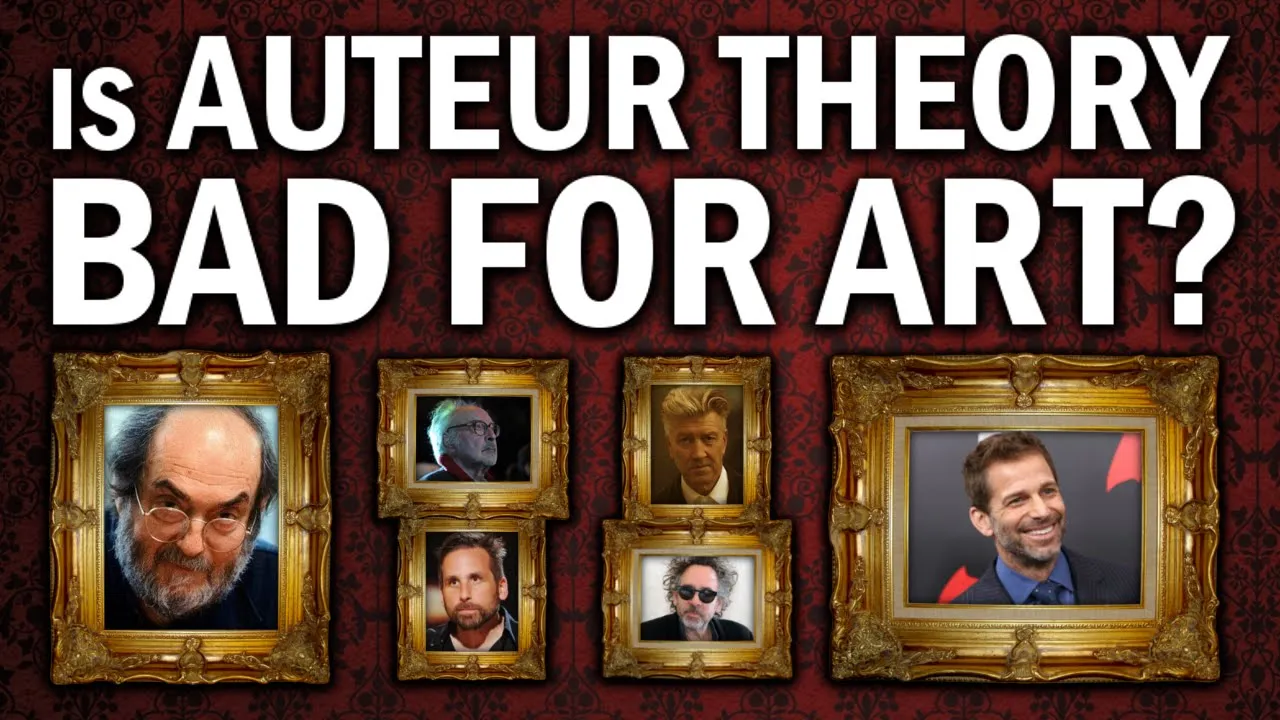
An introduction to Auteur Theory and the distinct thematic and visual styles of directors like Christopher Nolan, David Lynch, and Greta Gerwig.
Basic knowledge of film editing principles, specifically how cutting between shots can manipulate a viewer's emotional and psychological identification with a character.
Analyzing 'unreliable narration' in cinema, exploring how highly subjective framing can be used to actively deceive the audience about narrative reality.
Studying the role of sound design (diegetic vs. non-diegetic, and internal soundscapes) in reinforcing or subverting subjective and objective visual cues.
Deconstructing genre-specific uses of perspective, such as restricted narration in psychological horror versus omniscient narration in historical epics.
Applying these concepts practically by storyboarding or filming a short scene using transitions between objective reality and a character's internal subjective state.
297.2K views11Klikes25:25Original Release: 2023-12-19
On what happens when two directors depict the same event using radically different approaches.
If you were one of the viewers of the first nuclear detonation on July 16th, 1945, the time between when the blinding light of the explosion first hit your eyes and when you first heard the sound of that explosion would have been around 30 to 90 seconds, depending on where you were located.
So when Christopher Nolan incorporates this sound delay into Oppenheimer, not only is it accurate and dramatically effective, but it's also a great example of the use of subjective perspective in a film.
While the scene doesn't play out from the perspective of a single viewer, it is strictly limited to the perspective of the observers themselves.
While he's showing the explosions and makes that very calculated decision to never give us a more distant, objective overview of the scene like he did here just moments earlier in the film.
Instead, he grounds us in the immediacy of what the characters we've been following throughout the film would have actually experienced on that day.
Even when we do see the explosion.
It's always from the angle that the observers would have seen it from.
This scene is a great example of sonic and visual subjectivity in film.
Now compare that to this the way David Lynch depicts the exact same event in Episode eight of Twin Peaks The Return.
What we get here is essentially a two minute unbroken take that flies us directly into the heart of the explosion, down to the level where the atoms themselves are splitting apart.
It's a perspective that's completely detached from the way any real person could have experienced this event.
And it's a great example of objective perspective in film.
I think this scene was one of the most effective in Oppenheimer, and this scene was one of my favorites in the entire third season of Twin Peaks.
And it's not because I love watching things blow up.
It's because of the way each of these scenes uses perspective.
This video is sponsored by Nebula.
Get 40% off the annual plan and support my work when you sign up today.
Lynch is treating the explosion as a kind of abstract metaphysical event in his story, and so depicting it in a way no actual real life person could have experienced.
It makes sense for the story he's telling.
Nolan, on the other hand, is telling the story of Oppenheimer himself.
So focusing on a more individual subjective experience serves his story best.
I saw Barbie the day after Oppenheimer, and my favorite scene from that film also included a very strong use of subjective perspective For most of the film we're following Barbie narratively in the story, but visually the camera is more clinical, objective and removed, emphasizing the studio artifice of Barbie's world that Greta Gerwig is intentionally drawing our attention to.
But when Barbie leaves this artificial, corporately constructed fantasy land and for the first time experiences human emotions in the real world, look at what happens to the film's visual perspective.
In this moment, it's like we've suddenly slipped into a different kind of movie and simultaneously into Barbie's literal point of view.
I think it's a wonderful depiction of these moments in life where you kind of wake up to reality fakeness of the corporately constructed modern world just slips away and you see life kind of as it really is.
People living, experiencing difficult, complicated and wonderful emotions.
But the power of this moment doesn't just come from Greta Gerwig putting us literally in Barbie's visual perspective.
She's also using the shift in the style of filmmaking to reflect Barbie's emotional internal state to the viewer.
The film is taking on Barbie's emotional perspective because the filmmaking style is reflecting Barbie's emotional experience, how Gerwig chooses to shoot and construct the scene doesn't reflect Ken's experience, another Barbie's experience, or just vaguely the experience of everyone who's living in that moment in the world.
It reflects Barbie's experience specifically.
So this is an example of how not just the position of the camera and what we're seeing, but the filmmaking style itself can reflect an emotional perspective.
When we think about and talk about perspective in film, most of what we think of is this When we talk about objectivity and subjectivity, often we're talking about camera movements or the position or angle of the camera.
But perspective and film runs much deeper than this, and I think it's actually one of the most powerful tools cinema has at its disposal.
It can be the emotional heart of an entire story.
It can be shaped by everything from performances to editing and it starts with how you write your story.
But it's also a complicated idea that I don't think it's talked about enough.
So let's try to untangle some of this.
What is perspective in its deepest sense?
How is it formed and how does it impact a film?
Because whether you're a filmmaker looking to tell the most effective stories or just a cinephile looking to better understand what you're watching, I think understanding perspective and how it's used is a very important part of understanding film.
Let's start by talking about this distinction between objective and subjective perspective.
Most likely, you kind of have an innate sense of the difference between these two, even if you haven't thought about it before.
But how do we really tell if an aspect of a movie is objective or subjective?
Here's how I tend to approach reading the perspective of a scene or a specific choice that a filmmaker is making.
If a filmmaking decision, whether it's a camera move, an edit, what we hear or what we see is motivated by the experience of one or more characters within the scene, then it's subjective.
But if how the scene is shot, what we see, how the scene is cut is more neutral or is reflective of an experience that kind of stands outside the experience of any of the characters within the scene, then it's more objective.
These choices can have a huge impact on how a film or scene feels.
For example, I think a big reason why, for me, Tom Cruise's stunts in Mission Impossible Fallout go unbelievably hard.
While the big stunt in Mission Impossible Dead Reckoning part one kind of falls flat is because of the more effective use of subjective perspective for the stunts in Fallout.
In the Fallout scenes, we're right there with Cruise and we can see he's doing it all himself.
Whereas here, not only do we feel much more removed from the action because of the very objective perspective, but despite the fact that we know Cruise himself did this jump because of his reputation and because the film's marketing really drove that point home, it could have easily been a stunt double doing this.
We can't even see that it is Tom Cruise.
So you can go to all this work to plan an incredible stunt and get Tom Cruise to do it.
But if you shoot it from the wrong perspective, you kind of undercut all that work.
I think it's useful to think of subjectivity and objectivity as a kind of spectrum.
For example, I described this scene in Oppenheimer as subjective relative to this scene from Twin Peaks.
But that doesn't mean that this scene couldn't be even more subjective.
If, for example, Nolan had confined the experience of the scene to what Oppenheimer was experiencing in another, I think, very effective scene in Oppenheimer.
That's literally what Nolan does in this scene.
We're hearing and seeing things that only Oppenheimer is experiencing in his imagination, literally being inside a character's imagination or mind is about as subjective as it gets.
Apologies while I take a quick semantic sidebar here to avoid some confusion, it's important to note that when I'm talking about objective and subjective in this essay, the objective perspective is not necessarily the more accurate or more factual perspective.
If we're talking about events based on true stories, scenes shot objectively can distort facts and get them wrong just as much as scenes shot subjectively.
And if we're talking about fictional stories, scenes can be more objective or subjective, even though the whole thing is a fiction.
We'll explore this a little bit more later because there's some interesting implications here.
But what you need to know for now is that subjectivity and objectivity just refer to how we perceive the events in the film, not whether or not those events are actually factual.
David Fincher's latest film, The Killer, is a great example of a tightly subjective, visual and sonic perspective.
A lot of times film sound is pretty objective.
What you're hearing is just a vague approximation of what the camera would be hearing or more accurately, what a microphone floating above the heads of the characters would be hearing.
But it is possible for the audience to hear something that sounds more like what one of the characters within the scene is literally hearing.
When we hear the music that's playing just through his earbuds, we're inside his sonic perspective.
But that's not why I bring up this film.
I bring it up because it's a great example of another important kind of perspective, narrative perspective, the narrative framing of an entire film can also land somewhere on this spectrum between subjective and objective.
A movie like The Killer is extremely subjective because for one, we're placed inside his mental headspace through the use of voiceover.
That essentially sounds like his internal monologue.
It's the idle hours that most often lead a man to ruin.
But more importantly, the plot information that we receive as the audience is entirely filtered through the information that the killer receives throughout the film.
Fincher never cuts away from the character of the killer to fill us in on a plot point or give us a piece of information that the killer himself doesn't have.
Our perspective of the narrative as a whole is tightly constrained to the killer's experience and knowledge.
Almost the complete opposite of this would be a movie like The Big Short.
Mortgage backed securities, subprime loans, tranches.
It's pretty confusing, right?
So here's Margot Robbie in a bubble bath to explain.
Basically here, the delivery of information is completely detached from whether or not any individual character is receiving it.
Instead, the narrative perspective of the film is objective, almost to the point of being more like an essay or a documentary than a narrative film.
Another movie that's almost the opposite from the killer thematic, but which also very effectively uses a tight, subjective perspective narratively and visually, is the quiet girl from last year.
We experience almost everything in the film narratively and visually from the perspective of the main character who's a child.
And this often comes down to even just placing the camera at the height of a child when shooting adults in the film.
Most movies narrative perspective falls somewhere between the tight subjectivity of the killer and the broad overview, like objectivity of the Big Short.
A movie like No Country for Old Men has a kind of split subjectivity, objectivity.
Each individual scene is very tightly subjective.
In each moment, we only follow one character and we only experience what they're experiencing.
For example, in this scene where Anton Chigurh is hunting down Llewellyn.
We stay with Llewellyn perspective throughout the scene, Even though there have been other scenes in the movie where we've been following Anton's subjective perspective.
But even though the narrative approach in each scene is very subjective because the film as a whole follows a bunch of different subjective perspectives, the entire film has more of an objective narrative perspective that's built by sampling all of these very tightly subjective moments when I really want to drive home, as we're talking about this, is that it's not about one perspective or one use of perspective being best.
It's really about understanding which perspective is going to be best for the story that you're telling and when to switch between perspectives if that's something that will be useful for your story.
Predictably, Hitchcock is going to come up because he was a master of this in a story like Notorious.
He tends to follow pretty tightly with the subjective perspective of the two main characters.
We only really get information as they get information, and most of the scenes include one of those characters.
But in this scene, they're trying to sneak away to a wine cellar at a party to gather some information, and they know that the champagne is going to run out at a certain point, which would lead to the servant getting more champagne from the wine cellar and their discovery.
Hitchcock could play this scene entirely in their subjective perspective, but he chooses to cut away to a more objective narrative perspective momentarily.
Just a clue the audience into what's happening with the champagne, just for the purpose of creating more suspense, dramatic irony, or letting the audience in on a piece of information that one or more of the characters doesn't know is essentially a manipulation of perspective.
But again, there's no one right path here that's best.
Sometimes the scene is more suspenseful when we know that the character's enemy is hiding behind the wall, and sometimes the scene is more suspenseful.
If we stay tightly within that character's subjective experience and we're just as in the dark as they are, it's something that filmmakers kind of have to fill out.
But if you're not even thinking about the perspective of the scene, you're going to miss this entirely.
When it comes to narrative perspective, whether or not the perspective is going to be more objective or subjective and when to switch between them is not the only thing you need to think about.
If you're using a subjective perspective, which pretty much every film does to some degree, One of the first considerations a writer needs to make is What perspective am I going to tell this story from?
Martin Scorsese.
He was two years into working on the screenplay for Killers of the Flower Moon when Leonardo DiCaprio came to him and asked the question, What is the heart of this story?
After some reflection course as he realized that the heart of the story he was trying to tell really lay more with the Osage tribe and less with the FBI agents investigating the crimes, which is what he had been focusing on so far.
Realizing this, they rewrote the script to include more of the perspective of the Osage people, the perspective of the men investigating the crime is a perspective we've seen time and time and time again in movies and TV.
So making this change didn't just make the story more original and artistically compelling.
I think it actually told the more important story by focusing on the perspective that recognizes the experience of those most directly affected by these horrific serial killings.
And this brings us to a very interesting consideration when it comes to perspective in film.
Even though the script was rewritten to incorporate more of the Osage perspective, technically the film still focuses more on the villains than the native perspective.
And even if it had focused entirely on the native perspective, technically that Native perspective would have been Martin Scorsese's depiction of his perception of that perspective, which would be different from that perspective being depicted by someone who themselves is within that perspective.
Even though a film can depict more objective or subjective perspectives.
Technically, both of those depictions are still from the perspective of the filmmakers themselves.
Scorsese He's trying to depict this perspective accurately by consulting with and including people from the Osage tribe in the filmmaking process.
And I think it's great that he's including this perspective rather than excluding it.
I'm not saying it's a bad movie because of this.
It's one of my favorite movies of the year.
I think it's just important and interesting to make this distinction between someone depicting another person's perspective and someone representing their own perspective.
If you're interested in learning more about this, particularly as it relates to native perspectives or the killers of the Flower Moon, I highly recommend Elias Gould's video about this on his channel Native Media Theory.
This is a big part of why representation is itself important, both in front of and behind the lens.
The male gaze is a product of men historically just representing their perspective of women in cinema.
White savior narratives and film are also a product of perspective.
Being able to see perspectives that we can relate to, as well as perspectives that are very different from our own is a huge part of the power of cinema and art as a whole.
I don't see the world the way most people do due to the ocular effects of migraines that I often have.
Sometimes when I look at the sky, I see what I can only really describe as a film grain effect.
And when this isn't happening due to my mild colorblindness, where most people see something like this, I see something a little bit more like this.
These two things are a kind of constant reminder of the subjectivity of my perception of the world.
But even if you don't have these kind of biological phenomena that I do, altering how you see the world, your perspective is still subjective and unique to you.
You can put a hundred people in a room and they all have literally a different perspective of that room.
Even if they could stand in the same place, it would have to be at different times.
And even if they saw exactly the same thing, they still have different internal emotional spaces, memories and experiences in the past that might affect how they experience what's happening in that room, whether it's a piece of art, conversation or interactions with other people.
But this subjectivity is sort of paradoxical because while those people can have 100 unique perspectives, there's still a lot of experience that is universal.
There are many things we all feel and experience in common.
One of the things I really love about cinema, something that keeps me interested in it beyond just being something to pass the time, is the unique power it has to bring us into another perspective.
Sometimes this is interesting because it's bringing us into somebody else's subjective perspective, and sometimes it's interesting because it's allowing us a more objective perspective than any person could have in their own experience.
Perspective is an ever present part of life.
It shapes what we see and how we see it.
So tools that allow us to shift into a more objective perspective or allow us to glimpse another subjective perspective aren't incredibly valuable.
Seeing different perspectives expands our understanding of the world.
Comparing as many subjective perspectives as possible is how we get to an understanding of what objective reality even is in the first place.
I love when a film gets to show me an experience that I've never had, one that's new to me, but it's equally valuable to me to find myself relating to and finding commonality with the perspective of someone in a different time, place or culture.
Every shot, film or scene automatically has some kind of perspective.
Perspective is just naturally part of the process of telling a story in the same way light is just naturally part of the process of cinematography.
But you could just allow the light to arbitrarily be whatever it naturally is, or you can use light as a tool to help tell your story.
The same is true of perspective.
You can not think about it and just shoot your film and it'll have whatever perspective it has.
But I think the greatest films understand what their perspective is, why they have that perspective, and use it with narrative intention.
But it doesn't end with cinema.
While I've been talking about this, have you thought yet about the perspective of this video?
Obviously, I'm presenting my own perspective narratively, but stylistically it's pretty objective in delivery.
But there's also a visual perspective to the video that impacts the way it feels with the camera right here.
As I'm talking to you, hopefully it feels fairly direct, informal and comfortable.
But if I were to put the camera out here in the hallway, suddenly the more voyeuristic, removed perspective changes how things feel.
This is the technique that Benny Safdie and Nathan Fielder are using throughout their new show, The Curse, where many scenes are shot with this kind of removed voyeuristic camera peeking around corners and through doorways.
The two main characters in the show are desperate to present a certain image of themselves to the outside world, and they do this by performing any time they're in front of a camera or someone they want to make an impression on.
The show highlights the absurdity of this couple's attempt to perform their lives to others by showing us moments where they're performing and moments where they're being themselves in long, unbroken scenes.
The removed voyeuristic perspective of the camera is a very important part of this because it makes us feel like we're seeing them even when they don't think they're being seen by anyone.
The show is poking at an uncomfortable reality that many of us know in the back of our minds that whenever we watch something on reality TV or on social media, whether it's an Instagram reel or a YouTube video like this, the perspective of the creator shapes what you're watching.
Well, there's a beauty that I've talked about in how cinema can form and wield perspectives.
There are many people who are invested in passing off their subjective perspective as objective reality, and filmmaking gives people the tools to do this shockingly well.
That distinction I made at the beginning where I said that an objective perspective does not necessarily mean more factual.
This is something that trips us up a lot.
This is the whole basis of reality TV.
Reality TV often distorts and fictionalizes reality just as much as fictional film can.
But the whole genre is based on a style of filmmaking that makes it look and feel like you're watching a more objective perspective, like you're watching reality.
This same dynamic is true of social media.
It's good media literacy to realize that every piece of media that you look at has some kind of perspective.
Even when something has the impression of objectivity and doesn't feel like it has a subjective perspective.
It ultimately does, to a certain extent, the perspective shaping tools that cinema has available come into play even the moment you turn on your phone camera and we're all using them without even being aware of it.
The tightly controlled perspective I'm showing you of my office right now makes me look like less of a disorganized and messy person than I actually am.
This kind of shaping of reality happens every time we turn on a camera and choose to pointed at one thing instead of something else.
Perspective is ultimately an aspect of media that we can't avoid, so we should be aware of it, acknowledge it, and be mindful of how we use it.
Jetlag is my favorite thing to watch right now on Nebula, a sort of reality travel game show.
And one of the things that I like about it is unlike the reality TV shows you watch on television.
In this, the participants themselves film the show.
There's something so fun and immediate about the tightly subjective perspective of how it's shot that makes it feel like you're really hanging out with Sam, Ben and Adam and their guests as they chase each other all around the world.
There's a quality to it that I don't think it would have if it was shot from a different perspective.
It's a lot of fun, and I watch each episode when it comes out a week early on Nebula.
You can also find my usual videos early and ad free on Nebula.
Alongside this bonus video I made about visual perspective in the Batman that you can find only on Nebula.
Nebula is a streaming platform that a bunch of other creators and I created together so that we could create kinds of content that we wouldn't normally be able to make on YouTube.
Having different platforms that we can put our content on that have different economic incentives allows us to make exciting and interesting stuff on top of our existing YouTube content that we wouldn't be able to if it weren't for Nebula.
If you want to see this new, exciting content that we've made and that we're working on and you want to support myself and other creators signing up for Nebula is a great way to do that.
If you use my link in the description below, you'll get 40% off the annual plan.
It's a really affordable way to support my work.
While getting access to a whole host of Nebula Originals.
Nebula hosts a bunch of different perspectives on film and television in addition to mine.
And if you sign up using my code, it will support my channel directly.
Right now, for a limited time, we're also offering lifetime subscriptions so you can pay a one time fee and get access to Nebula for as long as both you and Nebula are around.
Nebula is a platform I'm really excited to be a part of.
So check out the new season of jet lag.
That's coming up.
Or my video on visual perspective in the Batman.
When you sign up using the link below or by clicking the link on the screen.
Up Next
31:36
Sex and the City 2: A Critical Analysis of Gender and Consumerism
@mothcub
1.1M views•2024-02-18

23:14
Visual Analysis Essay: How to Analyze Graphic Novels in College Writing
@nataliepleimann5941
1K views•2020-10-14

13:00
German Expressionism's Enduring Influence on Film Style
@ThomasFlight
781.3K views•2022-02-22

4:00
Evolution of Darth Vader: Anakin Skywalker's Animated Journey Across Star Wars Films
@TellItAnimated
13.4M views•2019-03-30
Related Study Plans & Knowledge Roadmaps
Structured learning paths in Film Analysis
film-analysis
Sensory Cinema: Foley, Haptic Sound & Texture
01Introduction to Film Sound and Foley Artistry
02Micro-Sounds, Textures, and Extreme Amplification
03Haptic Audition and Film Phenomenology
+ 1 more learning modules
12h4 modules
Explore Roadmap
film-analysis
Breaking the Fourth Wall: Mockumentary & Satire
01The Invisible Wall: Basics of Cinematic Illusion
02Looking at the Lens: Direct Address & Character Glances
03The Mockumentary: Satire, Realism, and Complicity
+ 2 more learning modules
12h5 modules
Explore Roadmap
film-analysis
Analyzing the Long Take: Cinema, Space & Ethics
01Foundations of Film Grammar: Montage vs. The Long Take
02Choreography and Mechanics of the Simulated One-Shot
03Phenomenology of Film: Real-Time Spatial Continuity
+ 1 more learning modules
14h4 modules
Explore Roadmap
film-analysis
Anachronistic Music: Period Drama & Subversion
01Foundations of Film Sound and the 'Needle Drop'
02Traditional Authenticity vs. Revisionist History
03The Rise of the Anachronistic Soundtrack
+ 2 more learning modules
12h5 modules
Explore Roadmap