








![[HÓA 11] Khái Niệm Về Cân Bằng Hóa học (Sách Cánh Diều, Kết Nối Tri Thức, Chân Trời Sáng Tạo)](https://i.ytimg.com/vi_webp/0_uc9eRWITA/maxresdefault.webp)















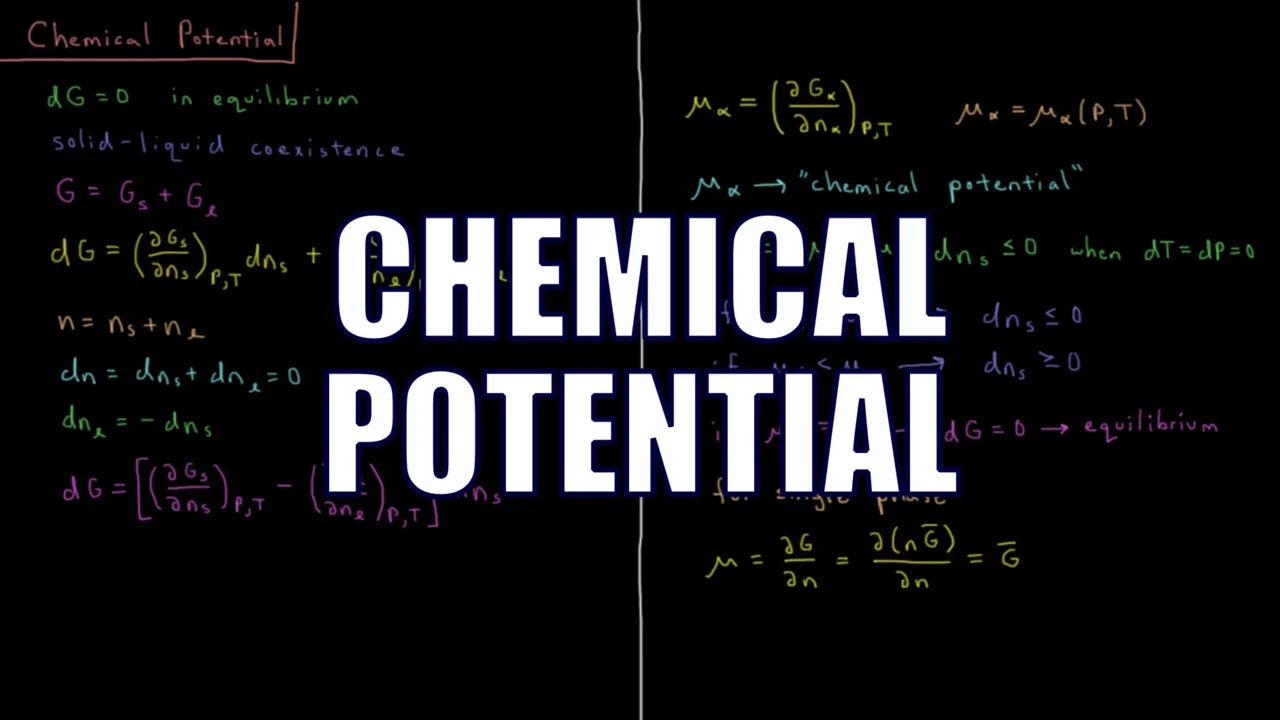

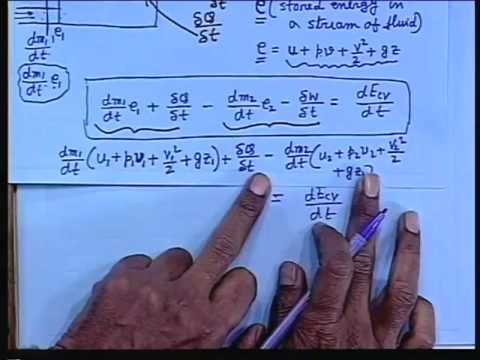
The Gibbs free energy (G = H - TS) is a thermodynamic potential that determines the direction of spontaneous change under constant temperature and pressure conditions, which are the most convenient experimental conditions in chemistry; its differential form dG = -SdT + VdP allows calculation of how Gibbs energy changes with temperature and pressure, and through Maxwell relations derived from mixed second derivatives of thermodynamic potentials, we can relate entropy changes to measurable equation-of-state properties (P, V, T), enabling prediction of spontaneous processes and equilibrium states for chemical reactions and physical transformations.
Gibbs Free Energy | MIT 5.60 Thermodynamics & Kinetics
Added:The concept of Enthalpy (H) and the First Law of Thermodynamics, focusing on heat transfer at constant pressure.
The Second Law of Thermodynamics and the definition of Entropy (S) as a measure of energy dispersal and spontaneous change.
The definition and properties of thermodynamic state functions versus path functions.
Basic understanding of chemical stoichiometry and the concept of dynamic chemical equilibrium.
The quantitative relationship between standard Gibbs Free Energy change and the chemical equilibrium constant (K).
The temperature dependence of Gibbs Free Energy and reaction spontaneity analyzed via the Gibbs-Helmholtz equation.
The connection between Gibbs Free Energy and electrochemical cell potential (E) to determine maximum non-expansion work.
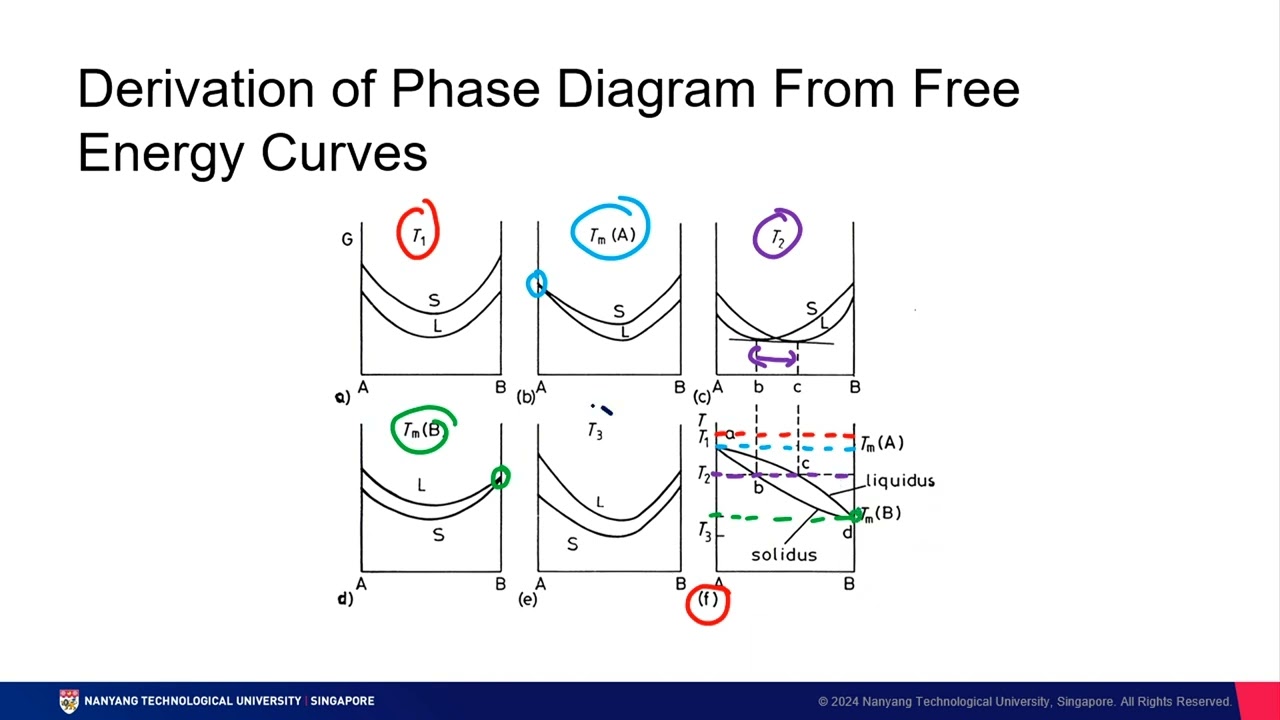
Application of free energy to phase equilibria, chemical potential, and the construction of phase diagrams.
78.2K views387likes49:50Original Release: 2008-12-12
The following content is provided under a Creative Commons license.
Your support will help MIT OpenCourseWare continue to offer high quality educational resources for free.
To make a donation or view additional materials from hundreds of MIT courses, visit MIT OpenCourseWare at ocw.mit.edu.
PROFESSOR: Alright.
Well, we've been looking in the last couple lectures at a really important topic in thermodynamics.
Which is, how do you tell what's going to happen.
Which way does a process want to go?
Which way will it go spontaneously?
And if it goes in one direction or another, where does is lead?
In other words, what is the equilibrium state?
And this is just an incredibly important area that thermodynamics allows us to speak to.
So we started to see this.
Sort of direction of spontaneous change.
And where the equilibrium lies.
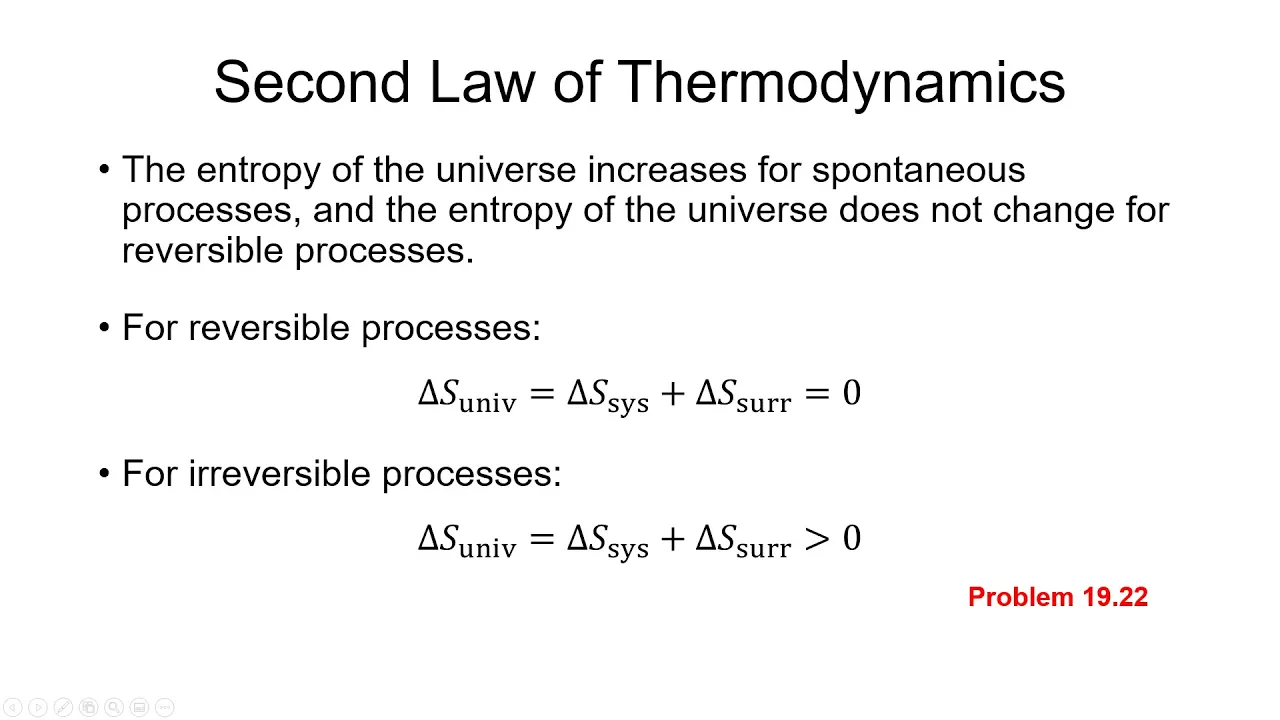
So what we did is, remember we started with the second law.
Right?
That dS is greater than dq over T. And for the spontaneous change which happens irreversibly That means that'll be dq irreversible.
It would be equal for the reversible case.
And we combine this with first law, which for the case of pressure volume changes we write as this.
And so what this gave us was a very, very useful general criterion for determining whether something happened spontaneously.
Namely, du plus p external dV minus T for the surroundings dS, is greater than zero.
Sorry.
It's less than zero.
And this is for any spontaneous change.
If it equals zero, then we're at equilibrium.
And if it's greater than zero, then the process goes the other way.
We would write the process in the reverse to have it be less than 0 and it would go spontaneously.
And based on this one result, we then looked under various constraints and said OK, what about looking at our variables, volume, pressure, temperature, other things, entropy, if we constrain those, what's the condition for equilibrium?
And that's what led us to a number of results to determine what quantities we even need to be looking at.
To figure out equilibrium.
And what the conditions were.
And so what we discovered were the following.
This one, which we already had seen, which is dS, is greater than zero.
Change in entropy is greater than zero, for an isolated system.
We also saw that dS for constant H and p was greater than zero. du, regular energy, at constant entropy and volume is less then zero.
And u is minimized at equilibrium.
And this is the familiar result from ordinary mechanics, where you're not worrying about something like entropy for a whole collection of particles.
That is, you minimize potential energy and you see things falling under the force of gravity and so forth, going to potential energy minima in conformance with this result.
dH, S and p is less than zero.
So our H is u plus pV, as you know.
And H is minimized at equilibrium.
And this is, of course, with constant S V. This is constant S and p.
But of course, the need to have entropy constrained is never going to be the most convenient one experimental.
There may be circumstances under which it's the case, but it's often difficult to control.
On the other hand, temperature, volume and pressure are variables that are much easier in the lab to keep constant.
To keep control over.
And so that led us to the definitions of other energy quantities, the Helmholtz and Gibbs free energy.
We discovered that the quantity dA, under conditions of constant volume and temperature, is less than zero.
And A is u minus TS.
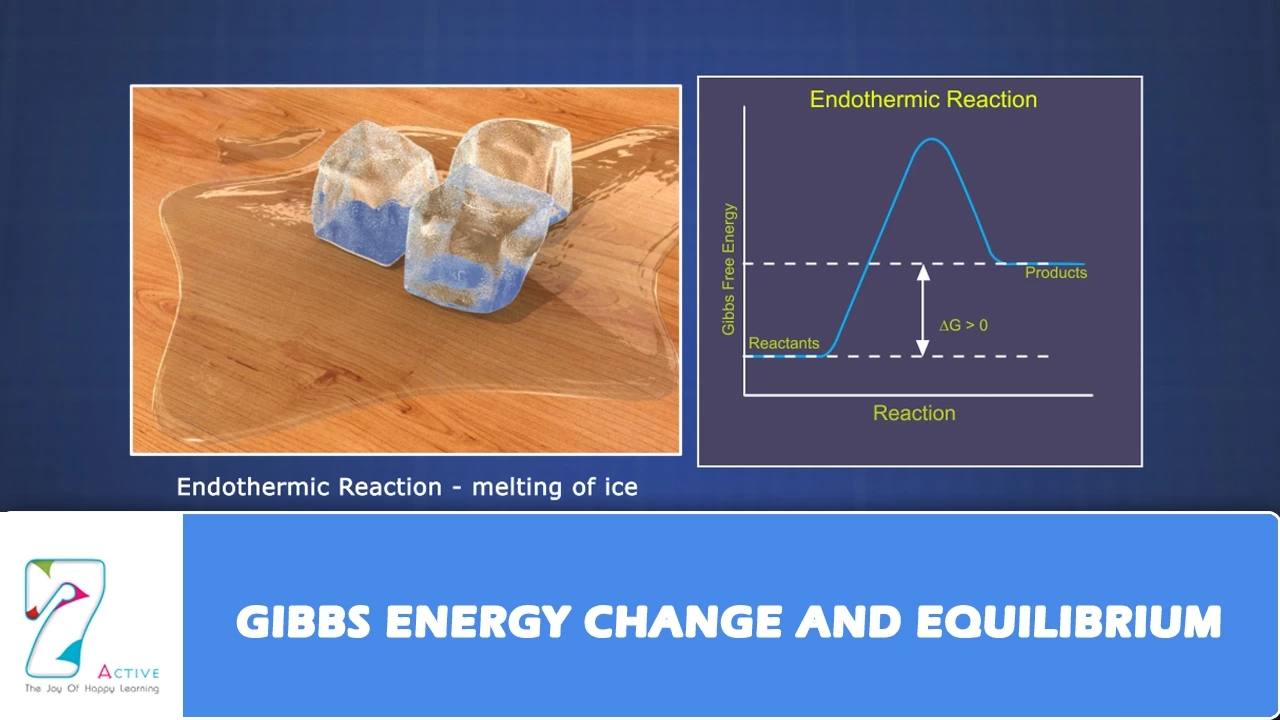
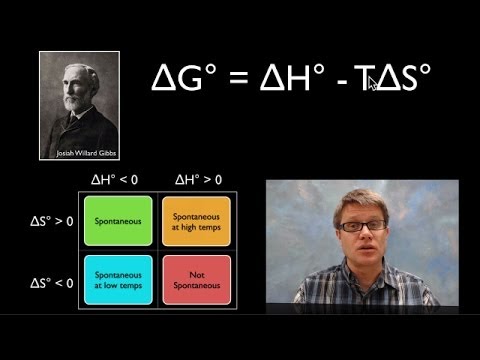
And A is minimized at equilibrium, under conditions of constant T and V. And finally, and in many cases the most important of the results, because of the conditions it applies to, we saw that this Gibbs free energy is less than zero, that's our condition for spontaneous change.
Where the Gibbs free energy, u plus pV minus TS is H minus TS.
Also A plus pV and G is minimized at equilibrium with constant temperature and pressure.
And that's why the Gibbs free energy is just so enormously important.
Because so much of what we do in chemistry does take place with constant temperature and pressure.
So we have this condition that's established in a quantity that we know how to calculate.
That tells us the direction of spontaneous change for ordinary processes, chemical processes, mixing and you name it, under conditions that are easy to achieve in the lab.
OK, now what we'd like to do is be able to calculate any of these quantities in terms of temperature, pressure, volume properties.
That is, in terms of equations of state.
For any material.
Then we would really be able to essentially calculate anything.
Anything thermodynamic.
About a material.
Of course, that's assuming we know the equation of state.
We may or may not.
But because in many cases we can reasonably either model or measure equations of state, collect data for a material for its temperature, pressure, volume relations, then in fact if we can relate all these quantities to those, then in fact we really can calculate essentially all of the thermodynamics.
For the material.
So let's relate the thermodynamic quantities to equation of state p, V, T data.
And we can do that by going through and deriving what we'll call the fundamental equations of thermodynamics.
that'll provide these relations.
And at this point we know enough to do this in a straightforward way.
So if we start with a relation for energy, T dS minus p dV.
Where u is written as a function of entropy and volume.
And we've seen that that's generally the case.
It comes from the fact that dq reversible is T dS, and dw reversible is minus p dV.
And of course du is the some of those.
So, this is generally true.
Since these are all state functions.
That is, this is derived in the case for reversible paths.
But since these are all simply state functions and quantities, this is generally true.
Now we can use it to derive differential relations for all of the thermodynamics quantities.
So let's just go through and do that.
So H is u plus pV.
So dH is just du plus p dV plus V dp.
And now we're just going to substitute du in here.
And the p dV terms are going to cancel.
So we have the result that dH is T dS plus V dp.
Right?
And that shows us that H is written naturally as a function of entropy and pressure.
And now let's keep going.
A is u minus TS.
dA is du minus T dS minus S dT.
We're going to do the same thing.
Substitute this for du.
This time, the T dS terms are going to cancel.
So we have dA is minus S dT minus T dS.
That can't be right.
And it isn't.
Minus S dT, that's the p dV term that's left, minus p dV.
And it shows us that A is written naturally as a function of T and V. G, we can write in any of a number of ways.
Let's write it as H minus TS.
So dG is dH minus T dS minus S dT.
Here's dH.
We'll substitute that in, and the T dS terms are going to cancel.
So dG is minus S dT plus V dp.
And this shows that G is written naturally as a function of T and p.
So these, which we will exalt and celebrate by our sparingly-used colored chalk, are our fundamental equations of thermodynamics.
So what they do is, they're describing how these thermodynamic properties change, in terms of only state functions and state variables.
Very, very useful.
And that's what it means, when we say well, it's natural then, to express say, G as a function of T and p, that's what we're saying.
Is that we can express its changes in terms of these variables.
Related only through quantities that are functions of state.
I don't need to know about a specific path here.
If I know about the states involved, I just need to know what the volume was in each of them.
Now, before, of course, in the first part of the class we started out looking at u and then looking at H not as functions of S and V or S and p, but as functions of temperature, mostly.
In general, temperature and volume or pressure.
And it doesn't mean that something was somehow wrong with that.
It certainly is, it still is going to be useful to do thermochemistry.
To ask questions like how much heat is released in a chemical reaction that takes place at constant temperature.
Not one of these variables.
And we can calculate that.
So it's not that we're somehow throwing away our ability to do that.
However, the thing to remember is, when you look at heats of reaction under those conditions it's all well and good.
But it doesn't tell you, this is the direction that the reaction is going to go.
It doesn't tell you, this is the equilibrium concentration that you'll end up with.
That doesn't come out of what we calculated before in thermochemistry.
What does come out, which is very useful is, if you do run the reaction, here's how much heat comes out.
And if you want to run a furnace and provide energy, that's an extremely important thing to be able to calculate.
Because you're going to run it and you'll probably find conditions under which you can run it more or less to completion.
But it doesn't tell you, by itself, which direction things run in.
Whereas under these conditions, these quantities, if you look at free energy change, for example, at constant temperature and pressure, you can still calculate H. You can still calculate the heat that's released.
This is what will tell you under some particular conditions what will actually happen.
Where will you end up.
Very, very important, of course, to be able to understand that.
Now, it's also very useful to look at some of the relations that come out of these fundamental equations.
And they're straightforward to derive.
So, all I want to do now is look at the derivatives of the free energies with respect to temperature and volume and pressure.
So for example, if I look at A, which we now have written as the function of T and V, of course, in general I can always write dA as partial of A, with respect to T at constant volume dT, plus partial of A with respect to V, at constant temperature dV.
And I know what those turn out to be.
It's minus S dT minus p dV.
So what does that tell me?
It tells me that the partial of A with respect to T at constant V is minus S. Right?
In other words, now I know how to tell how the Helmholtz free energy changes as a function of temperature.
Or as a function of volume. dA/dV, at constant T, must be negative p.
Things that I can measure.
So I can in a very straightforward way say, OK, well, here is my Helmholtz free energy.
If I'm working under conditions of constant temperature and volume, that's very useful.
Now, if I want to change those quantities; change the temperature, change the volume, how will it change?
Well, I can, for any given case, measure the pressure, determine the entropy and I'll know what the slope of change will be.
Similarly for G as a function of temperature and pressure, I can go through the same procedure.
That is, it's easy to write down straight away that dG, with respect to temperature at constant pressure is minus S.
That is, this is, dG/dT at constant pressure.
And this is dG/dp at constant temperature.
So again with the Gibbs free energy, now I see how to determine, if I change the pressure, if I change the temperature by some modest amount, how much is the Gibbs free energy going to change?
Well, it's easy to see.
These two relations involving entropy are also useful because they'll let us see how entropy depends on volume and pressure.
And let me show you how that goes.
Now, you've already seen how entropy depends on temperature.
We've already seen that, going to write dS as dq reversible over T. And it's Cv dT over T at constant volume.
It's Cp dT over T at constant pressure.
So we know that dS/dT at constant volume is Cv over T, and dS/dT at constant pressure is Cp, over T. And we've seen that on a number of occasions.
So that tells us what to do to know the entropy as the temperature changes.
But now, what happens if, instead we look at what happens when we go to some state one to some other state two and it's the pressure.
Or the volume, that changes.
And by the way, just to be explicit about this, let's take this example, it means that delta S, if we undergo a change from, say, T1 to T2.
There's Cp over T dT.
So it's Cp log of T2 over T1, and we saw this before.
So now, instead, let's look at some process.
State one goes to state two.
Let's have constant T. And look at what happens if pressure goes from p1 to p2.
Or volume goes from V1 to V2.
And see what happens there.
We looked at pressure change before, actually, in discussing the third law, the fact that the entropy goes to zero as the absolute temperature goes to zero for a pure, perfect crystal.
But, actually, we didn't do that in a general way.
We just treated the one case of an ideal gas as the temperature is reduced.
But we can do this, generally, by using what are called Maxwell relations.
And all this is, is saying that when you take a mixed second derivative, it doesn't matter in which order you take the two derivatives.
So, let's, we're going to use this relationship.
And we're going to use these two.
So, using those, now, what happens if we take the second derivative of A, the mixed derivative, partial with respect to T and the partial with respect to V. So let's leave these off for a moment, and now let's try that.
And the point is that the second derivative of A, with respect to V and T in this order is the same as the second derivative of a with respect to T and V in this order.
It doesn't matter which order.
But that turns out to be useful.
So let's do this explicitly.
Which means we're going to take the derivative with respect to volume of dA/dT.
Now, the dA/dT isn't constant volume.
The derivative we're taking with respect to volume, when we take that it's at constant temperature.
But what is it?
Well, we already know what dA/dT at constant V is.
It's negative S. So this is negative dS/dV.
At constant temperature.
Now let's take it in the other order.
So d/dT of dA/dV, just like this.
The dA/dV is calculated at constant temperature.
We know it.
Then we can take the derivative of that quantity, when we vary the temperature, holding the volume constant.
But again, dA/dV dT, there it is.
It's negative p.
So this is just negative dp/dT at constant volume.
These things have to be equal to each other.
Because these mixed second derivatives are the same thing.
But that's very useful.
Because this is what comes directly out of an equation of state, right?
You know how pressure changes with temperature at constant volume if you know the equation of state.
It relates the pressure, volume, and temperature together.
So from measured equation of state data, or from a model like the ideal gas or the van der Waal's gas or another equation of state, you know this.
Can determine how entropy is going to behave as the volume changes.
If we try that for an ideal gas, pV is nRT.
So dp/dT at constant volume, it's just nR over V. And that, now, we know must equal dS/dV, with a positive sign.
At constant temperature.
So now let's try looking at something where are V1 goes to V2.
The volume is going to change, and we can see how the entropy changes.
So, if one goes to two and V1 goes to V2, and it's constant temperature, just what we've specified there.
Delta S is S(T, V2) minus S(T, V1), T's staying the same.
So it's just the integral from V1 to V2 of dS/dV At constant temperature dV.
And now we know what that is.
So it's nR integral from V1 to V2 dV over V. So it's nR log V2 over V1.
There's our delta S. So we know how to calculate it.
Make sense?
Now, we can do the same procedure for the pressure change.
And all we do is, I'll just outline this, I think.
I won't write it all on the board.
But, of course, it's going to come from the fact that these second derivatives are also equal.
So d squared G dT dp is equal to d squared G dp dT.
In other words, the order of taking the derivatives with respect to pressure and temperature doesn't matter.
And what this will show is that dS/dp at constant temperature, here we saw how entropy varies with volume, this is going to show us how it varies with pressure.
Is equal to minus dV/dT at constant pressure.
And again, this is something that comes from an equation of state.
We know how the volume and temperature vary with respect to each other at constant pressure.
That's what the equation of state tells us.
So, again, I can just use that result.
So, if we do a process where one goes to two at constant temperature, and now the pressure, p1, goes to p2, well then delta S is just the integral from p1 to p2 of dS/dp times dS, so it's just this.
And so of course it's still pV equals nRT.
So now we just have nR over p dp.
Right?
So we're going to see the same story.
It's nR log of p2 over p1 for the process where there's a pressure change.
Any questions about this part?
So what we've done is take one step further.
We've used the fundamental equations that are hiding down here, out of sight but never out of mind.
And what we've done is look at the derivatives of the new free energies that we've just recently introduced, A and G.
And then, the only thing we've done beyond that is say, OK, well now let's just take the mixed second derivatives, they have to be equal to each other.
And what's fallen out when we do that, because in each case, one of the first derivatives gives us the entropy.
Then the second derivative gives the change in entropy with respect to the variable that we're differentiating, with respect to which is either pressure or volume.
And the useful outcome of all that is that we get to see how entropy changes with one of those variables in terms of only V, T, and p, which come out of some equation of state.
And all we did, further, is take that second derivative.
That mixed second derivative.
And, of course, see that either way we do that we'll have an equality.
Now, let's go back to our older friends u and H. Which we've expressed now in terms of S and V, S and p.
So, so far we don't have a way to just write off, relate them to equation of state data.
Which also would be very useful.
Here, A and G, we've already got as functions of these easily controlled, conveniently controlled state variables.
Let's look at those quantities. u and H. And look at, for example, the V dependence of u.
The volume dependence.
And in particular let's look at, for example, du/dV at constant temperature.
Now, we can immediately see what du/dV at constant entropy is.
Experimentally, though, that's not such an easy situation to arrange.
Of course, this is a much more practical one.
But it doesn't just fall out immediately from the one fundamental equation for du.
But we can start there.
So, du is T dS minus p dV.
And I can take this derivative. du/dV at constant T. And so, what is it?
Well, it's not just p because there's some dS/dV at constant T. This isn't zero.
There's some variation, dS/dV, at constant temperature.
That's going to matter.
This part, of course, is just minus p.
But we just figured out what dS/dV at constant T is.
This is dp/dT at constant V. So that's neat.
So in other words, we can write this as T, dp/dT at constant V, minus p.
Let's just check T, p, T, V, p.
Right?
In other words, we just have pressure, temperature and volume.
Again, if we know the equation of state, we know all this stuff.
So again, we can measure equation of state data.
Or, if we know the equation of state from a model, ideal gas, van der Waal's gas, whatever, now we can determine u.
From equation of state data.
Terrific, right?
So let's take our one model that we keep going back to.
Equation of state, and just see how it works.
That is, ideal gas.
And see how it works with that.
Now, we saw before, or really I should say we accepted before, that for an ideal gas, u was a function of temperature only.
Well, now let's try it.
So, dp/dT, for our ideal gas, at constant volume, remember pV is nRT.
So this nR over V. And then, using the relation again, we can just write this as p over T. In other words, we're taking advantage of the fact that we now know that quantity.
In the case of the ideal gas, we just have a simple model for it.
More generally, we could measure it.
We could just collect a bunch of data.
For a material.
What's the volume it occupies at some pressure and temperature?
Now let's change the pressure and temperature and sweep through a whole range of pressures and temperatures and measure the volume in every one of them.
Well, then, we could just use that for our equation of state.
One way or another, we can determine this quantity.
For the ideal gas it's this.
So now our du/dV, at constant T is just T times dp/dT, which is just p over T minus p, it's zero.
Remember the Joule expansion.
And we saw that, you saw that the Joule coefficient for an ideal gas was zero.
So that you could see that for the ideal gas, u would not be a function of volume, but only of temperature.
But actually, when you saw that before, you weren't given any proof of that.
It was just that when the good Mr. Joule made the measurements, to the precision that he could measure, he discovered that for some gases it was extremely small.
At least, smaller than anything he could detect.
So it sure seemed like it was going to zero, under ideal gas conditions.
And that was the result that we came to accept.
Here, though, you can just derive straight away.
That for an ideal gas it has to be the case that there's no volume dependence of the energy.
Only a temperature dependence.
It's the same for H. Just like u, we'd like to be able to express it in a way that allows us to calculate what happens only from equation of state data.
But, again, our fundamental equations show us how it changes as a function of entropy and pressure.
So, dH is T dS plus V dp.
So let's look at dH/dp.
We know how to get it immediately if we keep entropy constant.
But we'd like to relate it to what happens if we keep the temperature constant.
So then, just like we saw, analogous to what saw just before, it's T dS/dp at constant T. Plus V. But now we've seen from the Maxwell relations that dS/dp is minus dV/dT, for constant p.
Again, this is this quantity, one of these quantities that again we can determine from equation of state data.
Only V, p and T appear.
So it's minus T dV/dT at constant p, plus V. And so, again, this can come from equation of state data.
And if you do this again for an ideal gas, let me see.
So we have pV is nRT.
So dV/dT at constant pressure is just nR over p.
But we can plug that in again just like we did before.
It's just equal to V over T. And so dH/dp under our condition of constant temperature is just minus T times V over T plus V, everything cancels, and that's zero.
That's our Joule - Thompson expansion.
That was a constant enthalpy change.
And again there, too, you saw an experimental result you were presented with that says, well at least to the extent that it could be measured, it was obviously getting very small.
For gases that approach ideal gas conditions.
Well, there you can see it.
Sure better have gotten small because in fact it has to be zero.
Now let's take just one somewhat more complicated case.
Let's look at a van der Waal's gas.
Let's try it with a different equation of state, that isn't quite as simple as the ideal gas case.
So, then p plus a over molar volume squared times V minus b molar volume V minus b is equal to RT, remember?
This was back from the first or second lecture in the course.
So, we can separate out p.
It's RT over molar volume minus b minus a over molar volume V squared.
And then we can take the derivative with respect to temperature, it's just R over molar volume minus b.
So it's dp/dT at constant V is just R over V bar minus b.
Well, let's now look, given this, let's now look in that case, at what happens to u as a function of V. For the ideal gas, we know that u is volume independent.
It only depends on the temperature.
But for the van der Waal's gas, now it's going to be different.
And that's because this is different from what it is in the ideal gas case.
Namely, now du/dV at constant T, for the van der Waal's gas.
So it's this.
So it's RT over molar volume minus b.
Minus p, right?
But in fact, if you go back to the van der Waal's equation of state, here's RT over v minus b.
If we put it as minus b, that's just equal to a over V squared.
Equals a over molar volume squared.
But the point is, the main point is, it's not zero.
It's some number. a over the molar volume squared. a is a positive number in the van der Waal's equation of state.
So this is greater than zero.
In other words, u is a function of T and V. If we don't have an ideal gas.
By the way, just to think about it a little bit, it's a positive number.
What that means is, I've got my ideal gas in some container.
There's some energy, some internal energy.
Now I make the volume bigger.
I allow it to expand.
And the energy changes, it goes up.
In some sense it's less favorable energetically.
What's happening there, that a term in the van der Waal's equation of state, is describing interactions, favorable attractions, between gas molecules.
The b is describing repulsions.
Effectively, the volume changes.
The molar volume is being changed a little bit by the fact that if you're really trying to make things collide with each other, they can't occupy the same volume.
And that is being expressed here.
The a, though is expressing attraction between molecules at somewhat longer range.
So now, if you make the volume bigger, those attractions die out.
Because the molecules are farther apart from each other.
So the energy goes up.
Now, you might ask, well why does it do that, right?
I mean, if the energy is lower to occupy a smaller volume, then if I have this room and a bunch of molecules of oxygen, and nitrogen and what have you in the air, and there are weak attractions between them, why don't they all just sort of glum together and find whatever volume they like.
So that the attractive forces can exert themselves a little bit.
Not too close, right?
Not so close that the repulsions dominate.
Why don't they do that?
What else matters besides any of those considerations?
What else matters that I haven't considered in this little discussion?
Yeah.
What about entropy, right?
If I only worry about minimizing the energy, it's true.
They'll stick together a little bit.
But entropy also matters.
And there's disorder achieved by occupying the full available volume.
Many more states possible.
And that will end up winning out at basically any realistic temperature where the stuff really is a gas.
OK.
Next time, what you're going to see is the following.
It turns out we can express all these functions in terms of G, we wouldn't need to choose G, but it's a very useful function to choose.
Because of its natural expression in terms of T and p.
So we can write any of these functions in terms of G. Which means that we can really calculate all the thermodynamics in terms of only g.
It's not necessary to do that, but it can be quite convenient.
And then we can say, OK, if we have many constituents, what if we have a mixture of stuff?
We can take the derivative of G with respect to how much material there is.
With respect to n, the number of moles.
And if there are one, and two, and three constituents with respect to n1, and n2, and n3.
Each individual amount of stuff.
What that's going to allow us to do is, if we say, OK I have a mixture of stuff, how does the free energy change?
If I change the composition of the mixture?
If I take something away, or put something else in?
And we'll be able to determine equilibrium under those conditions.
That's very useful for things like chemical reactions, where this constituent changes to this one.
And I can calculate what happens to G under those conditions.
And that's what you'll see starting next time.
And professor Blendi will be taking over for that set of lectures.
Up Next

13:39
New Mechanochemical Battery Recycling Method Boosts Lithium Recovery
@JustHaveaThink
90.1K views•2023-05-14

83:56
Biocatalysis and Catalysis in Islatravir Synthesis | Merck Webinar
@SCIwheresciencemeetsbusiness
675 views•2020-10-08
6:57
Ocean Acidification Chemistry | MIT Solid-State Chem
@mitocw
5.5K views•2020-12-07

17:31
Edible Water Bottles: A DIY Guide to Sodium Alginate Spherification
@ryan
10.5M views•2019-06-21
Related Study Plans & Knowledge Roadmaps
Structured learning paths in Chemistry
chemistry
Nuclear Chemistry: Decay, Meds & Fuel Cycle
01Introduction to Nuclear Structure and Radioactivity
02Decay Dynamics and Kinetics
03Radiation Interaction and Detection
+ 2 more learning modules
24h5 modules
Explore Roadmap
chemistry
Supramolecular Chemistry: Forces & Machines
01Foundations of Chemical Bonding and Intermolecular Forces
02Introduction to Host-Guest Chemistry
03Thermodynamics and Dynamics of Self-Assembly
+ 2 more learning modules
16h5 modules
Explore Roadmap
chemistry
Photochemistry: Excited States & Reactions
01Foundations of Light-Matter Interactions
02Molecular Orbitals and Electronic States
03Photophysical Processes and Jablonski Diagrams
+ 2 more learning modules
18h5 modules
Explore Roadmap
chemistry
Coordination Chemistry: Bonding & Properties
01Introduction to Transition Metals and Ligands
02Crystal Field Theory (CFT) and Geometry
03Magnetic Behavior and Spin States
+ 2 more learning modules
14h5 modules
Explore Roadmap