















![How to Learn English with my podcast 🎧 [959]](https://i.ytimg.com/vi/SRluyg698u4/maxresdefault.jpg)


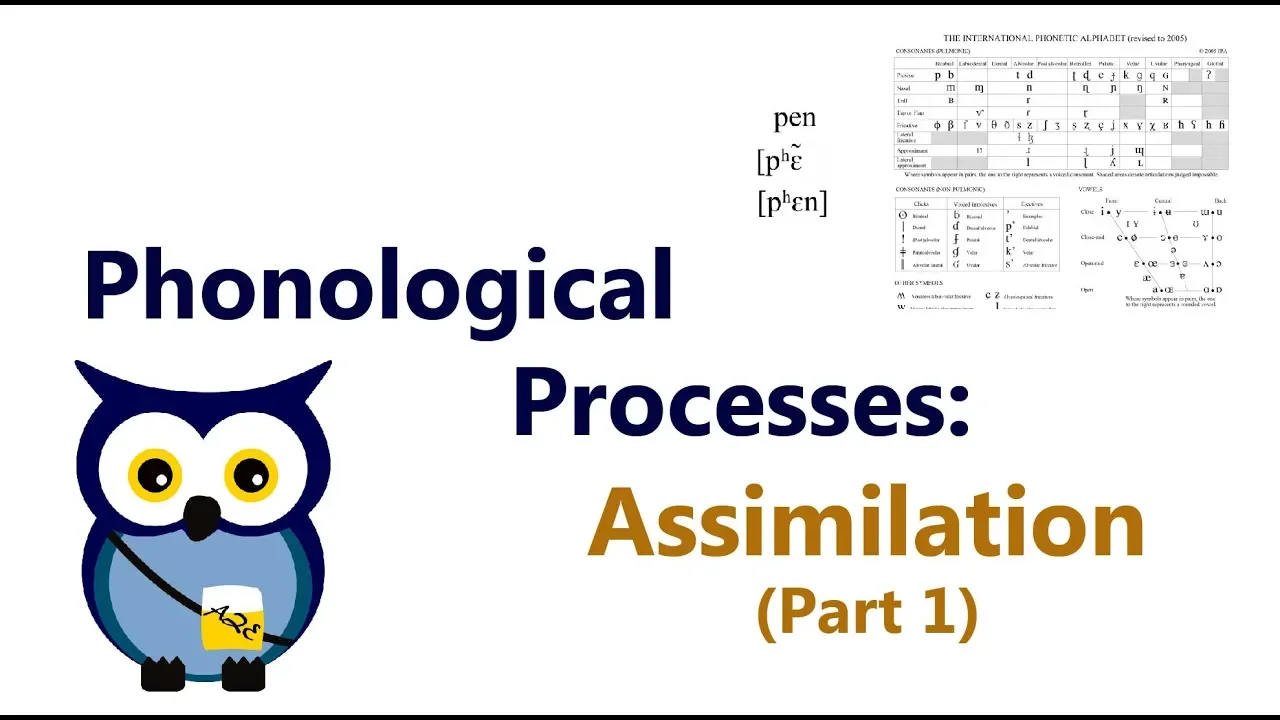

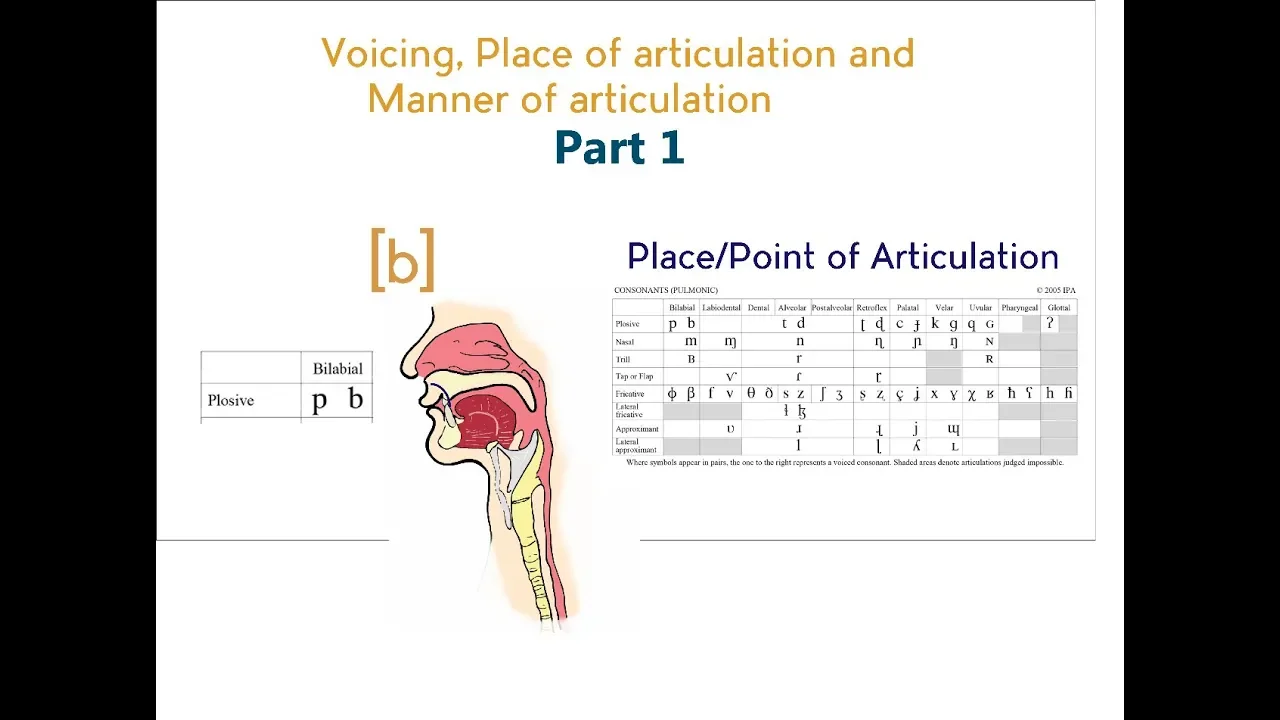
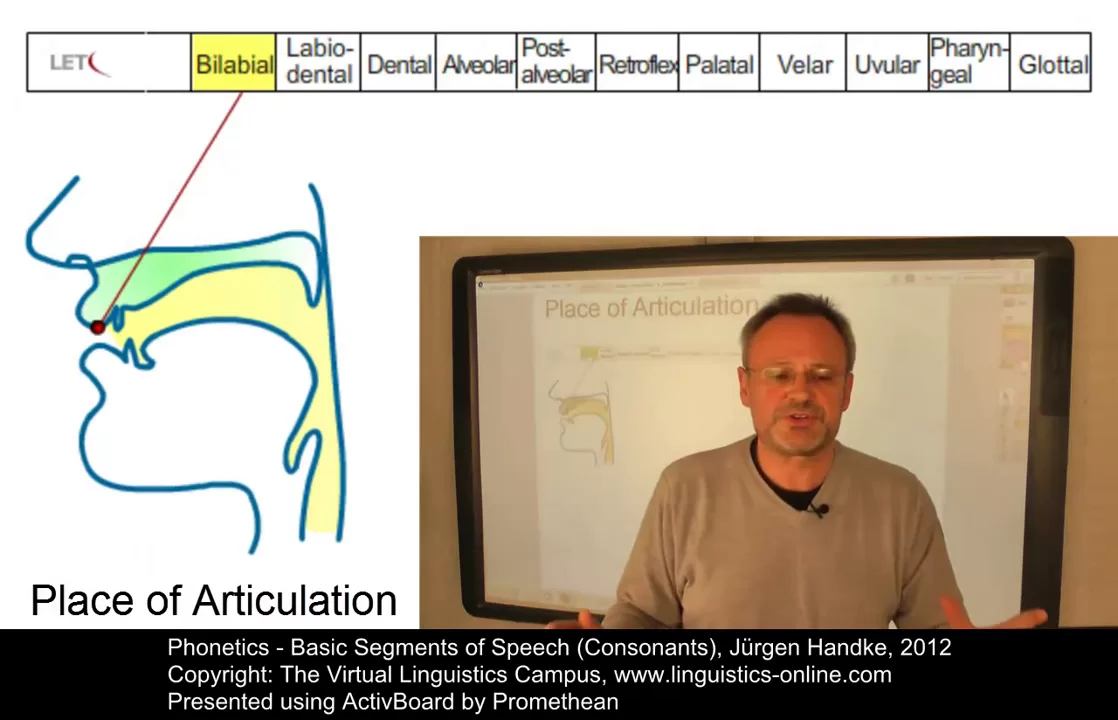
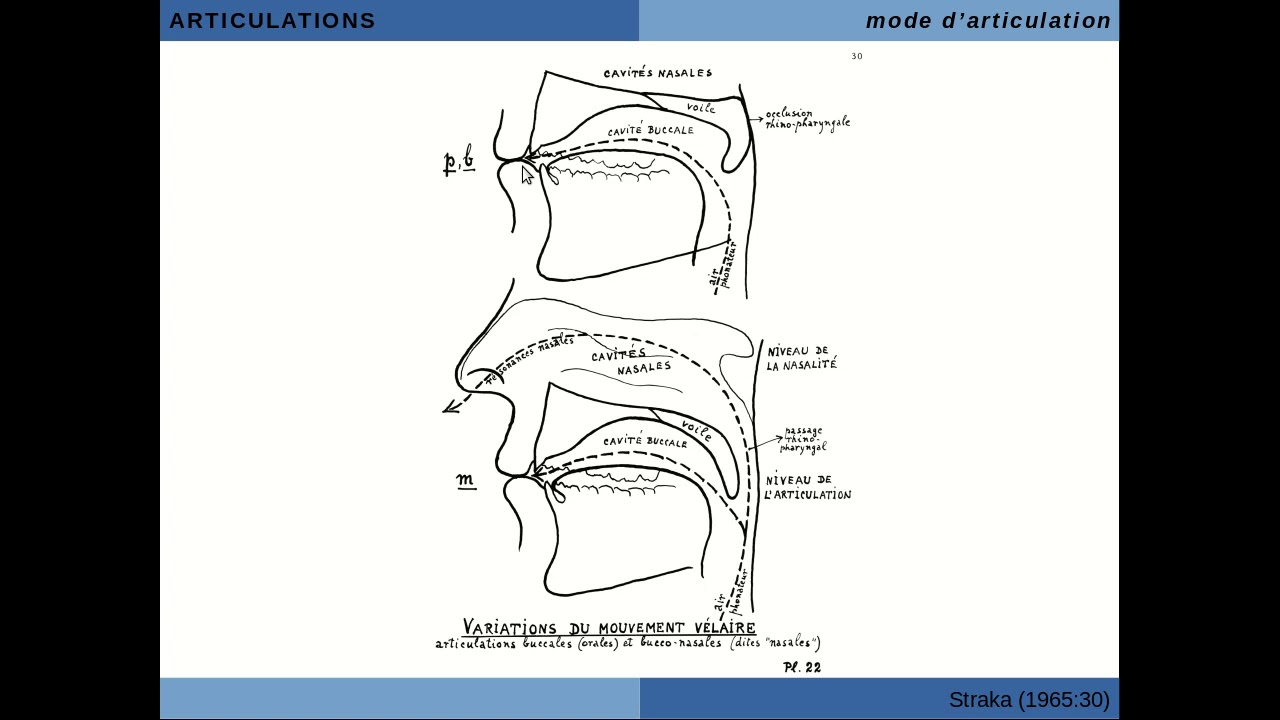
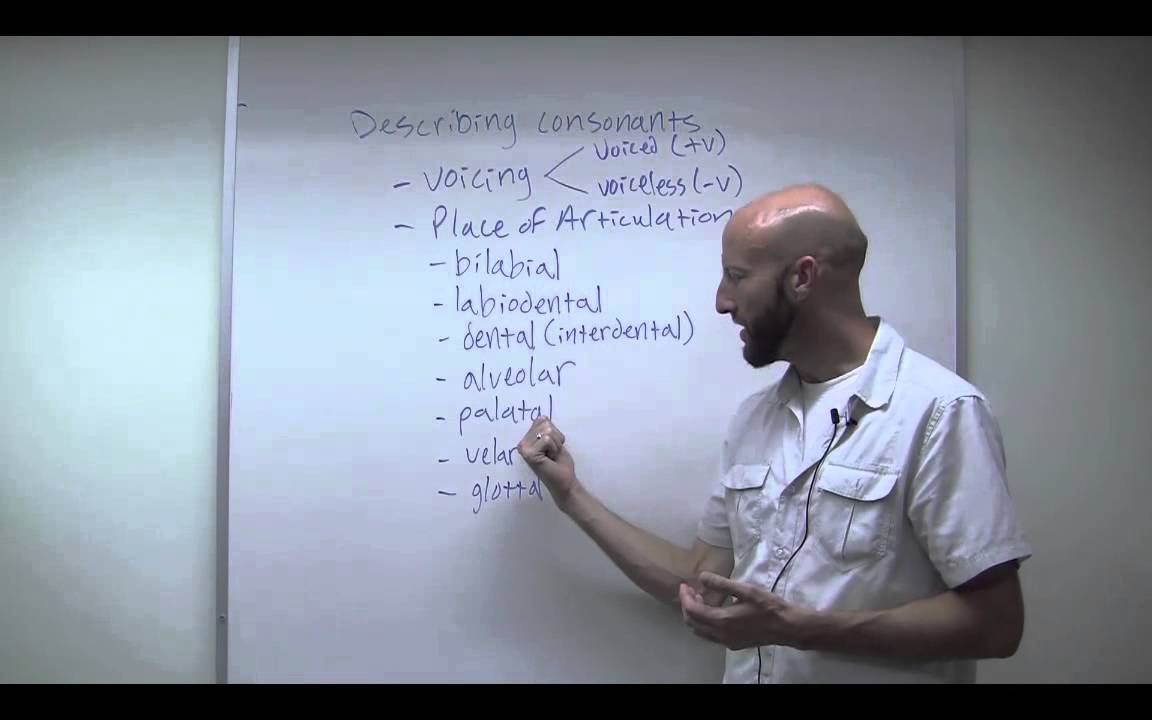
Place of articulation refers to where in the mouth the obstruction occurs when producing a consonant, determined by the interaction between an active articulator (which moves) and a passive articulator (which remains stationary); the 12 main places include bilabial (both lips), labiodental (lower lip to upper teeth), dental (tongue tip to teeth), alveolar (tongue to alveolar ridge), post-alveolar/palato-alveolar (tongue slightly back), retroflex (tongue curled back), palatal (tongue body to hard palate), velar (tongue back to soft palate), uvular (tongue to uvula), pharyngeal (tongue root to pharynx), epiglottal (folds to epiglottis), and glottal (vocal cords).
IPA Place of Articulation Explained | Linguistics Guide Part 1
Added:Anatomy of the human vocal tract, including the distinction between active articulators (like the tongue) and passive articulators (like the alveolar ridge).
The fundamental difference between speech sounds (phonemes) and alphabetical spelling (orthography).
The basic division of speech sounds into consonants (which involve constriction of airflow) and vowels (which involve free airflow).
The three-dimensional framework used to classify consonants: Voicing, Place of Articulation, and Manner of Articulation.
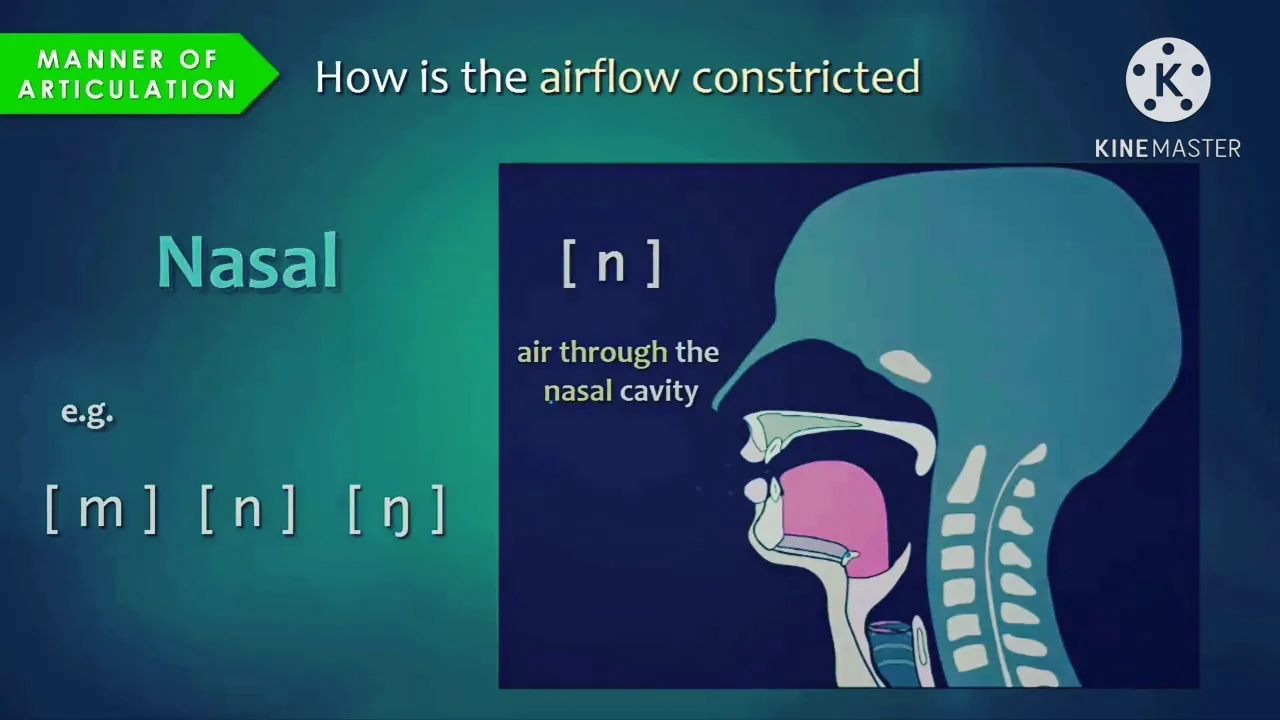
Manner of Articulation: Learning how the airstream is obstructed to produce different consonant classes (e.g., plosives, fricatives, affricates, nasals).
Voicing: Distinguishing between voiced and voiceless consonant pairs that share the same place and manner of articulation.
IPA Consonant Chart Navigation: Synthesizing voicing, place, and manner to locate and produce any consonant on the official IPA chart.
Phonological Processes: Studying how place of articulation changes in connected speech through real-world processes like place assimilation (e.g., 'ten bags' sounding like 'tem bags').
342.2K views10.8Klikes6:01Original Release: 2015-05-04
Youtube!
Edgar here, and welcome to Artifexian.
Here you will learn everything you ever wanted to know about worldbuilding...and then some!
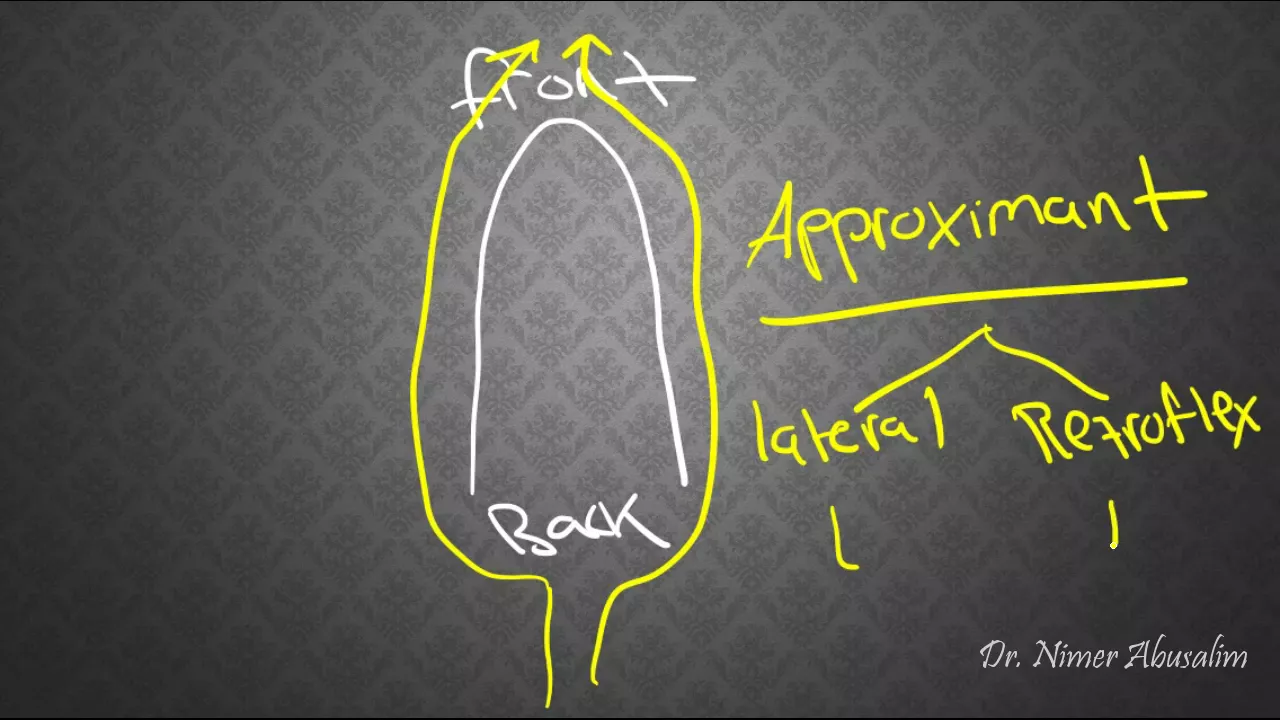
This is a cross section of the average human food hole.
Complete with lips, a tongue and some teeth.
A consonant is a speech sound produced when the airflow through the food hole, or vocal tract if you will, is to some degree obstructed.
There are three key elements to any consonant: place of articulation, manner of articulation and voicing.
In this video, let's look at place of articulation.
Place of articulation, or point of articulation, indicates where in the mouth the obstruction is occurring when a consonant is formed.
Now, to create an obstruction two bits of your mouth need to be brought together: the articulators.
One articulator will move, the active articulator, and one will remain stationary, the passive articulator.
Take the “f” sound in fish, for example.
Here the lower lip is the active articulator and the upper teeth are the passive articulators.
The lower lip moves to the upper teeth, an obstruction is created, air is blown through and boom, you get a [f] sound.
There are about 12-ish places in the mouth where the articulators can be brought together to form an obstruction.
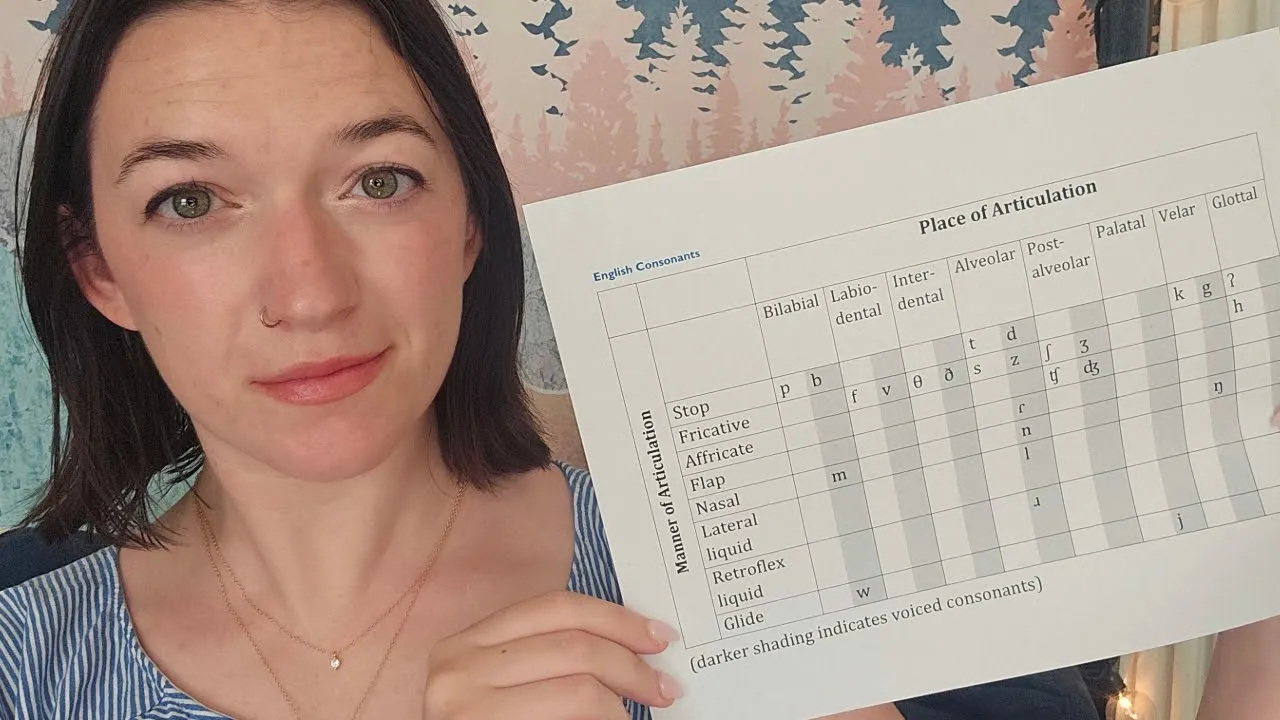
There are: Bilabial, labiodental, Dental, Alveolar, Post-alveolar, Retroflex, Palatal, Velar, Uvular, Pharyngeal, Epi-glottal and Glottal.
Let's break it down.
1.
Bilabial.
Here the obstruction is created using both the upper and lower lips.
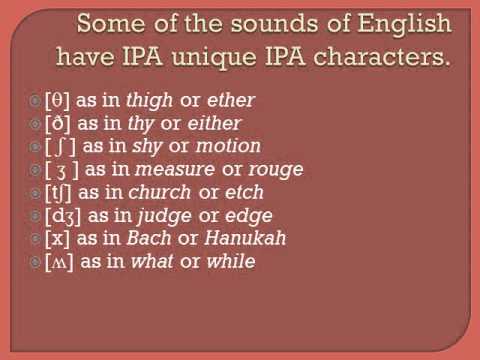
In english we have 4-ish Bilabial consonants: [m] as in man, [p] as in pan, [b] as in ban and [w] is in water 2.
Ladiodental.
Here the lower lip contacts the upper teeth to form sounds like [f] as in fish and [v] as is van.
3.
Dental.
Here the tip of the tongue touches the upper teeth.
We have 2 sounds here in english: [θ] as in thin, [ð] as in this.
4.
Alveolar.
Here the obstruction occurs at the alveolar ridge – that boney ridge just behind the upper teeth.
We have a truck load of sounds here in english, namely: [n], [t], [d], [s], [z], [r] and [l] as in nail, town, dog, sun, zoo, run and laugh.
Oh, and also there's also the rolled r.
Which I cannot do, Lucky, this guy can... 5.
Post, or Palato-alveolar.
So, this is almost the same as alveolar except the tongue moves back about a centimeter in the mouth.
In english we have two sounds here: [ʃ] as in shine and [ʒ] as in vision.
6.
Retroflex.
We have no retroflex consonants in english.
They are formed by curling the tongue back into the mouth and touching the roof of the mouth in the general post alveolar area.
They sound a little like this: [ʈ], [ɖ].
As in the Hindi word for island: “tapu”.
And the Swedish word for north: “nord”.
Apologies speakers of Hindi and Swedish.
I did my best.
Moving on... 7.
Palatal.
Palatal consonants are where the body of the tongue is raised to the hard palate.
In english we find only one sound here: [j] as in yes.
8.
Velar.
Here the obstruction occurs when the back of the tongue touches the soft palate at the back of the mouth.
Again, in english we have two sounds here: [k] as in king and [g] as in garden.
9.
Uvular.
Here the back of the tongue touches the uvula – that dangly bit at the back of you're mouth.
English does not have an uvular consonants but they are widespread through african, middle eastern and native american languages, amongst others.
Closer to home, french features a uvular trill [R] as in “rendez vous”.
10.
Pharyngeal.
Here's where things start to get a bit weird.
Pharyngeal consonants are articulated with the root of the tongue against the pharynx.
Don't ask!
Pharyngeals are found primarily in three areas of the world: North Africa and the Middle East, in the Caucasus and in British Colombia.
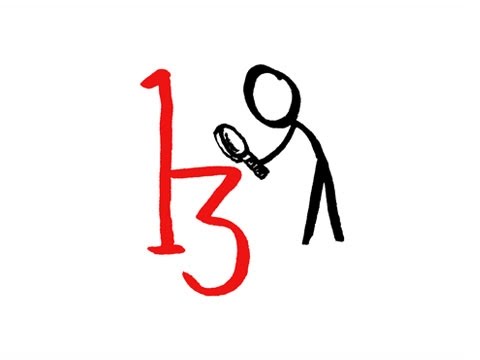
Again I can't produce these sounds but luckily my linguistically-inclined-stick-figure friend is here to help... 11.
Epi-glottal.
As hard as pharyngeals are to pronounce, epiglottals are much, much worse.
Epiglottal consonants are articulated using the aryepiglottic folds against the epiglottis.
If that's to much to get your head around, think of a vocal growl type sound a la Louis Armstrong and you're kind of on the right track.
Epi-glottals don't feature all that often in human language and they are primarily known from the Semetic languages of the Middle east.
Again, I hand you over to stick figure dude... And finally.
12.
Glottal.
These are articulated using the glottis.
Thankfully stickman won't be required here as english has two glottal sounds: [h] as in home and the glottal stop as in the little catch of air in the throat between “uh” and “oh” in “uh-oh”.
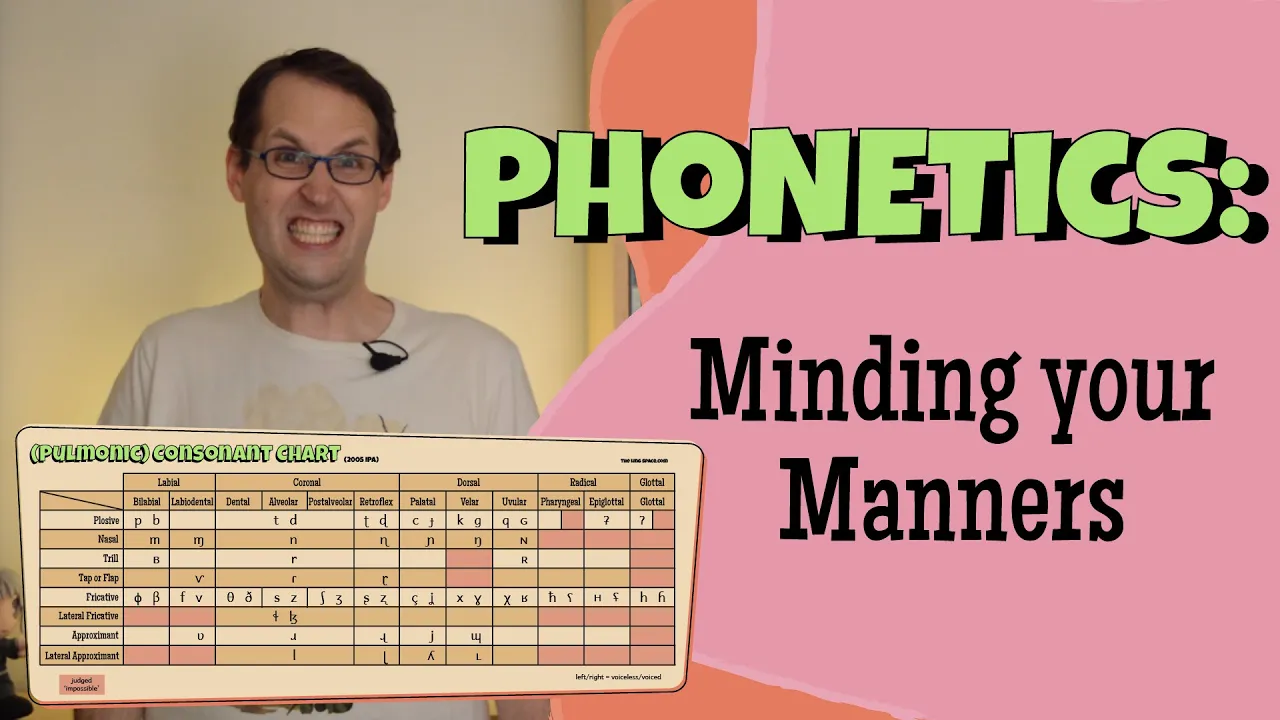
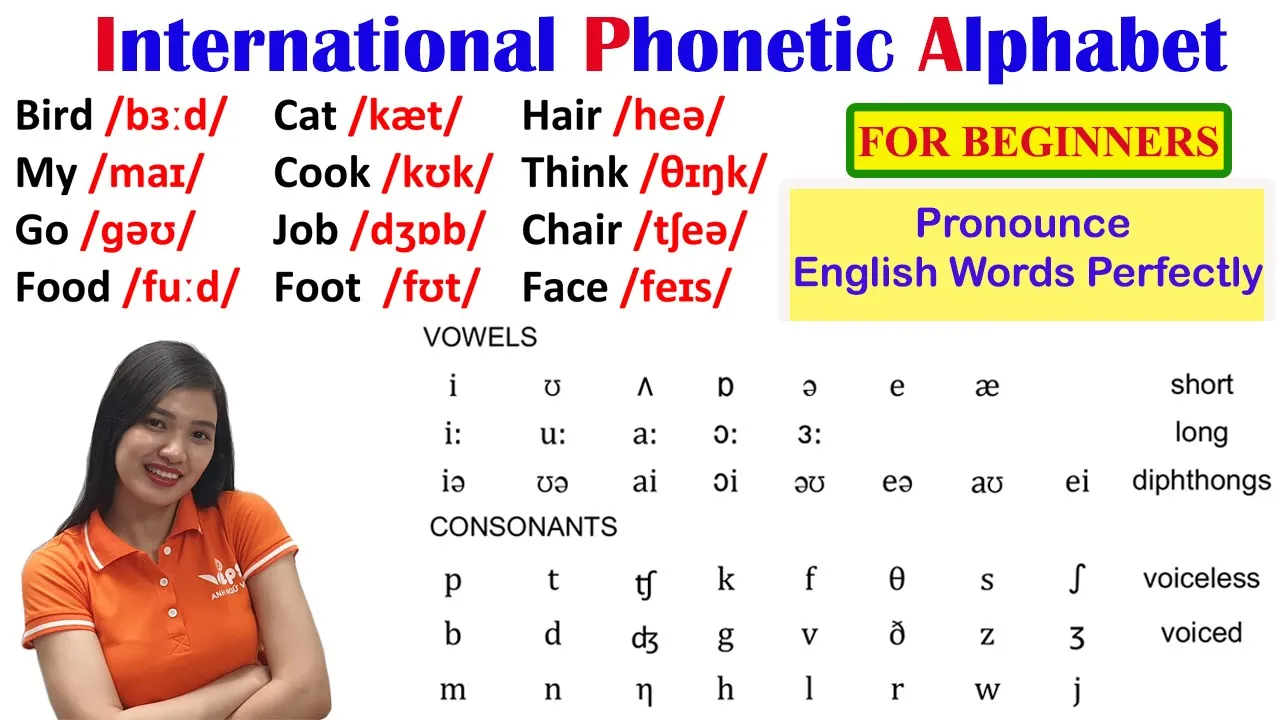
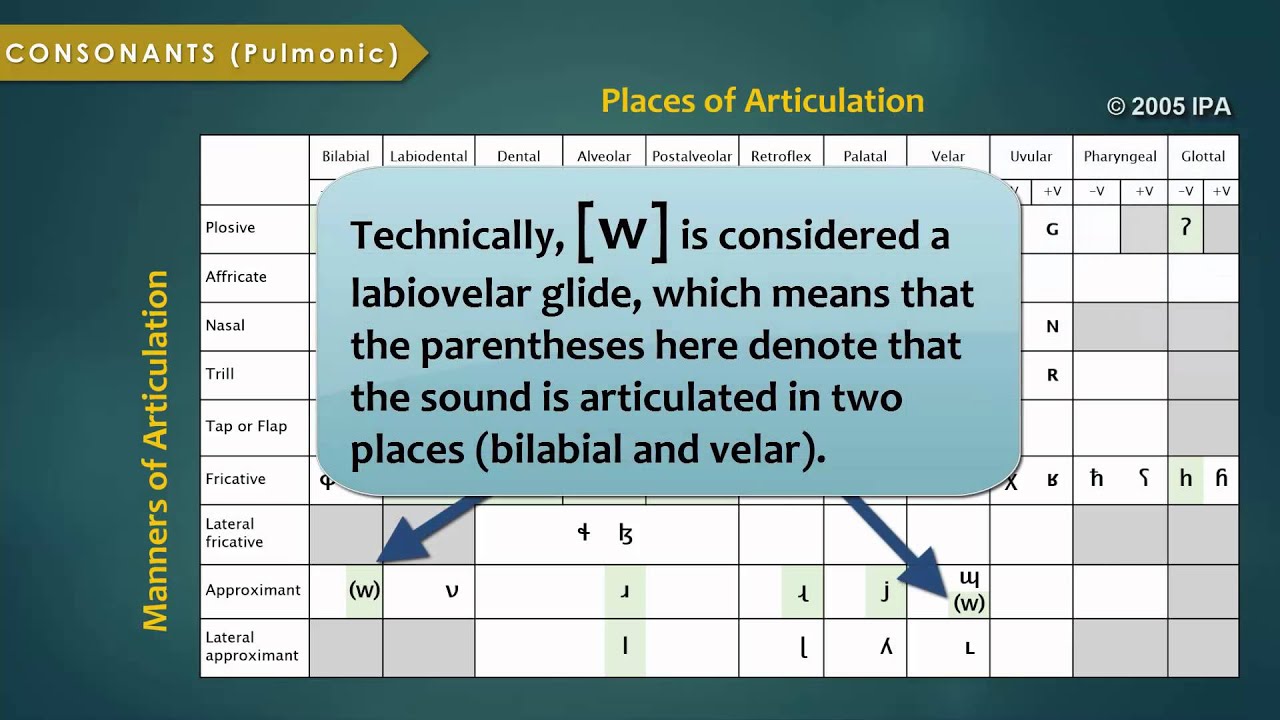
Now, this is the main consonant chart in the International Phonetic alphabet or IPA for short.
For now, all we need to know is that the columns are organized by place of articulation.
The active articulator can go on the very top i.e lips, tip, body and back of the tongue, and glottis.
And below are the 12-ish places of articulation.
Now, its worth noting that this list of 12 places of articulation is far from exhaustive.
I'm looking at you lingolabial trill...but that's another story, for another day.
Stay tuned... Good morning Interweb.
First up, apologies for this video being a week late.
To make up for this, hopefully, I'll be releasing a new video within the next couple of days.
And if you absolutely cannot wait until then for more Artifexian content, click the yellow box, to the side, to take you to the Artifexian Podcast.
There's a new episode out; two hours on nothing but language.
Thank you all so much for watching.
Edgar out!
Up Next

7:20
Broad Phonetic Transcription: IPA Basics and Practice
@evanashworth490
91.5K views•2014-09-11
36:52
Constraint Interaction in Optimality Theory: Epenthesis & Deletion
@Vidyamitra
180 views•2018-08-20

5:39
Consonant Harmony: Assimilation, Typology & Language Evolution in Conlanging
@Artifexian
13.2K views•2021-03-05

21:32
Accent Expert Explains U.S. Regional Dialects | Part 1
@WIRED
9.3M views•2021-01-21
Related Study Plans & Knowledge Roadmaps
Structured learning paths in Linguistics
linguistics
Optimality Theory: Tableaux & Constraints
01Phonological Basics: Sounds, Syllables & Rules
02Foundations of Optimality Theory: GEN, CON, and EVAL
03The Constraint Inventory: Markedness vs. Faithfulness
+ 2 more learning modules
15h5 modules
Explore Roadmap
linguistics
Morphosyntactic Alignment: S, A & P Systems
01Foundations of Syntax: Transitivity and Arguments
02The Linguistic Variables: Mapping S, A, and P
03Nominative-Accusative Alignment
+ 3 more learning modules
12h6 modules
Explore Roadmap
linguistics
Analyzing Sign Language: Phonology & Syntax
01Foundations of Sign Language Linguistics
02Phonology: The Five Parameters of a Sign
03Morphology: Word Formation and Classifiers
+ 2 more learning modules
14h5 modules
Explore Roadmap
linguistics
Pragmatics: Speech Acts, Grice & Politeness
01Introduction to Pragmatics: Meaning in Context
02Grice’s Cooperative Principle & Implicature
03Speech Act Theory
+ 2 more learning modules
14h5 modules
Explore Roadmap