





![Avoid the Pentatonic Scale in Your Solos [3 STEPS]](https://i.ytimg.com/vi_webp/FkFXXTc_ECU/maxresdefault.webp)







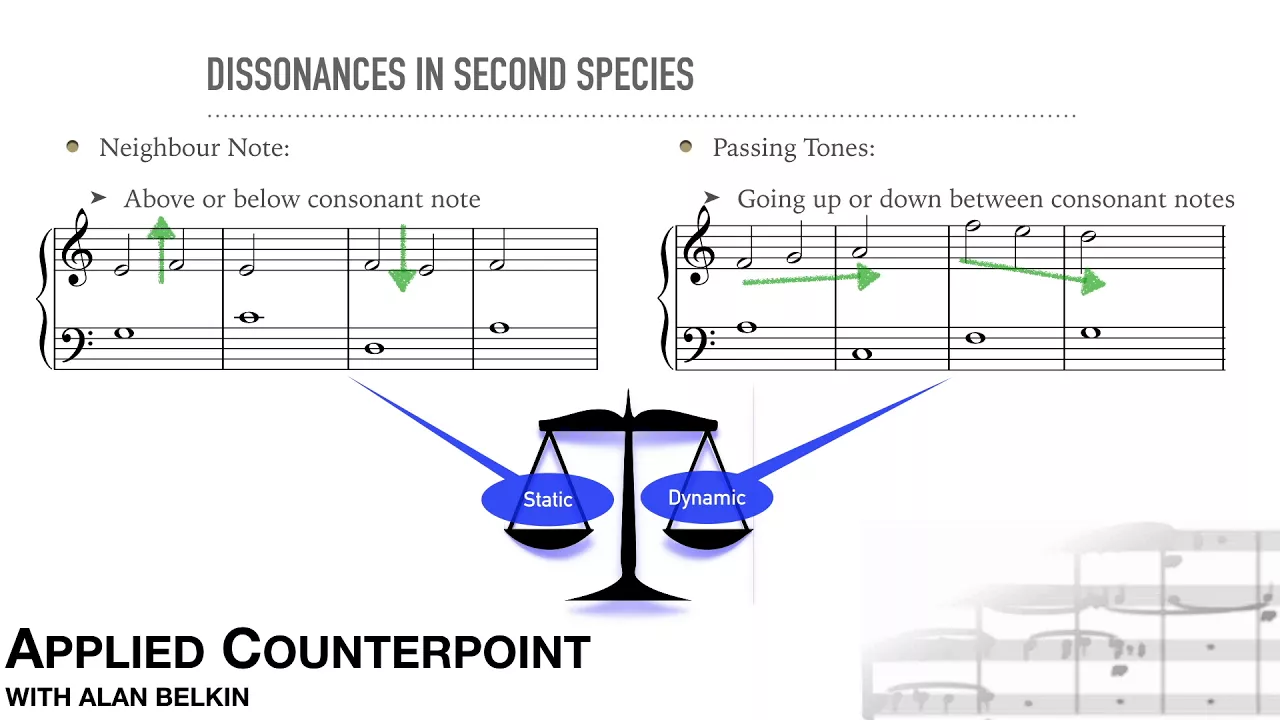


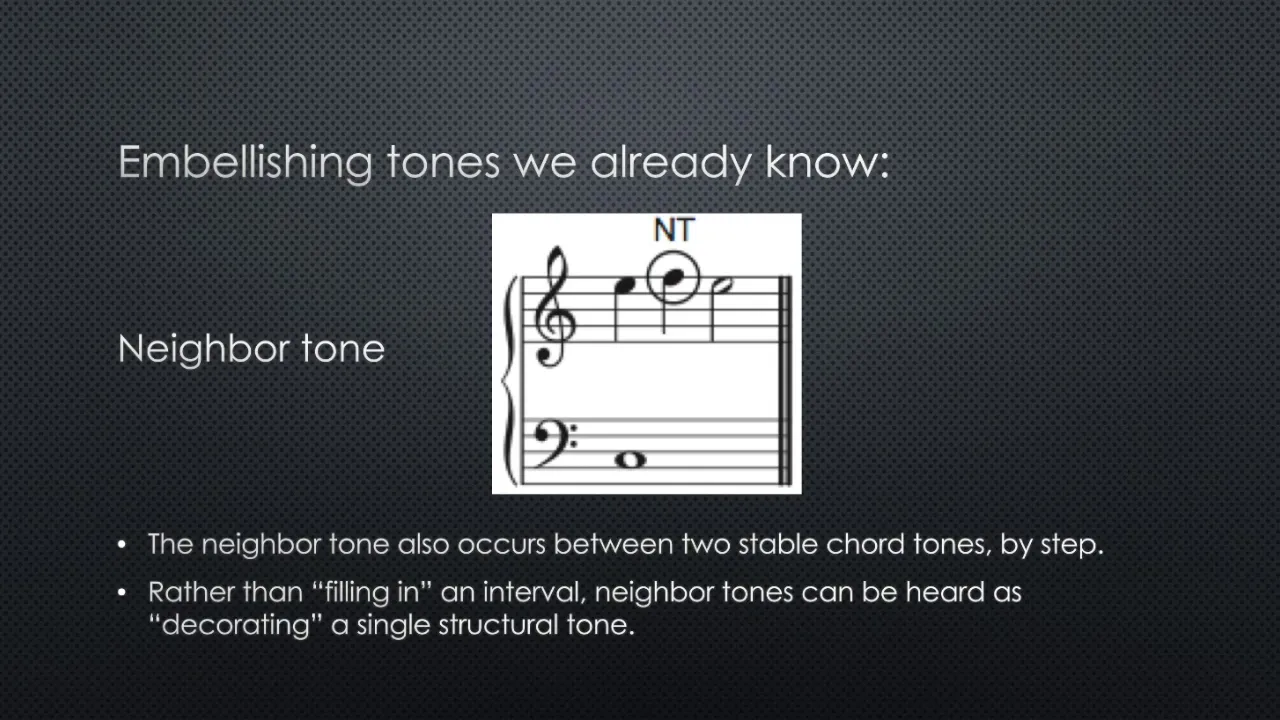
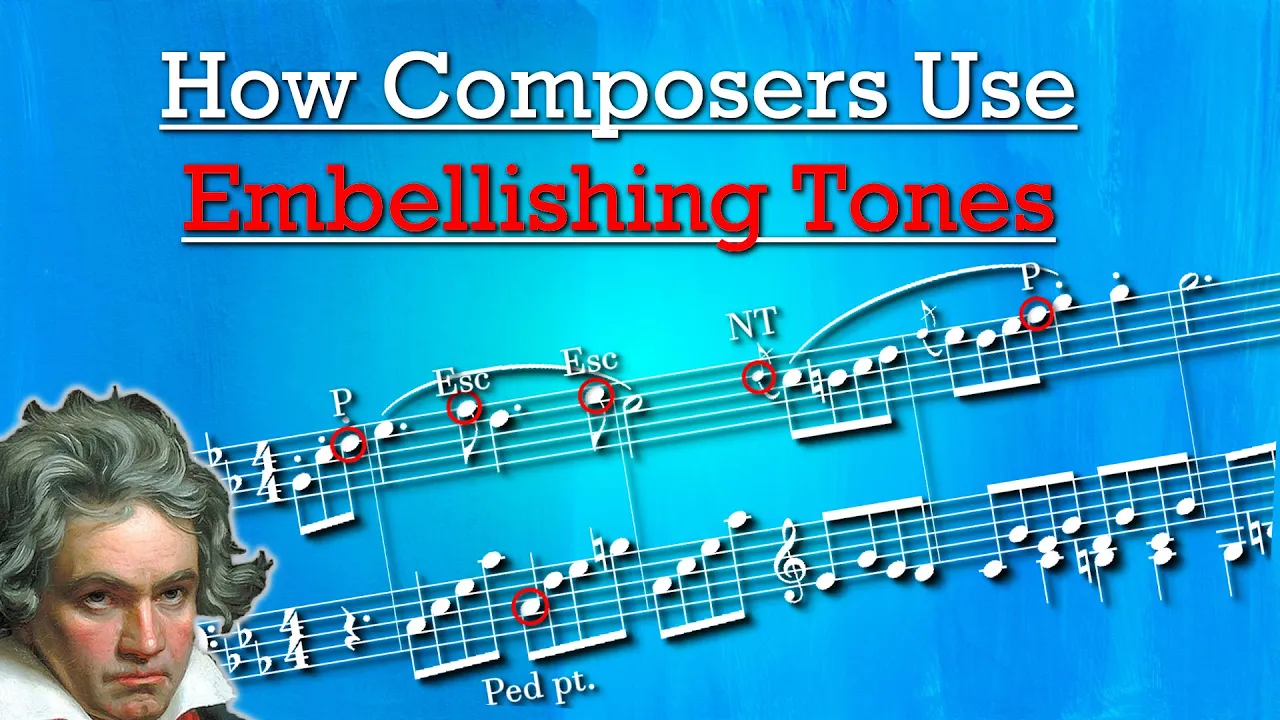


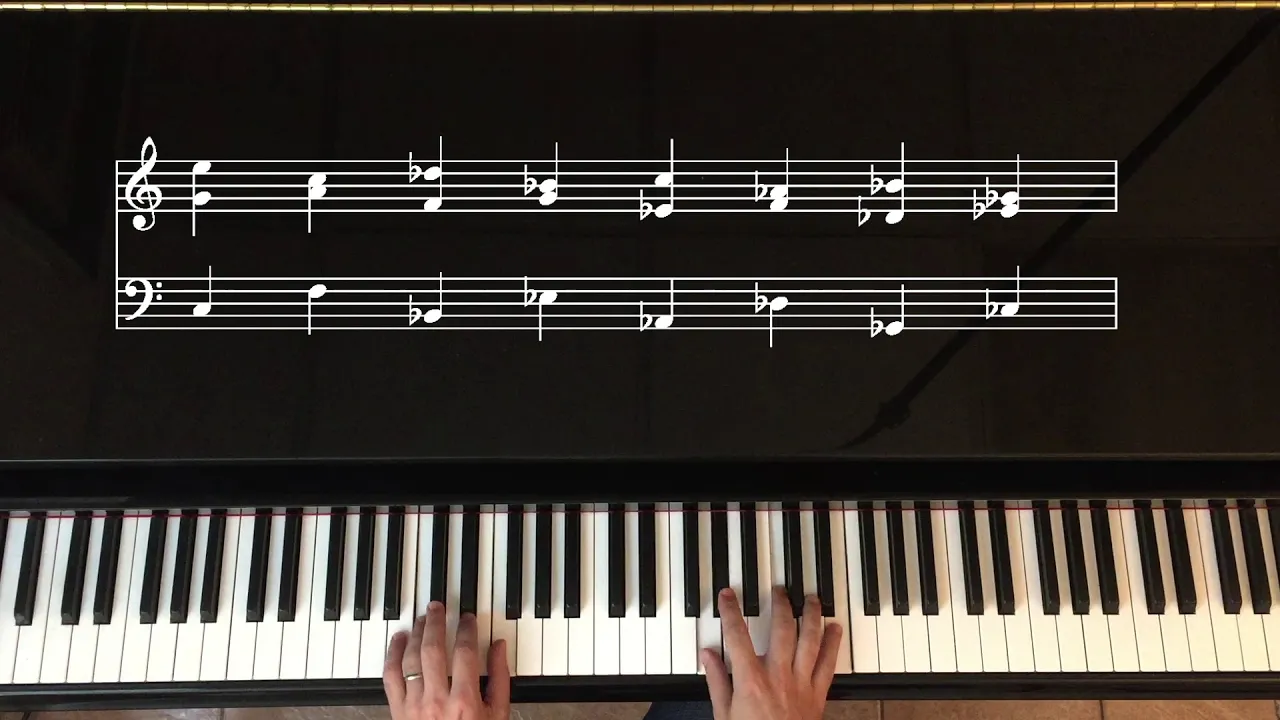

A passing tone is a non-chord tone approached by step and left by step in the same direction, creating a smoothing effect on melody lines, while a neighbor tone is approached by step and left by step in the opposite direction, creating an up-and-down motion around a chord tone; both can be diatonic (fitting the key) or chromatic (not in the key), and multiple passing tones can occur in sequence.
Understanding Passing Tones and Neighbor Tones in Music Theory
Added:Understanding of basic intervals, specifically the distinction between steps (conjunct motion) and leaps (disjunct motion).
Familiarity with major and minor scales, keys, and basic diatonic harmony.
Ability to identify chord tones (root, third, fifth) within standard triads.
A foundational concept of consonance versus dissonance in music theory.
Introduction to other complex non-chord tones (NCTs) such as suspensions, retardations, appoggiaturas, and escape tones.
Applying non-chord tones in Species Counterpoint exercises (specifically second and third species).
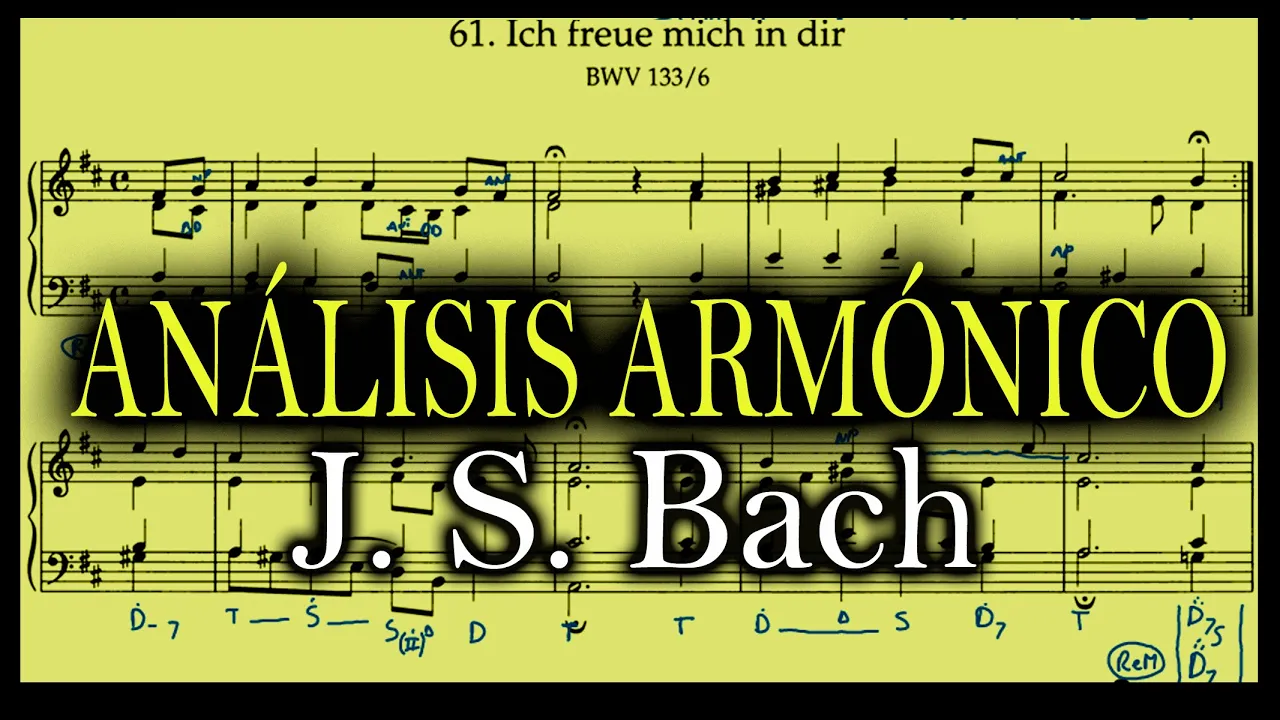
Analyzing Bach chorales or classical piano literature to identify and label various embellishing tones.
Using decorative tones in composition and arranging to improve voice leading and create more linear, flowing melodies.
602 views16likes7:21Original Release: 2020-03-31
in this next series of videos we're going to talk about non chord tones remember that a non- chord tone is any note that does not fit into the underlying Harmony of your chord so non- chord tones are best described when um talking about how they are approached and how they are left the first one we're going to look at today is the passing tone now the passing tone is going to be approached by step as you can see we've gone from C up a letter name up a step to D and then they are left by step in the same direction all right so we've gone up a step to e so the passing tone has this effect of kind of smoothing out your Melody line so passing tones can be dionic meaning that they fit into the key this note D exists in the key of C major which we're in they can also be chromatic meaning that we can connect our C here to our D here by the use of a C passing tone C Shar is not in the one chord in the key of C major um and it also has the effect of a passing tone it's approached by step this time just a half step and then left by a half step as well in the same direction so again the key component here is that a passing tone is approached by step and is left by step in the same direction all right let's look at another example sometimes you can have more than one passing tone in a row you might have two um where neither of those notes fit into the cord per se so here we're going from a one chord to a five chord and in our soprano line we start on E which is a chord tone c e g we then move to E flat and D both of which are non chord tones and then we move to C now the reason this C is not in Red is because it's not a passing tone C is a part of the one chord therefore it's not a non- chord tone so let's go through this from E we've gone down the step to E flat and then we leave E flat by going down a step so that meets the qualifications for a passing tone and same thing from E flat we're going down a step to D and then from D down a step to C so the D also meets the qualifications for being a passing tone so you see this a lot in music where you have a couple of passing tones in a row and that's totally okay next we're going to talk about neighbor tones neighbor tones are approached by step and they are left by step in the opposite direction and that's what makes them different from passing tones so in our example here we have a two chord in the key of C A DFA chord our F in the Gro is moving up a step to G and then it moves back down to F so this chord has all chord tones then you have your neighbor tone moving up and then it resolves back down to a chord tone so this F right here is a chord tone not a non- chord tone all right and similar to passing tones you can also have chromatic neighbor tones um in this case we have f f sharp and then back to F so it's moved up a half step and then back down the gist of neighboring tones is that they have that up and down motion now they can also go the other way let's say instead of going to f here or G here excuse me we went to e so we have gone down a step and then back up a step this is also considered a neighbor tone for your homework tonight I'm giving you an example and I want you to add passing and neighbor tones to increase the melodic interest in all of your parts let's do a practice example of this so you can be successful at your homework first I'm going to look through the melody line the soprano line and see if there are any places I could add some passing tones what I'm looking for are notes that are a third apart or maybe places where I can add a chromatic passing tone let's just scan through and see what we can do um well right off the bat we have a c going down to an a that might be a good place to stick a passing tone so what you have to do to make this work is change the rhythm of this first note and you'll be able to do this on your homework I'm going to make this c a quarter note and then draw a b right here so I have effectively added a passing tone B going from C to a and to make it work I had to change this Rhythm from a half note into a quarter note otherwise it wouldn't fit into the time signature all right let's look for another place let's see if we can find a place to add any neighbor tones when you're looking for a place to add neighbor tones it helps to find a place where you have a common tone in any of your voices so let's scan through do we have any common Tes we do right here between um the second half of the first measure and the first half of the second measure we have two common tones since we already did a passing tone of the soprano voice I'm just going to decide to stick a neighbor tone in between right here so first of all we need to make sure that has a stem and then I'm going to change this quarter note or excuse me half note into a quarter note and I'm going to draw another quarter note in here have to kind of Squish it in a little bit to make that fit and we have effectively added a neighbor tone so this goes down to e and then back up to F so approached by step and left by step in the opposite direction let's see if we can find one more place to add a noncon let's see how about we add a itic passing tone going from our a in the soprano to G in the soprano so remember it has to be approached by step and left by step so we could change our a to a quarter not we could add an A flat after that and then that a flat again is left by step in the same direction that it was approached so this is another way of adding a passing tone in as well so on your homework look for places that you can add passing and neighboring tones there is more than corre one correct answer so give it your best shot and that is about it
Up Next

4:02
Understanding the 4-3 Suspension in Counterpoint
@learnmusictheory9951
321 views•2025-03-20

10:20
Mozart's Musical Dice Game Explained: History, Rules, & Fun
@webpianoacademy
5K views•2023-03-13

47:36
Understanding Diatonic 7th Chords in Major Keys | Music Theory Tutorial
@GracieTerzian
54.7K views•2022-03-02
10:49
Understanding John Coltrane's Giant Steps: A Music Theory Analysis
@Vox
10.4M views•2018-11-12
Related Study Plans & Knowledge Roadmaps
Structured learning paths in Music Theory
music-theory
Composing Galant Music: Partimento & Schemata
01Foundations of Figured Bass and Keyboard Harmony
02The Rule of the Octave (Regola dell'Ottava)
03Galant Schemata: The Building Blocks of Form
+ 2 more learning modules
30h5 modules
Explore Roadmap
music-theory
Decoding Overtone Series: Tuning & Drone Music
01Acoustic Foundations: The Physics of the Overtone Series
02Tuning Systems: Equal Temperament vs. Just Intonation
03Microtonality and Spectralism: Beyond Standard Pitches
+ 2 more learning modules
24h5 modules
Explore Roadmap
music-theory
Impressionist Harmony: Scales, Planing & RPGs
01Foundational Music Theory: Keys, Intervals, and Seventh Chords
02Impressionist Color: Chord Planing and Parallel Harmony
03Whimsical Textures: Pentatonic Cascades and Whole-Tone Scales
+ 1 more learning modules
14h4 modules
Explore Roadmap
music-theory
Negative Harmony: Axis Reflection in Indie Pop
01Music Theory Foundations: Scales, Intervals, and Triads
02Functional Harmony and the Circle of Fifths
03Demystifying the Negative Harmony Axis Reflection
+ 2 more learning modules
16h5 modules
Explore Roadmap