





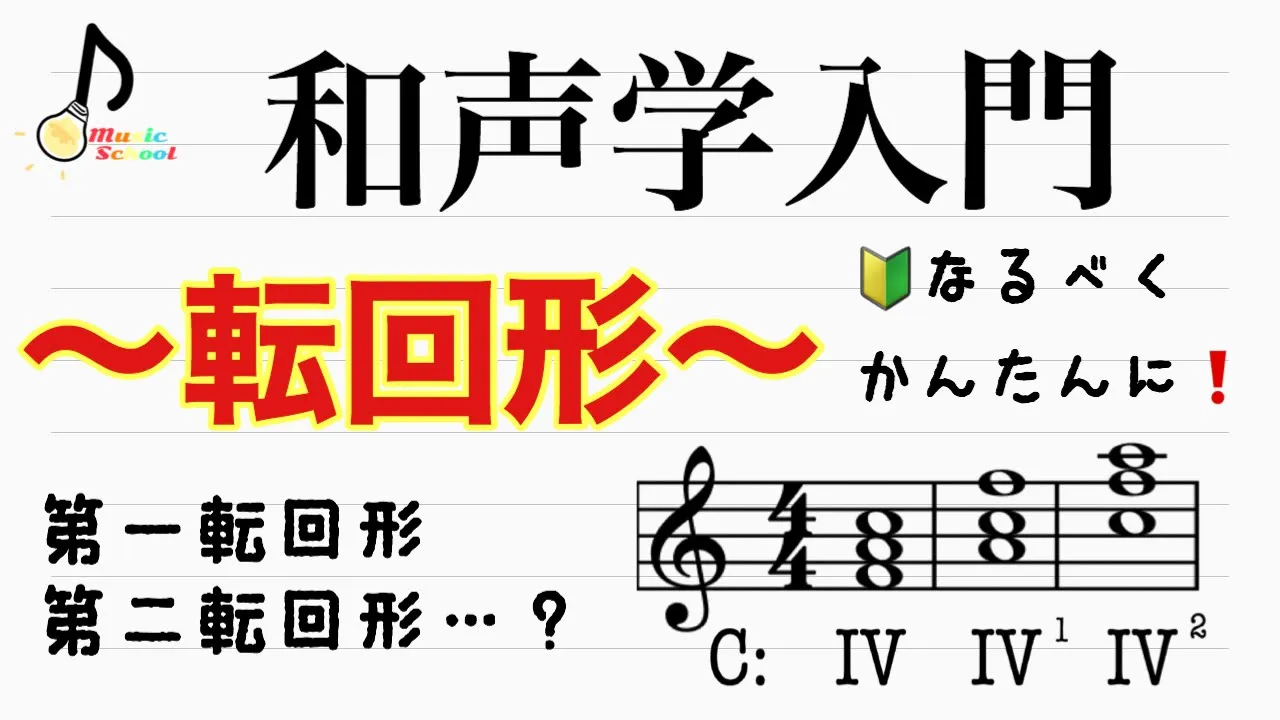





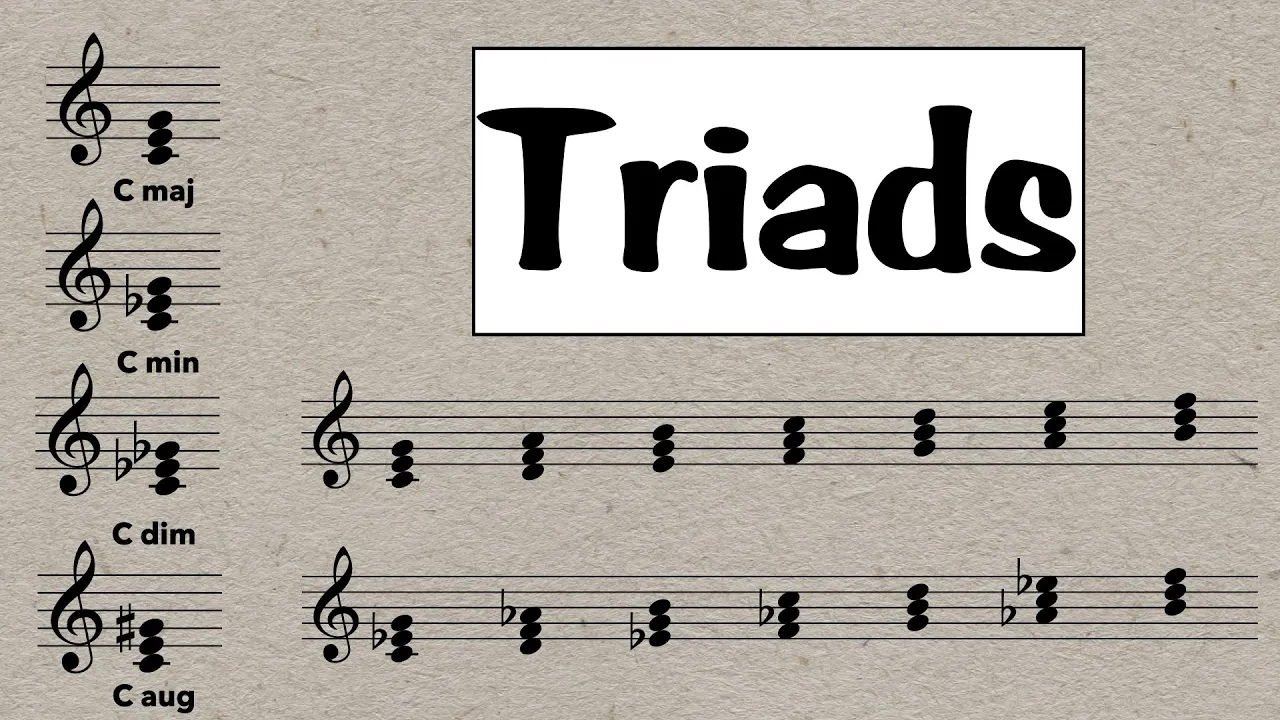

A triad is a three-note chord whose pitches can be arranged in stacked thirds, consisting of a root (bottom note), third (middle note), and fifth (top note); the four main triad qualities are determined by their interval patterns: Major triads have a major third and minor third stacked with a perfect fifth, Minor triads reverse this with a minor third and major third, Diminished triads feature two minor thirds with a diminished fifth, and Augmented triads contain two major thirds with an augmented fifth.
Music Theory 1: Identifying Triads and Their Qualities
Added:Basic understanding of pitch, note names, and how to read notes on the treble and bass clefs.
Knowledge of musical intervals, specifically how to identify and construct major and minor thirds, as well as perfect fifths.
Familiarity with accidentals (sharps, flats, and naturals) and how they alter pitch.
An introductory understanding of major and minor scales and key signatures.
Understanding triad inversions (root position, first inversion, and second inversion).
Introduction to seventh chords, which expand upon basic triads by adding a fourth pitch (a major, minor, or diminished seventh).
Analyzing diatonic triads within major and minor keys using Roman numeral analysis.
Applying triads to voice leading principles and creating basic chord progressions in songwriting or composition.
76.7K views900likes14:16Original Release: 2015-01-29
music theory 1 this is video8 on Triad identification I'm David frell today we're going to introduce one of the most important harmonic units in western music the Triad going talk briefly about what a Triad is and some of the different types of Triads that we'll be seeing in a lot of the music that we look at and listen to a Triad is a chord a particular type of chord that we see a lot in music and there's a couple of special things that make a Triad a Triad the first thing is that a Triad is made up of three different notes okay we can have chords with four notes five notes six notes seven notes all sorts of different combinations but for a chord to be a Triad there has to be three notes in the chord and so all those other things we're not going to analyze them as Triads and the other quality of a Triad is that its pitches can be arranged in stacked thirds okay and we can see that we've got a Triad written right here and we know it's a Triad because we can stack up the notes in thirds C to e is a third and E to G is a third and the word I'm going to be using bunch is tan tan means relating to thirds and so a Triad is a tan chord a chord that's built up of stacked thirds if we have a chord that's three notes and can be arranged in stacked thirds chances are it's going to be a Triad each of the three notes in the Triad has a particular name the bottom note we're going to call the root okay when we stack these Triads up in thirds the note that is in the bottom we're going to call the root the note in the middle is a third above the root and so we're going to call it the third and the top note when we stack a Triad in thirds is going to be called the fifth the root the third and the fifth these are the three members that make up all the Triads we're going to be talking about one last basic note before we move on to talking about chord quality in music often times we're going to see the notes of the Triad shuffled around as we can see in this particular example here we have the same three notes c e and G but they've been sort of jumbled up like this just because we see them in a different order it doesn't mean that it's not a Triad anymore as long as we can find an order in which we can stack these notes in thirds we're still going to call it a Triad and even though G is the lowest note in this particular chord we're still going to call C the root e the3 and G the 5th okay even when we end up jumbling the notes around in actual music we always want to remember how we could order them in stacked thirds because that's how we're going to be talking about them so now we have a decent idea of what a Triad is a three note chord whose notes can be stacked in ascending thirds we also recall from our talk about intervals that we have a whole bunch of different thirds different types of intervals that can be used to build up these Triads and depending on which thirds we use major thirds or minor thirds and what order we use them in we're going to have a bunch of different sounding sonorities for our Triads we call these Triad qualities okay and so for the rest of this video we're going to talk about the different qualities of Triads we find and what intervals we use to make them up we're going to be talking a lot about intervals and how we find them and so that's from one of our previous videos if you want to review that if you feel a little bit Rusty on how to calculate an interval maybe go back and watch that interval ID video and then you'll be come back you can come back here and be ready to learn about Triad quality all right so let's get to work finding out what kind of chords we can see when we look at this chord we can tell that it is a Triad it has three three separate notes and those three notes are all arranged in ascending third to figure out the quality to figure out what type of Triad it is though we need to analyze the intervals in this chord and we know that to analyze intervals we have to think about the key signature of that lowest note and so I've already figured out that the key signature for B flat major has two Flats B and E and so when I look at that D natural I ask myself the question I always ask about intervals is this in the the major scale of the lower note and it is that D natural is in the B flat major scale and so that means we have a major third what about that interval between the third and the fifth of the Triad between D and F I'd like to figure out what interval I have there as well and so once again I'm going to analyze using the major scale of the lower note the lower note is D and I know that the D major scale has two shars F Shar and C sharp my circle of fifths told me and so I asked myself the question is the upper note in the major scale of the lower note is f natural in the D major scale and I can see that the answer is no the D major scale has an fshp and so I have to figure out what happened here did I make the interval bigger or did I make it smaller well I took that F and I changed it to an F natural I moved it closer to the D and so I made it smaller by a half step and if we take a major third and we make it small smaller by 1/2 step that is correct we have a minor third a minor third so we have a major third between the roote and the thir and a minor third between the third and the fifth what about that outer interval of B flat up to F I'd also like to look at that interval again I want to analyze from the major scale of the lower note and so I ask is f natural in the B flat major scale and I look at my key signature for B flat major the only accidentals are B flat and E flat so f is in the major scale there that means we have a perfect fifth between the root and the fifth of the chord we've analyzed now all the intervals of this Triad we analyzed between the root and the third and saw that it was a major third we analyzed between the third and the fifth and saw that it was a minor third and we analyzed between the root and the fifth and saw that it was a perfect fifth this interval pattern is specific to one of our Triads we call this the major Triad the major Triad is one of the most common chords in all of western music and the major Triad is defined by having these intervals in it again a major third and a perfect fifth above the root and a minor third between the third and the fifth this is our major Triad let's look at what happens when we start changing some of the notes in this Triad you'll notice that I have changed the Third of this chord I changed it from D natural to d flat when I Chang that third I changed that bottom interval of my cord I changed it from being a major 3 to a minor 3 I took that D natural and I made it one half step smaller I pushed it one half step closer to the root notice that I've left the perfect fifth on there I haven't changed the B flat up to F and so that interval hasn't changed I've also changed the interval between the third and the fifth it used to be a minor third when it was D natural to F in our last chord what have I done to that interval I've moved the bottom note the D natural down I've moved it a little bit further from the F and so what kind of third is it now it's now a major third D to F was a minor third when I took that D and I moved it one half step further away from the f I made the interval bigger and I changed it to a major 3 we have a different interval pattern here than we did in our major Triad we have now we have a minor third between the root and the third and a major third between the third and the fifth we still have a perfect fifth between the root and the fifth this is not a major Triad it doesn't have the right interval pattern so what are we going to call this particular configuration of intervals this is our Minor triad our Minor triad has a minor third between the root and the third and a perfect fifth between the root and the fifth it also has a major third between the third and the fifth A Minor triad is another very common Triad when we don't hear M major Triads chances are we're hearing minor Triads in a lot of the music that we listen to again notice the difference between the Minor triad and the major Triad it's a subtle one the Minor triad starts with a minor third on bottom the major Triad has a major third on bottom and that first third the third between the root and the third of the chord is going to be one that's going to be useful for us to remember let's look at two more kinds of Triads which are a little bit less frequently found but we're still going to want to understand and be able to analyze let's take a look at another chord this one similar to the Minor triad it has B flat and d flat in it and so it starts with that minor third but we've got an F flat on top of this chord and so we've changed our other intervals we took the major third we used to have from d flat to F natural and made it a half steps smaller we made it into a minor third and we took the perfect fifth between our root and our fifth the perfect fifth from B flat to F natural and we made that a half step smaller we turned it into to a diminished fifth again we have a unique collection of intervals here we have two minor thirs on top of each other and we have an outer interval of a diminished fifth what are we going to call this collection of intervals this is our diminished Triad takes its name from that diminished fifth between the outer voices the diminished Triad is less frequently found than the major and minor Triad but we do see it a good deal in traditional classical music we'll see it a lot in our minor key music as well there's a couple of diminished Triads hiding out in there again the intervals two minor thirs stacked on top of each other and a diminished fifth between the root and the fifth let's look at one final chord switched a whole bunch of my accidentals back I switched from d flat back to D natural and so I switched that back to a major third and my f I've moved from F flat back through F natural back to fshp and so my intervals here are a little bit different I've got that major third again on the bottom B flat to D natural and then I've got on top another major3 D to F sharp two major3 stacked on top of each other if I look at my outside interval B flat to fshp this is not the perfect fifth that we find in the B flat major scale it's been changed it's been made one half step bigger by raising that Fifth and so we have an augmented fifth this collection of intervals major third and then second major third with that augmented fifth between the outer voices again has a particular name this is the augmented Triad and this is the last of the four commonly named Triads the augmented Triad is found by far the least among these four we really don't see augmented Triads too often in music but we want to be ready for them when we do see them and so we want to have this interval collection ready in our minds we want to understand what intervals to look at in an augmented Triad here's a quick overview of all the chords we've looked at in this video the major and minor Triads are by far the most common chords that we're going to be encountering and most of the music we study and listen to both of them have a major third and a minor third in them though the order of those intervals is shuffled around a little bit major Triad has the major third on bottom and the minor third on top where the Minor triad has a minor third on the bottom and a major third on top both have perfect fifths between the outer voices of the Triad our diminished Triad has two minor thirs a diminished fifth between the outer voices our augmented Triad has two major thirds an augmented fifth between the outer voices identifying Triads is going to be a skill that you are going to need to develop Mastery over and so what that means is that first we're going to have to be very comfortable identifying intervals all the stuff we talked about at intervals we can see starts to add up here because each of these chords has three intervals inside of it furthermore to master this skill we have to remember which collection of intervals goes with which Triad so please make sure you take notes on this screen make sure you remember which intervals go in which order with which chord okay this is something that we're going to have to learn and memorize a bit and the more we practice it I think the more quickly we'll be able to come up with which intervals go with which chords okay guys that is the end of video8 on Triad identification we talked about what a Triad is we talked about the different qualities of Triads that we're going to be encountering in music and we talked about how we're going to analyze these chords by looking at the different collections of intervals that we see in them we'll be spending some more time on this in class so I look forward to seeing you then see you guys later
Up Next

14:48
Writing Harmony at the Piano: Register, Function, and Voice Leading
@pianofluency
22.4K views•2024-03-05

10:20
Mozart's Musical Dice Game Explained: History, Rules, & Fun
@webpianoacademy
5K views•2023-03-13

47:36
Understanding Diatonic 7th Chords in Major Keys | Music Theory Tutorial
@GracieTerzian
54.7K views•2022-03-02
10:49
Understanding John Coltrane's Giant Steps: A Music Theory Analysis
@Vox
10.4M views•2018-11-12
Related Study Plans & Knowledge Roadmaps
Structured learning paths in Music Theory
music-theory
Composing Galant Music: Partimento & Schemata
01Foundations of Figured Bass and Keyboard Harmony
02The Rule of the Octave (Regola dell'Ottava)
03Galant Schemata: The Building Blocks of Form
+ 2 more learning modules
30h5 modules
Explore Roadmap
music-theory
Decoding Overtone Series: Tuning & Drone Music
01Acoustic Foundations: The Physics of the Overtone Series
02Tuning Systems: Equal Temperament vs. Just Intonation
03Microtonality and Spectralism: Beyond Standard Pitches
+ 2 more learning modules
24h5 modules
Explore Roadmap
music-theory
Impressionist Harmony: Scales, Planing & RPGs
01Foundational Music Theory: Keys, Intervals, and Seventh Chords
02Impressionist Color: Chord Planing and Parallel Harmony
03Whimsical Textures: Pentatonic Cascades and Whole-Tone Scales
+ 1 more learning modules
14h4 modules
Explore Roadmap
music-theory
Negative Harmony: Axis Reflection in Indie Pop
01Music Theory Foundations: Scales, Intervals, and Triads
02Functional Harmony and the Circle of Fifths
03Demystifying the Negative Harmony Axis Reflection
+ 2 more learning modules
16h5 modules
Explore Roadmap