






















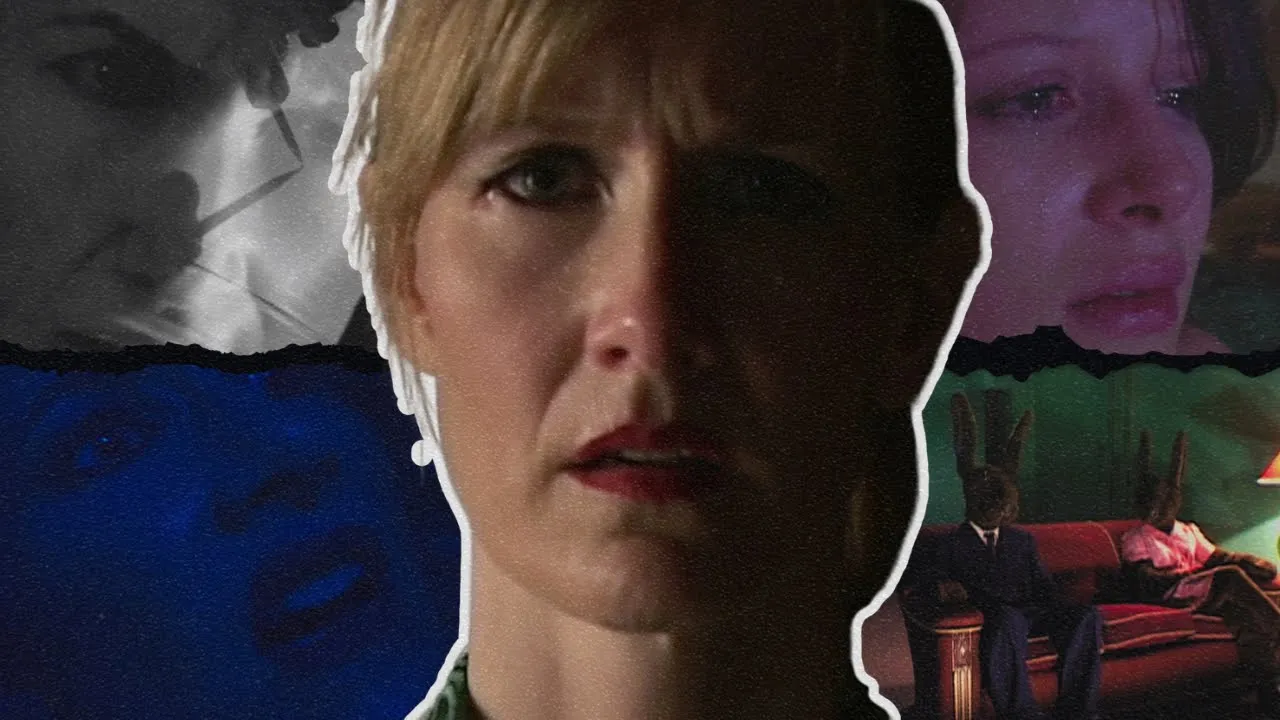

Gaspar Noé's Enter the Void employs repetition, subjective camera work, and sound design to authentically depict the psychological experience of trauma, where traumatic memories intrude unexpectedly and disrupt normal cognitive processing, creating a fragmented, cyclical narrative that mirrors the actual mental state of someone experiencing psychological distress.
Enter the Void: Visualizing Psychological Trauma in Film
Added:Basic film terminology, specifically the distinction between diegetic and non-diegetic sound design and the function of subjective point-of-view (POV) cinematography.
Fundamental psychological concepts of trauma, particularly PTSD symptoms such as dissociation, intrusive memories, flashbacks, and repetition compulsion.
The cinematic movement of 'French New Extremism' and Gaspar Noé's transgressive, sensory-overload approach to filmmaking.
The concept of subjective realism in cinema—how film techniques are used to externalize a character's internal cognitive and emotional state.
Advanced analysis of psychoacoustics in cinema, studying how low-frequency sounds, binaural beats, and auditory distortion affect viewer physiology.
Applying literary and filmic trauma theory (such as the works of Cathy Caruth) to other narratives of grief, memory, and repetition.
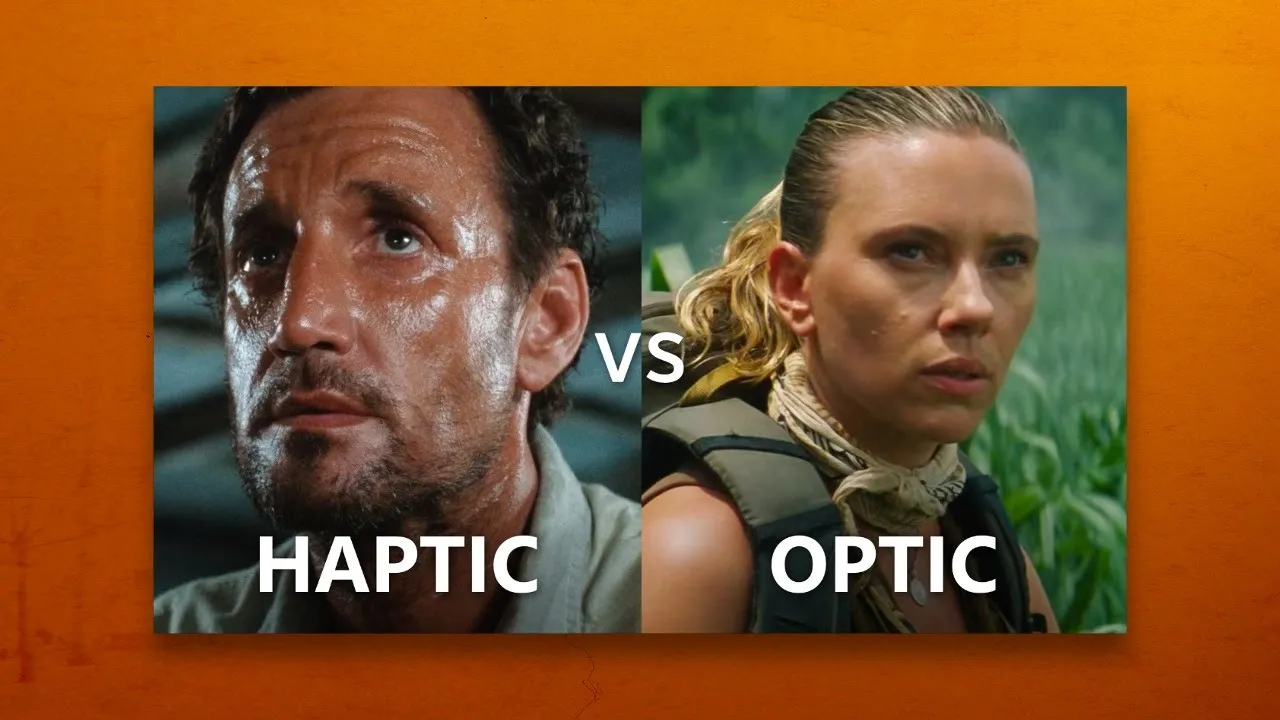
An exploration of 'Haptic Visuality' and somatic cinema, studying how filmmakers evoke tactile and physical sensations through visual media.
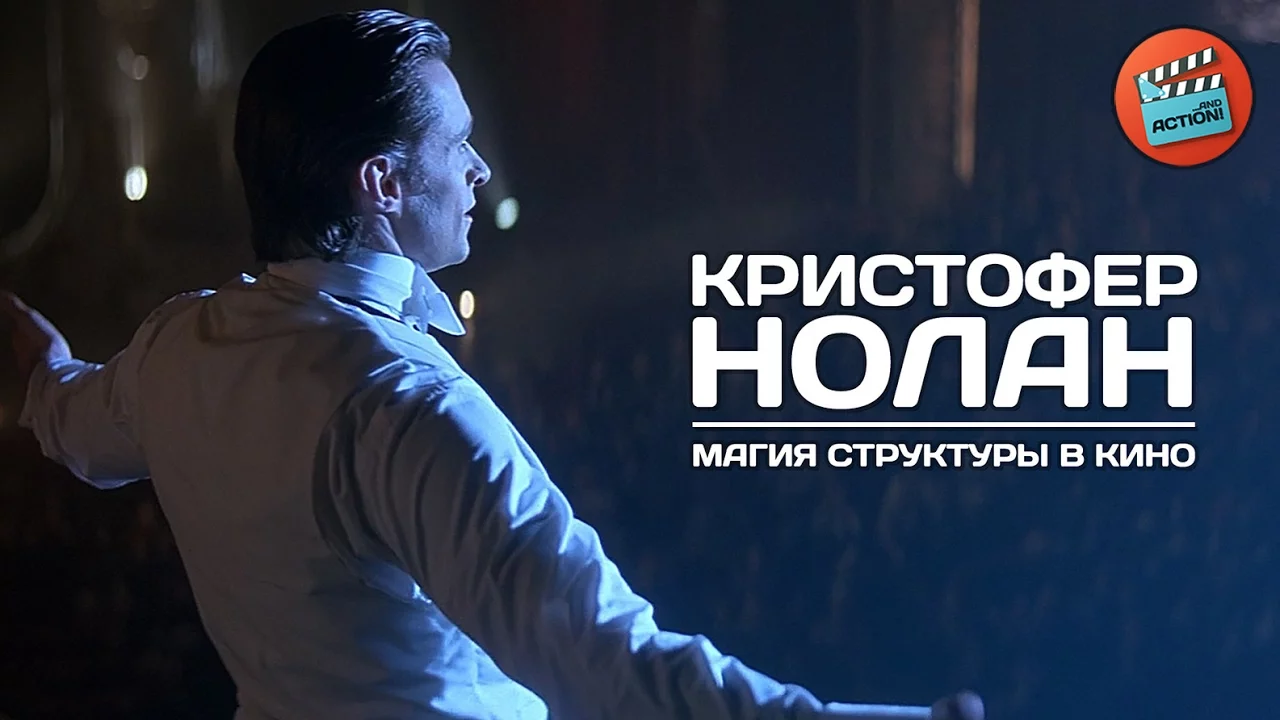
Comparative analysis of non-linear structure and memory representation in the works of other directors like David Lynch, Christopher Nolan, or Alain Resnais.
570.2K views23.1Klikes10:34Original Release: 2021-03-17
There is this one scene in Gaspar Noé’s 2009 film, Enter the Void, that terrified me so much that I had to watch the rest of the film with my hoodie over my head. As the movie went on, I began to wonder why that scene was so effective. And after some time, I realized that, despite the criticism, the visuals of this film actually do have a particular purpose that not only makes this scene (and the others) effective, but necessary: depicting a subjective experience of a psychological trauma. And the film’s true excellence is found only through this realization...that there is a young man slowly dying - his life flashing before his eyes. That there is a boy.
A girl.
A loving family.
And then... A trauma.
One of Enter the Void’s most prominent characteristics is its use of repetition. The film is told and viewed exclusively through the eyes of Oscar, a young American drug dealer and an addict living in Tokyo. We are given no information about him except that his sister Linda is in Tokyo with him, and that he has a friend named Alex, who introduces him and the audience to the concept of reincarnation through The Tibetan Book of the Dead. With this limited information, and less than a quarter into the film, Oscar dies.
And there, we begin a cyclic - and therefore, repeating - journey into Oscar’s past, present, and future, greeted with patterns, symbols, images and ideas that reveal his state of mind. We start with small things, like the psychedelic love hotel, changing words on the wall, and the recurring conversations about abortion and maternal love. These minute and less obvious recurrences work as the film’s foundation, helping to identify its underlying motifs, and easing the audience into its complex structure.
The vibrant colors of the love hotel foreshadow the last act of the film, hinting at the idea that Oscar isn’t really reincarnating, but is using pieces of his memories to desperately make sense of his existence before he takes his last breath. The changing words Alex has carved on the wall is representative of Oscar’s disorientation as he struggles to interpret his own wishes, and the recurring messages about birth, abortion, and maternal love is indicative of his repressed desires and of his yearning for peace and home.
"I just missed you...so much" Then, there are images that are repeated more explicitly. Of course, since the whole film is cyclical in nature, certain images are bound to repeat as an inevitable part of the journey: Oscar regularly seeing himself lying dead on the floor is a simple reiteration of his entire life that led up to the point of his unfortunate demise, and once a full circle has been drawn, he moves on to a different plane of existence. Similarly, there’s the scene featuring young Oscar and Linda making promises to never leave each other.
This one is more closely linked to Oscar’s trauma, as he is haunted by the guilt of not having fulfilled this promise, especially now that he’s dying. But then, there’s the accident. To call this a fragment of Oscar’s memories is a huge understatement. Before we talk about how this scene separates itself from other comparable examples of repetition, let’s first consider the sound design.
For the most part, the sounds of Enter the Void remain abstract, both in their origin and in the resulting atmosphere. Most scores are indistinguishable as such, and the ambience of the film is often a result of laying countless unsourceable noises. As Oscar slips out of consciousness and enters ‘the void’, so do the sounds, with electronic drones, muted voices, and overblown reverbs and echoes that create an audiovisual asynchrony. Since the film takes place in Oscar’s dying head, everything from his own voice to the voices of the world are altered to resemble a form of an auditory hallucination, producing a rather slow and low acoustic experience for the audience. So when scenes of a trauma - whether physical or psychological - are introduced, the sounds that have been withheld and restrained…...explode the gunshot, the punch, the cutting of the ambilical cord, and... the accident. And especially the accident because it is preceded by a rare instance of a clearly audible score - the music box remake of Johann Sebastian Bach’s Air on the G String.
This tune, a narration of Oscar’s innocence and a longing for such positivity, quickly gets hijacked by the polar opposite vision of a horrific car crash that took everything away from him.
So it’s safe to say that the distinctive structure and timing of this appalling scene actually hold a meaningful, thematic objective. And from here, the repetition only amplifies its genius.
The second time we witness this scene is during Oscar’s memory of him on a rollercoaster with Linda at an amusement park. This memory is special because Oscar has just reunited with Linda in Tokyo after years of being apart. Being with his sister again, he is reminded of his childhood and what it was like to be ‘okay’. Accompanying this peaceful montage sequence of Oscar’s time with Linda is, you guess it, the same score that preceded the first shot of the accident. With a building sense of unease, and before we can process the implication, Traumatic events are associated with powerful negative emotions; they are not only more easily recalled than other memories - positive or negative - but are, in fact, heavily intrusive.
So this scene, which is shown three times in total, acts the same way, appearing at seemingly random moments, interrupting the flow of the narrative.
It’s a beautiful description of Oscar’s lurking anxiety, anger and regrets.
So on the contrary, everything else (including the aforementioned sounds) is deemphasized. The characters of this film are shallow, monotonous and underdeveloped because they’re meant to act as a device that illustrate the ruptured human conditions. The film is long because DMT feels like eternity.
The dragged out sex scenes lack eroticism and excitement because Oscar is no longer human, absent of all human desires. In fact, it’s not even about the beauty of life and death; there is nothing but chaos, and any beauty left is that of a fading nostalgia - of a time with complete vulnerability and ignorance.
Therefore, the scene is purely functional - a frantic measure to complete the cycle, to return home and find peace through death. With this, every angle of Oscar seems different, now reminiscent of his presumably lonely and private childhood. Even in his own head, his presence before his sister and his mother feels painfully invisible, and his fate, that much more commanding.
The precious seconds of bliss, even as he dies, are sadly rushed and undigested because trauma is always right around the corner.
And it hits you, when you least expect...
Up Next

17:05
Shutter Island: Film Noir, Trauma, and the Nature of Evil
@WisecrackEDU
308.2K views•2019-10-19

23:14
Visual Analysis Essay: How to Analyze Graphic Novels in College Writing
@nataliepleimann5941
1K views•2020-10-14

19:00
A Study of 'Portrait of a Lady on Fire' as an Artistic Cinematic Exploration
@SpikimaMovies
680K views•2020-03-30

4:00
Evolution of Darth Vader: Anakin Skywalker's Animated Journey Across Star Wars Films
@TellItAnimated
13.4M views•2019-03-30
Related Study Plans & Knowledge Roadmaps
Structured learning paths in Film Analysis
film-analysis
Sensory Cinema: Foley, Haptic Sound & Texture
01Introduction to Film Sound and Foley Artistry
02Micro-Sounds, Textures, and Extreme Amplification
03Haptic Audition and Film Phenomenology
+ 1 more learning modules
12h4 modules
Explore Roadmap
film-analysis
Breaking the Fourth Wall: Mockumentary & Satire
01The Invisible Wall: Basics of Cinematic Illusion
02Looking at the Lens: Direct Address & Character Glances
03The Mockumentary: Satire, Realism, and Complicity
+ 2 more learning modules
12h5 modules
Explore Roadmap
film-analysis
Analyzing the Long Take: Cinema, Space & Ethics
01Foundations of Film Grammar: Montage vs. The Long Take
02Choreography and Mechanics of the Simulated One-Shot
03Phenomenology of Film: Real-Time Spatial Continuity
+ 1 more learning modules
14h4 modules
Explore Roadmap
film-analysis
Anachronistic Music: Period Drama & Subversion
01Foundations of Film Sound and the 'Needle Drop'
02Traditional Authenticity vs. Revisionist History
03The Rise of the Anachronistic Soundtrack
+ 2 more learning modules
12h5 modules
Explore Roadmap