


























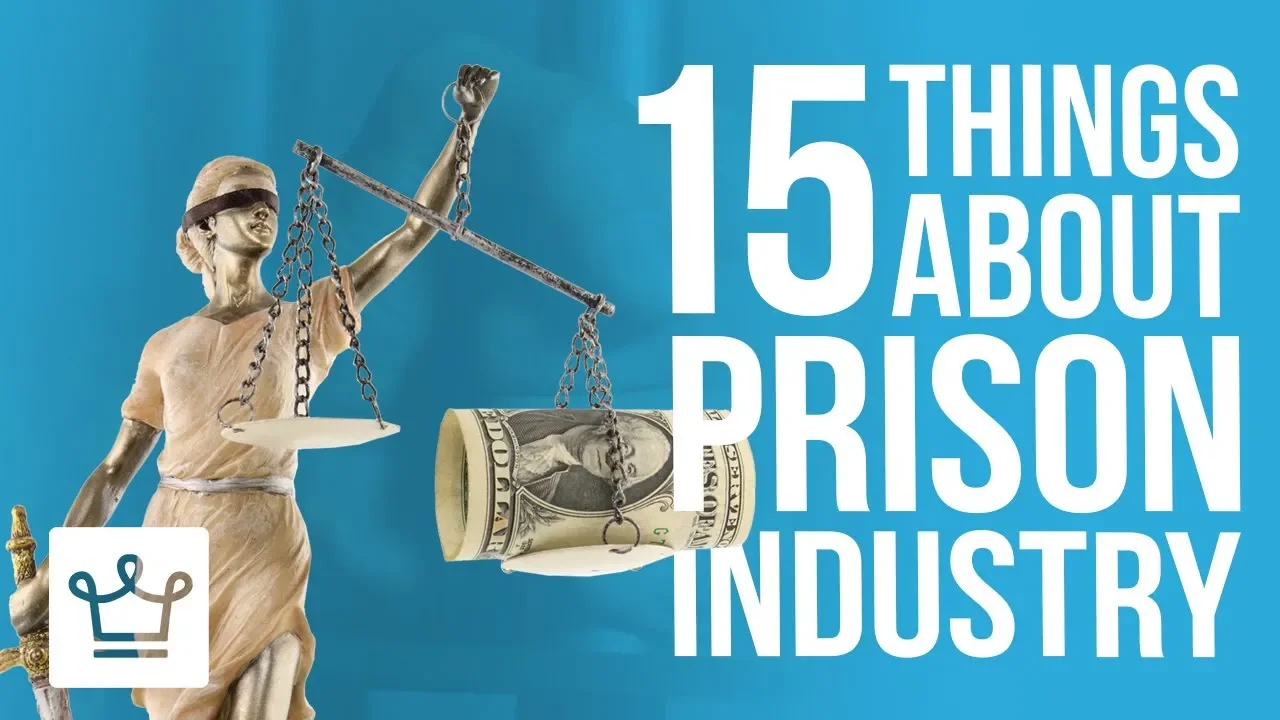



The private prison industry has grown significantly, with nearly 7% of America's inmates now housed in private facilities, and Colorado having the highest concentration at almost one in four inmates. Critics argue that corporations like Corrections Corporation of America prioritize profits over public safety and prisoner rehabilitation, as evidenced by higher assault rates in private facilities (49% more staff assaults and 65% more prisoner assaults according to a Justice Department report) and cases like the 2004 Crowley Prison riot. The industry has also influenced legislation through organizations like the American Legislative Exchange Council to maintain high incarceration rates, creating a conflict of interest where companies profit from keeping prisoners incarcerated rather than focusing on rehabilitation.
For-Profit Prisons: The Business of Incarceration in America
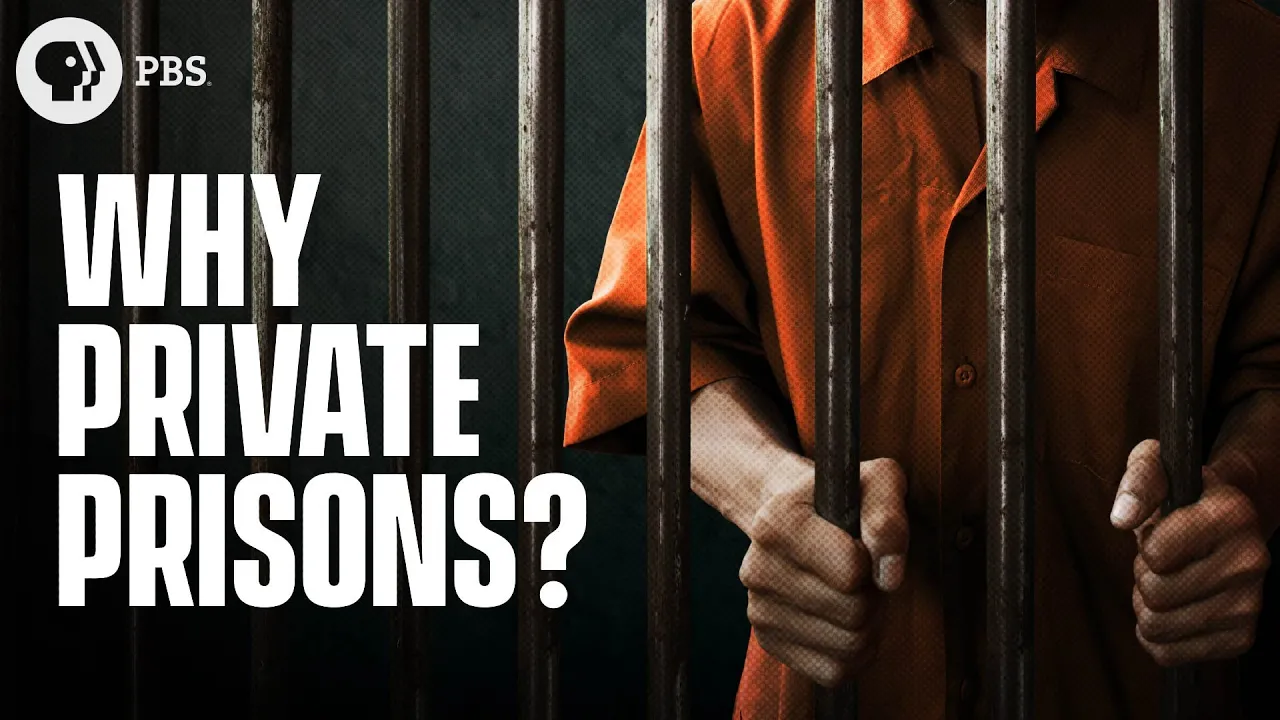
Added:come-to now it's nice to finally confirm that crime pays well here's how corporations build private prisons to house many of the millions of Americans who are behind bars stay with us for a story of profits and prisoners now on PBS on the road after a decade of judges handing out tougher and longer sentences America's prison population is going the same direction as the price of food and gas that is to say way up but what may be even more surprising is that government is increasingly outsourcing prisons and prisoners to the private sector Colorado's at the center of this controversy over incarceration for-profit a practice that's happening all over the country senior correspondent Maria in a HOSA along with producers Marianne valores and William Campbell have our report this is the Crowley Correctional Facility a nondescript structure sitting in the middle of the Colorado flatlands just east of Pueblo from the outside this medium security prison-- looks like any other but there's a huge difference here one that is yet another sign of the outsourcing of government because this prison isn't run by the state it's run by private industry a billion-dollar company called the Corrections Corporation of America the notion that a corporation making a profit off this practice is more important to us than public safety or the human rights of prisoners is outrageous almost 7 percent of America's inmates are now housed in private prisons it's much more here in Colorado where almost one in four inmates is in a private facility Colorado's inmate population has exploded it's six times larger than it was in 1980 as a result the state Forks over almost 95 million dollars a year in taxpayer money to corporate jailers to house its excess prisoners across the country the numbers have been growing faster than the government can build prisons in fact the u.s. now has the largest prisoner population in the world 2.3 million people behind bars more than Russia more than China as the industry grows so does a backlash from critics who argue that these private prisons are not only morally wrong but unsafe for both inmates and the people who are paid to guard them I started in the system as a corrections officer Donna Como has been here on the frontlines of this debate working for both Colorado State prisons and the Crowley private prison from my personal experience state facilities had lower assault rates state facilities had lower incidence of staff turnover state facilities generally have a better level on a better degree of programing and opportunities for rehabilitation for offenders our private prisons more violent there is no standard reporting system to compare violent incidents in private and public prisons but several years ago the Justice Department published an astonishing report there were 49 percent more staff assaults and 65% more prisoner assaults in private facilities is there a difference in safety between working for a state facility or a private facility when I started branding Corrections in a state facility it was a little scary but after about a month I finally figured it didn't take me very long to figure out that no matter where I went there was somebody watching there were always eyes so you didn't have that huge fear you always have some fear working in that environment but I didn't have a huge fear between on for you right now how come you're getting upset it makes me angry what does um tell me well it in the state facility you don't worry about getting hurt but in a private you better worry you better worry como was so worried that she reported serious security lapses at Crowley to her superiors but then she began to worry about her own safety one day in 2003 she was sent to remove a dangerous prisoner from his cell and when she called for backup nobody came to help she says leaving her alone and unprotected for half an hour when I left I sat 28 minutes with no responders with a volatile and me and a brand new staff member who was scared so he took off down the tear on me Donna como quit in 2003 and sued the corrections corporation saying she suffered retaliation and sex discrimination after reporting security violations she later settled but one night in 2004 a major prisoner riot blazed through Crowley some of the overwhelmed guards ran away and outside law enforcement had to put down the uprising a state report later found that the facility was not fully staffed and didn't follow fundamental security measures inmates were angry over bad food and inappropriate use of force low pay contributed to a high staff attrition rate and in an industry where years on the job can literally teach you how to save lives newly hired inexperienced staff were left to deal with an explosive mix of inmates from three different states for two or three hours the riot went unaddressed by the normal you know procedures that prison guards are trained to follow when things get out of hand because of a private company which didn't know how to do its business Judy Green is a criminal policy analyst based in New York and an expert on the private prison industry from your perspective what is the significance of the riot in Crowley in 2004 the significance is that this is an industry now a few decades old corporation the Corrections Corporation of America the company operating that prison is the the oldest and the largest of our private prison companies and yet the problems that were identified in the wake of that riot are typical of the private prison industry happen over and over again the Corrections Corporation allowed us to take a tour of Crowley to see what changes have been made since the riot the new warden Richard Smeltzer used to work for the Colorado Department of Corrections or do see he says that the privately run Crowley is just like any state facility other than possibly the uniforms I think if you went right down the road to the Arkansas Valley prison you'd see the same general practices same general procedures same general day-to-day events under contract with the state those day-to-day events must include the same security food and educational courses as state prisons but Crowley also has some unique programs like a workshop that supports local Habitat for Humanity projects and a Greyhound rescue program yes they're just hungry for affection and the guys here that take care of them have done such a great job with for you as a as an inmate to have a dog like this gives it some to work stay out of trouble we can keep the dog you know it's companionship for dog the company provides all these services to the state and what seems to be bargain prices Colorado pays the corrections corporation about $18 a day less than it costs the state to house an inmate in a similar medium security prison-- so how does the Corrections Corporation make a profit they say they reduce expenses through efficiency and innovation and nationwide they save millions on labor costs so then this security this year this is our this is our unit control and they're in every one of our pods they run all these doors they run these doors here and then they keep in contact with with our control centers this is one of our key positions in all of our units this means that the doors open well it these are like sort of messed up but they're closed yeah officer Gomez how long have you been in this position of watching over that I've been here over a year there was a riot at this prison what would make you decide to come to work in a prison where there was once a riot well I've had family that worked that I've worked here and they've told me that you know it's not what you see on TV why'd you choose CCA over dear son I think it's a lot easier as far as the testing and you know we do get our training of course but I think it's more stricter in do see mm-hmm get in and and what about the pay is the pay better at do see than here of course yeah of course yeah but like I said I like my job I I enjoy coming every day and the pay is and the reason I came this is a place where you had one of the worst riots ever right things went wrong which and they can be analyzed to death but from that point we just tried to build on that we didn't add an awful lot of new things we just tried to take what we were doing and get better at it although warden Smeltzer says he own stock in the Corrections Corporation he also insists he would never sacrifice safety for the bottom line you don't cut corners to where it's going to be a safety security or a health issue you just don't do that it's a tough job it's a professional job it's public safety at its best this is toughest beating law enforcement but it should not be made in the Commerce buffie McFadden knows about prisons she has 12 of them in the district she represents in the Colorado Legislature they range from the State Penitentiary to the notorious federal Supermax there's a veil secrecy that comes to prisons because we don't want to talk about it and we need to start talking about it she's also the most outspoken critic of private prisons in the state we sat down with her during a recess in the House chamber to find out why it's just plain and simple Phillip philosophically this is wrong as long as you put money on bodies in a Cell you pay stockholders for those bodies in a Cell you will we will never see a reduction in our prison populations in this country and in Colorado where we've doubled our prison population in less than 10 years it's despicable critics say the whole issue with you Buffy is that you're just allied to the unions that protect these workers that work in the state facilities oh I'm armed and armed with the American Federation of government employees we really don't have a big Union in the state as far as state employees in the prisons I'm locked the arm and arm the irony for me that you the unions at the federal facilities are almost 70 percent Republican the retired military their their their civilian job is working for the Bureau of Prisons so they're stuck with a Democrat woman named Buffy and they've priced a lot I've never liked a Democrat before this year the Colorado Legislature is grappling with a dilemma if the prison population continues to expand the state will need another 4600 prison beds by the year 2011 unless some is done to reduce the growth rate taxpayers will have to spend 800 million dollars to build more prisons or turn to private contractors I don't want to keep filling our prisons I don't want to keep building prisons because every dollar I have to put into a prison takes away from my infrastructure on my roads takes away my from my infrastructure building new bridge buildings on college campuses takes away ensuring the people of Colorado and it's the same at the federal level Colorado's cash crunch has finally forced lawmakers to look at the causes of its prison crisis last year the governor convened a criminal justice commission to review sentencing laws and parole policies that contribute to the state's dismal 50 percent recidivism rate meanwhile private prison companies have their own priorities to pursue they want to keep their beds filled with paying customers one way is my shipping prisoners from state to state in 2006 that policy became a matter of life and death for Glenn Hoffman when he and eventually 479 other Colorado inmates were transferred from the Buena Vista state prison in Colorado to a private prison in Oklahoma owned by the Corrections Corporation he had been told he wasn't going to move because he got visits and because he had a job and he hadn't had any problems and he was doing well and then all of a sudden they came around and threw a couple of bags into him and said pack up you're going Colorado officials told us that prisoners like Hoffman are just the kind of low maintenance low cost inmates that private prisons are looking for even though Hoffman was serving time for assaulting his girlfriend while high on meth he was a well-behaved prisoner and strong enough to win a prison weightlifting contest on one of the last times that he lifted at Buena Vista that he had been lifting and he said mom there just felt like there I tweaked a muscle or something the pain was actually early signs of bone cancer and according to Hoffman in his home video from his Denver hospital room the medical staff at the Corrections Corporation facility in Oklahoma ignored his constant requests for advanced treatment was taken me know five ten minutes just to get from the bed to the toilet in my cell which is two feet apart by the time the tumor was discovered it had shattered his femur and he was transferred to a hospital back in Colorado I convinced my heart that this whole CCA tour that he didn't say or Oklahoma was a it ended his life by the time they finally admitted that he had cancer or finally allowed him to have an MRI the cancer had already spread to his lungs which reduced his survival rate from 70% to almost zero it was a strong kid he fought it but ultimately he's gonna lose that battle Glenn Hoffman died a week later his parents blame the Corrections Corporation for neglecting him and the state of Colorado for moving their son so far from the help of his family for us it's not naturally thrust built bury our children I just don't think that's right and buds that's not the crime that he committed he didn't commit a crime that he deserves to die for but that's what he got that's what he got meanwhile with one in every 100 Americans locked behind bars the industry continues to thrive 35 states and the District of Columbia now have private prisons at last count in 2006 there were one hundred and thirteen thousand inmates in private prisons throw in juvenile facilities and jails and the numbers are even higher we wanted to learn more about the private prison industry so we signed up for the winter conference of the American Correctional Association in suburban Dallas Fort Worth the nonprofit Association accredits both public and private prisons sort of like giving them the Good Housekeeping Seal of Approval but it also promotes the corrections industry and provides a meeting place for state and federal officials and the companies that want a share of the fifty five billion dollars the government spends on Corrections each year winking at me I could silence it I can shut that door I'm back to a normal operating condition the exhibit hall is part carnival part tradeshow for what's openly called the prison industrial complex the launcher is extremely easy to operate extremely accurate load up to six rounds pull the trigger pump movement can you even do sights on it so you have a less lethal prisoner containment application this is free safe phase reachability television but the biggest displays were from the private prison corporations Cornell the Geo group formerly known as Wackenhut and the giant of the industry the Corrections Corporation of America which runs the fifth largest penal system in the country managing 72,000 inmates in 65 facilities business has been good last quarter its revenues were up nearly 11 percent and it posted a 35 million dollar profit Louise grant is Director of Communications and marketing for the Corrections Corporation if a state has no place to put all its prisoners she's got the solution the primary benefit to the state system is that they are not having to invest the capital dollars to build their own facility they're not having to wait three to six years so they get immediate relief grant is also a spokesperson for the company when it comes under fire in the media which happens so often that there's even a section on the company's website to refute what it calls myths among them that the corporation sacrifices quality and safety for profits we have never in the company's 25-year history lost a contract due to poor performance but there's another charge that won't go away that private prison companies lobby for harsher and longer sentencing guidelines that could help keep the prisons filled in Colorado Buffy McFadden says that their lobbyists work behind the scenes to defeat reforms say for example you have a bill on reducing sentencing in our state legislature like mine and it's time to look at it you won't hear the private prison industry or the for-profit industry talking against the bill but you'll see about four to six lobbyists in the room making sure that bill fails when people hear you saying that you believe that private prisons are in essence interested in in creating more prisoners people are going to say I can't believe that I don't believe that they have an investment in making sure people fail they'll argue back no they do care but any company that makes money off a body in a Cell how can their mission be anything else absolutely and unequivocally no corrections management provider ever is involved in anything having to do with sentencing legislation we never have been nor will we ever that is not the role of the corrections management providers in this country the Corrections Corporation of America told us that they do not lobby to increase jail time longer sentences they say they do not do this under any circumstance and you say perhaps they have a different definition for the word Lobby but they have great influence on any legislative measure that would affect their business private prison companies may even have a hand in writing the laws that keep their cells filled the private prison industry has participated in a free market think tank called the American Legislative Exchange Council or Alec that writes pro-business laws for state legislators at least one executive with the Corrections Corporation actually sat on the committee that drafted get tough on crime legislation Alec has taken a lot of credit for all the laws that have pushed the our prison population beyond the capacity of our public prisons and The Corrections Corporation of America the Wackenhut corporation the organization now known as Geo which is the second largest private prison company in the world both of these companies have participated in Alec and have made a lot of money off the results of those laws and back in Colorado Buffy McFadden is gearing up for another battle in the Statehouse legislators say the Corrections Corporation has made a threat unless it gets a 5% increase in payments from the state it may have to start evicting Colorado inmates but people will say well what about the Colorado in its area Colorado exactly what about the Colorado inmates and that's where I say we call their bluff because you know I say this is being held hostage you're trying to hold us hostage because they have too much power in this state and do your colleagues look at you and say Buffy I totally understand or they say Buffy what the heck are you doing taking on this issue I'm in my sixth year the Colorado Legislature I've been up this has been my song for six years I'm no longer singing it alone because we're at a crisis point in our prison system and it's sometimes it takes crisis to as I say have Poppa come around to momma's way of thinking the next prison market opportunity companies say is immigrant detainees check out a web exclusive video that examines how undocumented workers including children are becoming a new private sector profit Center connect to now online at pbs.org how many people are behind bars in your state and what is the price tag check out our interactive map to learn about the prison population where you live connect to now at pbs.org on the next edition of now American universities are setting up shop in the Persian Gulf can professors become America's ambassadors to a new generation of Middle Eastern leaders I can think of no more important time than now for us to be building positive bridges between America and and the Muslim they're a Muslim Gulf world and that's it for now from New York I'm David Brancaccio we'll see you next week you
Up Next

Freedom of Religion: Supreme Court Cases & the First Amendment
@crashcourse
1.1M views•2015-07-24

BRICS Pay and de-dollarization: A New Financial Order Emerges? | 55 chars
@DannyHaiphongYT
164.6K views•2024-10-22

Government Surveillance Methods: 10 Ways You May Be Watched
@BeAmazed
1.6M views•2017-04-09

Explaining the Saudi-Iranian Proxy Conflict in the Middle East
@Vox
18.2M views•2017-07-17
Related Study Plans & Knowledge Roadmaps
Structured learning paths in Political Science