Franchising Your Business: SOPs & Scaling
Learning Goal: Standardize and document daily service-based operations to successfully transition a single-location business into a highly scalable, multi-unit franchise system. Learn to design legal structures, establish quality control mechanisms, and build lead-generation funnels to recruit qualified franchise investors.
- Prerequisites: None (Ideally suited for service business founders with a proven single-location business model).
- Estimated Study Time: 16 Hours
Module 1: Foundations of Franchising & Business Scalability
This module introduces the core operational structures of franchising, guides you through evaluating your current business's franchise readiness, and contrasts the roles of a franchisor and franchisee. You will also learn to look at your business objectively from a buyer's perspective.
Recommended Videos
1. Is Your Business Franchisable?
- Why this video: Establishing whether your service business is ready for replication requires objective benchmarks. This video introduces three core criteria for franchisability: franchise saleability (market credibility and operating proof), operational replicability, and the financial returns required to support both the franchisee and the franchisor.
- Knowledge Checkpoint:
- Identify if your service business has a credible operating prototype with distinct competitive advantages.
- Evaluate if your operational systems can be taught to an outsider within a reasonable training window (typically under 2 months).
- Determine if your unit economics leave enough margin to pay royalties while keeping the local operator highly profitable.
2. How Does Franchising Work?
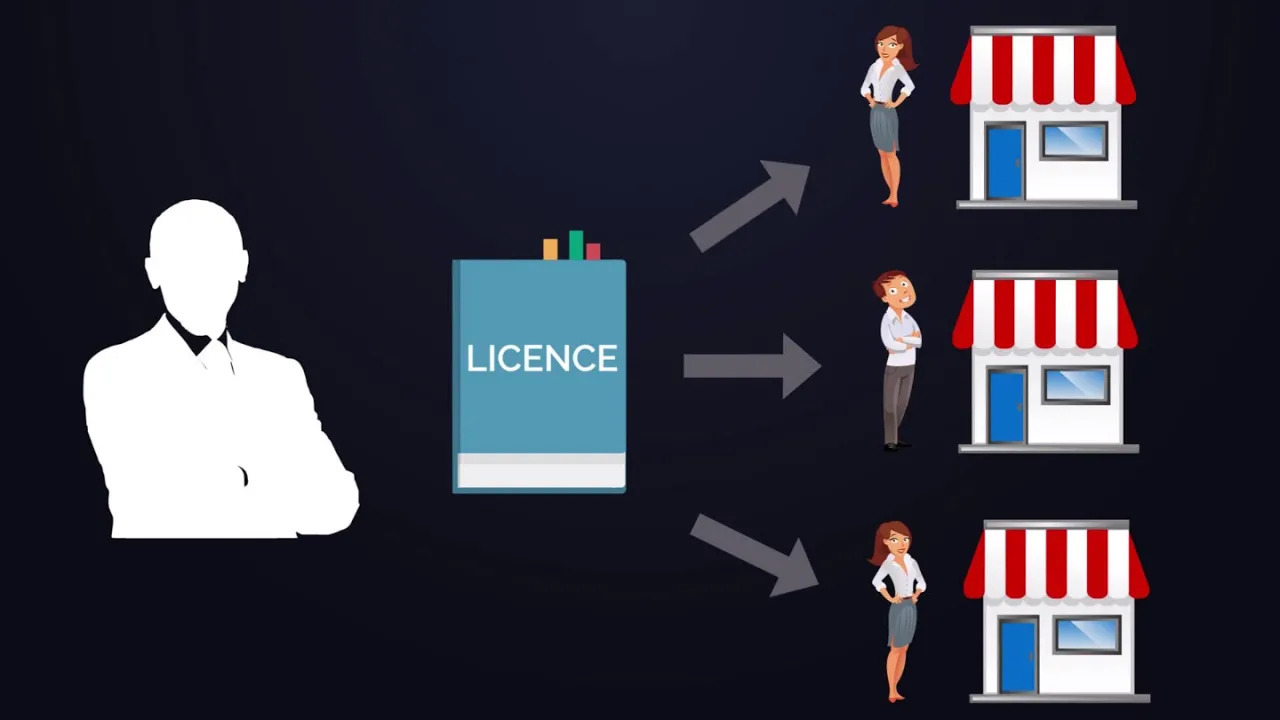
- Why this video: A clear, concise visual primer on the core financial and structural relationship between the franchisor and the franchisee. It establishes the flow of initial capital, ongoing fee exchanges, and intellectual property transfers.
- Knowledge Checkpoint:
- Define the legal and operational distinction between a franchisor and a franchisee.
- List the initial deliverables a franchisor must provide in exchange for the upfront franchise fee.
- Understand the mechanism of ongoing royalties as payments for continuous brand and system support.
3. Transitioning from Operator to Franchisor
- Why this video: Scale demands a massive mindset shift. The speaker outlines how franchising is fundamentally a service business where your product is the business model itself. You must move from mastering direct service delivery to mastering system delivery, coaching, site selection, and lease negotiation support.
- Knowledge Checkpoint:
- Map out how your job role must change from hands-on technician to process consultant and brand architect.
- Understand the range of systems a franchisor is expected to provide, from real estate assistance to marketing funnels.
4. How to 2X–3X Your Business Valuation via Systemization
- Why this video: Private equity and franchise buyers evaluate businesses based on systemization. This video highlights key questions every buyer asks, focusing on whether your operational team can execute successfully without your daily presence, and whether your profit margins are predictable.
- Knowledge Checkpoint:
- Assess your business against the "Owner Dependency" test: can it survive a 90-day absence?
- Identify key areas of variance in your current margins that must be normalized through standard processes.
Module 2: Documenting Operations: Writing Effective SOPs
Standard Operating Procedures (SOPs) are the lifeblood of a franchise system. In this module, you will master the art of process mapping, template creation, and compiling a comprehensive business Operations Manual that allows others to replicate your exact brand standards.
Recommended Videos
1. How to Write a Standard Operating Procedure (SOP) In 6 Steps

- Why this video: This video cuts through the fluff of documentation to deliver a clean, repeatable 6-step framework for drafting individual SOPs. It covers essential components like Title, Purpose, Step-by-Step Instructions, and Quality Control checks.
- Knowledge Checkpoint:
- List the six foundational components of a standard operating procedure.
- Write a brief, clear "Why/Purpose" statement for a critical task in your service business.
- Design an SOP template that includes space for prerequisite tools and defined quality metrics.
2. Service Process Mapping (5 Easy Steps!)

- Why this video: Before you write an SOP, you must map the broader process workflow. This video demonstrates visual process mapping using four basic shapes (circles, rectangles, diamonds, and parallelograms) to define handoffs, decision points, and actions within a service pipeline.
- Knowledge Checkpoint:
- Use process mapping shapes to design a visual flowchart of your client intake process.
- Distinguish between high-level workflows (processes) and granular execution steps (procedures).
- Identify decision-point bottlenecks in your current client delivery system.
3. Creating a Strategic Operations Manual
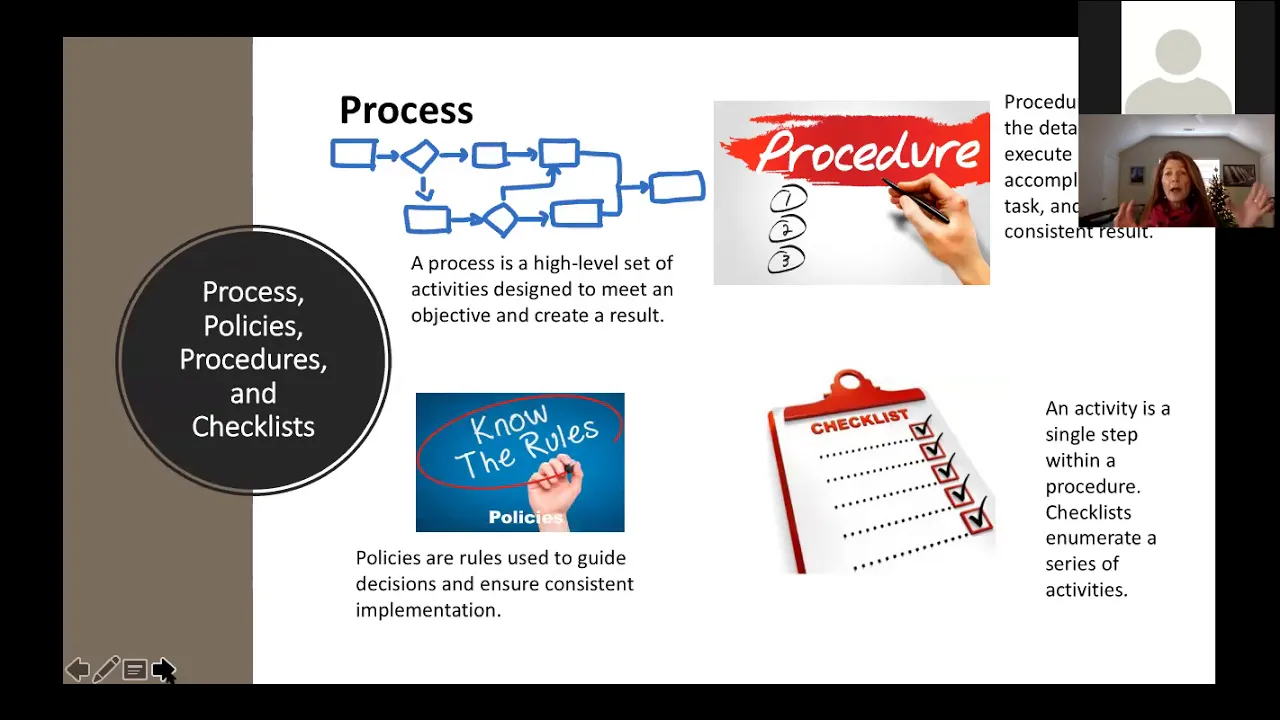
- Why this video: A masterclass on translating long-term business goals into daily, executable actions. This webinar explains how to organize your fragmented SOPs into a unified, strategic Operations Manual that serves as a tool for franchise execution, employee alignment, and management delegation.
- Knowledge Checkpoint:
- Structurally separate your Operations Manual into Processes (workflows), Procedures (instructions), and Checklists.
- Design a daily operational checklist for opening/closing procedures in a physical or remote office environment.
- Determine a system for keeping documentation up-to-date as technology or regulations change.
4. Step-by-Step Operations Manual Setup
- Why this video: Visualizing how to build and organize the final deliverable. It provides a practical, step-by-step structure on what sections to include (policies, emergency contacts, core operations, technology setups) to ensure a business runs smoothly even in the owner's absence.
- Knowledge Checkpoint:
- Outline the table of contents for your business's core Operations Manual.
- Implement standard policies regarding key-holder access, data security, and client communication.
Module 3: Designing the Franchise Business Model & Legal Basics
Scaling via franchising requires setting up a legal and financial framework that protects your brand, keeps operations compliant, and ensures long-term profitability. This module covers the Franchise Disclosure Document (FDD), initial franchise fees, and royalty calculations.
Recommended Videos
1. FDD Explained: The 23 Disclosure Items
- Why this video: The Franchise Disclosure Document (FDD) is the legally mandated bedrock of any franchise relationship in the US. This video goes through the 23 items of disclosure required in the FDD, highlighting the critical areas of litigation history, initial fees, territorial rights, and financial performance representation (Item 19).
- Knowledge Checkpoint:
- Define the legal purpose of an FDD and the "14-day rule" for providing documents to prospective buyers.
- Explain the significance of Item 19 (Financial Performance Representations) and its role in attracting buyers.
- Identify which fees (royalties, ad funds, technology fees) must be declared in Item 6.
2. Royalty Structure vs. Overhead Margins

- Why this video: A short but mathematically vital lesson on setting royalty rates based on business margins. High-overhead, low-margin business models (like full-service restaurants) can only support low royalties (4-5%), while high-margin service models (30-50% margins) can comfortably support royalties of 5-10%.
- Knowledge Checkpoint:
- Calculate your business's average profit margins to identify which royalty percentage band is financially sustainable.
- Understand why taking too high of a royalty fee can starve franchisee units of necessary working capital.
3. Calculating Royalty Fee Financials
- Why this video: Focuses on the math of royalties. Using a concrete example, it illustrates how percentage-based gross revenues convert to actual monthly cash payments at different volume levels, helping you design royalty structures that scale.
- Knowledge Checkpoint:
- Run a simulation calculating monthly royalty income from a franchise unit generating 50,000, and $100,000 in monthly gross revenue using 6%, 8%, and 10% royalty scenarios.
- Contrast flat-fee royalty structures against percentage-of-gross-revenue royalty structures.
4. Benchmarking Upfront and Ongoing Fees

- Why this video: Provides realistic baseline ranges for setting your franchise fees. Learn standard entry points (e.g., 35,000 upfront fees) and standard ranges for national advertising funds and ongoing royalties across industries.
- Knowledge Checkpoint:
- Establish a competitive, market-grounded upfront franchise fee for your business sector.
- Define the purpose and separate bank account requirements for an Brand/National Advertising Fund.
Curriculum Gap Alert — Fee Math & Service Margins: While these videos offer solid foundations, standard service industries (like cleaning, pest control, or home care) require custom models. Make sure to research and calculate how territorial size, customer density, and software licensing fees impact franchisee margin structures. Use search queries like: "how to calculate franchise royalty fees and margins" to find industry-specific financial models.
Module 4: Training, Quality Control, and Brand Consistency
A franchise system is only as strong as its weakest operator. This module focuses on building onboarding training programs, standardizing brand rules, and conducting operational audits to keep brand standards consistent across all locations.
Recommended Videos
1. Designing Onboarding Support Systems

- Why this video: An in-depth walkthrough of a premier franchise training and onboarding system (the "Right Start" program). It breaks down how a franchisor supports new operators from the signing of the agreement through initial setup, licensing, localized marketing, and launch.
- Knowledge Checkpoint:
- Map out an onboarding timeline spanning from contract signing to the grand opening.
- Identify key areas where new operators require hands-on support (such as local business licensing, staff recruitment, and technology setup).
- Design a milestone schedule to track franchisee progress during their first 90 days.
2. Establishing Values & Preventing Failures in Training

- Why this video: A strategic guide highlighting that successful onboarding starts before the sale by setting clear expectations and aligning core values. It outlines how comprehensive training programs help prevent early franchisee failure by teaching them self-responsibility within a structured system.
- Knowledge Checkpoint:
- Write a set of core operational values that prospective franchisees must agree to follow.
- Establish "rules of engagement" that define what is the franchisor’s responsibility versus the franchisee's responsibility.
3. Auditing Brand Assets & Physical Touchpoints
- Why this video: Brand consistency requires deliberate quality reviews. This video explains how to build and execute regular audits of physical and digital brand assets using your brand standards guide as a benchmark.
- Knowledge Checkpoint:
- Create a schedule for auditing physical franchisee workspaces and digital media accounts.
- Design a simple brand compliance rubric (Pass/Fail criteria for logos, typography, and employee uniforms).
4. Managing Quality & Standards Enforcement
![Car Wash Fundamentals of Success 2019 by Ryan Essenburg with Ed Rensi - at "The Car Wash Show"]](https://www.youtube.com/watch?v=NqX9ueFkuIg) Car Wash Fundamentals of Success 2019 by Ryan Essenburg with Ed Rensi - at "The Car Wash Show"
| Channel | Duration | Views |
|---|---|---|
| @Tommywash | 03:05 | 7256 |
- Why this video: Operational success requires a balance of standards enforcement and ongoing support. This panel discussion outlines how top systems use operational coaching, field consulting, and standard processes to maintain high service quality across multiple markets.
- Knowledge Checkpoint:
- Define the role of a Field Consultant / Franchise Business Coach in your expanding brand.
- Design a quality-assurance feedback loop that uses client complaints to trigger operational retraining.
Curriculum Gap Alert — Quality Control Checklists: Since standard compliance checklists vary widely by service, we recommend independently searching for: "how to conduct franchise quality control audits" and "franchisee training program design best practices" to construct your final grading sheets and learning management system (LMS) structures.
Module 5: Scaling Up: Marketing and Recruiting Franchisees
With your systems documented, model designed, and training built, the final step is treating your franchise as a product and marketing it to qualified buyers. This module covers B2B lead generation, sales pipeline construction, and candidate evaluation.
Recommended Videos
1. Building a Franchise Sales Machine
- Why this video: A deep dive into franchise B2B lead generation. This video covers conversion rates (the industry average is 2.4% from lead to sale), diversification of marketing channels, and how to balance high-volume lead sources (like Meta ads) with premium sources (brokers and portals).
- Knowledge Checkpoint:
- Draw a multi-channel lead-generation funnel showing where you will find and nurture potential franchise buyers.
- Calculate target cost-per-lead (CPL) and cost-per-acquisition (CPA) targets based on your upfront franchise fee.
- Set up tracking systems for paid ads, portal leads, and organic broker networks.
2. Shifting Mindset: Selling the Business System
- Why this video: Clarifies the core difference between selling your consumer service (e.g., painting houses) and selling your franchise (e.g., selling a home services business model). This long-form tutorial details how to speak to investor motivations rather than general customer needs.
- Knowledge Checkpoint:
- Refine your investor marketing messages to focus on business assets (ROI, lifestyle, systems) rather than service features.
- Build a landing page structure specifically for franchise recruitment ("Franchise With Us" page).
3. Defining the Franchise Discovery and Selection Process
- Why this video: To protect your brand, you must screen candidates carefully rather than accepting anyone who has the money. This guide outlines the "discovery process" where both you and the candidate assess mutual fit, turning "selling" into an selective "awarding" process.
- Knowledge Checkpoint:
- Define the steps of your Franchise Discovery Process (e.g., Inquiry -> Phone Screen -> FDD Review -> Discovery Day -> Signing).
- Write screening questions to evaluate a candidate’s credit score, net worth, and business management experience.
4. Selection Criteria: Assessing Culture and Values Fit

- Why this video: Real-world case study of Rolling Suds explaining their highly selective vetting process. Learn why turning away bad candidates protects system health, and why selecting for values like integrity, courtesy, and coachability matters more than picking someone based on technical experience alone.
- Knowledge Checkpoint:
- Create a candidate evaluation scorecard prioritizing character traits (honesty, coachability, and communication) alongside capital readiness.
- Identify red flags in candidate behavior that should trigger an immediate rejection (e.g., refusing to follow core systems during discovery).
Course Map
Key People Index
- Bedros Keuilian (@BedrosKeuilian): High-performance business coach and founder of Fit Body Boot Camp. Focuses on leadership development, business systemization, and shifting from operator to system-architect.
- Gary Occhiogrosso (@franchisegrowthsolutionsll6922): Founder of Franchise Growth Solutions. Strategic advisor on brand expansion, value-driven franchisee recruitment, and structured training development.
- Philip Van Dusen (@PhilipVanDusen): Brand strategist and agency founder. Specialist in visual consistency, brand development, and auditing standards across touchpoints.
- Laura Spaulding (@biggerpockets / Video 88): Founder of Spaulding Decon. An expert on turning specialized, complex service procedures (biohazard recovery) into a standardized, nationwide franchise network.
- Aaron Harper (@lancegraulich / Video 100): CEO of Rolling Suds. Advocate for values-based franchisee selection and standardizing operational processes in mobile service industries.
Final Self-Assessment
Complete this comprehensive readiness checklist before launching your franchise sales efforts:
- Unit Feasibility: My primary location has operated profitably for at least 1–2 years, and the unit economics show healthy margins that can comfortably support a 5-10% royalty.
- Owner-Independence: The day-to-day business operates smoothly for weeks at a time without my direct intervention.
- Process Mapping: All core service processes have been visually mapped out using clear swimlanes, decision points, and handoffs.
- SOP Compilation: Our step-by-step Standard Operating Procedures are written down, formatted consistently in a template, and organized into an Operations Manual.
- FDD Readiness: We have drafted or are ready to co-draft an FDD with legal counsel, clearly detailing our upfront fees, royalty metrics, and territorial protections.
- Onboarding Blueprint: We have designed a clear 60-to-90-day training curriculum for new owners that covers business operations, staff recruitment, and grand opening plans.
- Brand Audits: We have set up a brand standards guide and built a regular audit checklist to ensure consistent quality across all locations.
- Lead Pipeline: We have built a dedicated B2B marketing landing page and put tracking systems in place to nurture prospective investors through the Discovery Process.
- Candidate Scorecard: We have established a strict vetting scorecard that checks candidates for liquid capital, business acumen, and culture fit, prioritizing long-term quality over quick sales.