LinkedIn B2B Selling: Outbound Systems & Leads
Learning Goal: Build a highly scalable, systemized outbound B2B social selling system on LinkedIn to consistently identify, nurture, and acquire high-ticket (10,000+) consulting clients.
- Prerequisites: A clear baseline of business expertise or a service offering, a standard LinkedIn profile, and access to (or willingness to invest in) LinkedIn Sales Navigator.
- Estimated Total Study Time: 15 Hours
Module 1: B2B Consulting Foundations & Target Market Definition
To scale a high-ticket B2B social selling engine, you must transition away from generic "freelancing" toward a clearly defined consulting offer. This module guides you through defining a highly profitable niche, designing a packaged high-ticket consulting offer (pricing, duration, value delivery), and constructing a data-backed Ideal Customer Profile (ICP).
Recommended Videos
- Why this video: Establishing an Ideal Customer Profile (ICP) is the bedrock of outbound marketing. This video provides a structured framework for defining your target customer based on firmographics, technographics, and buying behaviors. It bridges the gap between guessing who your buyer is and building a highly validated target list.

- Why this video: Highly effective outbound campaigns rely on premium, outcome-driven offers. This video breaks down the core psychology of high-ticket consulting (5,000+). It explains how to structure your expertise around solving a single high-pain business problem rather than selling low-value hourly tasks.

- Why this video: For consultants starting out or scaling their authority, this video outlines a highly reliable way to identify market segments and structure your core value proposition. It shifts the focus away from superficial credentials toward defining structural solutions to your market's real operational bottlenecks.
Knowledge Checkpoint
- Define your high-ticket consulting offering using an outcome-focused model (e.g., "I help [ICP] solve [Pain Point] to achieve [Desired Outcome] in [Timeframe]").
- Establish a premium baseline price (minimum $3,000) for your offer using value-based pricing rather than an hourly model.
- Document your primary ICP, including firmographics (industry, employee count, geography) and demographic variables (job title, decision-making authority).
- Map out the "buying trigger events" (such as new funding, hiring waves, or job transitions) that make your target ICP receptive to an outbound message.
Module 2: Optimizing Your LinkedIn Profile as a Landing Page
Most LinkedIn profiles are designed like chronological resumes to attract recruiters. To acquire high-ticket B2B clients, you must redesign your profile into a high-converting, sales-focused landing page. This module teaches you how to format your header, about section, and featured assets to capture, retain, and convert cold outbound profile views.
Recommended Videos
- Why this video: This video reinforces the mind-shift required for successful B2B outbound selling: treating your profile strictly as a sales funnel landing page. It outlines why the top-of-funnel hook—specifically your headline—must clearly pitch your value proposition rather than state a passive corporate title.

- Why this video: High-ticket B2B buyers search extensively before replying. This video highlights why building a trust-driven, client-facing profile architecture is critical for converting outbound interest. It details how prospects evaluate the credibility of you, your product, and your business through your profile layout.

- Why this video: Since your headline follows every interaction on LinkedIn, it is your highest-leverage asset. This video details a strategic approach to writing headlines specifically designed to engage prospects and convert profile views into exploratory conversations.
Knowledge Checkpoint
- Remove all job-seeking terminology (e.g., "looking for opportunities") to avoid positioning yourself as a commodity contractor.
- Rewrite your primary headline to highlight your offer:
[Target Title] | [Value Proposition/Niche Problem Solved] | [Call to Action / Core Tool]. - Transform your "About" section into a sales narrative covering the prospect's pain point, your methodology, client social proof, and a clear call to action to book a call.
- Configure your "Featured" section to showcase a high-value asset, such as a case study, a video sales letter (VSL), or a direct booking link to your calendar.
Module 3: Content Strategy and Authority Building
Content on LinkedIn should not focus purely on viral reach; it should act as a nurturing system. For high-ticket consulting, your content must build domain authority, handle objections in advance, and warm up prospects who view your profile before or during your outbound sequence.
Recommended Videos

- Why this video: This video introduces a strategic split between personal and corporate page strategies. It explains why a founder's or consultant's personal profile must focus on thought leadership, insights, and industry expertise to drive incoming demand and build long-term trust.
- Why this video: Writing copy that attracts buyers requires structured frameworks. This guide outlines how to write posts with engaging headline hooks, convert readers using clear calls-to-action, and align your writing tone directly with your high-ticket prospects.

- Why this video: Understanding algorithm distribution mechanisms helps you optimize content visibility. This video details how the platform's connection-driven network distribution system works, explaining how content is first tested with close connections before reaching wider audiences.
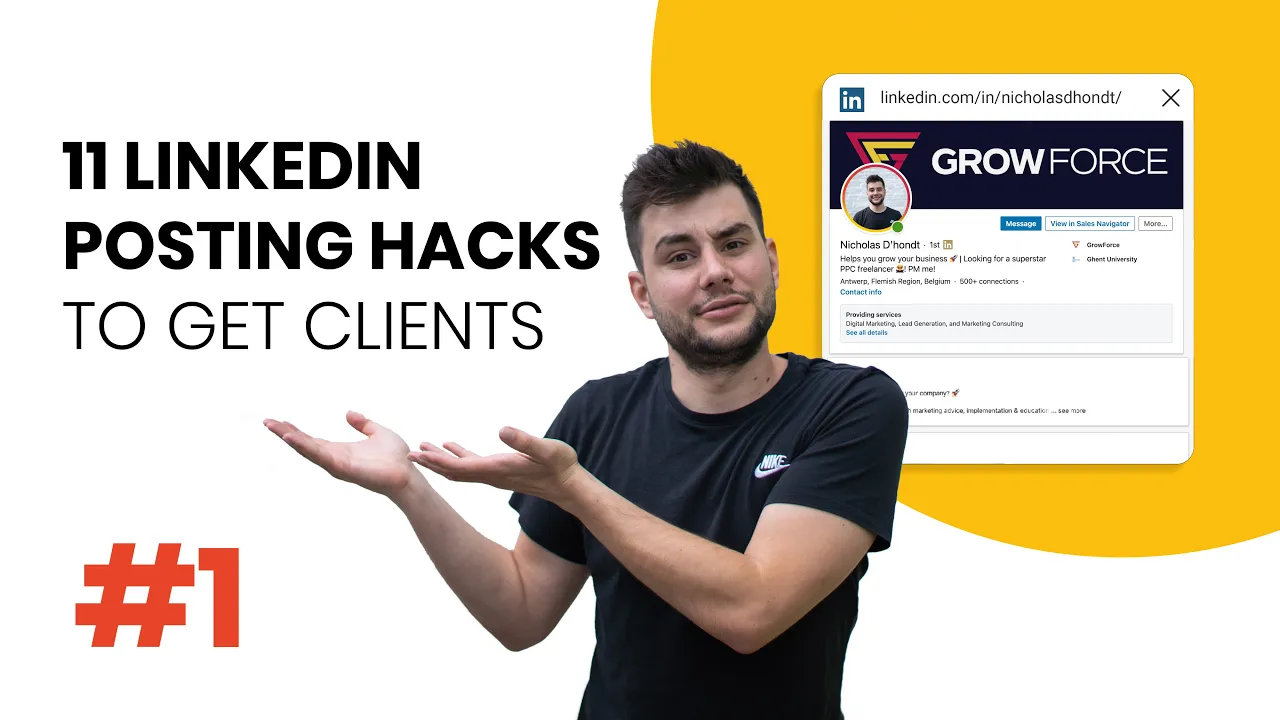
- Why this video: Written readability directly affects reader engagement. This video covers tactical copywriting tips, including varying sentence lengths, keeping language highly accessible, and writing to match how people naturally talk.
Knowledge Checkpoint
- Write and schedule 3-5 thought leadership posts that address common buyer objections (e.g., implementation time, proof of concept, ROI).
- Apply a clean, highly readable layout to your posts, using simple vocabulary and white space to keep readers engaged.
- Identify and implement your core B2B themes (e.g., industry trends, case studies, and contrarian perspectives) to build authority.
- Allocate 15 minutes daily to engage with high-value prospects' posts to increase your profile visibility.
Module 4: Prospecting and Lead List Generation
Unsystematic searching wastes valuable outreach limits. To build a reliable pipeline, you need to master advanced prospecting using LinkedIn Sales Navigator. This module teaches you how to construct hyper-targeted lead lists using precision boolean search filters.
Recommended Videos
- Why this video: Sales Navigator is essential for B2B prospecting. This video provides a step-by-step introduction to navigating the platform, managing lead lists, and using key filters to pinpoint matching profiles out of hundreds of millions of users.
- Why this video: This deep dive covers boolean search logic (AND, OR, NOT) and advanced list filtering. It is highly valuable for building targeted search strings that isolate exact buyers and exclude irrelevant job roles.
- Why this video: A comprehensive masterclass that highlights advanced ways to identify warm opportunities, bypass standard outreach limits via groups/events, and save active lists to systematically fill your pipeline.
- Why this video: This complete tutorial covers how to systematically find decision-makers by company size, seniority, and department, helping you build highly accurate list pipelines.
Knowledge Checkpoint
- Build a complex Boolean search string using
AND,OR, andNOToperators (e.g.,("VP of Sales" OR "Head of Sales") NOT ("Assistant" OR "Junior")). - Apply Sales Navigator persona filters to build an active target list of 250 verified decision-makers.
- Save your search parameters as a saved search in Sales Navigator to receive automatic alerts when new prospects fit your target criteria.
- Filter your lead list by "Changed jobs in the last 90 days" or "Posted on LinkedIn in the last 30 days" to prioritize warm prospects.
Module 5: The Conversational Social Selling Playbook
Cold pitches in LinkedIn DMs often get ignored or blocked. This module teaches you a conversational social selling framework. You will learn to use daily activity triggers to start discussions, build authentic relationships without spam, and guide prospects from a text chat to a booked discovery call.
Recommended Videos

- Why this video: This video focuses on relationship-driven outreach instead of aggressive sales tactics. It details how to use micro-conversations over a 30-90 day window to provide upfront value and build genuine connection before proposing a call.
- Why this video: A clear, four-step approach to structuring cold connection messages. It explains how to personalize outreach, avoid template traps, address prospects naturally, and open conversations without friction.
- Why this video: A practical guide to writing natural, effective outbound messages. It details how to state your context transparently, share clear value, and invite low-pressure conversation.
Knowledge Checkpoint
- Draft a personalized connection request template (under 300 characters) that references a common interest or connection without pitching.
- Create a 3-step conversational outreach sequence that focuses on finding problems and sharing resources rather than pushing for a sales pitch.
- Set up a daily routine to check your active profile triggers (e.g., people who viewed your profile, engaged with your content, or accepted connections).
- Create a low-friction transition script to move active DM conversations to a calendar booking (e.g., "We've been chatting about [Problem]; I put together a quick document on this, would you want to jump on a brief call to walk through it?").
Module 6: Closing High-Ticket Deals & Scaling Outbound Operations
Once prospects book a call, you must run a structured discovery process to close the deal. Additionally, to grow without consuming all of your personal time, you need to systemize your outreach. This module covers running discovery calls, using SPIN selling frameworks, managing objections, and scaling outreach safely using virtual assistants (VAs) and daily automation guardrails.
Recommended Videos
- Why this video: Listening to real-world high-ticket sales calls helps develop closing skills. This uncut breakdown models rapport building, the triage phase, using a "yes ladder," and guiding buyers through a $5,000 consulting close.
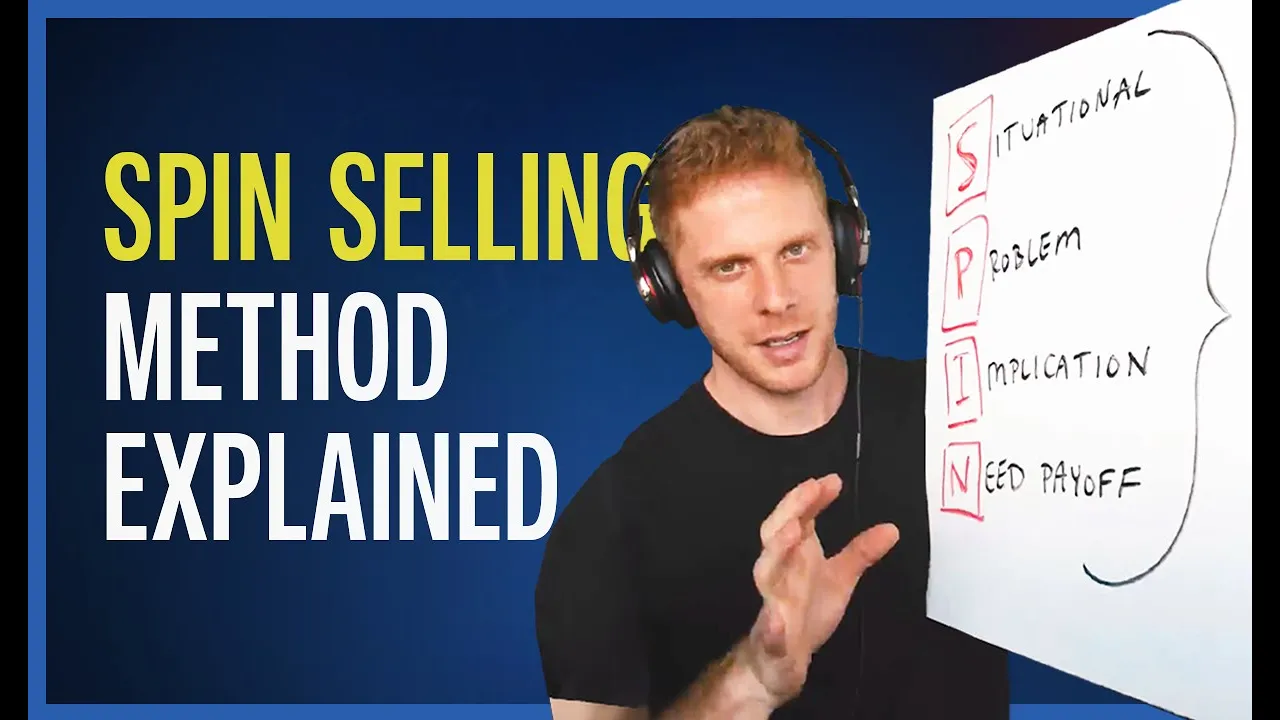
- Why this video: The classic SPIN Selling framework (Situation, Problem, Implication, Need-payoff) is highly effective for diagnostic consulting sales. This video provides clear question examples to help prospects understand the true cost of their operational problems.

- Why this video: Pure software automation carries risk of platform bans. This video explains how to delegate manual outreach to Virtual Assistants (VAs) using shared spreadsheets and step-by-step systems, keeping your account safe while scaling reach.

- Why this video: If you choose to use automation software, safety must be your top priority. This video covers safety settings in tools like Linked Helper, detailing working hours, action randomization, and platform-compliant activity limits.
Knowledge Checkpoint
- Create a discovery call script based on the SPIN selling model, including custom Situation, Problem, Implication, and Need-payoff questions.
- Build a standard sales objection guide detailing your answers to common concerns about Price, Trust, Authority, and Timeline.
- Document your step-by-step outreach process (finding leads, sending connections, and follow-up templates) into a standard operating procedure (SOP) to share with a virtual assistant.
- Configure automation software safety limits (e.g., maximum 20 connection requests/day, 30 DMs/day) and set up randomized delays to mimic natural human behavior.
Course Map
Key People Index
- Ravi Abuvala (Founder of Scaling With Systems): A systems specialist who teaches how to combine Sales Navigator data with scale-ready outbound infrastructure.
- Chris James (Outbound DM Strategist): An outreach educator focusing on relationship-driven, conversational LinkedIn DM frameworks that avoid spam tactics.
- Ryan Caswell (Lead Generation Consultant): Developer of headline conversion formulas and long-form Sales Navigator search strategies for B2B consulting niches.
- Neil Rackham (Creator of the SPIN Selling framework): While represented by educators in this pool, his foundational research on diagnostic, consultative question frameworks remains the industry standard for high-ticket sales.
Final Self-Assessment
- Market Definition: My high-ticket consulting offer is clearly defined, addresses a specific B2B niche, and has a starting price of at least $3,000.
- Profile Optimization: My personal LinkedIn profile acts as a landing page, featuring a clear value headline and an "About" section that addresses prospect pain points and leads to a booking link.
- Content Strategy: I have a scheduling calendar containing at least two weeks of scheduled, readable authority-building content.
- List Building: I have built and saved a targeted list of over 250 decision-makers in Sales Navigator using custom Boolean parameters.
- Outreach Scripting: I have a conversational messaging playbook designed to build natural rapport and transition prospects to discovery calls without cold pitches.
- Discovery Protocol: I run discovery calls using structured diagnostic questions (SPIN) to identify the business impact of the prospect's problems.
- Objection Framework: I have documented answers for common objections regarding pricing, trust, timing, and competitive alternatives.
- Scaling Safety: My daily outbound workflows (whether managed by software or virtual assistants) are set up within safe platform activity limits (under 30-50 connection steps daily) to protect my profile.