Building Raft in Rust: Distributed KV Store
Learning Goal: Designing and implementing a fault-tolerant distributed key-value store with Raft consensus in Rust. You will learn to construct systems that maintain consistent state replication across multiple unreliable network nodes, handle network partitions, implement asynchronous networking, and establish highly optimized storage engines.
- Prerequisites: Basic knowledge of programming structures (variables, loops, basic functions) and basic understanding of computer network models (IP addresses, ports). No prior systems programming or distributed systems experience is required.
- Estimated Total Study Time: 70 Hours
Module 1: Rust Programming Foundations
Module Overview
To build high-performance and reliable distributed systems, you must first master the system-level controls offered by Rust. This module covers Rust's foundational mechanics: ownership, borrowing, lifetimes, safe memory allocation without a garbage collector, and its strict concurrency paradigm. These rules are compile-time requirements that prevent common bugs like data races and dangling pointers, which are notoriously difficult to debug in distributed networks.
Recommended Videos

- Why this video: It provides an essential high-level overview of why Rust is chosen for systems programming over languages like C++ or Go, showing how it blends memory safety guarantees with low-level hardware control.

- Why this video: Ownership and borrowing form the core of Rust's compile-time safety. This in-depth explanation ensures you understand how data is moved, shared via references, and cleaned up, preparing you to pass parameters cleanly inside a distributed state machine.

- Why this video: Parallelism and concurrency are critical when managing client requests and peer network communication. This video dives into thread synchronization primitives such as Mutexes, reference counters (
Arc), and multi-producer single-consumer (MPSC) channels.
Knowledge Checkpoint
- Understand the difference between stack and heap memory allocations in Rust.
- Explain the rules of ownership: how many owners can a value have, and what happens when a variable goes out of scope?
- Differentiate between an immutable borrow (
&T) and a mutable borrow (&mut T). - Implement thread-safe sharing of a data structure using
Arc<Mutex<T>>.
Module 2: Async Rust and Network Programming
Module Overview
Nodes in a distributed key-value store must communicate constantly with one another over a network. This module transitions you from synchronous Rust to asynchronous networking using the standard Tokio runtime. You will explore low-level network fundamentals (the TCP 3-way handshake) and learn how to scale your system's network layer using asynchronous client/server connections and standard serialization frameworks like gRPC and Protocol Buffers via the Tonic library.
Recommended Videos
- Why this video: Consensus protocols rely on reliable, ordered network delivery. This visualization of the TCP three-way handshake explains the underlying networking dynamics that secure reliable node-to-node transport.

- Why this video: Writing blocking network code would cause a consensus node to freeze while waiting for responses. This video introduces Tokio—the gold-standard asynchronous runtime for Rust—showing you how to write non-blocking tasks and manage asynchronous I/O loops.
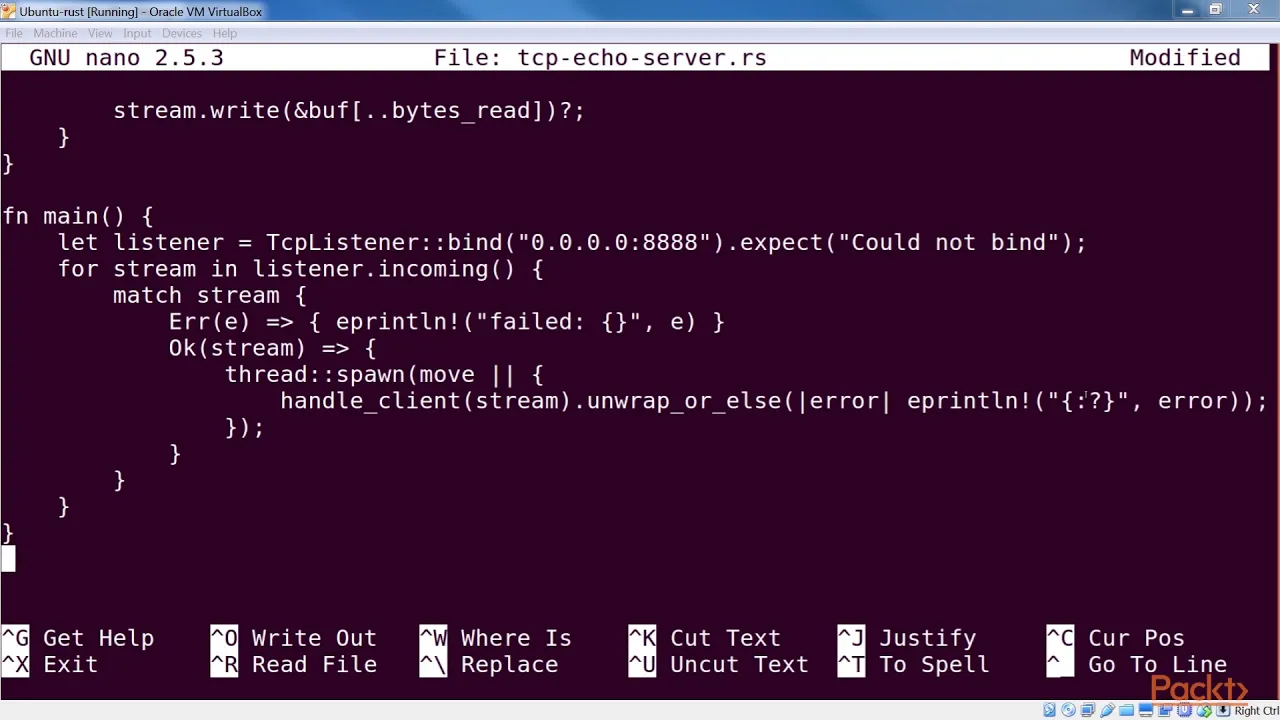
- Why this video: Practical application of Rust networking. You will see how to implement a basic TCP stream listener (
TcpListener) and socket connection, establishing the raw foundation for custom inter-node communication.
- Why this video: Raw TCP bytes are error-prone to parse manually. This tutorial demonstrates how to use the
Toniclibrary to generate typed gRPC interfaces in Rust from Protocol Buffer files, enabling safe RPC serialization between Raft peers.
Knowledge Checkpoint
- Explain how Tokio schedules futures over a multi-threaded work-stealing executor.
- Write a basic TCP echo server in asynchronous Rust that can handle concurrent clients using
tokio::spawn. - Define a Protocol Buffer schema (.proto) to represent a generic Remote Procedure Call (RPC).
- Compile a protobuf schema into generated Rust server/client stubs with
tonic-build.
Module 3: Foundations of Distributed Systems
Module Overview
Before diving into consensus code, you must understand the mathematical limits and architectural trade-offs inherent in distributed computing. This theoretical module covers the classic MIT 6.824 curriculum on distributed paradigms, details why simple master-replica patterns fail, and explains the bounds of Brewer's CAP Theorem when encountering inevitable network partitions.
Recommended Videos
- Why this video: The premier introductory lecture of MIT 6.824. It introduces the fundamental motivations of distributed systems (parallelism, fault tolerance, physical isolation) and highlights why concurrency, partial failure, and performance limits are difficult to balance.

- Why this video: This video presents a clear visual explanation of Brewer's CAP Theorem, proving why any distributed system must choose between Consistency and Availability when a network partition (P) occurs.
- Why this video: Explores primary-backup replication schemes. Understanding how passive replication works, its vulnerability to split-brain scenarios, and why active state-machine replication (the category Raft belongs to) is required for high fault tolerance.
Knowledge Checkpoint
- Define the three components of the CAP Theorem: Consistency, Availability, and Partition Tolerance.
- Describe a split-brain scenario and explain why basic primary-backup configurations cannot reliably prevent it.
- Explain the difference between linearizable consistency and eventual consistency.
- Why is an odd number of servers (such as ) typically deployed in consensus clusters?
Module 4: The Raft Consensus Protocol
Module Overview
This module deconstructs the mechanics of the Raft consensus protocol. It filters out unrelated material (avoiding gaming content) to focus strictly on the algorithmic phases: Leader Election, Log Replication, Safety guarantees, and Client interaction. You will study Diego Ongaro's fundamental design patterns and the MIT lectures that make this complex protocol understandable.
Recommended Videos

- Why this video: Taught by Diego Ongaro himself (the co-creator of Raft), this is the definitive lecture explaining the complete Raft consensus mechanism. It breaks down the protocol into manageable components: Leader Election, Log Replication, and Safety.
- Why this video: MIT's formal breakdown of Raft. This lecture walks through the state machines, transition triggers (Follower, Candidate, Leader), RPC structure, and the rigorous math proving why a majority vote guarantees log consistency.

- Why this video: A short, structured conceptual summary that walks step-by-step through the core message types (
RequestVoteandAppendEntries), reinforcing the sequence of events during a state update.
Knowledge Checkpoint
- Trace the life cycle of a log entry from client write request to state machine commit.
- Detail how randomized election timeouts prevent split-vote situations in Leader Elections.
- How does Raft's safety property guarantee that an elected leader has all committed entries from prior terms?
- What is the exact purpose of the term index inside
AppendEntriesandRequestVotepayloads?
Module 5: Implementing the Distributed Key-Value Store
Module Overview
This final module brings together your Rust concurrency skills, Tokio's network layer, and Raft's structural logic to build a distributed, persistent Key-Value Store. You will explore real-world production storage architectures, comparing B-Trees to LSM Trees, and study how industry-standard systems like TiKV structure their databases in Rust.
Instructional Note (Video Coverage Limitation): While the pool includes outstanding conceptual, theoretical, and system-architecture videos (like FOSDEM's TiKV showcase and database storage engine theory), it does not contain a step-by-step code-along for writing a complete custom Raft storage engine in Rust. You are encouraged to design your own implementation by modeling your data layer after TiKV’s architecture and using gRPC services built with
Tonic.
Recommended Videos
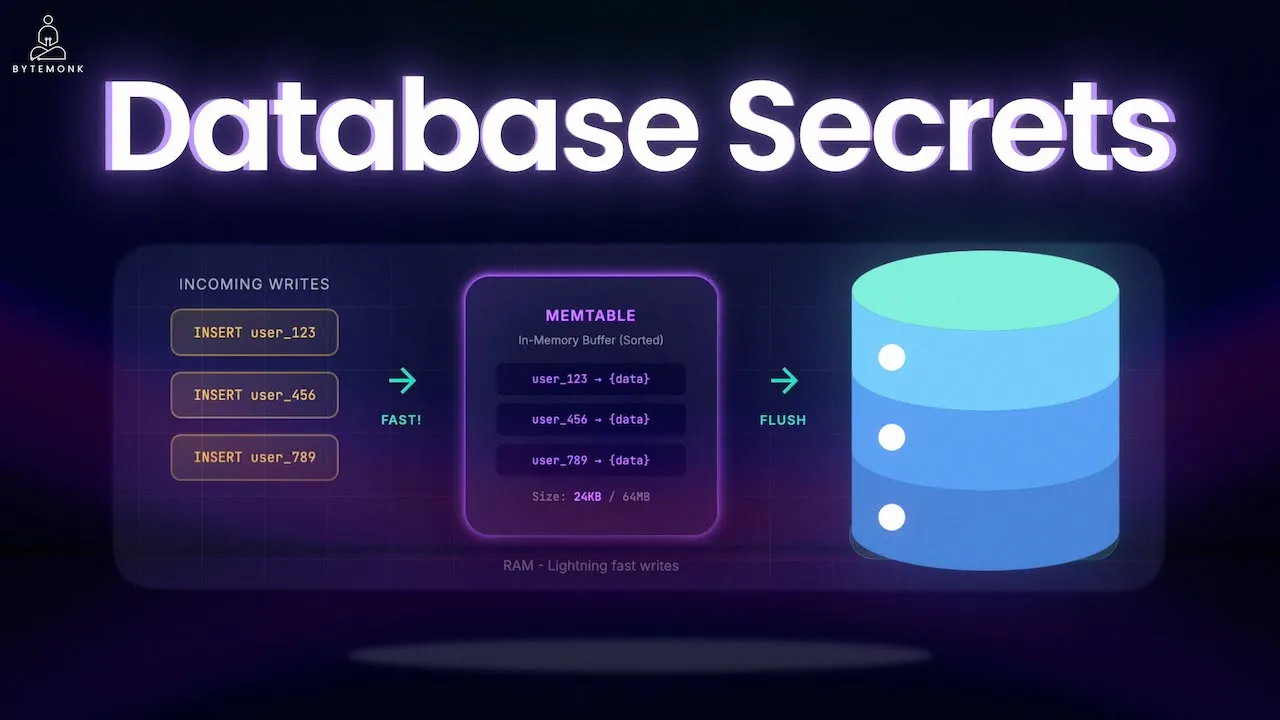
- Why this video: A consensus log requires local, persistent disk storage. This explanation compares B-Trees and Log-Structured Merge (LSM) Trees, helping you choose the right local data model for your key-value state engine.

- Why this video: FOSDEM presentation showing how TiKV (a CNCF graduate database) leverages Rust, gRPC, RocksDB, and their custom Raft implementation to handle petabyte-scale transactions safely and efficiently.

- Why this video: A brief industry commentary highlighting why building a distributed key-value store is a highly respected milestone for backend systems engineers, far surpassing trivial starter applications.
Knowledge Checkpoint
- Differentiate between read-intensive (B-Tree) and write-intensive (LSM Tree) storage engine designs.
- Explain how TiKV maps high-level transactions down to physical key-value updates using Raft.
- Design a safe local recovery model for your key-value engine: how does a node restore state if it crashes and restarts?
- Diagram how a client request interacts with a follower node: how does the client get redirected to the current term leader?
Course Map
Below is the logical flow of modules and competencies required to complete this course.
Key People Index
- Diego Ongaro: Co-creator of the Raft consensus algorithm alongside John Ousterhout at Stanford University. His research focus on understandability gave rise to the modular design of Raft (Leader Election, Log Replication, Safety).
- Robert Morris: Professor at MIT and co-creator of the MIT 6.824 (Distributed Systems) course. He is also famous for co-founding Y Combinator and creating the Morris Worm, one of the earliest computer worms on the internet.
- Eric Brewer: Computer scientist who formulated the CAP Theorem in 2000, creating the framework that categorizes all modern distributed databases.
Final Self-Assessment
Complete this comprehensive self-assessment to verify your understanding and execution of the design goals.
- Can you implement a program in Rust that passes mutable references between threads using only safe compile-time constructs (no
unsafeblocks)? - Can you write an asynchronous Tokio loop that accepts raw incoming TCP connections without blocking your program's thread pool?
- Can you define custom gRPC request/response payloads in a
.protofile and call them asynchronously from a client script? - Do you know what happens when a network partition isolates 2 out of 5 nodes in your cluster, and how the system behaves?
- Can you describe the state transitions of a Raft node from Follower to Candidate, and candidate to Leader?
- Do you understand what triggers a term increment and how old leaders discover they have been deposed?
- Does your local storage system persist Raft logs to disk in a way that tolerates abrupt hardware power failures?
- Does your implementation handle client writes by routing them to the Leader, wait for a majority commit, and then notify the client?
- Have you verified your distributed KV store using local network simulation tools (such as dropping packets or adding artificial delay to test consensus stability)?