





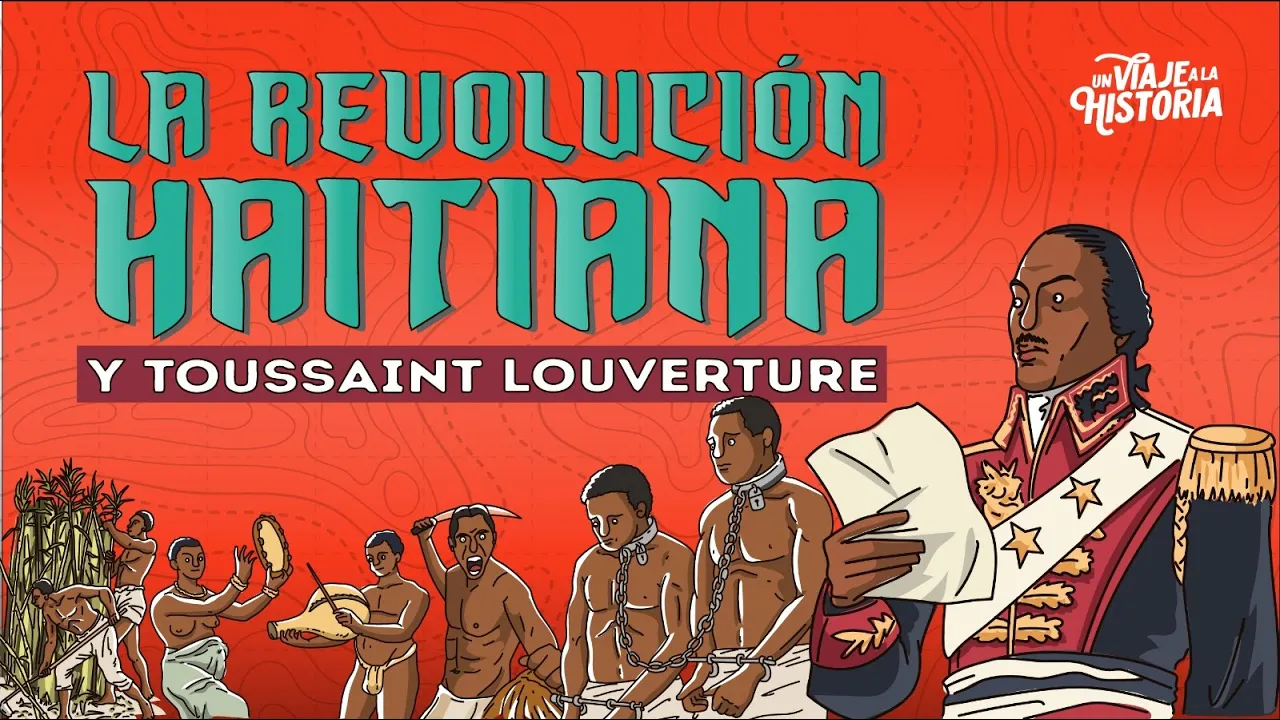













The Haitian Revolution (1791-1804) represents a pivotal moment in world history where enslaved Africans and people of color successfully overthrew colonial rule and established the first independent Black nation, demonstrating that determined collective action could achieve liberation even against powerful European empires; however, the revolution's aftermath revealed how former colonial powers responded with economic exploitation, diplomatic isolation, and repeated military intervention, illustrating the complex legacies of anti-colonial movements in shaping modern international relations.
The Haitian Revolution: Roots of Liberty, Part 6 | Extra History
Added:Understanding the rise of Toussaint Louverture and his role in establishing autonomy in Saint-Domingue prior to 1802.
Knowledge of Napoleon Bonaparte's rise to power in France and his global imperial strategy, including his desire to reinstate slavery.
Familiarity with the social structure of Saint-Domingue, particularly the divisions between the white colonists, free people of color (affranchis), and the enslaved majority.
Awareness of the early phases of the Haitian Revolution, including the 1791 uprising and the temporary abolition of slavery by the French Republic.
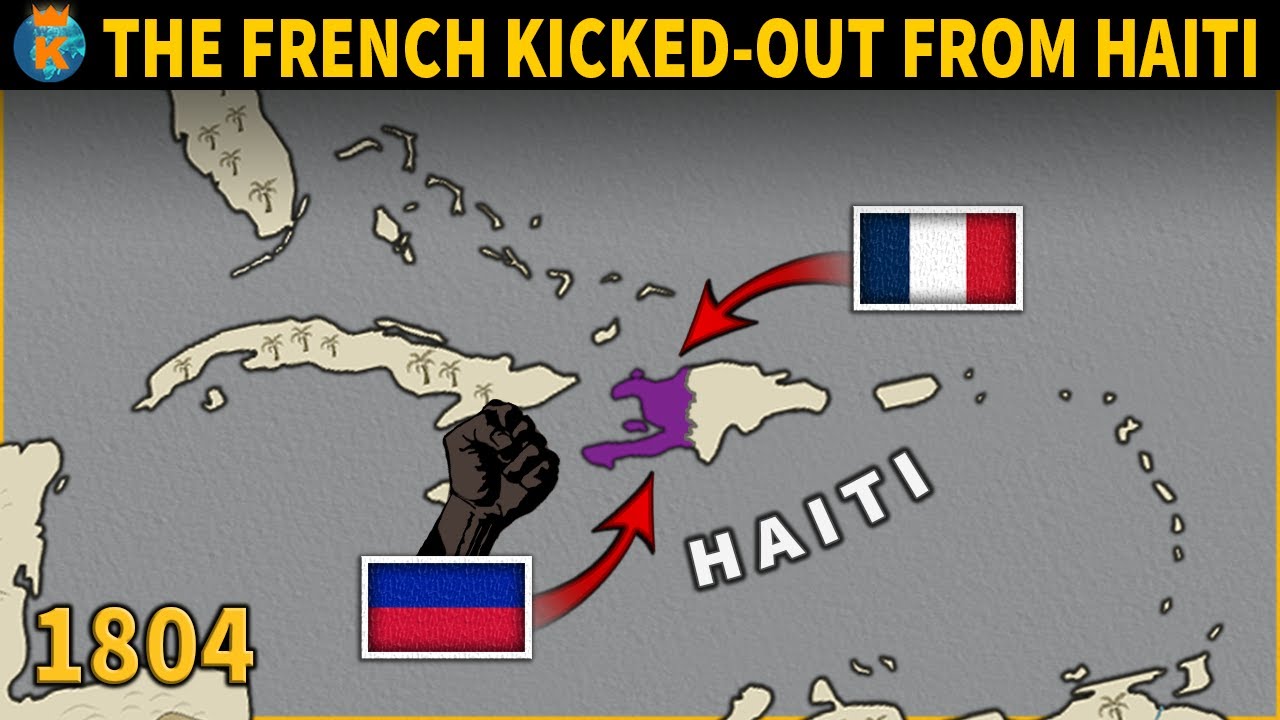
The declaration of Haitian Independence in 1804 by Jean-Jacques Dessalines and the creation of the world's first free Black republic.
The long-term economic consequences of the revolution, specifically the devastating independence debt imposed by France in 1825.
The global geopolitical reaction to Haitian independence, including diplomatic isolation by Western powers and the fear of slave rebellions in the United States.
The post-independence political divisions of Haiti, notably the split between the northern kingdom of Henri Christophe and the southern republic of Alexandre Pétion.
583.5K views20.3Klikes9:20Original Release: 2020-02-22
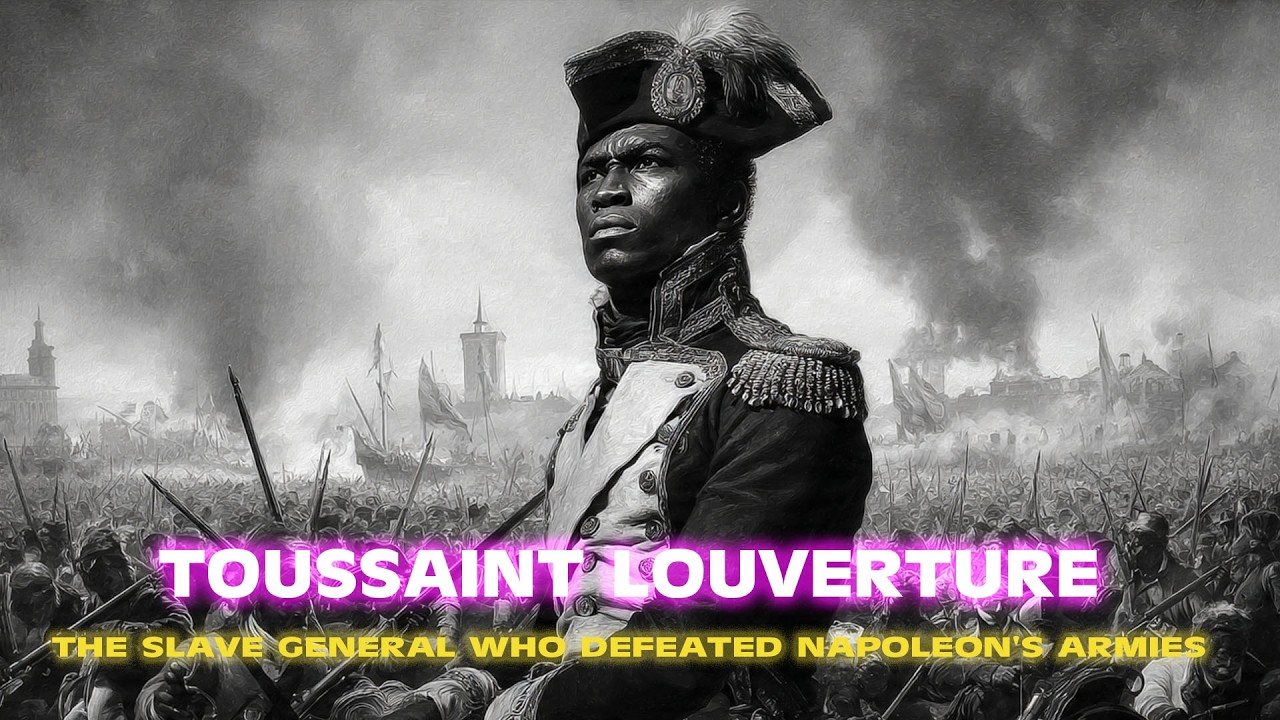
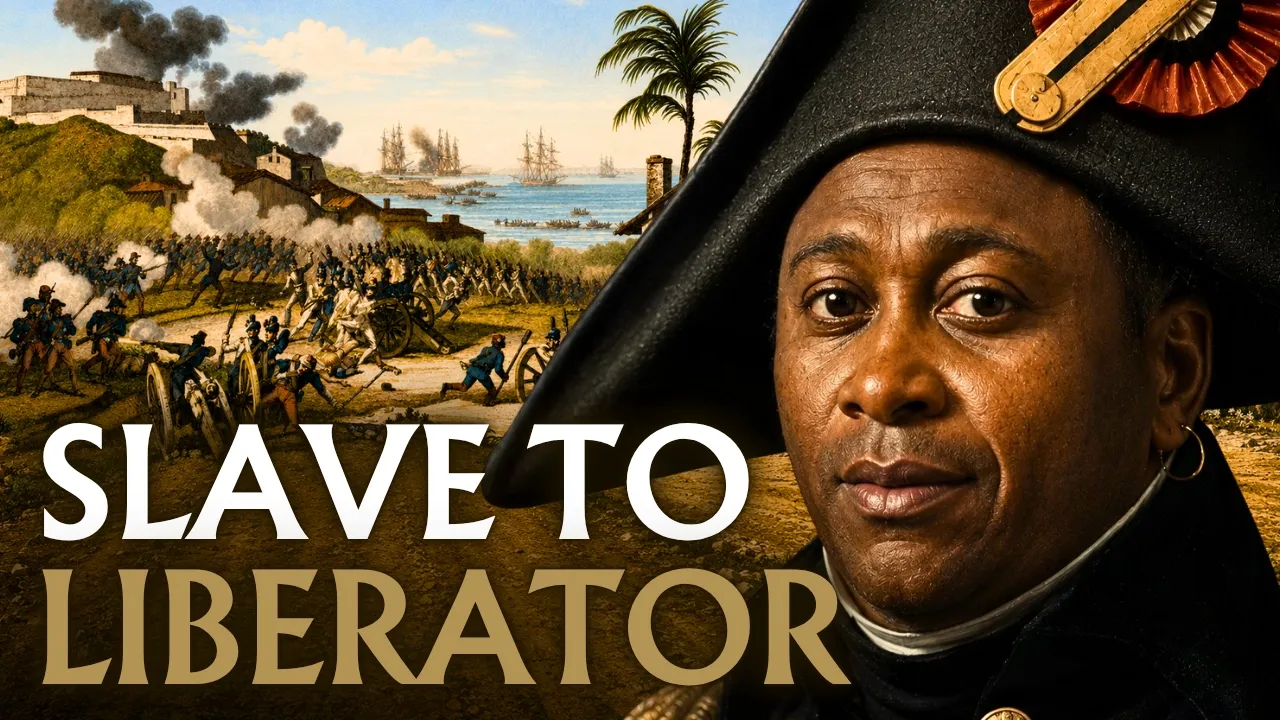
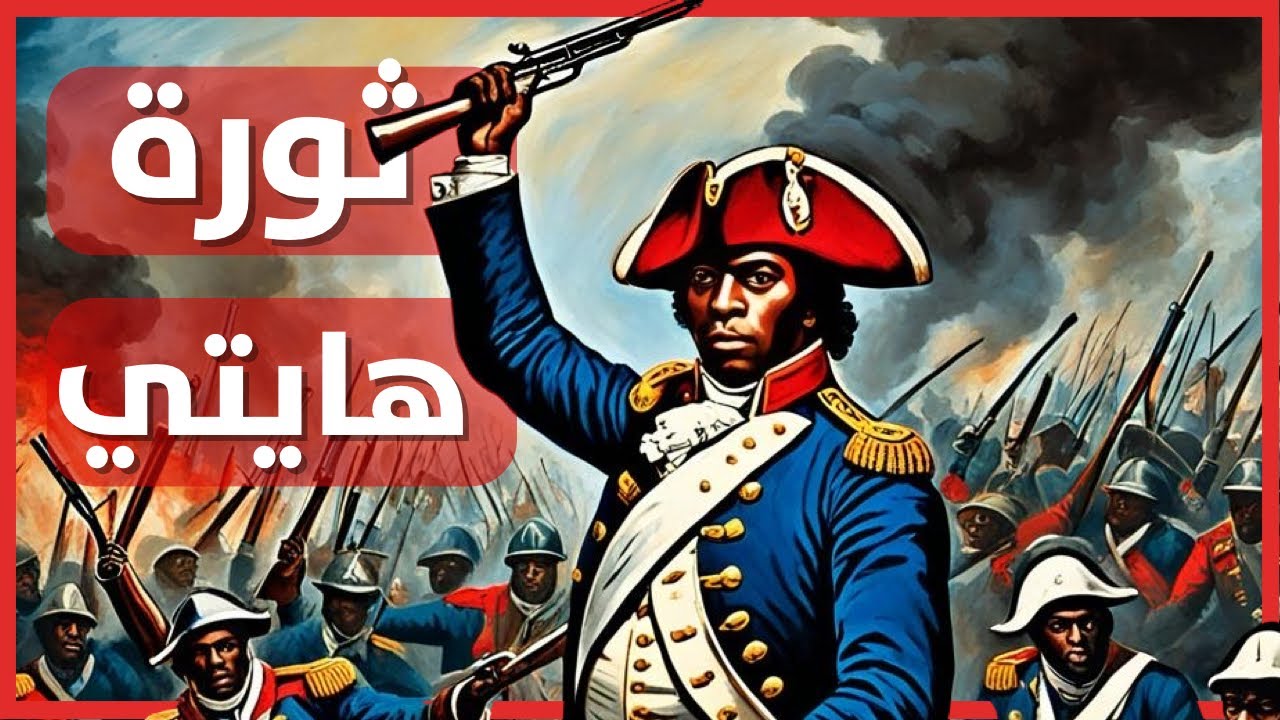
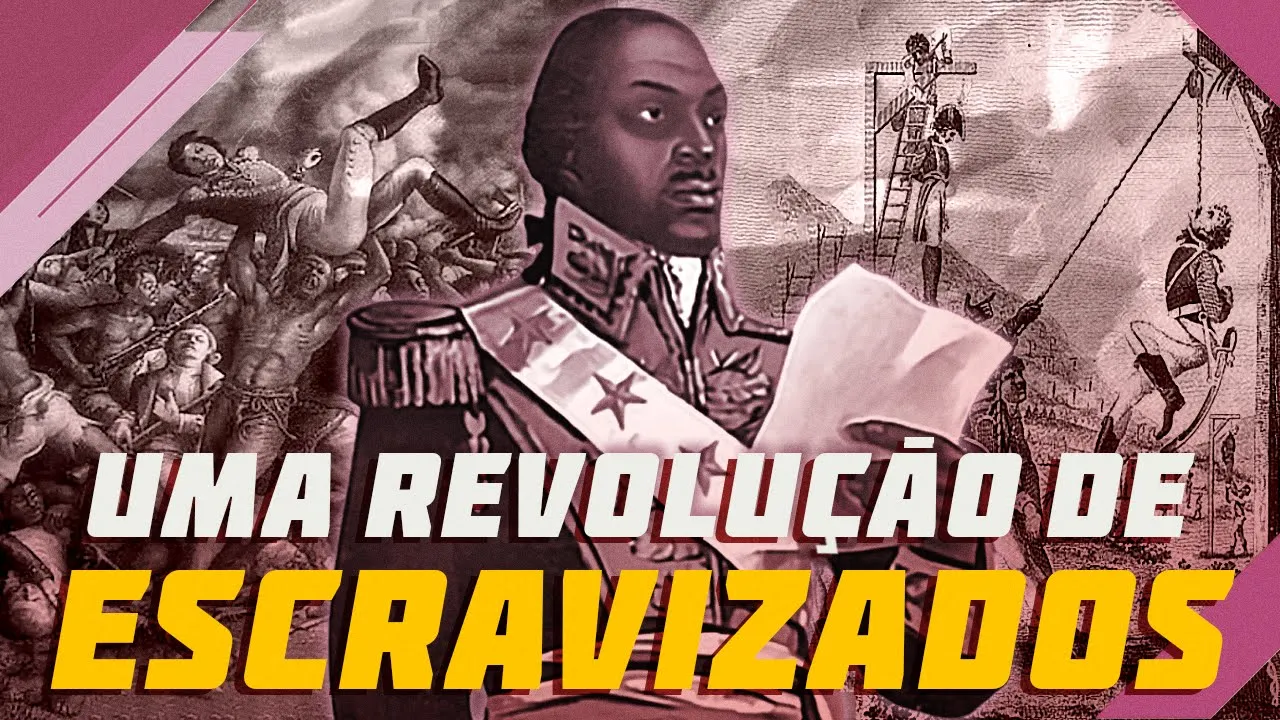
January 1802 'la cap 20,000 French soldiers arrived off the coast of Santa ma for months - Seong Lu Bhatia has sent letters to Napoleon telling him that the only way for Santa mom to stay a part of France is home rule a system where slavery can never return to SAW has not broken the colony from France he argues he has saved it Napoleon feels differently he has sent this force under the command of his brother-in-law Charles Leclerc with orders to subjugate the island and arrest to saw because he fundamentally believes to Saul's government should not exist my decision to destroy the authority of the blacks in Santa Mon Napoleon said is not so much based on consideration of Commerce and money as on the need to block forever the March of blacks in the world and in that endeavor he will fail - so Luba tears constitution of 1801 was a landmark in world history not only did it state that slavery would never be allowed in Santa monstah tution forbade discrimination on the basis of race and skin color it's an incredible document and many nations will spend a century and a half catching up to those same ideals but it also effectively gave the colony Home Rule and not only did this let's just say upset France it also made to Saul's allies reconsider supporting him the British were briefly at peace with France and no longer wanted to rock the boat and the new president of the United States Thomas Jefferson was a staunch libro French slave owner he was not going to support a government formed via slave revolt in fact both nations were so concerned that the revolution might spread to their own slave systems that they began turning away refugees that might even carry news of it there was an idea developing that this troublesome island that had proven slave insurrection could not only win but then fight off incursions by multiple European armies would set a bad precedent if it succeeded besides the country sugar infrastructure had been so damaged by the years of fighting that the main economic argument that independence was good for foreign trade no longer held water 15% of stomped amongst workforce had left the plantations to join rebel or foreign armies factory workers and cities had been ripped damaged and then Leclerc arrived originally his orders were to negotiate a peaceful solution but that went out the window when one of his commanders attacked a fort due to a miscommunication now it was war to Saul's defensive plan was to withdraw into the mountainous interior for a guerrilla war torching the cities so the French had no base of operations experience taught him that these new arrivals would suffer badly from disease and that would be his advantage but two months before la Clarke arrived to Seoul was forced to put down a rebellion led by his adopted nephew who had never been fully on board with the forced labor program soon Leclerc secured the Santo Domingo side had to sell been able to marshal a united Island he would have won outright but the recent civil strife and garbled communications meant that many did not rally to his banner even so initial battles stunned both sides with their ferocity Tucson decided against raising the cities but one of his commanders did put Lick app to the torch before withdrawing both sides were in bad shape yellow fever swept through the French ranks and the guerrilla campaign caused heavy casualties so five months into the war when Leclerc offered peace in exchange for two Saul retiring to his plantation with full honors Tucson decided that it was his best option he could not continue it was there the French troops arrested him instead of treating him like an officer of rank they bundled him along like a prisoner musket at his back putting him on a ship and deporting him to France in overthrowing me you have cut down in santa monk only the trunk of the tree of liberty to saw warrant during the arrest it will spring up again from the roots for they are numerous and they are deep he would die less than a year later malnourished and ill in a mountain castle but his words proved prophetic Leclerc had taken nominal control having brought with him Andre rego and other exiled that had fled Tucson and had mostly convinced the population that France did not intend to bring back slavery but then yeah France brought back slavery in nearby Guadeloupe and residents of San Tomas knew it was only a matter of time before it happened to them this was the universal call to arms to saw could not race no one wanted slavery back local officers that had supported Leclerc defected and one group massacred several hundred Polish troops who were part of the French expedition so Leclerc decided on a new tactic utter brutality he wrote to Napoleon saying that he would exterminate the rebels in the mountain areas sparing only children under age 12 he would execute all-black military officers French soldiers shot and bayonetted prisoners by the hundreds he executed a thousand people by tying weights around their necks and throwing them off ships and jacques de salim now in nominal control of local forces responded in kind the violence of the conflict only escalated further when Leclerc himself died of yellow fever leaving in charge and even more brutal subordinate who imported man-eating dogs to deal with the rebels but this only galvanized the black and coloured armies to finally form a united force a year later a year where dessaline handed the French defeat after defeat both sides gathered for what would be a decisive battle the French held a hill fort and General Francois Kapaa a man who had risen up the ranks to become a general and was known as cup wah the death sounded the charge French cannons tore into their ranks Kapaa and his soldiers clambered over the casualties regrouping when broken reforming and pushing on on the 4th assault cap la temple to earth he's hoarse mutilated by a cannonball he rose and a bullet snatched away his hat then he drew his sword and ran in front of his men yelling forward forward the display was so incredible the French stopped firing and applauded his bravery a French officer rode forward to carry the generals compliments after this weird little aside then the fighting resumed rebel generals serving in the front line were wounded shots tore away pieces of their uniforms still they attacked then the revolution ended as it began with a storm lightning rent the air and water poured down the French withdrew their position untenable they sent a peace envoy the next day to negotiate their withdrawal from the island of the 80,000 French troops sent to San Tomas only 30,000 would return in fact their withdrawal was part of a general French pullback from the Americas the vast expenditures of blood and treasure in Sante convinced Napoleon to cut his losses and focus on his European Wars to help that pursuit he sold Louisiana to the United States dessaline was supposed to and the French wounded back to France after Leclerc Swift drawl he drowned them instead because dessaline had learned something from all of those years of indecision around slavery with its wild reversals over civil rights and abolition with French citizens like the big whites constantly trying to undermine and reverse every freedom one the French had sent a message over the past decade that the people of San Tomas would never be safe under the rule of white Frenchmen so after declaring the island to be the independent nation of Haiti Dessalines ordered all remaining white French should be massacred even the women and children the people were reluctant and often only complied when Dessalines showed up with an army to enforce the edict some French escaped pretending to be Americans or British who were not subject to the decree but the message Dessalines intended to send backfired it further isolated Haiti with the United States refusing to recognize its government or trade with it for 60 years dis aleene's a military rule and crowning himself Emperor continued to set the new nation on a troubled path generals would seize power regularly ensuring the new nation could never fully recover from the damage of the Revolution slaveholding societies like the United States looked at Haiti as a nightmare scenario using it to argue incorrectly that wholesale slaughter was the inevitable result of abolition and then a black nation could not govern itself later the French returned forcing the Haitian government into massive indemnity payments it couldn't afford burdening the already broken economy keeping it in poverty and due to this political instability the United States would stage multiple military interventions in the 19th and 20th centuries under the banner of protecting American lives and property eventually occupying the nation for 19 years others saw a different message one of inspiration not fear when American firebrand John Brown tried to raise a slave revolt in the South before the Civil War he'd hoped to trigger an uprising like Haiti's and the new nation would both harbor the revolutionary Simon Bolivar when he was a fugitive and loan him Haitian troops on the condition that he freed the slaves in Spanish America to the oppressed and colonized around the world Haiti would become a symbol one that showed what was possible when people despite having nothing but determination and a desire for freedom declared they would be slaves no more special thanks to our educational tier patrons Ahmed Zayat Turk Joseph Blaine and Dominic Valencia [Music] [Applause] [Music]
Up Next

54:16
Why Haiti Collapsed Into Chaos While the Dominican Republic Thrives
@RealLifeLore
6M views•2023-12-16

33:02
The Great Schism of 1054: Causes and Consequences
@SacredCathedrals
113.5K views•2026-02-19
8:49
Mali Empire Origins: Sundiata's Victory and the Gold Trade
@extrahistory
2.4M views•2018-04-14
17:05
Understanding the Cold War: Superpower Conflicts and the Road to Détente
@OverSimplified
46.1M views•2019-01-24
Related Study Plans & Knowledge Roadmaps
Structured learning paths in History
history
Byzantine Iconoclasm: Theology, Art & Politics
01Foundations of Byzantium and Early Christian Images
02The First Iconoclasm: Leo III and the Crisis of Images
03Empress Irene, Nicaea II, and the Second Iconoclasm
+ 2 more learning modules
9h5 modules
Explore Roadmap
history
Iranian Revolution (Causes, Events & Legacy)
01The Pahlavi Dynasty and the Roots of Discontent
02The Spark of Rebellion and the Rise of Khomeini
031979: The Fall of the Shah and the Climax of the Revolution
+ 2 more learning modules
8h5 modules
Explore Roadmap
history
Mali Empire: Mansa Musa, Trade & Timbuktu
01Foundations of the Mali Empire
02The Trans-Saharan Gold and Salt Trade
03The Reign and Pilgrimage of Mansa Musa
+ 1 more learning modules
6h4 modules
Explore Roadmap
history
1947 Partition: Politics, Borders & Legacies
01Foundations of British India and the Divide
02The Political Negotiations and the Mountbatten Plan
03Drawing the Boundary: The Radcliffe Line
+ 2 more learning modules
8h5 modules
Explore Roadmap