![[Introduction to Linguistics] Word Order, Grammaticality, Word Classes](https://i.ytimg.com/vi_webp/E3eTNgPXkG4/maxresdefault.webp)







![Syntax: Intro to Linguistics [Video 5]](https://i.ytimg.com/vi_webp/I9RPueD8wGs/maxresdefault.webp)




![[Syntax] X-Bar Theory - Practice Sentences](https://i.ytimg.com/vi_webp/CIFOSEvcsT4/maxresdefault.webp)
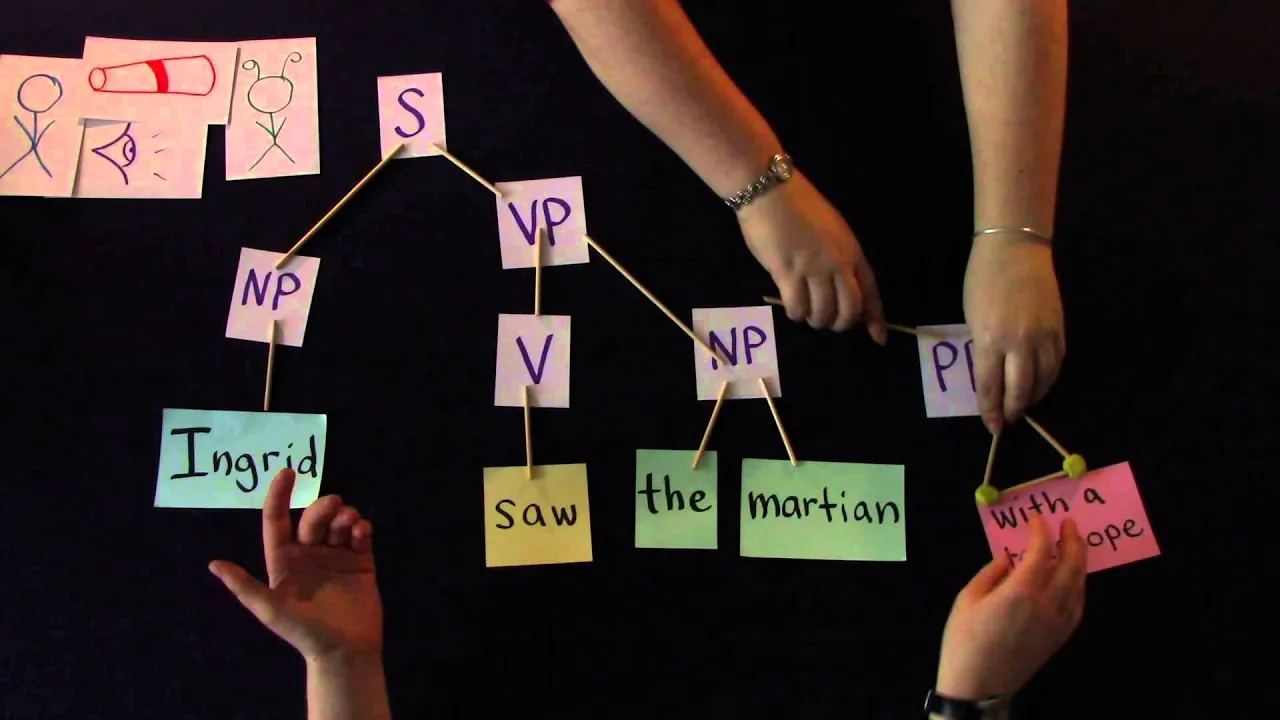





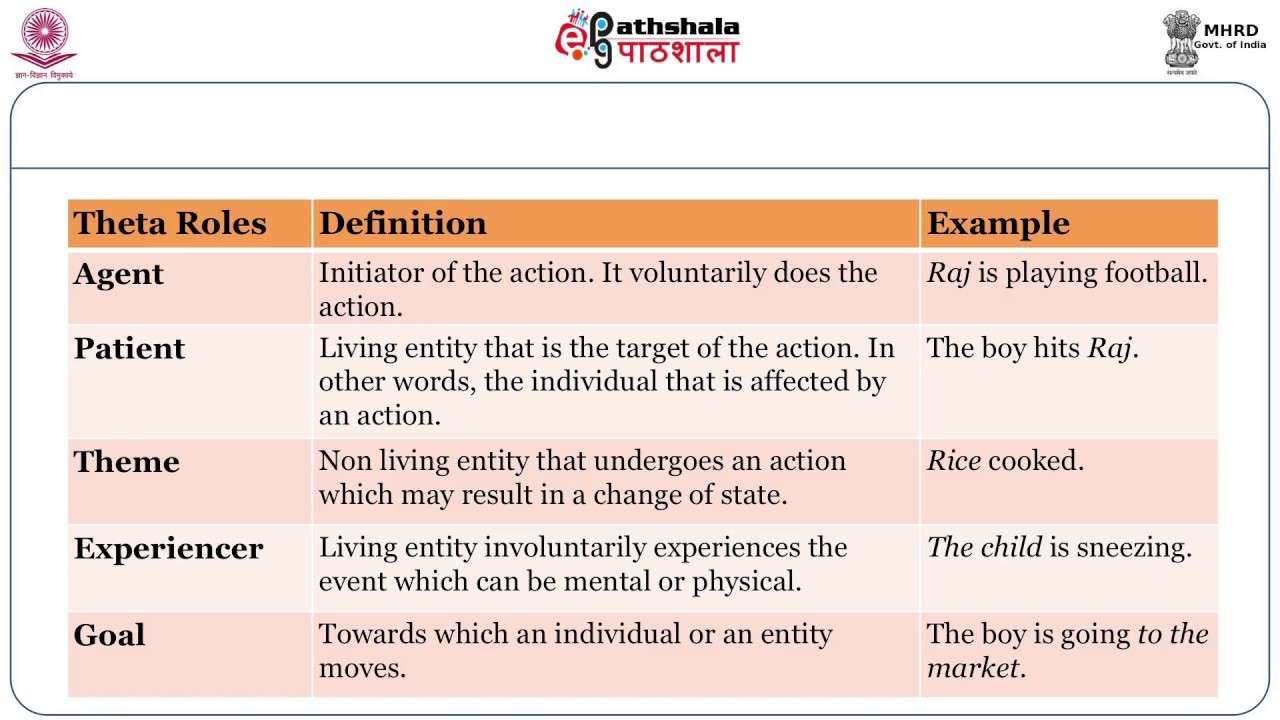
![[Syntax] Theta Roles and Theta Grids](https://i.ytimg.com/vi_webp/06MpE22sIPI/maxresdefault.webp)

![Syntax II: Intro to linguistics [Video 6]](https://i.ytimg.com/vi_webp/3CaX6MIzbZw/maxresdefault.webp)


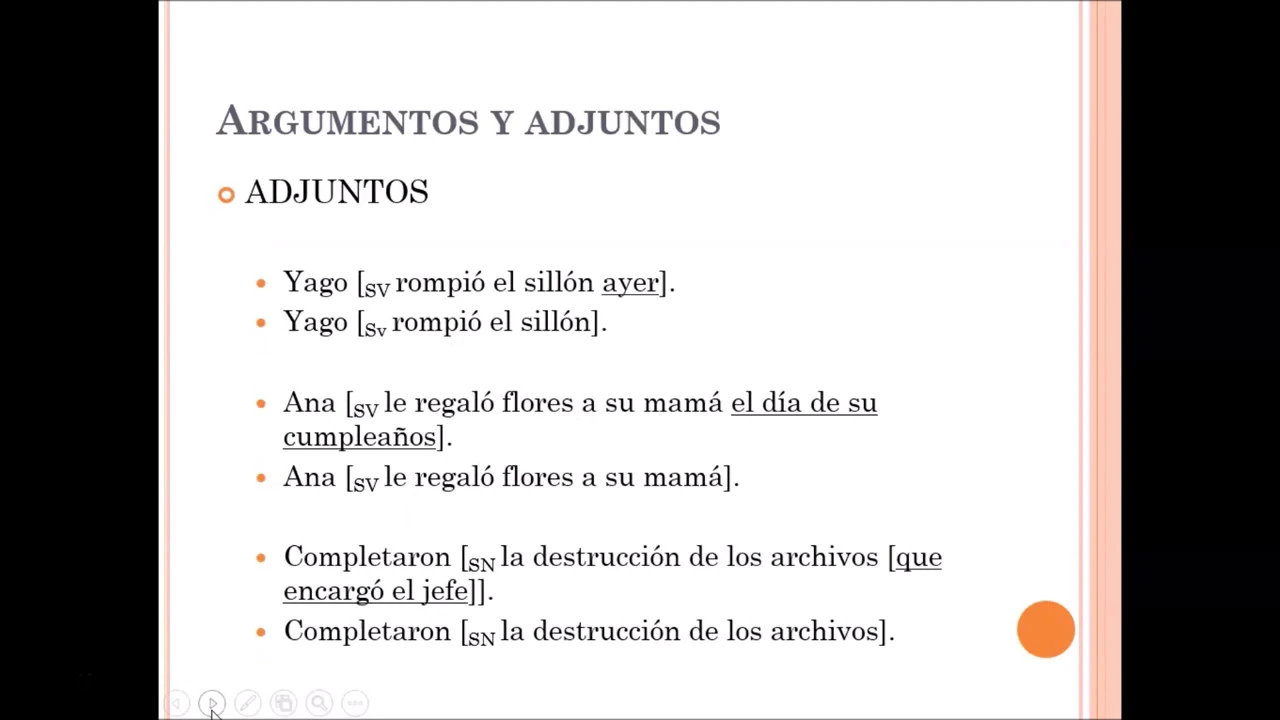
In generative syntax, complements and adjuncts are distinguished by their structural positions and behavioral properties: complements are daughters of bars and sisters to heads, must be adjacent to the head, can only occur once, cannot be reordered, and cannot undergo one/do-so replacement; adjuncts are daughters of bars and sisters to bars, can be separated from the head, can appear multiple times, can be reordered, and can undergo one/do-so replacement. This distinction is predicted by the three fundamental rules of phrase structure: the specifier rule, the adjunct rule, and the complement rule.
Complements vs. Adjuncts: Key Differences in Syntax
Added:Understanding of basic syntactic categories (e.g., Noun Phrases, Verb Phrases, Prepositional Phrases) and how words group into constituents.
The concept of a 'head' of a phrase and how lexical categories project their properties to phrasal levels.
The conceptual distinction between core semantic arguments (obligatory participants required by a verb) and optional modifiers.
Familiarity with basic syntactic tree diagrams and the concept of hierarchical structure in language.
Representing complements and adjuncts structurally using X-bar theory, specifically distinguishing sister-to-head (complements) from sister-to-bar-level (adjuncts).
Exploring structural ambiguity where a phrase can be parsed as either a complement or an adjunct (e.g., 'The cop shot the thief with the gun').
Investigating Theta Theory and how semantic roles are assigned to complements but not to adjuncts.
Applying advanced syntactic tests, such as extraction and island constraints, which display asymmetrical behavior between complements and adjuncts.
22.1K views406likes25:53Original Release: 2020-08-23
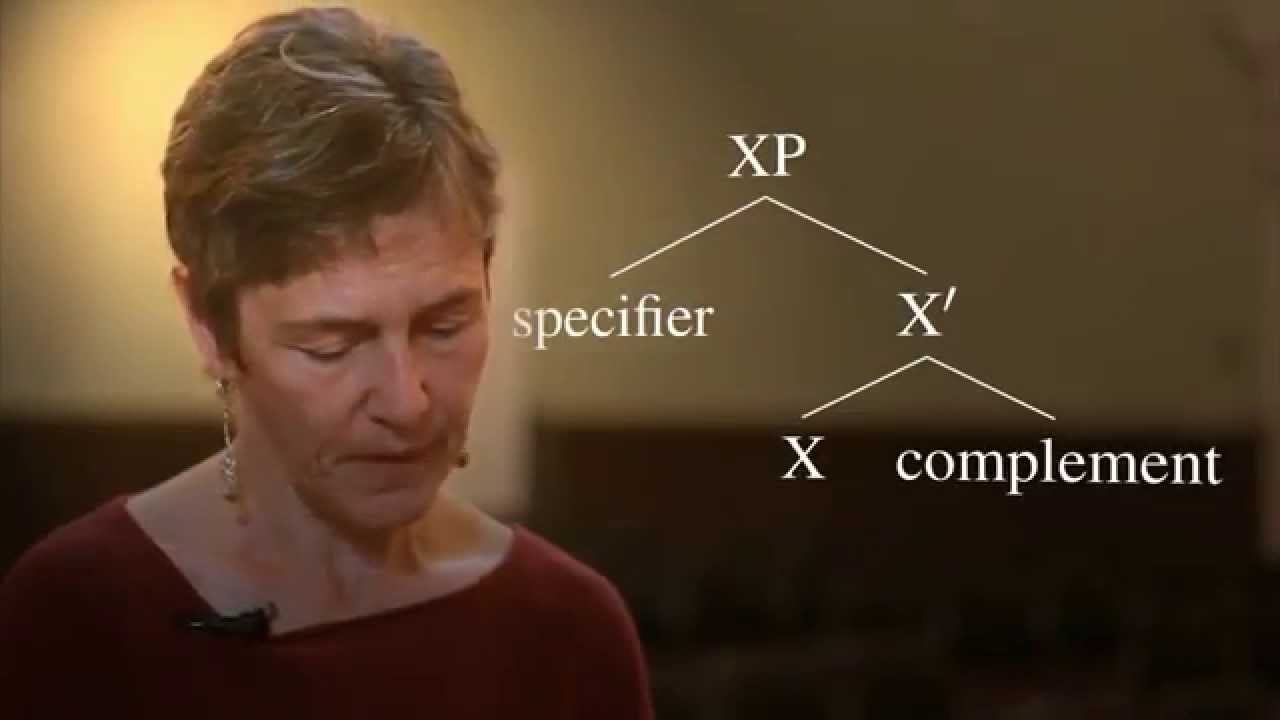
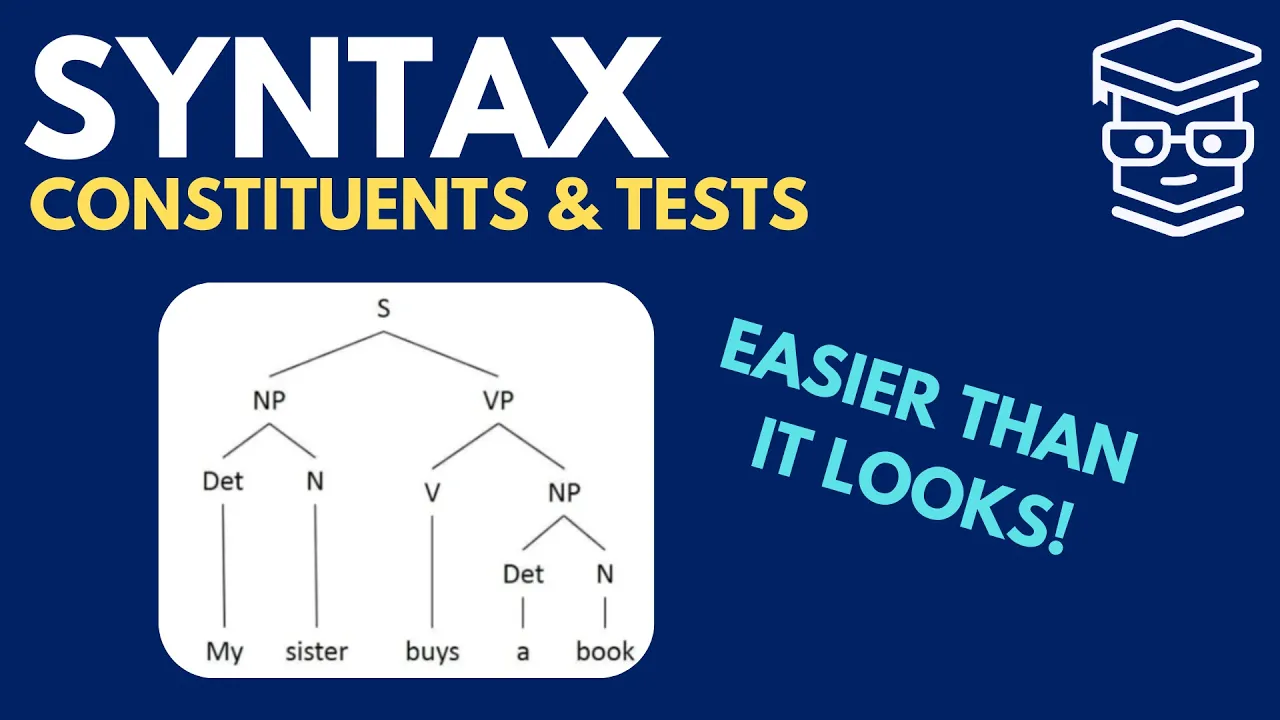
[Music] welcome to syntax a generative introduction fourth edition my name is andrew carney i'm a professor of linguistics at the university of arizona i'm the author of your textbook and i'll be leading you through this series of video tutorials in the last unit we talked about how we can simplify our rule set to only three rules the specifier rule the adjunct rule and the complement rule now this makes a prediction it makes the prediction that our system will distinguish three different kinds of modifiers so in this video we're going to talk about those three different kinds of modifiers with a particular focus on the difference between modifiers introduced by the complement rule and modifiers introduced by the adjunct rule so remember we have these three rules the specifier rule the adjunct rule and the complement rule the specifier rule starts with an xp on the left so some kind of phrase noun phrase verb phrase adjective phrase and on the right there's an x bar head and the thing that sits to the left of that in parentheses the y p is the specifier adjuncts are introduced by this rule that is cells for cursive so we have an x bar which goes to some modifier and an x bar or alternately an x bar goes to some x bar and a modifier and because there's an x bar on each side of those arrows that means that the rule is self-recursive and can apply as many times as you like and we also have the complement rule which introduces the head and then the the modifier that is called the complement so what are the predictions of these rules what do these rules predict about structure it proposes that there are really three different kinds of modifiers there are specifiers there are complements there are adjuncts but it we can legitimately ask the question is this prediction correct is it correct that we can distinguish among these modifier types but we're going to leave specifiers aside for the moment and concentrate on complements and adjuncts and see whether or not they really do have different properties from one another because they are introduced by different rules and have different structural properties so here's some formal definitions when we talk about the specifier we're talking about the non-head element that is the daughter of a phrase and sister to a bar right now the only example we have of a specifier is the determiner in noun phrases and in fact we're going to change that a little bit later on in a future unit but remember this this is the thing you have to be able to walk away and do in your sleep that specifiers are daughters of phrases sisters to bars adjuncts are daughters of bars sisters to bars so the zp here is an example of an adjunct it could have appeared on the other side too and it still would be an adjunct as long as it's a daughter of a bar and a sister to bar notice that these definitions daughters and sisters they entail that the relevant criterion is immediate dominance so zp is immediately dominated by x-bar and um another x-bar is immediately dominated by the same one that's just a different way of saying daughter to bar sister to bar and compliments are daughters of bars sister to heads so the wp here in this structure is a sister to the head and it's a daughter of a bar so remember these distinctions daughter of a phrase sister to a bar that's a specifier daughter of a bar sister to a bar that's an adjunct daughter of a bar sister to a head that's a compliment with those those definitions in place we've now test to see whether there are actually distinctions among these modifier types so let's have a look at this tree structure here and look at what modifiers play what role so first of all our determiner is a specifier it's the daughter of a noun phrase sister to a bar all of the prepositional phrases and adjective phrases other than of linguistics are adjuncts because they are a daughter of a bar sister to a bar so young is an adjunct from phoenix is an adjunct with red hair as an adjunct our prepositional phrase of linguistics is daughter of a bar sister to a head so it's a compliment the head noun is student and it's the head of the entire phrase we have some terminology here we have the head we have the maximal projection that's the phrasal level so the the n is the minimal projection and the the phrase is the maximal projection all the other n-bars are called projections of the noun if you want to think of it this way the head noun says i'm a noun and i'm going to create categories on top of me so i'm going to project my noun this up the tree so the n the n bar the n bar the n bar the n bar the np are all projections up the tree of that noun okay before we go any further we do need to revise our principle of modification because it's no longer the case that modifying heads are sister to the head in some cases as in this tree here their sister to the projections of the head so with a red hair is sister to a projection of the noun and from phoenix is sister to a projection of a noun so we need to make a slight um difference in our trees in our principle of modification rule that says an xp modifies some head y then it must be dominated by a projection of y so it must be dominated by y bar or yp so that's our revised principle of modification just to get that technicality into place so let's distinguish complements from adjuncts in terms of their structure take this noun phrase the student of linguistics here the prepositional phrase of linguistics is drawn as a complement to the head noun student that's because it's sister to the head and daughter of a bar we can contrast this with a a structure like the student from phoenix where the prepositional phrase from phoenix is drawn as a daughter of a bar sister to a bar that makes it an adjunct by definition here's a quick way you can distinguish prepositional phrases in english noun phrases complement noun phrases are almost always marked with the preposition of and almost always other prepositions mark adjuncts this is just a heuristic for you to remember to help you keep track of things while you're going along because that's not in fact the definition of a compliment versus an adjunct but you can quickly identify whether a prepositional phrase is a compliment or adjunct by whether or not it has that preposition of or some other preposition okay now here are some predictions of these structures first of all complements are always closest to their heads this is by definition right because if you look at your tree here of linguistics if it is going to be sister to the head it has no choice but to be adjacent to that head and we can see that in fact this prediction is true you can say the student of linguistics from phoenix but you can't in english say the student from phoenix of linguistics we'll talk about other languages a little bit later but for now that's true of english the student of linguistics from phoenix is fine but the student from phoenix of linguistics is just awful and that is predicted by our distinction between complements and adjuncts now another prediction of our theory is that you can only ever have one complement but you can have as many adjectives as you want this is because of the nature of the rules involved the complement rule does not suffer curse it is not iterative there is an x bar on the left hand side of the arrow and an x on the right hand side of the arrow so it doesn't feed itself by contrast the adjunct rule has an x bar on each side of each arrow so x bar goes to z p x bar or x bar goes to x-bar zp so this means that the abject rule you can apply as many times as you want which means you give gives you as many adjuncts as you want but those complements can only you can only ever have one of them so we can see that this is true the student of linguistics with red hair from phoenix in the bath is fine um this is a case where we have multiple adjuncts with the red hair from phoenix and in the bath but we have one compliment contrast that to the student of linguistics of chemistry from phoenix this is ungrammatical you can't have two compliments there is an interpretation of this sentence where there is a study of linguistics of chemistry that's not the meaning which we are intending here we're intending the the meaning where the student is of linguistics and of chemistry note that you can in fact conjoin those two complements a fact we'll come back to in a minute another property is that because the x-bar rules um are non-specific with respect to category you're going to find that complements because they have to be adjacent to the head are fixed in order whereas adjuncts can be put in any order with respect to each other so for example you can say the student of linguistics from phoenix with the red hair on the bus the student of linguistics with red hair from phoenix on the bus the student with red hair on the bus from phoenix etc etc but you can never reorder the compliment this is a restatement of the previous observation as well the student from phoenix of linguistics with red hair on the bus terrible the student from phoenix with red hair of linguistics on the bus terrible the student from phoenix with the red hair on the bus of linguistics it's terrible with the intended interpretation where of linguistics modify student if there is such a thing as a bus of linguistics that's a different structure entirely conjunction so because you can conjoin things at the same or different level sorry only at the same level you're going to find that you can only conjoin complements with complements and adjuncts with adjuncts you can't conjoin conjuncts with conjugates with adjuncts so our conjunction rule for now this looks like this the little superscript n stands for bar or phrase or word um so the n is a variable that spans over those things that modify the hen the head so this could be x bar goes to x bar conjunction x bar or x p goes to x b conjunction x b or x goes to x conjunction x and what we find is that this rule does seem to be correct you can conjoin like things so you can conjoin two adjectives you can say the red and blue house but you can't conjoin an adjective in a noun for example the red and cat is terrible so what we find as i said before is that complements can be conjoined with compliments so you can say the student of linguistics and with philo and of philosophy note by the way that this does not violate our condition that you can only have one complement because what you've done here is you've taken two complements conjoined them together and made them into a single thing and that single thing is the complement of student and you can conjoin adjuncts with adjuncts so you can say the student with red hair and with its two but you cannot conjoin conjuncts with adjuncts the student of linguistics and with red hair why should that be the case well it's because compliments have to be sisters to the head and adjuncts have to be sisters to the bar and it's impossible to create a conjoined phrase that is simultaneously sister to a head and sister to a bar you just can't draw a tree that does that all right we have another test here this is one we've actually seen before it's the argument that we used for intermediate structure which was one replacement now one uh condition on this not every speaker of english has this phenomenon so there are some of you who will not get the judgments i'm going to show you and that's fine you just have a different one replacement rule but for those people who do have this rule in the way i'm i've specified it then in fact you can use this as a test to distinguish between complements and adjuncts so for those people who have this version of the rule you can replace an n-bar category with one but you can't replace an np or an n with one those of you with the other dialect can replace an n so what we predict then is that we should be able to put a 1 after the determiner and we should be able to put a 1 before from phoenix but we should not be able to put a one before of linguistics right so that is one way we can distinguish compliments from adjuncts if you can put a one in front of the prepositional phrase it's an adjunct if you can't then it's a compliment so let's try this the student from phoenix not the one from tucson so that's an example of an adjunct because you can stick one in front of it the student of linguistics not the one of chemistry for those people for whom this is ungrammatical this is a test that shows that of chemistry is a complement because you can't put one in front of it now if you are one of the people who finds the second noun phrase grammatical what hap what seems to be happening is in your particular dialect or idiolect your rule is targeting both the n category and the n bar category so you simply can't use this test to distinguish adjuncts from complements but for other people you can so we actually now see that we have a whole bunch of ways in which adjuncts are distinguished um from complements you can only ever have one complement you can have multiple adjuncts the complement if it's there must be closest to the head adjuncts can be separated from the head by the way note carefully that sometimes adjuncts are adjacent to the head so it's the key is that they can be separated from the head not their actual um specific position adjuncts can be reordered compliments cannot you can join compliments with other clear compliments you can join adjuncts with other clear adjuncts if you are a speaker of the relevant dialect you cannot put a 1 before a complement but you can put a 1 before an adjunct okay now there's a very easy mistake for beginning tree drawers to make so let's take this sentence the big banana and big is in fact an adjunct you can say the big one right um you can uh if you have mult you can have multiple adjectives so you can say the big um rotten banana um it can be separated away from the head the big rotten banana you can conjoin it with other adjuncts so you can say things like the big and rotten banana so adjective phrases are adjuncts in the relevant level that means that they have to be both daughter to a bar and sister to a bar but it's so tempting to leave off that extra n bar because of the trees we've been drawing up to this point using phrase structure rules which didn't have this you'll if you drew a tree like the tree on the right hand side here then what you've done is made the adjective phrase a complement this is not correct all the empirical evidence shows that it's an adjunct which means it has to be a daughter of a bar and a sister to a bar in my years of teaching syntax this is probably the most common mistake that people make is they leave off that extra bar when they have an adjunct where there isn't a compliment now we also have the complement adjunct distinction in other categories you can see in a sentence like john often eats apples with a fork the head verb eats here has a compliment which is apples and it has two adjuncts often and with a fork now usually in english the complement is the direct object and everything else within the verb phrase will be an adjunct um that's a heuristic for you that is not a definition that's just a quick way for you to be able to tell what is an adjunct and what is a compliment because apples is the direct object of eats it has to be a compliment there is an exception to this rule the verbs give and put take two complements and we're going to leave this aside for a little while because in order to explain these kinds of verbs we need to understand movement and movement doesn't come until a later unit in this textbook okay let's look at this this noun phrase i love the policeman intensely with all my heart the tree for for the verb phrase here looks like this one we have the verb loved and then we have a series of v bar projections on top of it we also have the mysterious vp on top just go with it put it on top each of the adverb phrases and prepositional phrases are going to be adjuncts so their daughter of a bar and sister to a bar the policeman is the direct object it's the compliment it's the daughter of the bar but sister to the head now we should be able to do tests like the ones we did before for noun phrases that show this distinction clearly so let's start with remember you can only have one compliment because the compliment rule is not recursive so i love the policeman the fireman is terrible that would be having two direct objects not okay you can reorder adjuncts but you cannot reorder um compliments so i love the policeman with all my heart intensely i love the policemen intensely with all my heart but you can't say i loved intensely the policeman with all my heart and i loved intensely with all my heart the policeman now if you're a speaker of spanish or french or some other languages you'll notice that the two sentences that i've marked as ungrammatical if you translate them into your language they're fine we're going to come back to that that's because your languages have a special property called verb movement that we will return to another test is can you conjoin the items so you can conjoin a compliment with a compliment as in i love the policeman and the firemen and you can conjoin an adjunct with an adjunct i love the policeman intensely and with all my heart but you cannot conjoin the compliment with either of the adjuncts i love the policeman and intensely the equivalent to one replacement in english that you find with rib phrases is do so replacement or due to do so too so let's see what happens you can put do so before an adjunct but you can't put it before a compliment so you can say mary did so with her brain mary did so mildly with her brain but mary did so the firemen is just awful so therefore we can conclude that at least with verb phrases there does seem to be a distinction between complements and adjuncts now when it comes to adjective phrases and prepositional phrases you'll remember from an earlier video that the evidence for x-bar theory in these forms is not strong but that's simply because they typically have very restricted amount of modification that can happen within them um so it does seem to be the case that there is um there is a distinction between adjuncts and compliments uh in these forms so for example you can say very afraid of tar of tigers where afraid is an adjective and very is an adjunct and of tigers is a compliment and similarly with um the this fixed phrase in love you can be very in love with himself right where um uh himself isn't with himself as an adjunct love is the compliment or direct or object of the preposition in is the head and very can be an adjunct as well the distinction here is primarily for parsimony reasons that is to make the theory pretty but it we might predict that there are similar distinctions to what goes on in noun phrases and verb phrases here as well now we haven't talked about specifiers um the reason for this is the only element we've seen so far that's a specifier is the determiner and in fact in the next unit we're going to argue that even determiners aren't actually specifiers so the specifiers are going to be a bit of a mystery for the moment um i've already told you before you just have to take it on faith that the specifier rule exists but we're going to argue a little bit later that we do have a role for specifiers it's the position where subjects go we just haven't seen the all the data we need in order to get there so for the moment just understand the difference that specifiers are sister to a bar daughter of a phrase and that's where we're going to put determiners for now but we're going to have to return to this topic because it isn't quite clear yet so to summarize what we've talked about in this video specifiers are sister tabar daughter of the phrase adjects are sisters to bar daughter of bar and compliments are sister to head daughter of a bar this makes a number of predictions about the difference be in behavior between complements and adjuncts you can only have one complement you can have multiple adjuncts complements have to be closest to the head adjuncts can be reordered with respect to each other you can conjoin compliments with compliments adjuncts with adjuncts and you can do uh and you cannot do one replacement or do so replacement before a compliment but you can before imagine [Music] you
Up Next
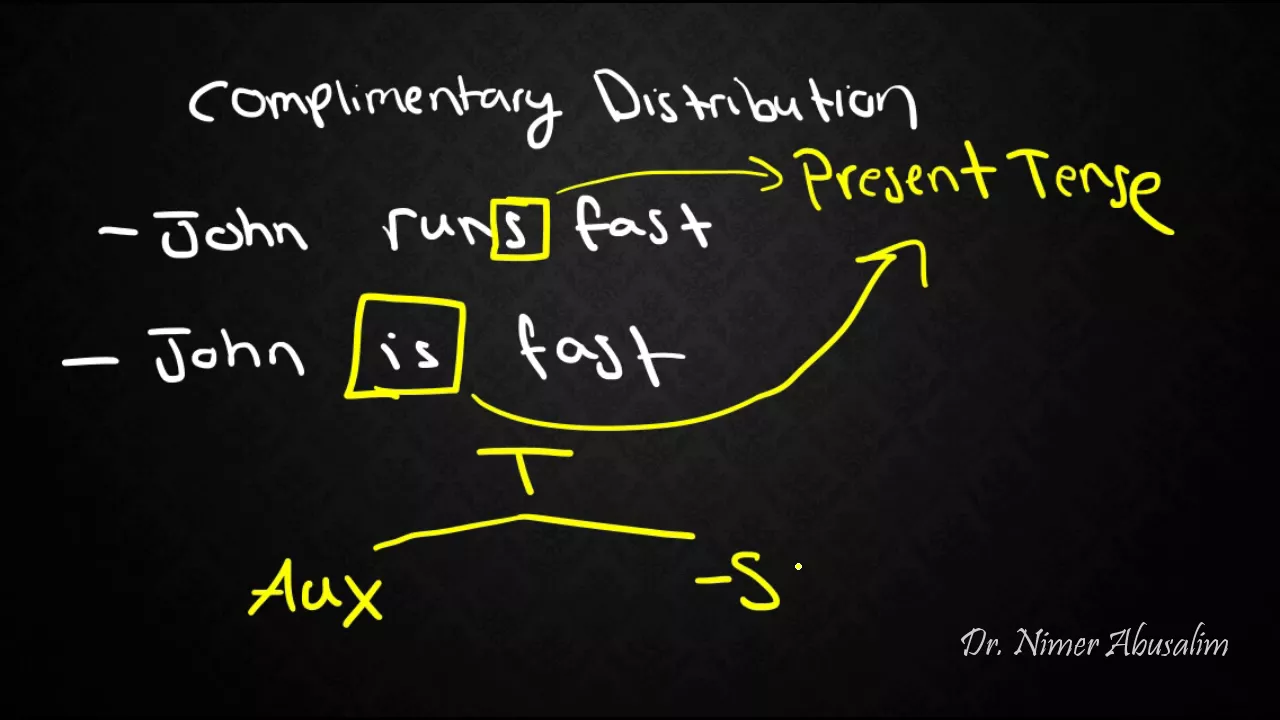
12:31
TP in X-bar Syntax: Why Tense Heads Are Obligatory
@DrNimerAbusalim
16.1K views•2017-09-30
36:52
Constraint Interaction in Optimality Theory: Epenthesis & Deletion
@Vidyamitra
180 views•2018-08-20

18:22
Syntax: DP Movement & Case Theory Explained by Andrew Carnie
@CarnieSyntaxthEdition
14.3K views•2020-09-29

21:32
Accent Expert Explains U.S. Regional Dialects | Part 1
@WIRED
9.3M views•2021-01-21
Related Study Plans & Knowledge Roadmaps
Structured learning paths in Linguistics
linguistics
Optimality Theory: Tableaux & Constraints
01Phonological Basics: Sounds, Syllables & Rules
02Foundations of Optimality Theory: GEN, CON, and EVAL
03The Constraint Inventory: Markedness vs. Faithfulness
+ 2 more learning modules
15h5 modules
Explore Roadmap
linguistics
Morphosyntactic Alignment: S, A & P Systems
01Foundations of Syntax: Transitivity and Arguments
02The Linguistic Variables: Mapping S, A, and P
03Nominative-Accusative Alignment
+ 3 more learning modules
12h6 modules
Explore Roadmap
linguistics
Analyzing Sign Language: Phonology & Syntax
01Foundations of Sign Language Linguistics
02Phonology: The Five Parameters of a Sign
03Morphology: Word Formation and Classifiers
+ 2 more learning modules
14h5 modules
Explore Roadmap
linguistics
Pragmatics: Speech Acts, Grice & Politeness
01Introduction to Pragmatics: Meaning in Context
02Grice’s Cooperative Principle & Implicature
03Speech Act Theory
+ 2 more learning modules
14h5 modules
Explore Roadmap