

















![신경전달물질이 이동하는 신경세포내의 골격 [박문호 박사의 뇌와 생각의 출현 6회]](https://i.ytimg.com/vi_webp/oSeCHAYAUWU/maxresdefault.webp)
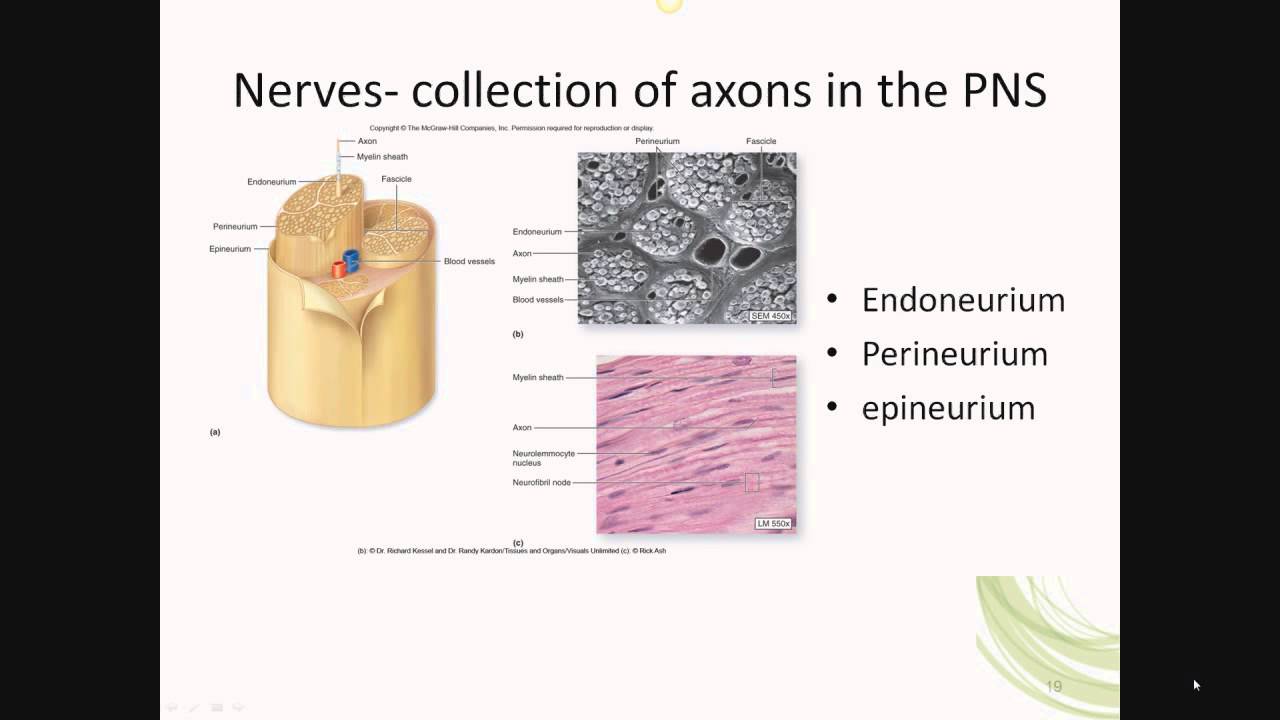


During neural development, neurons undergo three critical processes: proliferation (rapid cell division at approximately 250,000 neurons per minute), migration (guided by chemical signals along radial or tangential paths using somatic translocation or glial-mediated mechanisms), and aggregation (cell alignment at specific locations); these processes are precisely timed and spatially coordinated, with disruption leading to neurological complications, as evidenced by the neural crest's contribution to peripheral nervous system structures and the critical role of cell adhesion molecules and gap junctions in proper neural organization.
Neural Proliferation Migration & Aggregation | Brain Development
Added:Understanding of the early stages of embryogenesis, specifically neurulation and the formation of the neural tube from the ectoderm.
Basic cellular biology concepts, including mitosis (cell division), stem/progenitor cells, and cell differentiation.
The foundational structure of a neuron and the general layout of the central nervous system.
An introduction to cell signaling molecules (morphogens) and chemical gradients that direct cellular behavior during development.
Synaptogenesis and pathway formation, including how growth cones navigate to form functional connections.
The processes of programmed cell death (apoptosis) and synaptic pruning to refine neural networks.
Myelination and the development of glial cells (like oligodendrocytes and astrocytes) to support mature neuronal function.
Clinical and neurodevelopmental disorders resulting from abnormalities in these early stages, such as microcephaly, lissencephaly, and cortical dysplasia.
20K views0likes11:49Original Release: 2018-01-30
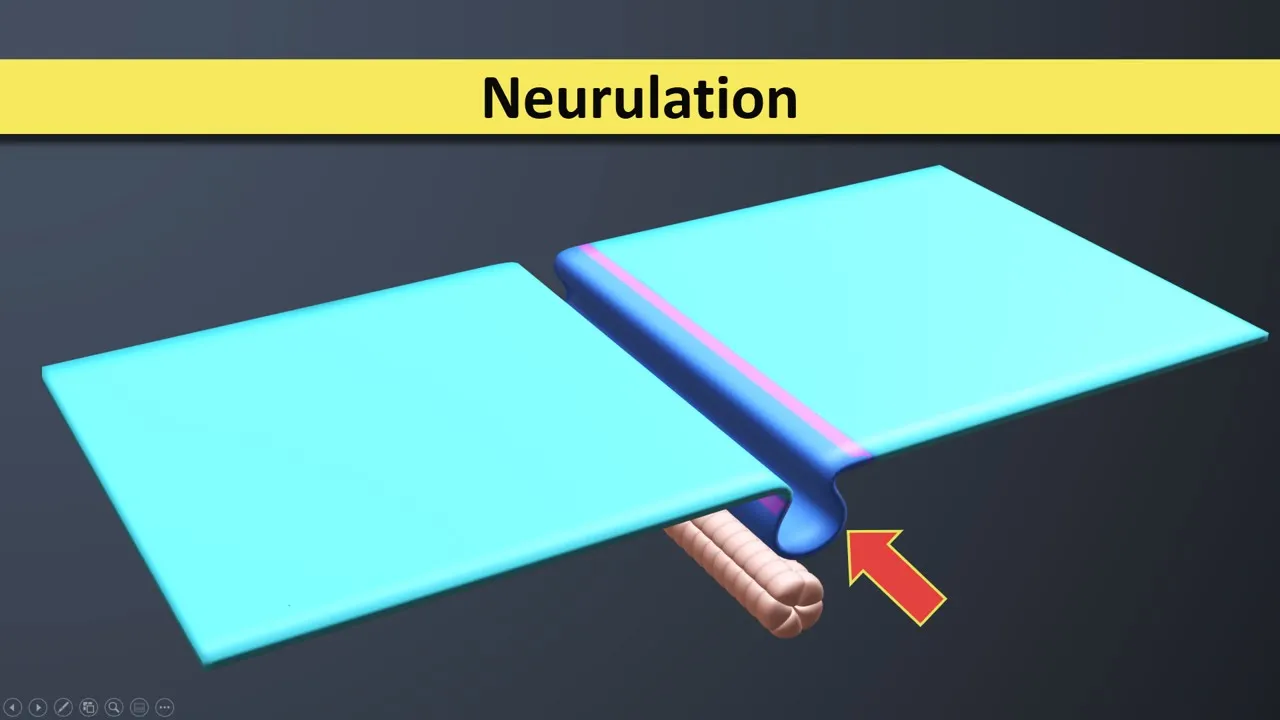
this module cover the neuronal addition of cells their migration processes and the aggregation to other cells as we learned earlier by the 24th day after conception the neural tube has already been formed once the neural tube has formed then neural proliferation begins proliferation is nothing more than the great increase in number of cells we find that the cells of the tube would begin to increase in a fashion that is quite oppressive a study done in 2008 by lumen revealed that the embryonic development of a nervous system is occurring at a rate of 250,000 neurons per minute this would allow the species to develop enough neurons which eventually some of them are going to die and we'll talk about this in a future module the police note that the cells proliferate in a way that is consistent with a specific species in the example of humans we will see three swellings at the anterior end and these will eventually become the forebrain the midbrain and the hi brain please note that the proliferation process is quite complex and it is in part controlled by chemical signals that come from to organizer areas in the neural tube and this what we call the mesoderm we call these the floor plate which runs along the midline of the ventral surface of the tube and then the roof plate which runs along the midline of the dorsal surface of the tube once enough cells have been created through cell division they begin to migrate to an appropriate target location during the period of migration the cells are still in immature form they lack the processes such as axons and dendrites that characterize mature neurons two major factors govern migration and developing neural tube that is time and location and that is important for us to note in a given region of the tube subtypes of neurons arise on a precise and predictable schedule and then they migrate together to their prescribed destination and that is why we look at again the two major factors that govern migration being time and location some individuals believe that there are greater principles that are operating behind the scenes that are responsible for where you are at any given moment and it's why some of the vigils say I was at the right time at there at the right place some people say I was at the wrong place at the wrong time and and you'd like to compare this to the migration we find that if the cells would arrive too soon and they migrate too early they just may not be able to survive as there wouldn't be any other cells that they could form bonds with another thing is that if they migrate but they migrate the wrong place they would also not be able to survive bringing about complications to the organism in this picture we're able to appreciate the neural tube here and green and you're able to see two types of neural tube migration you have radial migration which would be the blue ones here and these are basically those that are moving out from the ventricular you know each side of the four connected fluid filled cavities in the center of the brain this will eventually become our ventricles and they're moving in a straight line outward toward the outer wall of the tube the other type of neural tube migration is tangential migration and that is where they're moving up and by a tangential this would occur at a right angle to radial migration that is parallel to the tubes wall so you'd be looking at it in a pattern that's like this consistent at the bottom and on the outer purpose there are also two methods of migration and we look at somos translocation and Lille mediated migration with somos translocation we find that an extension grows from the developing cell in the direction of the migration the extension seems to explore the immediate environment for attractive and repulsive cues as it grows and then the cell body itself moves into and along the extended processes this process brings about like a trailing fashion and eventually is retracted and and it's almost kind of like a snake covering some ground and making sure that it's going through the right place the glial mediated migration is one that moves along the radial glial Network and that would be that once a period of neural proliferation is underway and the walls of the neural tube are thickening there is a temporary network of glial cells and and these glial radial glial cells would appear in the developing neural tube at this point most cells engage in radial migration to do so by moving along this network of cells please note that most cells engage in both types of migration and many radial glial cells eventually develop into neurons here we can appreciate the Somel translocation and that could be in either a radial or tangential form of migration within the tube here you can see how the cells started off like this and then through it's projection is able to grow an extension and then once it detects and and it's going around through chemicals being guided it covers quite a distance eventually the body begins to catch up to it and just like that it would have migrated into another form and to another location the glial mediated migration this would only travel through radial networks and these red hair would be the radial glial cells the neurons would bind to these glial cells and through this process they would begin to migrate to the specific location where they'll eventually end up please note as stated earlier that these glial cells that we have here eventually develop into neurons and so we find that these would also eventually go through a confirmation transformation process they morph into a neuron please note that the migration is guided by various chemicals they either attract them or repel them and based on this in here the guidance of molecules would play a critical role on the development of our nervous system because the brain cannot function normally unless each class of developing neurons arrives at the correct location in this specific slide we'll be looking at the neural crest please keep in mind that we are always able to appreciate the neural crest at 18 days after conception you can see it here and it's purple form and then eventually it starts forming at the dorsal part of the neural tube the neural crest cells develop into the cells of the peripheral nervous system so this is what you and I will start looking at aside from the spine and brain and spinal cord and brain this is what makes up the rest of us all the nerves all the afferent nerves that allow you to respond to stimuli on the outside actually come from the neural crest in this piece right here the cells do migrate long distances as we do have quite a bit of space to cover the migrating neurons again are guided by these chemicals that either attract or repel them if they're a specific type of cell which has developed into as stated earlier a specialized cell it would then be guided by chemicals and attracted to specific location anything other than that or any type of miscommunication with chemicals would end up with would result in a very odd-looking body think of your body and think of the skin and your lips perhaps in comparison to the skin and your eyelids had the cells that were supposed to be designed for your lips migrated elsewhere you would end up with a really different looking structure looking specifically at the brain and looking specifically at these cells we know that the cells of the hippocampus and the amygdala and the cerebellum in the pons although there are similar in various ways they in order for them to function well they need to arrive at this specific location and at the right time this would bring about what we would call normal human behavior any variation from the senior can result in difficulties with our behavior and mental processes once the developing neurons have reached their location they have to align themselves with other developing neurons that also migrated to the same place this would eventually give way to forming the structures of the nervous system and this is what we call aggregation the elimination of just one of these molecules that would allow for the aggregation can actually bring about a devastating effect on brain development camps which are cell adhesion molecules are located on the surfaces of neurons and other cells these aid both in migration and aggregation and they also recognize and adhere to molecules on other cells this should be similar to the concept of a sticky note please note that adhesion actually does come from that positive adhesive process a tape the gap junctions are points of communication between adjacent cells neurons and glia the gaps are bridged by narrow tubes called connections through which the cells can exchange cytoplasm and that is a material that lives inside the cell with for the exception of the nucleus the cytoplasm is where most cellular activities like the division occurs it also contains a lot of the organelles and bacteria so these gap junctions in here would prevent are prevalent and the development of the brain and they play a very important role in the migration and aggregation and other processes
Up Next

50:09
Neurobiology 3: Synaptic Regulation & Neural Circuits | MIT 7.013
@mitocw
20.4K views•2014-01-15
21:55
Deciphering Neural Circuits Controlling Anorexia in Mice | Richard Palmiter
@AllenInstitute
2.3K views•2011-10-10

4:10
Vagus Nerve (CN X): Anatomy, Nuclei & Functions Explained
@Alilamedicalmedia
305.2K views•2022-10-31

13:03
How Exercise Benefits Your Brain: Science Explained
@TED
11.4M views•2018-03-21
Related Study Plans & Knowledge Roadmaps
Structured learning paths in Neuroscience
neuroscience
Appetite Regulation: Brain Circuits & Hormones
01Foundations of Endocrinology and Brain Anatomy
02Introduction to Energy Homeostasis
03Peripheral Signals: Leptin, Ghrelin, and Insulin
+ 2 more learning modules
14h5 modules
Explore Roadmap
neuroscience
Neuroeconomics: Value, Risk & Brain Mechanisms
01Foundations of Neuroscience and Brain Anatomy
02Introduction to Neuroeconomics and Subjective Value
03Dopaminergic Prediction Errors & Reinforcement Learning
+ 3 more learning modules
18h6 modules
Explore Roadmap
neuroscience
Spatial Navigation: Cells, Grids & Brain Maps
01Foundations of Brain Anatomy and Memory
02Place Cells and Head-Direction Cells
03Grid Cells: The Brain's Coordinate System
+ 2 more learning modules
12h5 modules
Explore Roadmap
neuroscience
BCIs: Neural Decoding & Prosthetic Control
01Neuroscience Foundations: How the Brain Signals Intent
02Signal Acquisition: Recording the Brain's Activity
03Neural Decoding: Translating Brain Waves into Data
+ 2 more learning modules
25h5 modules
Explore Roadmap