

![Silk Roads, Indian Ocean, & Trans-Saharan Routes [AP World History Review]—Unit 2 Topics 1, 3, 4](https://i.ytimg.com/vi_webp/Vi6aLWr6HZw/maxresdefault.webp)















The Silk Road was not a continuous trade route but a dynamic network that expanded and contracted based on economic and political factors. The rise of Baghdad as a major market in the 8th century, driven by the Abbasid fiscal system and consumerist culture, transformed global trade patterns by creating unprecedented demand for goods from across Asia, including spices, ceramics, and exotic foods. This market demand, rather than government control or military expeditions, was the primary driver of long-distance commerce, demonstrating that economic globalization in the medieval period was fundamentally shaped by consumer markets and their demand for luxury goods.
Globalization of Baghdad: Imperial Capital & Global Trade
Added:The rise of the Abbasid Caliphate and the geographical significance of founding Baghdad as its capital in 762 CE.
The foundational geography and structure of the Silk Road and Indian Ocean maritime trade routes prior to the 8th century.
Basic concepts of pre-modern macroeconomics, including supply-and-demand dynamics, trade deficits, and the role of currency in transcontinental commerce.
The historical context of the Islamic Golden Age, particularly its advancements in legal frameworks, contract law, and urban development.
The devastating impact of the Mongol Siege of Baghdad in 1258 CE and the subsequent realignment of Eurasian trade under the Pax Mongolica.
The specific material culture exchange, such as how Chinese ceramic production (like blue-and-white porcelain) was influenced by Baghdad's market preferences.
The transmission of critical technologies (like papermaking) and philosophical texts facilitated by these trade networks and the House of Wisdom.
Comparative analysis of Baghdad's economic influence with other contemporary global trade hubs, such as Chang'an in Tang China or Constantinople.
272 views14likes1:34:14Original Release: 2025-06-16
Welcome everyone um to this the second in a lecture series called Silk Road Imaginaries. Um we had our first talk a few months ago um and this lecture series will continue into the next academic year with a third lecture in the fall um the fall quarter. Um, Silk Road Imaginaries, um, aims to foster critical approaches to the historical study of the phenomena that we call the Silk Road. Um, a framework that has enormous potential but also presents enormous conceptual pitfalls historiographically. Um, and our project is aimed at cultivating, as I say, more critical approaches to the concept of the Silk Road, giving the term greater analytical clarity, greater historical usefulness. um and in particular to bridge historical conversations um across different languages, anglophone, Chinese, um French etc. um for today's talk I'm delighted to welcome um professor Hugh Kennedy um who is the professor of Arabic at the school of oriental and African studies at the University of London. Um I will keep my uh my introduction my introductory remarks very brief so that we can hear from Hugh as much as possible. Um but Hugh is among the most eminent historians of the Middle East um really um over the past century or so. Um has authored um a truly remarkable um number of of books um all of which um are enormously consequential in the field.
Um I think around two dozen, but frankly too many for me to count. Um I tried to do so today and really lost track. Um that's how productive a scholar he has been. And he he's he's accomplished um such work while also guiding and mentoring um countless students um and having a a positive and and really determinative impact um even on many scholars in the field um whom he has not met or who have not met him um so directly and indirectly. Um and his talk today the globalization of Baghdad an imperial capital and its global entanglements um promises a fresh perspective on the history of the Silk Road in the first millennium. Um in conversation with Professor Kennedy, we have two colleagues. Um Professor Yoshu Yoshuen Chen um from Sunyatsen University in Guanggha um who completed his PhD um in the program at at Bedad Ping University um one of the leading centers of scholarship on the Silk Road, arguably the leading center for scholarship on the Silk Road today. um with an important tradition um and an expertise in Tong maritime trade and professor James Morton joining us from the Chinese University of Hong Kong um who's a historian of what I like to call the very late Roman Empire or the Byzantine Empire um and especially its legal traditions which of course are um crucial for understanding um the politics the society of the empire but of course also its economy and its commercial economy. So these two scholars I think will provide invaluable perspectives from their pers their respective regional areas of focus um on the work that professor Kennedy will present. Um so please join me in welcoming professor Kennedy.
[Applause] Thank you very much. Can you all hear me? Are we wired up? We're all good.
Excellent. Uh thank you very much for that kind introduction. I'll attempt to live up to at least a bit of it. Um now the subject of the Silk Road has become enormously important and the subject of widespread discussion way beyond the normal um academic boundaries and so on. People have seen in the discussion of the silk road a way of breaking through the barriers uh that so often separated the history of China and and the history of the Asiatic West that's Iran and and uh into Europe and so on. Um, and there was recently, most recently, a large exhibition in London in the British Museum, uh, dedicated to the Silk Road with lots of wonderful objects and and and lots of examples came from here and there, but I'm coming to it from a slightly different point of view. And I'm coming to it from the point of view of an economic historian because what this massive interest and these new books tend to neglect is the economics of the Silk Road, the economic history of the Silk Road. It's hardly started. There is a lot of discussion about the transference of ideas and objects. how you can find ideas uh you find objects in Scandinavia that obviously relate to objects made at roughly the same time in Korea for example. This is truly astonishing migration of of objects and to a lesser extent but still really of ideas.
What I found lacking is perhaps the the economic basis of this trade. Why are people doing this? What is the driving force that um encourages people to make these amazingly long journeys in very perilous and difficult circumstances and so on and so forth.
And now I come to you with full of apologies. I mean because the short road is a real difficult thing to comprehend unless you're a linguist of genius which I'm not. um because it tends to be that everybody who looks at it uh it comes from one linguistic or cultural background. I come from the background of Arabic and Arabic sources uh Persian Iranian if you like sources uh uh a bit as well but I'm painfully aware that I'm very ignorant of the Chinese material.
uh I don't read Chinese and there are all sorts of things that I'm missing.
And one of the reasons why I was so keen to come here and so keen to accept Richard's invitation was to hear uh voices from as it were the the other linguistic backgrounds, linguistic areas and so on and see you think now what I'm going to talk what I'm going to try and discuss is really the question of how the Silk Road changes in response to changing economic and political uh ideas and facts on the ground if you like.
There's um a an idea that goes through it going through the British Museum exhibition.
And I thought the silk road is like always the same that um that it starts off in in in the late first millennium before the common era in the Han dynasty and so on and more or less it can it continues uh all the way through and that people are still sending camels through the Takamakan desert and and and so on uh from one side to another. And one of I want to start off with this beginning this s short talk with suggesting this is not true that Silk Road in the sense of the road uh through Central Asia is very busy at sometimes and at other times nobody's going there at all.
And one of the reasons we we can understand what's happening and what the Silk Road is is by looking at these breaks and trying to work out why it is that people are doing a lot of this at one time and not very much another. And in that way, because when you look at disruptions, you know this from all sorts of um areas of historical research, when you look at disruptions, all sorts of things become obvious in a way that they're not. Uh when you're looking at, as it were, plain sailing.
So what I want to do first of all is to suggest what this break is and then a bit more why it happens. I'm going to zoom through various um uh slides just to to bring this uh this is what might be called the classic map of the silk road. It's one I had made, but it deals with all sorts of things.
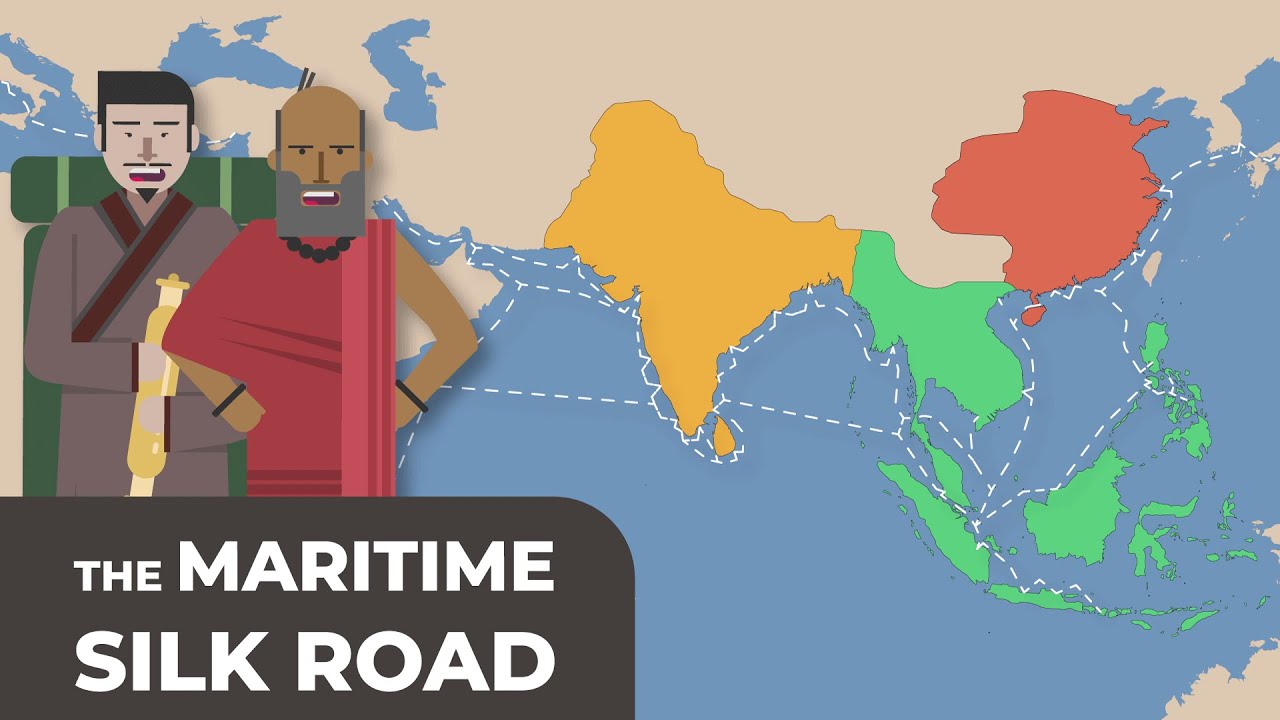
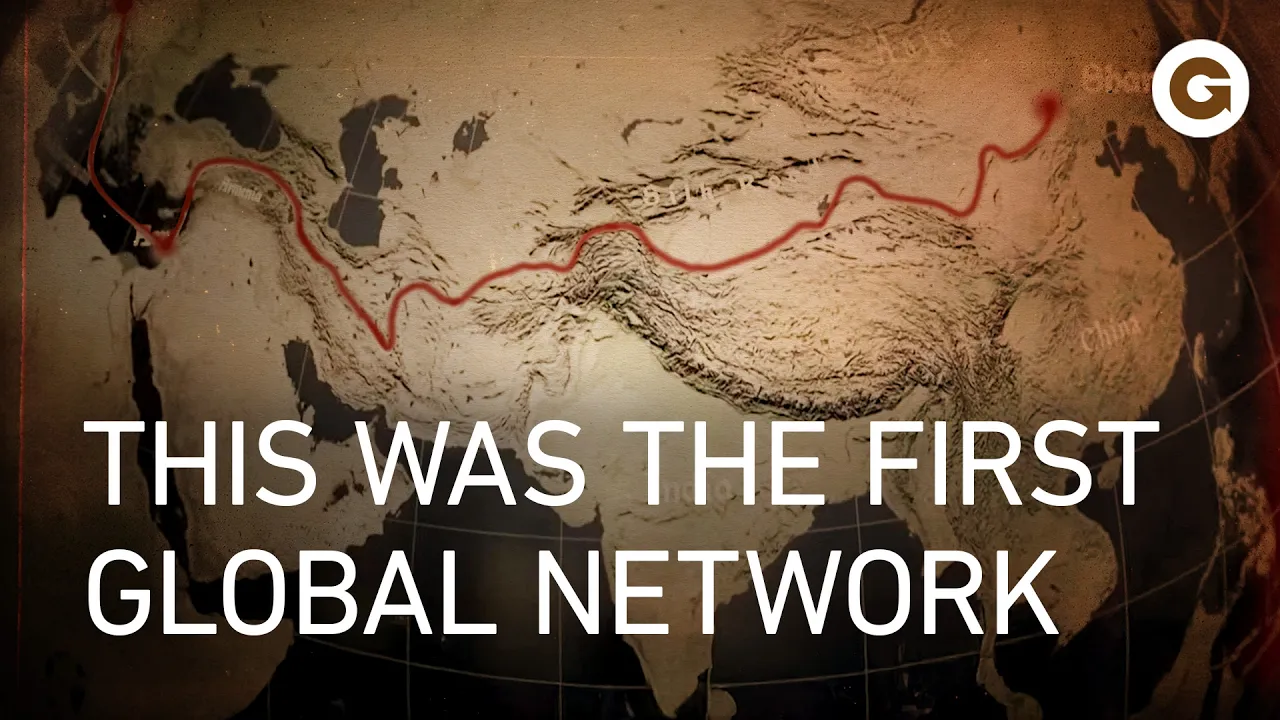
And you can see you've got all sorts of routes through uh central Asia uh and you've got roots the maritime routes down the Red Sea, down the Gulf, around past the straits of Malaca to China and so on. And this is often presented uh as uh description of the seaw roots as if all these things were happening at the same time.
And I want to suggest that they are not.
What I do the first my first piece of evidence if you like is to look at the roots to the far east as described uh by an Arab author um Iban Koradazby and I'll just just bring his name up because it's Imazby is um you see about halfway down there. Um and now he is an important figure because he is an administrator. He's uh working in the court of Baghdad in around 8:30 8:40 almost exactly the time and I will come back to this almost exactly the time as the famous Bellaton ship got wrecked on Java this is the world he's coming from and his job uh for the bureaucracy the busi bureaucracy was as a what sometimes called a postmaster uh basically somebody who organizes information systems and so on and so on.
So so he knew what he was talking about.
Uh his book is not well known as it might be because it's not that full of entertaining anecdotes. In fact various of his contemporaries in advanced political culture said but it's it's full of facts. It's basically boring only of interest to people who are carrying bundles of letters around and so on. For us it's extremely interesting because he is no doubt he's a shrewd contemporary innovate uh observer and if you plot his descriptions of the roots of uh with the between the east and western Asia if you like uh during this period this is what you find and you will see at the I think I've probably got a pointer here which might make a bit easier.
Yeah. Um I'll do it on this map.
No, that's not anyway. Mish as the Arab said we'll have to get by without it. Um you can see that there is indeed a northern silk road or northern route that goes over land and uh being a Baghdad abided Baghdaddy bureaucrat of course starts in Baghdad. Where else would you start when you want to describe what's going on in the world? And he starts and he describes in quite a lot of detail the routes to the east through Hamadan, Ray, Nishapur, Samand as far as Tash Kent and as far as the upper reaches of the Oxus River Valley and then it stops.
There are no places beyond that. People don't go, merchants don't travel. there are no places of um uh of of commerce.
But and then he's when he's finished discussing this, he goes back to discussing uh the seaw routes. And here he takes us all the way down the Gulf uh and obviously around India and and across to the straits of Mala and then up to southern China. He knows all about these things and he tells us about them and so on and the implication is surely that while time he is writing then uh the the routes to India look like uh this you'll also notice just at the side that nothing happens in the red sea uh everything happens in the Gulf through sir to and and and so on and so forth and that again is something we ought to uh take cognizance of.
So the argument is I'll just uh give you some broad history detail that the the argument is that there had been a great tradition of uh bringing goods and particularly silk and silk is particularly interesting through the overland route from China since before the tongue period and but particularly in the first phase of the current empire um bringing goods and that suddenly around the year 750 this stops and as I said disruptions are always a good place to begin when you want to find out how systems work and so why is this disruption occurring? Why do people no longer bring goods on the overland? um route and here I'm related to again perhaps I'd go down to the sources that I've been using people who know much more than I do and particularly um I'm interested here in the work of um Helen Wang and Valeri Hansen Helen Wang who works at the British Museum and uh particularly as elaborated by Etenier his book so traders you will you'll see up there and it's really these scholars I'm perhaps everyone knows about this already these scholars who concentrate on on silk and the importance of silk and above all the importance of silk as an alternative currency the importance of silk as a way of transferring value from one part of the world to another. This silk is uh in what is rather strange English word called bolts. It's just wrapped up bits of silk. There was an example of this in the British Museum exhibition and it was quite striking because when you read in in the imagin exactly imaginary that that Richard was talking about then you imagine that these silks are beautifully patterned garments and and you know finely woven and gorgeous colors and so on. The bolts of silk that are found on in the archaeological evidence look like stale French bread. They're about the same size, more or less the same color.
There's no vestage of decoration or uh anything on them at all. This is raw silk act like really small. It's not the sort of thing that you can show to people in the bazaar in other words to and and and do business like that or bazar in some account. Um it's a way of transferring value. Why does this why is this important? Um because uh the tank like other early empires was concerned to secure its frontiers and to make diplomatic uh contacts. And to do that it required a transfer of sources resources from imperial uh systems to uh nomads and other uh neighboring peoples.
Now the Romans did exactly the same. The Iranians did exactly the same. And the way they did it was by minting precious metal coinage.
Mostly in in the Roman um context it was mostly gold by the late Roman period. Um in the Iranian context overwhelmingly silver those dirhams or drowns which were the the dollar of early medieval trade throughout Western Eurasia. But the tongue dyn I know I'm traed talking about things I don't really understand completely. U was unable to produce this sort of precious metal coinage. There were lots of coins made uh but they they were made of they weren't made of gold and silver and as a result they were uh extremely inconvenient to transport in large quantities. They were too heavy. They weren't worth enough. Silk was a much better mechanism for transferring value than the coins that were available to the Tang administration.
And so this is how the system worked that the um the silk was transferred to central Asia and given to either uh outsiders as diplomatic gifts or to pay uh soldiers and administrators in Central Asia. But of course you can't eat silk and you silk has to be as it were broken down into into uh usable quantities. And this is where the Sodians the uh Sodian uh princes of Central Asia come into this because Sian businessmen of Central Asia come into this because they could buy the silk and give in exchange those goods that people wanted. uh whether it was very simple stuff like things to eat and drink or or whether it was uh the things that people in the west could produce horses for example um and uh even even woven textiles and so on. So the point and this the Solidian merchants then transferred moved on to western Asian markets to Iran and to the Baantine Empire. And in fact the what I like to call say the classic Silk Road Silk Road was a product of quite particular um political circumstances. It wasn't as it were a natural entrepreneurial trade. It was a trade whose boundaries and objectives were defined by imperial policy. And of course if that imperial policy changed for whatever reason why then the whole uh system might find be completely reorientated.
And this is what happened in the middle of the 8th century.
And it happens because of changes at both ends as it were of the thought. And I just draw attention to the tongue end as it were because this there's nothing I can tell you that's new here. But the Anlucan rebellion and the disturbances that followed it meant that the tongue system of transferring value, transferring wealth by uh soul trade to the people on the northeast frontier, northwest frontier of the Chinese empire essentially stopped and uh it wasn't and they they were unable because well all sorts of political problems near a um and that they were unable to continue this mechanism and so on. So at the tongue end the things that had generated and made this trade possible uh were shifted uh were were changed but there were also important changes in the west and here I want to come on to something I'm on as it were more familiar and safer ground uh than I am in in in the disturbances in the tongue empire and I want particularly to draw attention to changing patterns of demand in western Eurasia.
Now it is seems to me to be a problem that we have with early medieval economic history. The economic history as it were of the uh first millennium of the common era and particularly the second half of the first millennium of the common era that economic the discussion of economic history is almost entirely a supply side discussion.
people work on what goods were produced.
Isn't it nice? We got a new way of of producing pottery which is much finer and more elegant than the way we used to do it. Um and and we cultivating all sorts of crops which had previously just been very specialist niche products and they're going much wider as if this happened in a sort of as it were an economic not a vacuum so much an economic closed circle and so on. What so much this discussion lacks is a proper investigation of the demand side.
What do people want and how can they pay for it? And if you're trying to work out how a trade route works, then you have to locate not just the producers, but you have to locate the customers as well. And customers are defined not just because of what they want and and so on, but whether they can pay for it or not.
And what happens in the mid 8th century, it seems to me, is that the focus of demand changes uh a great deal in Western Eurasia.
What they want is different. Where they want it is different, and how they pay for it is different.
Perhaps the most obvious thing is the development of seric culture. That's the cultivation of silk and so in the uh in western Eurasia in Iran and then in the bazaine empire and so on during this period.
Silk in fact no longer has that um rarity and distinctiveness that it has. When this starts going there's all sorts of stories which we all know about how uh silk worms were transferred or smuggled out of China inside bamboo stems and so on. Um all these stories uh are probably untrue as they stand but they do point out a certain way that people have of looking at things and a certain way in which they uh understood them. So demand for silk that's raw silk in uh the west is is largely uh replaced.
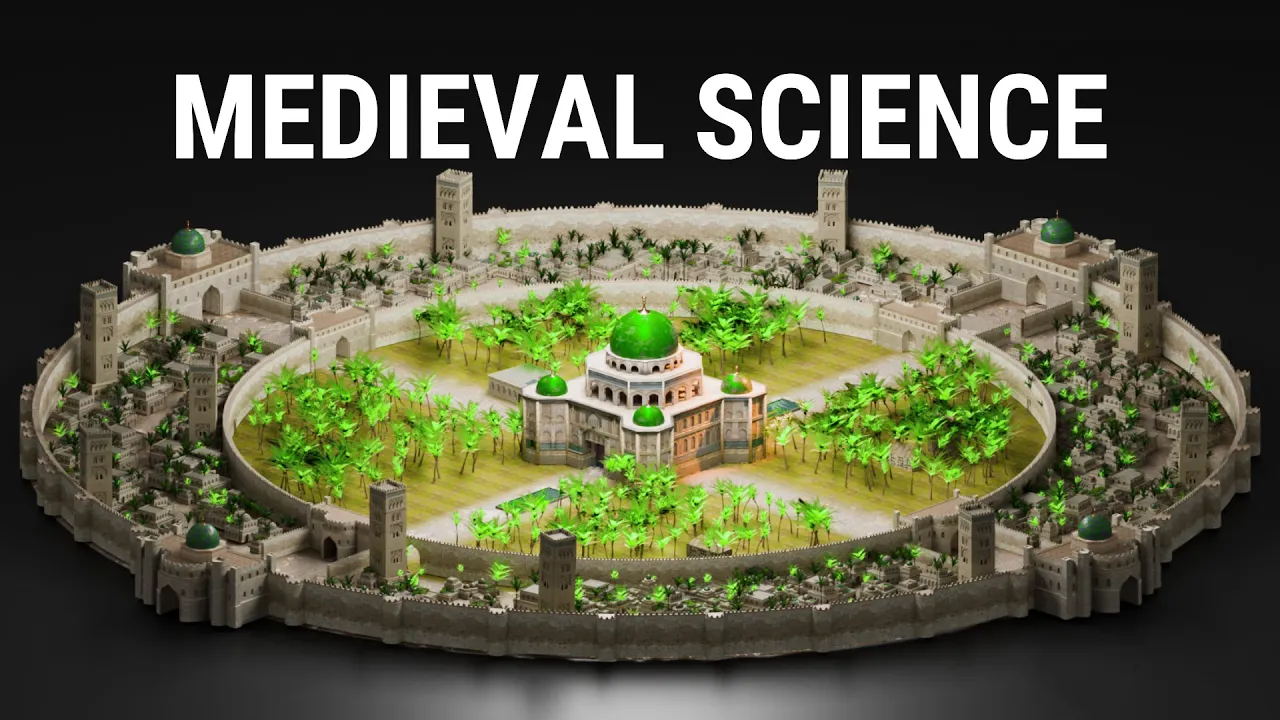
There is also the question of a new imperial power and the ambassad shall we um the foundation of Baghdad this is where the globalization of Baghdad in the title comes in u had a profoundly uh different um had a pro profound effect the city of Baghdad the Abas city of Baghdad. We know quite a lot about from uh literary sources, quite detailed literary sources. Who lived in what street, where the book bazaar was, uh where the water came from, all this sort of stuff is described, but it it remains nonetheless an imaginary city. Nothing of any consequence remains of a bus of the first two or three centuries after its foundation in 762. There all sorts of reasons for this. The fragility of the of the building materials, basically mud, brick and plaster. Uh there's almost no stone employed at all.
So you don't get those great wonderful ruins that you see for example in in in Roman Syria and in Bazantine Syria and so on in in Baghdad. But this is not the purpose of this inquiry. It became uh very rapidly a very important and rich city and it became an important and rich city because of the fiscal system which had been of the early Islamic world. a fiscal system that had been originated at the time of the first Muslim conquests uh uh in the 630s and 640s but which was developed and refined by the Abbasid period. The Abasi government when it was working well, which it did for 150 odd years, uh collected large sums in taxation and increasingly as time went on the taxation was collected in coined money.
uh that is so in the early days per taxation was paid sometimes in as it were wheat and barley and blah blah blah uh goods in kind in fact by the period we're looking at and by say the year 830 let's go back to that year when I was writing and the the bellong ship was sinking uh when we go back to that they taxation was paid in coined money and it was paid to people who were the function of the officials of the employees of the government and this most of the the largest number of these were the military. Military salaries were by far the largest uh government expenditure but other people too had uh uh uh salaries. the bureaucrats because if you've got a system of collecting taxation and paying salaries, then you have to have a significant number of people who can read and write and add up and they have to be professionals at knowing who's got paid, where the tax is coming from, who gets paid and all these other things. It's very important for the development of that secular culture which is characteristic of the um of the Baghdad of this period. But again that's something that we should just uh leave on one side. It's a very big market therefore because of the centralized fiscal practice. Furthermore, it's a very consumerrist society.
I suppose all societies in various ways are like to be consumerist but it's very consumerous in the sense that conspicuous consumption was the way in which you defined your status.
uh you showed that you were part of the elite. You were showed that you showed that you were a successful person by displaying stuff uh by displaying uh goods and so on. And there were this came in lots of different uh ways and lots of different circumstances. Um the one which has concerned us most of course is the question of textiles.
Textiles which you could wear in the street and show people how um and uh how well you were doing. And this is textiles is something you I'll come back to a bit long. But there all sorts of other forms of conspicuous consumption.
what sort of animals you rode very important that if you were and the highest status things that you could ride in the streets of Baghdad were were mules um not horses the horses were super for you know for for warfare and indeed for racing but yeah but but uh mules they were because I don't want to go too hard down this road but but mules have a limited life and they don't produce any offspring So a mule is a mule as long as it can work but it doesn't have it doesn't breed more mules you know I don't want to make this point obviously what else you are you going to to do um you are going to demand exotic foods there is a lot of discussion in the Abased literature of this period about cookery and there are quite elaborate cookbooks uh written and and you Some of them still survive down the present day and they're basically about uh what is highclass food because highclass food is obviously something that uh is part of your conspicuous consumption. High class food comes in two things uh two ways. Firstly, it's food that takes a lot of preparation.
You have to have servants who can work all day in the kitchen making it. And secondly, it has to be concerned with rare and unusual ingredients. Things that come from far far away, things that are very expensive. You can see where this conversation is is is is uh leading on to and the so uh food stuffs become a big source of uh demand in Baghdad. These cookery books are terribly elaborate and just like the cookery things that you get in in in in in in Sunday newspapers in in in many countries. They're not cookery books are not about what you actually do. They're sort of aspirational. They're about what you ought to be doing and what distinguished and discerning people do rather than actually giving instructions as to what you should do. So the there are cookery books. All sorts of other things are sucked in to the demanding markets of this great city. Take rock crystal for example. Rock crystal is a a quartz like stone that can with great care and skill be carved to make wonderful uh jars and glasses and so on. Um and rock crystal however is not just very difficult to work but it's very difficult to find. Now what is clear from recent archaeological evidence is that rock crystal was being imported into the market of Baghdad and later in the market of Cairo and something I'll come to um from Madagascar.
Okay. So the economic pull of the Baghdad market, this is mine coming back to globalization. Uh the economic pull of the Baghdad market included Madagascar in the world system in a way that had absolutely not been done before. And if you want to know why the people of the Kamora Islands are Muslims to the present day, then it's because they're on a staging post to uh Madagascar.
And so the market of Baghdad, this is a city of half a million people. We think the the efforts to define the number of people who actually lived in it. Uh it's it's it's of course very difficult and random. It was probably a city of half a million people. Um and quite a lot of them uh actually had money to spend on not just staying alive but the little luxuries of life. and uh things that went beyond what they actually needed.
And this generates demand whose areas uh whose tentacles as it were stretch far beyond the boundaries of Iraq and Mesopotamia and so on. take one little item of um food stuffs and those are those very small black spices known as cloves in English. I'm sure you all know and there must be all sorts of local words for clothes. Um now cloves are found in the cookbooks of Baghdad.
Cloves indeed occasionally very occasionally found in royal cuisine in Western Europe in the early Middle Ages.
Cloves until the 19th century when cloves were uh were started to be cultivated in Zanzibara and so on.
Cloves were found in two little islands off the Indones in the Indonesian archipelago.
That was where they came from. They didn't come from anywhere else. Now, no Muslim merchants that we know of ever went to these two little islands.
But the whole the demand of Baghdad created generated a cabage. And by cababotage we mean trading that goes from one little ship to one port and then change. So the the same goods actually try go through a lot of different hands. There's not one ship sailing from uh uh from northern Indonesia to Baghdad and and so on and so forth. And so the market of Baghdad generates a lot of custom and so on uh a lot of business and generates all sorts of new business.
Now um Baghdad is situated well we all know where I just show you another picture another hypothetical reconstruction of Baghdad of course in the uh where the rivers tigers and Euphrates come close together and so on and when Abu Jafal saw that KF was founding in the year 762 there's quite a lot of discussion in the sources people saying you should build a tower you should build a city there and but one consistent feature is connectivities.
It wasn't built in a place that was easily fortified though some chat about how rivers can be used as moes and so on. uh it's not the discussion is not about um the uh fortification the discussion or the security that the discussion is about connectivity and the sources make it clear that uh goods could come from everywhere down the Tigris and Euphrates rivers and and so on which which was mostly food stuffs grains and things to feed this enormous population.
uh but they all they sort of lay emphasis on goods from India and China the Indian Ocean area come to Baghdad they don't talk about things that come on an overland silk road that doesn't mean that um the uh central Asian parts of the Islamic uh domain uh were econom ically neglected and so on. It's just that the lecture of commerce changes. Now I let's go back or forward.
It's a a famous reconstruction of the the history of Baghdad with the round city in the middle and the various canals and rivers and so on which I've written about in other places but I don't want to do that. I want to go back to um Iban Kav's uh map. the fact that the economic um center of uh the western Eurasia had shifted to the Mesopotamian river valleys meant that the maritime routes had preference had precedence over the overland routes. People there were still a lot of things made in central Asia in places like Samakan Bkar and so on and so forth. But when we read the list of these uh things uh that were created uh there were all sorts of metal work and goodness what else and and there are fabrics but the fabrics are not silks.
The fabrics are things like wool and felt that compressed felt that were so valuable and important uh to keep out the central Asian cold. uh things like furs and the slaves that came along with with with furs and and and so on. The manufacturing and commerce of Muslim Central Asia in fact was reorientated away from the commerce with uh China and East Asia uh towards the commerce that went from uh Muslim Central Asia uh to Iraq.
And this commerce was for all sorts of things. One of the most intriguing things I just said is the dried melons of MV. Now the dried melons of MV may still exist actually or still produce. Dried melons and MV are labeled as one of the great imports to Baghdad from uh Central Asia.
And they are exactly melons that are put in lead caskets and transported from there to be to feed the foodies and the gourmet of Baghdad because those melons are just that little bit better than the melons you can draw grow outside Baghdad. And I draws to your attention because it's a measure of economic complexity that goods can be transported very long ways away because they are a little bit better than what you can grow at home.
It suggests um an ease of transaction, an ease of transport, and it suggests a bubble that you've got a reliable market for the stuff. And so these little economic indicators are the ways I think we can use these things as a way of getting a handle on uh economic activity when we don't have the sort of statistics and and the sort of graphs and so on that modern economic historians would use.
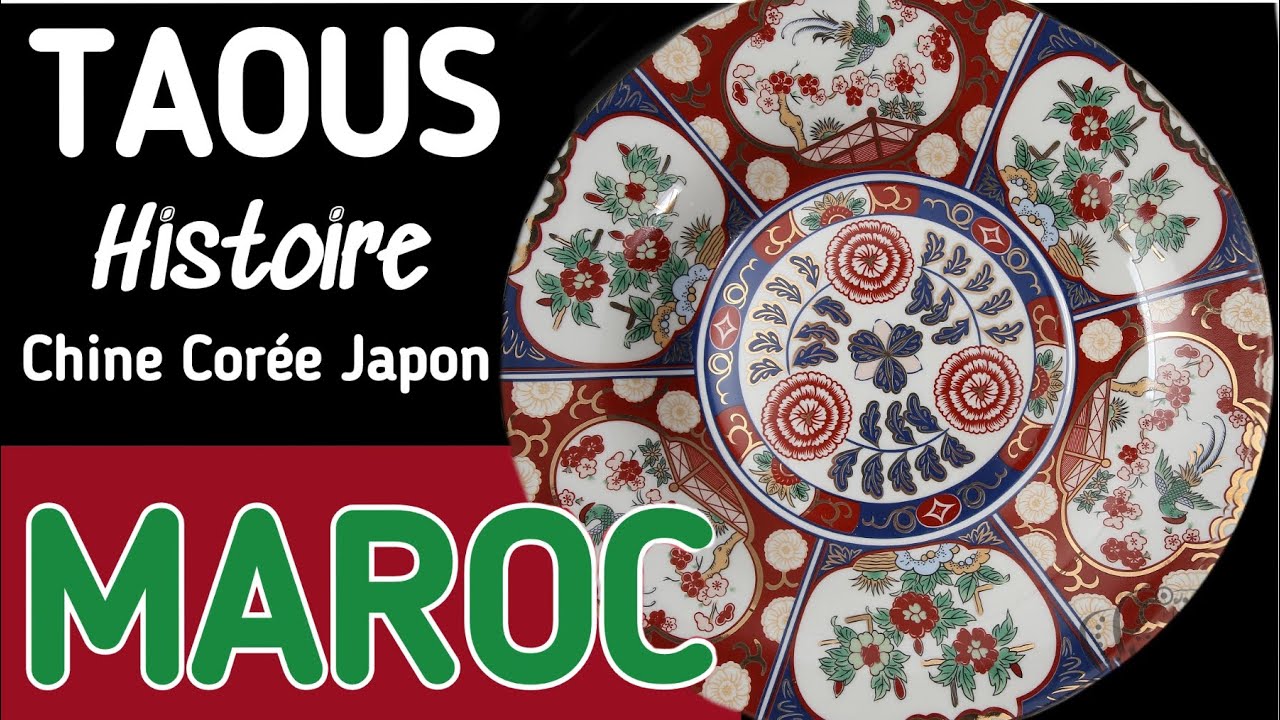
It's the the so we have a reorientation of central Asian trade. Now that doesn't mean that people didn't do things on as it were the classic silk road. And here again I'm treading on thinking all the famous paintings and all the literary treasures of Dun Huang for example uh are 10th 9th 10th 11th century but they relate to a commerce and connect connectivity that goes between Dunang on the western frontiers of China and as it were central China things don't go from Dun Huang to some account they do go from Dunwang or come to Dunang from as it were northern China and this is again a fundamentally changing thing. Now amongst the goods that the uh this complex economy was demanding were uh ceramics and here I want to come to Baton and I'm sure this is familiar to loads of you um the but it it's the Bellison shipwreck is extremely remarkable because it here it's a reconstruction of the ship need to say it's not um because uh because it illustrates the reality of these sorts of connectivities. Briefly for those of you who don't know about it, the Bellaton shipwreck we know uh well reasonably certain there's a certain amount discussion about uh was created in the Gulf. It's it's a sewn boat I held together by by by um by string basically um as opposed to by nails which is a Mediterranean tradition if you like. Um, and it was it sank off the coast of Java near a village called Balaton, which is why it's cool. And, uh, it contained in it some 60,000 pieces of Chinesemade china.
And this is staggering when you think of the implications of it. And furthermore, this Chinese uh this Chinese-made China, sorry, that you find in the Batum ship was not the sort of goods that were being produced in China for local demand at this stage. It was not what Chinese people were using. It was, I'm tempted to say, cheap and cheerful. It's got these very uh vivid patterns on it. Um and it's obviously table wear. It's not just sort of um uh you know stuff that you grind grain in or anything like that. Um and it's it is made in northern China a long way from the coast and it's made to cope with a foreign demand an outside demand which is strong enough and reliable enough to make it worth producing all this stuff.
uh and the knowledge that if you if it doesn't sink uh which of course is a disadvantage but if it doesn't sink that then there's enough of it to then there is a big enough market to mean that you're making a profit on it and this is another thing it's another way in which we can approach things like the size of an economy without having any statistics to say that each year 200,000 Chinese bowls or anything like that. But we can see um that this was a large scale and continuing uh trade in ceramics and of course a trade by sea.
It was a ship obviously. Yeah. It was it was it it was um being transported by sea through the Gulf and and and uh so and Iban Kadby and his contemporaries come back to him talk about what was imported from the Far East as they would have seen it and it contains things like alo wood and all sorts of uh spices and rare and exotic things and it also includes silk but the words for silk are different.
It's not the basic Arabic hara uh that's being talked about. It's talking about woven silk and silk that is in fine fabrics i.e. this trade is not the shifting of as it were raw silk as a way of transferring value. It's much more what we might think of as a conventional view of the the silk trade that it is a woven and manufactured fabrics being transported to uh the Middle East because people in the Middle East could make their own raw silk but Chinese uh material was of a quality and so on that made it worth uh transporting on its way. So it's not just that the that silk is going a different way but it's that different sorts of silk are are coming in different ways and I think that points to an important point sorry makes an important point um and finish up with this the role of the state what the um Muslims of the period would have called the sultan which is a word that's used for government authority.
ity and so later on it becomes the title of a ruler at the Ottoman Sultan and so on. But Sultan um up until the mid-1th century is a word that's used for the government. Um the overland sea trade silk road was a product of government action and a product of the way that government financed itself and moved value around from one part of the empire to another.
the trade that we're talking about uh that comes to Baghdad was not a question of government initiatives. This was not a trade route that was controlled by the uh by the government. One thing I is in this whole discussion that that sort of I think completely unre you read about people saying oh it was all about control of trade routes.
Governments had to control trade routes that's why they're sending military expeditions and so on. I think this is in almost every case untrue uh that control of trade routes is not how it worked and I could go on talk about that. What the Sultan in Baghdad contributed to this trade was not sending ships. There were no government ships. The the the Sultan played no active role in commerce at all. It didn't do that. still less there was any as they were naval protection or sailing ship uh to to make the seas safe or anything but the government did the sultan did employ contribute one thing which is much more important than any of those things it contributed a large prosperous and reliable market and that's what generates economic activity rather than this sort of economic activity uh rather than um uh government supervision or taxation of trade and and and so on. And this is what I mean and this is why I introduced the idea of the globalization of Baghdad as an important way of understanding the different sorts of trade and the different ways that trade moves during this period. I I could go on, which I won't, but I will just for a second um to talk about the way in which trade shifts from the Gulf to the Red Sea around the era thousand of the common era. And this is um to do with the the way in which Cairo and Egypt take over from Baghdad and Iraq as the main markets in the Middle East. And that is connected. Finally, this really is the end. I'm not going. It finally connected with another sort of globalization and that is the coming of the Franks and Frankish merchants by which we mean Western European merchants. The coming of Frankish merchants to the Eastern Mediterranean which then gives rise to a whole lot of new trading patterns and so on. But so I hope I've it's probably I can't help feeling that a lot of this must be familiar to lots of you already. uh but I'm trying to I think make points about the s but also trying to experiment with different ways of writing and thinking about economic history in a pre-statistical era. Ladies and gentlemen, thank you for your attention.
[Applause] Thank you Hugh for this um rich really quite extraordinary account of how the market of Baghdad with its sort of unprecedented level of consumption and maybe even a protoconsumerrist economy as you say reshapes global commercial networks um in the 8th and 9th century.
Um, so we'll have so if you'd like to come take a seat. Sure. Um, and then we'll have Professor Chen um respond for a few minutes uh before turning to Professor Morton.
Thank you for professor uh Kennedy's wonderful lecture uh and he has so many uh excitements on on me. Uh firstly it was said that the cookbooks were very important and I think so I think that it not only reflect the cuisine but also the mixture of different cultures and and today we in Hong Kong we can eat uh a lot of food from uh from the other countries. Uh last last night we tried the cuisine from Thailand and uh actually I I think that in Baka because it's a very important metropolitan is so we so uh the people living there can try a lot of food from the uh the other countries. uh but I want to highlight that uh that that uh that the cookbooks uh it also reflect the exchange the exchange of spice because the spy this price uh uh is the is one of the most important uh common common u the most important goods uh in the maritime silk load and I secondly I want to uh use your map This map uh is very important uh is is the looks to the east according to Iben Halat halat and actually uh it's the maritan silk load the so-cal maritan silk lo according to uh today's scholars and we we can we can see that uh the there's a very important part called Hung Fu. Hung Fu is actually Guang Guango. And uh we can and the archaeologist fight some release of u the Yas in in in Hungu or in Guanjo because the Muslim merchants they came to Hungu and they found the trading diasporate uh there.
So uh it it reflects the uh international uh tradings and also secondly you you highlight the value of coins especially Chinese coins and this Chinese coins is name is kin tomb uh we we find some uh kin tomb or Chinese coins in the bon super you have highlights it value uh but actually archaeology ologist find these coins uh it total number is limited only hundreds of transit coins in the uh in distrib so I think that is it was not it function was not for was not as money but but for personal uh collection I I don't think that it was money because at this time uh for it trends we will uh the trans people will use silk or pling or or cam mix for the uh spicy or other foreign groups they didn't use coins for exchange I I this is my it's my opinion and uh and third you you you said that the snammix it was uh very important and we we we have many archaeological evidence uh in the bon shux we we we found that the post lings in the this shux uh they are from the uh tanga or from uh or from uh uh northern China. So we can see that uh this uh trade of pling it uh collected the the inner market and the international international market uh together. So it is very important for the uh economics in the uh in in Kong China and some scholars have done uh some study in this field. uh and uh professor uh Chenzu of uh Hong Kong University he and his team had uh done uh the latest study in this field the the pattern of Salmic trade and and force I I I it's my question I I just want to ask you that why the Muslims adore the Chinese postling is it for um religion purposes or or not I And I think that they they they use ethanics is for uh is for clean uh cleaning because they they want to uh clean before doing the religion uh rise.
Yes. Yeah. Uh not not not only for the daily purposes and and and another question because the time is limited I I want to ask you the last question. Uh uh some scholars argue that the some some scholars are argue that the that international merchants in this period in this time period they are all coming from uh from Ilang they are Persian merchants. Uh do you think that this ideas right or not? they they think that they they are not they they are not the all merchants but Persian merchants.
Do you think that this ideas is right or not? And this is my comments and questions.
Thank you so much. So um I'll have Professor Kennedy respond to you both together. So if James um Professor Morton you come up and share your your thoughts and response to the talk. Uh hello all. Well um thank you very much uh professor for that fascinating talk.
I think um you made a number of very important and interesting points there.
If I can also make use of your slides for just a moment. See if I can uh find the slide. Here we are. So when people uh this is something that professor Kennedy said at the start of his talk when people think of the silk road in popular culture we often have this image of like an actual road a road from China perhaps going all the way you can see up in the top left corner there uh Byzantium. So I I've been asked here to give the kind of the response from the Byzantine perspective in as far as I can. Um, and this can create the impression that it was possible for a merchant to start in China and maybe travel all the way to Bzantium or start in Bzantium and travel all the way to China. Uh, and indeed this was possible at some points in history. Uh, particularly we can think of people like Marco Polo um or the uh the Chinese notorian Christian monk Robin Salma who ended up in Europe. Um but it was very much the exception I think and I think you made two points that are very important about how uh the Silk Road was actually shaped in practice, how it was kind of contingent in different historical periods on different factors uh particularly on the existence of important markets with a high demand for goods from a long way away. Uh so of course Baghdad by far and away the standout market um in the region which drew in uh these various lux well luxury goods and also everyday goods as well.
Um and also market access too is a very important factor. Um so I just because I don't have much time and I want to save a little bit of time if possible for questions from the audience. Um I just want to highlight um a couple of things to maybe illustrate these uh factors from the Byzantine perspective. Uh so um one I'd like to start with is paper. Um now we often think of the silk road in terms of a a way that uh goods physical goods were transported from east to west or west to east. Uh but it's also often thought of as a way that ideas and technologies were spread. Uh and paper is a good example of a technology that was in a manner of speaking spread along the Silk Road. Um but it was spread exceedingly slowly along the Silk Road.
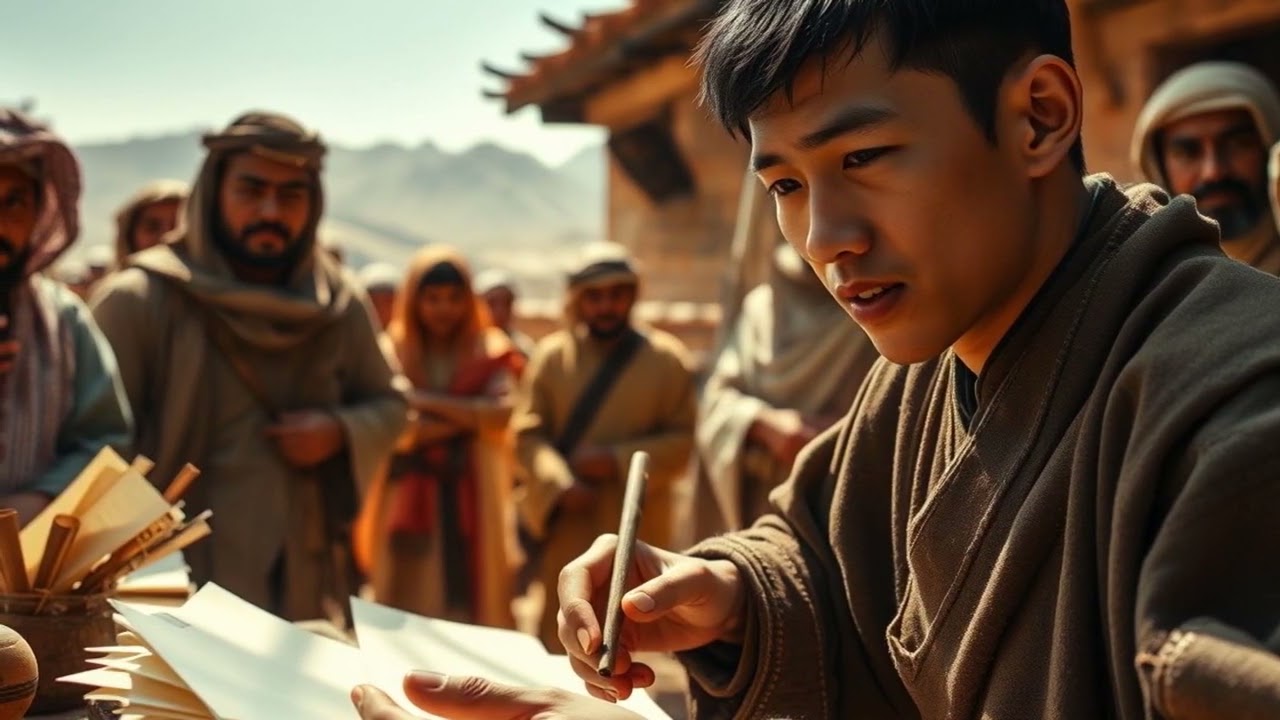
Uh paper was invented in China probably uh around about the first or the 2nd centuries AD. Um it over the following centuries spread to central Asia and then according to the traditional narrative in 750 uh the Islamic Arabs encountered the Tong Chinese in battle uh captured some Chinese soldiers and craftsmen and learned about the art of paper making from them. Um in practice what probably happened actually is that the Arabs just learned about paper making from the local central Asian peoples who had already themselves learned about it from China. Um so by the 8th century the ability to make paper had spread to the Islamic world and then it spread on to Bzantium by around about the mid 9th century. Now there's an interesting thing about what the Byzantines called paper. They did have a Greek word for paper itself karti how is also often known by two other names. Um one of them vanvvicon and the other one vagdaticon. Now, Vanvikon means from Manbage, which is a town in Syria, and Vagdaticon means from Baghdad. The Byzantines had actually received this uh technology of paper from China, but they didn't realize it.
Um they actually just assumed that they had received it from Baghdad and from the Islamic Arabs. So um this is a kind of an interesting corrective I think to the the stereotype that things just flowed east to west as they were along a continuous road. Um whereas in reality we're dealing more with various different indirectly connected and indirectly integrated markets. Um the other thing I just want to uh finish on um briefly before we go to the questions and answers um is that um Constantinople, the capital of the Byzantine Empire, which uh I do my research on. Um again, it has the stereotype of being an incredibly wealthy trading city, trading hub, um that received these luxury goods like silk, spices, and so on from the east, uh where um Italian merchants could then come and purchase them and trade them on into Europe. uh and this is indeed true but again if you look at the economic history of it this didn't really start to happen until the 11th and 12th centuries which is as professor Kennedy mentioned at the end of his talk when the market uh had started to shift from Baghdad to Cairo largely as a result of increased demand from Western Europeans from the Franks. So again this is another example um of how the shifting of markets and the shifting of demand I should say markets with demand for goods can then also affect uh the wealth of other cities. This is really how Bzantium how Constantinople came to be such a wealthy trading city. Um anyway uh time is short so I'll leave my remarks there. Um I'm afraid I don't have any of my own questions to ask you.
Uh I found your talk uh so convincing um and persuasive I don't really feel the need to ask any questions. So I'll say thank everyone else. Thank you.
[Applause] Thank you James Nishwan for your very generous um comments and responses. Um and I'll give Hugh the opportunity to respond to you in turn before we then open up the conversation to questions from um all of you. No. Uh thanks for for both your comments and and so on. Um I think the whole business of coinage that professor was talking about is very interesting. I'd like to to to know more about this. The question of the design of the uh of the fabrics of you know of the pottery of the Bellaton pottery and so on is is is a very interesting one.
Um I don't think it's to do with Muslim susceptibilities at all.
when there's it's a sort of curse really when looking at the history of the Islamic Middle East. We someh assume that everything is to do with religion or that religion is what what most people thought about and so on and so forth. Um I think there's lots of evidence that most people were indifferent to religion or it was something that passed them by. You know, we mustn't we mustn't necessarily think what there is in the cookbooks and perhaps reflected in this is a concern for hygienic and elegant eating.
And that was part of good manners and that's what part you made you a proper person. You shouldn't spit in your food.
You shouldn't um cough all over other people's food. You should wash your hands before you eat and things like that. is very much part of what being a a properly brought up Muslim was about.
But it's not really about religion. It's about social hygiene and and and and food hygiene and so on. So I I mean I'm perhaps I'm making too much of this. I I think we must try, you know, avoid talking about Islam when discussing a history of the Middle East too much, but is it it can give us a a perspective that doesn't reflect so much on everybody's everyday life and experience and thanks for the remarks about paper in Baantium. You know, I had no idea I mean you of that. whole question of adoption of paper is it oh yeah I've probably said enough but it's a question of the Baghdad market and the um with all the questions of adopting adapting and adopting new technologies there are two things aren't there firstly there is a new technology to adopt the second is there is a demand it satisfies a demand within the society it satisfies a need and if it doesn't satisfy a need it's just a curiosity that oh well quite interesting but not enough sort of attitude to it and so on. The Abbasid administration uses gigantic quantities of paper like all bureaucracies and you know it needs huge amount of writing materials and so on. If that sort of demand hadn't been there then nobody would be interested in paper at all.
Well, your your your point about the paper is is in use in those areas of central Asia that became Muslim before the famous battle of Talas and the capture. I think but thanks for both your comments.
one um important point. Um the event the advertisement for the event said that we would conclude at 7:10. Um and so those of you who've been promised um the opportunity to depart at 7:10 um I'd like to say that that opportunity still stands. So um if you know please do not um feel shy if you do need to leave if you have other plans. Um, but of course I'd like to take um, you know, 20 minutes or so, maybe up to 7:30 um, to to to handle or to to deal with questions from the audience. Um, so do we have any questions for you? I see one up there. Oh, also the the button in front of you, the um, this high-tech device. If you click on that button, then it lights up green.
I must warn you that I'm a little bit deaf. I try to pretend not to be, but it is a reality of that. And so you need to speak a bit clearly. Um, Professor Kennedy, thank you for your presentation. Can you hear me? All right. Yes. Good. You know, your map is quite interesting because what it misses is Africa and misses Europe. Of course, what we're talking about is the Silk Road, but at the same time, you you if you look at if you think about Europe, we we talk about the dark ages. So you've got the contrast of the dark ages of Europe around the same time when we were really flourishing in trade and this silk road and another flourishing part of trade is if you take the Marian Empire in Marley where they had in Timbuktu which is topical at the moment they had a university there around 1,250 about 20,000 students and it was the first university I think in in Africa and they were in the heavy industry business at this time. Um when the Silk Road was going on, their he their heavy industry was salt mining and gold and and they they transported um salt and gold all the way over from West Africa all the way over to Mecca and and when they they had a caravan trail of gold coming in and when it arrived it collapsed the gold market.
That was quite interesting. But that was a very interesting trade route that was going on in the Australian and the in the African route as the Silk Road was happening. And so and then then you've got the at that time you've got the dark ages of Europe when they were really really thick and not doing very much and it took a few hundred years more before they started getting in on the trade route you know 12 13 14 1500s and so I have one question how do you compare um the trading city of Baghdad say to the trading city of Mecca or or or or Cairo?
And then before you answer that question, I just bring us forward to today in Hong Kong because as as I'm sure you know, we in Hong Kong are very interested in Baghdaddy trade because we have a lot of Jewish recent immigrants from Baghdad who went from Baghdad to Bombay to to China to to Shanghai then Shanghai to Hong Kong and of course the Cissoon family, Kaduri families which are you know still very relevant today in Hong Kong. This is very it's very interesting topical subject. But getting back to the question of Cairo, Mecca, Baghdad, they were all great trading cities. How did you look at how would you compare those three? Well, um I just you got some very interesting points. I had these maps made because just to make a particular point about routes from uh Iraq or from Western Eurasia to the Far East, I could have had a whole another series of maps made. you're right to talk about African trade and there the trade up the vulgar as well into what is now uh Ukraine and Russia and so on is is booming at the same time. It's just the limited number of things you could put on a map without getting it very confused and and and so on. But you you're making a very good point there.
Um there are two things here. Mecca was an important center of trade despite what various scholars like Patricia Krono have said and so on at the time of Prophet Muhammad. Yeah. Um and that was the the trading and particularly the export of precious metals from mines in the hijaz was a major uh feature of um or major economic backdrop if you like to the emergence of Islam.
By the time of certainly by the late 7th century, the early 8th century, Mecca had ceased to be a commercial center except that the Hajj people coming on pilgrimage did a lot of buying and selling. That's one of the ways they financed the the pilgrimage. So when the pilgrims were there at the time of the Hajj, uh there was quite a lot of commercial activity, but it was connected with the Hajj. It wasn't Mecca had never very many people. I mean there's no water for a strong. I mean it's it's it's a very improbable place for a city. Caro is is is the great thing. But this is essentially this is sequential.
Baghdad falls in the 10th century. Caro rises in the 10th century. And that's what drags the uh sea routes from the Gulf to the Red Sea. Even though um uh indeed as Richard was telling me with his experience of sailing uh the Red Sea is a terrible sea to navigate and the winds are all in the wrong directions and so on. The Gulf is much easier.
Nonetheless, it was um the rise of Cairo meant that Red Sea trade picks up and the Gulf trade almost disappears.
Yes.
Uh, thank you so much for your talk. Uh, I just have a comment for this map. So, you said you had it made. Yeah. And, uh, I noticed that there's only one Chinese city there, but even Hordabi actually mentions uh, more cities. I think almost four.
Kong Jojo, Yangjo, Hjo, and Chenjo. And even talks about Korea, he's the first non-e person to mention Korea.
Um, and yeah, regarding to this, I don't know if you know about in this book, he talks about this place, Alwak.
Yes. And there is a debate whether if it's Madagascar or uh Japan. And do you have an opinion of this? So the point here is that in uh in the old times they didn't see uh the world like we have our maps now and the the whole area of this Indian Ocean was kind of uh pressed together and if you went to the east either following uh the Asian coast or the African coast they had this idea that somehow in the end you ended up in a place which is wakwack.
And do you have any uh Yes, you're right. I mean I I should go back to this map. I mean I had it made by a ctographer because I wanted a map that showed clearly what my argument was about. So it is a bit simplified and I should go back and ask him to add a few more places and so on. Uh from you're absolutely right. Work is is fascinating. I had a Korean research student once who was working with me who spent most of his thesis trying to prove that white work was in fact Korea. Mhm.
And you know but other people exactly say that it's Madagascar and you know the whole subject is just completely confused on what they thought was going on here. I really right I really don't know but it's but you know the Indian Ocean of course becomes a a realm of fantasy as well. I mean the whole Sinbad the sailor uh literature the company in the Arabian Knights is really fantasies on Indian Ocean trade and Sinbad the S doesn't go in the Mediterranean it it is all the wonders of India and and the Indian trade and so on what um William Rupal in recent book has called the Indosphere and so on is that's something we haven't really talked thank you but anyway Thanks.
Yes.
Before the Bakad is there is it have some another is it have some cities play a role as same as the Bad before the Bad Fund.
Yeah, that's a that's a good point. What happens before Baghdad is fun? I think funded. I think there are two things going on here. One is which there are other cities where there were markets um and particularly Basra and Basra is it's a very important commercial city. Basra is founded at the time of the earliest Muslim conquest. It was already um 150 years old or whatever before Baghdad was founded. And of course um when the Umads were ruling then Damascus was a big commercial city but Baghdad was a commercial city and a city on a size that had not existed in the um in the Middle East and size does matter.
I mean just at the most basic level if you've got half a million people all of whom hope to have one meal a day you've got to import an enormous amount of food. Now when we come to look at ancient Rome, if you look at the the history of ancient Rome, there's an enormous literature about the feeding of ancient Rome which might have had a population of up to a million and so on, books and books about it. If you want to find anything in the literature about the feeding of medieval Baghdad, nothing at all. It's a subject that really needs to be investigated because the gathering of supplies and we see a lot about this in the sources. The gathering of suppliers for everyday life in this city creates a huge economic system.
And it's like so many things in in the history of the Islamic world. It's hardly been looked at at all by modern scholarship either in the Middle East or outside.
But I said that's the closest I can give to an answer to your very interesting question actually. It's something I've thought about but not really. But of course there's Constantinople as well. But Constant was at this stage was much smaller than I think was much smaller than Baghdad in terms of the number of people.
So I'm just curious nothing. How much pricier if there's a way for you to know how much pricier is the product of silk or other whatever they import in Baghdad or other places versus in China because I I imagine the road is so difficult to navigate through. Uh the the premium of trading should be very high. So if there's a way for you to know how much is it more expensive whatever. Yes. Yeah. Yeah. It would be wonderful to know the answer to your question. But you I just I just can't think of any way in which well somebody must be able to do this but of comparing prices and so on and we and um it's obvious that there was money to be made otherwise people wouldn't be doing it. Yeah. Um but how much it was and so on I it's it's it's impossible I think to say but if you know it would be a great research project if somebody look at it question how do you see the um the rise with the rise of bricks countries and resuscitation of uh some of the you know Silk Road Central Asian infrastructure um with respect to well I I think it has it has a relevance I mean the the ancient silk road wasn't constructed in any sort of way I mean it was just you know a track through the sand dunes and so there was no such road but I think that the general point is is absolutely relevant. I mean these things work if there is if people are producing and there is a demand and there is a demand in western Eurasia for things that are produced in China. I mean every time you look out the window you see another enormous um ship going by full of of manufactured goods and so on. And that's what much more than government action I think maybe this is a coming from a particular point of view but economic demand is much more important than government action in terms of generating trade and governments can wish that more there was more trade and so on but as the British government finds repeatedly it's very difficing for higher production and so on doesn't actually mean it happens um but but but but it's the market demand But but I'm taking and arguing as as it were a very particular point of view here. There's a lot of discussion particular actually in Bzantine history saying that James is doing this and Roman history of the sort of command economy and so on where the government is all powerful. I'm um perhaps arguing for a sort of neocanesian position where it's basically the market what the but what the government can do is provide not a market and it can provide a certain amount of security so that people can go from one town to another without being robbed basically but apart from that there's no as it were government investment in trade. The government is a market but it's not much more. Oh, that's a very important thing.
Some Yes, sure.
Thank you for inspiring um talk. Um I am a bit curious about are there some um really important cities or towns in the hinderland of um Baghdad to as a support of it and I'm also quite curious because I'm think um the part about the um recipe is the cookbook is so interesting and I would want to know that could it also be an um evidence for like about the agricultural of um Baghdad or some nearby area like what kind of crops it would grow or like similar stuff. Yes.
And you've got a very important point there and um and I I've written quite a lot about this about the the effect that Baghdad has on the local economy. What you're talking about the villages and so on in in the hinterland and the agriculture. I think this is I didn't really have time to you know talk about that today but it does the market of Baghdad transforms the agricultural landscape of uh Iraq northern Iraq and Syria because it means there is a market for grain uh and this grain is grown in what we call Syrian Iraqi jazera that's those parts of northern Syria northern Iraq up against the Turkish border where there is sufficient um rainfall and irrigation possibilities and so and we can see that on the landscape from the archaeology the appearance of lots of new small towns and villages during exactly this period that I'm talking about and that collapses during the 10th century we find a lot of these not just the towns and villages but a lot of the irrigation systems are abandoned at that time and there's a lot in the literature, people traveling and saying this used to be a wonderful rich country and now nobody lives here anymore or they've all gone off and become better in nomads or whatever they don't. Uh but it, you know, you're absolutely right. This is another half of this whole discussion is the localized globalization. That's not a very good phrase, but you know, the the effect that the uh growth of Baghdad has on the hinterland of Iraq in Syria.
Uh my question is are there any like flow of people or migration activities over this overland sea route uh in the period like between the deck and to China like through different port cities uh besides overland trade I mean yeah that's an interesting question and I I I don't think it seems to me just from the accounts we have that there is not a great movement of people. We know there were a lot of traders at one stage in in Arab and Persian traders in China because there was a civil war insurrection a lot of them got killed.
Uh but there's no impression I think that they were settling there. I think on the overland sea route you do get things like soian cults in in in northern China and so on but I don't think we're talking about migration of people I think we're talking about yeah because uh there is a should I say foreign religion from I remember should be from Constantinople talking about religion from central Asia and then back then to China and then there is a temple uh should be Ian religion in canton. So I'm not so sure if they are like migrating from that particular route over overland route to all the way up then to the canton city or so yeah I don't I don't know the answer to your question.
No no no I'm I'm just curious. Thank you for that. Never mind. It it it is not very not very helpful. No no no it's fine. Thank you.
is referred to.
Yes, you do.
Chan, which is now Yes. That's a land, right? Right. Yes. I I remember reading something about that, but I haven't really sort of studied it in in any detail. And that was during the Tong period presumably. Yeah.
But I'm think much more about this. and and and the Muslim religion would have reached Chenjo or Zaiton which was the name that they used uh in Fujen province right yes that's why you have moss there also yes so I think um you're referring to two different religions historian Christianity and also manism as well um which um Marco Polo uh famously uh in his travels remarks s upon a a group of hidden Christians in Fuen who actually turned out to be Manakans that he apparently mistook for Christians. Um well maybe two quick questions. Well, I think we could do three quick questions if if you don't mind we take them all together um and allow you to respond once just because I I want to give everyone the chance to um voice their ideas but also be respectful of time.
Okay, we we can even do four So, um, but but all in a row and I'll have you respond to them all and I'll help you keep track of the questions as well. So, um, there was right behind you um, in the white you had your hand up a moment ago. Sorry. Um, I really quick question.
It's not really related to the content, but I wanted to know because you said you don't read Chinese, you can't read Chinese sources, but I really wanted to know if you could when after reading the Arabic sources, have you have you seen any different ideas projected in the English sources and the Arabic sources or are they basically the same ideas?
That's uh this one. Oh, yeah. Okay, let's Yeah.
Sorry. Yes. I'll do elaborate a bit more on the way religion might have shaped commodities and the demand and the trade especially in Baghdad or cities around that because usually when we think of the silk road we usually talk about Buddhism which isn't from Baghdad. So I was kind of curious if you could elaborate on that. Great. And then and then over here.
Sure please. Yeah. So thank you very much for your your talk. This was very enlightening. I this gentleman brought up something that made me think about parallels between the situation and where we are now. U particularly I guess the question is is there evidence that Baghdad was aware that Cairo the trade hub was moving towards Cairo and if so was there some government or other act action taken to try to prevent that? a bit similar to the situation now where the US is a net importer but has certain kind of influence over global trade by way of US dollar and swift I would say and in a way China is now a next uh net exporter um and there's of course this conflict going on for the US to prevent the centrality of trade to shift East. Yeah. And then finally uh sorry I I'm particularly interested I assume I mean those who travel uh at sea and on land they are employees right they are they are not the entrepreneur. So I wonder is there any business structure like the East India Company of uh British Empire at that moment of time. Yeah. Yeah, that's so we start off here with the different attitudes of different sources. Um I don't it's difficult to tell. I don't think so. I mean I work from the Arabic sources and uh because I think that's the way you have to start off with people like who was actually there at the time and was writing in Arabic and that's that's where you have to start off with. Um, and I think there's been far too little of people reading these sources carefully and you have to listen to the sources and you know rather than I often feel that the people read these ancient Arab sources and other things in order to ask certain questions, you know, want to know the answers to how many people did this and so on and so forth. um you're much better off listening to the sources and listening to what they want to talk about and then that will point you and I think that's what I've been trying to do with him.
What what does he want to say about trade and then you can start to build from that you can start to build your other structures in different languages and so on. Um now you were talking about religion weren't you? And um it's It's difficult to to see I mean it's all a question a bit of of I think of the attitudes of the researcher. I mean there is a long tradition in Islamic studies of thinking that discussion of religion and the the the hadiths of prophet Muhammad and so on. This is really what Islamic studies is about and the origins of Islamic law which are all interesting things. I come perhaps from a more secular background that I'm interested in. I'm interested in relating the economic history of the Silk Road and the economic history of the Middle East to other to economic history elsewhere. I mean a sort of globalization of knowledge if you like that rather than singling out is particularly Islamic. But this comes across to the the um question is from you wasn't it about the uh uh the organization of trade and so on. Uh the answer is no. Uh there are no organizations. We don't have any guilds like you get in Western Europe. Uh we don't get any joint companies of people.
What we do get is people investing in voyages and we know mostly about of course from the Caraggana which is slightly later and mostly based in Egypt. um that it it's it's it's slightly later, but these um seem to be mostly for individual voyages. There will be somebody who puts up money to build a ship and then somebody else uh finds money to pay the people who to work on the ship and so on. But there's no much not much more overall structure to it than that. there's there's no real capitalism if you see what I mean in the sense of uh providing capital which generates economic activity in that way it's much more informal and I think so yes partnership of entrepreneurs yes exactly okay and and there's a lot of you know why don't we get a ship together and go you know and yeah I think that's how it work but the trouble is that we have very little information about that until we get to the car which is um you know 11th and 12th century and there we get a lot of information which has been about partnerships how partnerships work and you know how partnerships don't work and what disasters and problems happen please uh excuse me for intervening at this stage Hugh but um I want to be respectful of our audience this time there's one more question over 7:30 um okay you want to respond very quickly That would actually be quick. Did people in Baghdad know that Cairo was as it were taking over? Um they may have known but they didn't do anything about or they didn't feel they could do anything about it. Early Islamic states have no economic policy in the way that we would understand economic policy. Uh their policy of making more money out of taxation because you know why not? It's all a good thing. But in the sense of an economic policy it's difficult to see that. They were aware that Kai was becoming richer because people were leaving Baghdad the whole time. We know lots of their names and so on and people and people making fine pottery, lustware pottery were leaving Baghdad against business in Egypt because that's where the trade was, that's where the market was. But the government didn't feel any way to stop them and very few restrictions on personal movement in the early if people found the better job opportunities in in Egypt than there were in Iraq. Why didn't they win?
Please join me in uh thanking Professor Yuken.
[Applause] And and also if we could have a second round of applause for the staff here at the University Chicago Center in Hong Kong, which um I think puts on they put on what are to my mind the best organized events at the University of Chicago as a whole. Um and I also neglected to recognize that this is a venture that's supported not only by the University of Chicago center here in Hong Kong but also by the new Bower Caligium um at the university back on campus in Chicago. So um we hope to continue this lecture series in the upcoming academic year. So if you it seems that this audience found these questions really engaging which is wonderful to see um and I hope to host a similar event um in the fall quarter um and it will be great to see many of you there um and um well there will be more more information forthcoming. So thanks again have a great evening.
Well and thank you very much to you all for for being here for listening and producing such interesting challenging questions. I have chances on them.
Up Next
46:15
Ibn Battuta: The Extraordinary Journey of a 14th-Century Traveler
@extrahistory
605.9K views•2025-06-07

33:02
The Great Schism of 1054: Causes and Consequences
@SacredCathedrals
113.5K views•2026-02-19
91:57
The Geopolitics of the Ukraine War and the Rise of Global Autocracy
@JordanHarbingerShow
468K views•2025-04-19
17:05
Understanding the Cold War: Superpower Conflicts and the Road to Détente
@OverSimplified
46.1M views•2019-01-24
Related Study Plans & Knowledge Roadmaps
Structured learning paths in History
history
Byzantine Iconoclasm: Theology, Art & Politics
01Foundations of Byzantium and Early Christian Images
02The First Iconoclasm: Leo III and the Crisis of Images
03Empress Irene, Nicaea II, and the Second Iconoclasm
+ 2 more learning modules
9h5 modules
Explore Roadmap
history
Iranian Revolution (Causes, Events & Legacy)
01The Pahlavi Dynasty and the Roots of Discontent
02The Spark of Rebellion and the Rise of Khomeini
031979: The Fall of the Shah and the Climax of the Revolution
+ 2 more learning modules
8h5 modules
Explore Roadmap
history
Mali Empire: Mansa Musa, Trade & Timbuktu
01Foundations of the Mali Empire
02The Trans-Saharan Gold and Salt Trade
03The Reign and Pilgrimage of Mansa Musa
+ 1 more learning modules
6h4 modules
Explore Roadmap
history
1947 Partition: Politics, Borders & Legacies
01Foundations of British India and the Divide
02The Political Negotiations and the Mountbatten Plan
03Drawing the Boundary: The Radcliffe Line
+ 2 more learning modules
8h5 modules
Explore Roadmap