






















Fear conditioning is a form of learning where neutral stimuli become associated with fear through the amygdala's two-synapse circuit, causing automatic fear responses; fear extinction involves new learning through the three-synapse circuit that competes with established fear circuits by activating inhibitory GABA neurons in the intercalated cell mass to suppress fear responses, though this extinction is reversible if not reinforced; preemptive treatment with beta blockers may prevent permanent fear conditioning by blocking norepinephrine input from the locus coeruleus to the amygdala during the critical early period after trauma.
Fear Conditioning and Extinction: Amygdala Neurobiology Explained
Added:Fundamentals of classical (Pavlovian) conditioning, including definitions of the conditioned stimulus (CS), unconditioned stimulus (US), and extinction.
Basic neuroanatomy of the limbic system, with a specific focus on the location and general emotion-processing functions of the amygdala.
The principles of synaptic transmission, particularly the contrasting roles of excitatory (glutamatergic) and inhibitory (GABAergic) neurotransmission.
An introductory understanding of the sympathetic nervous system and the role of adrenaline/noradrenaline in the physiological stress response.
The neurobiological mechanisms of memory reconsolidation and how pharmacological interventions like beta-blockers can disrupt this process to treat PTSD.
The role of the medial prefrontal cortex (mPFC) and the hippocampus in contextualizing fear extinction and providing top-down cognitive control over the amygdala.
Clinical protocols for exposure-based therapies and how they utilize extinction learning paradigms to treat anxiety disorders.
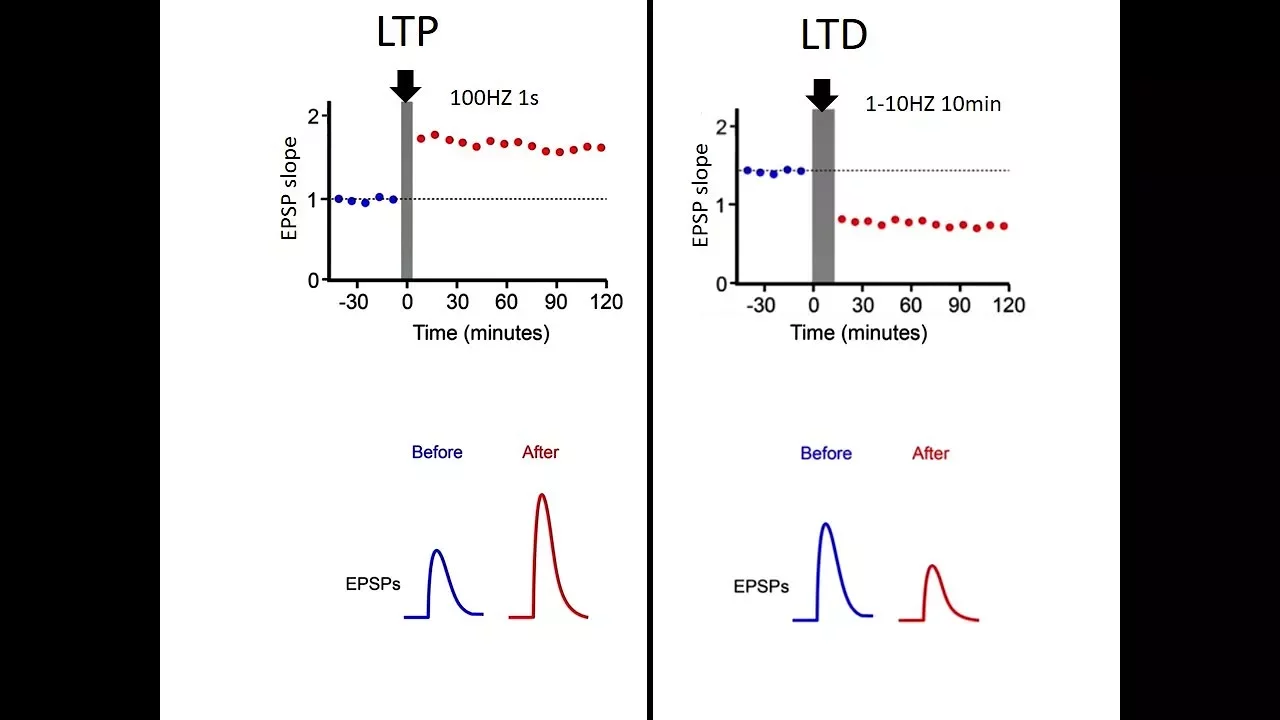
Advanced molecular mechanisms of synaptic plasticity, such as Long-Term Potentiation (LTP) and Long-Term Depression (LTD) within the lateral amygdala.
32.8K views499likes5:19Original Release: 2016-03-17
now let's look at the mechanism of fear conditioning and fear Extinction in the amydala that almond shaped structure in the middle of the slide is the amydala the lateral amydala at the top is receiving input from various brain areas vmpfc is ventromedial prefrontal cortex an area known to process of motion hippocampus is for memory sensory cortex Thalamus Etc and these inputs are coming into either a two synapse circuit on the right or a three synapse circuit on the left and as you see here the input must be neutral or absent because there is no fear response what can happen though is that you can get fear conditioning which is a form of learning especially if something horrible happens and if that input comes into the lateral amydala at the top and hits the two synapse circuit it'll jump over the intercalated cell mass and go into the Central igula and stimulate the output from that amydala and you have boom a fear response with affective problems Terror panic and the autonomic problems of increased breathing increased blood pressure increased pulse and if that occurs so dramatically even once that it cements that circuit into place hard wires it it's called fear conditioning it turns out that glutamate can cause plastic changes and what I call a form of diabolical learning kind of an evil learning these circuits essentially learn to have a fear conditioned response unthinkingly automatically like a reflex and that is so hardwired that it's considered to be almost irreversible but some people's fear responses go away how does that happen well you don't really forget your fear is what the theory is it doesn't just kind of reverse this conditioning synaptically instead you have a new learning and the new learning can compete with a hardwired old learning of fear conditioning which is shown here with the two synapse circuit on the right if a new input comes that says something counter to the conditioned of the fear in other words it's not so bad uh you know you're overreacted some Psychotherapy cognitive behavioral therapy particularly is a form of learning and if it's successful the theory is that it goes into the three synapse circuit on the left and stimulates a neuron that does terminate in intercalated cell mass and the significance of that is that these neurons talk to Gaba neurons which are inhibitory and that inhibitory neurotransmitter can block the excitatory glutamate and if strong enough will win and if such is called No sphere response and a fear Extinction phenomenon it turns out that it's a little more reversible to fear Extinction than it is to fear conditioning so that if you don't keep practicing whatever second learning blocked the first learning the fear Extinction may go away and your fear will come back a novel idea has arisen from the neurobiology of fear conditioning in the amydala that's called preemptive treatment in other words is it possible to stop the permanent conditioning of fear in the amydala rather than just treating the consequences after it's already permanent with analytics this idea is based upon blocking norepinephrine input with beta blockers let's look at how norrine is involved with the fear response the locus cerius has nor energic fibers that project to various brain areas that are activated in great extent when you're fearful projecting to hippocampus with norepinephrine projecting to ventromedial prefrontal Cortex with norepinephrine this in turn can trigger input to the amydala which says go through your two synapse circuit and quickly activate the central amygdala's output and let's have a fear response now if that's dramatic or long lasting and robust it can be permanent and of course set up fear conditioning what would happen if we block the neod nergic input the theory would be this could possibly prevent fear conditioning from taking a hold we'll look at that in the next slide now if your nor energic input has just recently happened and you're within minutes or hours of experiencing a traumatic event maybe it would be possible to block that no energic input before the resonance in this circuit is so robust through the two synapse circuit that fear conditioning gets established permanently that's the idea of using a beta blocker after trauma in order to prevent the formation of fear conditioning there is some evidence of course in some experimental studies in man that is very early that suggests this may be useful and that would eventually Wipe Out the hippoc cample and the ventom medor prefrontal cortex's input to the amydala so that fear conditioning never sets up the synaps is never permanently ingrain and fear conditioning never happens so that the fear response does not become permanent
Up Next
62:37
Fear Learning Strengthens Amygdala Ensembles | Journal Club Review
@AspirationalNeuroscience
161 views•2025-04-26
21:55
Deciphering Neural Circuits Controlling Anorexia in Mice | Richard Palmiter
@AllenInstitute
2.3K views•2011-10-10

4:10
Vagus Nerve (CN X): Anatomy, Nuclei & Functions Explained
@Alilamedicalmedia
305.2K views•2022-10-31
13:03
How Exercise Benefits Your Brain: Science Explained
@TED
11.4M views•2018-03-21
Related Study Plans & Knowledge Roadmaps
Structured learning paths in Neuroscience
neuroscience
Appetite Regulation: Brain Circuits & Hormones
01Foundations of Endocrinology and Brain Anatomy
02Introduction to Energy Homeostasis
03Peripheral Signals: Leptin, Ghrelin, and Insulin
+ 2 more learning modules
14h5 modules
Explore Roadmap
neuroscience
Neuroeconomics: Value, Risk & Brain Mechanisms
01Foundations of Neuroscience and Brain Anatomy
02Introduction to Neuroeconomics and Subjective Value
03Dopaminergic Prediction Errors & Reinforcement Learning
+ 3 more learning modules
18h6 modules
Explore Roadmap
neuroscience
Spatial Navigation: Cells, Grids & Brain Maps
01Foundations of Brain Anatomy and Memory
02Place Cells and Head-Direction Cells
03Grid Cells: The Brain's Coordinate System
+ 2 more learning modules
12h5 modules
Explore Roadmap
neuroscience
BCIs: Neural Decoding & Prosthetic Control
01Neuroscience Foundations: How the Brain Signals Intent
02Signal Acquisition: Recording the Brain's Activity
03Neural Decoding: Translating Brain Waves into Data
+ 2 more learning modules
25h5 modules
Explore Roadmap