

![Узлы и косы [3] // Алексей Сосинский](https://i.ytimg.com/vi/ubqM1Frhz1s/hqdefault.jpg)
![[GS#2] Théorie des nœuds (Introduction)](https://i.ytimg.com/vi/g7HSdT6-YJU/maxresdefault.jpg)

![[London Learning Lean] Tori, by Amelia Livingston](https://i.ytimg.com/vi/A7DlX78ApCQ/maxresdefault.jpg)



![[FULL] KAIX Introduction to knot theory](https://i.ytimg.com/vi/Zd2RcW3Kwd4/maxresdefault.jpg)

![МАТЕМАТИКА МОЖЕ ВРЯТУВАТИ ВАМ ЖИТТЯ 🤯 [VERITASIUM]](https://i.ytimg.com/vi/c6zxT14L-G8/maxresdefault.jpg)

The Kauffman bracket and writhe are two key ingredients in the definition of the Jones polynomial, where the Kauffman bracket satisfies three axioms (K1, K2, K3) and the writhe is the sum of crossing signs in an oriented link diagram; together they change predictably under Reidemeister moves (R1 changes Kauffman bracket by -A³ and writhe by ±1, while R2 and R3 leave both unchanged), allowing their combination to produce a genuine knot invariant.
Kauffman Bracket, Writhe & Reidemeister Moves in Knot Theory
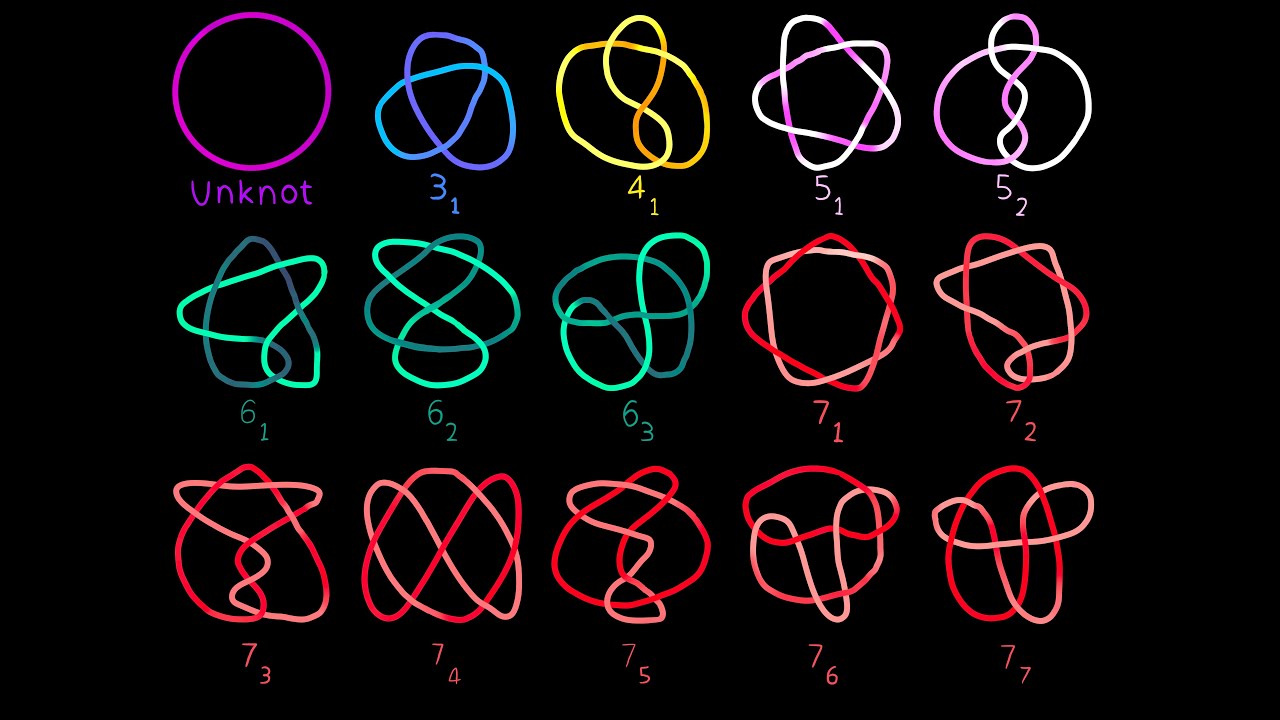
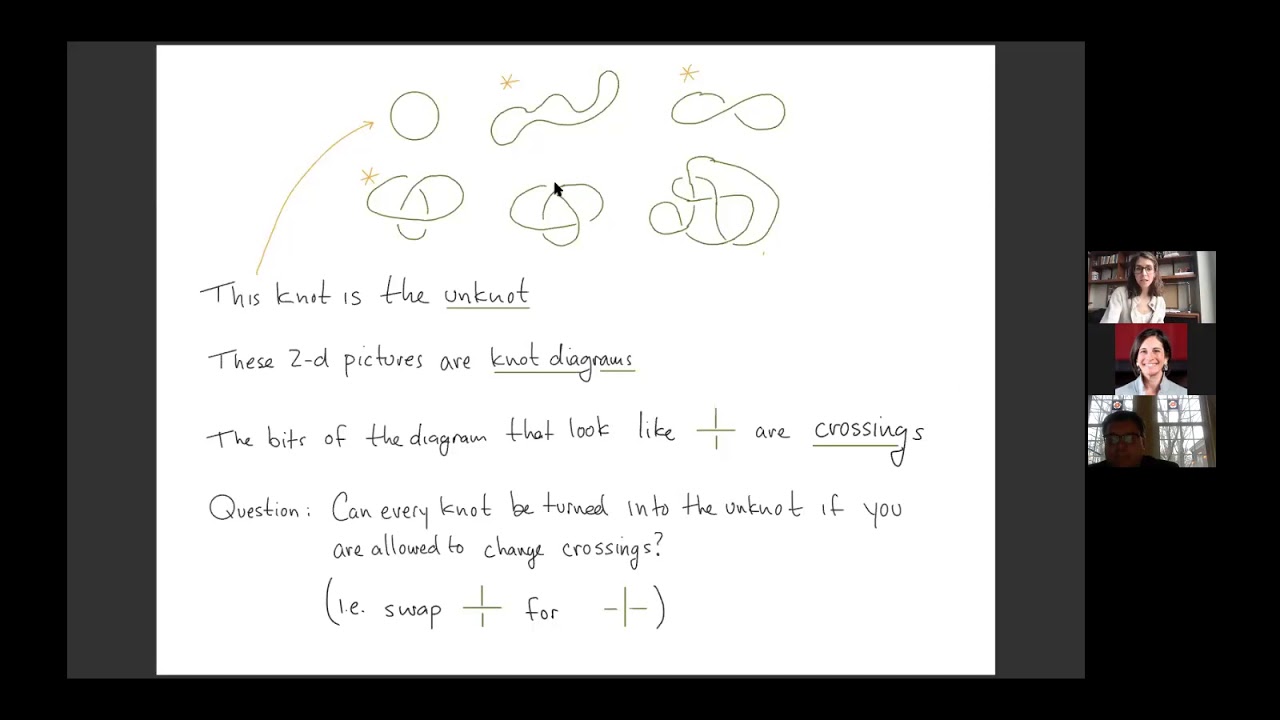
Added:Basic concepts of Knot Theory, including knot diagrams, crossings, and the definition of a mathematical knot.
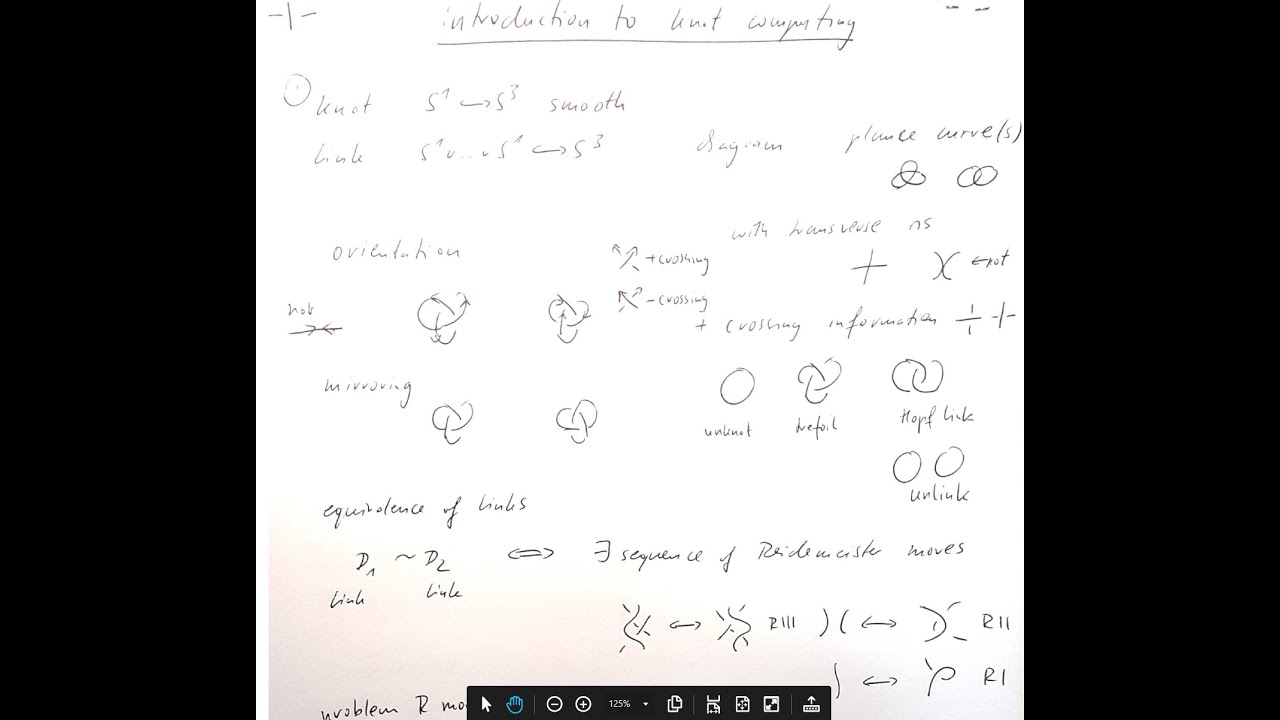
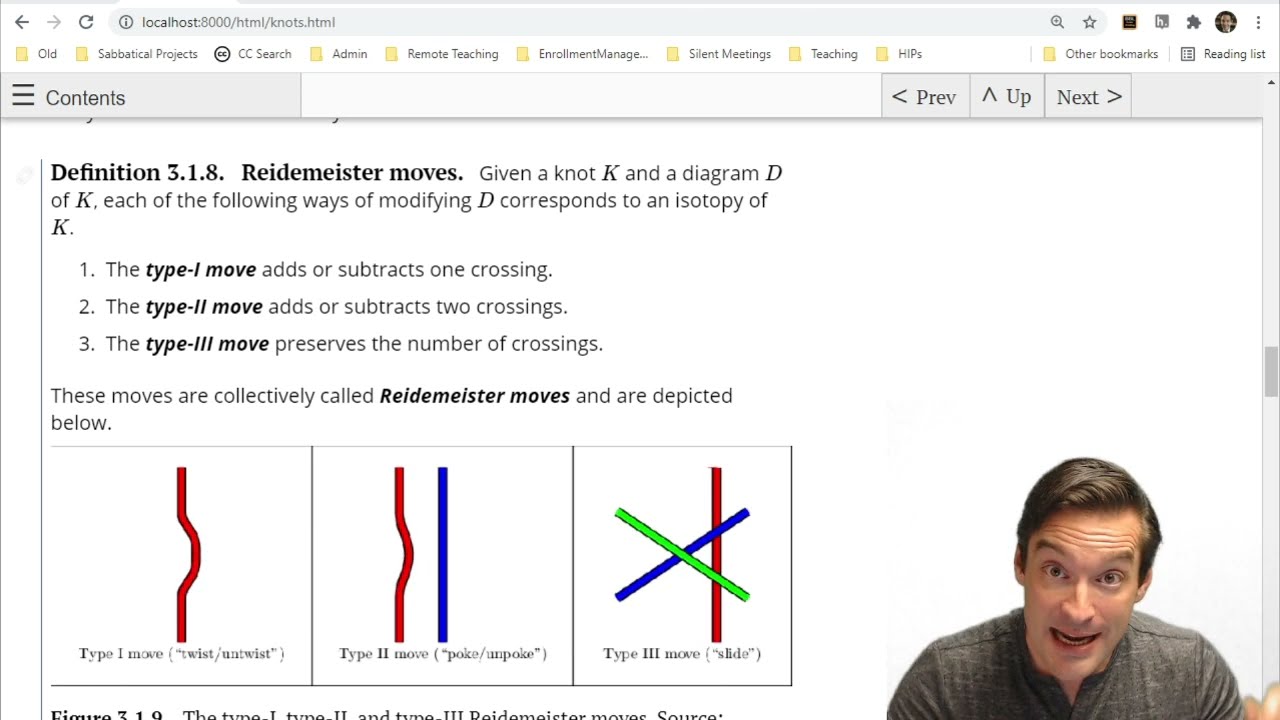
The three Reidemeister moves (Type I, II, and III) and how they represent ambient isotopy of knots in diagrammatic form.
Oriented knots and the rules for assigning positive (+1) or negative (-1) signs to crossings, which is necessary for calculating writhe.
Fundamental algebra, specifically working with Laurent polynomials and algebraic variable substitution.
The formal definition, computation, and properties of the Jones Polynomial for various classical knots and links.
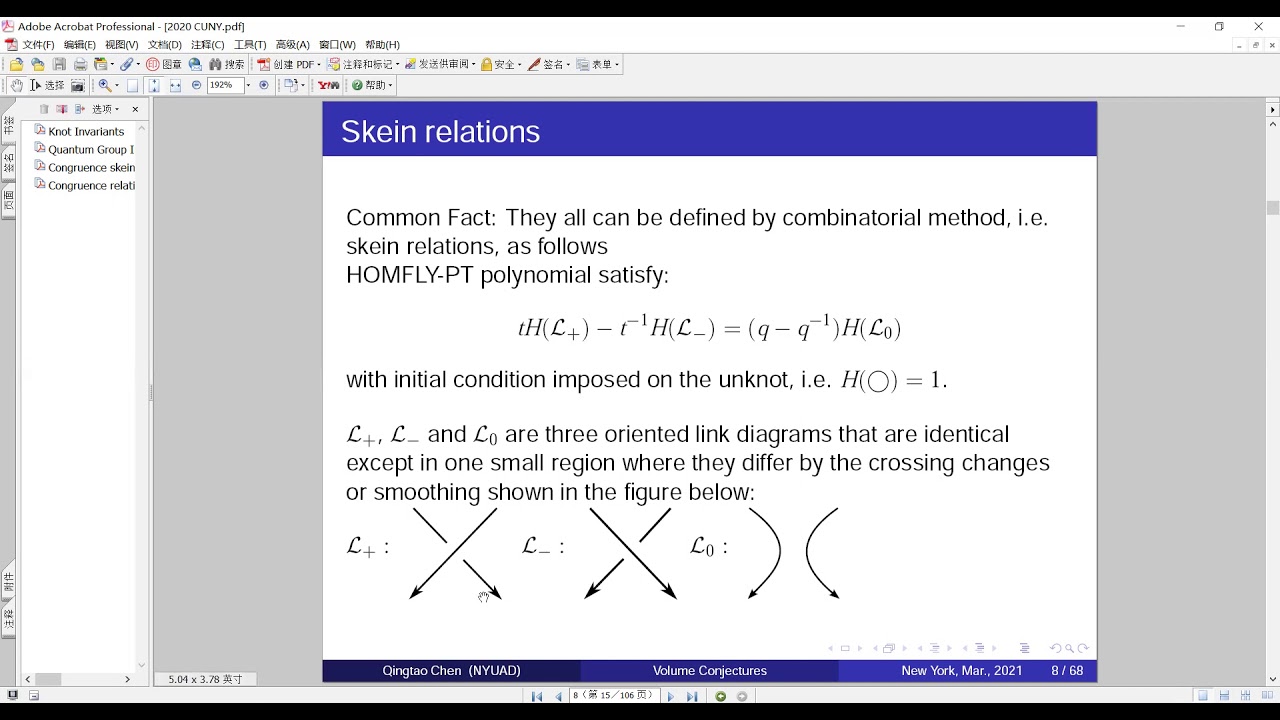
Skein relations and other polynomial invariants, such as the Alexander-Conway polynomial and the HOMFLY-PT polynomial.
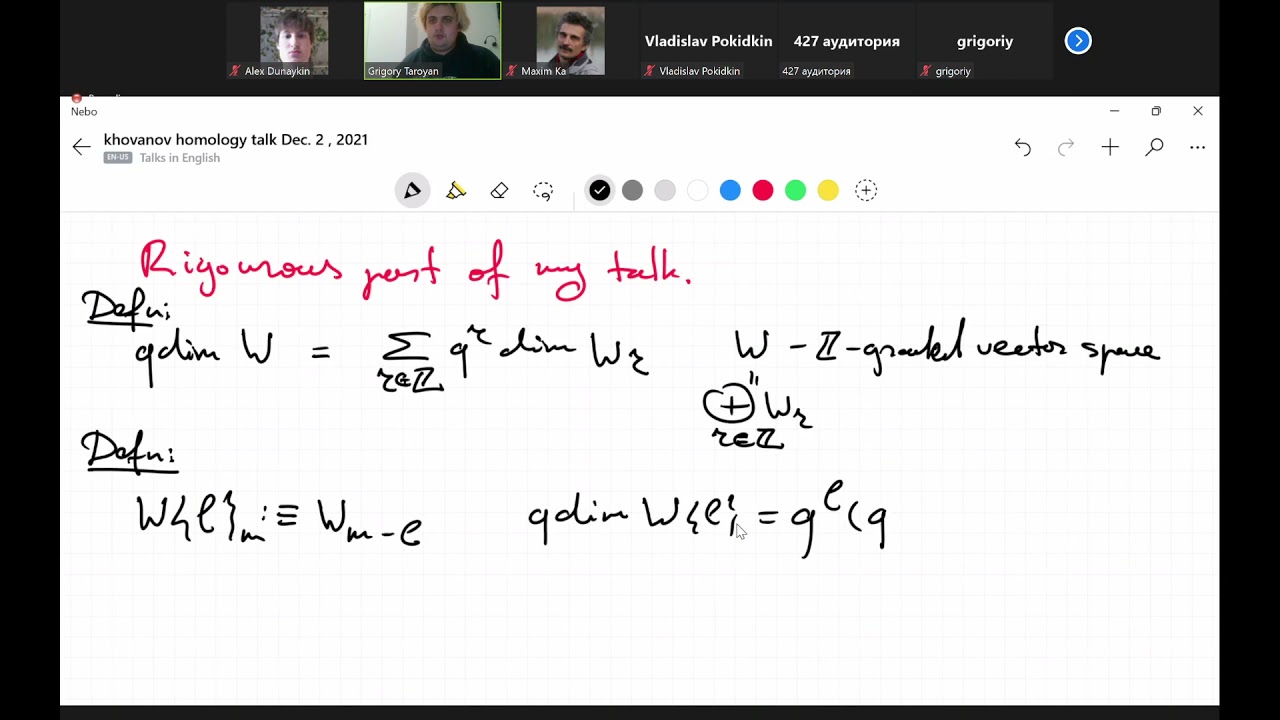
Khovanov Homology, which is an advanced categorification of the Jones polynomial yielding a stronger topological invariant.
Applications of knot invariants in mathematical physics (e.g., Chern-Simons theory) and molecular biology (e.g., DNA topology).
3.5K views29likes13:11Original Release: 2015-03-13
hello and welcome to a mini lecture about the calman bracket the ride and Ryder Meister moves uh the calman bracket is something we've seen in a previous mini lecture uh it's one of the ingredients in the definition of the Jones polinomial the RVE we haven't seen yet but I'll Define it for you it's the other ingredient in the definition of the Jones polinomial and finally uh I'm going to tell you how these two ingredients change under the ryom moves um they're not inv variants of links they will change under the romis moves but the point is that they're going to change under the romis moves in a similar way so that when we count when we combine them the Carma bracket and the RVE to make the Jones polinomial those ways that they change under the ROM masterer moves are going to cancel each other out and we're going to get a good decent invariant of knots uh so let's begin uh let me remind you about the cfan bracket it's an invariant of diagrams and it's characterized by the fact that it doesn't change under uh smooth deformations of the diagrams and that it satisfies these three axom K1 K2 K3 so K1 you remember told you that the uh if you take this diagram of the unot not any other diagram of the unot then the C bracket is one K2 tells you that if you uh take an any diagram you like d and then next to it place this diagram of the unot uh then what you get is the C bracket of the your old D Times by this big factor here and then K3 tells you that if you have a diagram with a Crossing in it then uh you can smooth that Crossing into different ways this one and that one and the Cal bracket of the diagram with the Crossing in it is a times the first smoothing the Cal bracket of the diagram smooth that way plus a inverse times the Cal bracket of the diagr with the second smoothing and uh just down here there's a couple of examples um and you can look through them uh you can pause the video and read through them if you want the point is that these are both diagrams of the unot but their C brackets are different so pause it and look through that if you want to uh now let me tell you what the wyth is the Wy is extremely simple the rth of a diagram of an oriented link is the sum of the signs of the Crossing it's the sum over all the crossings this is not like the linking number we don't care how many components meet at each Crossing we just sum over all of them uh it's the sum of the signs of The Crossings uh so here are a couple more examples and again pause and convince yourselves of those if you wish I want to end with a warning because it seems to be frequently uh misunderstood that these little symbols that I've been drawing like this one and this one here these are not diagrams they represent diagrams in particular the one on the left well you can see one Crossing in the little picture but it represents a diagram with an arbitrary number of Crossings one of which is the one in the picture right and then the second image represents that same diagram but with that Crossing that one favorite Crossing replaced by something else this smoothing so don't mistake these for for complete diagrams because they're not okay so let's move on and see how these things change under the radomized moves um well the first rule for the C bracket says that if you apply R1 to something on the left then you get the cap bracket of the same diagram but with the Kink removed so this little this thing that looks like a one this is actually a diagram this is this is a symbol like this one but with the crossing removed uh multiplied by - Aus 3 so with this Factor at the front similarly for the W the W uh if you apply R1 changes in a simple way just by subtracting one uh secondly our one does not sorry secondly the C bracket does not change under R2 neither does the WTH it doesn't change and finally the uh C bracket does not change under R3 neither does the right and and for the W these are all regardless of the orientations because the diagrams have to have been oriented for me to work out the r at all so now let me try to tell you something about why uh this rule holds for the R2 and the way I'm going to try and explain it is by taking what we started with and using the axioms to turn it into the thing on the right so let's start by applying K 3 to this diagram so K3 is going to tell us that this C bracket is equal to the sum of two other ones a * 1 plus a inverse time another and what do I do well I have to take that Crossing in the original one and smooth it in two different ways so I'd like you now to pause the video and decide how I should complete these diagrams with the little Vacuums in them uh how should I fill in those gaps uh according to K3 so pause it and decide how I should complete the diagrams and the answer is in order to view this Crossing as the one that appears is in K3 I have to turn my head 90° to the right in which case the positive smoothing is this one and the negative smoothing is that one okay so I've turned the left hand side into this quantity on the right and actually because uh I've tried making this video several times before and I've run out of space every time so I'm going to erase that and move this to the left and so let's see how we can now change this so this is going to be equal to let's move to the left a bit this is going to be equal to what shall I do next well what I want to do next is I want to apply K3 to this uh crossing here in the first term so let's move him out the way let's insert a great big parenthesis and let's write in here what would happen if we applied K3 well it would be a * one thing plus a inverse time another what are those things well they're the ones I get by smoothing The Crossing out in two ways pause decide how I should complete these diagrams I've just erased parts of what should I put in here what should I put in there so the answer is that this crossing here is already the positive way up and so I I make the positive smoothing like this and I make the negative smoothing like that there so that's what I get by applying K3 and let's move up again nope no room okay so what is this quantity now well uh remember that the C bracket is invariant under um smooth deformations so I can just smooth that bit out and let me expand the bracket so this a becomes an a^ S this a inverse evaporates to become no coefficient at all and this term here stays where it is okay so let's keep going now um what will I do next well I can see two things I could do one is I could apply K2 to this floating unot diagram here and remove it or I could apply K3 in there in the Crossing in the right hand term and I'm going to do it by starting off with the K2 so what I'll get is what I had before going to make some space there except I'm going to replace this with - a - 2 - a^ 2 times what I get by eradicating the unot and then look carefully this term here is the same as minus this term here so I can remove those goodbye you goodbye you and now I've simplified things somewhat so that was by K2 let's keep going next step what should I do now now I have to write now I have to apply K3 to the remaining Crossing so let's leave these guys as they were except here I'm going to apply K3 so I'm going to get a times the first thing plus a inverse times the second where the first one is where I smooth positively and the second is where I smooth negatively there we go and well uh that's going to simplify nicely because this term well let me just redraw and expand the brackets because this is going to become whoops this is going to become plus Aus 2 and remember I can deform this bit away until it looks more pleasant like that and these are going to cancel each other out and now I have this first term is minus the last one so actually that's equal to what I have in the middle which is just this as required so sorry that that took so long um uh it it actually looks nicer in the notes I don't know why this was so painful for us um but there you go so that's the explanation for what happens with our two let's uh and the Calin bracket let's do the same thing for the Ry briefly before we finish why would this be true well this one's much easier what's the r what's the r of this well this symbol here represents a large diagram which has two special crossings that look like this so what is that well if I sum up all the crossings that I can't see in this little bit of the image then that's exactly the sign the same as the Wy of this uh but then I have to add on the contributions from the two Crossings you can see there so if we called this Crossing C and this one D then what we would get would be the derive of the previous one plus the S of C plus the S of d uh but regardless but regardless of orientations s Cal minus sin D whatever happens they're opposite in s and so the right hand side is in fact just this term here and so that's the end of that proof and that's the end of the mini lecture
Up Next

8:47
Introduction to the Jones Polynomial: Oriented Link Invariant
@richardhepworth1441
11.2K views•2015-03-11
4:43
Elliptic Curve Cryptography Explained: ECC, ECDSA, ECDH
@PracticalNetworking
28.5K views•2024-10-21

6:20
Jones Polynomial Definition: Invariance Proof
@richardhepworth1441
3K views•2015-03-13
6:00
The Mathematical Impossibility of Accurate World Maps
@Vox
23.3M views•2016-12-02
Related Study Plans & Knowledge Roadmaps
Structured learning paths in Mathematics
mathematics
Tensor Calculus: Vectors to Riemann Curvature
01Mathematical Foundations: Linear Algebra & Calculus
02Covectors, Dual Spaces, and Tensor Basics
03The Metric Tensor and Index Gymnastics
+ 2 more learning modules
40h5 modules
Explore Roadmap
mathematics
Gödel's Incompleteness: Logic, Proofs & Limits
01Introduction to Formal Systems & Hilbert's Dream
02Set Theory, Cardinality, and Cantor's Diagonal Argument
03Arithmetization and Gödel Numbering
+ 2 more learning modules
14h5 modules
Explore Roadmap
mathematics
Galois Theory: Fields, Groups & Solvability
01Foundations of Abstract Algebra: Groups & Fields
02Polynomials & Field Extensions
03Splitting Fields & Symmetries
+ 2 more learning modules
24h5 modules
Explore Roadmap
mathematics
Non-Euclidean Geometry: Models & Geodesics
01Euclid's Fifth Postulate and the Birth of New Geometries
02Hyperbolic Space and the Poincaré Disk Model
03Geodesics: Defining Straight Lines in Curved Spaces
+ 2 more learning modules
15h5 modules
Explore Roadmap