




![[Syntax] Constituents](https://i.ytimg.com/vi_webp/Ia7d4slVL6s/maxresdefault.webp)



![[Syntax] X-Bar Theory - Specifiers, Adjuncts, and Complements](https://i.ytimg.com/vi_webp/n8TYuq173N0/maxresdefault.webp)
![[Syntax] X-Bar Theory - Practice Sentences](https://i.ytimg.com/vi_webp/CIFOSEvcsT4/maxresdefault.webp)

![Syntax II: Intro to linguistics [Video 6]](https://i.ytimg.com/vi_webp/3CaX6MIzbZw/maxresdefault.webp)






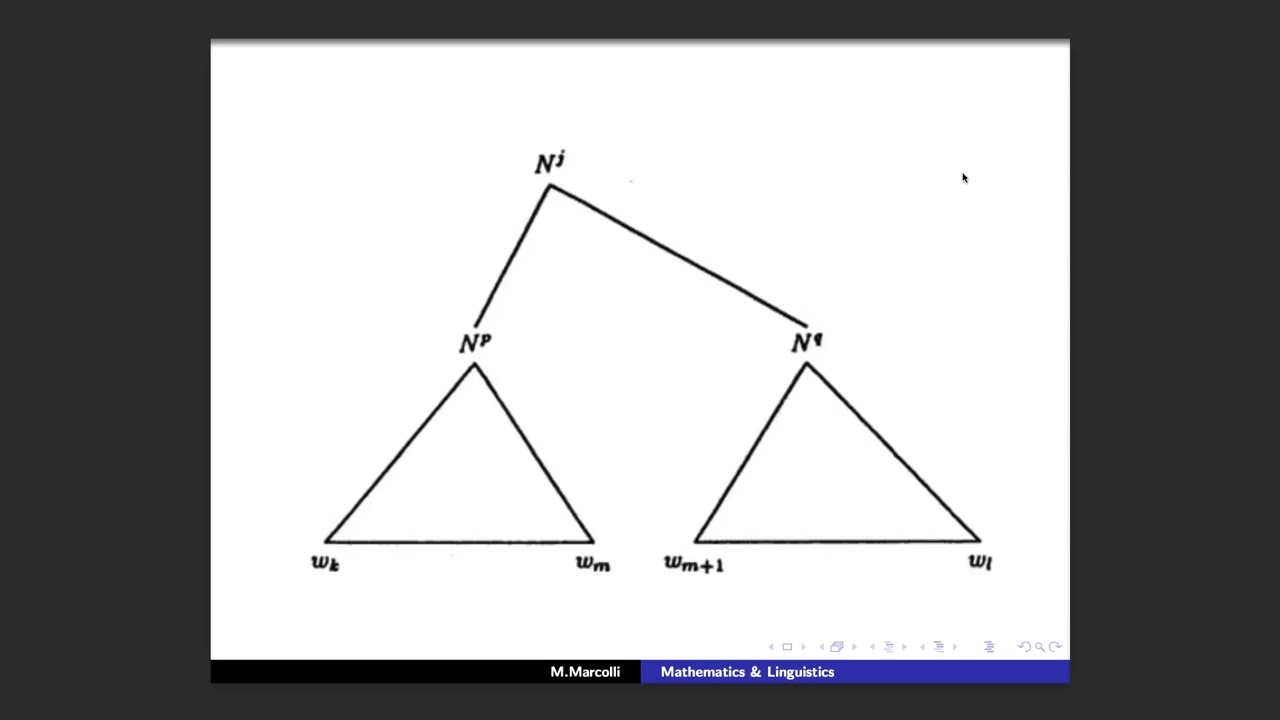
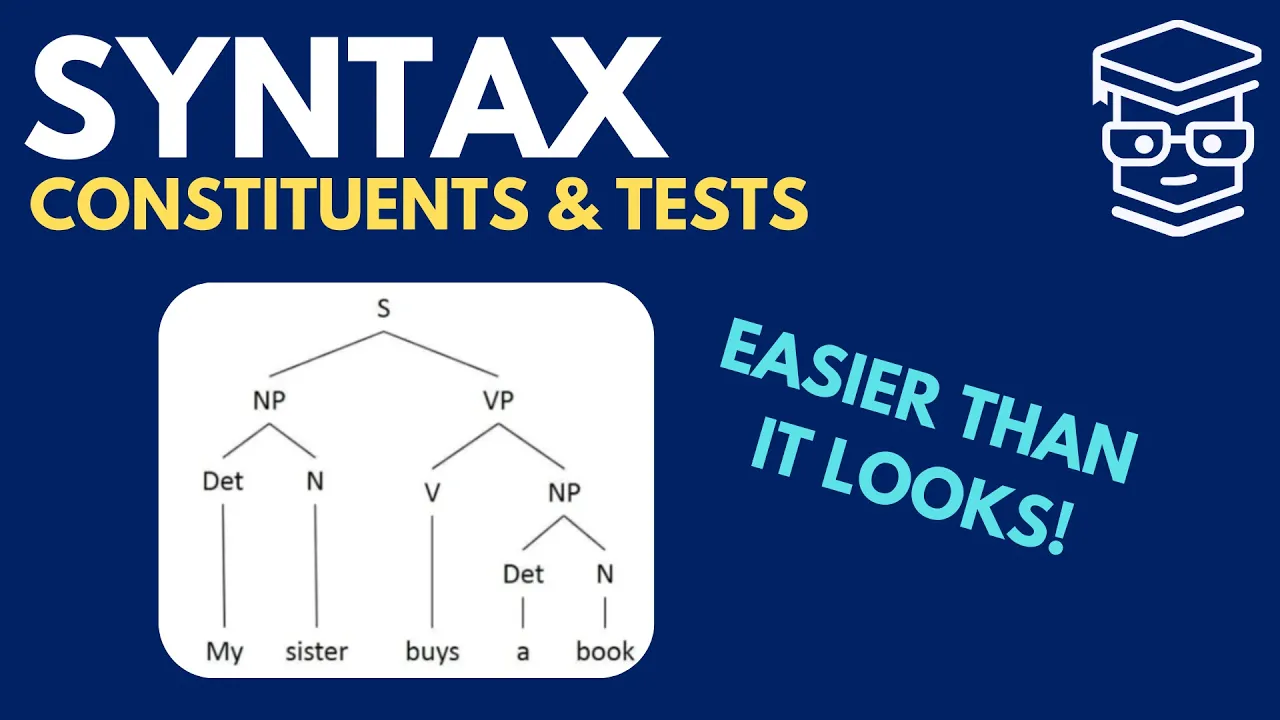
This lecture demonstrates that flat syntactic structures (where all noun phrase constituents like determiners, adjectives, nouns, and prepositional phrases occupy the same hierarchical level) are inadequate for capturing true syntactic constituency, as evidenced by one-replacement tests (showing constituents like 'box of toys with a blue sticker' function as single units) and coordination tests (revealing that phrases like 'night of glamour' and 'prince of the kingdom' must be of the same type to coordinate). To address these limitations, syntax employs X-bar theory, which introduces intermediate projection levels (N-bar) between the head noun (N) and the maximal noun phrase projection (NP), allowing for more accurate hierarchical tree representations that properly capture constituent relationships.
Syntax: From Flat Structure to X-Bar Theory Explained
Added:hello and welcome back to a new lecture on syntax now in our previous lectures you may recall that we assigned to the noun phrase or to a noun phrase like the big box of toys with a blue sticker the following structure before we start though it is important to understand that there is one common mistake that we usually make once we get to the level of the terminal nodes or the non-branching nodes we no longer need these lines that attach to the actual words therefore those lines have to not be drawn now with that let's take a look at our structure here our structure here shows that this adjective phrase is a constituent of the noun phrase prepositional phrase is a constituent of the noun phrase as well so is the head noun and the determiner and this other prepositional phrase this structure is what we call the flat structure and you can see why because if you notice the P P and the other prepositional phrase along with the noun and the adjective phrase and the determiner are pretty much on the same level because there's only one line extending to each and every one of them as you can see here so really they're all like the main parts of the maximal noun phrase that there's a lot of evidence to point to the fact that this flat structure actually is not what we should be looking for our evidence comes from one of the constituency tests that we discuss in our previous lectures in particular there is the replacement test one type of the replacement test is the one replacement meaning that we place a constituent with one the word one so if you recall the main idea behind one replacement is that if you're able to replace something with the word one that means that that something is a constituent it functions together as one unit so let's take this example here I saw a monster with green eyes and Mary saw one - this one here refers to a monster with green eyes because we are able to replace a monster with green eyes the word one and still have a grammatical sentence we know that this whole stretch a monster would agree with green eyes is one constituent that's the basic idea behind one replacement now here's a sentence I want you to think about recall our structure here the big box of toys with a blue sticker here's a sentence again I bought the big box of toys with a blue sticker not the small one one here replaces what exactly well we still have the and we have small which is just like big another agita phrase what we're missing here from the rest of the sentence is this box of toys with a blue sticker so this shows us that box of toys with a blue sticker forms a constituent apart from big and the now let's look back to our tree there's our tree here show us that box of toys with a blue sticker forms a constituent apart from big and actually no if we go up to the noun here and trace it it stops right here if we are going to take everything else we're going to need to draw a box let's say like this but how can you take only this part and leave these two our tree as you can see does not show that box of toys with a blue sticker forms a constituent without big and so let's try to modify this tree a bit to show that box of toys with a blue sticker forms a constituent and in this constituent let's call it X along with the adjective phrase big and the determiner all these together form our noun phrase so we know now that box of toys with a blue sticker forms a constituent but how are we going to show this let's put in a new node here and call it X now it is X that is I can say immediate constituent of NP x is now sister to the adjective phrase and the determiner and the constituents of X is the noun the head noun the PP and another PP now this structure looks a bit better because now we see that when we replaced all of this with one really what we're doing is replacing this with the word one now it's easy to target one node here and everything that's underneath it but that's not all click a sentence I bought the big box of toys with a blue sticker not the small one with a green sticker what does one replace here in this case well we have the and small we have something that's just like with a blue sticker which is with a green sticker so what are we missing we're missing only box of toys so one here replaces box of toys one equals box of toys that means box of toys is a constituent it forms a constituent it is one unit one structure together now again our original structure does not show this so here's box of toys let's trace it up like so this does not form a constituent in the tree that we have here there's still these two and these all of these are parts of the tree we could easily take for example this n to be here I mean why wouldn't why wouldn't it be there we could take this PP to be here what would stop us from doing that great so now back to this sentence here we want box of toys to form a constituent so here's where we are so far in there our structure apparently even with this intermediate X node here that's still not enough because X here has as its constituents box and of toys and with a blue sticker as you can see here the noun the PP and the other PP we want an X that only takes P P and n in other words only box of toys how are we going to get that maybe we need another X here to place in between let's see how that will look all right how about this way now we have two x's let's call the first one x one and the second one x two now if you see we can form a constituent out of box of toys alone and then a bigger constituent out of box of toys with a blue sticker like so how are we able to do that well because box of toys forms a constituent which is called X two box of toys with a blue sticker forms a larger constituent which is called X 1 now notice then X 1 is made up out of X 2 and the PP these are the immediate constituents of X 1 then X 2 divides up into a PP of toys and the head n which is box now kind of makes sense does it now we know why box of toys can be replaced with one because they form a constituent another piece of evidence that our flat structure that we've been assuming so far is not the right way to go comes from coordination and conjunction so the idea behind coordination in conjunction is that it shows us that two constituents or of the same type so for example if I say John bought eggs and a bag of chips I know that a bag of chips and eggs have to be of the same type because they are coordinated together so eggs is a noun phrase a bag of chips must also be a noun phrase now what does that show us exactly well lagina chose us to our flat structure is it really the way to go take for example the noun phrase the night of glamour and prince of the kingdom we could easily have a sentence where we say he is the night of glamour and prince of the kingdom now let's see here what exactly are we coordinating together prince of the kingdom is coordinated with night of glamour so this determiner the is kind of like a determiner for both of these so what we're really trying to say is that he is the night of glamour and the prince of the kingdom so then again we were able to coordinate night of glamour and prince of the kingdom that means that they are constituents of the same type but what type is that let's look back up here and see is there a specific type for night of glamour all we see in this flat structure is this MP but but then if we take this MP we have to include this as well so there's nothing that shows us that night of glamour is a constituent by itself the same goes for Prince of the kingdom since we are able to coordinate these two that means they are constituents of the same type and now we're asking what is that constituent how do these form a units it looks to us here that they do not form a unit well then perhaps again there must be some intermediate structure in between perhaps our noun phrase should look something like this an NP with a determiner let's just say an X for now and then this X would give rise to our noun which was night and the peepee of glamour the next NP would look the same now it looks very easy to understand how we can coordinate these two together as you can see now we could say that the night of glamour and prince of the kingdom now we have two constituents that look exactly the same they are the same type again though here we still don't know what this type is for now we've been calling it an X here's another example I want the blue box and red gloves what are we coordinating here blue box and red gloves to get that we need a structure like so you want the determiner the to be separate and we want blue box and red Globes to be coordinated because we want them to be of the same type again here we're calling them expore now we still don't know what these X's are but the point of the matter is so far that we've seen more than three examples that show us that our flat structure NP like this one is not the way to go now going back to this one we called this unknown node and X it would make sense to call it something in between N and NP recall n is the head of this phrase NP is what we call a maximal projection the idea here is that this n projects upwards its features and that's why we call the phrase a noun phrase instead of a determiner phrase or a prepositional phrase in this case so then it makes sense or this noun to also project upwards to this intermediate stage so why don't we call this instead of X we can just call it n but then to distinguish this level of n from this level of end give it a bar so we call this n bar and with that we will have seen some good evidence against the flat structure and for what we'll call X bar theory this is going to be our topic for the next lecture and this as we will see is more on the right path to drawing correct trees and now we see why it's called X bar and that's because there is a bar structure or an intermediate structure and it's X because for now we still don't know what to call it see you in the next lecture
Up Next

Identifying Constituents in Syntax: Substitution Tests
@edinburghLangScience
50.1K views•2015-09-12
Constraint Interaction in Optimality Theory: Epenthesis & Deletion
@Vidyamitra
180 views•2018-08-20
CP in X-bar Syntax: Yes/No Questions & Clause Structure
@DrNimerAbusalim
31K views•2017-09-30

Accent Expert Explains U.S. Regional Dialects | Part 1
@WIRED
9.3M views•2021-01-21
Related Study Plans & Knowledge Roadmaps
Structured learning paths in Linguistics