























![모두가 들어봤지만 아무도 모르는... 돌비 애트모스 기술의 정체! [주Q멘터리] #친절한돌비씨](https://i.ytimg.com/vi/exJcu_e9uTQ/maxresdefault.jpg)
To create a character's subjective sound experience, sound designers should selectively amplify specific environmental sounds while reducing others, rather than layering all sounds equally; this technique, demonstrated in films like 'Come and See' and 'There Will Be Blood,' places viewers inside the character's head by heightening discomfort-inducing sounds and creating a unified soundscape where score and sound design become indistinguishable.
Sound Design Subjective Audio Character Perspective Filmmaking
Added:Understanding the distinction between diegetic sound (originating within the film's world) and non-diegetic sound (external to the film's world).
Basic concepts of cinematic perspective, specifically the difference between objective storytelling and subjective (character-driven) point-of-view.
Familiarity with the fundamental components of a film soundtrack, including dialogue, foley, sound effects (SFX), and atmospheric room tone.
An introductory understanding of how sound frequency, volume, and reverberation can influence human emotion and psychological states.
Advanced mixing techniques for sonic point-of-view, such as utilizing low-pass filters to simulate hearing loss, muffling, or disorientation.
Analyzing landmark films known for masterful subjective sound design (e.g., 'Sound of Metal' or 'The Conversation') to study their technical execution.
Integrating subjective audio cues into screenplay formatting and pre-production planning to guide the sound department early in the filmmaking process.
Exploring spatial audio, Dolby Atmos, and binaural recording technologies to create highly immersive, three-dimensional acoustic environments for the audience.
4.5K views142likes5:26Original Release: 2020-02-17
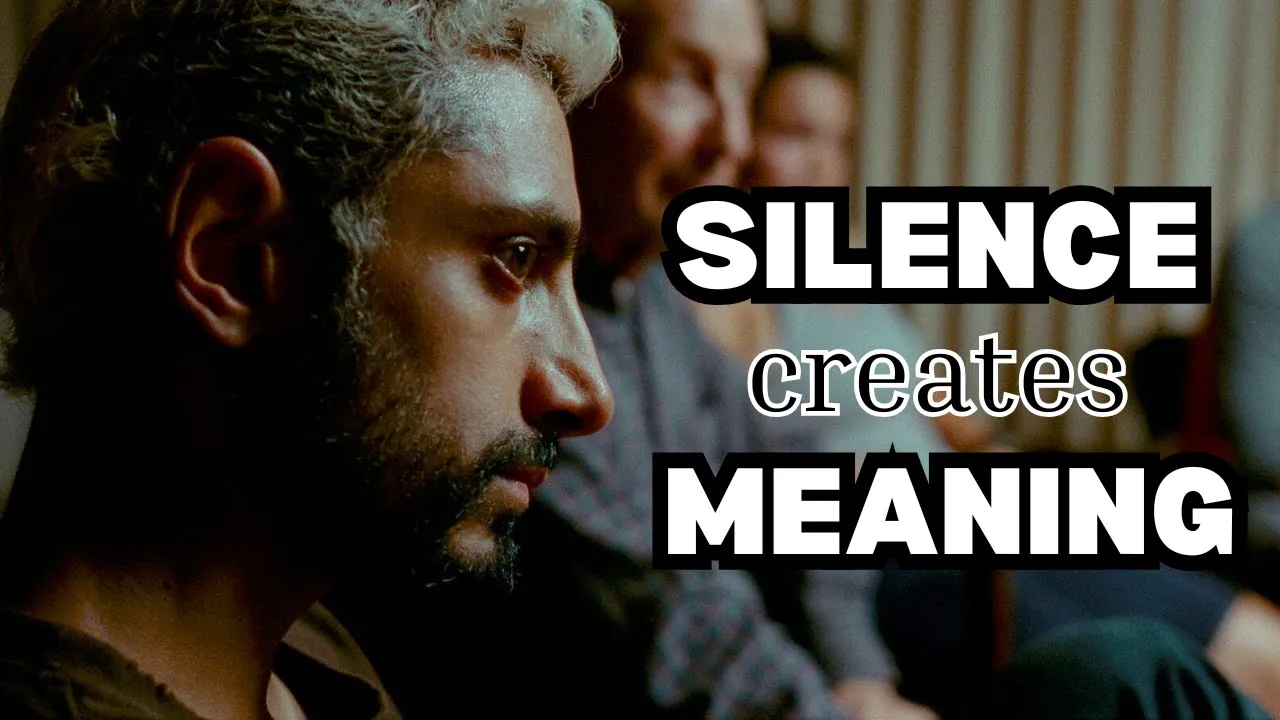
hi my name is Michael Tyburski and I had directed and co-wrote the sound of silence I suppose I have always been a visual thinker but sound this is one of those areas especially in film that I feel like is often underutilized not kind of given its full potential and it really makes up so much of the movie-going experience one of my first assignments in film school it was essentially to tell a story adjust through sound having kind of the constraints of just being able to tell a story with sound can be really amazing because you can do so much and you can manipulate kind of the viewer in a way that's really interesting one of my favorite films is come and see from Ellen clean off it's you know World War two I think it's you know probably best known for kind of brutal naturalism early on in the movie the main character this young boy he experiences and the big explosion and bombing and essentially goes death and because we're experiencing it from his perspective first that transitions from kind of these explosions to ringing and then they really cut sound entirely for most of the movie it really places you in that character's head it shakes you as a viewer because suddenly you're just aware of all of it kind of micro sound in the world and then you know Paul Thomas Anderson did that and there will be blood and much to the same effect where when the oil Garrett explodes they really cut sound from the soundtrack and then we do that in this movie we have a character who he over here is essentially that's as biggest discomfort from the script stage we knew we needed to have some sort of coping mechanism these custom modified headset that he wears it's a way that he can quite literally tune the city out we have the scene where Peter goes in to visit the regime's character who works in homes and offices are just literally out of his comfort zone when you're in an office you hear fax machines on the water cool office chair phones were fluorescent lights buzzing and so all of these for Peter are gonna be heightened you know our first passive the mix of that scene that was just kind of the cliché of just like hearing all those layered on top of each other and I got to meet Gary wrench strim who's this kind of legendary sound designer Arthur and he gave me a great note the idea that if you want to go inside that character's head it's best to kind of lose a lot of the other sounds so instead of taking all those and hearing all those individual sounds on top of one another we took the most predominant ones and we pitched it to a high frequency so we could kind of understand how uncomfortably was almost without hearing all of those other things that were making him uncomfortable and Gary worked on punch-drunk love I think what I love about that movie is bad it really meshes both sound design and score in a really unique way I always believe that sound design and score are best when they're synonymous and you don't really know what you're hearing at one time and that they can kind of be one in the same thing Peter Sarsgaard character kind of fashions himself in his head is this kind of conductor to a big symphony and you know New York City in this case speaking the orchestra and he has this one vantage point in the city that he goes to several times in the film and just kind of business as usual it's down is recording equipment and has this this moment where he can kind of have an overview of everything and we start with score slowly evolves into the sounds of the city [Music] [Music] and then finally transitions into this ringing it was a great moment where our composer and sound design team were really kind of working in parallel with each other because this moment is about him and being in front of this so-called Orchestra it was about tuning up to a certain chord so our score is tuned a certain way and then our sound design of all of those sounds are tuned right to that part of the score so it really kind of becomes this bed of sound I can't stress having good onset sound enough it'll end up saving you time and money in the Edit I think we should all be thinking about sound as much as we are thinking about image and it's easy not to but it's so powerful and having good sound there's nothing better recording silence [Music] you
Up Next

17:02
Sound Design Lies: Crafting Cinematic Reality | TEDx Talk
@TEDx
512.2K views•2016-03-21

12:54
Triumph of Orthodoxy Icon: Byzantine Art & History Explained
@BenCallan
2.1K views•2024-08-06

9:49
FastAPI vs Flask vs Django: Choosing the Right Python Web Framework
@TechWithTim
302.5K views•2024-05-26

1:42
Game of Thrones Opening Credits: A Cinematic Analysis
@gameofthrones
46.3M views•2011-04-18
Related Study Plans & Knowledge Roadmaps
Structured learning paths in General & Interdisciplinary Studies
general-studies
Elevator Engineering: History, Physics & Cities
01From Hoists to Safety Brakes: The Dawn of Vertical Lift
02Hydraulic vs. Traction: The Engineering Physics of Elevators
03Modern Speed, Safety, and Algorithms
+ 2 more learning modules
12h5 modules
Explore Roadmap
general-studies
Rubber: Material Science, History & Geopolitics
01Origins of Natural Rubber & Mesoamerican History
02The Chemistry of Natural Rubber & Vulcanization
03The Geopolitics of the Rubber Boom & Colonization
+ 2 more learning modules
12h5 modules
Explore Roadmap
general-studies
Containerization: Evolution, Logistics & Trade
01Ancient Trade & Bulk Cargo: Amphorae to Barrels
02The Industrial Revolution & Cardboard Packaging
03The Containerization Revolution: Malcom McLean
+ 2 more learning modules
12h5 modules
Explore Roadmap
general-studies
Textile Tech: Evolution, Labor & Global Impact
01Pre-Industrial Textiles: Handloom & Cottage Industry
02Mechanization: The Spinning Jenny to the Power Loom
03The Factory System & Global Labor Transformation
+ 2 more learning modules
10h5 modules
Explore Roadmap