















This video teaches a systematic approach to reharmonizing songs through seven progressive levels: (1) harmonizing melody notes with thirds diatonically from the scale, played one octave lower to create tenth intervals; (2) finding diatonic chords by identifying the fifth and seventh degrees from each bass note; (3) adding secondary dominance chords to create tension and resolution; (4) using 2-5-1 progressions before dominant chords; (5) applying the half-step approach by moving the bass note up a half step to create dominant seventh chords; (6) using chord inversions to change voicings; and (7) improvising to discover personal musical preferences. The instructor emphasizes that harmony is infinite and encourages learners not to feel overwhelmed by the vastness of music theory.
Reharmonization Techniques for Songs: A Seven-Level Guide
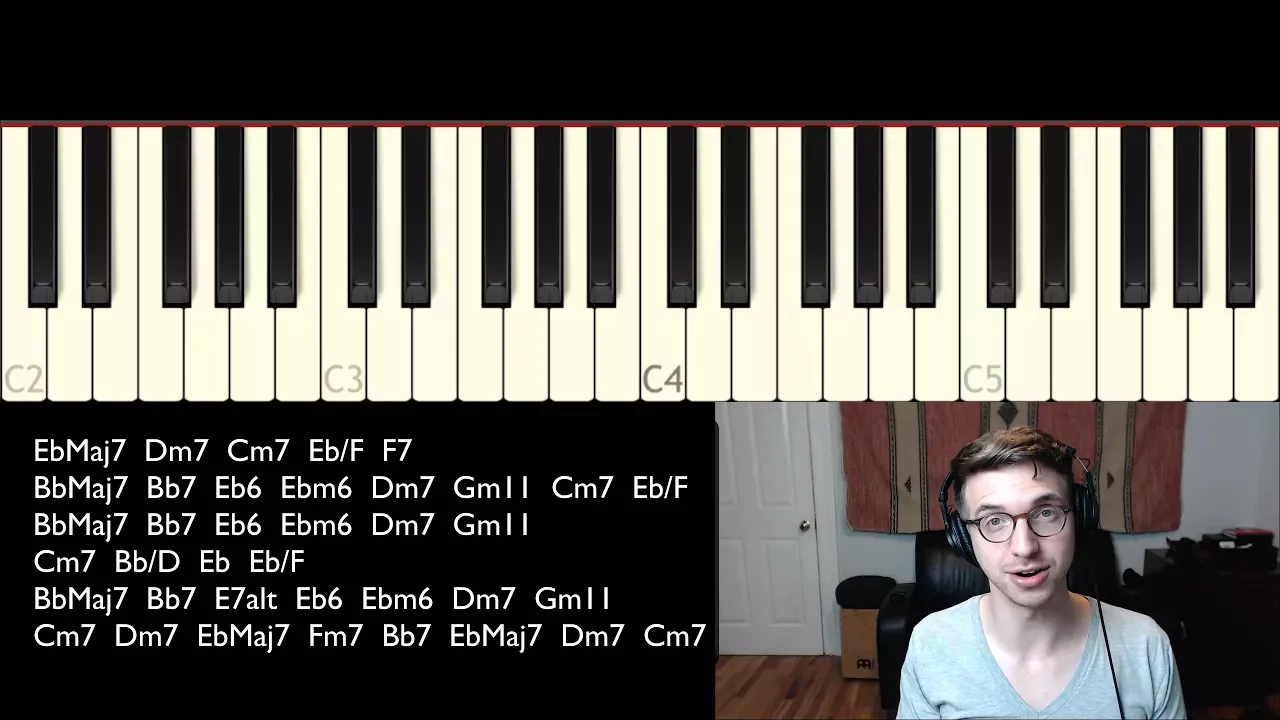
Added:i would like to thank skillshare for sponsoring this video what's up guys so many people have asked me how do i re-harmonize a melody how do i find new chords how do i stop playing wonderball how do i get more girls well in this video i want to answer those burning questions within you in seven levels of reharmonizing a song [Music] how do we go from a basic chord progression [Music] to something more interesting like [Music] seven levels of re-harmonization create a picture and there's actually a harmony hack you can use to accomplish this really fast let me show you you will harmonize each and every new melody note with a minor or major third diatonically from the scale so the melody starts with a d and we're in d major so go three steps down the scale from d and there you have the third but instead of playing it so close to the melody note i play it one octave lower [Music] okay this is known as the tenth interval and if i do this with every new melody note i get this [Music] we're off to a good start now we have the bass note together with the melody note and those two together imply chords we just need to find them one quick way to do this is to find the diatonic chords so from each bass note find the fifth degree and the seventh degree diatomically and you get full chords and that would sound like this now that we have found some basic chords that go along with the melody what i'd like to explore are ways to lead into those chords and one effective way of doing that is to find all the dominant chords so for example in d major the dominant would be a seven but all the other chords also have their respective dominants and they would be known as secondary dominance i'll play an example now where i have added [Music] [Music] do it's time to explore the 2 5 progression before the dominant the 5 chord we can add the 2 chord we have the b minor chord you go one step up play a minor chord minor seven chord perhaps with a flat five a dominant to the one explore that and do that with all the chords in the scale now let me play you an example using two five one progressions one two one two three four video is sponsored by skillshare one of the greatest joys of life is to learn new skills and get that feeling of becoming better at something but we all need help to stay inspired skillshare is an online learning community that does just that i've been a part of the skillshare community for quite a while now and as a member you get unlimited access to thousands of inspiring classes on topics such as music music production film and video graphic design and much more i'm currently checking out a class by ali abdal on productivity called principles and tools to boost your productivity because i really need to get more stuff done the classes on skillshare combine video lessons with a class project and are mostly under 60 minutes divided into short lessons so it's easy to fit into your schedule skillshare is also incredibly affordable it's less than ten dollars a month with an annual subscription in this time when so much is happening around the world your voice and creativity is more important than ever the first thousand people to use the link in my description will get a free trial of skillshare premium membership [Music] music is all about tension and release going on a journey then coming home so in level five i'd like to show you what i call the half step approach whenever you have a chord in this case i have a b minor seven take the bass note and go up a half step and from that step play a dominant seventh chord [Music] that half step creates a lot of tension let me show you an example applying the half step approach [Music] you found these basic chords the secondary dominance the two five one the half step approach chords you can also invert them an inverted chord simply means that you no longer have the root note in the bass but perhaps the third the fifth the seventh or the ninth i'll tell you an example of twinkle twinkle little star where i use more inversions [Music] it's great to have a toolbox it's great to know a lot about music theory because that can help you when you get stuck but don't let theory confine you and if you don't know much about theory don't let that stop you from trying things out one thing i do for example is i just improvise and i allow my fingers to do whatever they want and trying not to think about what i'm [Music] doing [Music] [Music] so [Music] and in that way you can accidentally find really cool stuff that you like and you also find out what your musical taste is harmony is infinite and compared to someone like jacob clear i'm a beginner it's really important not to get depressed about everything there is to learn because you will never learn everything there will always be something more to learn and that's really good because the greatest joy in life is the process of learning not achieving the end result hope this video was useful for you and if you want more tutorials and stuff like that i have that on my patreon page thanks for listening [Music] you
Up Next

Chord Inversions & Voice Leading: A Music Theory Guide
@ImpliedMusic
1.1K views•2023-07-15

Mozart's Musical Dice Game Explained: History, Rules, & Fun
@webpianoacademy
5K views•2023-03-13

Understanding Diatonic 7th Chords in Major Keys | Music Theory Tutorial
@GracieTerzian
54.7K views•2022-03-02
Understanding John Coltrane's Giant Steps: A Music Theory Analysis
@Vox
10.4M views•2018-11-12
Related Study Plans & Knowledge Roadmaps
Structured learning paths in Music Theory