






















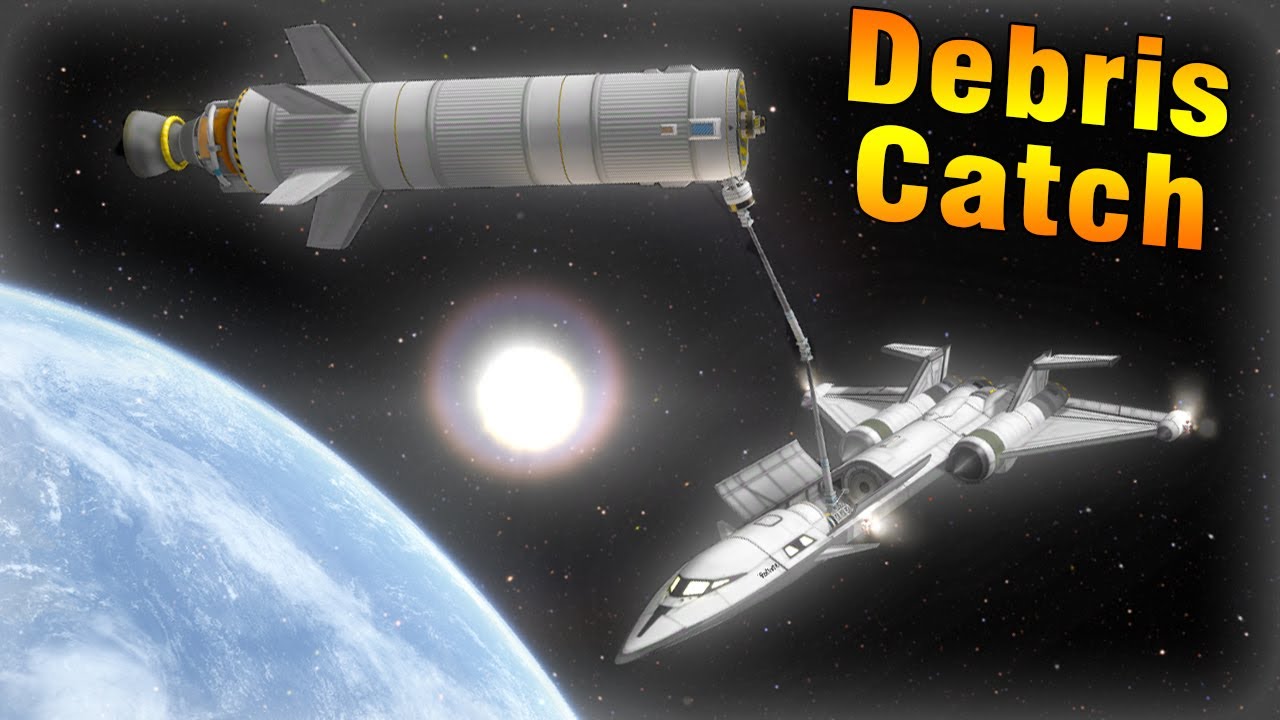
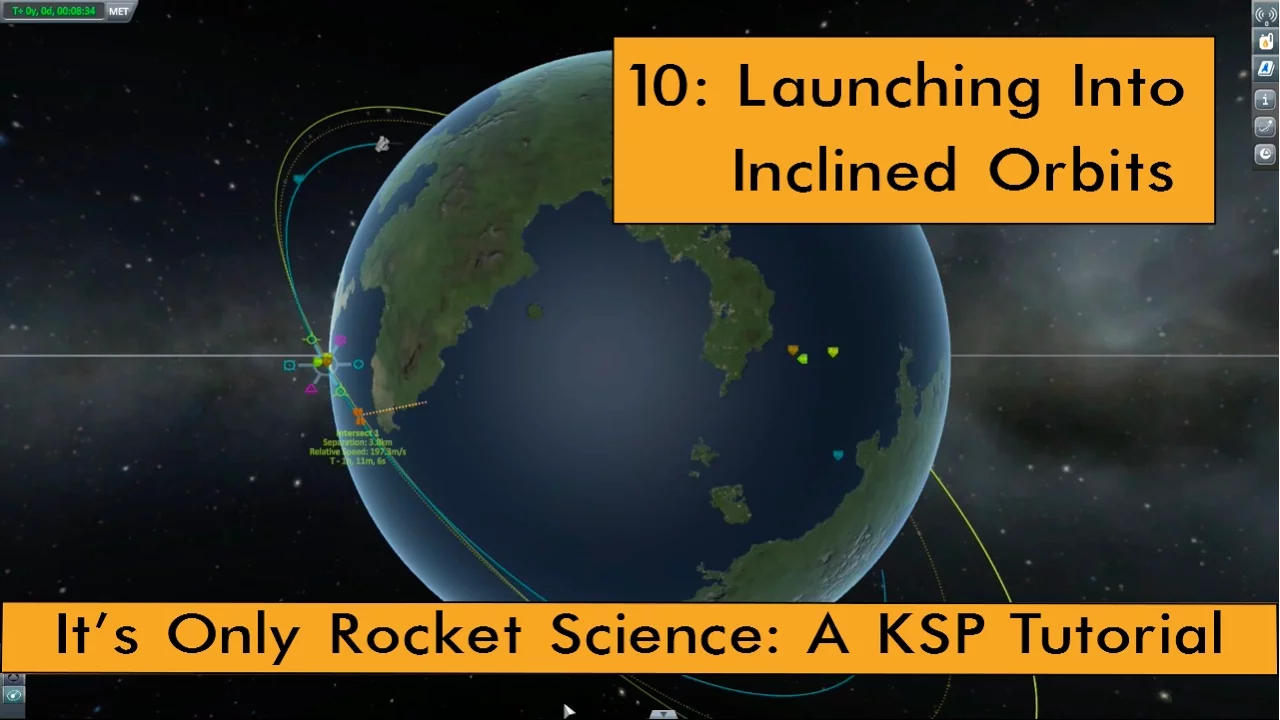

The total propellant mass required for a two-impulse orbital transfer can be calculated using the rocket equation, where the total impulse equals the exhaust velocity multiplied by the natural logarithm of the initial mass over the final mass (ΔV_total = V_exhaust × ln(M_initial/M_final)), allowing engineers to determine the necessary propellant mass based on the computed velocity changes for the transfer maneuver.
Trajectory Transfer in Space Flight Mechanics | Rocket Propulsion & Hohmann Transfer Derivation
Added:Newton's Law of Universal Gravitation and Kepler's Laws of Planetary Motion, particularly the mathematical properties of circular and elliptical orbits.
The Principle of Conservation of Mechanical Energy in gravitational fields, including familiarity with gravitational potential energy and kinetic energy.
Basic classical mechanics concepts of impulse, momentum, and circular motion dynamics (centripetal force and acceleration).
Introductory calculus, specifically integration and differentiation, to understand rate of change and derivations of physical laws.
Bi-elliptic transfer maneuvers, exploring scenarios where three-impulse transfers are more fuel-efficient than two-impulse Hohmann transfers.
Three-dimensional orbital maneuvers, including orbital inclination changes, right ascension of the ascending node (RAAN) changes, and combined plane changes.
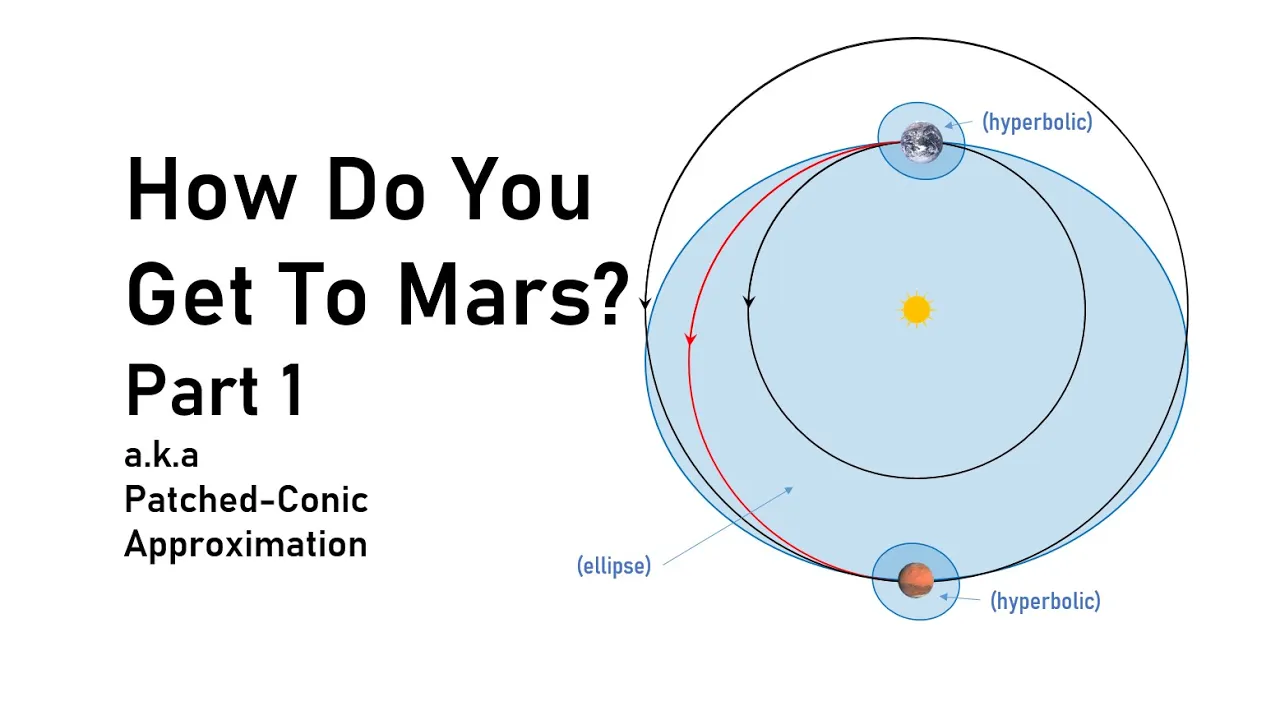
Interplanetary trajectory design using the Patched Conics Approximation, including Earth escape, heliocentric transfer, and planetary capture phases.
Low-thrust trajectory mechanics, analyzing continuous thrust propulsion systems (like ion engines) where transfers are spiral rather than impulsive.
Orbital rendezvous and phasing maneuvers, calculating the precise timing and velocity changes required to intercept another spacecraft in orbit.
1.5K views8likes56:37Original Release: 2013-06-27
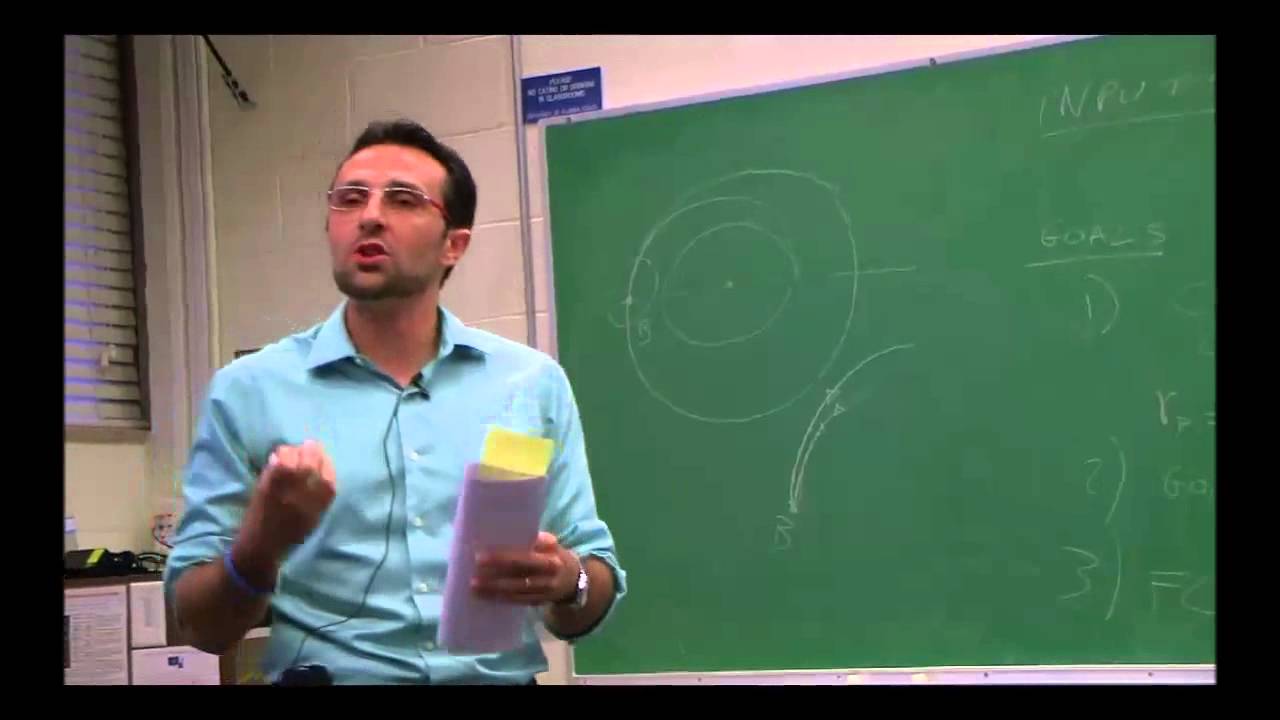
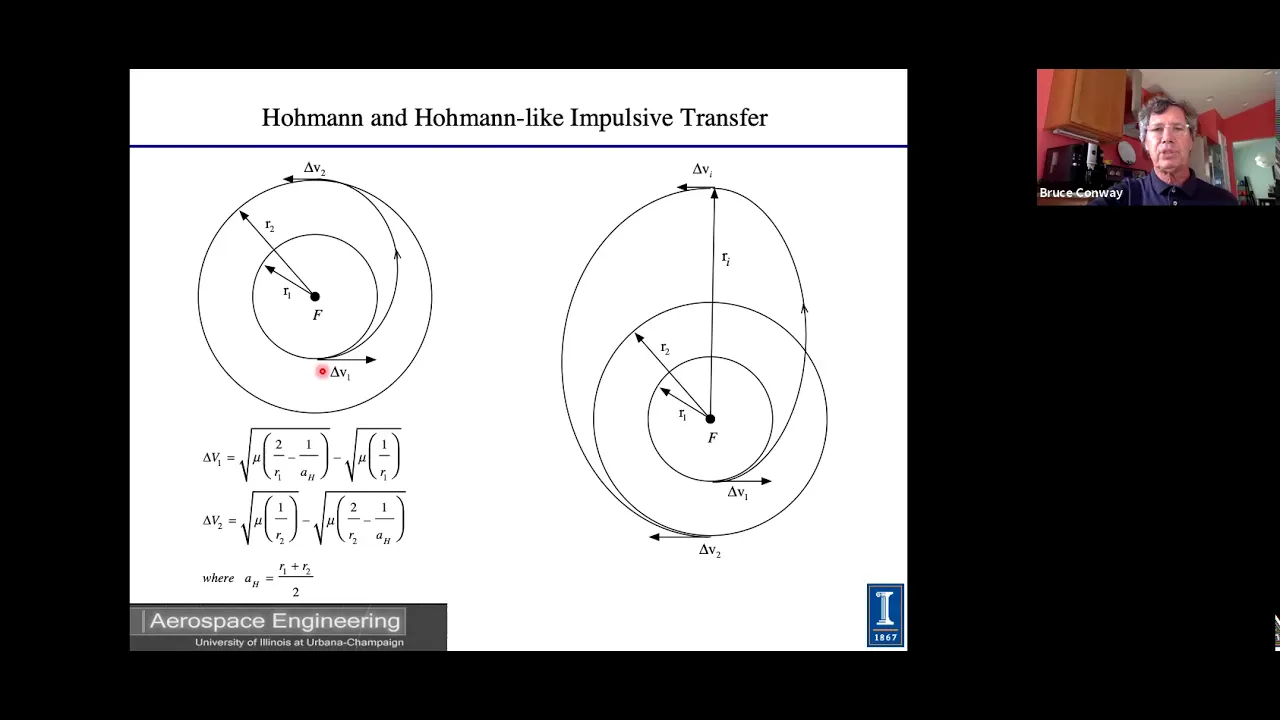
[Music] okay we have been working with the trajectory transfer so last time we were working with the minimum Ecentric eccentricity transfer which is also called home and transfer so we continue with that and uh finish it so uh given two orbits this is the initial orbit whose radius is r and then we have the final orbit whose radius is RF and the satellite is moving in this initial orbit and it is required to put it in the final orbit here so one impulse is given here in this place and the satellite goes into this elliptical orbit so this is transfer orbit this is final orbit and this one is initial orbit okay so once we are given this two orbits and we have to put the satellite in the final orbit then what we require the impulses in two places one impulse is required here in this place which we wrote as Delta V another impulse is required here in this place and this we wrote as Delta VF okay so we last time we worked out what is the expression for Delta VI so Delta VI we wrote as VI I time 2 N / by n + 1un minus1 and this is our equation number one and Delta VF this we wrote as vfc * 1 - 2 / n + 1 under root this is our equation number two okay so these are the two impulses required here in place a and this is the place B so this is the per of the iCal orbit and this is oppos of the elliptical orbit so if we give these two impulses it will put the satellite from the initial circular orbit into the final circular orbit okay now for providing this impulse what we need we have to fire the Rockets So for providing impulse we need to fire rocket so the rocket provide impulse by burning the propellant okay so we are going to develop the equation for the rocket and it's a very simple equation so let us take the mass of rocket at T = to t 0 to be m0 let M be the mass of Rocket at time t let m0 or let us say mi mi be the initial mass of the rocket let MF be the final mass of the rocket and let V exhaust speed this is the speed at which the propellants are being thrown out so propellant are burnt and then they are thrown out at this speed so this is our V so we start using uh start deriving the equation for the rocket using Newton's third law so Newton Third Law so from that M * V where m is the say the initial mass of the rocket so instead of putting here Mi I let us assume that m is is the mass of the rocket at any time T So m is the mass of the rocket as we have written also so no need of writing here and V is the speed at time T and then DM mass is ejected and the consequently the speed increases changes by Delta V and we have the ejected Mass so ejected mass is DM and its speed is given by v+ V where V is the exhaust speed with respect to and it is always taken with respect to the rocket so therefore from this place we can get MB equal to MB + MDB minus DMV minus DM DV plus DMV plus DM V okay these two will cancel out and minus DM V and DM plus DMV they will cancel out leaving you with these three terms okay now this term this is a very small term so DM is itself infinite symbol and DV is also infinite symbol so if you multiply them so this is almost a second this is a second order term basically so we neglect it and put it as zero so M * DB we can write it as M * DV is equal to DM DV we are neglecting this one so we will simply write as DM * V with a negative sign so this is the equation number three this is the equation of motion for Rocket which is a mass bearing system remember Newton Second Law is not directly applicable to the mass bearing system okay once we have done this then it's easy now to calculate how much mass will be required to provide the necessary impulse that we have computed so we have M DV we can drop the vector sign now and simply write this as mdv = minus DM * V so this becomes DV = minus DM by m and V we take V is constant integrated and integrate between the initial time VI to V and uh MI 2 m so this becomes V minus VI = to- V * Ln M minus Ln Mi I so this we can write as and this becomes Delta basically VI so at the initial Point what is the impulse required and that can be equated with the initial mass and the changed Mass so if I need to give this much of impulse accordingly our mass will be the changed mass will appear as M here in this place now this mass now we are having the mass of the rocket which is M right now so after the first impulse after the first impulse mass of the rocket is him so when we need to give the second impulse so for the second impulse similarly we can write here so we have the starting speed will be given okay and uh the say in the elliptical orbit so we put here some different notation so the starting speed here we let us assume this is VI so we write it as V1 okay and the final speed we write as VF or we can put here here it as VB similarly here we can put here this as VA so VA indicates the speed in the elliptical orbit at Point a okay and similarly this Mass can be put here as ma a so this is mass in the elliptical orbit at Point a okay so after the first impulse mass of the rocket is we can put here as Ma and this also becomes Ma and here we can replace this with Ma so ma is the mass of the rocket after first impulse at Point a okay now with this chain notations so again we can write DV minus V * DM by m and now final mass is MF and the initial mass is ma a okay so integrating we get VF minus VB is equal to Delta VF which is nothing but the impulse required at V okay impulse required at B so this becomes equal to minus V * Ln MF by m now the same thing can be written as V * Ln M by MF and this is thus we what we get Delta VF equal to V * Ln m a y this is our equation number five so from here the total Delta V the total impulse required will be Delta vi+ Delta VF the magnitude of both of them so this becomes V * Ln Mi by m a times we can write here plus and then later on multiply so Ln M A by MF which is equal to V * Ln Mi by MF so what we have got the total impulse required Delta V which is the total required impulse and this is equal to V * Ln Mi by MF obviously Mi is greater than MF because as the fuel is burned so the mass of the propellent is decreasing so MF is the final mass of the propellent or the rocket so here we are taking the mass of the rocket which includes the body so whatever the decrease in the mass of the rocket is there so mi minus MF so this is your Delta M this gives the mass of the propellent burn mass of the propellent bond okay so from here you can calculate how much this MF will be so Delta V by V this becomes equal to Ln Mi by MF okay and the same thing we can write as Mi y or MF we can simply write as Mi * C power minus Delta V by V okay therefore this implies Delta M will be equal to mius MF = to Mi * 1 - e ^ - Delta v v so this is the mass of the propellent B so you can see that how simplified this equation is so if you need to do some maneuver just calculate the impulses required in various places and then using this equation that we have developed for the rocket the total amount of the propellent required can be computed okay once we have done this now we go back again into the home and transfer so the home and transfer earlier we worked that derivation was little long so a shorter way of writing the same thing is not to go through the energy method but to use the velocity equations which are derived from the energy equations itself so we obate the need of using the energy equation and go in a longer process so the alternative way for deriving the home and transfer we are going to do now we will carry this out in the future also for any other purpose so we will follow the same method for any other competition so here we have alternate derivation of home and transfer so we take the same problem in which the satellite is moving in the initial orbit and then we need to put it in the final orbit so the satellite is here at a and this is to be put in B so the procedure is the same and we get the exactly the same equation one and two through this alternative root also so in fact the alternative roote we are taking it's just a compress form of the energy equation that we have used so we go into this right now so let us say the Vic is the is velocity of the satellite in the initial orbit initial circular orbit so this will be written as Mu y r i under root okay and vfc the Velocity in the final circular orbit this will be mu divided by RFC under root okay now in the iCal orbit at the initial point a so there the velocity can be written as 2 mu by r i minus mu by a where a is the semi measure X of the transfer orbit which is the elliptical orbit here in this case and VF at the final point which is the point B so this is at a at a and this is at B same equation is valid okay this quantity is a is constant of the orbit of the elliptical or transfer orbit so it is not changing here in this place so how we have got this equation we have done this earlier also and it's easy to work out so we know that the energy per unit Mass can be written in terms of the kinetic energy per unit Mass minus mu by R which is the potential energy per unit mass of the satellite and this will be equal to minus C by E is the total energy here so sorry this will be minus mu by 2 a which is the total energy of the satellite so from here we can write now 1X 2 v² = to Mu Rus mu by 2 a and this implies v² = 2 mu by r - mu by a and therefore this implies V = to Mu * 2 by r - 1 by a under root okay so this is the equation that we are using in both these places okay and a is given as r i + RF by2 this we have done earlier also so the semi measure X of this litical orbit will be nothing but the distance from here to here which is RI this distance is RI and distance from here to here which is nothing but this distance RF okay from the center to point B this is RF so semi measure X will be obtained by summing this r i + RF and dividing it by 2 so AAL to r i + RF by 2 and therefore the vi e this can be written as 2 mu we can take it outside and 2 by r i c minus mu by r i + RF mu we have taken outside so mu will go outside and this is a square root so this becomes mu * okay r i c we have put the to indicate the radius of the circular orbit so we can put here the C and here also we can put C so this is r i c plus RFC and to we can take it outside the whole thing this becomes 2 r i + RFC minus r i this whole under root so this is 2 mu * r i r i cancel out and we get RFC ided by r i * r i + RFC so mu by r i is nothing but velocity in the circular orbit this is G okay and mu by r i is v i so V take it outside and inside we can write as 2 RFC by okay therefore okay so the change in velocity required at the initial Point Delta VI this can be written as 2 mu VI I from this equation so this equation also we can number so this is equation number five so from equation five and okay from equation 5 Delta VI we can write as VI minus VI this will be the impulse required at the point a so VI we have written as VI I * 2 R FC / by r i + RFC under root minus viic taking Vic outside and if we remember what we have done last time we we put the RF by r i n okay this ratio we have written as n so in this case the final circular orbit and r i this equal to n so we divide the numerator and denominator here with r i so this becomes VI I equal to 2 N / 1 + n under root and then minus 1 okay so this is the impulse required at the initial point and if you remember that this is the equation we have derived this was the equation number one that we have written okay similarly at point B we can write Delta VF equal to V FC this is the velocity in the final orbit circular orbit minus VF at the final point in the elliptical orbit and again VF we can evaluate here so VF is nothing but mu [Music] * under root mu * 2 by RFC minus 1 by E and A is nothing but R i+ RFC divided by 2 so two goes into the numerator okay so this gives us mu * 2 and then r i + RFC minus RFC ided by RFC * r i + RFC this cancels out and we get here 2 mu 2 mu r i divided by RFC * under root okay so let us develop here further so this can be written as we can divide RFC by r i so if we do that so this will become 2 mu time RFC by r i and then r i is here ri we can take it outside the bracket and the whole thing then will become 1+ RFC by so we write here in this place so this becomes 2 mu ided by RFC by r i * r i+ 1 + RFC by r i under root and this becomes equal to 2 mu now RFC by R IAL to n so replace we replace it in that terms okay so again rewriting here let us make the space here available so we will carry out on the next page okay so this becomes VF equal to 2 m this quantity is in time r i Time 1 + RFC r i = to n under root okay so we have started with this equation mu * 2 ided by this this is fine okay so two mu r i 2 RFC and mu y r i is nothing but our we have already written this this is our V mu y r i under root this we can write as v i under root and then we will have 2 * n * 1 + n now if we try to write it in this format then you can see the difficulty that here vfc is the velocity in the final circular orbit and VF just now we have computed here which appears here but it appears in terms of Vic and therefore we cannot take common the vfc so what we will do instead of taking r i what the RC is appearing here we should have RFC appear in this place so if that happens then the MU y RFC then becomes vfc and then we can take common and write in the we can we'll be able to write in the previous format that we have developed so we will be able to write it in this format so we rework it and so so what we do here now VF we can simply write this as Mu 2 mu * r i ided by RFC * r i + RFC under root and mu by RFC we will take it outside so this is Mu by RFC let us write it in this fashion and this this becomes 2 r i ided by r i + RF C okay now if you look into this way so here this quantity which is appearing here this is nothing but your velocity in the final circular orbit and then you can divide here R by r i so this becomes 2 / 1 + RFC by r i so this is your vfc * 2 / 1 + n okay once we have got this now Delta VF Delta VF will be equal to V Final in circular orbit minus V Final in elliptical orbit so V Final in circular orbit minus V Final in elliptical orbit just now we have written this is FC * 2 / 1 + n so this is V FC * 2 / 1 + n taking out vfc outside so this becomes 1 - 2 / 1 + n under root okay and this is nothing but your equation number two that we have written earlier so this is nothing but equation number two okay thus we see that the moment transfer for the home and transfer the Delta VI and Delta VF that we computed using the energy method the same thing can be worked out in a very short way using the equation for the velocity so we directly and of course there we have used the uh we have equated the energy equation only but uh in the while choosing this way we have sorted the whole derivation a lot otherwise it was little more complicated and little difficult to handle also Okay so till now whatever we have done this is all about the transfer in transferring from one circular orbit to another circular orbit in an elliptical orbit where the transfer orbit is an an elliptical orbit so we have the starting point was here and the ending point was here in this place now suppose I do not want to do this the reason is very simple the time period of the transfer the time taken for the transfer will be time is given is 2 pi by see the angular velocity how do we write so angular velocity once we write the expression for this so from there we can write the equation for the time period so here the time period if you see it's going to take a lot of time in this orbit so look in this figure so here point from point A to point B it's going an in an eliptical orbit so from going to point A to point B and coming from this place to this place it will complete one orbit and for one orbit the time period if we know so we can find out how much the time will be taken to go from point A to point B and that is the time the satellite requires to go from point A to point B but this kind of calculation it poses certain problem what is the pro exact problem here because if we go for this calculation so for going to point B always I have to go from this point to this point only thing I am consuming little lesser energy as we know that if the uh if the velocity Vector at Point a and the impulse given at Point a both are in the same direction then the kinetic energy the change in kinetic energy will be maximum so from that point of view we are going to spend little less energy but the time of transition from point A to point B will be large and and in many cases it may not be acceptable we want that the time period should be small so the time period is given by T = 2 pi * e / mu okay so from where we have derived it it actually we have derived it from Omega = to 2 pi by T okay you can write it in this way so this is what earlier we have used frequenc ly this equation mu by AQ under root so your time to go from here to here so T AB this will be equal to Pi * AQ by muot so you can assume that if the radius of the initial orbit this is R this is much less than the final orbit then how much time it's going to consume okay and it's a really pathological so in that situation he would like to not to do like that but rather transfer from some point say a to some point C here along this orbit okay so time of transition from this point to this point obviously it will be very small and thereby you save a lot of time though of course we know that the energy to be given when at this point and this point will be much larger so we have to pay in terms of the propellent mass there is no other option so we cannot uh get the two Advantage simultaneously either we can have lesser transfer time or either we save the energy or the mass of the propellent okay so going to the next step before going to the next step which we will discussing here so this is basically a general trajectory transfer and before we carry out this step we will just have a few uh steps about the difference between the circular and the parabolic orbit parabolic and the hyperbolic orbit to complete the topic so say we have one circular orbit given in which the satellite is moving okay so VI I this will be equal to Mu y r under root now if you need to put the satellite in a parabolic orbit so you have the circular orbit here whose radius is r i and you are throwing it in certain parabolic orbit okay so we use the equation for the velocity so V = mu * 2 by r - 1 by a okay in the parabolic orbit a equal to Infinity okay semi measure X of the parabolic orbit is infinity and therefore V parabolic we can write here as 2 mu by R under root and he put here R so if we are here in this place so this is the distance R so this is nothing but under < tk2 * and mu by R is nothing but v i okay therefore the Delta V the impulse that you need here in this place Delta V okay that will be VP minus v i which is equal to under < tk2 - 1 * v i similarly if you want to find out the what will be the impulse required if the satellite is moving in a parabolic orbit and if you need to send into a hyperbolic orbit so how much impulse is required that can be calculated either the satellite in the circular orbit and you need to send it into the hyperbolic orbit so how much impulse is to be given so what is the benefit of the parabolic and the hyperbolic orbit it's a benefit is that these orbits are faster because you can see that VP in the Velocity in the parabolic orbit in this point is much larger this is root2 times larger than the circular orbit okay and therefore it will cover certain certain trajectory up to certain distance in a shorter time similarly the same thing is true for the hyperbolic orbit also so for the hyperbolic orbit and this is the per Point here okay so this is your per point in hyperbolic orbit we can write the velocity at PV here we have written for the parabolic orbit so we will write here as BH this is the velocity in hyperbolic orbit hyperbolic orbit at the initial point a okay this is the initial Point let us say a and this will be equal to Mu * 2 by r i + 1 by a okay this we have discussed already that this minus sign will change to plus plus sign for the hyperbolic orbit so now now you have given this equation so RI is the per position okay so therefore you can write this as 2 * r i will be nothing but a * e minus one for hyperbolic orbit for ellipse R per we can write as a * 1 - c for hyperbola R per is written as a * e minus 1 because for hyperbola is e is greater than 1 okay okay and for uh parabolic orbit obviously we have uh AAL to Infinity so here uh in this case now we can separate out a and write it in a way mu by a * 2 + e- 1 / eus 1 under root so this quantity becomes equal to e + 1 / by E-1 under so Delta VH in this case required will be mu by a * e + 1 / e- 1 under root minus 2 mu by RP under root where RP is the per distance this is for parabolic orbit this is for hyperbolic orbit okay and a * C minus 1 is nothing but the RP okay okay so the whole thing can be simplified and written in the way now a * C minus 1 is nothing but RP here in this case so this will become mu by RP under root * e + 1un minus under < tk2 inversely because e is greater than 1 and therefore this quantity is greater than two the under root here so this is obviously a positive quantity so Delta VH so Delta VH is greater than zero so you need more energy to put in the put the satellite in h hyperbolic orbit from parabolic orbit okay now we have completed these topics and we can go for generalized transfer so for the generalized transfer we worked out the figure earlier so this figure again we can repeat here we want to send the satellite from point A to point B along this trajectory velocity in this circular orbit will be T in the tangent Direction so this is a VI and here the velocity will be tangent to this circle so this is VF and if we are sending the satellite along this orbit so here the orbit again the Velocity in this electrical orbit will be written as VI and here in this place it will be tangent to this orbit and this is let us say v f so your elliptical orbit will be somewhat looking like so now the per distance of the transfer orbit is less and oppos distance is larger and going from this point to this point the time taken will be small so this we need to work out okay so this is your Center a here okay so for working out this we take this initial velocity as VI and this is V EI and the required impulse then will be Delta VI okay and let us say this angle is Alpha so we need to work out what is the impulse required at the point a which is given by Delta VI so again v i this is Mu by RI under root this is your RI this is your RF and this is nothing but velocity in circular orbit at then v i e and we can put here this as v i to indicate this is the initial point and this is the initial orbit and similarly here we can write this as VF this notation is better so VI is the velocity in elliptic orbit at a wef is the velocity in elliptic orbit at B and vfc this is the which is equal to Mu by RF under root and this this is the velocity in circular orbit at B and let V cap equal to V by Vi I okay so this implies VI I cap will be equal = to v i by v i thisal to 1 similarly we can write PFC cap equal to vfc by v i = to Mu by RF under root / mu by r i under root so this becomes r i by RF under root = to 1 by n under root so this is our equation number we'll write this as equation number a and this as equation number B therefore Delta VI this will be equal to v e so from this figure this is the velocity in the circular orbit VI I and uh this is the velocity in the elliptical orbit and this is the Delta VI Alpha is the angle between them so we can write here Delta VI Square v² + V i² - 2 V * v i c * cos Alpha I this is equation number c similarly we can write Delta VF is equal to V FC minus v f okay so this implies Delta VF squ this will be equal to VF c² + VF squ - 2 vfc * VF * cos Alpha F so in this case we have VC is the vfc is the velocity in the circular orbit and the largest orbit and larger circular orbit and this is this is say this is v f and this angle is Alpha F okay and therefore the quantity here this will be Delta V so these are the vectors here so this is Delta VF so here also we can show them by Vector okay so we put here Alpha F now this we can number as is question number D so we have two equations C and D which gives you the impulse required at the initial point and the final point but you can see that this equation is not easy to work out with and we need further simplification of these two equations to get the total amount of impulse required so we'll work out this in the next class so we end here thank you very much [Music]
Up Next
4:15
Controlling 16 Servo Motors with Arduino and PCA9685 Driver
@sritu_hobby
178.1K views•2021-05-11

30:32
Ultrasonic Transducers: Resonant Frequency Measurement and Horn Design
@imajeenyus42
229.9K views•2017-02-22

56:53
Microfluidics Introduction | Micro & Nanofluidic Devices
@iit
37.1K views•2015-06-22

33:39
How a Student's Question Saved a NYC Skyscraper from Collapse
@veritasium
22.8M views•2025-04-26
Related Study Plans & Knowledge Roadmaps
Structured learning paths in Engineering
engineering
Building Acoustic Levitators: Physics & Arduino
01The Physics of Sound and Standing Waves
02Piezoelectric Transducers and H-Bridge Drivers
03Arduino Programming: Generating 40 kHz Signals
+ 2 more learning modules
14h5 modules
Explore Roadmap
engineering
Building Peltier Cloud Chambers: Particle Tracks
01Cosmic Rays & Cloud Chamber Physics
02Thermoelectric Cooling (TEC) Fundamentals
03Custom Liquid-Cooling Loop Design
+ 2 more learning modules
18h5 modules
Explore Roadmap
engineering
Yagi-Uda Antennas: Modeling, Build & VNA Test
01Introduction to RF and Antenna Fundamentals
02Yagi-Uda Antenna Design Principles
03Antenna Modeling and Simulation in 4NEC2
+ 2 more learning modules
18h5 modules
Explore Roadmap
engineering
ECG Monitor Design: Op-Amps, Filters & Noise
01Electronics & Breadboard Basics
02Op-Amps and Instrumentation Amplifiers
03Bioelectricity and ECG Fundamentals
+ 2 more learning modules
18h5 modules
Explore Roadmap