Direct rule is a colonial governance system where the colonial power takes full control over the territory's government, imposing foreign officials and laws while excluding local voices, whereas indirect rule involves working through existing local authorities and indigenous leaders to manage day-to-day affairs while maintaining overarching colonial control, with France and Belgium favoring direct rule and Britain preferring indirect rule in their colonies.
Direct vs Indirect Rule: Colonial Governance Systems Compared
Added:Deep Dive
The fundamental definitions of colonialism and imperialism, including the economic and political motivations of colonizing powers.

الوحدة3 الدرس1 الاستعمار مفهومه ودوافعه واشكاله2008
234
Colonialism is defined as a strong state conquering and exploiting a weak state, with the purpose of exploiting resources and controlling economic, social, and military assets. European colonialism was driven by political motivations including territorial expansion, control, and influence, and economic motivations including raw materials, cheap labor, markets, and strategic maritime routes. Colonial powers employed systematic methods including geographic exploration to discover routes, direct military occupation of territories like Algeria, Tunisia, and Egypt, and intense competition for strategic passages like the Suez Canal and Strait of Hormuz.
Click to watch →
Post colonialism : An introduction
16.9K
Settlers justified colonization by claiming to reform savage, primitive inhabitants lacking civilization. However, the primary motivation was economic: colonizers possessed capital but lacked manpower and resources, driving them to exploit colonies for profit. Settlers plundered resources, sent profits to their motherlands, while natives lost everything including their culture and traditions. Imperialism served as the stepping stone to full colonization, representing the attainment of supremacy through political, economic, and military means. This systematic exploitation created lasting trauma and established frameworks for continued control.
Click to watch →

Kolonialisme vs Imperialisme: Mirip Tapi Beda, Jangan Ketuker | XI KUL 1 | SMKN 1 SALATIGA
128
Colonialism and imperialism are distinct but related concepts that drove European expansion from the 15th century. Colonialism, from Latin 'kolonia' meaning settlement, involves territorial expansion to control regions and extract resources, typically by powerful nations. Imperialism, from Latin 'imperal' meaning to control, focuses on governing other nations for power and benefits, coined by Benjamin Disraeli in the 18th century. Ancient imperialism (pre-Industrial Revolution) was driven by Gold, Gospel, and Glory. Modern imperialism emerged after the Industrial Revolution, driven by economic needs. Classification includes political, economic, and military imperialism. Key factors driving colonialism include economic demands for spices and raw materials, political competition among European powers, religious missionary activities, technological innovations like the compass and caravels, and the spirit of exploration.
Click to watch →

Kehidupan Masyarakat Indonesia pada Masa Kolonialisme dan Imperialisme@BelajarIPSAsyik-h7t
138
Colonialism is the practice of conquering territories through settlement, originating from the Latin 'polonus' meaning farmer. Imperialism is a policy of controlling other nations to expand power, from Latin 'imperium' meaning to rule. Colonialism's primary purpose was exploiting natural resources like spices and gold, plus labor. Imperialism aimed to spread political, cultural, and economic influence through sovereignty control. Ancient imperialism (pre-Industrial Revolution) followed the '3G' principle: God, Glory, Gospel. Modern imperialism (post-Industrial Revolution) focused on industrial needs: raw materials, cheap labor, and markets.
Click to watch →

उपनिवेशवाद एवं साम्राज्यवाद Class 10 इतिहास Chapter 7 Question Answer | HBSE भारत एवं विश्व in Hindi
25.7K
Colonialism is defined as the practice of powerful nations exploiting weaker nations for economic gain, while imperialism refers to extending a nation's power through territorial acquisition. European powers, particularly Britain and France, established colonies in India driven by intense desire for profit and economic resources. The Industrial Revolution created demand for raw materials, which India provided. Colonial powers developed India primarily to meet their own economic needs rather than for India's benefit. British capitalists invested in India expecting returns, but this development served only colonial economic interests. The video emphasizes that colonial expansion was fundamentally driven by economic greed and the pursuit of maximum profit.
Click to watch →
Deep Dive
The historical context of the Scramble for Africa and the Berlin Conference (1884-1885), which initiated widespread European partition of the continent.

The Berlin Conference: The Scramble for Africa (1884-1885) | Colonial History
165.3K
The Scramble for Africa (late 19th to early 20th century) represented a dramatic shift in European colonial policy toward the African continent. Prior to 1870, European powers focused primarily on coastal colonies along the Mediterranean and African deep south, engaging in limited trade with tribal leaders while largely ignoring Africa's interior. This changed dramatically when Belgium's King Leopold II announced his plan to fund an expedition to explore the Congo in 1876, sending Sir Henry Morton Stanley in 1879. France simultaneously began building railways east of Dakar to tap Sahel markets and joined Britain in controlling Egypt. When France discovered Leopold's secret agenda to create the Congo Free State, they organized their own colonial expansion. Portugal allied with Britain to block the Congo Free State's Atlantic access. This competition intensified when Italy joined the Triple Alliance, disrupting German Chancellor Otto von Bismarck's plans and forcing Germany into the race. Bismarck organized the Berlin Conference (November 15, 1884 - February 26, 1885) with representatives from 13 European nations and the United States to establish common policies for colonization and trade. The 1885 General Act declared the Congo River Basin neutral, guaranteed free trade, forbade the slave trade, and rejected Portugal's claims to the Congo estuary, enabling Belgium's Congo Free State. The conference established the principle of effective occupation requiring physical control for territorial claims, while refusing to address sovereignty issues for African states.
Click to watch →
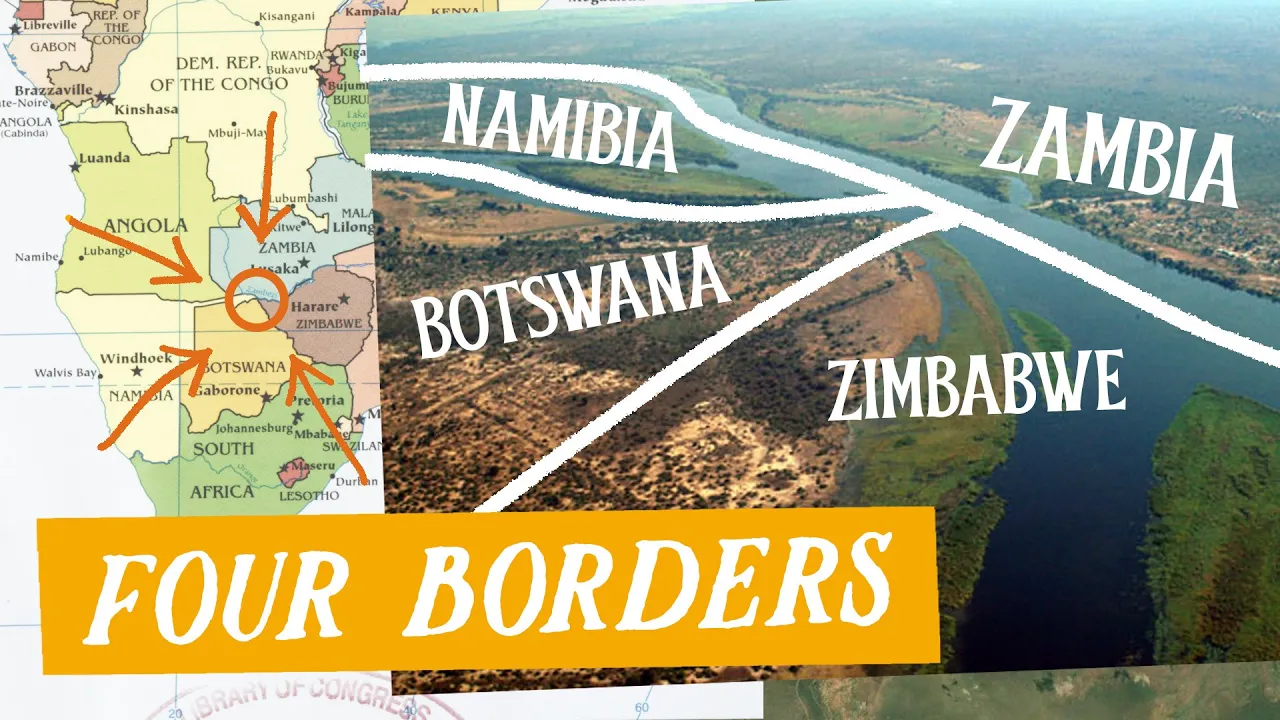
Understanding the World's Only Four-Nation Border Quadripoint
294.7K
This section covers the historical background of colonial border creation in Africa during the late 19th century. It explains how European powers competed ruthlessly for African territories, leading to the Berlin Conference of 1884-1885 organized by German Chancellor Otto von Bismarck. The conference brought together 14 European nations plus the USA to negotiate territorial divisions without war. Britain sought a Cape Town to Cairo connection, while France, Portugal, and Germany aimed for Atlantic-Indian Ocean links. The video details how these competing interests resulted in arbitrary borders that persist today, including the Caprivi Strip acquisition through the illegal Zanzibar Treaty of 1890.
Click to watch →
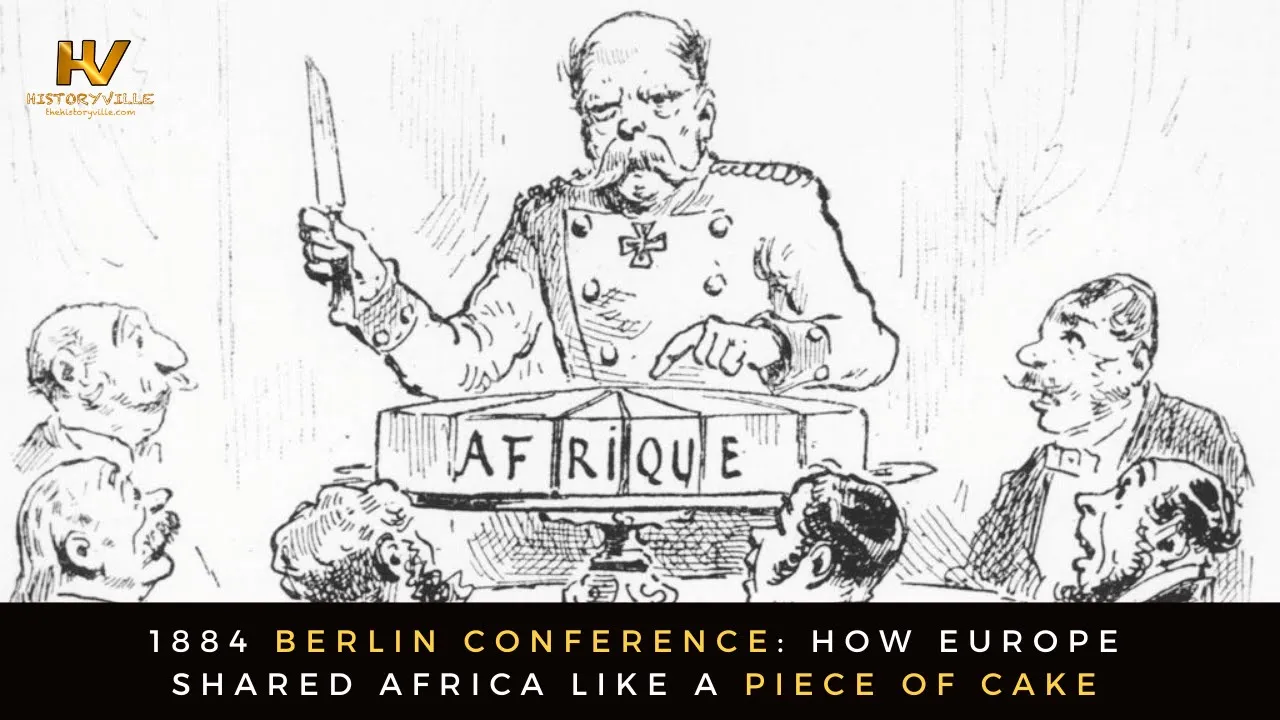
The Berlin Conference 1884-1885: The Scramble for Africa Explained
114.1K
The Berlin Conference of 1884-1885 was a meeting organized by German Chancellor Otto von Bismarck where 14 European nations divided Africa's vast territories among themselves without African representation, establishing the principle of 'effectivity' that required colonial powers to demonstrate actual control over claimed lands; this conference formalized the 'Scramble for Africa,' resulting in the artificial division of the continent into 50 colonies that merged different ethnic groups and created borders that persist today, causing long-lasting political, social, and economic challenges for African nations.
Click to watch →

CONOCIENDO ÁFRICA, el CONTINENTE OLVIDADO | Kevin BRYAN con Pedro ROSEMBLAT
61.9K
In 1884-1885, 14 European powers met in Berlin to divide Africa among themselves, formalizing the 'Scramble for Africa.' Britain and France received the largest territories due to their existing colonial presence. The conference established artificial borders that ignored ethnic and cultural realities, grouping together different groups while separating others. Only Liberia (protected by the United States) and Ethiopia (which successfully resisted Italian invasion) escaped colonization. The Congo Free State was granted to King Leopold II of Belgium as a personal possession, where he committed atrocities including forced labor and mass killings. This period established the framework for modern African political boundaries and the legacy of colonial exploitation.
Click to watch →

Cauzele Primului Război Mondial: cum s-a sinucis Europa
57.6K
The Berlin Conference of 1884-1885 formalized the European partition of Africa. At this conference, European powers divided African territories among themselves, with only Ethiopia, Liberia, and a few other small states remaining independent. The conference was called by King Leopold II of Belgium, who had taken control of the Congo Free State through a private company. This period marked the height of European colonial expansion and the beginning of the end for African independence.
Click to watch →
Deep Dive
Basic political science concepts of sovereignty, authority, and the structures of a state.

AP Comparative Government and Politics: Introduction: Sovereignty, Authority, and Power
1.4K
Sovereignty is the ability of a state to carry out actions within its borders without external interference, while authority refers to the legitimate power to make and enforce rules, and power is the capacity to influence outcomes; states are political entities that control territory and pass laws, nations are groups of people bound by shared political identity such as ethnicity, religion, or culture, and regimes are the established rules and procedures that governments follow over time.
Click to watch →

Ilmu Negara 09 | Konsep Kekuasaan, Kewenangan, dan Kedaulatan #politik #belajar #hukum #tutorial
500
Power is the ability to influence others' behavior according to one's will, while authority is legitimate power recognized by society, and sovereignty is the absolute, indivisible, and perpetual power of a state over its territory and people; these concepts are interconnected, with power being the foundation, authority providing legitimacy, and sovereignty representing the highest form of state power.
Click to watch →
AP Comp Gov - Sovereignty, Authority, Power, Legitimacy
6.3K
Sovereignty is defined as a state's independent legal authority over a defined population within a defined territory, distinguished from sub-national units (like U.S. states), militias, and religious groups that exercise power but lack sovereignty; states maintain sovereignty through three interrelated elements: power (coercive ability to compel action via military/police), authority (right to exercise power justified through constitutions, legislatures, or popular support), and legitimacy (citizens' belief that the government has the right to use power), with legitimacy derived from sources such as elections, constitutions, ideology, and effective governance.
Click to watch →

اختبار التربية المدنية الفصل الثالث للسنة الأولى متوسط 2025
218.8K
This section covers three core concepts in political science. A state is defined as a geographical territory with defined borders containing a population engaged in political, economic, and cultural activities, governed by a political system. Authority represents the legitimate use of power in a socially acceptable manner, such as when states employ laws and security forces to organize society. The constitution serves as the supreme law of the land, comprising legal provisions that all other laws must follow. These foundational concepts form the basis for understanding governmental structures and citizen-state relationships.
Click to watch →

B.A.LL.b|Political Science|ONE SHOT|1st Sem| #law #ballb #llb_entrance_exam #gurujiclasses
3.2K
Power has two main sources: political power (controlling government resources to make policy decisions) and economic power (wealth and control over economic resources). Those with political power control government and have authority to make policy decisions. Legal sovereignty is the highest authority to make laws, vested in specific persons or groups, recognized by courts. Political sovereignty is vested in voters, uncertain and unorganized. Legal sovereignty must yield to political sovereignty as real power lies with voters. The state consists of four elements: population, territory, government, and sovereignty. The government is only one element - an agency working for the state. The state is abstract while government is concrete.
Click to watch →
Deep Dive
The existence and nature of pre-colonial societies, kingdoms, and traditional governance systems in Africa and Asia.

Доколониальная Африка – Дмитрий Бондаренко | История Африки | Научпоп | НаукаPRO
95.7K
Pre-colonial Africa south of the Sahara was home to diverse and sophisticated political systems, including the three great West African empires (Ghana, Mali, and Songhai) that thrived on trans-Saharan trade routes, the city-states of the Yoruba and Benin kingdoms in West Africa, the Kingdom of Kongo in Central Africa which achieved successful Christianization, and the powerful kingdoms of the Horn of Africa and Great Lakes region. These societies developed complex political organizations, artistic traditions, and cultural practices that persisted through the colonial period and continue to influence contemporary African societies.
Click to watch →

African College Students Push Decolonization Movement To Liberate The Continent
31.4K
Africa had many glorious kingdoms and civilizations that existed before colonizers arrived, including the Ashanti Kingdom, Nubia, Aksum, and Egypt. These civilizations had sophisticated governance, wealth, and cultural achievements. For example, Mansa Musa of the Mali Empire in the 1300s possessed enormous wealth. Understanding this history is crucial for decolonization because colonizers tried to erase these achievements and present themselves as the original inhabitants.
Click to watch →

VERSION INTEGRALE DE L’INTERVIEW MAGISTRALE DU LEADER DU NIGER 🇳🇪 LE PRÉSIDENT TIANI,11 /02/2024
43K
Before colonial penetration, West African peoples organized themselves into empires and kingdoms. For example, in the Niger region, there were the Sultanate of Bornou, the Sultanate of Kano, the Sultanate of Gobir, and the Sokoto Caliphate. The Songhai Empire also existed in what is now northern Benin. These pre-colonial political structures demonstrate that African societies had sophisticated governance systems before European colonization.
Click to watch →

Как построить успешную страну в Африке?
672.7K
Before colonial rule, Botswana developed unique democratic traditions that distinguished it from other African societies. The extreme poverty of the region meant pastoralists could easily relocate with their herds if dissatisfied with leadership, preventing chiefs from becoming absolute rulers. All major decisions were made at the Gona (people's assembly), where any citizen could speak and criticize leaders. The principle 'a chief is a chief by the will of the people' governed governance. This tradition, preserved because Britain never fully colonized Botswana, provided the foundation for modern democratic institutions and explains why Botswana avoided the civil conflicts that plagued other African nations.
Click to watch →

HISTÓRIA DA ÁFRICA: ESMAEL GABRIEL, YURAN TINTA E MISTER PRAV - Inteligência Ltda. Podcast #1358
145.3K
Before European colonization, Africa was organized into numerous independent kingdoms and empires, including the Kingdom of Congo, the Mali Empire, the Songhai Empire, and the Benin Kingdom. These political entities had sophisticated governance systems, trade networks, and cultural achievements. The diversity of African political organization contradicts the notion of a unified 'African' identity and demonstrates the continent's historical complexity.
Click to watch →
Prerequisite Knowledge
- Concept 01The fundamental definitions of colonialism and imperialism, including the economic and political motivations of colonizing powers.
- Concept 02The historical context of the Scramble for Africa and the Berlin Conference (1884-1885), which initiated widespread European partition of the continent.
- Concept 03Basic political science concepts of sovereignty, authority, and the structures of a state.
- Concept 04The existence and nature of pre-colonial societies, kingdoms, and traditional governance systems in Africa and Asia.
Subsequent Learning
- Step 01The process of decolonization and how different administrative legacies influenced the path to independence and nation-building.
- Step 02The long-term impact of colonial legal systems, specifically the institutionalization of customary law versus civil law systems in post-colonial states.
- Step 03The relationship between colonial administrative strategies (like 'divide and rule') and modern ethnic conflict and political fragmentation.
- Step 04Neocolonialism and Dependency Theory, examining how post-colonial states remain economically and politically linked to former metropoles.
Governance Styles
Colonial Impact
Governance Styles
0:03Playing Section
- 1
Direct rule centralizes power with foreign officials and laws, excluding locals.
- 2
Indirect rule delegates authority to local elites while maintaining oversight.
- 3
These methods differ in colonial control and local autonomy levels.
The False Dichotomy and Pragmatic Hybridity of Colonial Rule
While traditional analyses contrast British 'indirect' and French 'direct' rule, revisionist historians and post-colonial theorists argue this dichotomy is largely a colonial myth. Scholars like Mahmood Mamdani and Frederick Cooper suggest that both systems converged in practice due to severe resource and manpower constraints. Regardless of official ideology, all colonial powers relied on a hybrid mix of direct military coercion and collaboration with co-opted local elites, a system Mamdani labels 'decentralized despotism.' Focusing strictly on the direct/indirect binary overstates the coherence of colonial administrative strategies and understates the agency of colonized populations, who actively subverted, resisted, and reshaped these governance structures. Ultimately, both models functioned similarly to extract resources and maintain control, making the distinction more rhetorical than substantive.
Deep Dive
The process of decolonization and how different administrative legacies influenced the path to independence and nation-building.
Decolonization: Crash Course European History #43
604K
Decolonization refers to the rejection of European rule in colonies, resulting in the process by which colonized peoples achieved independence. By the 1970s, most European colonies gained independence. During WWII, Europeans continued exploiting colonies through forced labor and destruction. Post-war, millions rose up for independence, ending centuries of colonial rule. The process varied dramatically: India and Pakistan became independent in 1947 after British policies divided Muslim-Hindu communities, creating horrific violence with over a million deaths. China's Communist victory in 1949 ended foreign influence. In Africa, peaceful transitions occurred in Ghana, Morocco, and Tunisia, while violent conflicts erupted in Kenya (Mau Mau uprising) and Algeria (three million European settlers), where torture and concentration camps characterized the struggle. Despite brutality, independence eventually came, though new nations faced severe challenges: weak infrastructure, systems designed for resource extraction, and ongoing violence as former colonizers resisted change.
Click to watch →
Theology and the Limits of Liberal Democracy
215
Decolonization in the 1950s-1960s was fundamentally a process of transferring internal administrative power from colonial administrators to indigenous politicians, without redistributing power between newly independent states and their former colonizers. The independence constitution participated in propagating colonial ideology by defining self-determination as having power to form government within national borders, rather than addressing global power imbalances. The end of formal colonial occupation plus creation of an internal government comprised of indigenous people became sufficient evidence of decolonization, despite no significant changes to international political and economic order or reparations for past colonial extractions.
Click to watch →
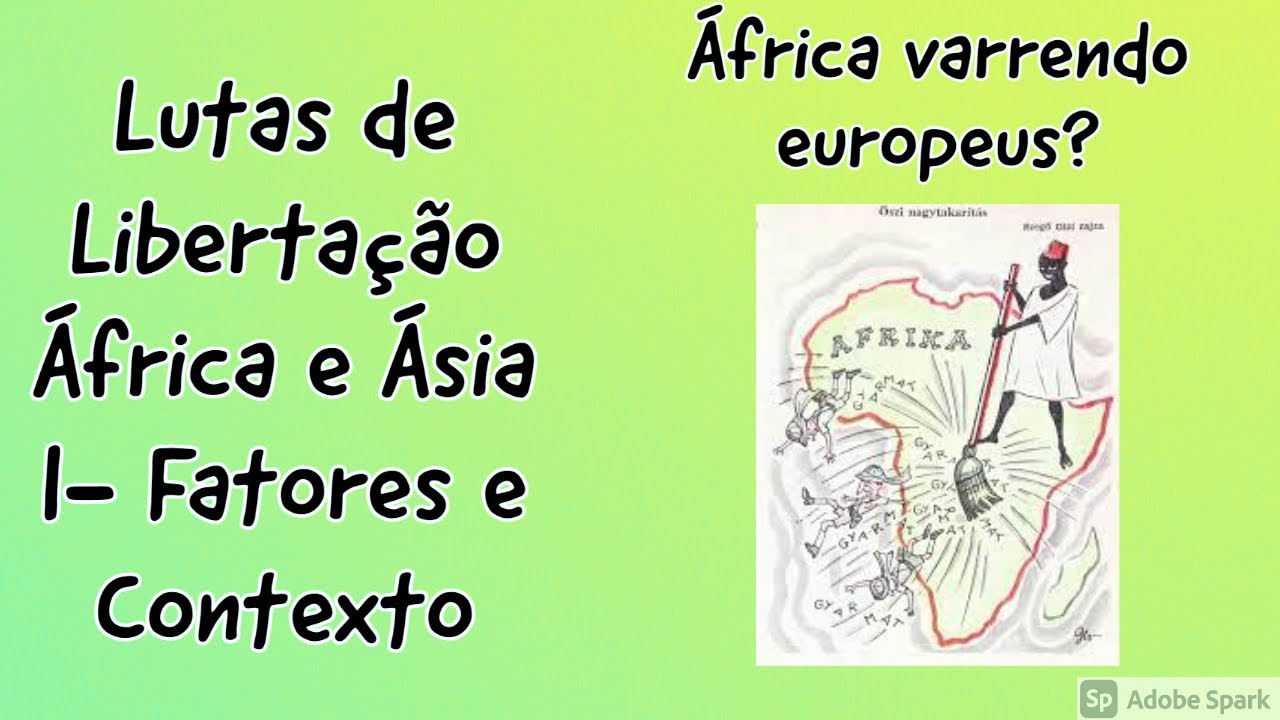
História: Lutas de Libertação na Ásia e na África I- Contexto e Fatores
338
Decolonization refers to the process of colonized peoples achieving independence, though 'liberation' is more accurate as it acknowledges the active struggle required. The process occurred in four main periods: 1920s (Middle East after Ottoman dissolution), 1930s-1940s (Asia before and after WWII), 1950s-1960s (Africa, with over 15 countries gaining independence in 1960), and 1970s (Portuguese Africa). Colonial powers artificially divided territories, placing rival tribes in the same countries while separating connected groups, creating ongoing conflicts. Many countries changed names after independence (Congo became Zaire, Burma became Myanmar, Dahomey became Benin).
Click to watch →
Seminario UDIR: Lo poscolonial, lo decolonial y lo colonial
2.8K
This section establishes three interconnected frameworks for understanding colonial legacies. Decolonization serves as the middle category mediating colonial and postcolonial perspectives due to its urgency in contemporary movements like Black Lives Matter and interrogations of slavery, apartheid, and caste injustices. Six distinct meanings of decolonization exist in academia: political processes (1920s-1970s), decoloniality from Latin American work on coloniality of power/knowledge, making disciplines more inclusive, fresh readings of disciplinary practices, questioning settler colonialisms, and critical practice addressing asymmetries. Postcolonial studies emerged from Edward Said's 'Orientalism,' which established that Western knowledge and power were discursively fabricated through imperial representations. Subaltern studies, originating in India using Antonio Gramsci's concept of subaltern, examined subordination through class, caste, age, gender, and race. Postcolonial approaches interrogated empire under the sign of the colony, while subaltern studies questioned dominant nationalism under the mark of the nation. Both share anti-colonial antecedents but should not be easily collapsed together.
Click to watch →

Contexte politique, Situation de Sonko, parcours de Senghor :L' ecrivain Boubacar M R SY decrypte...
1.1K
The fundamental problem in Africa was balkanization or fragmentation during decolonization. The speaker argues that if Africa had remained united, it would have been economically and militarily stronger. This explains why African nations now work toward unity through organizations like the African Union. Léopold Senghor is recognized as the father of the Senegalese nation who built the nation and its administration. He emphasized that people must first root themselves in their own culture before opening up to others. His role was both symbolic and practical in constructing a strong national identity and administration.
Click to watch →
Deep Dive
The long-term impact of colonial legal systems, specifically the institutionalization of customary law versus civil law systems in post-colonial states.

Olufunmilayo B. Arewa: Technology Disruption, Digital Colonialism and Law in Africa
473
Colonial authorities created bifurcated legal systems that hierarchically separated customary law from European law. Customary law was treated as a repository of unchanging traditional practices ('from time immemorial'), while European law was applied to Europeans and viewed as rational and impartial for business purposes. This bifurcation created hierarchical legal systems where European law took precedence through repugnancy doctrines without accounting for cultural implications. Colonial treaties were often signed by illiterate populations who didn't understand what they were agreeing to, and colonial administrators acknowledged these contracts were problematic yet proceeded anyway. This legal fragmentation continues to affect how justice is administered in post-colonial African societies.
Click to watch →

Prof PLO Lumumba on the value of Pan-Africanism in developing ethical leaders in HEI's
322.4K
African legal systems reflect colonial legacies with three main traditions: civil law derived from French colonialism (with elements in Portuguese colonies), common law derived from British reception on August 12, 1897, and Dutch traditions in some areas. Customary African law is only applicable to the extent it does not conflict with justice and morality—whose standards remain undefined. This fragmented legal landscape prevents a unified pan-African approach to justice and law.
Click to watch →

Ghost Dancing With Colonialism Part 2
314
Colonial law involves externally imposed normative systems instituted by force to uphold unequal distribution of resources, denying some people political voice and excluding them from determining laws. Post-colonial law involves self-determined laws based on consensual processes with informed public discussion and accountable governments aiming for egalitarian distribution of power and resources. Colonial systems impose identities—before colonization, there were distinct Nations, not 'Aboriginal people.' Colonial courts operate in foreign languages and cultures with biased procedures, declaratory reasoning, and ethnocentric perspectives. Post-colonial systems feature mutually determined law, public participation, equal treatment, proof-based facts, consensual concepts, principled explanations, and respect for diverse backgrounds.
Click to watch →
How Legal Systems Shape Southeast Asia: Common Law Vs Civil Law - Episode 4 Of Sea Dreams
281
Colonial powers determined legal traditions across Southeast Asia: Britain imposed common law on Malaysia, Singapore, and Brunei; Dutch and French colonialism established civil law in Indonesia, Thailand, Vietnam, Cambodia, Laos, and Myanmar. Before colonization, these regions had diverse indigenous systems including feudal codes, Hindu law, Islamic law, and customary traditions governed by elders and kings.
Click to watch →

#14: Nachricht aus Paris ✦ Schottland ✦ Let's Play Europa Universalis V (Gameplay / Deutsch)
25.6K
Countries can choose between customary law and civil law systems. Customary law increases estate balance and reduces stability costs, while civil law promotes centralization. The choice affects long-term governance structure and stability. Players should consider their strategic goals when selecting legal systems, as this decision has lasting implications for national development.
Click to watch →
Deep Dive
The relationship between colonial administrative strategies (like 'divide and rule') and modern ethnic conflict and political fragmentation.

Was Colonialism Good for the Colonized People? Pernicious Political Legacies of Colonialism
2.6K
Colonial powers employed 'divide and rule' to maintain hegemony by heightening ethnic, religious, and regional rivalries. In India, the British pitted Muslims against Hindus, using each group to undercut the other, creating divisions so severe that Muslims formed Pakistan. Regional identities (Punjabis vs. Bengalis, Tamils vs. North Indians) persist as sources of distrust. In Trinidad and Tobago, colonial labor policies created ethnic rifts between African and Indian workers, establishing political divisions that continue today. This strategy transformed pre-existing differences into hardened ethnic identities used as markers of inner and outer groups, creating lasting conflict in post-colonial nation-states.
Click to watch →
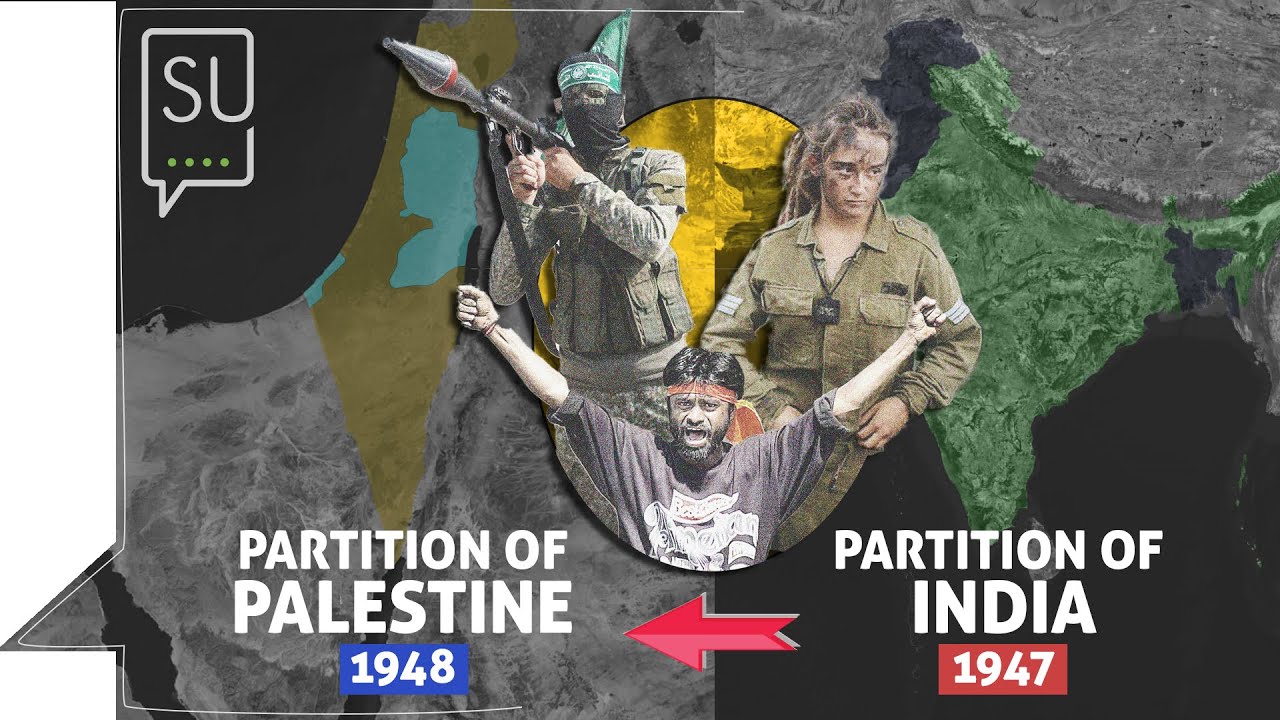
How INDIA echoes The Israel-Palestine Conflict|Straight up
7.4K
The British colonial strategy of 'divide and rule'—categorizing colonized populations by religion, ethnicity, or social class to create internal conflicts and prevent unified resistance—has created lasting ethnic tensions in former colonies like India, Hong Kong, Malaysia, and Singapore, with the Israel-Palestine conflict being a modern parallel where both groups claim legitimacy to the same land.
Click to watch →

Níger y África LUCHAN por su dignidad frente al saqueo - Entrevista con Eric Calcagno
22.3K
Colonial powers employed a strategy of 'divide and rule' by never creating ethnically homogeneous nations. This approach ensured that ethnic tensions would always exist within these artificially constructed countries. The most extreme example was the Rwandan genocide, where colonial powers manipulated ethnic divisions between Hutus and Tutsis to create conflict. This strategy served colonial interests by preventing unified resistance and maintaining control through manufactured ethnic divisions.
Click to watch →

جرائم الطائفية
371
British colonial intervention in the 19th century became the main cause of modern sectarianism through divide-and-rule policies. Colonizers relied on minorities to create gaps between them and the majority, weakening national unity and forcing minorities to depend on external support. This policy facilitated colonial control by binding ruling elites' power with colonizers' interests. The sectarian problem today is presented as a product of this colonial past and its continuation.
Click to watch →

Кому выгодна война? И кто победит: Великий Израиль или Великий Иран?
35K
The hosts use the example of British colonial rule in India to illustrate a historical pattern of divide-and-rule strategies. They explain that 900 British officers governed a country of 300 million people with hundreds of different languages and ethnic groups. The British deliberately pitted local rulers and ethnic groups against each other, creating constant tension and conflict. This strategy prevented unified resistance and made colonial control easier. The hosts draw parallels to modern conflicts, suggesting that similar patterns of creating and exploiting divisions between peoples continue to be used by powerful external actors.
Click to watch →
Deep Dive
Neocolonialism and Dependency Theory, examining how post-colonial states remain economically and politically linked to former metropoles.

La descolonización epistemológica.
92.3K
Neocolonialism refers to the continued economic and cultural dependency of former colonies on their former colonizers, even after political independence. Dependency Theory, formulated by Brazilian, Chilean, and Mexican scholars in 1968, explains how countries in the Global South cannot develop independently because their economic structures are designed to serve the interests of wealthy nations. This theory argues that true development requires breaking these structural dependencies and developing autonomous economic and intellectual systems.
Click to watch →

Enrique Dussel - Hacia un Marx desconocido: miradas desde América Latina
82.8K
The Theory of Dependency explains how less developed countries are exploited by more developed countries. Countries with less technology have higher labor costs because they must pay higher wages to reproduce workers. When they compete with more developed countries, their products are more expensive, so they lose in the global market. This creates a system where the developed countries extract surplus value from the less developed countries through trade. Since 1810, Mexico has been economically dependent on Europe and later the United States.
Click to watch →

Ouvrez vos yeux peuples d'Afrique
223.2K
Former African colonies maintain economic and political dependency on France through multiple mechanisms: currency systems like the CFA franc that extract 69% of foreign reserves, military interventions supporting preferred leaders, corporate partnerships with French companies (Bouygues, France Télécom), and manipulation of democratic processes through election fraud. This creates a system where political independence is nominal while economic and political control remains with the former colonial power, perpetuating subjugation despite formal independence.
Click to watch →

OCCIDENT VS SUD GLOBAL : L’AMÉRIQUE VIENT DE CONDAMNER L’EUROPE | JACQUES BAUD | LA MATINALE GPTV
42.3K
This segment presents a critical analysis of neocolonialism and economic dependency. The analysis examines how former colonial powers maintain influence over former colonies through economic means. Key points include: 1) The analysis suggests that neocolonialism involves maintaining economic dependency rather than direct political control; 2: The segment argues that effective decolonization requires addressing economic dependency alongside political independence; 3: The analysis suggests that economic dependency undermines the sovereignty of former colonies; 4: The segment raises questions about how to achieve genuine economic independence for former colonies.
Click to watch →
BRICS: Malaysia Bullied by The US or G7?
58K
Neocolonialism emerged as a new form of colonization after formal colonial rule ended. While colonized nations gained political independence, their economies remained designed to continuously supply resources to former colonizers. Malaysia continued supplying rubber and tin to Britain, while Kenya supplied coffee. The post-WWII international order was dominated by former colonizers (US, UK, France, Germany, Japan), leaving former colonies with limited influence in decision-making. The IMF and World Bank provide financial assistance but their loan terms often favor multinational corporations over borrowing nations, prioritizing transparency and efficiency that benefit foreign businesses rather than long-term national development.
Click to watch →
Governance Styles
Colonial Impact
Governance Styles
0:03- 1
Direct rule centralizes power with foreign officials and laws, excluding locals.
- 2
Indirect rule delegates authority to local elites while maintaining oversight.
- 3
These methods differ in colonial control and local autonomy levels.
The False Dichotomy and Pragmatic Hybridity of Colonial Rule
While traditional analyses contrast British 'indirect' and French 'direct' rule, revisionist historians and post-colonial theorists argue this dichotomy is largely a colonial myth. Scholars like Mahmood Mamdani and Frederick Cooper suggest that both systems converged in practice due to severe resource and manpower constraints. Regardless of official ideology, all colonial powers relied on a hybrid mix of direct military coercion and collaboration with co-opted local elites, a system Mamdani labels 'decentralized despotism.' Focusing strictly on the direct/indirect binary overstates the coherence of colonial administrative strategies and understates the agency of colonized populations, who actively subverted, resisted, and reshaped these governance structures. Ultimately, both models functioned similarly to extract resources and maintain control, making the distinction more rhetorical than substantive.
The fundamental definitions of colonialism and imperialism, including the economic and political motivations of colonizing powers.
The historical context of the Scramble for Africa and the Berlin Conference (1884-1885), which initiated widespread European partition of the continent.
Basic political science concepts of sovereignty, authority, and the structures of a state.
The existence and nature of pre-colonial societies, kingdoms, and traditional governance systems in Africa and Asia.
The process of decolonization and how different administrative legacies influenced the path to independence and nation-building.
The long-term impact of colonial legal systems, specifically the institutionalization of customary law versus civil law systems in post-colonial states.
The relationship between colonial administrative strategies (like 'divide and rule') and modern ethnic conflict and political fragmentation.
Neocolonialism and Dependency Theory, examining how post-colonial states remain economically and politically linked to former metropoles.
833 views6likes3:02@InternationalPolicyZoneOriginal Release: 2025-07-11
What is the difference between direct and indirect rule? Have you ever wondered how colonial powers managed vast territories with different cultures and traditions? The methods they used can tell us a lot about their governance styles. Today we will look at two key approaches, direct rule and indirect rule.
Direct rule is a system where the colonial power takes full control over the territo's government. In this setup, officials from the colonizing country run everything from the legislature to the civil administration. The local population often has little to no say in how things are run. This method is marked by the imposition of foreign laws and officials, sidelining local leaders and institutions. Essentially, the natives are treated as subjects rather than citizens with rights.
This approach can lead to significant resistance and conflict because it excludes local voices from governance.
On the other hand, indirect rule operates differently. Instead of replacing local authorities, colonial powers work through them. They maintain control but delegate everyday administration to local rulers or elites. These indigenous leaders manage internal affairs like justice, taxation, and social order. While the colonial power oversees broader issues like foreign policy and defense, this method allows colonial rulers to govern larger areas with fewer personnel by using existing local structures. It can also create a sense of continuity for the local population even though it still limits the autonomy of these leaders.
Historically, direct rule was often used by countries like France and Belgium who aimed to assimilate their colonies into their imperial systems. In contrast, the British Empire favored indirect rule, especially in regions like Africa and parts of Asia. They relied on local rulers to help manage vast territories, which reduced the need for European officials on the ground.
Understanding these two governance styles is important for grasping the impact of colonialism on international relations. Direct rule tends to centralize power, often leading to conflict due to the exclusion of local populations. Indirect rule, while more stable, still reinforces a hierarchy that prioritizes colonial interests over local autonomy.
In summary, the difference between direct and indirect rule lies in how colonial powers interact with local authorities. Direct rule imposes foreign control while indirect rule collaborates with existing local structures. Each method has shaped the political and social landscapes of the regions affected, leaving lasting legacies that continue to influence international relations today.
Up Next

22:00
Why France Ended African Central Bank Deposits: Historical Analysis
@SweetChi016
7K views•2020-07-27

24:30
BRICS Pay and de-dollarization: A New Financial Order Emerges? | 55 chars
@DannyHaiphongYT
164.6K views•2024-10-22

7:33
Government Surveillance Methods: 10 Ways You May Be Watched
@BeAmazed
1.6M views•2017-04-09
10:19
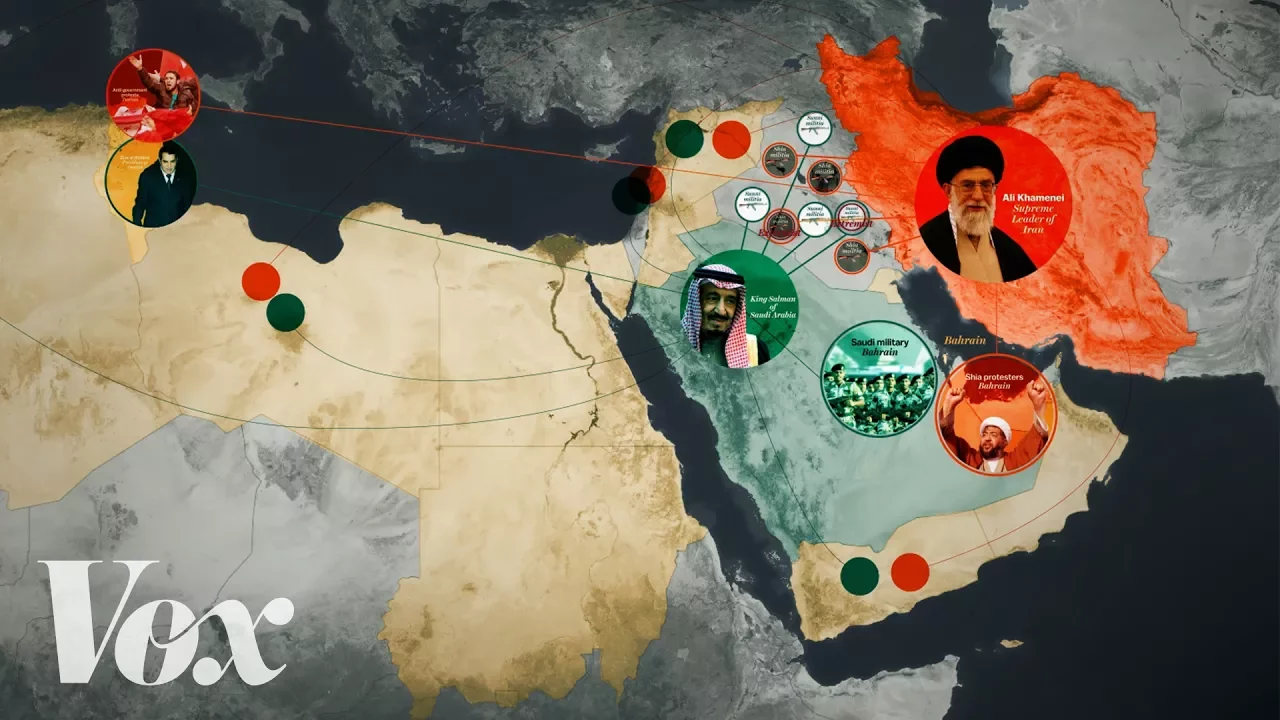
Explaining the Saudi-Iranian Proxy Conflict in the Middle East
@Vox
18.2M views•2017-07-17
Related Study Plans & Knowledge Roadmaps
Structured learning paths in Political Science
political-science
Economic Statecraft: Sanctions & Chokepoints
01Foundations of Geoeconomics and Economic Statecraft
02The Mechanics of Weaponized Interdependence
03International Sanctions: Types, Implementation, and Efficacy
+ 2 more learning modules
12h5 modules
Explore Roadmap
political-science
Central Bank Independence: Politics & Policy
01Foundations of Central Banking and Monetary Policy
02The Time Inconsistency Problem & Inflation Bias
03The Delegation Model and Designing Independence
+ 2 more learning modules
12h5 modules
Explore Roadmap
political-science
Consociationalism: Power-Sharing & Stability
01Democratic Dilemmas in Divided Societies
02Introduction to Consociational Democracy
03The Four Pillars of Consociational Design
+ 2 more learning modules
12h5 modules
Explore Roadmap
political-science
Rebel Governance: Legitimacy, Economy & State
01Foundations of Rebel Governance and Statehood
02Establishing Political Legitimacy and the Rebel Social Contract
03Wartime Economies and Rebel Resource Management
+ 2 more learning modules
14h5 modules
Explore Roadmap