














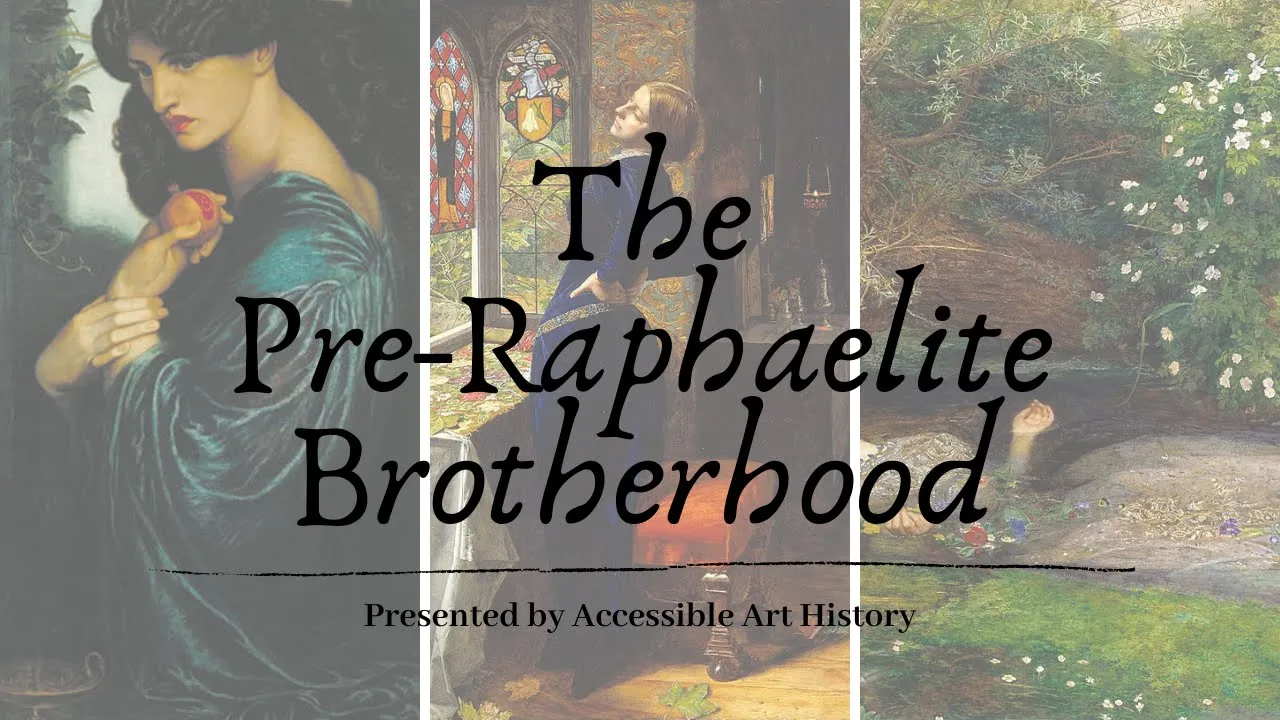






The 19th century in England witnessed a transformative period in art where major painters responded to the Industrial Revolution and Romantic Movement through distinct approaches: William Blake pioneered mystical, visionary imagery combining biblical references with personal spirituality; J.M.W. Turner captured nature's overwhelming power through abstracted, emotional landscapes; John Constable celebrated idyllic rural life with meticulous realism; and the Pre-Raphaelite Brotherhood (founded 1848) revived medieval and Renaissance artistic ideals, emphasizing detailed symbolism and literary themes in their exploration of religious, mythological, and genre subjects.
19th Century British Painting: Romanticism, Turner & Constable Subtitle
Added:The core tenets of Neoclassicism and the Enlightenment, which Romanticism directly reacted against.
The socio-economic impact of the Industrial Revolution in Britain, which prompted a cultural shift toward nature and nostalgia.
Edmund Burke's philosophical concept of the 'Sublime' versus the 'Beautiful' in art and nature.
Basic elements of 18th-century landscape painting traditions and the established academic art standards in Britain.
The evolution of landscape painting into French Impressionism, specifically Turner's influence on Claude Monet's depiction of light.
An in-depth study of the Pre-Raphaelite Brotherhood's rejection of High Renaissance principles in favor of medieval realism and moral themes.
The role of art critic John Ruskin and his influential defense of J.M.W. Turner in 'Modern Painters'.
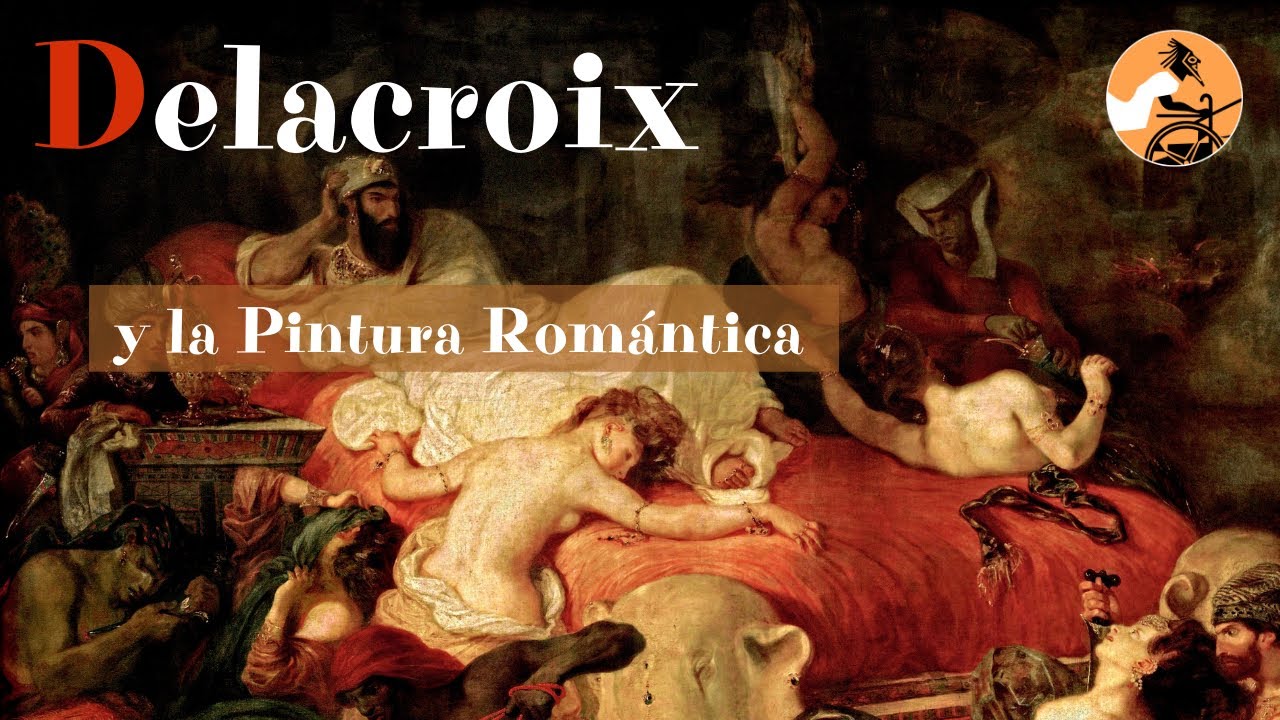
A comparative analysis with Continental Romanticism, such as the works of Caspar David Friedrich in Germany and Eugène Delacroix in France.
140 views2likes1:05:16Original Release: 2025-04-15
Hello everyone. Thank you for joining us this morning. Please just give us a few moments while we wait for others to join in.
Okay. Hello everyone and welcome to today's virtual tour of the Timkin Museum. We're so excited to have you with us this morning. And a few housekeeping things before we get started. Please keep yourselves muted throughout today's presentation. And if you have any questions, please feel free to use the Zoom chat function by clicking the bottom the button at the bottom of your screen that says chat in order to type your question. We'd be happy to address any questions or comments at the end of today's tour. If you're joining us over from Facebook Live, welcome to you as well and you can ask any questions you may have using the comment section on Facebook and we'll be monitoring those comments and answering those questions at the end of the tour as well. Lastly, this tour is being recorded and streamed live and will be posted to our social media channels.
Once the tour is over, if you would like to rewatch this tour or watch other tours put on by the museum previously, please check out our YouTube or our Facebook pages to find those. Without further ado, I'm so excited to introduce Karen, who will be presenting on 19th century British painting. Thank you so much for being with us today, and I'll turn things over to you, Karen. Thank you so much, Elsay. Um, as I mentioned last time, ILs is our new intern for the Timkin Educational Department and she is a a prestigious award-winning USD student. Um, I just want to make a comment. There's a gentleman, I believe his name is Frank, he's at the beach listening to this lecture, and I just think how what a great idea. So, um, so without further ado, I'm going to talk about, uh, British painting. I do want to and we're looking at a wonderful uh JMW Turner who I will be discussing because Turner probably along with John Consible is the most are the most important landscape painters in England in the 19th century in the earlier part of the 19th century. But before we really talk about individual artists, I want to kind of tell you that I'm going to be speaking about the romantic movement and not only art but a little bit in literature because they're very inextricably united. This is an era in England where literature the sonnetss writing poetry the great poets um are linked with these painters. Um some of them like William Blake not only does artwork but writes his own poetry. Um, the other thing I wanted to talk about is the pre- Rafulite Brotherhood that begins about 1838 and that is an organization of seven artists who hearken back to earlier times. And as we get to the prefilites, I will um indicate some of their uh various um unique characteristics, let's put it that way. Uh just a quickly historically England is a very interesting place.
England has witnessed or participated in multiple wars in the 18th century. We had the American Revolution which the British lost. They lose to uh they win over France and the Napoleonic wars but it does affect them as does the French Revolution. So it is a time of a lot of wars at the end of the 18th century. And another thing that's happening in England is the industrial revolution.
The industrial revolution begins in England a little earlier than it does in France for example around 1760 and it goes into about 1840. That is sort of the height of the industrial revolution.
Well, it changes England in many ways.
Uh it changes it in terms of technology mass production a movement of individuals from the countryside and an agrarian way of life to an industrial mass-produced way of life. There's developments in bridge building, communications, transportation, gas, electric. Lots of interesting and important things are going on in England. However, it also changes the dynamic of London. We see the doubling of the population. We see poverty. We see um smoke billowing from the factories that pollutes the air. We have very stratified societal groups such as you know the higherups but we also have workers who are struggling in these impoverished situations. We have a lot of illness. We have a lot of children who are in subpar housing situations working in factories developing diseases like ricketetts and malnutrition. And you can really get uh the point of all this if you read the work of Charles Dickens uh read Oliver Twist Christmas Carol and you'll see how he was horrified by some of the changes in England. Now two more things and then we'll start looking at the art. We do have two periods uh going on at this time. Georgian period with the kings uh three Georgian handover kings and that ends about 1837 with Queen Victoria. And so we have two eras really happening.
And we'll begin by looking at work from the more Georgian era. Um if we could advance this first slide. And here we have William Blake, the ancient of days. Now you can see this is at the very latter part of the 18th century. Let's talk about what's happening in England and France a little bit artistically. This is the end of the neo class I mean sort of the beginning sorry of the neocclassical period but Blake moves away from that interest. He is interested in his own unique perspective on the world on art and he looks to biblical references. Now, these artists were not necessarily religious, like caught up in the Anglican church, but they do use religious references in many of their artworks and poetry. Now, this is the ancient of days. This was actually a book written by Blake and he this is the cover of one of the books and only nine of these are extent in the world today. So, it's very valuable. And this is urrizin and it comes from the book of Daniel. And so he's you know he's going through these sort of proverbs and biblical references and it creates this character and they are moving away from rational thought and going into more mystical romantic imagery. And you can see that if you were to compare this painting, let's say, with um a a neocclassical image like from Jacqu Louie David, um you would see that this is much more colorful, gestural, light infused, very different. So they're moving, these artists like Blake are moving away from rational thought, the enlightenment, the age of reason from the 18th century and going into their own mystical, spiritual uh quests and things are very romanticized. That's why we call these artists romantic artists. And Urazen holds a caliper. This is an ar architectural tool and he is helping to kind of create the world and he is a man pictured as a very um uh older man a man full of wisdom and so that is part of the imagery here and thank you Ilsce for uh swirling around that that's very important. Um, let's go on to his next work. And this is a really captivating piece, the great uh uh the great dragon here hovering with horns and wings. And he's hovering over this woman clothed.
And this woman clothed in Blake's reference is suggesting the Virgin Mary suggests Christianity as a whole. and she stands on the moon and swirling figures at the bottom are in rapture looking at her and then we have this red dragon, the great red dragon and he represents Satan. So what we look at um is an image really from the book of revelations but it is Blake's take on this and he wants to discuss the tumultuous situation in England after as the industrial revolution is going on but also what has happened to England after all these wars because this is the time when many wars have just been wrapping up and it leaves England very vulnerable. One thing I do want to mention is that England really doesn't have a lot of a lot of allies. They've lost their allegiance with France.
Remember, they're at war. American colonies have dissipated. So, the Netherlands is no longer interested in working with them. So, England feels a little bit a drift. So, that is what's happening politically. But we have also this again this interest in poetry.
Remember this is the era of the romantic poets Percy Bisley Shelley, Lord Byron.
Um they're also hearkening to older poets like John Milton. So this is very much capturing what is happening in romantic poetry, individual uh interests as of Blake and his writing and watercolors. Um and one other thing I do want to mention about Blake is not only was he an artist and a writer, but he created books. He was a bookmaker in his earlier time. So he was a very brilliant uh artistic individual. Uh we can go to the next uh piece please. All right. Jeffrey Chaucer. So if you study Chaucer uh in college or uh English literature in college, you know that Jeffrey Chaucer was the first truly British writer of you know great consideration and he does write these tales. There are 24 tales about 29 pilgrims who leave uh uh a a certain location outside of London and they go to Canterbury Cathedral and they want to honor Thomas Beckett who was martyed.
And so what uh Blake creates is a beautiful representation of all these figures who are going to these 29 pilgrims and they're all from different walks of life. Some of them are more aristocratic, some of them are more of the lower realms of society. and he creates a very medieval like um line of figures exquisitly done and it's really nice to see that he did multiple images of this. So we have an engraving because I told you he was a book maker. So he done a lot of engraving, print making, watercolors and above we have which is probably watercolor uh or gouache uh a mixed media piece and we see it's aligned like something you would see in a scroll. So again these romantic artists particularly when we look at the pre- Rafelite brotherhood they look back on the quattroento pre- Raf uh Raphael they look at chivalry and medieval life and the um focus on women. So you can see that uh he incorporates those elements and we have a beautiful if we could uh look at right here this beautiful architectural element this arched um recess architectural point we have birds in the sky sun a light coming through and Blake was very good at capturing light so we will move on and now we're going to talk about JMW Turner. Turner was along with John Constable the most important landscape artist of Britain of the 19th century.
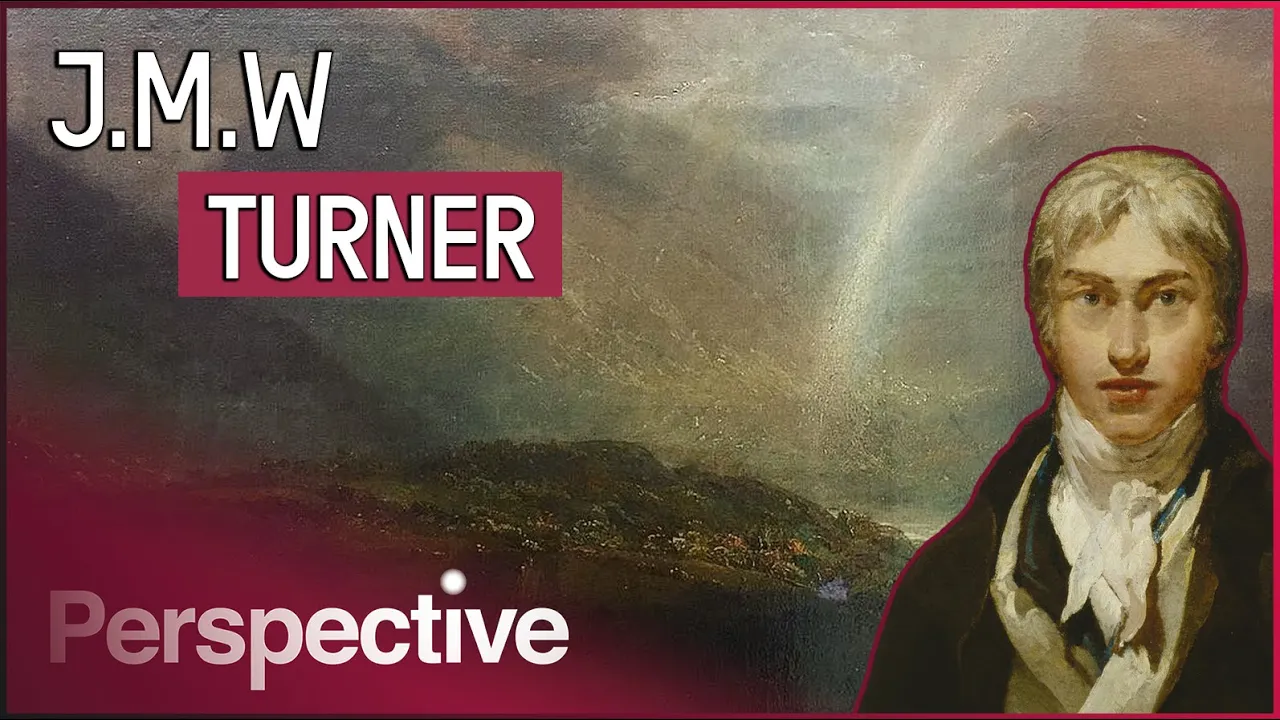
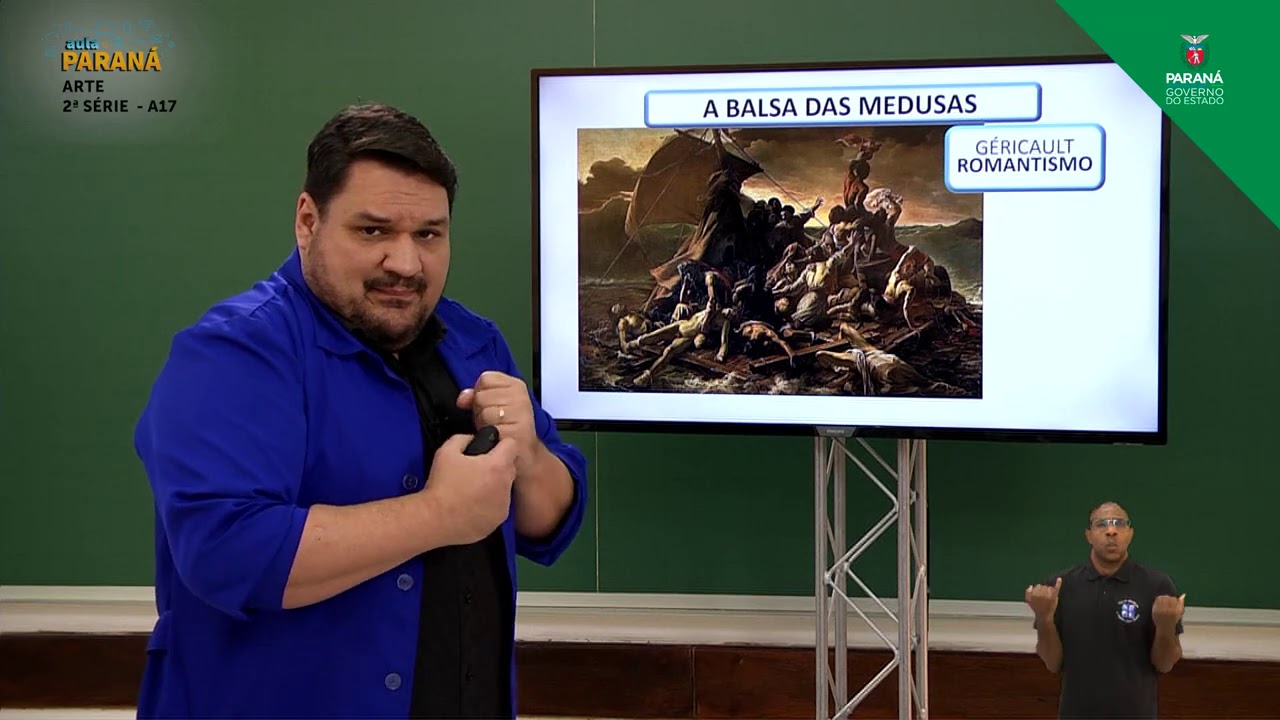
So so instrumental in developing art in that time and place. Now Turner was very interested in new things that were being created technologically in England. He was interested in bridges and buildings, but he was really captivated by the sea. And so he looks to the sea for inspiration. What is also so important about Turner and if you go to the tape the tape modern the tape gallery in England today in London, you will see rooms full of of Turners. Now Turner unlike Constable believed in the power of nature. Man does not coexist peacefully with nature. He is often overcome by nature. And you can see in this very vivid uh churning sea that the boat is about to capsize and people are desperately trying to leave the scene of this of this catastrophic situation. We have white the white caps of the waves that indicate they're very powerful. We have a storm in the background. And what is particularly interesting about this is we don't know for example Jericho uh the great French uh uh romantic painter of a who did a painting a little bit late about 10 years eight years after this and the raft of the medusa which I have shown a while back. Now, that one, the reason why I bring that up, that also talks about a shipwreck, a terrible storm, things happening, but that was from a true journalistic story. We do not know if Turner read about a shipwreck or just imagined that this might have occurred, but we know that he was very uh taken up with this type of activity. His brush strokes are more gestal, more painterly, not in any way neocclassical, very romantic. Uh, if we could go to the next slide please. Ah, so as I mentioned earlier, Turner and the prulites they were very interesting in history. So Daido who was a Phoenician queen which would be today Tunisia was written about um in Virgil's the anid and we'll just go back for um right there that's perfect and it was from Roman times Virgil and this predates Roman civilization this story Indida was the queen of Carthage and she was trying to rebuild her city and if you can see on the left hand bank. Um the woman in the blue and white uh to the left there, she is Daido the queen and her husband has been dead and I believe he was murdered and he is buried in the building on the right that uh looks like a Corinthian engaged column. So it looks like a later Greek architecture. And we see um a figure on the parallel to her and um that would be her her the love of her life the king or the prince sorry and what is happening is it's really showing how uh Carthage is in a very vulnerable spot because at the bottom of the left hand side we see children playing with little boats and they're very fraud. fragile and it indicates that her civilization is also very fragile and again it's commenting on what Turner thinks about what is really happening to England its fragility it's going through all these wars and not to say that the Georgian period did not have some wealth and and grow economic growth in England but there was also a lot of economic downturn as well look at this beautiful light infused sky that actually indicates a more positive outlook because he's also commenting not only that he's that England has kind of escaped a lot of these wars or had to participate and suffer but he wants to represent England as the dawning of a new empire. So that is a more positive take on this uh pre- Roman topic. All right, we will move on now. Uh Child Herald's pilgrimage.
This comes from Milton's work and it's a narrative poem. Pardon me, not John Milton, Lord Byron. I I beg your pardon.
And it was in five parts. So Byron wrote about this pilgrimage of child herald and child herald refers to uh it's old English and it means someone who is studying for the nighthood and so child herald is discovering his way in the world he's worldw weary he's been traveling seeking uh enlightened thought and it's a very although we're moving away bit from the enlightenment it is a very romantic subject how one finds their place in the world, place in the cosmos.
This is an oral on canvas. One thing that Turner does, even though he creates very tumultuous, somewhat uh real inh incidents that happen, and you're going to see that in just a second, he also uses a very poetic, ethereal, visionary way of capturing scenes. And this natural beauty is very reminiscent of the 17th century artists.
If you look at Claude Lauron in in France, if you look at some of the 17th century Dutch painters, you see that there's a lot of inspiration, particular uh Claude Lauron. And you also have this idea of um I don't know if you can see this, but you can see the figures resting. You can see some of the uh ruins here. and you get a sense of almost an Arcadian landscape. What do I mean by this? This is not a realistic landscape. It's very poetic, romanticized and exquisite, but we get a sense of almost like a dreamscape and that is what Turner is looking toward.
Um, if we could go to the next slide.
Thank you. Now, the burning of the Houses of Parliament. Wow, what a story. This actually did take place in 1834.
What had happened is in the houses of parliament there is a basement and one of the workers there he was the clerk one of the clerks he decided that because they were often voting in the houses of parliament they would utilize wooden sticks almost like a popsicle stick and they just built up a supply of these and that this clerk decided you know we really don't need all these sticks I think I'll burn So what does he do in not a very intelligent manner? He sets the sticks of fire. Well, he burns the houses of parliament and a very tragic situation.
To the left of the Houses of Parliament, which is in the middle of the painting, we oh, sorry, the middle of the watercolor, we will have Westminster Abbey, the great cathedral. And then we have all these figures in the foreground would be people watching as the water cascades over the burning building. It almost looks like we have um a waterfall.
Um and this is just the water streaming.
And in between here we actually have uh the river temps because this is near the river temps. So this is a real occurrence. He did read about it. He actually did a different version. He was standing in this group of people and doing a planer documentation of what had happened. But he also later went into a boat on the tempames to try to capture another perspective. So quite an extraordinary feat for him. But look at how romanticized this is. This isn't hyper real. It's diffused. It's abstract. And that's why many artists in subsequent decades really looked at Turner in the evolution of abstraction because of he captures this very monumentous situation in a very abstracted manner of painting.
All right, we will just move on and we're going to go to a colleague another great of the 19th century and as I mentioned earlier John Constable like Turner was the most important they were the two most landscape important landscape painters of the 19th century particularly in England but maybe for other uh countries as well. Now Conwell was quite different than Turner. Coswell's work is much more representational. He is interested in a completely different concept than Turner. Where Turner sees man being overcome by nature, John Conwell sees man in an idyllic setting setting, excuse me.
Hearkens back to his childhood in Suffkol area and he loved his childhood.
his father had uh a water mill that would grind the corn. Now remember this is time during the time of the industrial revolution. He is looking at the time that he which is more idyllic and not so industrialized and when people lived in the countryside and worked in the countryside. He also uh shows a barge and some young people on the left hand side in the uh middle ground to foreground moving on a barge because his father also was involved with boat built barge building and you see a young man pulling the horse. You see the empty lines here and it's just exquisite. It reminds us very much of the 17th century Dutch painters who inspired Constable.
So Flatford Mill was where his father worked. And I apologize. I think there's a um a little bit of a a mistype on the title because it wasn't burning. I think that was just carried over in inadvertently from the uh burning of the houses of Parliament. But you see he captures in a very realistic manner the trees uh the nature the the the houses the this is a very 17th century Dutch sky.
the lower horizon line, these very detailed trees, the young boy as he pulls the h the wagon. And you will actually see that when we look at um the haywne, his most important painting. So we'll go on to the next image and probably the most important painting done by Constable is the Haywane and a Haywane is a hay wagon and he painted this as part of what we call a group of six. The group of six was largecale paintings that he wanted to create a body of work. Some of them were commissioned and this one was considered probably the number two most important painting in all of 19th century English history. Why? It was so greatly received. Everybody could relate to this. Now you have to remember even though Turner was a very important painter, it's not as esoteric of a style. This is real. You can see what is happening here. You can see the light fil sky. You can see the little cottage.
Now the little cottage to the left was where his was the subject of some of his other paintings but it was a cottage of a man who lived in this region Suffk County who helped his father and never left the county. He was a hermit and he maybe four days and this man's entire life was outside of this region and he stayed in this cottage and I think that Console found that to be a very romantic idea. He again, hearkens back to his idyllic childhood. And you see a dog, a little a white and black dog in the foreground. And he's directing our eye to the haywing. And what the young man is doing is attempting to cool the horses. I believe there's three horses.
It's kind of hard to see. He's attempting to cool the hor's legs. Um, and he wants to try to expand the wheels of this hay wagon because if he doesn't, he will have it will be a difficult uh procedure to get it out of the water.
So, he's trying to kind of expand it, give the horses a rest, and then he can continue to pull it. But it is light filled. We have a little bit of uh clouding in the sky, but the light is magnificent. The details on the foliage remarkable. He carefully crafts a foreground, middleground, and background. Again, using that low horizon line inspired by the Dutch. Um, and as I mentioned earlier, probably his most important painting. So, we'll move on. And um also another beloved painting done a little bit later is Salisbury Cathedral. Now it's important to sort of think about uh what religion is like in England because we now we have the Anglican church and Salisbury Cathedral was a Gothic cathedral and it was originally a Catholic cathedral and then it became Anglican the church of England. Many of these artists when I showed you let's say the work of Blake and they looked at some of the like the book of revelations, book of Daniel, book of Solomon, they weren't necessarily religious. They were not necessarily religious men. However, that is not true for Constable. Constable was a very religious man. He always had been a very pious man and he had a very strong relationship with the two bishops uh Bishop Fischer and his nephew by the same name who were bishops of the cathedral and he often visited them and talked about scripture and I believe that they commissioned this painting. So what do we have here? Again he uses this technique of a dog in the foreground. We have a dog here and we have three horses pulling the cart across the meadow. And the focus is on the weather. Remember, science is developing too in the 19th century as it began even in the 17th century. And people are looking to understanding weather. We need it for everything from transportation to farming. And they are very in interested in weather uh the effects of weather. And we see a beautiful rainbow after a storm, but the storm has not been finished. There's still remnants of it. And actually, if you look very closely around the spire of the cathedral, you even see um lightning. There's an element of lightning striking. Also, the palette is much darker, much more ominous. So, it is there's a sense of a little bit of foreoding as you often would see in the Dutch landscape painters because what they would indicate and there's some suggestion of that in this Salisbury Cathedral that things can change at any time.
weather changes, life changes, and things can have a rapid turnaround. So, there's a bit of a hint of that, but it's also that sort of reference, this spiritual reference for the cathedral, for his Christian spirituality, and then this hope opening up that we all look for hope and um sort of um rebirth. And so here we have this magnificent darkened sky with the Gothic exquisite Gothic cathedral and then we have of course the wagon here being pulled across the water and then again some of the little architectural elements here.
So again one of his uh most magnificent and very large scale canvas. Now, we're going to move on, I believe, to Samuel Palmer and yes, um, Entranced by Nature. Samuel Palmer was very influenced by William Blake and he fits the pattern of these romantic writers and painters. Uh this is actually a watercolor which is kind of interesting because when I look back obviously in the Timkin if you recall our collection and I hope you visit soon when we reopen we don't really have um on display watercolors or um prints. So I am using some of these multiple images not of watercolor but for example print making engraving those are a way of creating multiple images because a lot of these artists were connected to bookmaking and writing so they didn't always create large scale paintings as you would see with Turner and Constible.
These are meant to be part of books oftentimes or to illustrate poetry. And here we have a very interesting we have a tower and in this tower we see that it's very lonely and it was inspired by a poem by John Milton from the 1600s il uh I think it's called il penseroso and if I'm not mistaken it is thinking you know to be pensive to be thinking so these figures on uh in the right hand side are contemplating their place in the cosmos and they're also contemplating um divine uh kind of divine intervention. Palmer was not religious as was constable in the same sense of being kind of devoted to the Anglican church but he had this kind of spiritual issue uh interest and he feels that there is enlightenment to be gained and in this tower it is said that enlightenment will kind of be revealed and it's actually like a little lantern that lights up this single tower and that's why it's called lonely and what he did is to capture the night sky in such a lot like poetic manner. He would literally and you'll see that we'll see it in a couple of the other images that he does. He kind of etches them out. He uses um you know mixed media and and then he sees these young people contemplating uh this tower enlightenment and then we have a figure across a chasm and we have an owl flying out of the chasm and it pro and then we have the sheep because like constible uh Palmer talked a lot about nature farming and you see a lot of times elements of farming would he incorporated into his painting.
So this is based on John Milton from 1640. It is um sort of this divine knowledge and spirituality that we hope to gain. Um okay I hope we can move on to the harvest moon also by John uh Samuel Palmer and and Palmer is a really interesting figure. He, as I said, he was a poet, a a writer, an artist. Um, very inspired by William Blake. Looked a lot at Blake's work. He was kind of um, for one of a better term, he was really interested in in kind of not the occult exactly, but he was interested in really kind of spiritual and u metaphorical images and issues. And you can really see that in this. This is like something taken out of a dream. And and it's very true with Blake and Palmer. Often their dreams would produce this wonderful imagery. And here we have these two lone figures watching the dance of the harvest in the moonlight.
This exquisite light that sort of chasuro that falls on these figures. And of course harvesting wheat, you know, is a very typical endeavor for farmers in England at this time. But he creates a more um mystical spiritual dance. It's almost these figures are wraithike. They almost look like ghosts dancing in the field with this moon, low moon that hovers over them. And then we have these figures here that kind of wait and watch. So I see that I'm going a little too slowly.
So we're going to move on because I do want to get to the pre-ar rafilites who we will be seeing u momentarily. Um again this is another just really quickly another version of the harvest moon and many times uh subject matter would be done multiple times and again we have these people looking over the chasm and we see the city and behind them and they're gathering these stocks of weed and it's a very autominal image I would think because of the time that we are in. So because of the time I think I'm going to move on and we'll go to the pre-affilites. Okay. The pre- raffulite brotherhood. It was made up mostly of seven artists. Dante Gabriella Rosetti. Um we have Holman Hunt. We have Mule. So we have seven artists who knew each other at school art school I believe. and they decided to create this brotherhood and they hearken back to earlier times. They revered the quattricento. They loved earlier medieval literature and history and artwork. They liked the idea of knighthood and chivalry. They revered women. They looked at poetry and the Bible. And they had this brotherhood that lasted about 10 years. So this would be kind of on the edge of the pre- Rafelite brotherhood. It gets its name from the artist Raphael because they felt that Raphael was a little too classical as it were and they wanted to go back to earlier times. Now Dante Gabriella Rosetti's father was an academic did a lot of translations. They spent a lot of time in Italy and he was named after the writer Dante. He knew Italian and that was uh kind of inspirational to him and he looked at biblical stories. Now, this is very unusual in that we have such a realistic depiction of Mary being taught to embroider by her mother an Rafael pre- raffulite style until actually Charles Dickens starts to criticize them and then began to get some notoriety and subsequently became more popular. Now, we see Mary, as I mentioned, she's embroidering here with Queen Anne, sorry, with her mother an angel that stares at these books of knowledge. And we have a white dove, the spirituality of Mary represented. We have a window that doesn't seem to really correspond what is happening in the interior space. It's almost like a loia that she's sitting in. But for some reason, the prulites often incorporated windows in their paintings. Now, at the base of Mary's feet is a seventhorned brier and then the seven sheets of uh grass. And that talks about her suffering particularly the thorns. And if you can see it in the foreground at the floor, these are very long thorns, very dangerous thorns. And again, as I mentioned, this book of this is the book of knowledge, books of knowledge here.
And we have a white lily uh for Mary's purity. This would be considered pre-annunciation.
I talked a lot about that in my last talk about uh the virgin depicted in art and we discussed some of the iconography. So they're mixing this iconography of past centuries of the Renaissance and incorporating a much more let's say 19th century approach and again the books of knowledge. This is also refers to Mary this little lamp and we have this open loia this woman who doesn't even seem to be she's a woman just cultivating an arbor here. So there was a little bit of a critical element associated with some of these paintings because this sort of as people would say sort of mixing the metaphors. All right so we'll go on to the next image please.
Thank you ILs.
And now this is the beloved. This is actually more of a marriage portrait.
And if you look at this, you will see that the beloved really looks so much like a painting by Tishon. He was he was very much inspired by Tishon. Even though he was Venetian Renaissance and that came earlier uh than the Quattrochento uh I'm sorry, later than the Quattroento, he still did hearken back to some of these gifted uh Venetian painters. And this woman, this beautiful woman, she's wearing a Japanese gown.
She has a Peruvian headdress. She's surrounded by her attendants. And um she is really um from the book of Solomon. And if you know the book of Solomon in the Old Testament wasn't so much of prescribed doctrine. It was more about romantic uh relationships um a little more sensual. It talked about love and commitment. And so that's why you know we have of course this title the beloved. The negative aspect of this would be to think about well one other person I want to he was also influenced by Manise Olympia that was really popular and got some notoriety but the thing I do want to mention is it's a very there's a negative quality to this painting that I do want to bring out and many people would would maybe bypass it but we have a young beautiful woman in the foreground this young girl actually and because uh the beloved is so overblown in the in how she's placed in the painting. Some people suggest that it's a little bit like, oh, white privilege, white beauty.
And it did get a lot of negative um uh comments about it because it seems to sort of personify beauty as being this white woman as opposed to this beautiful young girl. So, that did bring some controversy into the painting and it it carries over today. Um, and then of of course we have these beautiful lilies, these faces that peek out her attendance. So, the beloved is a marriage portrait. It comes from the book of Solomon. And we're going to also go to uh one that goes back to another uh rosé and that is our next image. And this is a beautiful I'm going to use the Greek term. I'm more comfortable with this. Pphanie.
uh porcupine was the Latin version or the Roman version, but we'll tell the story. What was happening in Rosett's life is he was actually having an affair with Jane Morris. And William Morris was another prairie raffleite and very important to the movement.
and Rosetti and and and I'm sorry um Jane was Jane Morris was married to William Morris and she had two children with him who she loved dearly but she was carrying on this affair. So she was considered this forbidden fruit just as Pphanie holds the forbidden fruit of the pomegranate. So the story is Saras, you know, the god of grain was her mother and Pluto saw her on earth, you know, frolicking on earth and he fell in love with her even though she had a boyfriend and he captures her and drags her down to the underworld to Hades, the underworld.
And uh her mother Cirrus begs Jupiter, please or Zeus, please allow my daughter to come back to Earth. I can't be without her. She's done nothing wrong.
And Pluto says to the mother, "I'm sorry, but your daughter ate six seeds from the pomegranate." And for that reason, she will remain in the underworld for six months out of the year. And that's how the Greeks talked about fall and winter. that fall and winter was when Pphanie was in the underworld and that when she's able to go back after 6 months, she will be in light of spring and summer. She is a beautiful woman. Um he did use um some you know of course the faces of his beloved but she holds a pomegranate and then we have memory here. The ivy captures this idea of memory and the light as it shows that she would be looking up to the earth. And here she is in sadness with a lighted lamp to guide her and of course this exquisite depiction of a beautiful woman. So this is from Greek mythology and the story of Pphanany. Um I'm going to go on because again I want to be able to give um our viewers some time. Now Jean Everett Mle came from a wealthy family. He was part of the brotherhood of seven. Uh the brotherhood actually kind of hearkened back to the a Nazarene movement dazarene movement and again they were interested in religious subject matter but not necessarily deeply religious. Christ in the house of his parents. This took a lot of heat when it was first revealed. Lot of heat. Um Dickens, Charles Dickens, who was alive at this time did not like it. There was a lot of anti-semitism in England. And they they made comments as, you know, I don't even want to say it. It's just so awful. But making comments at how Jesus could be this little red-haired child with some uh anti-semitic comments attached to it.
They said he looked like he had ricketetts, which was a disease prevalent during, you know, industrial revolution, and that Mary looks like a drunken uh husband, which is so awful. I mean, these comments were just catastrophically bad. But let's talk a little bit about the story here. So, Joseph is making a door and we have Jacob's ladder here. We have an trying to pull out with pliers a a nail that is embedded in our little Jesus here. And we have an attendant here represents um the disciples. We have John the Baptist carrying water to bring over to clean uh Jesus's uh nail which was the stigmata of course. And we have the sheep as brethren here, the Christian brethren.
So stylistically it does seem very antiquated. When you think about the pre- rafflites, it is a very um sort of retro style.
Stylistically, it is a little bit retro and it did have its share of critics. It also had its share of enthusiasts. But you can see that if you think about what's happening in the 19th century, um it does seem uh a little bit a little bit uh old-fashioned stylistically, but you can see of course all the wood carving. She kneels this thin woman, but again it does relate to uh some Christian imagery. So we're going to go to to one more prilite painting and probably the most important prulite painting was this one Oilia. It was considered probably the most beautiful and it is the most I would say exquisite and I will tell you a little bit about the story.
Who was Ailia? Well, Shim was in the story of Hamlet, the king of Denmark. And Hamlet, uh, if you might recall, was this was his love. He was to marry her, but he murdered her father in his insanity and and began to denounce her.
And she fled the palace, the Danish palace, and she goes into the countryside. Now, this is supposed to be Denmark based on Shakespearean lore from Hamlet, but he of course isn't in Denmark. He's in England. So, people kind of laugh like, oh, you have the English countryside and it's supposed to be in Denmark, but that that's unimportant really. And so what was the story that Ailia too is driven mad by the loss of love of Hamlet and she goes out into the she flees the castle and she goes out into the wilderness into this garden this beautiful garden with water lilies and roses and poppies and she begins to sing and she's swinging from a a pine bower and she falls into the water and her body is uplifted. ed by, you know, the clothing is the water goes into the clothing, kind of buoys her up for a short time, but she doesn't make any effort to get out. She's kind of committing suicide, it is suggested, and she holds her hands in this prayerike position, but it's almost, some people say almost sensual, too. And she is floating. She may die. And you see the red poppy. And the poppy also was a flower like other flowers shown. And the pre- raffulites attached a lot of meaning to flowers as did the Dutch still life painters and the Flemish still life painters in the broke era.
But so did the pre- raffulit. So they uh attached a lot of meaning like white and purity. But the rose puppy is poison. So she is floating. Now the true nature of this is he had a young girl uh girlfriend um who he used in this painting and she almost died from she wasn't in water like this. He did the water separately pl air and then he set up a hut with water like a bathtub and put her fully clothed and he had these fans creating a kind of a wind tunnel and she almost died from expo from like bronchitis. Uh funny story. Father actually sued uh Mle because he said, "Listen, you almost caused my daughter's death." But anyway, in terms of beauty, this is probably one of the most beautiful pralletite paintings. Uh we don't have a lot of time, so let's move on and we're going to look at the word of Alfred Sicily. Now, you may say, why did you include Sicily? He spent a lot of time in France, but he was British and he did paint a lot in England, too.
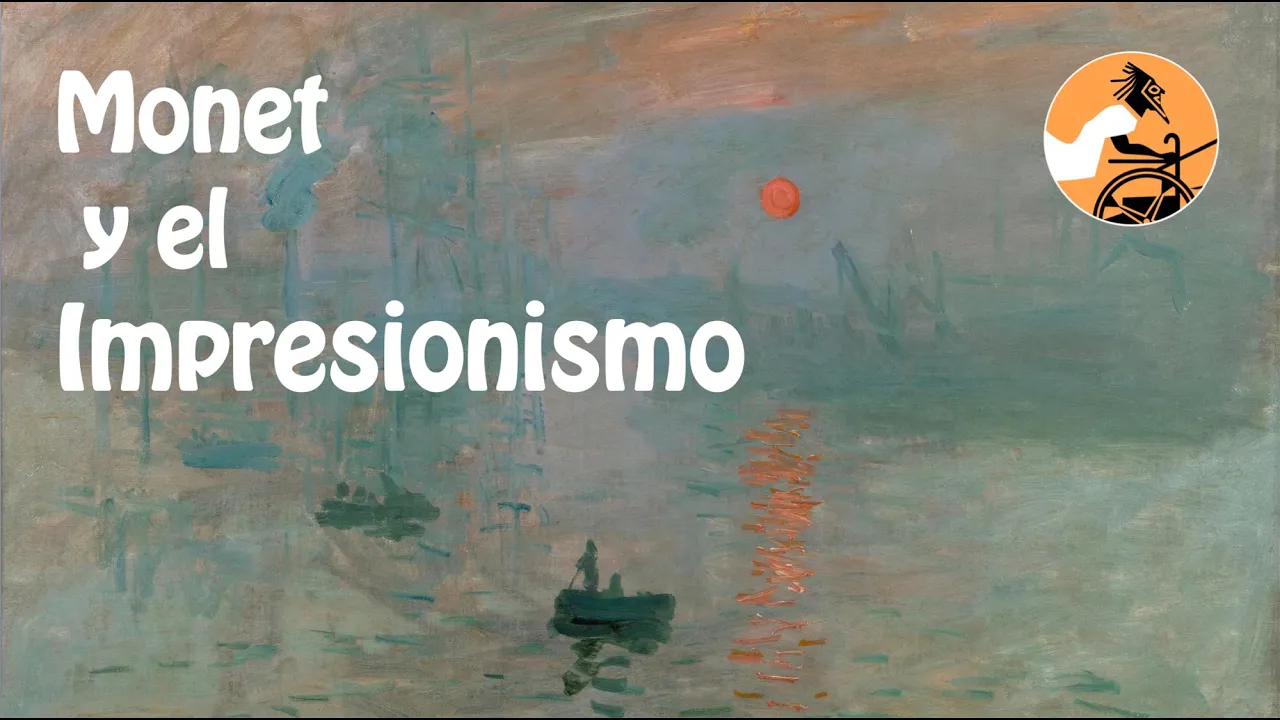
And I wanted to show you that there was an attachment by some of these English artists to the impressionist movement because this is done around the same time of impression sunrise. Um and we have the um his influence. He was influenced sorry by Renois. He knew Monae. He came from a very wealthy family and he had an allowance. So he had a lot of latitude in his paintings.
He could go back and forth to England and France. However, his father, who had been a wealthy merchant, did lose um his vast wealth when uh Sisley was in his early 30s. So, Sicily did have to really kind of struggle and change the course of some of his artwork because of the fact that he no longer had an allowance.
Now, you can see a softer palette than if we were to compare it to, let's say, the work of Monae or Pisaro. There's a softer palette. And again very much interested in some of the Dutch painters that that he looked at. Um also what is really important in this painting is this bridge. And the bridge was interesting not only to Sisley but Turner. Many of them were inspired by a lot of the use of iron and the bridges that were being built in during the um early part of the century because of the industrial revolution and the advancement of technology. We had, you know, locomotives streaming through the countryside, bridges being built. And so we have the encroachment of technology on this beautiful French countryside. And then we have uh Boers on the water, this dappled sunlight. You can see this very impressionistic uh study right here of the light field and just a gorgeous depiction of nature on a sunny day. Uh again for time we will move on. And this is a beautiful allay of chestnut trees. So it's a little road that is mirroring the path of the trees.
Much more diffused light, much more abstracted. were well in the confines of the impressionist movement. I believe this one might have been done also in France and so I apologize I was unable to get uh some images uh from the English countryside but I do want to show you that there was a cross-pollonization of impressionist artists from England and particularly Sicily um into uh the French kind of a melding of French impressionism. So look at the dappled sunlight. It's more abstracted, very painterly. One thing I do want to mention about Sisley, he was almost 100% a plan air artist. He did not, as some of them did, go back into the studio and complete these works. He preferred to stay outside even in inclement weather and capture the beauty of the landscape. Uh we just have one or two more and I just want to move on because we do want to see if you have any questions. Okay.
Ellejo John Singer Sergeant was actually born in Italy and um spent a lot of time he was an American born in Italy but he spent most of his time in England and he was the great portrait painter of England. He was considered let's say like Van Dyk Flemish painter during the Baroque era. We have this dancer. She's a flamnco dancer. Many of his works were inspired by the work of Velasquez, the great Spanish Baroque artist. You can see these musicians. Um they're performing, they're singing. And this wordlejo refers to when flamco music and dancing occurs, we have clapping and singing. And so it's kind of a standard uh form. She is an exquisite woman.
She's seems to be captured in movement.
You can definitely see the black and white influence the the choso that is influenced by Velasquez. And we'll just go to really quick. We have like maybe one more minute. I just want to show you. Um this is a portrait of a highborn French woman. Her husband was a banker.
This painting was not commissioned. He just wanted to gain some notoriety. And this portrait of Madame X caused a lot of concern because they thought it was too um sensual. And this actually the strap here on the dress was originally painted down. And he got a lot of guff for it. But anyway, we'll end here because we don't have much time and I do enjoy when we have um opportunity to hear if the audience has any questions.
Thank you so much Karen. we will start taking questions and I believe we do have some in the chat. Okay. Um there is a question from Frank. He asked earlier, how does Blake's imagery relate to the Aian imagery a bit later in France Jirro Day?
I'm sorry. Could you repeat the question one more time? Yes. How does Blake's imagery relate to the I apologize if I'm mispronouncing that imagery a bit later in France? Jirro day in parenthesis.
Oh, I think he was uh Are you speaking uh [Music] um can you answer Frank? Can you uh state your question? I'm I'm a little concerned that I either don't understand it or don't know the answer, but if you could uh Sure. Um later on in the early uh 19th century in France, Jiray uh among others uh do a series of paintings on the Aian myths which were portrayed as uh prehomeriic and I think uh were originally passed off as authentic uh prehomeriic myths but the reality was that they were done by if I remember correctly an Irish monk um who uh put put them forward and then various painters uh especially Jira Day um did this fantastic uh fantastical imagery which to me seems similar to that uh of Blake of the AP right yeah where you've you've you've clearly gone beyond as you were discussing with Blake uh classic neocclassic uh imagery uh which more clearly defined lines uh to imagery which is uh less defined and mystical kind of thing. So right I was just wondering yeah I was just wondering what the interplay uh may have been between those between Blake and that school of art. Okay, I do think there was a cross-pollonization and you have to remember that um Blake because of his book making his writing uh he could disseminate some of that information a lot uh more easily as opposed to let's say you you have one painting you see it maybe you see copies but because this was in books now there were only nine of these extent that he only created I believe nine but they did there was a cross reference to neocclassicism in France But as you just pointed out and maybe uh reflecting a little bit on what I said, even though this is the height of neocclassicism, this is not a neocclassical image whatsoever. Very romanticized, the diffused light, the color, etc. But I don't think I quite answered your question. I believe there was a crosspollization. I know that the French were aware of the English even though they were a little bit at odds uh politically. But I do think because of this being a book and the cover of a book I believe that there would be some inspirational elements and I don't know if I directly answer the question but that's as far as uh as far as I know on that on that but a very interesting question by the way very interesting that was very helpful. Thank you. Oh you're most welcome. Um, this is Dee.
I'm uh I uh I just want to say I saw this painting by Blake in um Oh, I'm trying to think near Piccadilli. They have a museum. What's the name of that thing? Anyway, uh but the title is the ancient of days. The ancient of days.
Okay. Absolutely. It is absolutely. Yes.
Right. and and Blake is more devout than people tend to credit that that famous children's poem tiger tiger burning right in the you know and and it says who made thee god made thee you know and so uh I think Blake is more devout than probably would you say uh a different way simply that you cannot necessarily lift it only from uh his uh pictures in the books that he published but that particular picture of the ancient of days in my opinion is God the creator but he's got this uh tool here whatever that is he called it it's an architect it's like calipers like a compass yeah and that is totally look at the date 1794 total enlightenment thinking you know meaning we are now shifted into none of this silly stuff you know let's get down to brass tax God the creator knew what he was doing it's very ma mathematical and you know it it it has a savers of of his thing anyway that's just my opinion but no doub is a title of god you know I think it's very well taken and I think part of it is because if we you know when I talk about constable constable had a very pragmatic but a very uh let's say kind of prosaic and I don't mean to diminish his spirituality but a little bit more prosaic connection to Christianity a more a more typical whereas I think what you're suggesting and I think you're absolutely right because some my readings on Blake it is he is devout in a different way though I think he's kind of grappling with spirituality and and he does look at he's using these biblical references and of course here too you know uh you urin who's depicted here is shown as uh an older man with wisdom so it just shows as sort of uh overseeing uh creation with wisdom and direction so I think your interpretation And obviously you're well steeped in this uh with your background. I think it's quite uh correct than what you're saying and I I just think that I might have missed spoke that about him because I think in they're sort of moving away so much from reason and going into a more romantic sensibility and he used a lot of visionary elements. So they're not as click. You're not looking at Salisbury Cathedral. Yeah. Which is so so obvious.
this is more of his personal uh Christian spirit. So I think that's a very good point Dee that you bring up.
Yeah. I I all wanted to add that um when I saw this I was shocked at how small it was. Oh yeah. If you can look at you know it's Yeah. It's not big at all. And yeah and the second point was simply that brother talk about Michelangelo influence. I mean look at those muscles.
Oh absolutely. Absolutely. you know, so uh he uh was definitely prerefolite in the fullest sense of the word with the the respect that the enlightenment had for the high masters of the Renaissance.
I just absolutely but isn't it interesting how the the pre- Rafelites themselves, the brotherhood really didn't want to go past uh Raphael a high renaissance. They didn't I mean they actually yeah and there's very when you look at the structure of some of the paintings not so much in Oilia but if you look at Joseph's workshop they're so un renaissance like they're you know they're very almost absolutely right.
Yeah. This one so rudimentary in their style. Yeah.
Beautiful thing. It really is. Yeah.
Thank you. Thank you.
Okay. Well, it looks like we don't have any questions from the Facebook live.
So, thank you so much Karen and everybody. And before you go, I would like to remind you that uh every tour can be found on all all our social media channels, including our YouTube and Facebook. Um, and if you would like to find further information for future tours, please check out our website, events calendar. And again, thank you so much for such a wonderful tour and for your help, Elsa. And also, thank you uh uh listeners for attending the lecture. I hope to see you soon. Thank you. Thank you.
Up Next
13:47
The Real Women Behind Iconic Paintings: Renoir to Serov
@TheDecodedArt
65.2K views•2025-11-24

114:18
Christian Iconography: History, Theology, and Meaning | Fr. Panayiotis Papageorgiou
@Trisagionfilms
58.8K views•2020-02-21
7:48
Ukiyo-e Art: History, Woodblock Printing & Influence
@japanathand
6.3K views•2023-06-08

16:34
Earliest Depictions of Jesus in Art: 10 Ancient Images Explained
@UsefulCharts
5.9M views•2022-06-03
Related Study Plans & Knowledge Roadmaps
Structured learning paths in Art History
art-history
Gothic Cathedrals: Engineering, Light & Society
01The Birth of the Gothic: Romanesque to Suger's Vision
02The Structural Triad: Pointed Arches, Ribbed Vaults, and Flying Buttresses
03Theology of Light: Lux Nova and Sacred Geometry
+ 2 more learning modules
14h5 modules
Explore Roadmap
art-history
Pre-Raphaelites: Realism, Symbolism & Critique
01The Victorian Art Establishment and Academic Formula
02The Founding of the PRB and Radical Realism
03Medieval Revivalism and Literary Symbolism
+ 1 more learning modules
8h4 modules
Explore Roadmap
art-history
Street Art: From Subways to Art Market
01Subcultural Origins in Philadelphia and New York (1970s)
02The Subway Era and Style Wars (Late 1970s - 1980s)
03The East Village Scene and Early Gallery Crossover
+ 2 more learning modules
10h5 modules
Explore Roadmap
art-history
Classic Maya Art: Iconography, Glyphs & Ritual
01Foundations of Classic Maya Visual Culture
02Deciphering Maya Hieroglyphs & Text-Image Integration
03Sacred Geography and Cosmological Architecture
+ 2 more learning modules
14h5 modules
Explore Roadmap