Fourth Amendment: Digital Searches & Privacy
Learning Goal: Analyzing Fourth Amendment protections against warrantless digital searches and seizures to understand privacy rights in modern law enforcement investigations.
- Prerequisites: Basic understanding of the three branches of U.S. government and foundational constitutional law.
- Estimated Total Study Time: 7 Hours
Module 1: Foundations of the Fourth Amendment
This module introduces the historical origins, text, and core mechanics of the Fourth Amendment. You will explore why the Framers established protections against general warrants, how a constitutional "search" or "seizure" is defined, and the structural baseline of the warrant requirement along with its traditional exceptions.
Why this video
This concise guide from the National Constitution Center provides the perfect textual and historical launchpad. It reviews the literal text of the Fourth Amendment and introduces the crucial transition point in 1967 when the Supreme Court shifted its target of protection from "places" to "people."

Why this video
To understand modern digital overreach, you must first understand the historical abuses the Fourth Amendment was written to prevent. This video outlines "general warrants"—writs of assistance used by British officers to conduct limitless, suspicionless physical searches—and explains why placing an impartial judge between citizens and law enforcement is the Amendment's core purpose.

Why this video
Warrants are the default rule, but exceptions are common. This legal presentation outlines the primary exceptions to the warrant requirement, focusing heavily on the "search incident to a lawful arrest" (SITA) doctrine. This baseline exception is critical to master before studying how it was later challenged by digital cell phone data.
Knowledge Checkpoint
- Read and write the exact text of the Fourth Amendment, noting the distinction between the Reasonableness Clause and the Warrant Clause.
- Explain the historical context of "general warrants" and "writs of assistance" in colonial America.
- Define what legally constitutes "government action" vs. private action under Fourth Amendment jurisprudence.
- List the primary elements required to secure a valid search warrant (probable cause, oath/affirmation, and particularity).
Module 2: The Evolution of Privacy: Physical to Digital
This module tracks the seismic shift in how the Supreme Court defines a "search." You will analyze the transition from a strict, property-based "trespass" standard established in the prohibition-era Olmstead v. United States to the landmark "reasonable expectation of privacy" framework established in Katz v. United States.

Why this video
This deep dive analyzes Olmstead v. United States (1928), in which the Supreme Court ruled that wiretapping telephone lines outside a suspect's home did not constitute a search because there was no physical entry (trespass) into the home. Understanding this property-centric perspective is vital to appreciate the technological gap that later emerged.

Why this video
Presented by the Federal Law Enforcement Training Centers (FLETC), this video offers a highly practical legal explanation of Katz v. United States (1967). It details how Justice Harlan's famous concurring opinion established the two-prong "reasonable expectation of privacy" test, which is still used by law enforcement today to determine if their actions require a warrant.

Why this video
This brief explainer simplifies the conceptual shift of Katz, illustrating how the physical isolation of a public phone booth represents an expectation of privacy, thereby proving that the Fourth Amendment "protects people, not places."
Knowledge Checkpoint
- Explain the physical "trespass" doctrine of Fourth Amendment searches as formulated in Olmstead v. United States.
- Detail the facts, ruling, and constitutional impact of Katz v. United States.
- Outline the two prongs of Justice John Marshall Harlan II’s test for a "reasonable expectation of privacy" (subjective and objective prongs).
- Contrast how the Court handled electronic surveillance in 1928 (wiretapping physical wires) versus 1967 (listening to wireless signals).
Module 3: Cell Phones, GPS, and Landmark Digital Cases
This module tackles the collision between traditional law enforcement tools and modern digital tracking. You will conduct case studies of two landmark Supreme Court decisions: United States v. Jones (which resurrected trespass theory in a digital context) and Riley v. California (which recognized that digital devices are qualitatively different from physical effects).
Why this video
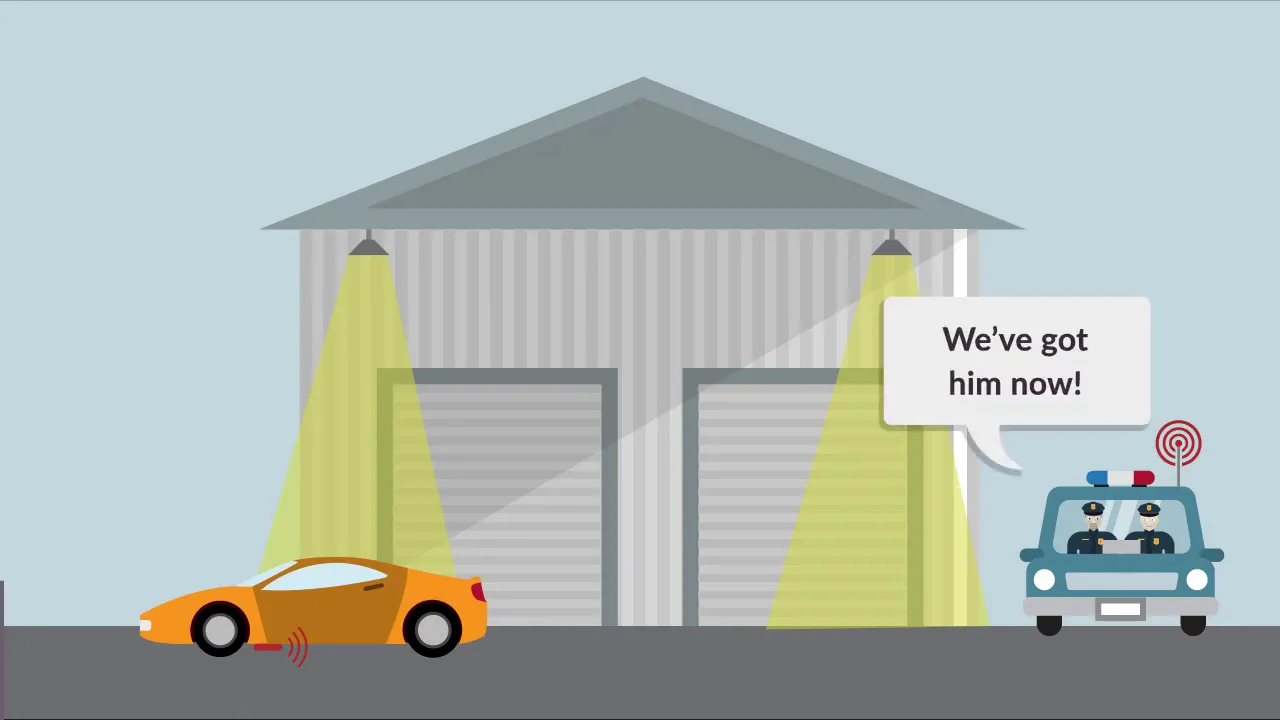
This expert case brief outlines United States v. Jones (2012). It details how the government's warrantless installation of a physical GPS tracker on a suspect's vehicle for 28 days constituted a search. The video highlights how the Court combined modern tracking concerns with historical common-law trespass principles.

Why this video
This production resolves a crucial curriculum gap by providing an in-depth breakdown of Riley v. California (2014). It explains the facts of the case, the mechanics of the "search incident to arrest" doctrine, and why the Supreme Court unanimously decided that mobile phones contain too much deeply personal, qualitative data to be treated as simple physical containers.

Why this video
This video explains the legal distinction the Court drew in Riley between physical items found on an arrestee (like wallets or cigarette packs) and smartphones. It walks through Chief Justice Roberts' famous declaration that officers must "get a warrant" before searching a phone, showing how the quantitative scale of digital data changes qualitative privacy rights.
Knowledge Checkpoint
- Explain how U.S. v. Jones revived the physical trespass test as an alternative to (and alongside) the Katz privacy test.
- Describe the "search incident to lawful arrest" exception and why the Supreme Court ruled it does not apply to the digital content of cell phones.
- Identify the safety and evidence-preservation justifications that support physical searches incident to arrest, and explain why they do not apply to cellular data.
- Explain the quantitative difference between physical effects and a smartphone as outlined in the Riley decision.
Module 4: The Third-Party Doctrine in the Internet Era
In this module, you will analyze one of the most controversial doctrines in constitutional law: the Third-Party Doctrine. You will trace its origins in the analog era via pen registers in Smith v. Maryland, and study its critical modern limitation in Carpenter v. United States, which dealt with long-term Cell Site Location Information (CSLI).

Why this video
This segment addresses a foundational curriculum gap by illustrating Smith v. Maryland (1979)—the case that established the third-party doctrine. It explains how the use of pen registers to record dialed phone numbers was deemed outside of Fourth Amendment protection because the numbers were voluntarily shared with a third party (the phone company).
Why this video
This masterclass video covers the landmark Carpenter v. United States (2018) case. It explains how cell carriers track movements using Cell Site Location Information (CSLI) and why the Supreme Court decided that this data is so detailed and pervasive that the third-party doctrine does not apply to it.

Why this video
This security-focused news analysis breaks down the immediate operational impact of the Carpenter decision. It details the 5-4 split on the Supreme Court, explaining how the ruling forced federal agencies and local police to seek standard probable cause warrants to access historical cell tower location logs.
Knowledge Checkpoint
- Define the Third-Party Doctrine and cite its foundational analog-era case (Smith v. Maryland).
- Explain what a "pen register" is and why the Supreme Court ruled that individuals have no expectation of privacy in the numbers they dial.
- Define Cell Site Location Information (CSLI) and describe how telecommunications networks generate this data.
- Explain why the Supreme Court in Carpenter v. United States refused to apply the third-party doctrine to historical CSLI data.
Module 5: Modern Surveillance, Geofence Warrants & Exceptions
This final module focuses on the front lines of digital surveillance. You will study geofence warrants (reverse location searches that identify all users in a specific area), the legal landscape of electronic device searches at international borders, and how law enforcement adapts to modern encryption.

Why this video
This investigative segment explains geofence warrants. Unlike traditional warrants that target a specific suspect, geofence warrants sweep up location data for all devices in a specified area during a set time window. This video analyzes the constitutional conflicts raised by this dragnet investigative method.

Why this video
Legal analyst Steve Lehto explains a major development in border search doctrine. He details how courts are beginning to limit the "border search exception," ruling that customs and border protection agents must have probable cause and a warrant before conducting forensic searches on travelers' laptops and smartphones.

Why this video
This courtroom footage shows a real-world application of digital evidence. An expert witness walks through a geofence warrant return from Google, demonstrating how law enforcement uses device IDs, latitude/longitude coordinates, and confidence radiuses to place suspects at a crime scene.
Knowledge Checkpoint
- Explain how "geofence warrants" invert the traditional particularity requirement of the Fourth Amendment.
- Detail the "border search exception" and describe how recent federal rulings have restricted warrantless forensic searches of digital devices at international borders.
- Describe how anonymized "Device IDs" provided by corporations like Google are unmasked by law enforcement during multi-stage warrants.
- Explain the legal challenges associated with "tower dumps" compared to individualized CSLI requests.
Course Map
Key People Index
- Chief Justice John Roberts
- Context: Authored the unanimous majority opinion in Riley v. California (2014) and the 5-4 majority opinion in Carpenter v. United States (2018). He is a key figure in shaping modern digital privacy jurisprudence by limiting historical exceptions in the face of deep, pervasive cell phone data.
- Justice Antonin Scalia
- Context: Authored the majority opinion in United States v. Jones (2012), reviving the physical trespass standard for searches. This ruling established that physical intrusions by the government remain constitutional violations even as electronic privacy doctrines evolve.
- Justice John Marshall Harlan II
- Context: Authored the highly influential concurring opinion in Katz v. United States (1967), which established the two-prong "reasonable expectation of privacy" test that replaced the trespass-only standard.
- Timothy Carpenter
- Context: The petitioner in the landmark case Carpenter v. United States (2018). His case challenged the warrantless collection of cell site location information (CSLI) by the FBI under the third-party doctrine.
- Edward Snowden
- Context: Former NSA contractor who leaked highly classified information in 2013, exposing global surveillance programs like PRISM. These disclosures sparked widespread public debate and litigation regarding the limits of the Third-Party Doctrine.
Final Self-Assessment
Complete this comprehensive self-assessment to verify your mastery of the Fourth Amendment in the digital age:
- I can explain the textual difference between the Fourth Amendment's "Reasonableness Clause" and its "Warrant Clause."
- I can explain why the British use of "writs of assistance" directly inspired the drafting of the Fourth Amendment.
- I can describe the facts, ruling, and constitutional significance of Olmstead v. United States (1928).
- I can apply the two-prong Katz test to determine whether a given government investigative action constitutes a "search."
- I can explain how the Supreme Court ruled on the warrantless installation of physical GPS trackers in United States v. Jones (2012).
- I can explain why the search incident to arrest (SITA) doctrine does not allow police to search an arrestee's cell phone without a warrant (Riley v. California).
- I can define the Third-Party Doctrine (Smith v. Maryland) and explain how it historically reduced privacy protections for shared data.
- I can detail how Carpenter v. United States (2018) limited the Third-Party Doctrine regarding Cell Site Location Information (CSLI).
- I can define a "geofence warrant" and explain the constitutional debate surrounding its "particularity" under the Warrant Clause.
- I can outline the current legal standards and recent limitations on warrantless electronic device searches at international borders.