Title VII Liability: Prevention & Compliance
Learning Goal: Analyzing employer liability for workplace harassment and discrimination under Title VII of the Civil Rights Act to implement effective compliance policies.
- Prerequisites: None (This is a comprehensive, zero-to-one guide designed for HR professionals, corporate counsel, and business leaders).
- Estimated Total Study Time: 10 hours
Module 1: Foundations of Title VII and Workplace Discrimination
Module Overview
This foundational module explores the historical context, statutory architecture, and scope of Title VII of the Civil Rights Act of 1964. You will learn about the protected classes, understand the crucial role of the Equal Employment Opportunity Commission (EEOC) as the gatekeeper of workplace claims, and explore landmark legal precedents, such as the Supreme Court's ruling in Bostock v. Clayton County, which explicitly expanded sex discrimination protections to include sexual orientation and gender identity.
Recommended Videos

Why this video
This lecture serves as a clean, structured introduction to the core legal tenets of Title VII. It outlines the specific threshold for coverage (employers with 15 or more employees, including government agencies), details what constitutes unlawful employment practices, and establishes the foundational statutory vocabulary required for the remainder of this curriculum.
Knowledge Checkpoint
- Identify which employers are subject to Title VII regulations.
- List the original protected categories established under the Civil Rights Act of 1964.
- Distinguish between basic terms and conditions of employment protected under the Act.

Why this video
This video is a specialized guide for HR professionals, detailing the nuances of "protected classes" under Title VII. It provides essential context on how protected classes are legally defined and treated under federal law, which is vital for designing non-discriminatory hiring and operational procedures.
Knowledge Checkpoint
- Explain how a "protected class" is defined under Title VII jurisprudence.
- Differentiate between the treatment of protected classes in recruitment versus day-to-day operations.
- Identify common compliance mistakes HR professionals make regarding class-based hiring practices.
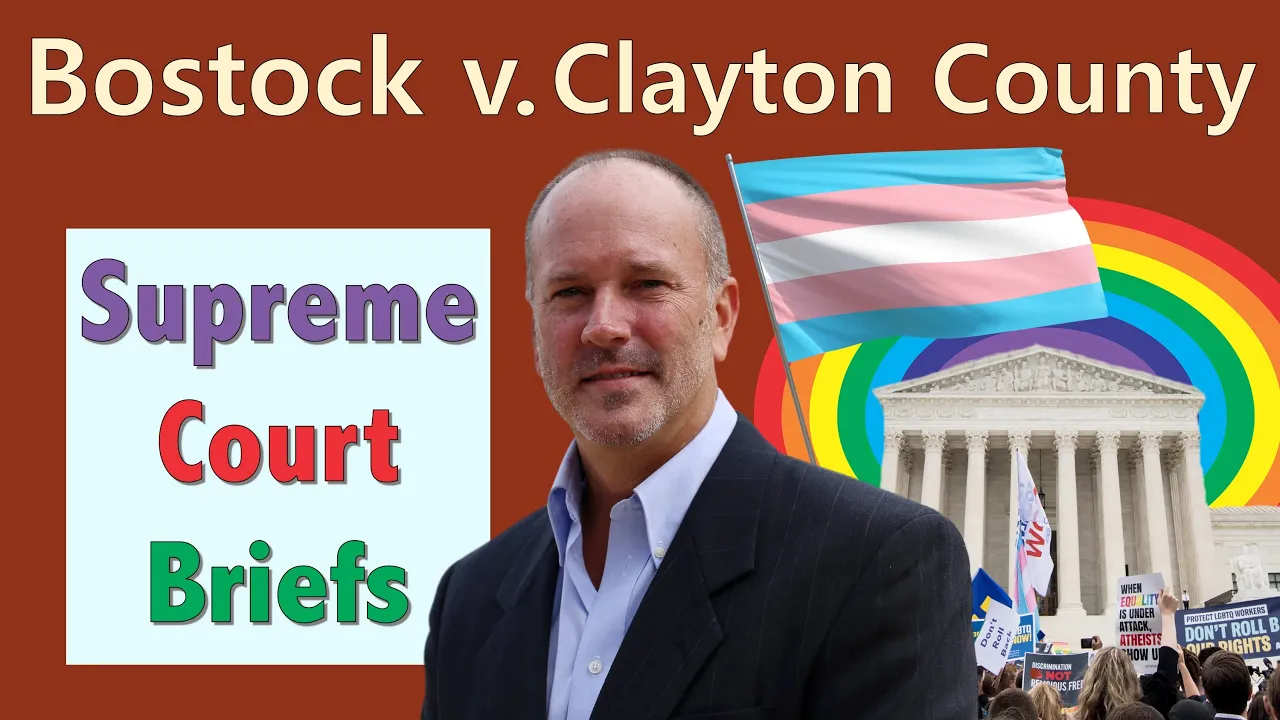
Why this video
This video offers a concise analysis of the landmark Supreme Court decision Bostock v. Clayton County (2020). Understanding Bostock is non-negotiable for modern compliance, as it established that discrimination based on sexual orientation or transgender status is inherently discrimination "because of sex" under Title VII.
Knowledge Checkpoint
- Summarize the primary legal question in Bostock v. Clayton County.
- Explain the Supreme Court's textual reasoning for including sexual orientation and gender identity under the category of "sex."
- Apply the Bostock ruling to analyze a hypothetical scenario involving the termination of an LGBTQ+ employee.
Module 2: Understanding Workplace Harassment Claims
Module Overview
This module transitions from general discrimination to the specific legal mechanics of workplace harassment claims under Title VII. It breaks down the two primary legal frameworks for sexual and non-sexual harassment: Quid Pro Quo ("this for that") and Hostile Work Environment. You will study how courts evaluate whether conduct is "severe or pervasive" and examine real-world case studies to build a sharp operational boundary between merely offensive behavior and legally actionable harassment.
Recommended Videos
Why this video
Produced by a regulatory agency, this comprehensive video provides clear, practical breakdowns of harassment types. It maps statutory definitions to realistic physical, verbal, and visual behaviors, and introduces how hostile environment dynamics function inside professional settings.
Knowledge Checkpoint
- Define Quid Pro Quo harassment and identify its core legal triggers.
- Explain the definition of Hostile Work Environment harassment.
- List at least three distinct categories of unwelcome conduct (e.g., verbal, visual, physical) that can contribute to a hostile work environment.

Why this video
This continuing legal education (CLE) style video dives deep into the precise legal standards used by courts and attorneys to evaluate claims. It breaks down the "severe or pervasive" standard, demonstrating why isolated offensive remarks rarely rise to a actionable claim, and how a cumulative pattern of behavior creates liability.
Knowledge Checkpoint
- Explain the difference between "severe" and "pervasive" conduct under federal standards.
- Identify why single, isolated incidents are usually insufficient to establish a hostile work environment claim (and specify the rare exceptions).
- Describe the objective and subjective tests used by courts to analyze whether an environment is legally hostile.

Why this video
This selection utilizes realistic scenarios to illustrate how subtle workplace interactions evolve into clear Title VII violations. By walking through case studies, you will learn to apply the theoretical rules of Quid Pro Quo and hostile environments to complex, multi-layered employee situations.
Knowledge Checkpoint
- Analyze how power dynamics affect whether an employee's participation in conduct is deemed "consensual" versus "welcome."
- Identify immediate signs of supervisor-led Quid Pro Quo harassment in a case study.
- Discuss the liability exposure an employer faces when a supervisor conditions workplace benefits on personal favors.
Module 3: Employer Liability & The Faragher-Ellerth Defense
Module Overview
This core module focuses on when and how an employer is held legally responsible for harassment occurring in their workplace. We will cover the different legal standards for supervisor harassment (strict/vicarious liability) versus co-worker/non-employee harassment (negligence standard).
Additionally, we will dissect the Faragher-Ellerth affirmative defense—the most critical legal shield available to employers in supervisor harassment cases where no tangible employment action was taken.
⚠️ Curriculum Note on Video Gaps: YouTube's free public catalog has limited standalone legal deep-dives on the two prongs of Faragher-Ellerth. To offset this gap, we have curated rare, highly technical lectures (including university and legal defense firm updates) and paired them with detailed analytical reading checkpoints.
Recommended Videos

Why this video
This academic legal lecture is an exceptional find. It explicitly breaks down the Faragher-Ellerth defense requirements, highlighting that employers must prove: (1) they maintained an effective prevention policy with documented annual training and at least two distinct reporting paths, and (2) the employee unreasonably failed to utilize those paths.
Knowledge Checkpoint
- Define the two essential prongs of the Faragher-Ellerth affirmative defense.
- Explain why a policy must contain at least two paths of complaint to satisfy the "reasonable care" requirement.
- Describe the legal definition of a "tangible employment action" and why its presence completely blocks the use of this defense.

Why this video
This practical update from a management-side labor and employment law firm discusses modern compliance issues. It highlights the direct connection between avoiding tangible employment actions and maintaining the eligibility to raise affirmative defenses under Title VII.
Knowledge Checkpoint
- Distinguish between supervisor behavior that results in vicarious liability and behavior that allows for affirmative defenses.
- Explain how a mid-level manager’s unilateral decision-making can accidentally strip an employer of their Faragher-Ellerth defense.

Why this video
This quick, high-impact legal video clarifies the massive difference in legal standards between supervisor-created hostile work environments and co-worker-created hostile environments. It explains the negligence standard applied to co-worker harassment.
Knowledge Checkpoint
- Contrast the liability standard for supervisor harassment (strict/vicarious) with the standard for co-worker harassment (negligence/knew-or-should-have-known).
- Explain why putting a complaint in writing is a critical step in establishing or defeating employer negligence.
Deep-Dive Self-Study: Supervisor vs. Co-Worker Liability
To fully round out Module 3, master these two distinct pathways to liability in court:
- Supervisor Harassment (Vicarious Liability):
- If a tangible employment action occurred (firing, demotion, pay cut, reassignment): The employer is strictly liable. No defense is possible.
- If NO tangible employment action occurred: The employer is vicariously liable unless they can establish both prongs of the Faragher-Ellerth defense.
- Co-worker or Non-Employee Harassment (Negligence):
- The employer is liable only if they knew, or in the exercise of reasonable care should have known, of the harassment, AND failed to take immediate and appropriate corrective action.
Module 4: Retaliation and Protected Activity
Module Overview
Retaliation is consistently the most common claim filed with the EEOC. This module covers the legal anatomy of a Title VII retaliation claim. You will study what constitutes a "protected activity" (both participation and opposition), define "materially adverse actions," and analyze the legal requirements of proving causation under the strict "but-for" standard.
Recommended Videos

Why this video
Using the case study of Lively v. Wayfarer, this legal explainer details the precise elements required to prove a retaliation claim. It explains how plaintiffs must construct their cases and details the legal definitions of employer awareness and causation.
Knowledge Checkpoint
- List the four essential elements required to establish a prima facie Title VII retaliation claim.
- Define the scope of "protected activity" under Title VII.
- Explain what constitutes a "materially adverse employment action" and how it differs from minor workplace annoyances.

Why this video
This video explains how managers engage in "quiet retaliation" (e.g., schedule changes, isolation, exclusion) and discusses why retaliation claims are often easier to prove in court than the underlying discrimination claims.
Knowledge Checkpoint
- Identify at least four subtle or "quiet" forms of manager retaliation.
- Explain the "but-for" causation standard applied to retaliation claims (established in University of Texas Southwestern Medical Center v. Nassar).
- Describe why an employee can win a retaliation lawsuit even if their original discrimination complaint is ultimately dismissed as unfounded.
Module 5: Designing and Implementing Effective Compliance Policies
Module Overview
In this final, highly practical module, you will translate legal theory into operational protection. You will learn the mechanics of drafting a legally compliant anti-harassment policy, structuring multi-channel complaint reporting systems, and establishing a standard operating procedure for handling immediate, objective workplace investigations.
Recommended Videos
Why this video
This official guide details the structural components required for a harassment policy to be recognized as compliant and legally effective. It acts as an outstanding reference checklist for drafting or revising corporate policy documents.
Knowledge Checkpoint
- List the eight essential components of a legally compliant anti-harassment policy.
- Define how a policy must address external reporting options (such as the EEOC and state agencies) alongside internal complaint pathways.
- Explain how a policy must declare that retaliation against complainants or witnesses is strictly prohibited.
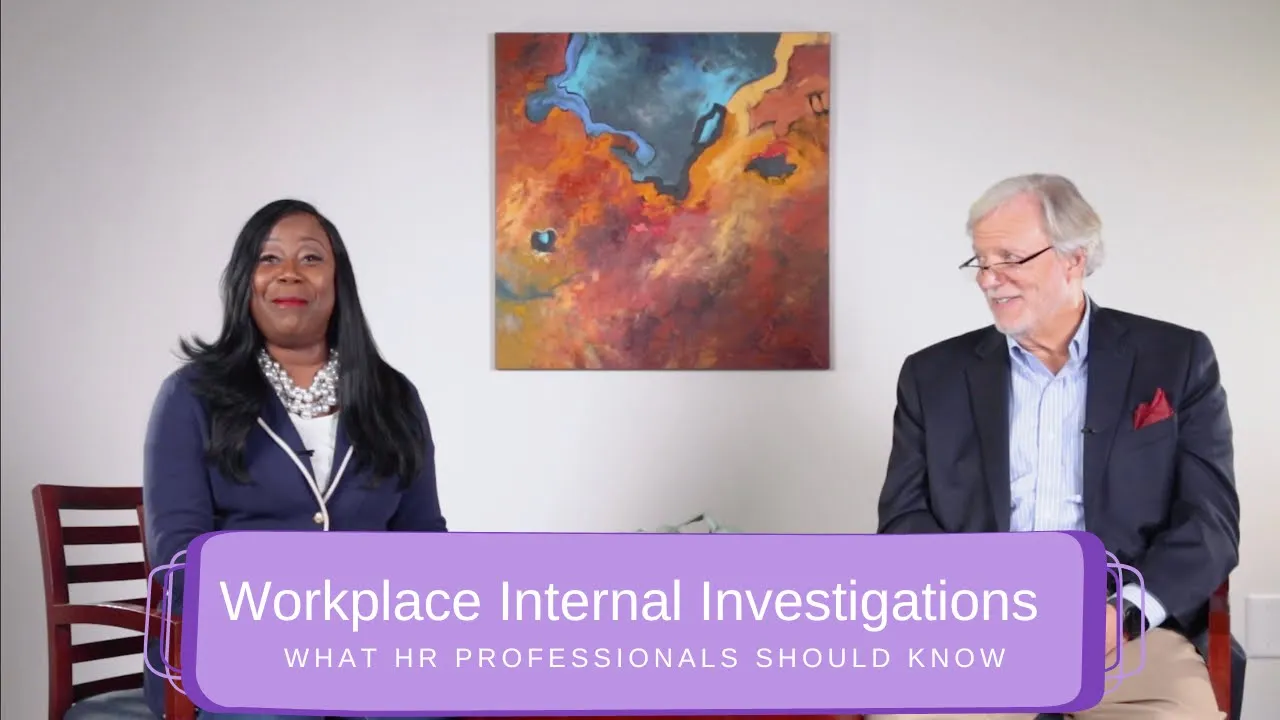
Why this video
This interview with a seasoned labor and employment attorney outlines the concrete steps HR professionals must take once a complaint is filed. It highlights the importance of protecting the complainant from immediate retaliation and avoiding split-second termination mistakes.
Knowledge Checkpoint
- Describe the first step an HR professional should take upon receiving a harassment or discrimination complaint.
- Explain why a business should never terminate an accused employee immediately without an investigation.
- Establish how to balance confidentiality with the legal obligation to conduct a thorough, fair investigation.
![Understanding Sexual Harassment [Step-By-Step Workplace Guide]](https://i.ytimg.com/vi_webp/S1I-paa_MTE/maxresdefault.webp)
Why this video
This short guide highlights how to translate policy into action. It emphasizes the need for continuous training, standardized documentation, and consistent enforcement to insulate a company from Title VII liability.
Knowledge Checkpoint
- Describe the role of document retention in defending against future EEOC charges.
- Explain how consistent enforcement of policies across all levels of management prevents claims of disparate treatment.
Step-by-Step Guide: Drafting an Anti-Harassment Policy
If you are tasked with drafting a compliant policy, use this structure:
- Clear Statement of Policy: Explicitly prohibit discrimination and harassment based on sex, race, religion, color, national origin, and other federal/state protected classes.
- Clear Definitions & Concrete Examples: Clearly define both Quid Pro Quo and Hostile Work Environment with practical, real-world examples.
- A Multi-Channel Complaint Procedure: Provide at least two independent pathways to report harassment, bypassing direct supervisors if they are the accused party.
- No Retaliation Clause: Strongly state that retaliation against anyone who reports harassment or participates in an investigation is illegal and will result in immediate termination.
- Investigation Commitment: Commit to a prompt, thorough, and impartial investigation of all claims.
- Disciplinary Actions: State that violations of the policy will result in appropriate disciplinary action, up to and including termination.
Course Map
Key People Index
- Justice Neil Gorsuch: Authored the majority opinion in the landmark case Bostock v. Clayton County (2020), defining textualism's application to Title VII protections.
- Beth Lively: The plaintiff in Lively v. Wayfarer, a case commonly used to teach the elements of Title VII retaliation.
- Jeff Weintraub: Guest expert and prominent labor law defense attorney, specializing in workplace internal investigations and preventative training for management.
Final Self-Assessment
Complete this comprehensive self-assessment to verify your mastery of the legal and compliance elements of Title VII liability:
- I can clearly identify when a business meets the 15-employee threshold to trigger Title VII compliance.
- I can list all federal protected classes under Title VII, including updates established by Bostock v. Clayton County.
- I can articulate the difference between Quid Pro Quo harassment and Hostile Work Environment claims.
- I can apply the "severe or pervasive" standard to evaluate whether a workplace interaction is legally actionable.
- I can outline the two-prong test of the Faragher-Ellerth affirmative defense.
- I can explain why a "tangible employment action" prevents an employer from using the Faragher-Ellerth defense.
- I can identify the difference in liability standards between supervisor harassment (vicarious) and co-worker harassment (negligence).
- I can list the four elements required to prove a Title VII retaliation claim.
- I can distinguish between "participation" and "opposition" as forms of protected activity.
- I can evaluate a corporate anti-harassment policy to ensure it has at least eight essential regulatory components, including multi-channel reporting.
- I can describe the correct steps of an internal workplace investigation, starting from initial intake to final documented resolution.