











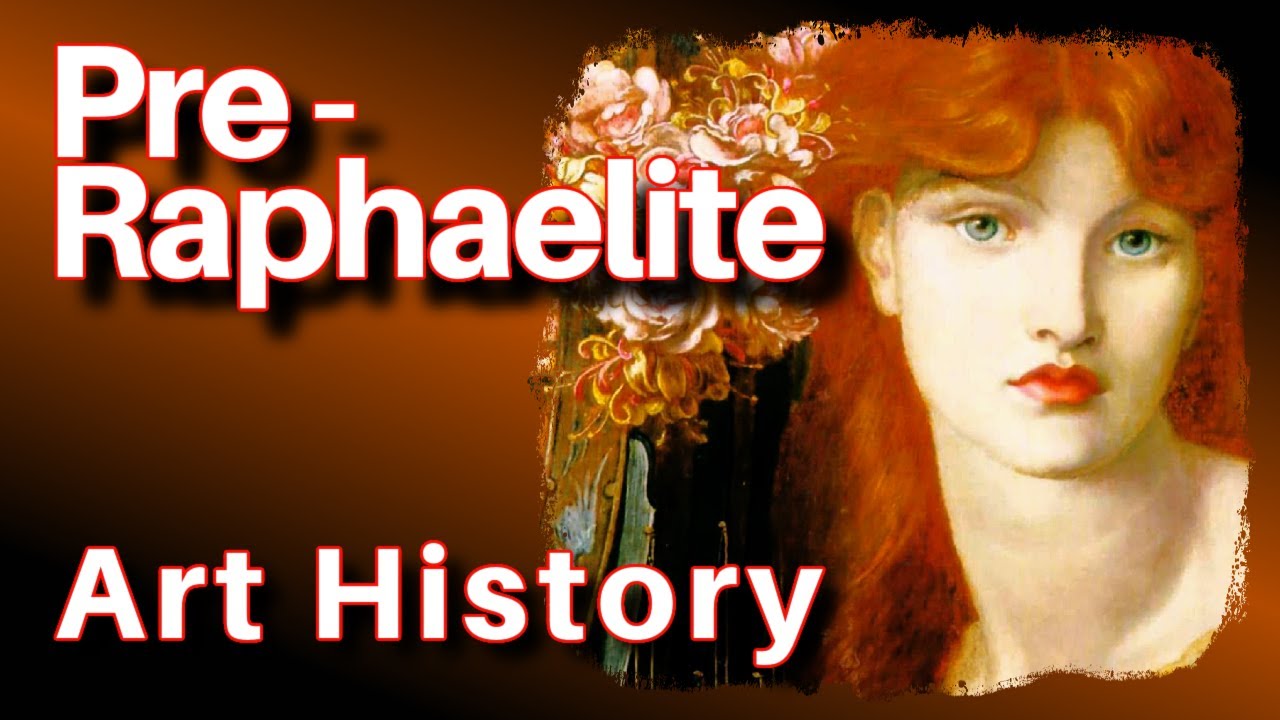


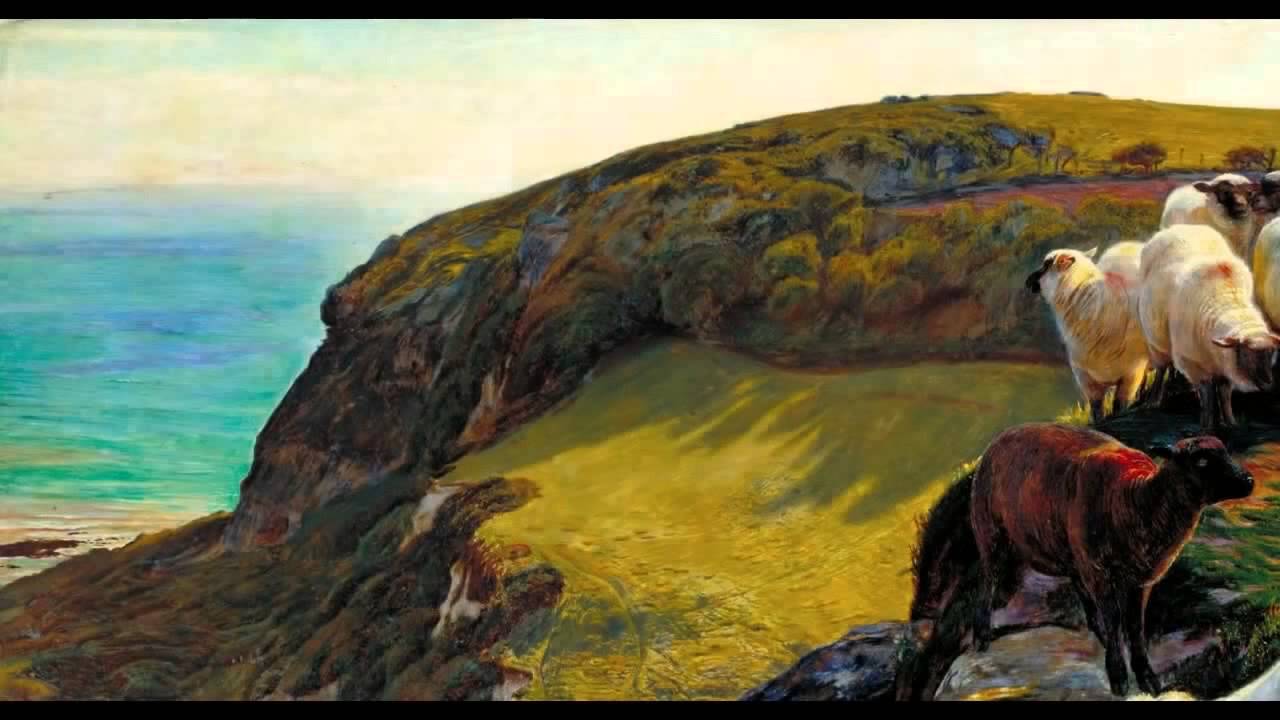

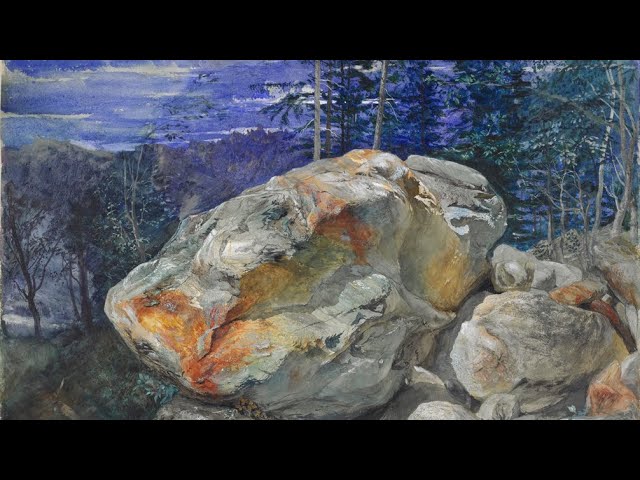



The Pre-Raphaelite Revolution, led by William Holman Hunt and his brotherhood, fundamentally transformed British art in the mid-19th century by rejecting the Royal Academy's conventions and embracing meticulous naturalism; Hunt's revolutionary painting 'The Strayed Sheep' (originally titled 'Our English Coast') at Fairlight Cliffs exemplified this approach by painting every element with equal detail, allowing viewers to choose their own focal point rather than being guided by traditional light and shade techniques, while Hunt's obsessive attention to detail and use of natural light represented a radical departure from established artistic norms.
Pre-Raphaelites: Hunt's Coastal Masterpiece at Fairlight Cliffs
Added:The origins, artistic philosophy, and core tenets of the Pre-Raphaelite Brotherhood (PRB), particularly their rejection of the Royal Academy's formulaic conventions.
The life and artistic style of William Holman Hunt, including his commitment to symbolic realism and meticulous observation of nature.
The distinction between academic studio lighting techniques (such as chiaroscuro) and the practice of painting 'en plein air' (outdoors) to capture direct sunlight.
The cultural and scientific context of mid-Victorian Britain, specifically how developments in geology and natural history influenced landscape art.
The comparative analysis of Pre-Raphaelite naturalism and the subsequent French Impressionist movement's approach to light and atmosphere.
The 'wet white' painting technique utilized by Hunt and Millais to achieve unprecedented luminosity and brilliant color saturation.
A detailed iconographical study of 'Our English Coasts, 1851' (Strayed Sheep) to understand how Hunt embedded geopolitical and religious allegories into coastal landscapes.
John Ruskin's art criticism, particularly his concept of 'truth to nature,' and its theoretical application to Victorian landscape painting.
1.8K views62likes44:20Original Release: 2025-12-17
[Music] Welcome to Tate Britain. Well, here we are in the famous Tate Gallery.
>> In this series, we've been given unique access to some of the nation's most loved paintings.
>> I do love it.
>> I think you've got great taste.
>> Do I?
>> Mainly because I share it.
>> I'm Gus Casey Hayford, art curator and cultural historian.
>> Isn't this just magnificent?
>> And I'd like to invite you into scenes of some of the most extraordinary paintings and remarkable landscapes. Oh my god, it's the same.
>> All in the company of some very talented men and women.
>> Part of me does go like, I could have done that.
>> The walk in the shadows of these great artists.
>> Put your hands behind your back. It gives you more authority.
>> Rediscovering their secrets and inspirations.
>> I'm changing my mind about this painting now.
>> So sit back, enjoy the view, or better still, follow in my footsteps.
>> I've got my walking boots, and I'm looking forward to it very much. hand in hand like local.
[Music] >> Long live the revolution. In the middle of the 19th century, art in Britain changed radically and it changed in the hands of a young group of artists, the pre- rafflites. And they were led by the most zealotic of all of them, William Hullman Hunt, known by the pafflites as the mad. And we're going to enter into their world with another revolutionary Wolfie Smith, Robert Lindseay, wonderful actor, writer, racker.
Despite his many successes, Robert Lindseay has always been true to his workingclass roots. He shot to fame in the 70s playing Wolfie Smith with whom he shares a rebellious streak.
I've just got a feeling he'll enjoy the art of the pre- Rafflites for their subversive and their radical ideas.
>> Hi.
>> Hey.
>> So, I now know the face. It's so lovely to meet you. Welcome to Tape Britain.
>> Most of us are familiar with the preferralites and will have an opinion of their work. William Hullman Hunt, John Everett Mille, Gabrielle Rosetti.
They're all names that we recognize.
They've produced some of the most memorable pieces of British art.
>> This room is my favorite in all of the tapes. It's a particular moment when I think everything changes in British art. A kind of revolution. And >> that's a strange word. Reolution.
>> That's nothing to do with me, of course, at all.
>> When they arrived on the scene in 1848, the pre- rafflites tore up the rule book of British art. They have skewed the idea of guiding the viewer's eye to the focal point of paintings and in so doing they created something utterly new.
The preferites they place us in the landscape and they paint everything with an equal level of detail and attention.
>> I know that one really well. You know this one.
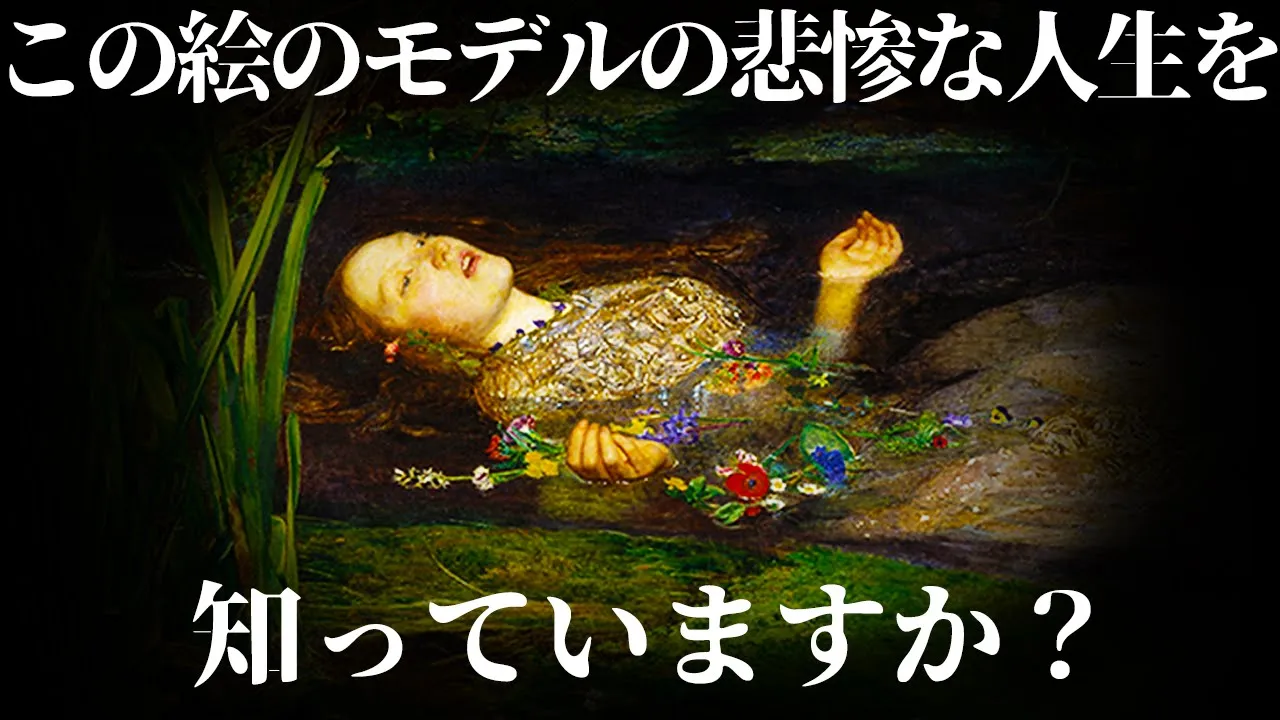
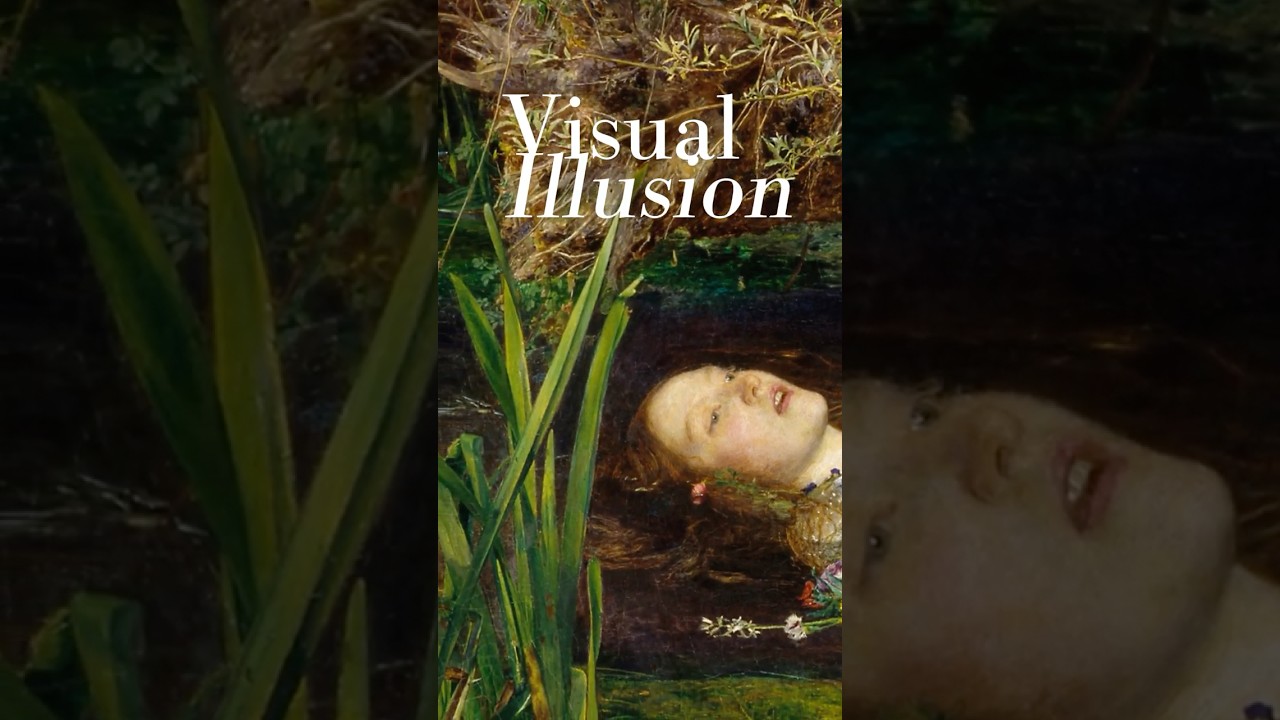
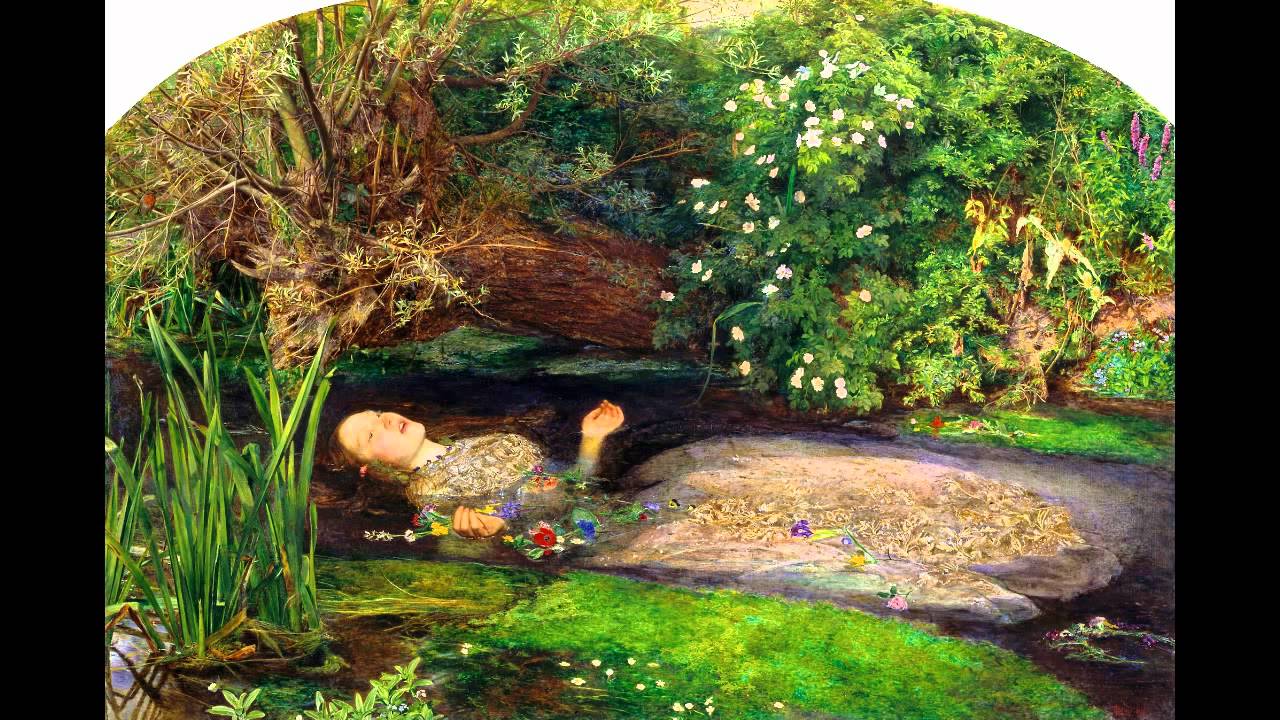
>> There was an American friend of mine who was playing Hamlet at Rada in the 60s and he was a method actor and he he used to come here and stare that and he he he actually said to me he said I'm trying to work out the effect on Hamlet's life if Ailia could swim.
>> But that's Mle, isn't it?
>> That is MLE. And and if there were method painters, these were the guys.
>> It's method painters. Well, in the sense that they would take their canvases out into landscapes and paint from nature.
>> So these people, the pre- Raffelites went out on a limb.
>> On a limb on a limb and probably more than any other of the pre- Rafflite artists who went out on a limb is William Holman Hampton.
>> You see, I I I love that. I absolutely love that. I've seen it, but to see the real thing is my god, the color.
>> Yes.
>> Then the thing that always strikes me is the fact that they're all destined to die cuz they've all got the red stripes.
You know, the sheep. So, they're all, you know, they're going to be slaughtered soon. It's called the strayed sheep, and it is about the possibility of of peril. If you look at the detail, every single leaf, all the blades of grass, >> all with an equal weight in terms of color and balance. It means that you stand in front of the canvas and you can gaze across it and you can choose where you want to focus your eye. Yeah. Rather than him leading you using light and shade. And at the time this was so revolutionary.
It's it's just utterly exp.
>> That sunlight is incredible the way he's used that.
>> Yes.
>> And and this is where >> this is um fair light in Hastings.
>> Let's go.
>> Let's go.
>> So power to the people. Let's find out exactly what this revolution was all about. Our first walk will take us to Lover's Seat in Fairlight, the exact spot where 25-year-old Hunt painted the Stray Sheep, which originally was called our English coast. We'll follow the splendid coastal path overlooking Covest Bay, offering breathtaking views. And oh, the light. That perfect light that Hunt was so fond of.
But this is absolutely perfect. I mean, H Homeman Hunt talks about painting in all weathers out here, but uh I think today he would have absolutely adored, >> but look at this now. I mean, look at the light.
>> To our eyes, this painting may look proic, but it was the use of light. The technique literally dazzled viewers when they first saw it. And I know that light has a huge significance to Robert.
>> You speak about how light impacts you. I mean, obviously it impacted Homeman Hunt.
>> I was prescribed as sad. I mean, I come from the East Midlands where the sun very rarely shone. And when it did, I was very happy and when it didn't, I was very sad. Um, it changes my life. I mean, just this morning, just arriving here with that, it makes me feel glorious and everything's wonderful with the world. But likewise, I get up on a Monday morning in a gray February and then feel like, oh, and I never want to do anything. I just want to stay in bed.
In fact, drive my wife crazy cuz I put on all the lights in the house first thing in the morning. That's all I do.
Put on lights. And she's from Yorkshire.
She's trying to save money.
A lot of people who suffer from depression, it's also something which they seem to use in their own creative practice.
>> You sound like my drama teacher at No.
That's what that's what drama teachers always used to find, you know, say to you, you know, find something in yourself. Find the dark side. You know, >> my depression really started when I smoked a lot of marijuana when I was um teenager. Funny enough, when I was doing Citizen Smith in the 70s, the whole thing about being a an actor or performer or painter or whatever is self-confidence.
>> Yes.
>> And of course, if self-doubt creeps in, then that comes with an awful lot of baggage like depression.
>> It's gorgeous here, though.
>> I don't know what it is, but I suddenly feel very English. I'm very proud of being English. I love this island, you know, and I suppose all of us are kind of protective about it in many ways.
Want it to be the same.
>> Yes. Yes.
>> Well, life isn't like that.
>> Yeah.
>> A place this beautiful can't help but inspire a sense of patriotism.
When Hunt came here, he wanted to create a vision of Albian, and he called it our English coasts.
his idea of of England was an England that he felt that in the 1850s was at threat and it was at threat from a number of things and one of the things he was really concerned about was the imminent threat from Europe, the threat from uh mechanization and industrialization.
>> Brexiteer.
>> Yes, he would have been a Brexiteer. He would have been a Brexiteer.
>> How would he have felt with the Channel Tunnel?
Well, you would have hated all that >> cuz we've become a culdeac now.
We're not an island anymore.
>> More than the symbolism of the painting, what struck critics at the time was Hunts obsessiveness, he would come to this bit of the coast day in day out to replicate fanatically all the details that he observed.
because for him there was no substitute for nature along the cliffs overlooking the beautiful Covest Bay towards the lover's seat. And the incredible thing is you can still walk into that exact same view.
>> Oh my god. Isn't that dramatic?
>> It's It's the same and so stunning.
It's just a wonderful thing.
>> Wow.
>> I see what you mean now about capturing the reality of life and and being part of nature.
>> And it's not just a new level of ambition of technique, but he had to use a whole new generation of paints, many of which were deeply toxic. And and this is a particular green which had a kind of arsenic in it.
It could be, you know, pretty uh >> oh my god >> dangerous profession in more ways than just a kind of walking along the cliffsides.
>> Let's walk down into the RV.
[Music] Oh gosh, this is just idilic, isn't it?
>> Perfect.
>> Do you find it as a art historian to go to a place where they actually painted, isn't it?
>> Oh, it's it's very special.
>> Yeah, it's very special.
>> This is it. This is the actual bluff where Holman Hunt painted.
>> Are you entirely sure, Gus? Well, >> so our sheep would have been here.
>> Yes. You say sheep, but he managed to actually construct this whole scene using a single sheep that he would move around and paint and over over a period of five months in all kinds of >> Well, he was an animal trainer as well.
Hang on. I want you here. I can't believe he actually stage managed the sheep. Hang on a second. Hang on. Whoa, whoa, whoa, whoa.
>> It's fake.
>> Fake? What? What? is fake. I mean, it's because he's spinning in his grave.
>> There are not there are not escape sheep stage managed the whole thing.
>> The light would have been accurate.
>> He would have manipulated an animal into those positions. He was someone who boiled a horse, rendered it right down to its bones so that he could actually see the workings of an animal. He was totally obsessive in his pursuit of accuracy. And it's about a the vulnerability of our country. It's just that sense that we are all safe in our group on this gorgeous island. We are part of a community, but we are all simultaneously vulnerable.
>> Do you know what, Goss? Now I really get it. I mean it's it's a fantastic painting.
>> This may not look like it, but this buolic scene painted by Hullman Hunt was once considered a subversive work of art.
In the mid-9th century, William Hullman Hunt and a group of Bohemian fs calling themselves the pre- Rafflite Brotherhood were trying to tear down the art establishment. And Robert Lindsay, another revolutionary, is exploring this rather excitable world with me.
>> I mean, I wouldn't I wouldn't call that revolutionary.
>> We all know these images. They're almost part of our identity.
But what were the origins of this peculiar band of brothers?
We'll start at the Royal Academy where Hunt first met Mille and Rosetti. A place where they rebelled against Sir Sloshua Reynolds, the name they gave to the first academy president whose work remains in the permanent collection.
I'll make my way to Leicester Square, where Reynolds used to live, past the National Gallery, which now hosts all of the players in the story.
and then onto 83 Ga Street, Mille's household, the birthplace of the pre- Rafflite Brotherhood, before I end my walk at Cleveland Street, where the young Hunt and Rosetti shared a gloomy studio.
If you wanted to make it as an artist in the 19th century, this is where you needed to be, the Royal Academy. This was a place that didn't just put art on plints, it put artists right up there, too.
Getting into the Royal Academy was no easy task. It was harder still for Hunt, whose father, a copy Clark, regarded art as an occupation fit for vagabons.
Despite his father's wishes, age 16, Hunt managed to visit the institution where he was immediately impressed by a prize winner, a 14-year-old maverick called John Everett Mille. Their meeting was a revelation for Hunt as the prodigious Mille encouraged him and invited him to stay with his family on Gow Street.
This is where the pre- rafflite brotherhood begins. It's where a group of spotty teenagers turn themselves into a new chapter for art history. And at the heart of this brotherhood is a friendship between two men. And Millle he has that thing that Holman Hunt envys. He has a family around him that understand the importance of art and art history and they back their son. They back the brotherhood to the hilt.
Preparing for the RA exhibition in 1848, Hunt and Mille would spend hours pontificating on the arts, condemning the work by regailed Italian painter Raphael. The main focus of their criticism was this painting. The Transfiguration.
Raphael, what on earth were you thinking? The young upstarts judged the work of the Renaissance master decadent, inaccurate, and decided that they had to revive medieval art in order to revolutionize British painting. These radical views earned them the accolade pre- rafflites.
Our final stop is the site of a scientific center on Cleveland Street. But this is where in 1849 Hullman Hunt shared a dingy studio with the flamboyant Gabrielle Rossetti.
Amongst all the grit and the grime and the metropolitan confusion, they wanted to fashion a sort of perfect art.
But the dream wasn't quite like the reality. Of course, these two fiery characters, they didn't get on. I mean, just the size of the egos, Rosetti and Holman Hunt, sharing a studio. You can imagine it. And this was a group who were as naive as they were talented.
They even wrote something that they called a suicide pact. The rules of the pact were quite frankly stupid and revealed the clueless nature of the young prerefites. Rosetti and Hunt declared that if either were to tire of life, the other would be called upon to end it by cutting his throat. You can love the prerelites, but there is also something that you've got to acknowledge about them. They were a little bit annoying.
[Music] So for all the revolutionary banter, it may come as a bit of a surprise to find that this group of self-proclaimed upstarts only went as far a field as the leafy suburbs of South London to find inspiration in a place called you.
For our third walk, I'm meeting Robert at Rectory Farm, home of Hunt's wealthy uncle, a place he regularly visited as a child and later on with Mille. Jane, the owner, has agreed to meet us and to show us around. Then pass the old St. Mary's Church, which Hunt painted in his early days, and finally follow the Hogsmeal River to reach the spots where Hunt and Mille created the two iconic works, the Highing Shepherd and Ailia.
[Music] >> That is Rectory Farm Barn. And where we are now was the farmard. Uh Holman Hunt's uncle and aunt Hobman Hunt. Yes.
>> Actually, were tenants of the farm.
>> Yes. So he he and some of the priathlites stayed with them.
>> So G the painters worked in here.
>> I like to believe >> let's believe they painted here >> because a number of their paintings >> are cited >> within a stones throw of of this this this bar.
>> The light of the world was um the door of a shed on the gum one of the gunpowder mills.
>> But they were looking for something and I think they felt that they found it here.
>> I think they did. Yes. It was a nice quiet rural area.
>> But more than that, there a kind of something that sort of quintessentially English >> that sort of evokes something of a past that they felt that maybe we had lost or were losing.
>> Oh, that's interesting. I didn't think of it like that. I just thought it was the line until thine own self be true.
You know, the the finding finding art within what you know and understand. But they could have followed so many other artists who were painting Epsom Derby.
But they wanted to look back at something.
>> But they were young men. I think they were using this barn for dodgy substances. Personally, >> you know what? You know what? Teenagers alike.
>> Well, we've never found anything. I have to say.
>> You've never found >> You've never found evidence of that.
>> No. No.
>> And you you call them the Hobman hunts.
And >> the the name was Hobman Hunt >> with a B >> with a B.
>> Hobman.
>> Hobman Hunt. Why he became Hullman Hunt, whether it was a misprint >> or he decided it sounded a bit more refined, I we Nobody knows, >> a lot of artists change their name, you know. Gazing.
>> Is there is there something that you >> Well, my name my name is Stevenson, but then Equity asked me to change my name, but it does sound rather nice, I think.
And I mean maybe Jane's right. Maybe May Hoffman. I thought Hobman >> weren't very good at the Broad Academy.
>> I think I'll change my name to Hullman.
>> Who knows? It's it Nobody knows.
>> Well, we run the trail of the other great paintings created by Mille, >> right?
>> And Hullman Hunt. So, we've got a bit of walking.
>> Okay. You've got a bit of walking to do.
Enjoy it. It's a lovely walk.
>> Oh, it's lovely to see you.
>> Yeah. Lovely to meet you.
>> Thank you.
>> Thank you.
So when you changed your name, what was your family's reaction?
>> Well, I was Robert Lindseay Stevenson anyway. If my dad had got his way, I'd have been Robert Louis Stevenson.
>> Really?
>> Yeah. That was my only claim to fame when I was a kid that I was almost like Robert Louis Stevenson.
But um >> a stones throw from rectory farm stands the remains of the old St. Mary's Church. Through encouragement of his uncle, Hunt was commissioned by the local vicar to paint the church.
>> How English is that?
>> Sadly, only the tower survives.
>> I had a lot of support from my family to be an actor. Changed my accent, changed my, you know, I went to Alexandra technique. I learned to stand up. I was like that, you know, talking like that all the time. Hey, Doc, how you going on all right? you know, from Derby and and I was eager and anxious and naive. And then on the first night of me and my girl at the Adelfi, um Emma Thompson uh took me up like that. She pushed me forward, go forward.
And as I went forward, the entire audience stood up in a standing ovation and I went, "Oh my god." It was like, "Wow." And I looked and the only person sitting down was my dad. Oh. And I looked and and I could see him tearing up. So, and after was at the party, I said, "Dad, wasn't that amazing?" And he went, "Oh, yeah. Yeah." I said, "But you are the only person sitting down. Why didn't you stand up?" He said, "I paid for the bloody seat. I'm sitting in it."
>> He didn't pay for the seat, but never mind.
[Music] >> We're continuing our walk along the tranquil Hogsmill River as I want to show Robert the exact location where Hunt painted the hiling shepherd. A painting which created a huge amount of controversy.
This is the picture that really makes Holman Hunt's reputation. A picture that he wins prizes for and a picture which he paints here.
>> Here >> here.
>> Of course, this would have all been meadow, wouldn't it?
>> It would have. It would have. Yes. Yes.
And there's a kind of a kind of a sexual tension in the air. She's got red cheeks. He's >> blush of youth.
>> Yes, exactly. But also that it was interpreted as more than being a blush of youth, but there was a sort of sexual fre. You may think this painting looks pretty tame. But at the time, that face flushed with drink from the shepherd's barrel and the hungry look in her eyes, it shocked viewers to the core.
So this this would have been risque at its time, would it?
>> Oh my word. Yeah, absolutely. And I think also because they knew that this was based on a real model, it would be almost like kind of um pornography, you know, the idea that Yes.
>> mind you who I don't blame him to be quite honest, >> you know, with She is so beautiful, >> isn't she?
>> She really is.
Continuing along the river past Worcester Park Gunpowder Mills where in the evenings Hunt worked on the light of the world before reaching 6acre meadow where Mille based probably the most famous pre- rafflite painting of them all. Ailia Mille captured this river with obsessive accuracy and he did it in situ but he asked his model Elizabeth Siddell to pose in a bath for him in his London studio. Both models from the two paintings were to cause Hunt and Millle quite a bit of trouble. So, Robert and I are about to explore the sometimes difficult relationships between the pafflites and their muses.
When we think of the pafflites, there's a certain kind of woman that comes to mind. These enigmatic muses with long hair and fair skin. The prolites are a kind of myth unto themselves and women and female beauty plays a really important role.
>> Robert Lindseay and I are joining Professor Linda Neid to discover who these women were. We'll explore the controversial nature of the relationships between the brotherhood and their muses.
The women are usually seen as the models, the myths, you know, the muses, the wives, the mistresses, >> but they're not the kind of creative, romantic, desperate, you know, young artists. They're they're they're never that.
>> Punt was accused of having a scandalous affair with Emma Watkins, the young model featured in The Hiling Shepherd.
While rumor has it that the poor Elizabeth Sidel from Meilia contracted pneumonia as a result of spending hours in the bath for Mille, but the muse adored above all others was Annie Miller. Hunt was infatuated. Our walk with Linda will take us around the streets of Chelsea where Hunt and Rosetti relocated in the 1850s looking for models.
Starting from outside Rosetta's house in Chelsea, we'll walk towards Hunt's lodging in Cheney Walk and his studio on Justice Walk. And we'll end at Annie Mina's local, the Cross Keys Pub.
I mean, as a group, they seem to become completely obsessed with their models.
Certainly in the early 1850s um Annie Miller was the face for um Holman Hunt. She was a a really very poor workingclass girl when Hunt first met her.
>> And this bit of London, it tells a very particular chapter in their story.
Absolutely. This is >> Rosetti's >> Yeah. This is um Rosetti's fantastic house. Although, you know, Chelsea was a different kind of area in the Victorian period. It wasn't the, you know, 10 million pound houses that that one thinks of now. Yes.
>> You know, there were areas that were really slum poor areas, which is where Annie Miller came from.
>> But it was always a kind of mix of a place. That's why you get this meeting of the young Annie Miller and Hullman Hunt because his studio was literally um round the corner >> just a stones throw >> just a stones throw from uh where she lived.
>> It's around these very streets that the brothers would indulge in their search for models, an activity that they referred to as stunning. Their aim was to capture the prettiest girls with a desire to educate them and to make them more respectable.
We're making our way to Justice Walk where on a solo night out in the spring of 1850, Hunt spotted Annie Miller and stalked her to her home behind the Cross Keys pub.
>> Watch the step.
>> What's this phrase I've been reading? I think thing called stunner hunting. It's pretty horrible, isn't it?
>> Yeah, it doesn't sound very good.
>> Doesn't sound good. Um, they would refer to the women who seem to embody this kind of beauty that they were looking for as stunners. And when they went out, they would go looking for these women.
Stunner hunting.
>> Yeah. Yeah. And that's which is really >> Well, how would they what would they do?
They walk. I don't know exactly what they would do, but it's that sense that you are entitled to do this.
>> Yes. Can Can I try and play devil's advocate?
>> I mean, Homeman Hunt, is he trying to do something that he feels is actually underpinned by his moral compass?
>> I think he had an evangelical Christian sense of duty. He saw her as a kind of potential stray sheep, you know, someone who needed him to rescue her.
But if you think about it from her point of view, she must have found it flattering.
>> Uh when Hunt came and asked her to model and then also irritating when Hunt keeps on trying to turn her into a rescue mission. Hunt asked her to model in this highly symbolic painting, the awakening conscience, depicting a kept woman realizing the wrongs of her ways after seeing the sun reflecting on a tree outside. This painting is full of visual clues from the predatory cat attacking the bird symbolizing the woman's plight to the tangled piece of thread as a reference to the web in which she's trapped. Even the glove on the floor, a symbol of how she could be discarded by this man and end up on the street. In an attempt to keep Annie loyal, Hunt tried to offer this painting as a moral lesson. It didn't work.
>> I like her.
>> I I think she's gutsy, too.
>> What What was her ending? Well, she comes in and out of the prolite story and then she um marries a guy called Captain Thompson who is the first cousin of an aristocrat. It's the most incredible story.
>> Gosh, got to be a play.
>> It should be. And it would make a great role for an actress, wouldn't it?
>> Yeah. Yeah. Kira Nightly.
>> Can I be devil's? Carry on. You be devil.
>> No. Because I'm just, you know, if this brotherhood is about nature and reality, why don't they take men off the street and do real men and people with, you know, street dwellers and paint them as street dwellers? Why do they take a girl who's poor and make her look stunning?
>> They're radical in the sense that they oppose the mainstream art establishment, but they're driven by art really.
They're They're not social reformers.
>> All right, I'll finish pipe and we'll go there.
>> Muses continued to be at the heart of contemporary arts. When he met benefit supervisor Sue Tyl, Lucy Freud decided to make her his model. He'd pay her £20 a day to pose for him and painted her four times.
When it sold for over£17 million in 2008, this image featuring Sue sleeping was the highest price ever paid for a painting by a living artist.
I'm on my way to meet Sue to find out about the relationship between an artist and their muse.
>> There is something, isn't there? I guess it's a bit of a cliche about the relationship between artists and their their models. Yeah.
>> Was that something that you were aware of? Because sometimes it can actually tip over and become >> romance.
>> Romance or >> a couple of weeks I thought what if he starts on me? But nothing like that when I wasn't his cup of tea. I was far too loud mouth and what have you. So it was fine.
>> But he had a bit of a reputation, didn't he?
>> With the ladies.
>> With the ladies and also with the lunches and the the and the after lunch tipple as well.
>> Oh, not really. No. I wasn't a terrible drinker. No, he was so obsessed with working. We had time for a bit of lazy liking, but usually fit down with him being a model as well. So, it was two birds with one stone.
>> And can you remember the first time that you >> got into a room and that he said, you know, I'd like you to model. What was that conversation like?
>> He made me strip off naked on the sofa first as practice >> so I won't be embarrassed cuz I'm not really a nudist. I'm not M flashing myself, you know. Even when I was at Lucian's in the studio be posing model, there was no one in the house but him and me. If I went to the toilet, I put my clothes back on although there was no one else there.
>> And can you remember the first time that you saw this image that you walked around in front of the canvas and began to see it coming?
>> Yeah. Was to see it the whole time because the painting is so big. He has to stand in front of them. So he's turning around the whole time to paint you and look at them. So you see it from the very beginning.
And I was thinking, it's not very attractive, is it?
>> And this was um was this the second or >> I think it was the third.
>> This was the third.
>> Yeah.
>> I would say that you were more than just a model for Freud that you become someone who actually helps to stimulate and to trigger and perhaps even change the direction of their work.
>> Yeah. You don't think anything about it at all. It was just like going to work and over the years I've kind of fallen in. It really changed what he did and changed how he worked and sort of made him more famous really.
>> And you were on a percentage, weren't you? So, >> as if that's what people always say.
They think I'm really rich.
>> Have you not got the half bottles of champagne?
>> No, I've got nothing. Nothing. Didn't even get an etching when you died.
>> So lovely to meet you and speak to you.
Sure, Sue. A living legend.
>> Oh, shut up.
>> An icon in our midst.
>> Look, I'm just an or woman who lives in the lens and sea.
>> Looking gorgeous enough.
>> Oh, thank you for the greatest art.
You're a very smooth talker, aren't you?
>> Robert Lindsay and I are out to discover the life and the art of pre- rafflite painter William Hullman Hunt.
Before joining him on the last walk, I have the privilege of meeting Joyce Townsend from the Tate Conservation Department.
Thanks to her X-rays and microscopic photography, we have a unique opportunity to see the layers beneath Hunt's seemingly perfect paintings.
>> We wanted to see why all these paintings were in such perfect condition.
We looked at them and we found they weren't.
Looking at the wonderful El Dolce Fariente with the naked eye, it would have been impossible to tell that Hunt returned to this painting to make a few tweaks, including replacing the original model, his first love, Annie Miller, with his new wife, Fanny War.
>> He definitely did make major changes, even changing the shape, the format of the canvas. Really, >> you can see that whole strip is added.
It ended just beyond the hands. In fact, he didn't just change the format of the canvas. He changed the woman.
It was a woman in that rather beautiful winter dress and he retained that. And he kept the hands from the first painting, but it ended up with a different sitter, the woman he would marry. So, he changed the face by scraping down. He kept most of the hair.
The second sitter had a smaller, slimmer face than the first, so the hair looks exceptionally thick where you see it.
>> Hunt married the respectable Fanny War after his relationship with Annie Miller collapsed. And it collapsed as a result of her infidelities with other prolites.
And I wonder what secrets that Joyce can unravel about Hunt's other works.
>> My next painting is is this one.
>> I do love this painting. It is so magical. If one starts to deconstruct it, I worry that we might take away a little bit of the magic. But um let's have a look. So >> we began by drawing the figure. The figure is the very key thing. And he drew a nude figure.
how >> to get the proportions and then he applied the whole ornate costume on top once he had got a perfectly proportioned figure and he actually made changes in the way the weight falls on the two feet and he's gone for the more upright pose that Christ is knocking on the door and he spent many nights in moonlight night painting it and of course you have to wait for moonlight.
>> Yes.
>> But a considerable investment of time, months of planning and execution.
>> Yes. This man was a wizard in the way that he used paint, but also just the level of ambition that he had for art itself.
Thank you.
While completing the first version of the light of the world in 1853, Hunt felt he'd experienced a personal encounter with the risen Christ, the hubris of youth faded. And after a few short years in the spotlight, the brotherhood was no more. It was time for Hunt to explore new boundaries.
In a neverending search for truth, he traveled the Holy Land to study biblical settings and to observe the lives of its inhabitants.
Unfortunately, my last walk won't take us to the Middle East, but to Holland Park.
Starting outside Hunt's home in Melbby Road where he spent the latter part of his life. I'm heading towards Leighton House, a shrine to the Victorian fascination with the Middle East.
And this was in a period in which the imperial machine was raging across the world, bringing millions under the yoke of colonialism. But there was for a generation an opportunity to travel the world and to bring back some of the most glorious things and homeman hunt. He had to be there. But these trips to the Middle East would cost him dearly. While traveling to Syria in 1866, Fanny died in agony after giving birth to their first child, Sirill. a traumatic event that had a profound effect on Hunt.
The feeling of loss of abandonment gradually led him to seek consolation in even stronger faith and in the idea of resurrection.
Toward the end of his life, Hunt revisits the light of the world, perhaps as a way to celebrate his spiritual hope. This is the image that he wanted to share with humankind.
The last version of the light of the world is kept in St. Paul's Cathedral.
And I'm curious to see how Robert, a staunch atheist, will react to it.
>> This has got to be the greatest view ever. I mean, look at it. It's very special.
It >> does lift my heart every time I come in and see this.
[Music] This is our image. The light of the world.
You are the light of the world.
>> I think this is pretty special. And this is actually the third version of this painting and that he paints the first 50 years before this one.
>> And having done a bit of research, Gus.
>> Yes. Some critic said there was no door handle. And then Homeman Hunt said, "Yes, I meant that."
>> There is no door handle on the outside.
Christ is knocking and is saying >> he can't let himself in.
>> Yes, it's up to you.
>> If you want redemption, you have to let him in.
>> So this is an actual a metaphor for the process that he goes through.
>> And this becomes the picture that defines the latter part of his career.
So over that 50 years, >> yeah, I'm beginning to understand the picture from youth to maturity and and I think it happens to a lot of people in age of finding some spiritual guidance probably.
>> Yes, >> I guess I miss it. I I do admire people who have found it, you know, but I was not brought up that way. But when the country needed a symbol around which it could unite people across the empire, it was this >> good lord >> painting. In the first decade of the 20th century, this painting was seen by more people than any other artwork. Was the most traveled painting in existence in that time. One might think, you know, this group of fppish young boys, the prerefites, as it began, but as a legacy, they changed the ambition of painting.
>> One of the things you you taught me is the fact that the preferites were looking for a narrative.
>> Yes.
>> Well, what bigger story can you get than that?
>> Yes.
[Music] >> And there's one last thing that I want to show Robert. all of the the greats and the good folk over 500 years that they're buried there [Music] among the great and the good rest William Hullman Hunt and John Everett Millle ironically next to the very man they rebelled against Sir Joshua Reynolds.
[Music] there. Holman Hunt.
>> Yes.
>> And Suslua, the man they the man they resented all lying together.
>> Yes. I mean, as >> that's really quite touching, actually.
>> Yes.
>> Yeah. Hunt and Millle transcended the art establishment to become part of our national heritage.
What a testament.
>> It's the history of Britain we're working on here.
[Music]
Up Next
78:01
The Pre-Raphaelite Brotherhood: Victorian Art Revolution 1848
@LaurenceShafe
10.6K views•2021-01-20

114:18
Christian Iconography: History, Theology, and Meaning | Fr. Panayiotis Papageorgiou
@Trisagionfilms
58.8K views•2020-02-21
7:48
Ukiyo-e Art: History, Woodblock Printing & Influence
@japanathand
6.3K views•2023-06-08

16:34
Earliest Depictions of Jesus in Art: 10 Ancient Images Explained
@UsefulCharts
5.9M views•2022-06-03
Related Study Plans & Knowledge Roadmaps
Structured learning paths in Art History
art-history
Gothic Cathedrals: Engineering, Light & Society
01The Birth of the Gothic: Romanesque to Suger's Vision
02The Structural Triad: Pointed Arches, Ribbed Vaults, and Flying Buttresses
03Theology of Light: Lux Nova and Sacred Geometry
+ 2 more learning modules
14h5 modules
Explore Roadmap
art-history
Pre-Raphaelites: Realism, Symbolism & Critique
01The Victorian Art Establishment and Academic Formula
02The Founding of the PRB and Radical Realism
03Medieval Revivalism and Literary Symbolism
+ 1 more learning modules
8h4 modules
Explore Roadmap
art-history
Street Art: From Subways to Art Market
01Subcultural Origins in Philadelphia and New York (1970s)
02The Subway Era and Style Wars (Late 1970s - 1980s)
03The East Village Scene and Early Gallery Crossover
+ 2 more learning modules
10h5 modules
Explore Roadmap
art-history
Classic Maya Art: Iconography, Glyphs & Ritual
01Foundations of Classic Maya Visual Culture
02Deciphering Maya Hieroglyphs & Text-Image Integration
03Sacred Geography and Cosmological Architecture
+ 2 more learning modules
14h5 modules
Explore Roadmap