







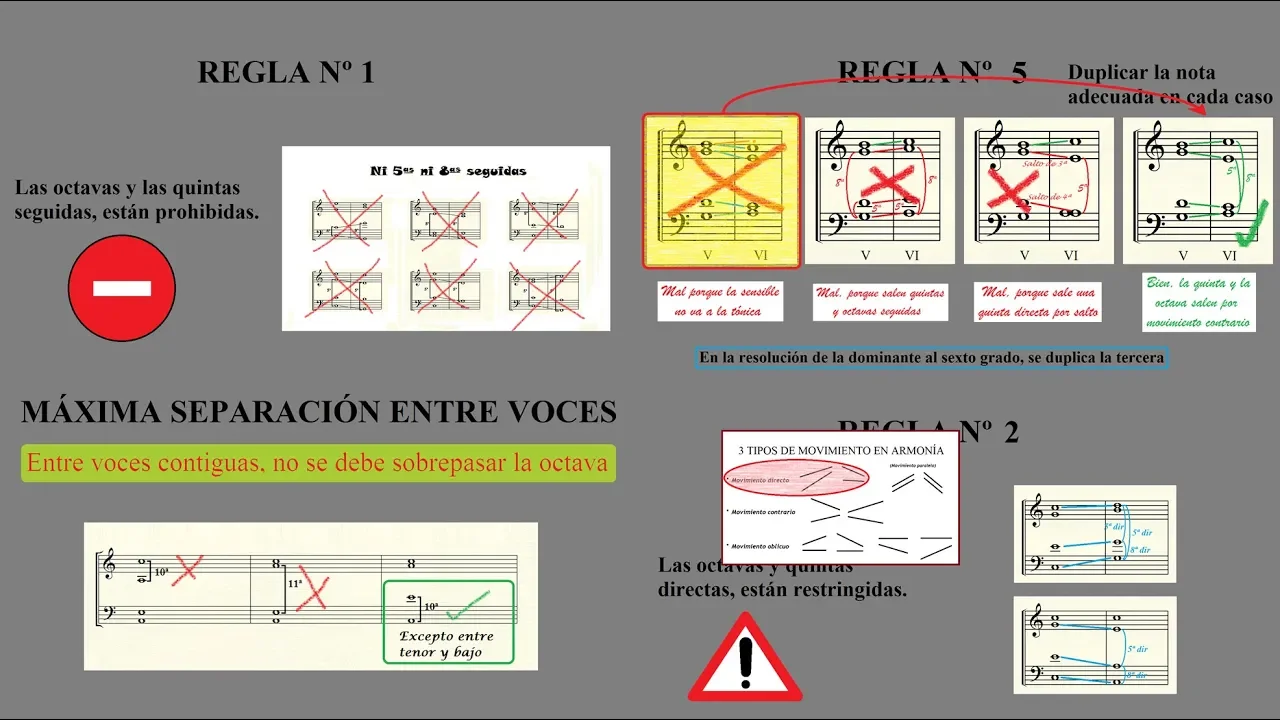





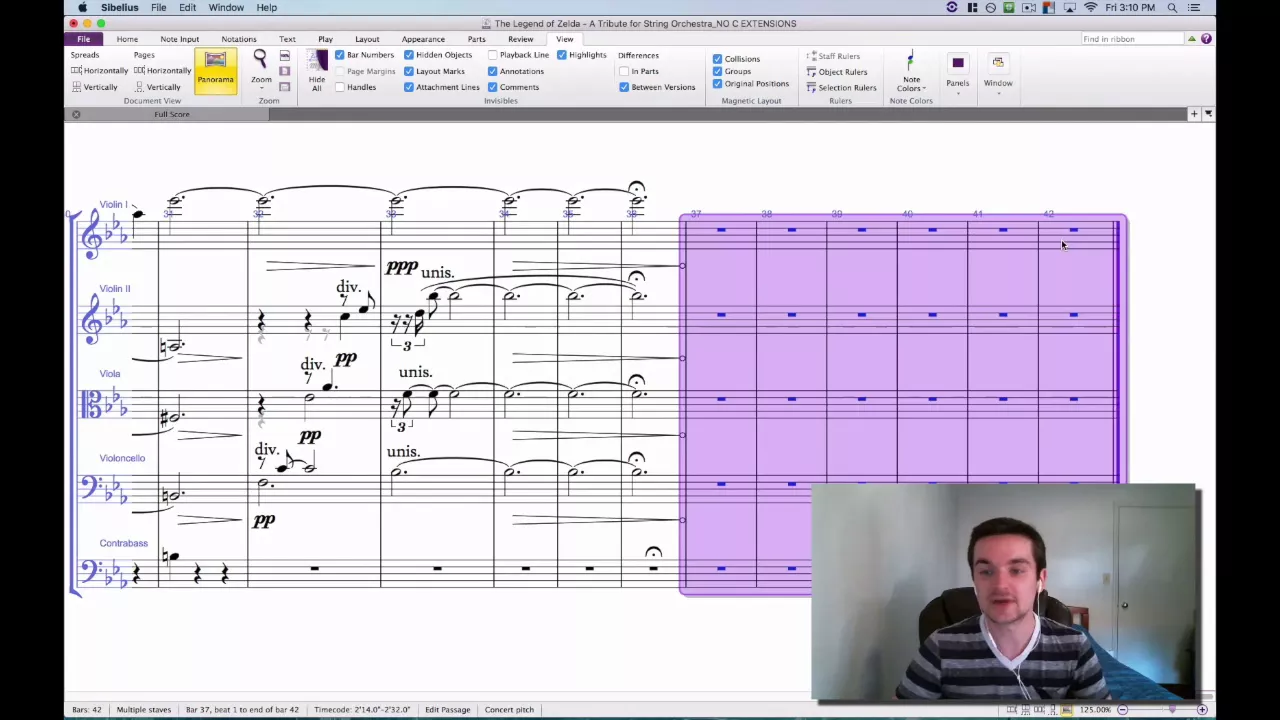
Voice leading refers to the way different parts in multi-part music relate to each other as harmony changes, ensuring musical coherence both harmonically and melodically. There are four types of relative motion between parts: contrary motion (parts move in opposite directions), parallel motion (parts move in the same direction by the same amount, maintaining constant distance), similar motion (parts move in the same direction but by different amounts), and oblique motion (one part remains stationary while the other moves).
Voice Leading Basics: Relative Motion in Four-Part Chorale Style
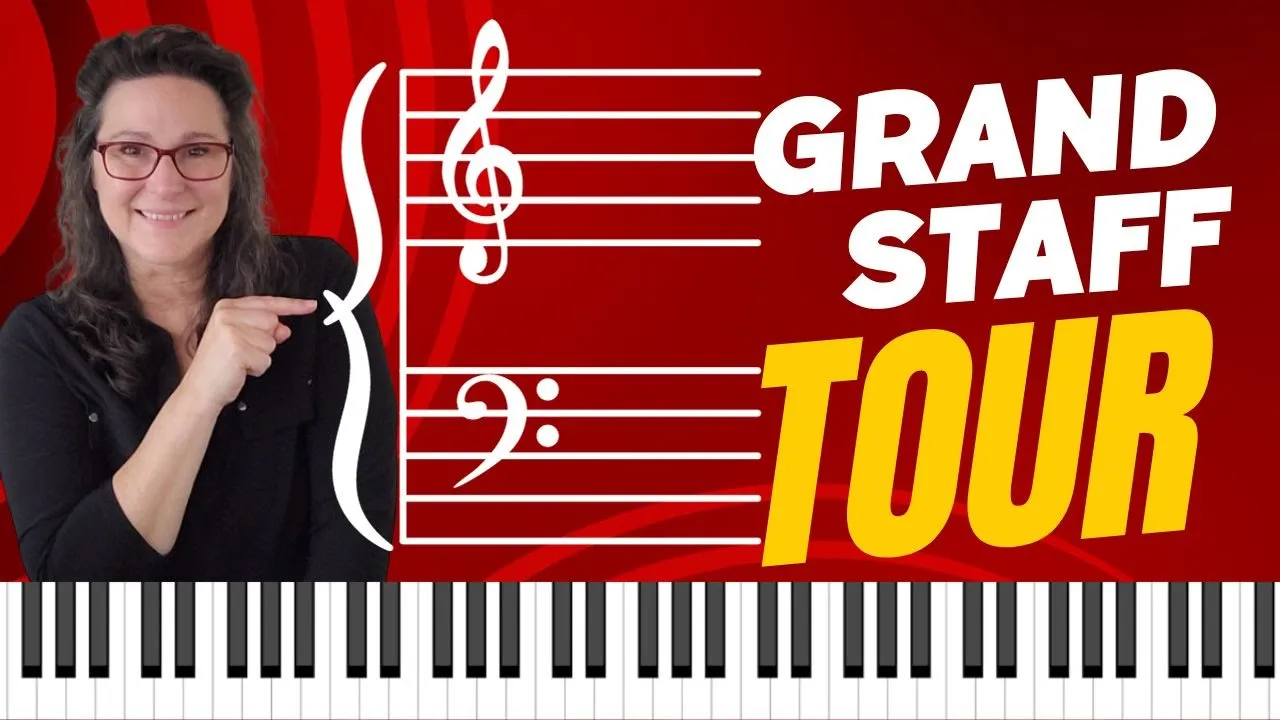
Added:Basic music theory notation, including reading both treble and bass clefs on a grand staff.
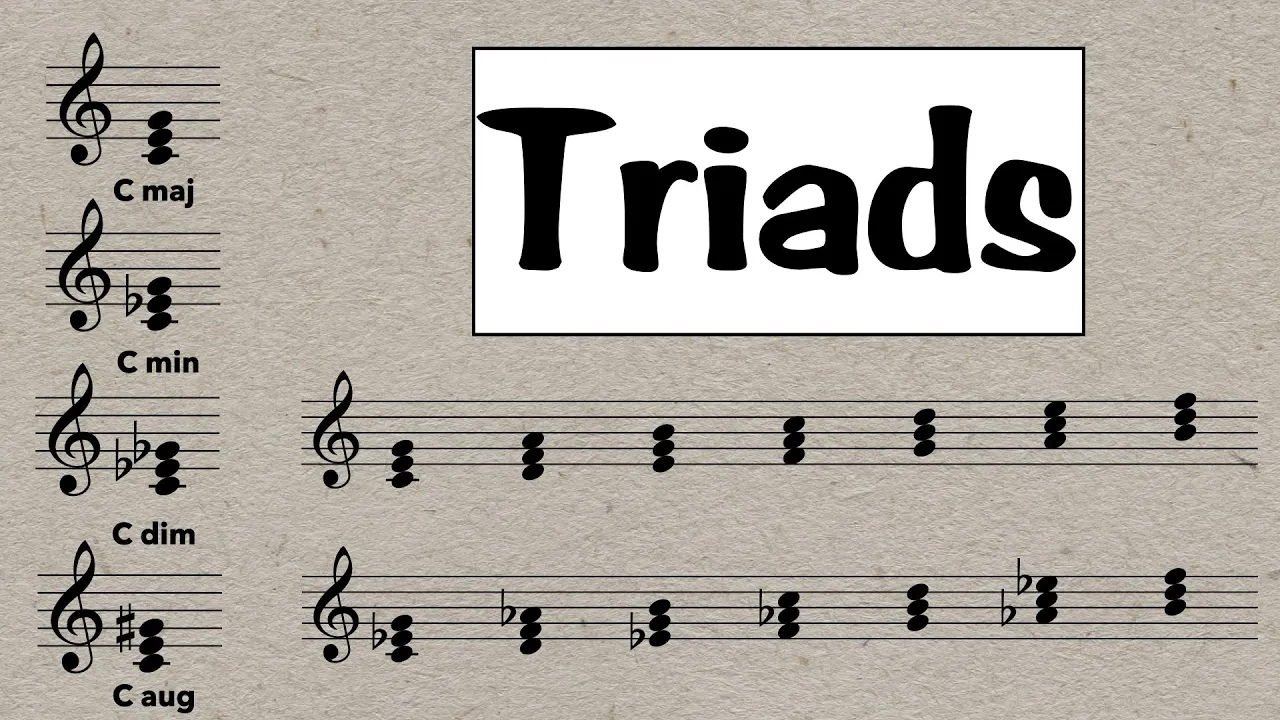
Understanding of triad construction, chord spelling, and basic Roman numeral analysis.
Knowledge of SATB vocal ranges (Soprano, Alto, Tenor, Bass) and standard spacing rules (close vs. open position).
Ability to identify and calculate melodic and harmonic intervals, such as thirds, perfect fifths, and octaves.
Identifying and avoiding forbidden parallel motion, specifically consecutive perfect fifths and octaves.
Rules of chord connection, including the proper resolution of active tones like the leading tone and chordal seventh.
Standard doubling guidelines for root-position and inverted triads in four-part writing.
Realization of figured bass and Roman numeral progressions into complete four-part chorale textures.
Introduction of non-harmonic tones (such as passing tones, neighbor tones, and suspensions) to embellish the basic voice leading.
20.7K views235likes5:55Original Release: 2014-09-02
hi welcome to voice leading basics mini lecture 1 in these lectures I'm going to try to set up all the little things that you'll need to know in order to write the four-part chorale style pieces that you're going to be writing for music theory 1 and in this first one all I'm going to do is define what voice leading is and then also define some types of relative motion between parts and then we'll cover some more things over the course of three or so other lectures voice leading is the words that we use to refer to the way that the different parts in multi-part music relate to each other as harmony changes if you think about so much music that has a melody on top and a bass line on the bottom and then one or more things going on in between the two then you've got three or four or more parts happening and we're going to generically refer to these parts as voices even if they're not vocal parts although the ones you're going to be writing at first at least will be the way that these parts move when the harmony changes is important because we want the music to have coherence not just harmonically but also in the melodic dimension the horizontal dimension all of the parts the melody the bass the inside parts should make sense as melodic lines they're not just random notes of chords but actually functional and by the way in the choral style singable lines so you get coherence this way and also on the harmonic dimension the way that we achieve that is what we call voice leading now let's take our parts and reduce them down to two to talk about the different kinds of relative motion relative motion is the way that the two parts or any parts move against each other and I'm going to define for you four types of relative motion and I've put some examples up on the board up here the very first kind of going to talk about is what's called contrary motion because it's probably the easiest to explain when two voices move in opposite directions so for example here the lower voice moves up while the same time the lower the upper voice moves down so they come close to each other we call that contrary motion and if you reverse that and here you see this upper voice moves up and the lower voice moves down so they move away from each other we also call that contrary motion as long as they're moving in opposite directions one going up the other going down it's contrary motion but what if they're going the same direction well there's two things that could happen there here I've written a line that goes up a step and then down a third and then below that a third below I've written another line that also goes off a step and down a third and so these two parts stay the same distance apart a third and so we call that parallel motion and in parallel motion just like parallel lines like railroad tracks the two parts if one moves the other moves the same amount the same direction and so they stay the same distance apart and we would say that these two lines are moving in parallel thirds because they stay 1/3 apart harmonically by moving the same distance logically but what if they're moving in the same direction but not by the same amount here is what's called similar motion you can see that both voices are moving up but the top voice is moving up a step and the bottom voice is moving up a fifth so we call that similar motion and it tends to happen this way where the upper voice being more like a melody tends to move more conjunct late by step while the lower voice if we think of that as being like a bass line that'll move more disjunct little tend to leap around sort of if you think of a bass line going bump on bum it's like that and then finally I promised you four kinds we have oblique oblique motion occurs when one of the parts doesn't move while the other one moves and the voice that doesn't move might repeat a note or it might hold a note I've made my example with a repeated note because in the choral style usually everybody has the same words and therefore everybody has the same rhythm so tends to be that if one of the parts stays on a note while the other one's moving it's because it's repeating but it could just as easily be that one of the parts is holding while the other one is moving we would also call that oblique motion all right that's the first lecture we'll pick it up again in another one and I will see you in class
Up Next

10:23
Music Theory Fundamentals for Modern Music Production
@Composerily
185.1K views•2019-07-08

10:20
Mozart's Musical Dice Game Explained: History, Rules, & Fun
@webpianoacademy
5K views•2023-03-13

47:36
Understanding Diatonic 7th Chords in Major Keys | Music Theory Tutorial
@GracieTerzian
54.7K views•2022-03-02
10:49
Understanding John Coltrane's Giant Steps: A Music Theory Analysis
@Vox
10.4M views•2018-11-12
Related Study Plans & Knowledge Roadmaps
Structured learning paths in Music Theory
music-theory
Composing Galant Music: Partimento & Schemata
01Foundations of Figured Bass and Keyboard Harmony
02The Rule of the Octave (Regola dell'Ottava)
03Galant Schemata: The Building Blocks of Form
+ 2 more learning modules
30h5 modules
Explore Roadmap
music-theory
Decoding Overtone Series: Tuning & Drone Music
01Acoustic Foundations: The Physics of the Overtone Series
02Tuning Systems: Equal Temperament vs. Just Intonation
03Microtonality and Spectralism: Beyond Standard Pitches
+ 2 more learning modules
24h5 modules
Explore Roadmap
music-theory
Impressionist Harmony: Scales, Planing & RPGs
01Foundational Music Theory: Keys, Intervals, and Seventh Chords
02Impressionist Color: Chord Planing and Parallel Harmony
03Whimsical Textures: Pentatonic Cascades and Whole-Tone Scales
+ 1 more learning modules
14h4 modules
Explore Roadmap
music-theory
Negative Harmony: Axis Reflection in Indie Pop
01Music Theory Foundations: Scales, Intervals, and Triads
02Functional Harmony and the Circle of Fifths
03Demystifying the Negative Harmony Axis Reflection
+ 2 more learning modules
16h5 modules
Explore Roadmap