German Expressionism, an artistic movement emerging in Germany during the 1910s-1930s, rejected realism in favor of distorted, surreal imagery using mirrors, large shadows, and optical effects to create subjective worlds; born from Germany's isolation during WWI when banned foreign films drove domestic production from 24 to 130 films between 1914-1918, the movement explored themes of mind control and manipulation that later influenced Hollywood Noir and horror films, with its distinctive visual style continuing to inspire contemporary filmmakers like Guillermo del Toro and Tim Burton.
German Expressionism in Film: Origins, Aesthetics, and Influence
Added:Deep Dive
The historical and socio-political climate of the Weimar Republic in post-World War I Germany.

The Weimar Republic
37.4K
The Weimar Republic emerged from the ruins of the German Empire in late 1918, following World War I. Exhausted by the war, Germany attempted political reform, but a rebellion broke out among soldiers, sailors, and workers. Pro-war Social Democrats declared a new republic on November 9th, while Spartacists announced their own socialist state. The monarchy ended when the imperial chancellor transferred power to Social Democrats, who formed a coalition with pro-war rebels. The new government signed an armistice with Allies, ending WWI but leaving Germany defeated and politically chaotic. This fragile transition set the stage for decades of instability.
Click to watch →

The Entire History of Germany
416.8K
With Germany in no position to negotiate, Allied leaders met to dictate peace terms. The resulting Treaty of Versailles was harsh on Germany, forcing it to accept blame for the war, surrendering neighboring territories to France and Poland, losing all overseas colonies, and paying enormous war reparations. The treaty's punitive clauses caused shock and humiliation among Germans across the political spectrum, greatly damaging the new democratic Germany's legitimacy. The resulting Weimar Republic faced tremendous difficulties from the outset, racked by political violence from both right and left, huge war debts, and economic inflation. Despite some stability in the mid-1920s, resentment over Versailles and economic vulnerabilities persisted. In 1929, the Great Depression struck another hammer blow to recovery, and as coalition governments struggled to respond, a sense grew that democratic politicians were incapable of decisive action.
Click to watch →
Are we a New Weimar?
618.3K
Weimar Germany (1919-1933) emerged as an awkward transition between conservative militarism and Nazi rule. Pre-WWI Germany was Europe's largest economy with immense internal diversity among five social groups: monarchy, Junker nobility, industrialists, bureaucracy, and trade unionists. The Treaty of Versailles replaced the monarchy with an artificial liberal democracy that most Germans despised. Immediate challenges included civil wars between leftists and rightists, failed democratic governance, and hyperinflation that destroyed the middle class. Hitler's 1923 coup attempt resulted in only one year in prison due to conservative judicial bias. The government was dominated by moderate leftists who were ineffective, with a disproportionate number of Jewish politicians contributing to rising anti-Semitism. Despite this dysfunction, Weimar was legally the freest country in the world with universal suffrage, yet the ruling class viewed these freedoms with contempt.
Click to watch →

2018. Frühling.18. Al final del verano
1.3M
This educational segment explains the formation of the Weimar Republic in 1918 following Germany's defeat in World War I. The narrative covers how the German Empire collapsed due to war losses and economic crisis, leading to internal revolution and the establishment of the Weimar Republic. The content demonstrates how major geopolitical events can trigger domestic political transformations, providing historical context for understanding modern German political systems.
Click to watch →

Die Weimarer Republik | Die Goldenen Zwanziger | musstewissen Geschichte
1.3M
Despite gradual diplomatic successes in normalizing international relations, the Weimar Republic remained politically unstable. Governments changed frequently, coalitions broke apart over disagreements, and some chancellors served only brief terms. In 1925, voters elected Paul von Hindenburg, an avowed enemy of democracy, as President, illustrating the deep divisions within German society regarding democratic governance.
Click to watch →
Deep Dive
The core tenets of the broader Expressionist movement in painting, literature, and theater, which prioritized subjective emotion over objective reality.

EXPRESSIONISM (DEFINITION/ KEY FEATURES & MAJOR EXPONENTS) HINDI EXPLANATION
328
Expressionism is a literary movement that began as an art movement in painting around 1901. The term was first used by French painter Julien Auguste Huber to differentiate Expressionist painting from Impressionist painting. Impressionism began around 1870 and focuses on external reality and surface reality, showing how things appear from the outside. Expressionism focuses on expressing inner feelings and emotions rather than external reality. The writer's focus is on showing inner feelings, facial expressions, body language, and way of talking of characters, rather than dialogues or stage settings. Expressionism never tries to copy real life but focuses on inner reality and emotions inside. It is a modernist movement that started in the beginning of the 20th century, particularly in France with artists like Nader Neuro. Its most important feature is that the writer presents his views and shows his expression, making it subjective. The movement started before World War I and was very popular in Berlin at the time of the constitution of Baden Germany. It spread to many arts including painting, literature, theatre, architecture, dance, films, and music. Paris became the center for expressionism in artists, with the School of Paris being associated with the movement. Expressionism started as a reaction against naturalism, which was one of the earlier movements that included Naturalism, Impressionism, and Positivism. The writer used to present his perspective and personal opinion. The main focus was on expressing the experiences he was having. Pioneers of this movement include Fred Mithse, Stenberg, Vakine, Bolt Bittman, and Dost Visky. In 1905, Die Brücke was formed in Munich, which invited many artists to this place. Expressionism rejected realism, saying that reality should not be shown to us. We should not present things that appear to be the same from the surface. We have to give our expressions and show how we feel. They denied reality and conventional representation. Expressionism has an emotional impact and sometimes things are presented in a very exaggerated manner. The emotions that characters have are often symbolic. Compared to the Baroque style, which shows dramatic intensity with very ornate decorative things, Expressionism focuses on emotional experiences and does not show physical and objective reality. Expressionist theatre started in Germany in the 20th century and flourished in the early 20th century. Writers of Expressionist theatre used a lot of exaggeration and distorted the way things appeared. Different characters were presented from the way they are and things were presented in a very exaggerated manner. The aim was to create a very strong emotional impact on the audience. The main purpose was to present very powerful ideas and emotions through characters to make a greater impact on the brains of the readers. Expressionist theatre focused on the inner struggle of characters and the kind of conflict going on inside them. The dramatists focused on presenting criticism of the conflicts going on in the mind and whatever customs and traditions were prevalent in society. The focus was always on the sorrows, sufferings, and emotional tensions of the people. The stories were emotional, symbolic, and not realistic at all. The atmosphere in Expressionist theatre was shown very poorly and was completely different from what we normally believe. It was either very simplified or very strange and seemed unreal. For example, in Eugene O'Neill's 'The Hairy Ape' (1922), an industrial ship is shown in an exaggerated manner to show how big a struggle is going on in the mind of the protagonist. The setting of this type of drama is very abstract and strange. In 'From Morn to Midnight' by George Kaiser (1912), only the bare minimum of things are shown on stage and all objects are symbolic with another meaning. The minimalistic setting means only the necessary props and elements are present for the scene. There should be no extras at all. The scenes shown were dream-like, at night, scary, dreams, etc. The atmosphere was completely unreal and completely different from what happens in real life. The decoration was symbolic and completely different from what happens in real life. In Expressionist theatre, colors are sensational and create sensations. They are shocking and arresting. These colors, along with the surrounding setting in the background of the scene, create emotional intensity and psychological impact. Characters in Expressionist theatre are not like the people we meet every day. There is no individual personality. They represent a wider section or the masses. They represent a very large community, many classes, rich class, poor class. They do not represent one person but the entire class. Characters are nameless and do not have any name. For example, in 'The Adding Machine' by Emmer Rice, the character Mr. Zero represents the working class. Characters are prototypes that represent the larger society. They are caricatures of society at large. The greatest ones are twisted a little and made ridiculous. They do not look like normal people and are not realistic at all. Characters in Expressionist theatre sometimes have split personalities. They behave like one person and sometimes like another. It seems like many characters have been merged into one man. This technique shows a dream-like mental state where the person is behaving like someone else. The acting style in Expressionist theatre is called exotic style, which means emotional outburst. Characters showed a lot of emotional outbursts and went to the extreme on any issue. They would suddenly react in some way and give very violent reactions, like suddenly standing up and punching the wall very hard. Actors would sometimes start shouting very loudly and physically attack each other to show extreme emotions. Gestures used in Expressionist dramas were excessive. Actors used to make very strong physical movements to show their emotions. Common gestures like rolling the eyes, grinding the teeth, moving the fingers, stamping the feet, and making sudden hand movements were used. These gestures revealed emotional tension. The word 'lunges' is used when an actor suddenly moves towards another character or to pick up another object to show anger or intense emotions. The style of dialogues in Expressionist theatre was called telegram style. It used very short sentences that were fragmented. The dialogue delivery was very fast and happened without breathing. Consecutive sentences were very short and sometimes incomplete. This type of dialogue shows how urgent emotions the person is expressing and how important it is for them to speak. The language used in Expressionist theatre was conversational language, the language in which we talk. The dialogues were in regional language within the local language. Long pauses were used intentionally and deliberately. Silence often conveys messages that words cannot. Monologues were used extensively in this type of dramas. Chorus was also used. Normal conversation was replaced by rhapsodies and lyrical monologues. A character would deliver long dialogues. The poetry chorus would come on stage and read poetry to show emotions. Expressionist plays did not show traditional stories with a clear beginning, middle, and end. They would start from a
Click to watch →

+1 net | Edebî Akımlar
39.7K
Ekspresyonizm (Expressionism) is a 20th-century literary movement characterized by: (1) The artist's inner world and subjective experience are the primary focus; (2) The movement rejects all previous notions of objective reality; (3) True reality is believed to exist within the artist's soul and spirit; (4) The movement is inherently subjective and introspective; (5) Artists are directed toward self-observation and external expression of inner experiences; (6) Emphasis on individualism and abstraction; (7) The movement is particularly prominent in poetry and theater; (8) The artist is isolated from society, focusing on personal psychological states.
Click to watch →

Otto Dix - L’expressionnisme allemand
38.3K
Expressionism is an art movement that prioritizes individual emotion above all else. The term, coined by a Berlin art dealer, became so influential in German-speaking countries that it extended to cinema, literature, and theater. The fundamental principle of expressionism is that the artist's personal subjectivity and emotional experience take precedence over external rules, whether social laws or aesthetic conventions. This represents a complete rejection of objective standards in favor of subjective artistic expression.
Click to watch →
Sanat Terimleri | Ekspresyonizm | 6. Bölüm
13.5K
Expressionism is a revolutionary art movement that emerged in early 20th century Northern Europe. Unlike movements that focus on objective reality, expressionism prioritizes the artist's subjective emotions, reactions, and human experience. The movement represents a deliberate departure from depicting the external world, instead concentrating on the inner emotional and psychological dimensions of human experience.
Click to watch →

L'Espressionismo ed Ensor
1.8K
Expressionism is a 20th-century artistic movement (1905-1925) primarily in Central/Northern Europe, especially Germany. Unlike Impressionism (outside-to-inside), Expressionism moves from inside to outside, projecting the artist's subjective states onto canvas. It rejects traditional conventions like perspective and chiaroscuro, creating harsh, sometimes unpleasant art. The movement manifests across painting, architecture, literature, theater, and cinema, representing a heterogeneous and complex cultural phenomenon.
Click to watch →
Deep Dive
Fundamental film terminology, particularly 'mise-en-scène' (how elements are arranged in a camera frame) and 'chiaroscuro' lighting.
O QUE É MISE-EN-SCÈNE?
58.2K
Mise-en-scène is a French term meaning 'placed on stage' that encompasses all the visual elements arranged within a film scene, divided into four key components: location (the physical setting and environment), costume and makeup (character appearance and visual transformation), lighting (the three essential types being key light, fill light, and backlight), and acting (the performance that reveals the character's internal truth). These elements work together to create the visual and emotional foundation of cinematographic storytelling.
Click to watch →

How To Analyze Movies – Film Studies 101
807.5K
Mise-en-scène refers to everything that appears in the frame—costumes, locations, lenses, lighting, and all visual elements that result in what we see on screen. It encompasses the dozens or hundreds of choices that filmmakers make to create meaning. Cinema exists on a spectrum between pure realism (reproduction of reality) and pure formalism (entirely artificial). Most movies exist in classicism, combining realist elements (naturalistic performances, subtle editing) with formalist elements (musical scores, camera movement). In Home Alone, glossy Hollywood lighting, 35mm film, and realistic settings combine with musical scores and exaggerated camera angles to communicate Kevin's perspective.
Click to watch →
O que é MISE EN SCÈNE? | Dicionário de Cinema #03
5.2K
Mise-en-scène is the deliberate arrangement of visual elements within the camera frame—including actors, objects, lighting, costumes, makeup, and set design—to create meaning and emotional impact in film; it encompasses four key aspects: movement of the cast, lighting, costume and makeup, and scenery, and differs from theatrical staging by being pre-planned and structured before filming rather than improvised in the moment of performance.
Click to watch →

MISE-EN-SCÈNE là gì và quan trọng đến mức nào?
89.4K
Mise-en-scène (French for 'placing into a scene') is the arrangement of all visual elements within a film frame, including setting, costume, makeup, acting, and lighting, which work together to convey emotions, establish atmosphere, and express the director's artistic vision. The four main elements are: (1) Setting - the physical environment where the scene takes place, which can be real locations or studio sets, and includes blocking (actor positioning and movement) to establish power dynamics; (2) Costume and Makeup - which build character identity and world atmosphere; (3) Acting - the performance of characters, ranging from naturalistic to stylized approaches; and (4) Lighting - which controls viewer attention through qualities like intensity, direction, and color, with high-key lighting creating bright, cheerful scenes and low-key lighting creating dramatic tension.
Click to watch →

Film Term - Mise-en-scène | Anupama Chopra
15.3K
Mise-en-scène is a French film term meaning 'placing on stage' that refers to the arrangement of all visual elements within a film frame, including set design, lighting, costumes, acting, makeup, and props, which work together to support the director's vision and convey narrative tone, themes, mood, and meaning.
Click to watch →
Deep Dive
The transition of cinema from early short attractions to feature-length narrative silent films.

The Cinema of Narrative Integrity
171
The transition from cinema of attractions to narrative cinema between 1909-1914 was not driven by individual genius directors like David Wark Griffith, but by institutional and economic changes within the medium itself, including the rise of nickelodeons, the influence of vaudeville programming, the development of the film star system, and the need for longer screen time that enabled character development and psychological depth, fundamentally transforming cinema from a visual spectacle into a storytelling medium.
Click to watch →

Tarih ve Görsellik Konuşmaları 8 / Sinema Tarihçiliği
274
Around 1910, cinema underwent a paradigmatic shift from attractions cinema to narrative cinema (anlatı sineması). This transition introduced storytelling as the primary focus of films, with narratives becoming the main attraction for audiences. This change fundamentally transformed cinema from a technology showcase into a medium for storytelling, establishing the foundation for the narrative films that dominate cinema today.
Click to watch →

Pervivencia del cine de atracciones: Project A (“A” gai wak, Jackie Chan,1983).
225
The cinema of attractions was eventually relegated to the background as cinema of narrative integration became dominant. This transition occurred around 1903-1907, when narrative integration triumphed and became the standard. This narrative cinema, exemplified by Griffith's 'The Birth of a Nation,' became the foundation for what is now understood as classical cinema. In classical cinema, all elements including montage, scenography, direction, and acting are subordinated to the causal logic and dramatic structure of the narrative.
Click to watch →

Sinematograf | Balkan Savaşları Döneminde Sinema | 4. Bölüm
375
The Balkan Wars period marked a significant transition in cinema from 'attractions' (short, spectacle-based films) to 'narrative cinema' (feature-length films with storylines). This shift required new methods for audiences to understand film content, particularly in silent films where intertitles (text cards) became essential for conveying plot information. This evolution coincided with broader societal changes including mass mobilization and nationalist sentiment.
Click to watch →

El Cine de 1900 a 1997
174
Early cinema positioned the camera as a spectator in the first row, creating immersive experiences. The first color films featured hand-painted single shots. The technique of superimposition demonstrated cinema's magical nature. Edison attempted to synchronize phonographs with cinematographs. French filmmaker Emile Cohl created animated films in 1908 mixing actors, puppets, and drawings—20 years before Disney. The 1903 film 'The Great Train Robbery' marked cinema's transition from attraction to narrative storytelling. By 1917, Hollywood productions reached 300 meters in length. Charlie Chaplin, tired of his miserable life as a poorly paid actor, emigrated to America in 1914. His 1914 short 'The Immigrant' introduced the Tramp—a vagabundo who always comes out worse but knows what he wants. In 1916, he signed his first major contract with Mutual, earning $10,000 per week. His recurring theme of the small against the large appeared in approximately 60 films between 1914 and 1918.
Click to watch →
Prerequisite Knowledge
- Concept 01The historical and socio-political climate of the Weimar Republic in post-World War I Germany.
- Concept 02The core tenets of the broader Expressionist movement in painting, literature, and theater, which prioritized subjective emotion over objective reality.
- Concept 03Fundamental film terminology, particularly 'mise-en-scène' (how elements are arranged in a camera frame) and 'chiaroscuro' lighting.
- Concept 04The transition of cinema from early short attractions to feature-length narrative silent films.
Subsequent Learning
- Step 01A close aesthetic and thematic analysis of seminal films of the era, such as 'The Cabinet of Dr. Caligari' (1920) and 'Metropolis' (1927).
- Step 02The migration of German filmmakers to Hollywood in the 1930s and their direct influence on the emergence of American Film Noir.
- Step 03The evolution of the classic horror genre, analyzing how Universal Monsters films adapted Expressionist visual design and monster motifs.
- Step 04Modern applications of Expressionist aesthetics in contemporary cinema, particularly in the works of directors like Tim Burton and Guillermo del Toro.
Expressionist Roots
Themes & Legacy
Expressionist Roots
0:01Playing Section
- 1
Explores German Expressionism's origins in 1910s-30s art, film, and literature.
- 2
Highlights how WWI isolation and domestic demand fueled a boom in German film production.
- 3
Focuses on surreal aesthetics reflecting a post-war national mindset.
The Over-Categorization of Weimar Cinema and the Rise of New Objectivity
While German Expressionism is highly celebrated, film historians argue that the "Expressionist" label is often over-applied to the entirety of Weimar cinema, overshadowing distinct and opposing movements. Critics point out that only a handful of films, such as *The Cabinet of Dr. Caligari*, truly embody pure Expressionism. In reality, the era was defined by a tension between Expressionism and competing styles like *Kammerspielfilm* (intimate, realistic chamber dramas) and, later, *Neue Sachlichkeit* (New Objectivity). New Objectivity directly rejected Expressionism's distorted, highly subjective, and fantastical aesthetics in favor of social realism, objective documentation of Weimar Germany's harsh realities, and cinematic sobriety. Furthermore, revisionist historians argue that many stylistic hallmarks of the era, such as painted shadows, were not purely artistic choices but pragmatic solutions to post-WWI economic constraints, such as electricity shortages and limited budgets. Understanding these alternative movements and material realities provides a more nuanced, less romanticized view of German film history.
Deep Dive
A close aesthetic and thematic analysis of seminal films of the era, such as 'The Cabinet of Dr. Caligari' (1920) and 'Metropolis' (1927).

Metropolis (1927)
106.7K
Metropolis (1927) is a German silent science-fiction drama directed by Fritz Lang and written by Thea von Harbou, produced by Erich Pommer for UFA at Babelsberg Studios. Filmed over 17 months (1925–26) at a cost exceeding five million Reichsmarks, it is among the first feature-length science-fiction films. Set in a futuristic urban dystopia during the Weimar period, the story follows Freder, the son of the city’s master Joh Fredersen, and Maria, a moral guide to the oppressed workers, as they seek to bridge the divide between the ruling class and laborers. The film’s central message, conveyed in its final inter-title, is: “The Mediator Between the Head and the Hands Must Be the Heart.” Visually, it is renowned for its groundbreaking art direction by Otto Hunte, Erich Kettelhut, and Karl Vollbrecht, incorporating Bauhaus, Cubist, Futurist, and Gothic influences in sets including catacombs, a cathedral, and Rotwang’s house. Special effects were praised for their complexity, though critics found the narrative naive and politically simplistic, with H.G. Wells calling it “silly” and The Encyclopedia of Science Fiction labeling its politics “ludicrously simplistic.” After its premiere, the film was heavily cut; only 95% of Lang’s original version was restored in 2010 following the discovery of a damaged print in Argentina and supplementary materials from New Zealand. A 1984 version featured a rock soundtrack by Giorgio Moroder. In 2001, Metropolis became the first film inscribed on UNESCO’s Memory of the World Register.
Click to watch →
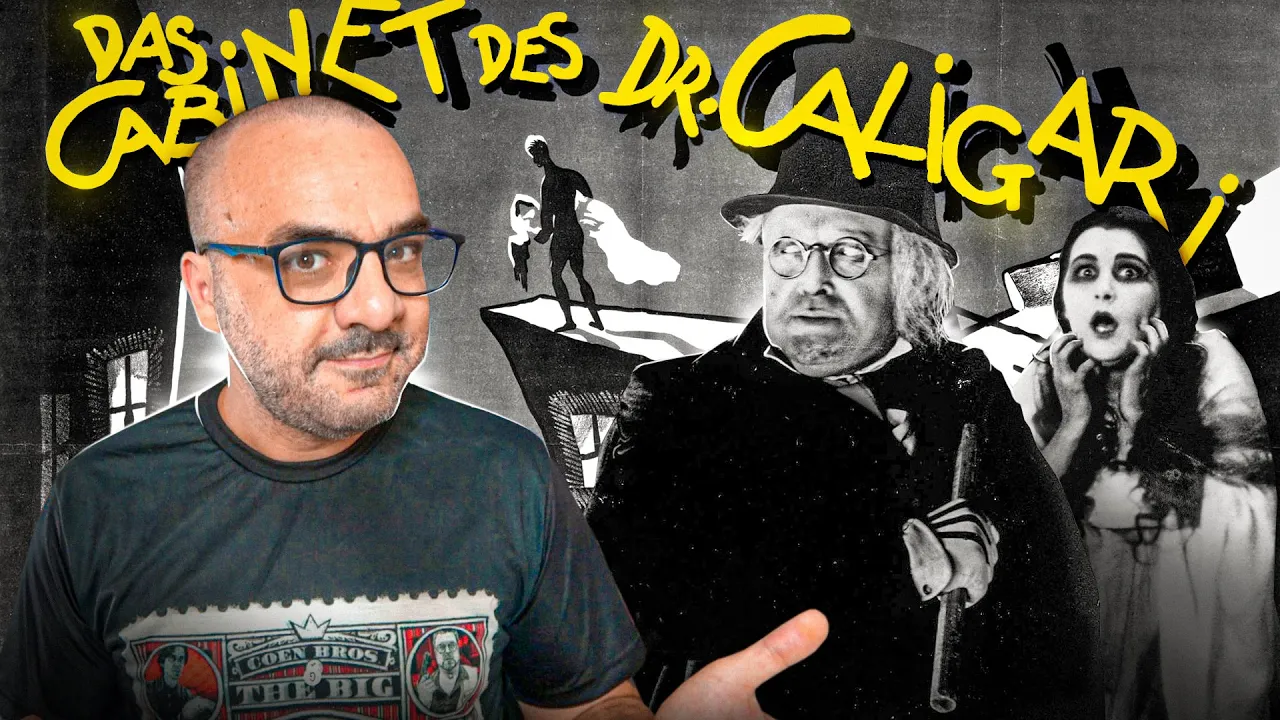
O GABINETE DO DR. CALIGARI (1920) - O Pai do Horror Psicológico
15.3K
The Cabinet of Dr. Caligari (1920), directed by Robert Wiene, is a pioneering film of German Expressionism that revolutionized cinema by using distorted sets, sharp angles, and chiaroscuro lighting to represent psychological states, while its narrative told through an unreliable narrator's perspective and innovative use of music established foundational techniques for psychological horror films.
Click to watch →

The Cabinet Of Dr. Caligari (1920)
939.2K
The Cabinet of Dr. Caligari (1920) is a German silent horror film directed by Robert Wiene and written by Hans Janowitz and Carl Mayer. It is regarded as the quintessential example of German Expressionist cinema. The narrative centers on an insane hypnotist, portrayed by Werner Krauss, who controls a somnambulist, played by Conrad Veidt, to carry out a series of murders. The film’s visual style is defined by its dark, distorted aesthetic, featuring sharp-pointed forms, oblique and curving lines, and structures and landscapes that lean and twist at unusual angles. These surreal architectural elements are not naturalistic but deliberately artificial, created through painted sets. Shadows and streaks of light are directly applied onto the backdrops and surfaces, enhancing the unsettling, dreamlike atmosphere. The visual design serves as a direct expression of psychological turmoil, aligning with Expressionist principles that prioritize emotional experience over realistic representation. The film’s innovative use of set design and lighting profoundly influenced later horror and film noir genres. Its non-realistic visuals are integral to the storytelling, reflecting the unstable mental state of its characters and the unreliability of perception. The film remains a landmark in cinematic history for its bold departure from naturalism and its pioneering use of environment as psychological metaphor.
Click to watch →

TOP 100 Greatest Movies Ever Made (Ranked!)
125.2K
This film taught the world how the future could look. In a towering city, the rich live in comfort while exhausted workers keep machines running far below. When the ruler's son discovers the truth, he is pulled into a battle between power, compassion, and the promise of change. Parts of the film were missing for years until long-lost footage was found in Argentina and helped create a near-complete restoration in 2010.
Click to watch →
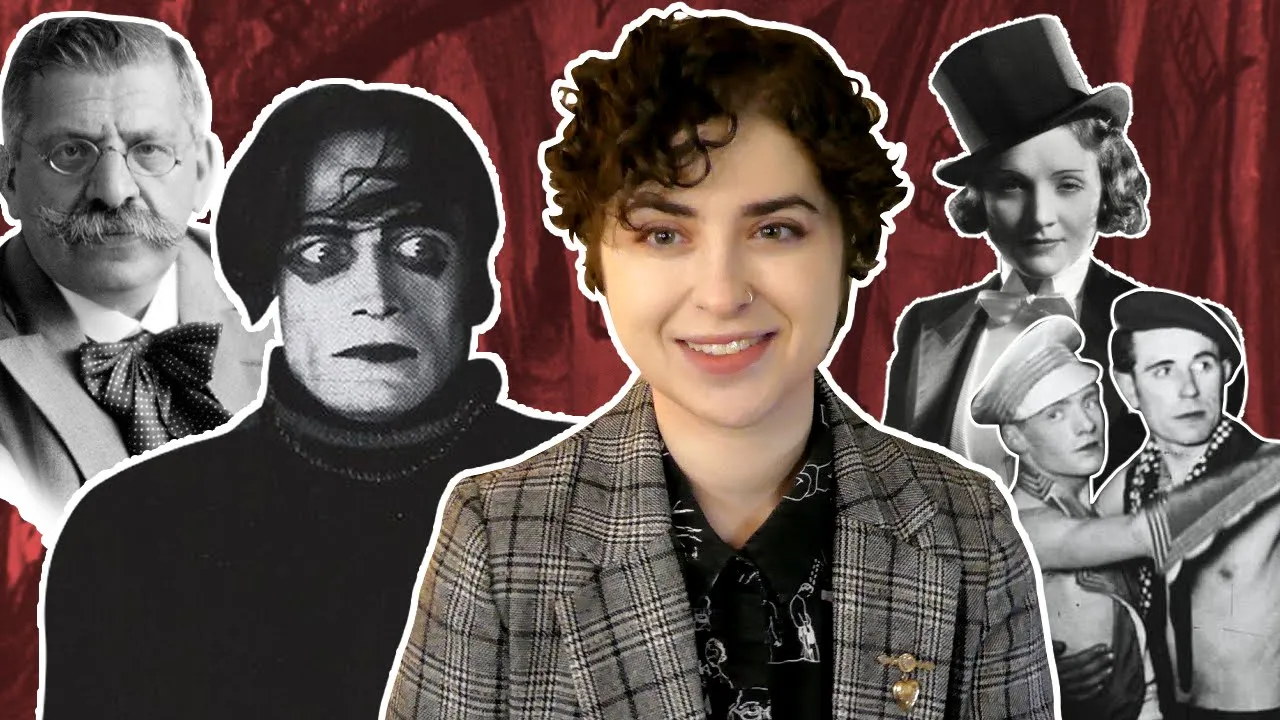
The Queer History of Weimar Germany
470.5K
The Cabinet of Dr. Caligari (1920), often cited as the first real horror film, exemplifies German Expressionist cinema and contains deeply coded representations of queer identity. The film stars Conrad Veidt as Cesare, a somnambulist with a corpse-like appearance who knows future secrets. Cesare represents social disruption reflecting German society's fears—living in a literal state of twilight, half-asleep and half-awake, embodying the allure and anxiety of the Weimar fantasy. His feminized appearance, movements, and actions by era standards clearly code him as queer. The character shatters the heterosexual unit twice: he kills Alan and steals away Jane, Francis's romantic interest. This symbolism reflects broader German societal obsession with threats of masculine women and feminine men. The screenwriters intended the story as criticism of the authoritarian government, with Cesare representing mindless puppets of the state who unquestioningly kill and destroy.
Click to watch →
Deep Dive
The migration of German filmmakers to Hollywood in the 1930s and their direct influence on the emergence of American Film Noir.

The Noir Detective: A Gentle Journey Through the Shadows
114
As the Nazi party rose in Germany, the atmosphere became suffocating for Jewish artists and left-wing intellectuals who built the German film industry. In 1933, Joseph Goebbels summoned Fritz Lang and offered him the job of head of the German film industry. Lang politely declined, packed a suitcase, and fled to Paris that very night. A mass exodus began—the greatest cinematic minds of Europe fled to Paris, then London, and finally Hollywood. These men who had lived in gray, rainy ancient cities of Europe and seen the trenches of World War I stepped off trains in Los Angeles to find palm trees, blue skies, and cheerful optimism. They found it superficial and blinding, wearing sunglasses and pulling blinds down in their offices. Billy Wilder, Robert Siodmak, Otto Preminger, and Edgar G. Ulmer brought their expressionist style to American stories, teaching American technicians how to light scenes for mood rather than visibility. They took gangster films and twisted them, creating a world where buildings loomed like Metropolis, rain never stopped, and shadows were painted on the soul.
Click to watch →

The Rules of Film Noir (BBC Documentary, 2009)
11.7K
German Expressionism emerged in 1916 Germany when foreign films were banned, leading to domestic filmmaking uninfluenced by outside sources. During social and economic turmoil, filmmakers turned to this artistic movement to express themes of anxiety, oppression, insanity, and misery. The core principle is expressing interior experiences externally through the environment and style of the work. When the Nazi regime rose to power, German expressionist filmmakers like Fritz Lang fled to Hollywood, leaving their mark on film Noir. American expressionism differs from German expressionism in that environments don't bend to defy physics but are structured or lit in ways that are exaggerated and warped. Film Noir grew from pulp fiction, which was produced quickly and efficiently. Raymond Chandler wrote Murder My Sweet and James M. Cain wrote Double Indemnity, writing about cheap detectives and cheaper crooks. Dashel Hammet was the daddy of the genre, and his first book Red Harvest published in 1929 was a blueprint for the entire hardboiled Noir cannon. Hammet was a Pinkerton man who brought his life experience to these books, saying that the system is corrupt and if you peel back the layers there's maggots underneath. Once Hammet's nasty world made it to the big screen, the Dark Work of other writers was given the green light. Film Noir grew in California but its vision came from Europe. Hitler built the autobahn and created the conditions in which Film Noir was born. The tide of darkness that the Nazis unleashed across Europe propelled some of the most talented film people in the world westward towards Hollywood. There wouldn't have been Film Noir without World War II and an influx specifically of German immigrants. Fritz Lang, Billy Wilder, Edward Olmer, and their technicians made a mass exodus, importing technical ability and aesthetic sensibility formed in the 1920s and 1930s with German expressionism.
Click to watch →

Neon Noir: Style, Substance, and Existential Angst in Film
221.5K
Classical film noir emerged from German Expressionism and hard-boiled Pulp Fiction. German Expressionism developed post-WWI to capture isolation and trauma through visual storytelling using exaggerated makeup, chiaroscuro lighting, and asymmetric sets. Jewish filmmakers like Fritz Lang brought these elements to Hollywood in the 1930s, influencing 1940s noir with heavy contrast and moral ambiguity. In 1946, Nino Frank coined 'film noir' to describe crime films rejecting sentimental humanism and featuring violent death. These films gained popularity as the Production Code restricted on-screen violence, prompting filmmakers to compensate with heightened sensuality in crime narratives.
Click to watch →

At the Movies with AMC: The Hollywood Melting Pot
169
With Hitler's rise, Germany's UFA studio produced influential expressionist films that shaped American film noir. When persecution intensified, hundreds of German artists fled to Hollywood, transforming American cinema. Billy Wilder escaped the Reichstag fire in 1933; his entire family perished in the Holocaust. He became Hollywood's most celebrated director, winning seven Oscars and directing classics like Double Indemnity and Sunset Boulevard. Fritz Lang fled after refusing Goebbels' offer to head UFA, bringing his expertise to films like Fury and The Big Heat. Over 800 Germans fled to Hollywood during the 1930s-1940s, creating a community in Santa Monica nicknamed 'Vermont on the Pacific.' WWII-era squad films like Bataan depicted diverse military units—Filipino, Latino, African-American, Irish-American, and Jewish soldiers—uniting against fascism, promoting American ideals of assimilation and diversity.
Click to watch →
German Expressionism in Film History Explained
554.4K
Because UFA was the largest film studio in the world, it attracted young filmmakers including 25-year-old Alfred Hitchcock. As Germany shifted toward fascism, many German filmmakers fled to London, New York, or Hollywood, taking German Expressionism techniques with them. This influence appears in film noir from the 1930s, horror films from the 1940s, Douglas Sirk's melodramas, and modern films like David Fincher's 'Se7en.'
Click to watch →
Deep Dive
The evolution of the classic horror genre, analyzing how Universal Monsters films adapted Expressionist visual design and monster motifs.
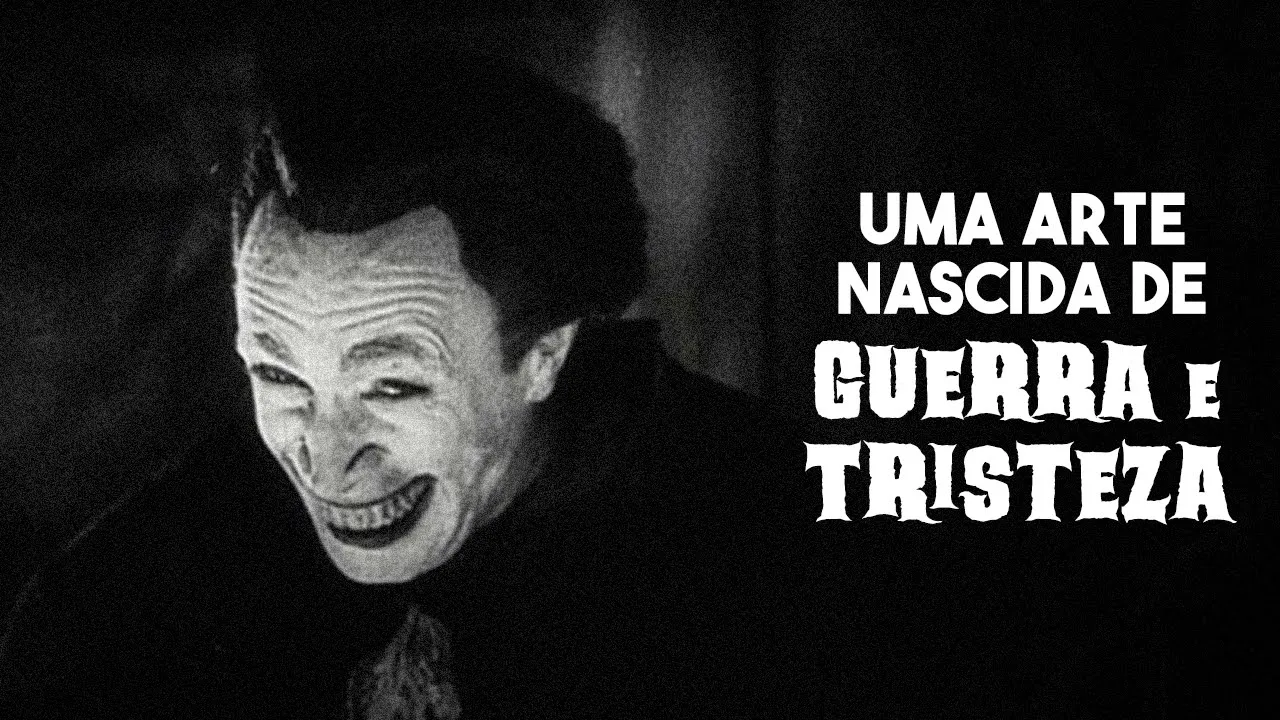
O GRANDE LEGADO do EXPRESSIONISMO ALEMÃO para o TERROR
21.1K
German Expressionism profoundly influenced classic Universal monster films including Dracula, The Mummy, Frankenstein, and The Black Lake Monster. Alfred Hitchcock used Expressionist camera angles and lighting techniques as early as 1927. The Joker's first appearance in Batman #1 (1940) drew directly from Expressionist imagery. Blade Runner contains numerous visual elements inspired by Metropolis. Tim Burton was heavily inspired by Metropolis when creating Gotham City. The Farol film was created entirely using Expressionist structure, closely resembling Nosferatu.
Click to watch →

La evolución de los MONSTRUOS de Universal - #Shorts
35.2K
Universal Pictures launched the first monster movie franchise in 1931, creating iconic horror figures like Dracula, Frankenstein's monster, and the Wolf Man, which were heavily influenced by German Expressionist cinema and established a template for modern horror that continues to evolve with new monsters like the Xenomorph and Pennywise.
Click to watch →

Así NACIÓ el CINE de TERROR 🎃
11.7K
German Expressionism emerged as a response to societal anxiety about humanity's relationship with the world, inspired by Symbolist art movements. The movement began with 'The Student of Prague' (1913), which introduced the doppelgänger trope through innovative double exposure techniques. Hans Henny Jahnn's screenplay provided necessary respectability to horror cinema. Louis Feuillade's 'Les Vampires' (1915-1916) was one of the longest films ever made at 7 hours across 10 episodes. Paul Wegener's 'Der Golem' (1915) adapted the ancient Jewish legend of the clay creature, establishing the Golem as a horror icon. Richard Oswald's 'Ein himmel gitan' (1919) was an anthology film connecting German mystery films to innovative fantasy cinema. 'The Cabinet of Dr. Caligari' (1920) was the first psychological thriller with a twist ending and the first film to use surreal production design significantly. 'Nosferatu' (1922), directed by F.W. Murnau for Universal Pictures, is considered the definitive vampire film. The film established many tropes still used today, including the first vampire killed by sunlight. The term 'horror' as a cinematic genre was not used until the 1930s, when Universal Pictures began releasing monster films.
Click to watch →

Origen de 8 MONSTRUOS CLÁSICOS de las Películas de Terror | #Mefe
209.9K
Universal Pictures pioneered the creation of classic movie monsters by adapting literary works into cinematic horror. Quasimodo from Victor Hugo's 1831 novel became the first Universal monster in 1923 due to his deformity. The Phantom of the Opera, adapted in 1925, was considered the most faithful adaptation. Dracula, based on Bram Stoker's 1897 novel inspired by historical figure Vlad Draculea, became the most famous vampire in cinema in 1931. Frankenstein's Monster, from Mary Shelley's 1818 novel, was adapted in 1931 with significant changes including the monster receiving a murderer's brain. The Mummy, inspired by Tutankhamun's 1922 tomb discovery, was the first Universal monster without a literary source. The Invisible Man, from HG Wells' 1897 novel, was adapted in 1933. The Wolf Man, from ancient lycanthrope legends, was adapted in 1941. The Creature from the Black Lagoon, from a conversation about South American myths, was adapted in 1954. These adaptations established Universal's reputation as the home of classic monsters.
Click to watch →
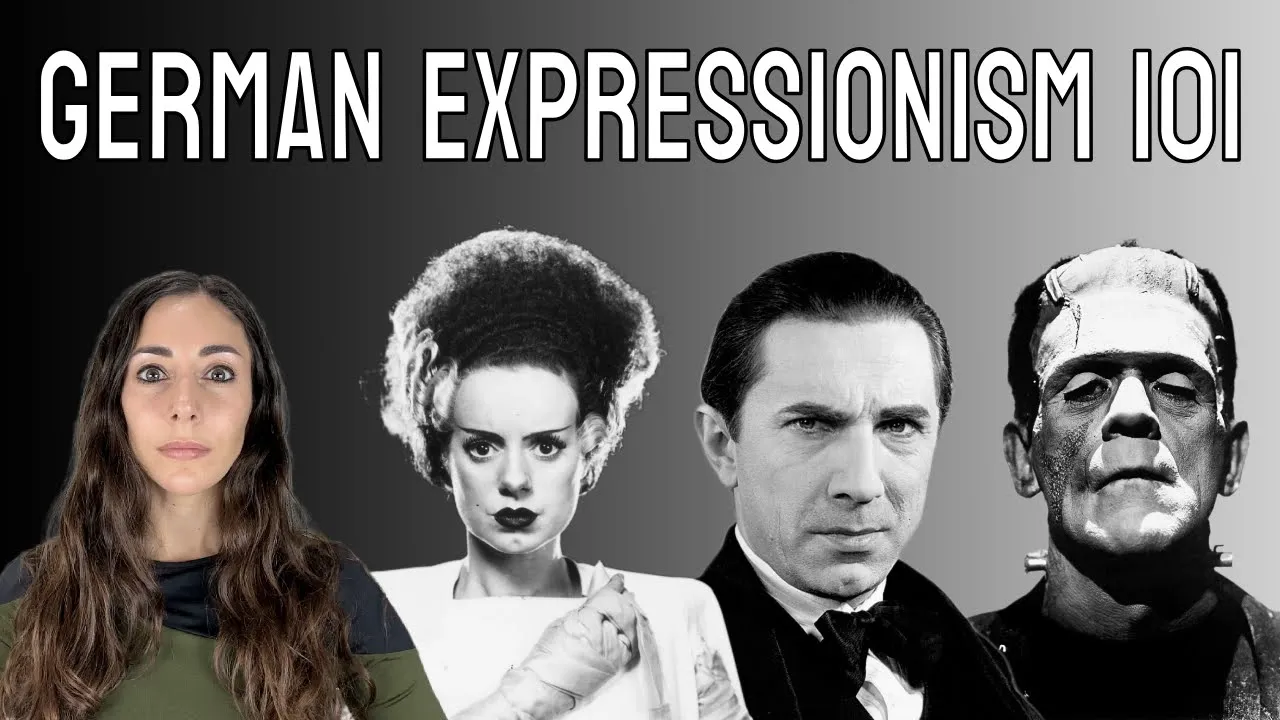
German Expressionism 101: Making the Universal Monsters
4.9K
German Expressionism, an art movement born from post-WWI Germany's psychological trauma, fundamentally transformed horror cinema through its use of distorted sets, chiaroscuro lighting, and theatrical performances to externalize internal psychological states. This style, exemplified by films like The Cabinet of Dr. Caligari (1920) and Metropolis (1927), became the visual foundation for Universal's monster movies including Dracula, Frankenstein, and The Bride of Frankenstein, and continues to influence contemporary filmmakers like Tim Burton and Guillermo del Toro.
Click to watch →
Deep Dive
Modern applications of Expressionist aesthetics in contemporary cinema, particularly in the works of directors like Tim Burton and Guillermo del Toro.

German Expressionism's Enduring Influence on Film Style
781.3K
Neo-expressionism continues German Expressionism's legacy in modern cinema. Recent examples include 'The Tragedy of Macbeth' (2021) and Tim Burton's work, while directors like Terry Gilliam, Guillermo del Toro, and David Lynch show expressionist influences. Surrealism differs from expressionism—it's a language of dreams versus expressionism's language of subjectivity projected outward. Modern films like 'Euphoria' and 'The Humans' use subtle expressionism to portray psychological states through environmental design. The distinction matters: being stylized doesn't mean expressionist. Films like 'Blade Runner' are direct descendants of both film noir and 'Metropolis,' showing how urban environments can externalize anxieties about the present by exaggerating worst elements to distorted extremes.
Click to watch →

Che cos'è successo a TIM BURTON? - Come siamo arrivati a Mercoledì?
250.8K
Tim Burton's early films (Beetlejuice, Batman, Edward Scissorhands) are characterized by German Expressionism, an artistic movement from the 1930s. This style features distinctive use of shadows, sharp angles, and pointed shapes. Burton favored nighttime settings, foggy atmospheres, and very specific lighting techniques. The contrast between dark, gothic castle settings and colorful, urban cityscapes creates a unique visual paradox in his work.
Click to watch →

Tim Burton: The Twisted Story Of The Eccentric Filmmaker
1.6M
German Expressionism is a film movement that began in the 1920s during World War I when German filmmakers were shut out by the international film community. This isolation forced German filmmakers to branch out and create original films, resulting in iconic visual works including Nosferatu and The Cabinet of Dr. Caligari. Key elements of German Expressionism include stark shadows, dramatically angled props, distorted shapes, and dark lighting. These visual techniques have become essential elements in Tim Burton's films, appearing in Gotham City designs, Beetlejuice's strange statues, and Vincent's zombie dog.
Click to watch →
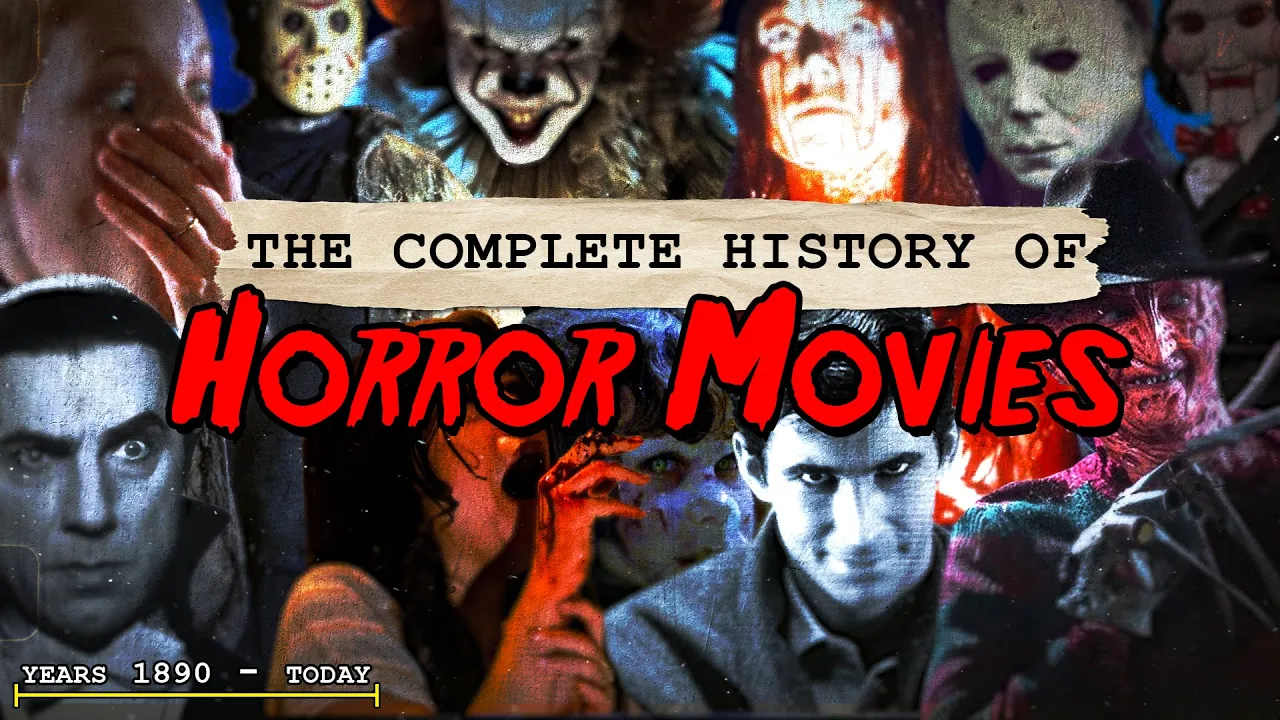
The COMPLETE History of Horror Movies
1.6M
German Expressionism was a major influence on horror films during the silent film era, with movies like 'The Cabinet of Dr. Caligari' and 'Nosferatu' being iconic examples. This movement used tall, sharp, warped buildings, shadows painted on walls to create unnatural shapes, misshapen windows and doors, exaggerated towns and buildings, and harsh lighting. These artistic choices were used to show dreamscapes of the macabre by using harsh shadows and exaggerated silhouettes to signify feelings of dread and tension. The influence of German Expressionism can be seen throughout film history, including in Citizen Kane's use of tilted cameras and harsh lighting, Noir films' lighting techniques, Disney's Fantasia, and most notably in Tim Burton's films which continue this tradition of gothic, macabre aesthetics.
Click to watch →
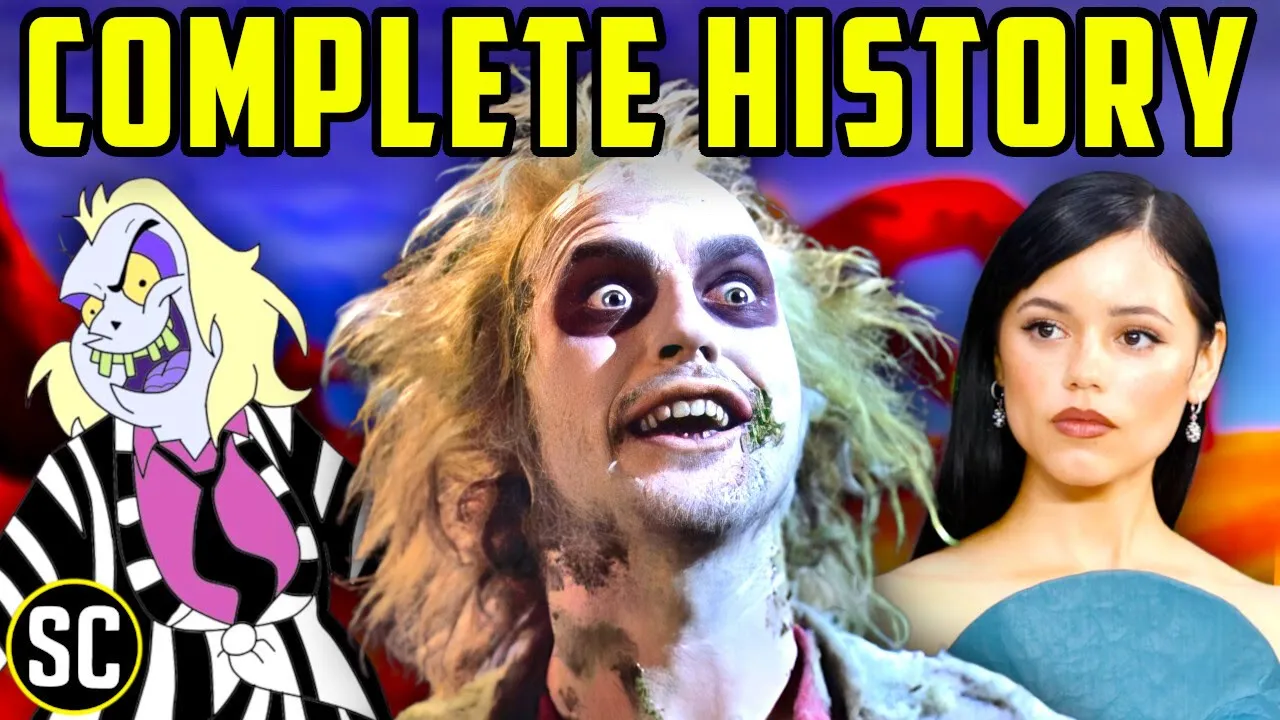
The DEFINITIVE HISTORY of BEETLEJUICE! - The Making of the Original Film Explained
83.8K
German expressionism was an artistic movement that started in the early 20th century but became popular in film around the time of World War I. This style focuses on heightened emotions, curvy distorted forms, and often uses bold colors encapsulated by mostly dark shadowy areas. Two excellent examples of this film style are The Cabinet of Dr. Caligari and Nosferatu, the infamous film that basically started the horror genre as we know it. German expressionism and Tim Burton have become synonymous with one another.
Click to watch →
Expressionist Roots
Themes & Legacy
Expressionist Roots
0:01- 1
Explores German Expressionism's origins in 1910s-30s art, film, and literature.
- 2
Highlights how WWI isolation and domestic demand fueled a boom in German film production.
- 3
Focuses on surreal aesthetics reflecting a post-war national mindset.
The Over-Categorization of Weimar Cinema and the Rise of New Objectivity
While German Expressionism is highly celebrated, film historians argue that the "Expressionist" label is often over-applied to the entirety of Weimar cinema, overshadowing distinct and opposing movements. Critics point out that only a handful of films, such as *The Cabinet of Dr. Caligari*, truly embody pure Expressionism. In reality, the era was defined by a tension between Expressionism and competing styles like *Kammerspielfilm* (intimate, realistic chamber dramas) and, later, *Neue Sachlichkeit* (New Objectivity). New Objectivity directly rejected Expressionism's distorted, highly subjective, and fantastical aesthetics in favor of social realism, objective documentation of Weimar Germany's harsh realities, and cinematic sobriety. Furthermore, revisionist historians argue that many stylistic hallmarks of the era, such as painted shadows, were not purely artistic choices but pragmatic solutions to post-WWI economic constraints, such as electricity shortages and limited budgets. Understanding these alternative movements and material realities provides a more nuanced, less romanticized view of German film history.
The historical and socio-political climate of the Weimar Republic in post-World War I Germany.
The core tenets of the broader Expressionist movement in painting, literature, and theater, which prioritized subjective emotion over objective reality.
Fundamental film terminology, particularly 'mise-en-scène' (how elements are arranged in a camera frame) and 'chiaroscuro' lighting.
The transition of cinema from early short attractions to feature-length narrative silent films.
A close aesthetic and thematic analysis of seminal films of the era, such as 'The Cabinet of Dr. Caligari' (1920) and 'Metropolis' (1927).
The migration of German filmmakers to Hollywood in the 1930s and their direct influence on the emergence of American Film Noir.
The evolution of the classic horror genre, analyzing how Universal Monsters films adapted Expressionist visual design and monster motifs.
Modern applications of Expressionist aesthetics in contemporary cinema, particularly in the works of directors like Tim Burton and Guillermo del Toro.
202.7K views4.9Klikes3:47@nofilmschoolOriginal Release: 2016-08-12
[Music] that dark stylish Beauty synonymous with directors like guo Delo and Tim Burton has its roots in Germany during the 1910s 20s and 30s here realism is done away with in favor of the distorted and The Surreal mirrors large shadows and Optical effects are abundant strange worlds are created through a purely subjective eye this is German [Music] expressionism despite German expressionism never officially being a film movement it pertain to other kinds of art forms as well you may have seen this painting titled the Scream by edford Munch or read the metamorphosis by France kofka both of these Works take subjectivity to the extreme in the films the distorted scenery and the caned angles put us in the minds of the the characters we see the world as they see it a different approach to Art was being taken as a result of Germany's isolation during World War I during that time Germany banned All Imports which included foreign made films so the demand by the German filmgoing public caused a massive influx of German films being made the country went from producing 24 films in 1914 to 130 films in 1918 as a result artists use fantasy and exaggerated visuals to work out the feelings of the German mindset in the wake of the first World War something large was looming just overhead and if you look closely it isn't hard to see the Thematic connections between some of the most important of these films and what was going on in Germany during that time for example a Fritz Lang film titled Dr mauza The Gambler follows a hypnotist who uses mind control to force others to commit crimes for him he's eventually imprisoned in a mental hospital but in the sequel titled The Testament of Dr muuza the doctor continues to use his powers to manipulate others to commit crimes outside the Prison Walls The Testament of Dr mabuza was scheduled to be released in German shortly after Adolf Hitler's rise to power in January 1933 Hitler had been imprisoned himself for a short time in the 20s where he had written his own Testament titled mine comp or my struggle which would pave the way for the Nazi party's rise and manipulation of the German people Nazi propagandist Joseph gerbal saw the film and despite disliking it offered Lang the position of the head of the biggest German Film Studio UFA instead Lang fled Germany and went to Paris and then the United States interestingly enough mind control and manipulation found its way into several of the movement's biggest films including perhaps the most famous the cabinet of Dr Caligari in which a hypnotist manipulates a man in a dreamlike state to commit a series of murders the themes of authority and conformity in the cabinet of Dr kagari are both a reflection on post World War I Germany and a disturbing foreshadowing of what was to come expressionism made its way to Hollywood after many in the German film industry fled to the US during the rise of the Nazi party but the influence of expressionism was not merely conf refed to the films that these German artists worked on the Noir genre of the 40s and 50s was heavily influenced by expressionist style mainly in its use of Shadows and many horror films also adopted the aesthetic created by the German expressionist movement even though the movement was born out of a need of German artists to process what happened during the first world war its influence continues to impact contemporary films albeit this impact is mainly exclusive to style many filmmakers continue to be inspired by the look of expressionist films for their surreal and highly stylized imagery sharp and dynamic shadows and distorted reality and if you keep a rather peculiar eye out you'll notice the strange Darkness creeping [Music] in
Up Next

19:53
Stefan Dechant on Macbeth's Oscar-Nominated Production Design
@goldderby
262 views•2022-03-08

114:18
Christian Iconography: History, Theology, and Meaning | Fr. Panayiotis Papageorgiou
@Trisagionfilms
58.8K views•2020-02-21
7:48
Ukiyo-e Art: History, Woodblock Printing & Influence
@japanathand
6.3K views•2023-06-08

16:34
Earliest Depictions of Jesus in Art: 10 Ancient Images Explained
@UsefulCharts
5.9M views•2022-06-03
Related Study Plans & Knowledge Roadmaps
Structured learning paths in Art History
art-history
Gothic Cathedrals: Engineering, Light & Society
01The Birth of the Gothic: Romanesque to Suger's Vision
02The Structural Triad: Pointed Arches, Ribbed Vaults, and Flying Buttresses
03Theology of Light: Lux Nova and Sacred Geometry
+ 2 more learning modules
14h5 modules
Explore Roadmap
art-history
Pre-Raphaelites: Realism, Symbolism & Critique
01The Victorian Art Establishment and Academic Formula
02The Founding of the PRB and Radical Realism
03Medieval Revivalism and Literary Symbolism
+ 1 more learning modules
8h4 modules
Explore Roadmap
art-history
Street Art: From Subways to Art Market
01Subcultural Origins in Philadelphia and New York (1970s)
02The Subway Era and Style Wars (Late 1970s - 1980s)
03The East Village Scene and Early Gallery Crossover
+ 2 more learning modules
10h5 modules
Explore Roadmap
art-history
Classic Maya Art: Iconography, Glyphs & Ritual
01Foundations of Classic Maya Visual Culture
02Deciphering Maya Hieroglyphs & Text-Image Integration
03Sacred Geography and Cosmological Architecture
+ 2 more learning modules
14h5 modules
Explore Roadmap