


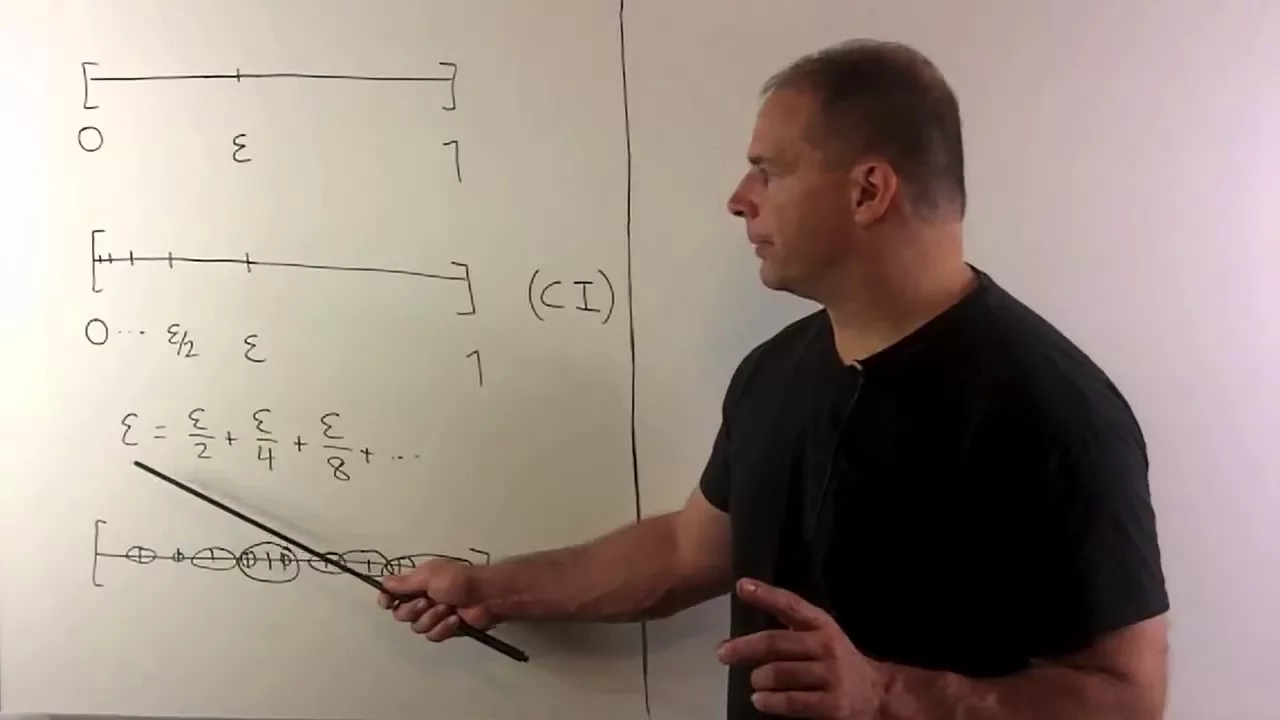
![Topologia da Reta - Introdução [Leitura]](https://i.ytimg.com/vi/hdVhT9FF5wE/hqdefault.jpg)


![Curso de Análise - Topologia da Reta [1/4]](https://i.ytimg.com/vi/pTa8SIJKSXc/hqdefault.jpg)


![[TMiC] 4. Miara zewnętrzna. Wprowadzenie do miary Lebesgue'a](https://i.ytimg.com/vi_webp/L5ZcI0b-pr0/maxresdefault.webp)











![[L3] Théorie de la mesure: Fonctions mesurables, lim inf et lim sup.](https://i.ytimg.com/vi/du-gpZQCzsM/maxresdefault.jpg)



![[s4 | 2024] Математический анализ, К. П. Кохась, лекция 18](https://i.ytimg.com/vi/57EZ-Lzl9b0/maxresdefault.jpg)
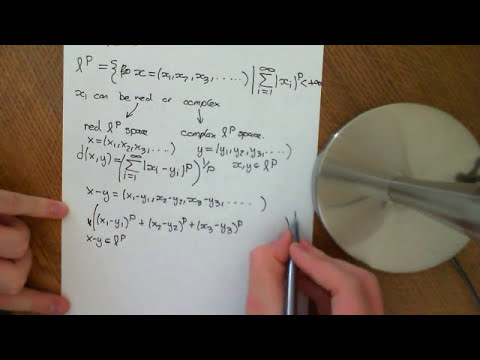

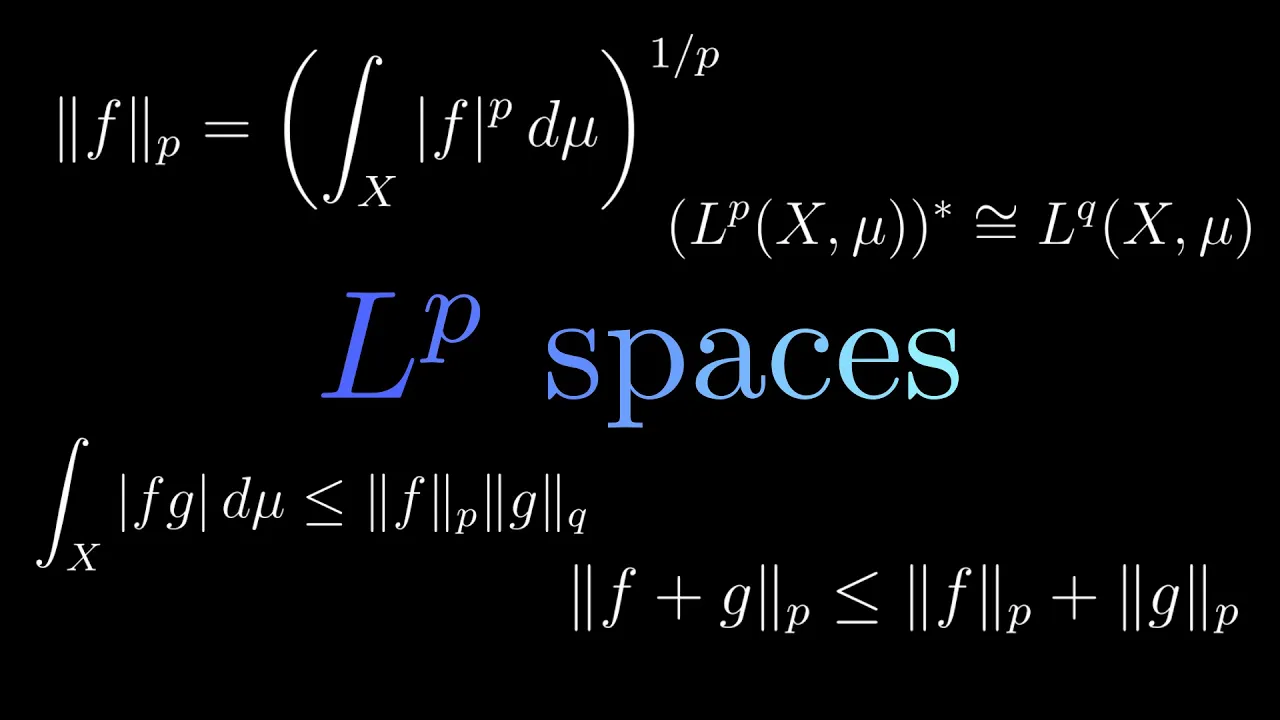
A set E is measurable if for every subset A of the real numbers, the outer measure of A equals the sum of the outer measures of A intersected with E and A intersected with the complement of E; this condition ensures that the outer measure behaves additively when partitioning sets by E and its complement.
When is a Set Measurable? | Real Analysis Part 1
Added:Basic Set Theory: Familiarity with operations like countable unions, intersections, complements, and the distinction between countable and uncountable sets.
Elementary Topology of the Real Line: An understanding of open, closed, and compact sets, as well as the concepts of supremum and infimum.
Lebesgue Outer Measure: Grasping the definition and properties of outer measure, as Lebesgue measurability is formally defined using Carathéodory's criterion on outer measure.
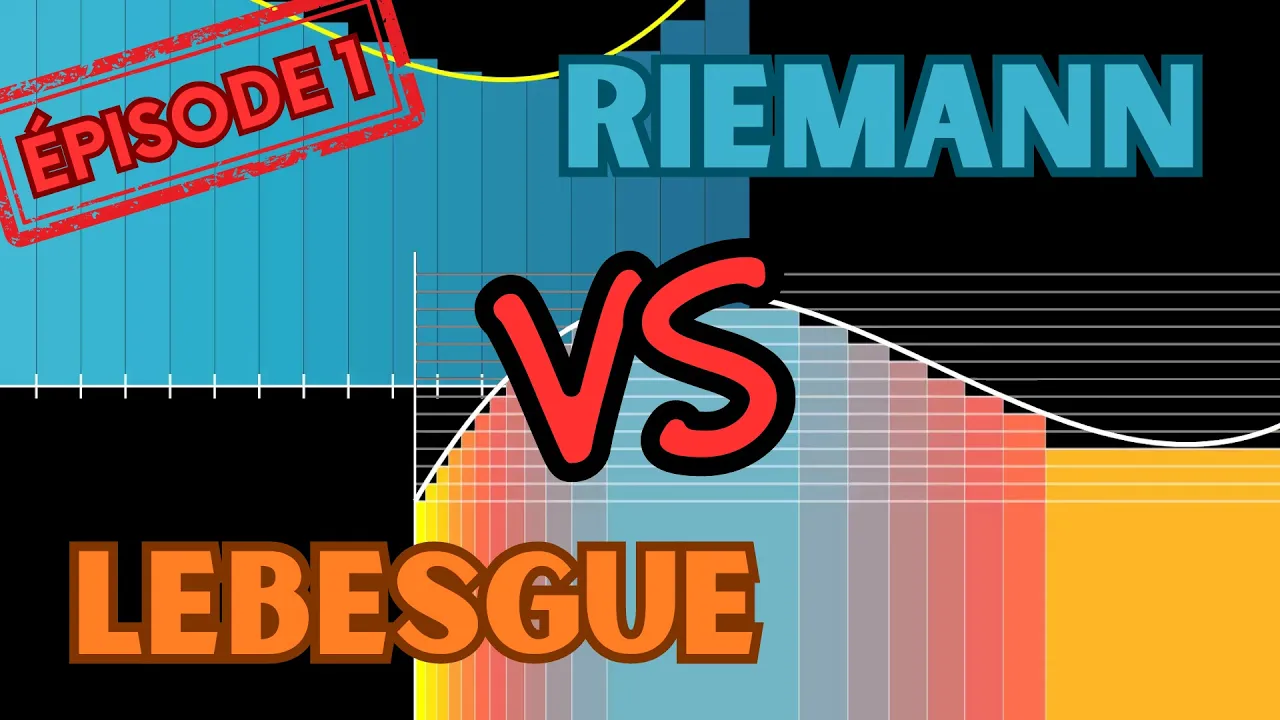
Limitations of Riemann Integration: Knowing why Riemann integration fails for highly discontinuous functions, which motivates the transition to Lebesgue measure.
Sigma-Algebras and Borel Sets: Studying the algebraic structure of measurable sets and the relationship between Lebesgue measurable sets and Borel sets.
Non-Measurable Sets: Exploring the construction and implications of non-measurable sets, such as the Vitali Set, which utilizes the Axiom of Choice.
Measurable Functions: Learning how to define and analyze functions that preserve measurability, which are the building blocks of Lebesgue integration.
The Lebesgue Integral: Developing the modern theory of integration and proving major convergence theorems, such as the Monotone Convergence Theorem and Dominated Convergence Theorem.
Abstract Measure Spaces and Lp Spaces: Generalizing these concepts to abstract spaces and studying Banach spaces of integrable functions.
585 views11likes13:41Original Release: 2021-11-18
good day everyone in this video i'm going to discuss measurable set when is a set measurable so before that let me have a brief review about the concept of sets now recall that we have this equality so to illustrate this one let me have that venn diagram we have here the set a and this one is the set e now a intersection e is this one shaded region and then a intersection complement of e so of course the complement of e is outside e then we intersect it to a so this is the intersection now notice that if you're going to get the union it will result to set a now if in the case that if we're going to get the the bag outer measure of this and the back outer measure of this intersection and the bag after measure of this if you're going to get the sum of the of the intersection of the outlet bag outer measure rather the sum is equal to the lab outer measure of a now if it is in that case we can say that our set e is measurable notice here that a is a subset of the set of real numbers so let's define here measurable set so we have here a set e is a subset of course of a real number it is measurable if for each subset of r we have this equality so if this holds then we can say that e is measurable or if e is measurable then this will follow now for this remark here we know that by sub additivity this will hold okay so this always holds that if a is we have here if a is equal to the union of this then always true and less than or equal if you're going to get the back outer measure by sub additivity therefore if we are to show that e is measurable so it's enough to show that here it is greater than or equal so it is enough to show this one or of course you can show that they are equal but then it is enough to show that they are at that the outer the back outer measure of a is less than or equal to the sum of the bag outer measure this now we have another remark here that if e is measurable then we can say that its complement is also measurable now to proof this one uh i'll just give you an uh an outline on how to prove this so here's our statement so here's our statement so our assumption here is e is measurable so by our assumption we have this one okay by using our assumption this is true or you can use greater than or equal this is true and then we need to show that for e for each rather subset of r for any e so we need to show that the outer measure of a is equal to the outer measure of a intersection instead of writing e we use here e complement because we will show a complement is measurable so we replace so we want to show this one one a intersection e complement of the component follow because we want to show this that's why we just replaced it seems like we are just replacing so we want to show this one now to show this one we will be using uh the concept of complementation we will use this concept that e complement of the complement is just equal to e and then by commutativity the result follows okay that's it now let's have the next here empty and r are measurable so let's show first empty being a measurable set that is we will show that the outer measure of a is equal to that the peg outer measure of a intersection what instead of e we have complement because the complement empty set because this set uh we will show that this set is measurable then plus the outer measure of a intersection of course the complement of it so we will show this one now to show this one we can work backward so we can have this first and then we will show that the outer measure of a out that this is equal to the alternation of a so let's begin we have this of a intersection now we know that the complement of mp is r so we can write it away so this is equal to r and the intersection of a and mt is of course empty so we have here the back outer measure of this is that one plus the the back outer measure of what notice that this the complement of mp is r and then if you're going to get the intersection of a and r the intersection is of course the smaller set this is a because we know that a is just a subset of r now in this case the label alter measure of empty is of course zero so we have the other measure of a of course so we have proved this statement now to show for our being measurable we use the same process so instead of writing empty here we replace it by r this is our complement so we know that the intersection of a to r is a smaller set and the complement of r is okay let's have this so r so we replace this by r and replace this by r so we show we will show that we start here a then of course the intersection of this is the smaller set a and we know that this is equal to empty and the intersection is empty so as you can see the outer measure of a and then the outer measure of empty is zero so we have proved the result or we can use another and we can prove this one using the the statement measurable implies its complement measurable so because we have already shown that empty is measurable so of course its complement which is r is also measurable so we can also prove that by using this result so let's have here another result so if the the big outer measure of e is zero then e is measurable now to prove this one looks like this so we let of course in the subset a of r and then we note that this is true why because um intersection is smaller than any set here so this intersection is a subset of e and this intersection is a subset of a that's why we have a statement this means that the outer measure of this is less than or equal to the outer measure of e then traveling next and we also know that this is true that this intersection is a subset of this set then this holds we get the lapec outer measure of each then less than or equal to this liquid of the measure of this now by our assumption the outer measure of e is zero now for this uh with this rather it follows that we know that the outer measure of any set is greater than or equal to zero and we know from this result by one that this is less than or equal to the the back outer measure of e and by assumption this is 0. now notice here it is this set is greater than or equal to 0 but less than or equal to 0.
what do you think will happen we can say that the the big outer measure of this set is zero therefore if the label outer measure uh therefore uh we have this statement from two here that the the back outer measure of a intersection e complement is of course less than or equal to the label outer measure of a this is the statement we just added zero anyway this is the same inequality then of course by this now this is zero we added this one here because this is just equal to zero from this so are we done are we done showing that e is measurable we have shown here that the the back outer measure of a is greater than or equal to the sum of this so we have here e here e complement so we're done proving this statement so that's all for now in my next video i'm going to discuss their some known results on measurability so thank you for watching and listening
Up Next
81:43
Real Analysis Lecture 7 | Metric Spaces & Heine-Borel Theorem
@AlexKontorovichMath
274 views•2019-10-10

4:43
Elliptic Curve Cryptography Explained: ECC, ECDSA, ECDH
@PracticalNetworking
28.5K views•2024-10-21
10:44
Fourier Series Introduction: The Big Idea Explained
@DrTrefor
387K views•2021-05-03

6:00
The Mathematical Impossibility of Accurate World Maps
@Vox
23.3M views•2016-12-02
Related Study Plans & Knowledge Roadmaps
Structured learning paths in Mathematics
mathematics
Tensor Calculus: Vectors to Riemann Curvature
01Mathematical Foundations: Linear Algebra & Calculus
02Covectors, Dual Spaces, and Tensor Basics
03The Metric Tensor and Index Gymnastics
+ 2 more learning modules
40h5 modules
Explore Roadmap
mathematics
Gödel's Incompleteness: Logic, Proofs & Limits
01Introduction to Formal Systems & Hilbert's Dream
02Set Theory, Cardinality, and Cantor's Diagonal Argument
03Arithmetization and Gödel Numbering
+ 2 more learning modules
14h5 modules
Explore Roadmap
mathematics
Galois Theory: Fields, Groups & Solvability
01Foundations of Abstract Algebra: Groups & Fields
02Polynomials & Field Extensions
03Splitting Fields & Symmetries
+ 2 more learning modules
24h5 modules
Explore Roadmap
mathematics
Non-Euclidean Geometry: Models & Geodesics
01Euclid's Fifth Postulate and the Birth of New Geometries
02Hyperbolic Space and the Poincaré Disk Model
03Geodesics: Defining Straight Lines in Curved Spaces
+ 2 more learning modules
15h5 modules
Explore Roadmap