


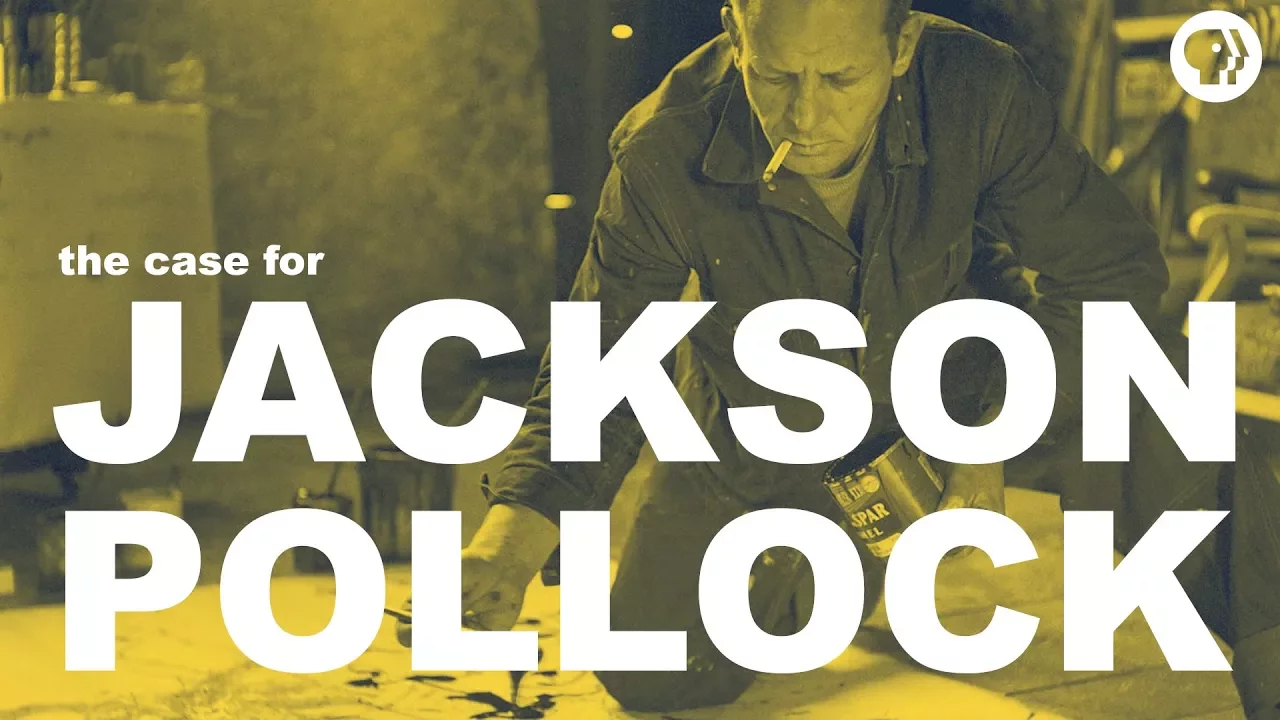















Jackson Pollock's revolutionary drip painting technique and abstract expressionist style were significantly shaped by his early exposure to Mexican muralists José Clemente Orozco and David Alfaro Siqueiros, whose innovative use of industrial materials, experimental techniques, and powerful iconography provided Pollock with both technical inspiration and a broader vision of what art could be, ultimately enabling him to develop his distinctive approach to painting that would define the Abstract Expressionist movement.
Mexican Muralists' Influence on Jackson Pollock's Art
Added:Familiarity with Jackson Pollock's signature style, particularly Abstract Expressionism and his pioneering of action painting and the 'drip' technique.
An understanding of the Mexican Muralism movement, including its key figures (José Clemente Orozco, David Alfaro Siqueiros, Diego Rivera) and its socio-political context post-Mexican Revolution.
Basic knowledge of the shift in the global art world's center from Paris to New York City during the 1930s and 1940s.
Awareness of the role of experimental art spaces in 1930s New York, specifically Siqueiros' Experimental Workshop, where unconventional materials and collective creation were embraced.
A deep-dive analysis into how Siqueiros' use of industrial materials, like pyroxylin (liquid plastic) and pouring techniques, directly informed Pollock's physical paint application.
An investigation of the ideological contrast between the overtly political, public messages of Mexican Muralism and the highly subjective, seemingly apolitical nature of American Abstract Expressionism.
Exploration of the broader influence of Mexican Muralists on the United States' Federal Art Project (WPA) and how it shaped public art during the Great Depression.
A comparative study of other mid-century American artists, such as Philip Guston or Will Barnet, who also drew significant inspiration from Mexican modernism.
8.3K views369likes26:57Original Release: 2025-04-14
In the summer of 1930, a teenage Jackson Pollock and his older brother Charles made the short drive to Pomona College to see a mural that had just been completed by the Mexican muralist Joseé Clemente Arosco. The 20x 20ft fresco that still rests in the school's dining hall depicts the Greek titan Prometheus giving fire to humans in defiance of the Olympian gods.
A crowd of onlookers offer mixed reactions. Many look terrified. Inset panels on the left and right designed by Arosco and painted by an assistant feature an angry Zeus Hera Io centaurs and a creature entangled in a serpent. Joseé Clemens Rosco said the panels collectively represent quote the ancient times that Prometheus is upsetting by giving the fire of knowledge to man. According to the mythus punishes Prometheus by chanting him to a rock and sending an eagle to endlessly eat his liver which regrows every night. When Arosko was young, he lost his left hand in a gunpowder explosion while making fireworks. While he describes the accident in his autobiography as in no way out of the ordinary, fire will become a recurring symbol of creation and destruction in his artwork. Jackson Pollock referred to Arosco's Prometheus as quote the greatest painting done in modern times, and he kept a large reproduction displayed in his studio. Art historians suggested Arosco's work significantly influenced Pollock's first submission to a major art show, a painting called The Flame.
The art critic Peter Sheldall described some of Pollock's early work as an emulation of quote Arosco's dark, fierce, rhythmic expressionism to the point of making works that are almost but not quite hard to distinguish from him. Jackson Pollock attempted to incorporate a vast range of material into his artwork. Hinduism to shamanism, mysticism, Freud, Carl Young, Mesoamerican mythology, even the apparent swirling hallucinations he experienced from migraines. In Pollock's search for an artistic identity, he seems to have taken from just about everything he came in contact with. And by all accounts, he suffered in this pursuit. His brother Charles described the teenage Jackson Pollock as quote sensitive, easily hurt, inward, and withdrawn.
The art critic Clement Greenberg described Pollockch as gothic. The painter Paul Jenkins compared Pollock to Melville's Billy Bud, saying that Pollock, while a decent person deep down, could only find expression through quote some violent gesture. Pollock was notoriously reticent, and his reputation as a brooding, tortured, hard-drinking, self-destructive artist is wellounded.
So, when trying to understand Pollock's artwork, it makes sense to consider his psychological motivations, to consider his so-called inner world. But it's also important to recognize how much Pollock, like all artists, built on the work of others, particularly in his formative years. Pollock biographer Ellen Lando offers a good anecdote on this point.
Beginning in 1939, Pollockch began seeing the Union psychologist Joseph Henderson for his alcoholism, which had become debilitating. The 1930s found Paul regularly fist fighting and passing out in the gutters of the Lower East Side. Lando writes that Henderson quote offered vocational support, encouragement, and advice about how to deal with the accelerating creative blocks which were the cause of Pollock's alcoholic binges. Instead of treating the alcoholism, Henderson felt the cure entailed finding Paul's artistic identity. Pollock gave Henderson 83 drawings over a period of 18 months for review. Henderson focused on the archetypal symbolism of the drawings and introduced Pollock to Yian symbols in the process of pictorial analysis where for example curved lines indicate among other things a feminine impulse and jagged lines indicate a male impulse. He also fed Pollock a lot of information about Yian theory which likely influenced what Pollock submitted. Henderson thought the drawings revealed Pollock's psychological experiences. Quote, demonstrating phases of sickness and his feelings about a possible cure. While a fascinating episode, Landa points out that someone with more artistic knowledge might have recognized that Pollock's drawings quote exhibited a strong dependence on imagery borrowed from more famous artists. According to Lando, the two artists Pollock passionately admired at the time were Pablo Picasso and Joseé Clemente Arosco. Orosco was one of the big three of the Mexican muralist movement along with Diego Rivera and Devid Afaro Ciceros. The mural movement began in the 1920s following the Mexican Revolution during a time of radical transformation in the country. The post-revolutionary government created a public arts program to help unify the country. Featuring themes of left-wing nationalism and celebrating Mexico's cultural heritage and pre-colonial past. Inspired by the ideals of the Mexican Revolution, artists depicted historical events and created idealized works featuring rural, workingclass, and mixed race people as heroic subjects. There was a concerted effort to break from the European traditions and colonial pretensions that had defined pre-revolutionary Mexico. In a 1922 letter to Mexico's Secretary of Education, Jose Vos Conos Carroll wrote, quote, I find myself in total agreement with your basic plan to create a new civilization extracted from the very bowels of Mexico.
The three artists had different styles and divergent politics, but they all made monumental public art with a social commitment. Notably, Mexico's federal arts program would directly inspire America's New Deal arts projects, employing many now famous artists during the depression years, including Jackson Pollock, who was employed by the WPA. Arosco, Ciceros, and Ria all traveled to the United States to make murals. In fact, all three artists made significant murals in California, where Jackson Pollock spent much of his early life. Pollock first heard about the Mexican muralist as a teenager. Writing to his brother Charles in 1929, he said, quote, "I became acquainted with Rivera's work through a number of communist meetings I attended after being ousted from school last year. He has a painting in the museum now.
Perhaps you've seen it. Dia de Flores. I found the creative art January 1929 on Ria. I certainly admire his work."
The issue also featured an essay by Arosco called New World, New Races, New Art, in which Arosco argued that quote the art of the new world cannot take root in the old traditions of the old world. Orosco whose artwork featured cynical critiques of history and he worked as a political cartoonist was actually fairly ambivalent politically.
Ria and Dvid Faros Caros were far more partisan. Both were prominent members of the Mexican Communist Party in the 1920s. And Carol founded the Communist newspaper, Elmachete. But it wasn't necessarily the politics of the Mexican painters that captured Pollock's imagination. He was interested in the rendering of the images, the colors, rhythms, expressiveness, and lack of artistic orthodoxy. To the extent that Pollock was concerned with subject matter and meaning, it was a focus on things like mythology, ritual, ancient symbols, not any kind of concrete social or political concern. But wittingly or unwittingly, the myths and symbols of politically charged art found their way into Pollock's paintings. But there is some irony in Pollock's lack of politics, considering the influence of the Mexican painters and more generally the ubiquity of socially conscious art in America in the 1930s. And it also makes sense that Paul gravitated most towards Orosco who was more politically neutral and more universalist than Ria or Siceros. Ria the most famous of the muralist would prove to be the least influential on Pollock. Not long after viewing Prometheus in 1930, Pollock left California without finishing high school to attend the artist Student League in New York City where his brother Charles was already taking classes. There Pollock was mentored by Thomas Hart Benton who would become one of the most famous artists in America during the depression era as part of the regionalism movement. Benton had a big impact on Jackson Pollock. His teaching style was structured and academic using formulas to achieve rhythmic balance and compositional equilibrium. He was hostile to modern art and painters like George Brock and Picasso preferring old masters like Luca Senorelli and Peter Paul Rubin. Benson was however a fan of the Mexican muralists. He said that despite the Marxism, he quote saw a profound and muchneeded redirection of art toward its ancient humanistic functions. Benton wanted to emulate the way the Mexican muralists had depicted Mexican national life in the United States. He and other prominent regionalists like Grant Wood and John Stewart Curry painted idealized, often sentimental scenes of rural American life. Regionalism was the dominant art movement in America along with social realism before abstract expressionism took the spotlight in the 1940s. Pollock spent much of the 1930s trying to emulate the regionalists.
Though according to Benson, Pollock quote injected a mystic strain into regionalism. Pollock traveled the Midwest through Kansas, Texas, and Oklahoma in search of experiences and things to paint. He wrote to his family that he met interesting bums and cut throats, rode freight trains, experienced hunger, and spent time in jail. By all accounts, Pollock was eagerly, even desperately searching for an artistic identity. In the summer of 1936, Pollock traveled to Dartmouth College to see Arosco's mural, The Epic of American Civilization, with his brother Sandy and a few friends. The mural cycle features 24 fresco panels illustrating the civilizational development of the Americas. The mural depicts cyclical destruction and creation featuring migration, human sacrifice, conquest, and critiques of modern times. Panels offer dichotoies like Anglo-American conformity versus Latin American instability and corruption.
Pollock was particularly drawn to a controversial section of the mural called Gods of the Modern World that depicts skeleton academics giving birth to skeleton fetuses. In a section called modern migration of the spirit, a larger than life-sized Christ holding an ax and a closed fist and standing over a failed cross. Behind him, the ruins of a corrupt civilization.
Pollock made many drawings and paintings based on the scenes in Arosco's mural.
His sketchbooks feature all kinds of dark imagery pulled from Arosco's work.
Bones, chains, crucifixions, flayed humans, and beasts. Similar images would show up in Pollock's so-called psychoanalytic drawing under the care of Joseph Henderson. During this time, Pollock's paintings were trending towards abstraction, becoming more focused on form and expression. Though according to Ellen Landau, quote, "As late as 1937, Pollock had been trying, albeit not very successfully, to fit into the regionalist mold." In that in the summer of 1938, when the WPA had refused Jackson permission to leave New York in search of new material for his paintings, he snapped, ending up in a psychiatric care unit. Sandy told Charles that after his release, Jack underwent a decisive and radical artistic change. By 1941, Pollock had quote thrown off the yoke of Benton. Pollock's painting Untitled Baldwoman with skeleton shares a number of similarities with Arosco's gods of the modern world, including a skeleton giving birth. Though Pollock's painting is more abstract, and there's no clear narrative or social critique. It's more of an exploration of iconography and mood. Maybe an exploration of personal demons. The abstract expressionist Robert Motherwell remarked that the years 1941 to 1942 represented a transition from Arosco to Pablo Picasso.
According to Motherwell and Pollock's wife Lee Kraner, it was Pollock's desire to surpass the accomplishments of Picasso. Another important influence on Jackson Pollock was the Mexican painter the vidaros. Ceros was an explosive figure who made radical art and led a radical life. He was censored, jailed, deported, and exiled. He joined the Mexican Revolution as a teenager and fought for the Republican army in the Spanish Civil War. He wrote fiery political manifestos and railed against Western imperialism.
He tried to assassinate the Russian revolutionary Leon Trosky with machine guns and explosives. He thought the ideal goal of art should be one of beauty for all, of education, and of battle. He was the youngest and most politically outspoken of the big three muralists. For Sakiro's politics was inseparable from art. He was a militant communist and party organizer whose political identity was forged in the Mexican Revolution. He was also the most experimental of the Mexican muralists.
He wanted to create a new realism using modern tools and industrial materials.
Sicos used spray guns, projectors, and Portland cement to create large-scale frescos. He poured different colors of paint on a spinning board decades before Damian Hurst. Sicos was an advocate for working collectively, assembling large teams to create public art and engage in political activism. In 1936, Sicros created an experimental workshop in New York City, which was attended by Jackson Pollock, his brother Sandy, and his friend Ruben Kadish. The artist Harold Leman described the workshop as a laboratory for the experimentation of modern painting techniques with a goal of creating revolutionary political art.
Workshop attendee Axel Horn said, "We sprayed through stencils and frisketss, embedded wood, metal, sand, and paper.
We used it in thin glazes or built it up in thick gobs, poured it, dripped it, splattered it, hurled it at the picture surface." According to Polloc biographers Steven Neify and Gregory White Smith, Cicero's quote generated a torrential flow of ideas and new projects with a child's eye for investigation and surprise. Paint itself was a source of endless discovery.
Especially the new industrial paints like Duco, a synthetic nitro cellulosebased paint developed for automobiles. Accidental images were created by pouring paints of different colors onto a board and pouring thinner on top. patterns in turn suggested images. By directing the flow of paint, guiding it with a brush, tipping the surface, Ceros could seize the image and develop it. Ceros called the process controlled accidents. Harold Leman recounted that Pollock and others were directed to quote splatter and hurl colors at the floats and banners they were making, and that many of these same methods were used by Sicaros to create his 1936 painting, Collective Suicide. According to Nifian Smith, quote, "On a 1936 visit to Axel Horn's apartment, Jackson laid a canvas on the floor and tried to duplicate Sakuros's technique by dripping paints across it."
According to Ellen Lando, just before Paula created his breakthrough painting mural in 1943, quote, he had created three smaller pictures in which he had returned for the first time in a number of years to see Carolos inspired experiments.
The experimental workshop built on techniques Saros had piloted on murals in California in the early 1930s. Saros first came to the United States as a political refugee. After spending time in jail and then under house arrest in Mexico for political activities, he was granted permission to leave the country.
In the spring of 1932, he traveled with his family to California where he made three murals using large teams of assistants which included Jackson Pollock's brother Sandy and his friends Ruben Kades and Philip Goldstein. The most famous of these murals is a monumental fresco called America Tropical located in downtown Los Angeles at Alvera Street. The mural commissioned was for a romantic depiction of Latin America ornamenting a rooftop beer garden. But Ciceros instead painted a crucified indigenous figure under an American eagle, a symbol of US imperialism. The mural features twisting tropical flora, pre-Colombian ruins, and revolutionary sharpshooters. To create the 80ft mural more efficiently, Sicos used airbrushes, a projector for creating outlines, and cement instead of lime plaster.
traditionally used in fresco painting. Although America Tropical's artistry was praised, including by the LA Times art critic, the subject matter proved too provocative and it was whitewashed. Due to the use of experimental materials, decades of exposure, and damage from being covered in white paint, the mural is now a dull version of its former self, despite extensive conservation efforts by the Getty Foundation. It was also Sicaros's wish that the mural should not be repainted. Jackson Pollock traveled to Los Angeles in the summer of 1932 and briefly met Sieros through Ruben Kades and he apparently wasn't very impressed stating quote Rosco is the real artist.
But by 1936 Pollock had come around to Sicaros who offered a kind of subversive creative freedom. Neify and Smith write that at the experimental workshop there was a quote deep and instant bond between Cicaros and Pollock. Almost immediately they established a barroom physical rapport, beginning most work days at the studio with 5 minutes of arm wrestling and horseplay. More than once, assistants found them on the floor twisting and wrestling, rolling over each other in adolescent play.
In 1966, artist and former Pollock classmate Axel Horn gave a colorful account of the party held to send Devid Alaro Cerolos off to fight the fascists in Spain. He writes that quote, "Scaros decided to go to Spain as an artist and fighter in the civil war on the loyalist side. We gave him a farewell party in someone's loft. A couple bottles of liquor were producing notable effects, and the gathering was typically noisy.
Cicero sported a huge ivory handled revolver given to him by Mexican well-wishers. However, when someone proposes a toast to the departing warrior, he had disappeared. Pollock, whose scatological bellowing was usually much in evidence on such occasions, was also missing.
Both men were eventually found. They were under a table, each had his hands around the other's throat and was silently attempting to choke the other into unconsciousness. Jack in a wild, exhilarated effort and see Carol in a desperate attempt to save himself.
Sandy McCoy moved in with a deaf right to the jaw unlocked Jack's fingers. Four of us lifted him up, hustled him downstairs into Sandy's model a Ford in which he was driven home. The next day, Sikaros left for Spain where he joined the international brigades, eventually being put in command positions and experiencing heavy casualties. During this time, he was reportedly recruited by the Soviet secret police. According to the artist Roberto Berdesio, when Sicos returned to Mexico in 1939, he was quote a changed man, a fully dedicated Stalinist, in May 1940, Sikaros led an armed assault on Leon Trosky's Mexico City compound. Although only Trosky's grandson was wounded in the attack, the American Robert Sheldon Hart was later found murdered. Hart, who was Trosky's assistant, had likely helped Taros and his men into the fortified compound.
Diego Rivera, who along with Freda Ko had helped Trosky get asylum, was initially a suspect until the authorities zeroed in on Sicaros, who ultimately escaped the prison sentence after several months on the [Music] run. By all accounts, Ciceros's experimental workshop was the most innovative, chaotic, and exciting artistic environment the young attendees had ever experienced. Ruben Kadesish remarked quote how different it was from what we had run across in art school in life drawing. Ciceros was overturning the whole idea that the only worthwhile thing in art was what was being represented. The whole neocclassical ideal the whole Greco Roman tradition.
Axel Horn said that quote the possibilities inherent in the experimentation at the Sicaros workshop offered Jackson Pollock a way out of his lack of technical facility. If Sicaros was unorthodox, he was also pragmatic, using airbrushes to spray 25 paintings on the ground. Ciceros wanted to use the same tools and materials as modern workers and create an artistic language the working class could understand. He thought the Mexican fresco was too slow for a place where skyscrapers are raised in 24 hours.
While some point to the importance of the dripping and pouring done in Siceros's workshop, it may have been Sicaros's irreverent creativity and unorthodox use of materials that had the greatest impact on Pollock. The experimental workshop wasn't Pollock's first time dripping paint. That happened in the high school classroom of Frederick Schwankovski, dripping paint on glass. And while Jackson Pollock is certainly the most famous paint dripper, he wasn't the first. Hans Hoffman, Lee Kraner's friend and art teacher, made drip paintings. Surrealists engaged in similar experiments, as did many others.
Pollock also wasn't the first to exhibit all over drip paintings. The Brooklyn based artist Janet Soil beat Pollock by a few years. The art critic Clement Greenberg and Pollock both saw Soil's work. Who knows what would have happened if the influential Greenberg had championed her paintings instead of Pollock's. In any case, it would be Pollock's own irreverent approach to painting captured by Hans Namoth photography that inspired a generation of artists. Flinging house paint on giant canvases laid flat on the ground became a symbol of liberation. Pollock's approach engendered a good deal of mythos about pure painting. His painting style was compared to improvisation and jazz music. His paintings were thought of as recordings of his dance with the canvas. The conceptual artist Alan Capro wrote that Jackson Pollock liberated art itself by destroying painting. It's again interesting to note that Pollock was mostly concerned with the technical aspects of Sicaros's methods and not necessarily the politics. Despite Sicaros's entire enterprise being premised on his political ideology, Sicaros's stated goal was to create a worldwide syndicate of revolutionary artists. Pollock did assist Car Seros in the creation of quite a bit of social messaging though, including a float for the 1937 Mayday parade. The float conceived of by Cicaros and his retinue featured a Wall Street capitalist reaching out to a donkey and an elephant and a huge mallet emlazed with a hammer and sickle that repeatedly struck a ticker tape machine ejecting tape all over the capitalist.
Ser called it an essay of polychrome to monumental sculpture in motion. Despite this experience, politics never manifested themselves in Pollock's artwork. In the following years, Pollock would not only consciously avoid politics, but abandoned subject matter and paintings altogether. This turned out to be somewhat of an asset in the Cold War McCarthy era when modern art came under political attack for its association with leftist politics. The popularity of abstract expressionism, which was essentially an a-olitical art movement, did however annoy a lot of figurative artists who were still interested in taking on social issues, whether they were communist, anti-communist, or someone like Ben Shawn, who didn't fit into either box. The wartime influx of European artists in the 1940s helped make European modern art the dominant influence in New York City, and the tables had turned on Jackson Pollock's old teacher, Thomas Hartbenton.
Pollock eventually ended up in an artistic space that was fueled by things like surrealist concepts and a belief in the power of the unconscious mind. But he got there by way of the Mexican artists who captured his imagination in those important formative years. Pollock was presented with a more expansive vision of what art was and could be. In a time when many Americans were looking to break the traditional American mold, Ciceros was a radical instigator of creative freedom. Orosco offered Pollockch a powerful iconography and expressive style that was both an alternative to the American scene and European modern art. While it's true that Pollock argued his brush strokes were not random or accidental, he also described painting as a process of discovery, saying that quote, "Sometimes I lose myself in a painting, but I have no fear of changes, of destroying the image because the painting has a life of its own." This was a fairly novel way to think about art in the 1940s. and sounds a lot like the controlled accidents from Sicros's workshop. In 1949, Hulk landed on the pages of Life magazine, standing in front of the question, "Is he the greatest living painter in the United States?" Behind him, the radical style of painting that made him famous and divided critics. Was it primal liberation or apocalyptic wallpaper? As the critic Harold Rosenberg warned about, modern art as a whole was a rebellion against tradition. But Pollock's technique of dancing around the canvas flinging paint was so radical for the time, it begged the question, what is painting? When Alan Capra wrote that Pollock had destroyed painting, he wasn't kidding. Like many artists in the 1950s, Capro saw Hans Nam's photos of Pollock painting on the ground. These images of Pollock are in many ways more iconic than the paintings themselves.
They embody a kind of creative discovery. What Capell ultimately saw in Pollock was pure possibility.
Up Next

20:47
Ancient Roman Art: The Roman Republic | Art History Lecture
@ProfessorKateChaseArtHistory
211 views•2025-04-24

114:18
Christian Iconography: History, Theology, and Meaning | Fr. Panayiotis Papageorgiou
@Trisagionfilms
58.8K views•2020-02-21
7:48
Ukiyo-e Art: History, Woodblock Printing & Influence
@japanathand
6.3K views•2023-06-08

16:34
Earliest Depictions of Jesus in Art: 10 Ancient Images Explained
@UsefulCharts
5.9M views•2022-06-03
Related Study Plans & Knowledge Roadmaps
Structured learning paths in Art History
art-history
Gothic Cathedrals: Engineering, Light & Society
01The Birth of the Gothic: Romanesque to Suger's Vision
02The Structural Triad: Pointed Arches, Ribbed Vaults, and Flying Buttresses
03Theology of Light: Lux Nova and Sacred Geometry
+ 2 more learning modules
14h5 modules
Explore Roadmap
art-history
Pre-Raphaelites: Realism, Symbolism & Critique
01The Victorian Art Establishment and Academic Formula
02The Founding of the PRB and Radical Realism
03Medieval Revivalism and Literary Symbolism
+ 1 more learning modules
8h4 modules
Explore Roadmap
art-history
Street Art: From Subways to Art Market
01Subcultural Origins in Philadelphia and New York (1970s)
02The Subway Era and Style Wars (Late 1970s - 1980s)
03The East Village Scene and Early Gallery Crossover
+ 2 more learning modules
10h5 modules
Explore Roadmap
art-history
Classic Maya Art: Iconography, Glyphs & Ritual
01Foundations of Classic Maya Visual Culture
02Deciphering Maya Hieroglyphs & Text-Image Integration
03Sacred Geography and Cosmological Architecture
+ 2 more learning modules
14h5 modules
Explore Roadmap