













Tritone substitution is a jazz harmony technique where a dominant seventh chord is replaced with another dominant seventh chord that is a tritone (six semitones) away, which works because both chords share the same tritone interval (the third and seventh degrees), allowing them to substitute for each other while adding harmonic tension to chord progressions; this technique can be applied to both chord voicings and soloing, enabling musicians to create more interesting harmonic movements and explore outside playing within the key center.
Tritone Substitutions Explained for Jazz and Blues
Added:Understanding the interval of a tritone (three whole steps) and its inherent harmonic instability.
Familiarity with the construction and function of dominant seventh chords, particularly the role of the 3rd and 7th scale degrees (guide tones).
A solid grasp of standard jazz harmonic frameworks, specifically the major and minor ii-V-I chord progressions.
Basic knowledge of diatonic chord functions and Roman numeral analysis in major and minor keys.
Applying the Lydian Dominant scale (fourth mode of melodic minor) and the Altered scale for soloing over tritone substitutions.
Exploring voice leading techniques and smooth guide-tone transitions (e.g., chromatic bass lines) when resolving substituted chords.
Integrating tritone substitutions into extended dominant chains and secondary dominant progressions.
Studying advanced substitution concepts, such as Coltrane changes (mediant relationships) and minor third substitutions.
341.5K views9.8Klikes13:09Original Release: 2017-04-15
Hey, and welcome back to another lesson.
In this lesson, we're going to talk about trionee substitutions, what they are, how to construct them, and where to make use of them. Let me start with a simple definition of what a trionee is. So, a trionee is a musical interval in which there are two notes and they're a triton apart, which is basically just six semmitones. So, pick any note. let's say B flat and count up six semmit tones 1 2 3 4 five six and you have yourself a trionee. Now it turns out that if you count down six semmit tones 1 2 3 4 5 6 you get to the same note. So you can either count up or down. So now that you know what a trionee is, let's see where it appears.
And the most prominent place it appears in is in dominant seventh chords. Let me construct a C major dominant or a C dominant C dominant seventh chord.
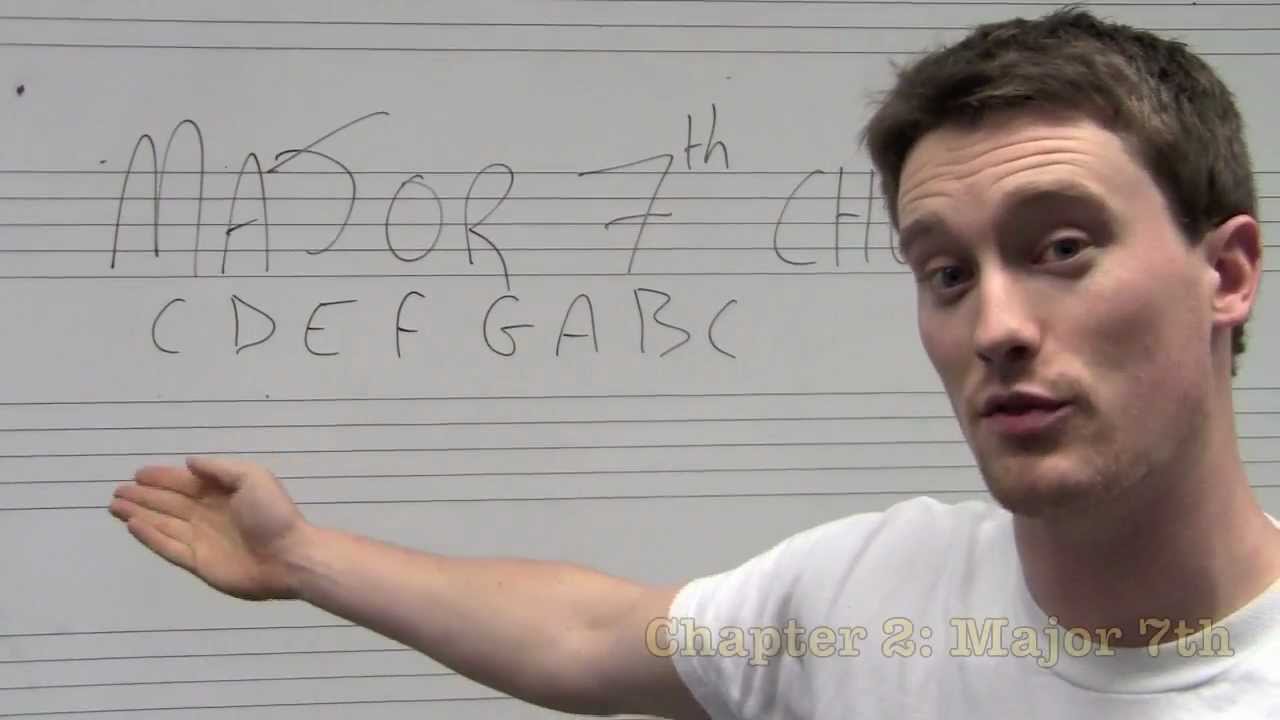
So to make this I basically construct the C major scale and I pick the first, third, fifth and flat and seventh degrees of the scale. Now the most important notes in this uh C dominant uh chord are the third and the seventh, the E and the B flat. And I can kind of retain the character or the color of this chord if I just play these two notes. So I'm going to omit the first and fifth. And what I have here is a trionee. So just let's verify this.
Let's start with E and count up 1 2 3 4 5 6. And I indeed get an E and a B flat.
the third and seventh uh degrees, flat and seventh degrees of the C major scale. Now, I can actually use this voicing to play dominant seventh chords.
It's kind of uh sparse, but it still works. It still retains the main character of the chord. For example, I can play a blues using just this these tritone intervals.
So I was changing chords in the left hand as I was changing trione intervals.
This interval corresponded to C dominant 7. This one corresponded to F dominant 7. To see this, construct the F dominant 7th chord. Omit the first and fifth. Here's your trionee. And now just invert it.
Take this E flat down here. And here's your voicing trionee voicing for F dominant 7. And this here, this F and B is a G dominant 7.
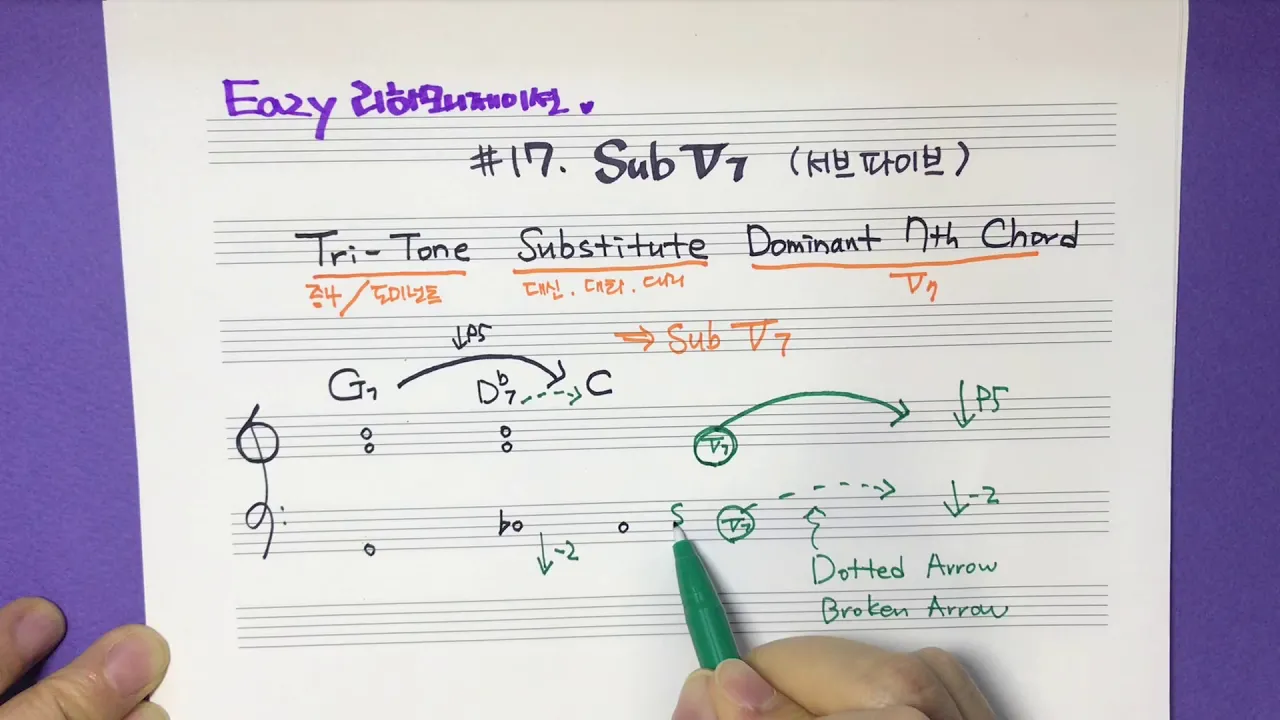
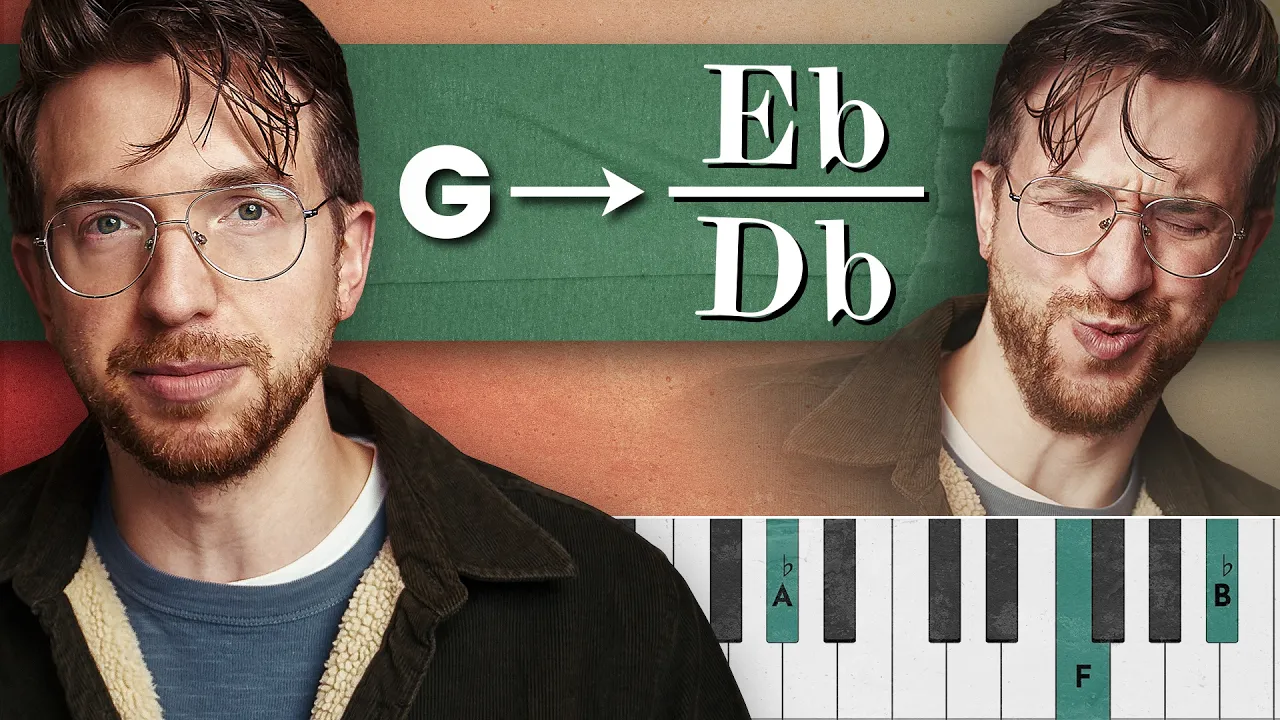
Now let me show you something interesting. Let's take two dominant seventh chords which are a trionee apart. So let's take G dominant 7th which is made out of G B D and F. And let's take a dominant 7th which is a trionee apart. So let's count 1 2 3 4 5 6.
Here's a D flat. So, we're going to construct a D flat uh dominant 7th. So, I have these two chords, the G dominant 7th and the D flat dominant 7th, which are triton apart. Now, I've told you that the main character of the chord is sort of captured by these third and seventh degrees. So, let's see what they are in these two chords. In G, the third is this B and the seventh, the flatt and seventh is this F. And this is the G. Uh, this is basically a G dominant seventh chord.
And for the B flat dominant, sorry, for the D flat dominant 7th, let's take the third and the seventh. Let's omit the first and the fifth. And we get this. Now let's compare them.
G D flat G D flat. They're actually the same. See, here I'm playing a B and an F. And here I'm playing an F and a B. I can invert this one. I can just take this B down an octave. And you'll immediately see that they're the same thing. And this is where the trionee substitution comes from. It's the fact that both G dominant 7th and D flat dominant 7th share uh the two most important chords that let you substitute one for the other. And let me give you a straightforward example. Let's say I'm playing a D minor going to a G going to a C. This is a basic 251 progression. So, I'm going to play this progression as follows. Going to play a D minor 7 to a G dominant 7th to a C major 7. Now, instead of playing this G major, C dominant 7 in D, sorry, instead of playing this G dominant 7th in the middle, I can substitute it. I can switch it out for the trionee or for the dominant 7th which is a trionee away which is the D flat dominant 7th. So instead of playing this I can play something like say this right this is a D dominant 7th just a different voicing for it. I'm playing a D flat in the left hand and then a B, F, um, A flat and B again in the right hand. So instead of sounding like this, it will sound like this. So the substitution adds tension to the progression.
So let me give you two uh musical examples in context that will maybe help you see where triton substitutions come into play. Let's start with a progression with a melody. Uh and we'll use some substitutions in that progression. So I'm going to play it in the key of C as usual to make it a bit easier in those of you who are not fluent in other keys. And it's going to be an E minor going to an A dominant 7th, going to a D minor, going to a G dominant 7th, going to a C. And the melody is going to be something simple. It's going to be um something like this. So put together, the original chord progression would be maybe this.
[Music] Now I'm going to use chord substitutions in two points. First I'm going to change the A or going to substitute a dominant 7th U a triton away. So instead of playing an A dominant 7, I'm going to play an E flat dominant 7th. And instead of playing a G dominant 7th again, I'm going to do a trionee substitution and going to play a D flat dominant 7th. Let's hear Let's hear how this sounds. Uh I'm going to whistle the melody because I want to play the kind of the chords with my hands.
[Music] So, we can I can I can actually play the melody.
[Music] So, personally, I thought the first substitution was a lot better than the second one. So, this worked. This chord here, this um E flat dominant 7th, this one didn't really work as well because there's a clash, a bit too much of a clash in my opinion.
between the melody and the chord might actually work. You might want to change the melody a bit, just a little bit to make it work. So, instead of playing this D here, maybe let's let's play a G.
So, something like [Music] uh and that fits a lot better.
Again, there's a question of whether you're you you're capable of changing the melody. Maybe maybe there's a singer who has practiced a particular melody uh and you can't really change it on the fly, but maybe it's you just soloing and then you can make these changes. So, it's up to you to sort of figure out where uh clashes might occur and then maybe not do a Triton substitution there. Let me give you one more example.
Uh, let's look at soloing. So, let's let's say that you're playing a C going to an F going to back to a C.
Now, I'm not going to substitute the chord G in any way, but instead of playing on the scale of G or maybe a G a uh a G major uh flat and seven scale, so a G dominant scale. Uh let me play or maybe arpeggiate instead. that is solo in the right hand over the chord which is the trionee substitution of G. So instead of thinking of soloing over G, let me solo over D flat. So I'm still going to play it A G. This is my bass chord, but then I might say arpeggiate D flat. So it would sound like this.
[Music] So I thought the arpeggiation sounded really good, you know.
Maybe you don't want to overdo it, but you can definitely play something that's related to G. So start with a C and then sort of go out of scale and arpeggiate a D flat uh and then go back to scale. So you see that the uh trionee substitution actually is useful not only when playing chords but also when soloing on these chords. So when deciding which chords to arpeggiate, which scales to solo on, uh maybe helping you go in and out of scale, uh and do all sorts of more interesting things and just stay on the scale of the chord that you're currently playing. That's it. I hope you've learned something interesting and I'll see you next time.
Up Next
10:57
Every Dominant Chord in Jazz, Explained
@jazzlessonvideos
21.1K views•2023-12-13

10:20
Mozart's Musical Dice Game Explained: History, Rules, & Fun
@webpianoacademy
5K views•2023-03-13

10:53
Mastering Secondary Dominants: Tonicization in Music Theory
@MangoldProject
347.3K views•2022-09-30
10:49
Understanding John Coltrane's Giant Steps: A Music Theory Analysis
@Vox
10.4M views•2018-11-12
Related Study Plans & Knowledge Roadmaps
Structured learning paths in Music Theory
music-theory
Composing Galant Music: Partimento & Schemata
01Foundations of Figured Bass and Keyboard Harmony
02The Rule of the Octave (Regola dell'Ottava)
03Galant Schemata: The Building Blocks of Form
+ 2 more learning modules
30h5 modules
Explore Roadmap
music-theory
Decoding Overtone Series: Tuning & Drone Music
01Acoustic Foundations: The Physics of the Overtone Series
02Tuning Systems: Equal Temperament vs. Just Intonation
03Microtonality and Spectralism: Beyond Standard Pitches
+ 2 more learning modules
24h5 modules
Explore Roadmap
music-theory
Impressionist Harmony: Scales, Planing & RPGs
01Foundational Music Theory: Keys, Intervals, and Seventh Chords
02Impressionist Color: Chord Planing and Parallel Harmony
03Whimsical Textures: Pentatonic Cascades and Whole-Tone Scales
+ 1 more learning modules
14h4 modules
Explore Roadmap
music-theory
Negative Harmony: Axis Reflection in Indie Pop
01Music Theory Foundations: Scales, Intervals, and Triads
02Functional Harmony and the Circle of Fifths
03Demystifying the Negative Harmony Axis Reflection
+ 2 more learning modules
16h5 modules
Explore Roadmap