


![PHILOSOPHY - Language: Gricean Pragmatics [HD]](https://i.ytimg.com/vi_webp/we6uSVf4qss/maxresdefault.webp)







![How I'd Write | It's A Wishful Life | Fairly Oddparents | The Alpha Jay Show [67]](https://i.ytimg.com/vi_webp/JY-4wyOcd34/maxresdefault.webp)






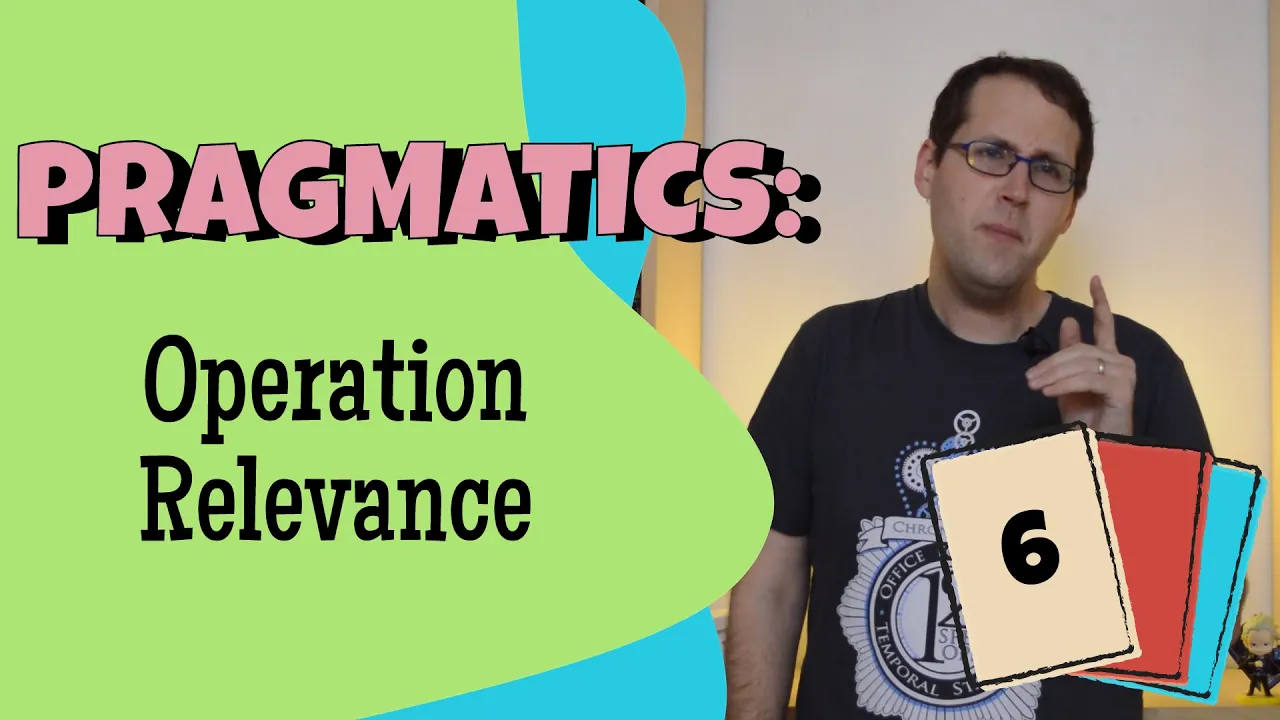

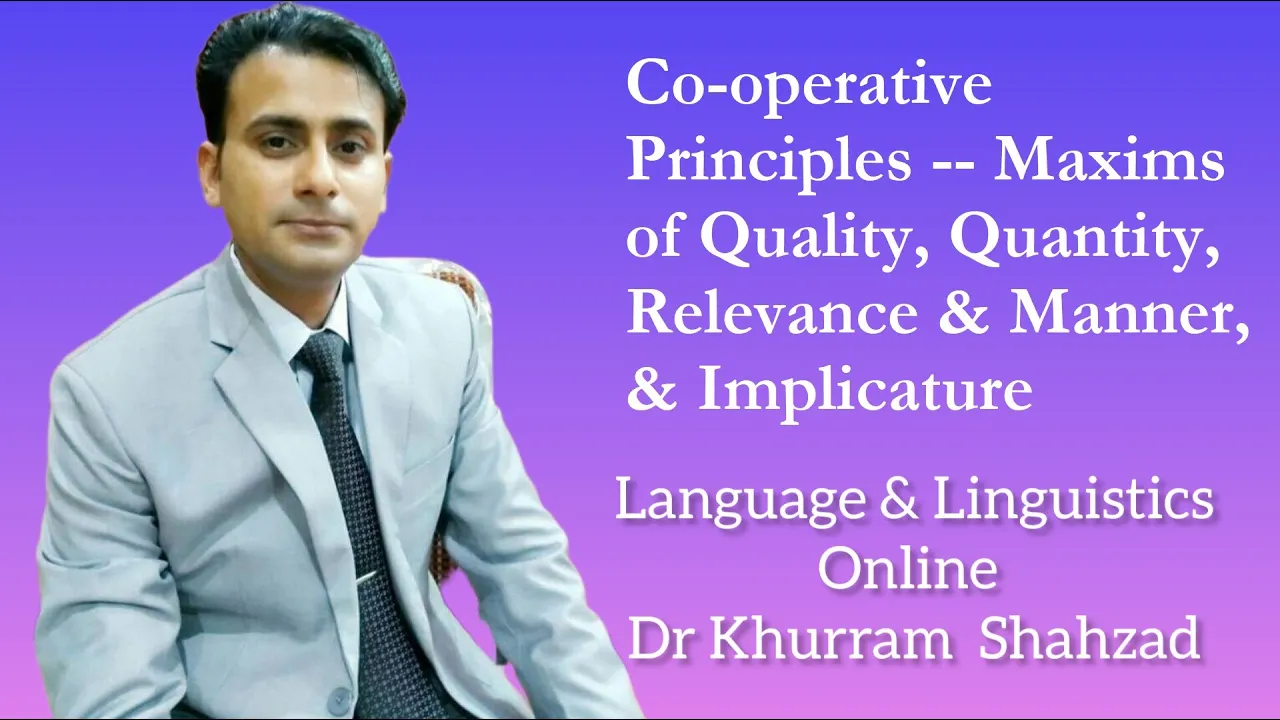
Grice's four maxims—quality (truth-telling), quantity (providing sufficient information), manner (clarity and order), and relation (relevance)—form the foundation of cooperative communication; when characters in 'The Big Bang Theory' deliberately violate these maxims (such as lying about going to the office or using irrelevant information), it creates comedic misunderstandings that demonstrate how breaking these conversational rules affects communication effectiveness.
Grice's Maxims in The Big Bang Theory | Pragmatics Examples
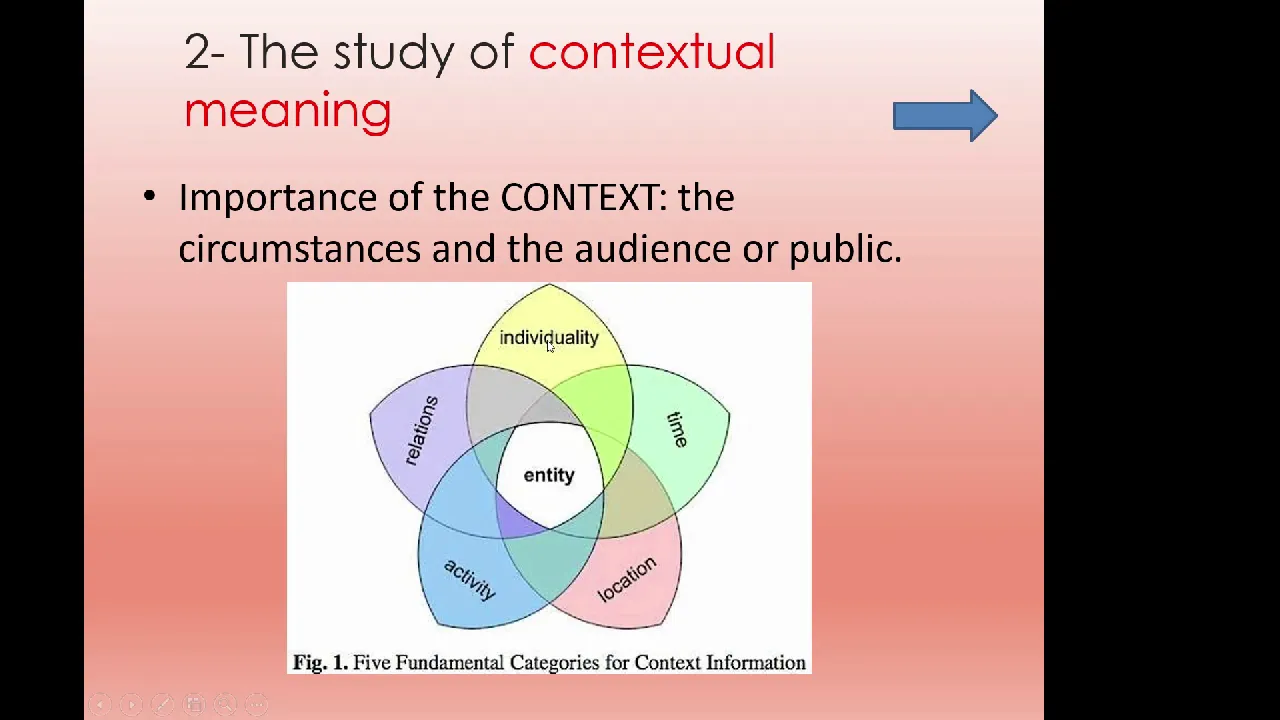
Added:A basic understanding of Pragmatics as a subfield of linguistics that studies how context contributes to meaning.
Paul Grice's Cooperative Principle, which posits that participants in a conversation expect each other to cooperate to achieve mutual understanding.
The conceptual definitions of the four conversational maxims: Quantity (information), Quality (truthfulness), Relation (relevance), and Manner (clarity).
The linguistic distinction between 'violating' a maxim (covertly failing to observe it, like lying) and 'flouting' a maxim (blatantly failing to observe it to prompt an inference).
Deep-dive into Conversational Implicature, focusing on how listeners decode the implicit meanings generated when maxims are flouted.
Analyzing humor, sarcasm, and dramatic irony in media through a pragmatic lens, showing how comedic writing relies on pragmatic failure.
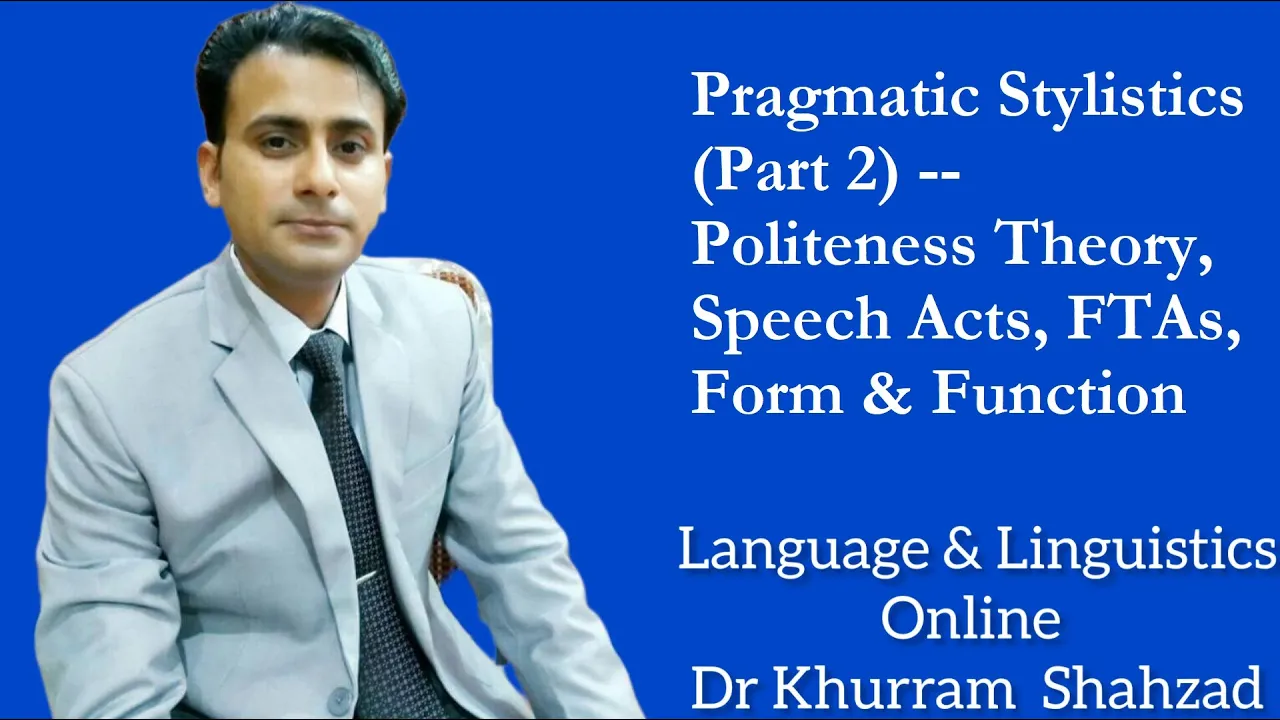
Exploring Brown and Levinson's Politeness Theory to understand how social face-saving needs drive speakers to communicate indirectly and flout maxims.
Introduction to Relevance Theory by Sperber and Wilson, which simplifies Grice's maxims into a single cognitive principle of relevance.
187.5K views1.4Klikes4:42Original Release: 2014-06-16
[Music] So, I was doing some checking on the ring. Hold on, Sheldon. Is that ketchup on the table?
Yes, there is. But here's a fun fact.
Ketchup started out as a general term for sauce, typically made of mushrooms or fish brine with herbs and spices.
Some popular early main ingredients included blueberry, anchovi, oyster, kidney bean, and grape.
No, that's okay. I'll get it.
Leonard, a moment. What if someone, and of course, we don't know who this would be, does ask where you've gone, what should I say? I don't know. always tell him I went to the office. Are you going to the office? No. Well, how can I say it convincingly? Just say Leonard went to the office. All right. Leonard went to the office.
What is No, not like that. Just Leonard went to the office. This would have worked out a lot better if you just told me you were going to the office.
I'm going to the office. See, why don't I believe you?
Doesn't anyone want to know where he's going?
Okay, where is he going? Leonard is going to the office.
[Applause] [Music] Benny, are you experiencing some sort of difficulty? Yes. I can't get my stupid door open. You appear to have put your car key in the door lock. Are you aware of that?
Yeah.
All right, then.
Damn it. Damn it. Damn it. Damn it. Damn it. Damn it. Would it be possible for you to do this a little more quietly?
I can't get the damn key out. That's not surprising. That Baldwin lock on your door uses traditional edgemounted cylinders, whereas the key for your Volkswagen uses a center cylinder system.
Thank you, Sheldon.
You're welcome.
Point of inquiry. Why did you put your car key in the door lock? Why? I'll tell you why. Because today I had an audition. It took me 2 hours to get there. I waited an hour for my turn and before I could even start, they told me I looked too Midwest for the park. Too Midwest? What the hell does that even mean? Well, the American Midwest was mostly settled by Scandinavian and Germanic people.
They have a characteristic facel.
[Music] I want to build a road, but I need wood.
Either of you fellas have wood.
I don't understand the laughter.
The object of settlers of Katan is to build roads and settlements. To do so requires wood. Now I have sheep. I need wood.
Who has wood for my sheep?
Well, where were we? Oh, yeah. Does anyone have any wood?
Come on. I just want wood.
Why are you making it so hard?
And now that I have some wood, I'm going to begin the erection of my settlement.
He's going to be doing this on purpose.
[Music] Now, back to our game. So, you were in the middle of an erection.
Oh, of course. It's right here in my hand.
Up Next
22:00
Writing Subtext in Screenplays: Techniques & Examples
@StudioBinder
653.6K views•2023-04-10

12:54
Triumph of Orthodoxy Icon: Byzantine Art & History Explained
@BenCallan
2.1K views•2024-08-06

9:49
FastAPI vs Flask vs Django: Choosing the Right Python Web Framework
@TechWithTim
302.5K views•2024-05-26

1:42
Game of Thrones Opening Credits: A Cinematic Analysis
@gameofthrones
46.3M views•2011-04-18
Related Study Plans & Knowledge Roadmaps
Structured learning paths in General & Interdisciplinary Studies
general-studies
Elevator Engineering: History, Physics & Cities
01From Hoists to Safety Brakes: The Dawn of Vertical Lift
02Hydraulic vs. Traction: The Engineering Physics of Elevators
03Modern Speed, Safety, and Algorithms
+ 2 more learning modules
12h5 modules
Explore Roadmap
general-studies
Rubber: Material Science, History & Geopolitics
01Origins of Natural Rubber & Mesoamerican History
02The Chemistry of Natural Rubber & Vulcanization
03The Geopolitics of the Rubber Boom & Colonization
+ 2 more learning modules
12h5 modules
Explore Roadmap
general-studies
Containerization: Evolution, Logistics & Trade
01Ancient Trade & Bulk Cargo: Amphorae to Barrels
02The Industrial Revolution & Cardboard Packaging
03The Containerization Revolution: Malcom McLean
+ 2 more learning modules
12h5 modules
Explore Roadmap
general-studies
Textile Tech: Evolution, Labor & Global Impact
01Pre-Industrial Textiles: Handloom & Cottage Industry
02Mechanization: The Spinning Jenny to the Power Loom
03The Factory System & Global Labor Transformation
+ 2 more learning modules
10h5 modules
Explore Roadmap