Digital Acquisitions: Valuation, DD & Financing
Learning Goal: Valuing, conducting due diligence on, and financing the acquisition of an established profitable digital business as an individual buyer.
- Prerequisites: Basic understanding of financial statements (Income Statement, Balance Sheet) and general familiarity with the digital business landscape (SaaS, E-commerce, Content websites).
- Estimated Total Study Time: 18 hours
Module 1: Foundations of Digital Business Models
This module establishes the foundational landscape of digital acquisitions. You will learn to compare the operational overhead, exit multiples, and technical complexities of Software-as-a-Service (SaaS), E-commerce, Content, and Agency business models. This section also explores the strategic thesis of acquiring existing cash-flowing entities (micro-private equity) instead of starting from scratch.

- Why this video: This video introduces SaaS and E-commerce dynamics from an acquisition and exit perspective. It directly addresses the trade-offs of acquiring a technically demanding SaaS asset (which commands high exit multiples) versus an operationally straightforward E-commerce brand (which trades at lower multiples but requires physical supply chain management).
- Knowledge Checkpoint:
- Understand why SaaS companies command higher exit valuations compared to E-commerce brands.
- Identify the technical and skill barriers associated with managing a SaaS product compared to an E-commerce store.

- Why this video: It outlines the mental shift and practical steps required to transition from an employee or startup founder to an acquisition entrepreneur. It emphasizes defining clear buying criteria before reviewing deals.
- Knowledge Checkpoint:
- Articulate the primary advantages of buying an existing profitable digital business over starting one from scratch.
- Draft your own personal buying criteria, specifying limits on your budget, required traffic channels, and niche preferences.

- Why this video: A concise primer on the concept of micro-private equity (micro-PE) for individual buyers, showing how small-scale private equity strategies can be applied to acquisitions in the 100,000 range.
- Knowledge Checkpoint:
- Define the term "micro-private equity" and how it applies to small internet assets.
- Explain how acquiring a cash-flowing asset mitigates the high failure rates associated with early-stage digital startups.
⚠️ Curriculum Note on General Model Comparisons: The available pool lacks a single comprehensive video comparing SaaS, E-commerce, Content, and Agencies in one frame. For an in-depth breakdown of these models, we highly recommend researching: "SaaS vs Ecommerce vs Content vs Agency business models compared" on your search browser.
Module 2: Valuation Frameworks & Financial Metrics
In this module, you will learn how to read digital business financials and apply industry-standard valuation frameworks. You will study how to calculate Seller's Discretionary Earnings (SDE) and EBITDA, analyze the appropriate valuation multiples for different asset classes, and deep dive into essential SaaS unit economics.
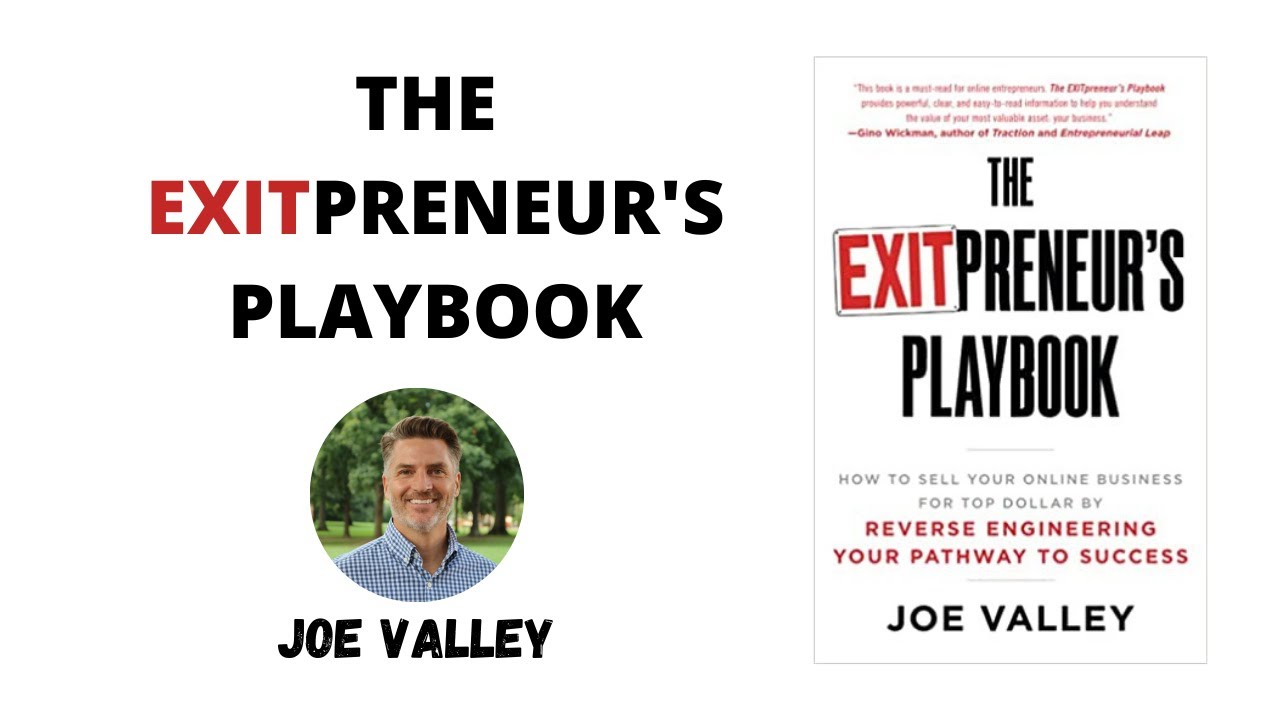
- Why this video: This video introduces the core formula for valuing businesses under $25M: Seller's Discretionary Earnings (SDE). It explains how to normalize net income by applying an "add-back schedule" to uncover the true earning power of an asset for an individual owner-operator.
- Knowledge Checkpoint:
- Define Seller's Discretionary Earnings (SDE) and explain how it differs from raw Net Income.
- Identify common "add-backs" (e.g., owner's salary, personal travel, non-recurring legal fees) used to normalize financials.
- Why this video: Clear differentiation between SDE and EBITDA metrics. Understanding when to apply SDE (usually under 2M in value for owner-operators) and when to use EBITDA (for larger, run-by-management businesses) is essential for negotiating with brokers.
- Knowledge Checkpoint:
- Explain why SDE multiples are typically lower than EBITDA multiples in transaction databases.
- Choose the correct metric (SDE or EBITDA) to apply when analyzing a digital business with $300,000 in annual profit managed by a sole owner.
- Why this video: Provides mathematical depth on the core unit economics of recurring revenue software models. Acquiring a SaaS asset requires validating its underlying health through Customer Acquisition Cost (CAC), Customer Lifetime Value (LTV), and Churn.
- Knowledge Checkpoint:
- Calculate Customer Lifetime Value (LTV) using the formula: .
- Evaluate the financial health of a SaaS business by assessing its LTV:CAC ratio and its CAC Payback Period.

- Why this video: A comprehensive masterclass on implementing real-world calculations of SDE and using industry-specific multiples. It guides you on how to execute a fast financial sanity check on a business listing.
- Knowledge Checkpoint:
- Perform a basic SDE calculation starting from a business tax return.
- Identify which external market risk factors would compress or expand a business's valuation multiple.
Module 3: Sourcing Deals & Marketplace Navigation
This module details how to identify acquisition targets. You will compare public digital marketplaces with private off-market sourcing strategies, learn how to build a proprietary pipeline, and study how to draft compelling outreach to business owners.

- Why this video: Provides a comparative breakdown of the top three online brokerage and marketplace platforms. This helps buyers understand where to look based on budget, risk appetite, and desired level of platform-assisted due diligence.
- Knowledge Checkpoint:
- Compare Flippa, Empire Flippers, and Acquire.com in terms of deal size, quality filtering, and fee structures.
- Determine which platform is best suited for a buyer seeking a vetted SaaS business with a budget of $250,000.

- Why this video: Walks through the actual buyer dashboard of Acquire.com. It teaches you how to register, set filters, view metrics, sign NDAs, and initiate conversations with founders of bootstrapped software companies.
- Knowledge Checkpoint:
- Navigate the Acquire.com dashboard to filter for businesses by revenue, profit, and tech stack.
- Understand the process of signing a digital NDA to unlock private seller profiles and financial metrics.

- Why this video: Compares on-market deals (highly competitive, pre-packaged) with off-market deals (less competitive, direct owner negotiation). Outlines tactical outreach steps to generate proprietary deal flow from owners who haven't listed their businesses for sale.
- Knowledge Checkpoint:
- Define the primary structural differences between "on-market" and "off-market" acquisitions.
- Explain why off-market acquisitions typically offer better terms and lower valuation multiples.

- Why this video: Offers a deep-dive methodology for creating a "referral army" and executing direct outreach campaigns. It provides actionable templates on how to build relationships with local brokers, lawyers, and CPAs to access off-market digital businesses.
- Knowledge Checkpoint:
- Identify key referral sources (CPAs, specialized attorneys, brokers) who can supply warm off-market leads.
- Write a structured outbound email targeting a niche digital business owner that sparks interest without sounding predatory.
Module 4a: Financial Due Diligence & Fraud Detection
This module focuses on verifying the financial health of the target asset. You will study how to identify discrepancies, trace funds, and prevent screenshot/ledger fraud by auditing direct merchant accounts and raw database records.
![How to Verify Stripe Account [2026 Full Guide]](https://i.ytimg.com/vi_webp/ofWwycZw-1Y/maxresdefault.webp)
- Why this video: Teaches you how to navigate a live Stripe merchant account. As a buyer, you must never rely on PDF reports or screenshots; you must require a live screen share or view-only access to verify active processing and merchant account authenticity.
- Knowledge Checkpoint:
- Identify where to look in the Stripe Dashboard to verify if a merchant account is fully active and has completed its identity checks.
- Understand the process of logging directly into the seller's payment processing backend to cross-reference transactions with their Profit & Loss (P&L) statements.

- Why this video: This quick checklist focuses on checking 3 to 5 years of tax returns, matching bank account statements, and auditing customer concentration.
- Knowledge Checkpoint:
- Explain how to cross-examine a seller's internal books against their IRS tax transcripts.
- Define customer concentration risk and state why a single customer representing more than 15% of revenue is a major red flag.
⚠️ Curriculum Note on Financial Fraud Detection: The video pool has limited coverage of the mechanical steps of exporting raw CSV transaction data to trace anomalies and refund rates.
Step-by-Step Fraud Verification Guide:
- Request view-only access to the seller's Stripe/PayPal account.
- Export a full, raw CSV transactions ledger since inception.
- Verify refund rates and chargeback ratios (ratios exceeding 1% indicate poor product quality or payment gateway risk).
- Look for single-day batch transactions of identical values, which could indicate simulated fake sales.
Independent Search Recommendation: Search for "Stripe verification due diligence buying a business" and "how to spot financial ledger fraud during acquisition".
Module 4b: Technical, Traffic, and SEO Due Diligence
This module covers auditing the non-financial infrastructure of a website or application. You will learn how to verify organic search traffic via Google Analytics, audit backlink health using SEO tools, identify technical debt, and check software dependencies.
- Why this video: Focuses on evaluating website viability. It teaches you how to check backlink profiles via professional tools (like Ahrefs) to look for artificial link manipulation and how to analyze the site's structural framework using Wappalyzer.
- Knowledge Checkpoint:
- Audit a target website's backlink health to ensure Domain Rating (DR) is backed by high-quality, relevant links rather than spam networks.
- Use toolkits like Wappalyzer to audit the underlying technology stack of any website before purchase.

- Why this video: Illustrates how GA4 classifies user acquisition. For digital content and e-commerce assets, organic traffic is the lifeblood of the business; buyers must learn how to read GA4 reports to confirm that traffic is genuine and stable.
- Knowledge Checkpoint:
- Navigate to the "Acquisition Overview" and "User Acquisition" reports inside a Google Analytics account.
- Break down website traffic by acquisition channel (organic search, direct, social, referral, email) to confirm channel diversification.

- Why this video: Underlines the warning signs of fraudulent or automated traffic. It teaches you how to compare "Direct" traffic spikes with "Organic Search" trends to determine if a seller is buying artificial hits to pad their analytics.
- Knowledge Checkpoint:
- Identify traffic fraud patterns, specifically looking for abnormally high percentages of direct, un-referred page views.
- Analyze geographic traffic distributions to check if the user base aligns with the monetization model.

- Why this video: Defines "technical debt" in SaaS architectures. When buying software, you are buying the code. If the code is unorganized, undocumented, or heavily patched, you will face high maintenance costs post-purchase.
- Knowledge Checkpoint:
- Define "technical debt" and explain how it affects the valuation of a SaaS asset.
- List two methods for auditing code quality (e.g., assessing documentation, reviewing open-source libraries, and hiring a third-party developer for an architecture audit).
⚠️ Curriculum Note on Technical Codebase Audits: This module has limited coverage of the deep architectural reviews of SaaS code.
Technical Due Diligence Guide:
- Hire an independent software architect to review the repository (GitHub/GitLab).
- Check for dependency vulnerabilities and outdated framework libraries using scanning tools.
- Verify server performance logs and API response times.
Independent Search Recommendation: Search for "SaaS technical due diligence codebase audit" and "how to conduct code audits for software acquisitions".
Module 5: Financing & Structuring the Acquisition
This module details how to pay for your acquisition while minimizing your personal cash requirements. You will study how to qualify for government-backed SBA loans, negotiate seller financing, and structure earnout clauses.

- Why this video: A comprehensive guide on acquiring businesses using SBA 7(a) loans. It breaks down equity injections, post-closing liquidity demands, and personal credit requirements.
- Knowledge Checkpoint:
- List the primary qualification criteria for an SBA 7(a) acquisition loan (e.g., debt service coverage ratio, industry experience, equity down payment).
- Explain how an individual buyer can leverage an SBA loan to finance up to 90% of a business acquisition.

- Why this video: An in-depth structural review of seller "carry-back" financing. It details how seller notes can either serve in first position (replacing banks entirely) or in second position (subordinating to primary bank debt to reduce your out-of-pocket cash).
- Knowledge Checkpoint:
- Explain the mechanics of seller carry-back financing.
- Compare "first position" seller notes with "subordinated second position" seller notes.

- Why this video: Teaches you how to structure earnout clauses. For early-stage software or content businesses where future performance is uncertain, earnouts tie part of the purchase price to actual performance metrics (like active subscriptions or revenue), protecting the buyer from immediate post-sale churn.
- Knowledge Checkpoint:
- Define an "earnout" and provide a scenario where it is the most appropriate financing tool.
- Design an earnout structure that protects you as a buyer if the acquired company’s monthly recurring revenue drops after the sale.

- Why this video: Outlines the "three buckets" deal-structuring model (Closing Payment, Seller Notes, and Inherited Liabilities). This framework helps you bundle different financing tools to negotiate a win-win transaction.
- Knowledge Checkpoint:
- Name the three main components of a structured M&A transaction.
- Explain how inheriting working capital and current liabilities affects the final cash-at-closing requirement.
Module 6: Legal Contracts, Escrow & Asset Migration
The final module covers closing the deal and taking ownership of your new business. You will learn to parse Asset Purchase Agreements (APAs), use Escrow services to protect your funds, and execute a technical transition of hosting accounts, domains, and payment gateways.

- Why this video: Breaks down the essential clauses of an Asset Purchase Agreement (APA). This is the definitive legal document that protects you during the purchase, outlining representations, warranties, and non-compete agreements.
- Knowledge Checkpoint:
- Identify key APA clauses, specifically "Purchase Price Allocation" and "Representations and Warranties."
- Draft a standard non-compete clause to prevent the seller from launching a competing digital asset immediately after sale.

- Why this video: Explains how to use Escrow.com as a neutral third party to manage transaction funds during technical migration. It shows how the inspection period protects the buyer before the money is released to the seller.
- Knowledge Checkpoint:
- Describe the step-by-step escrow flow (from funding, through domain/asset handover, to inspection and release).
- Set up an appropriate "Inspection Period" duration to test the site's live metrics before releasing the funds.

- Why this video: A clear walk-through on transferring Stripe merchant account ownership. Retaining the seller's active Stripe account structure is vital for SaaS and subscription businesses to prevent active users from having to re-enter credit card data.
- Knowledge Checkpoint:
- Update owner profiles and payment options within the Stripe administration panel.
- Complete a legal change of Stripe account ownership without disrupting recurring subscription payments.

- Why this video: Detailed guide on migrating a live WordPress site, along with associated email setups and domain registration records, to a new webhost.
- Knowledge Checkpoint:
- Create complete manual site and database backups using tools like All-in-One WP Migration or WP Vivid.
- Migrate hosting directories, domain nameservers (DNS), and corporate emails safely to your own web hosting accounts.
⚠️ Curriculum Note on Complex AWS/GCP Migrations: This module covers WordPress and standard shared web hosting migrations well. However, if you are acquiring a SaaS built on complex cloud infrastructures like AWS, Heroku, or GCP, these simple methods will not apply.
Cloud Migration Guide:
- Set up an independent AWS/GCP account.
- Have the seller use account-sharing features or invite you as an administrator.
- Remove the seller's root login access and update billing details once access is transferred.
Independent Search Recommendation: Search for "Website migration checklist domain hosting transfer" and "SaaS AWS hosting migration walkthrough".
Course Map
Key People Index
- Codie Sanchez (@CodieSanchezCT) — Founder of Contrarian Thinking. An expert in micro-private equity, deal structuring, and strategies for sourcing off-market business acquisitions.
- Carl Allen (@carlallenofficial) — Renowned dealmaker and M&A specialist. Focuses on leveraged buyouts (LBOs) and structuring transactions using seller notes and assets.
- David Skok — Prominent Venture Capitalist at Matrix Partners. Regarded as a pioneer in SaaS metrics, specializing in unit economics (LTV, CAC, and Churn).
- Joe Valley — Co-owner of Quiet Light Brokerage and author of The EXITpreneur's Playbook. A leading authority on calculating Seller's Discretionary Earnings (SDE).
- Leo Landaverde (@LeoLandaverde) — Certified Business Broker and SBA lending expert. Specializes in helping acquisition entrepreneurs secure SBA 7(a) funding.
Final Self-Assessment
Review this checklist once you have completed all modules. You should be able to check off every item before making an offer on a digital asset:
- I can explain the operational differences and valuation multiples between SaaS, E-commerce, Content, and Agency businesses.
- I can calculate SDE starting from a business tax return and apply an add-back schedule.
- I can calculate LTV, CAC, and Churn rate for any subscription-based SaaS target.
- I can navigate Acquire.com and Flippa, and I have drafted an outreach template for off-market business owners.
- I know how to check a live Stripe merchant dashboard to verify revenue claims and spot potential payment fraud.
- I can use tools like Google Analytics and Ahrefs to identify artificial traffic spikes and verify search engine optimization profiles.
- I understand the requirements for securing an SBA 7(a) acquisition loan.
- I can draft a seller carry-back note and structure an earnout clause based on future performance targets.
- I understand the purpose of crucial Asset Purchase Agreement (APA) clauses, such as Representations and Warranties and Non-Competes.
- I can explain the legal and mechanical process of using Escrow.com to protect my transaction funds.
- I know how to legally and technically transfer ownership of domain names, hosting servers, and payment processing accounts.