FastAPI: Secure APIs & Postgres Migrations
Learning Goal: Mastering the design and implementation of secure RESTful APIs using FastAPI and PostgreSQL database migrations.
- Prerequisites: Basic understanding of programming concepts, logical thinking, and command-line interface (CLI) familiarity.
- Estimated Total Study Time: 35 Hours
Module 1: Foundations of Python & Web APIs
Before building APIs, you must understand the underlying rules of the web and become comfortable with Python programming. This module covers the anatomy of HTTP requests, client-server architectures, and the RESTful standards that dictate modern backends.
Recommended Videos

- Why this video: Establishing a world-class foundation in Python is non-negotiable. This comprehensive course covers fundamental programming constructs (variables, logic, loops, functions) and progresses to advanced concepts necessary for backend development. Use this to solidifying your core Python syntax.

- Why this video: This classic lecture by Harvard Professor David J. Malan breaks down the raw anatomy of an HTTP request and response cycle. It covers DNS, ports, TCP handshakes, and how text-based requests are processed by servers.
- Why this video: A clear visual introduction to the core verbs of the web (GET, POST, PUT, DELETE). It explicitly explains how these verbs allow clients to query and mutate data across networks.

- Why this video: Understand Representational State Transfer (REST) rules, statelessness, and standard HTTP response codes (e.g., 200, 201, 400, 401, 404, 500).
Knowledge Checkpoint
- Write a custom Python script using basic collections (lists, dicts) and control flows.
- Explain the structural difference between an HTTP Request (headers, body, method) and an HTTP Response (status code, headers, body).
- Define statelessness in REST architecture.
- Match HTTP verbs (GET, POST, PUT, DELETE) with their corresponding CRUD database operations.
Module 2: Getting Started with FastAPI and Pydantic
FastAPI has emerged as the modern gold standard for Python web API development due to its execution speed, ease of use, and native validation capabilities. This module introduces FastAPI, compares it against older alternatives, and unpacks the power of Pydantic for data parsing and validation.
Recommended Videos

- Why this video: To appreciate FastAPI, you must understand where it sits in the ecosystem. This architectural comparison details when to choose FastAPI over monolithic Django or minimalist Flask.

- Why this video: A code-along to boot up your first FastAPI instance. It shows how path decorators, automatic OpenAPI docs generation (Swagger), and basic route management are structured out of the box.
- Why this video: FastAPI utilizes Pydantic under the hood for all data parsing and validation. This deep dive teaches you how Pydantic uses Python's typing system to validate inputs, cast variables, raise custom validation errors, and manage schema structures.

- Why this video: This structured walkthrough compiles your knowledge of endpoints, query parameters, request bodies, and validation schemas, putting them into a unified, clean, working microservice architecture.
Knowledge Checkpoint
- Initialize a virtual environment and launch a FastAPI development server using Uvicorn.
- Build path parameters and query parameters inside endpoint signatures.
- Create a Pydantic class to validate incoming POST payloads (with default values, string lengths, and numerical constraints).
- Describe the difference between standard Python standard library
dataclassesand Pydantic models.
Module 3: PostgreSQL and Relational Database Basics
Data serialization is only half the battle; web backends need a persistent storage engine. This module steps away from python runtime models to focus on PostgreSQL, a powerful open-source relational database management system.
Recommended Videos

- Why this video: An entry-level crash course on database architecture, keys, joins, and relationships. It teaches you how to map entity relationships (one-to-many, many-to-many) in relational environments.
- Why this video: Essential theory explaining ACID compliance, foreign keys, transaction rollbacks, and the functional logic of relational constraints.

- Why this video: Hands-on walkthrough for installing PostgreSQL on local machines and interfacing with schemas directly through PgAdmin or the SQL Shell (
psql).
Knowledge Checkpoint
- Spin up a local PostgreSQL service instance and connect with a client (e.g., PgAdmin or CLI).
- Construct a script to create tables with appropriate Primary Keys and Foreign Key relationships.
- Perform standard SELECT, INSERT, UPDATE, and DELETE operations manually via raw SQL queries.
- Define ACID properties and explain why transaction logs matter.
Module 4: Object-Relational Mapping (ORM) and Alembic Migrations
Manually writing raw SQL queries can lead to brittle, hard-to-maintain code. Object-Relational Mappers (ORMs) allow us to treat database rows as standard Python objects. This module introduces SQLAlchemy and provides the foundations for database schema migration control using Alembic.
⚠️ Curriculum Note & Search Prompt Recommendation: There is a known gap in direct, single-video tutorials combining FastAPI, PostgreSQL, SQLAlchemy, and Alembic collectively. To supplement this module, we strongly recommend executing the following query on YouTube: "How to set up Alembic migrations with PostgreSQL and FastAPI" or "FastAPI SQLAlchemy Alembic database migrations tutorial".
Recommended Videos
- Why this video: Bridges the gap between PostgreSQL and FastAPI by integrating SQLAlchemy. It covers standard model declarations, managing session lifecycles via FastAPI dependencies, and writing CRUD routes that interact with Postgres.
- Why this video: Offers a direct, hands-on demonstration of configuring Alembic inside an existing SQLAlchemy-FastAPI repository. You'll learn how to initialize the migration environment, link the declarative base metadata, and autogenerate database upgrade files.
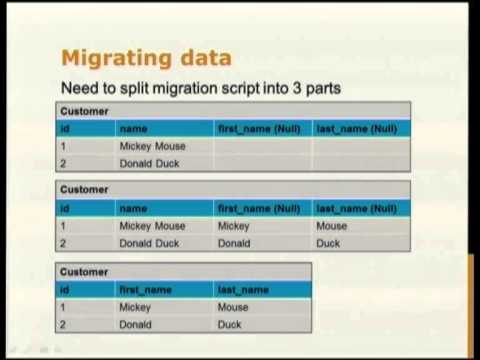
- Why this video: Understand the engineering theory behind code-driven schema evolution. It details why manual database schema modifications fail in collaborative team environments and how Alembic tracks structural states over time.
- Why this video: Learn direct insights on how reflection mechanisms work inside SQLAlchemy and how modern ORM systems parse schema metadata to feed Alembic engines.
Knowledge Checkpoint
- Configure a SQLAlchemy engine, session factory, and a thread-safe database connection session generator (
get_db) to inject into endpoints. - Map Python classes to database models using SQLAlchemy's Declarative Base framework.
- Initialize Alembic (
alembic init) in your project root and modify its configuration file (env.py) to connect dynamic migration files to your SQLAlchemy target metadata. - Generate, review, and apply a database migration script via CLI execution commands (
alembic revision --autogenerate,alembic upgrade head).
Module 5: Securing APIs: Authentication & Authorization
Securing access paths is arguably the most critical requirement for any production REST API. This module covers token-based security workflows, password hashing, and dependency injection to manage fine-grained user authentication.
⚠️ Curriculum Note & Adaptability Challenge: While the primary FastAPI authentication tutorial provided in this module demonstrates robust JWT mechanisms, it uses Tortoise ORM for database management (Video 5). Since this curriculum leverages SQLAlchemy (M4), you must adapt the database queries. Instead of Tortoise's syntax (
await User.get(...)), use SQLAlchemy session methods (e.g.,db.query(User).filter(...)) inside your authentication dependencies.To find direct SQLAlchemy authentication guides, search: "FastAPI JWT Authentication OAuth2 with SQLAlchemy".
Recommended Videos

- Why this video: Introduces the fundamental logic of OAuth2 flows using an illustrative analogy. It contrasts credentials-based authentication with decentralized token verification models and security vulnerabilities like signature manipulation.
- Why this video: Breaks down the code structure of a token endpoint utilizing FastAPI's standard dependency library (
OAuth2PasswordRequestForm). It details password verification, payload signing, and JWT generation processes.

- Why this video: Offers a masterclass on FastAPI security layers, token encoding/decoding logic, extraction helpers, and security exception handling. Use this to construct your core security utility modules, adjusting the ORM logic to SQLAlchemy.
Knowledge Checkpoint
- Implement password hashing and matching utilities using Passlib and CryptContext (Bcrypt).
- Construct custom token generation functions that encode variable claims (sub, exp) using PyJWT/Jose libraries.
- Build a dependency function (
get_current_user) that extracts authorization header strings, decodes and validates JWT signatures, and retrieves matching user entities. - Apply FastAPI's dependencies injection system (
Depends) to secure resource endpoints.
Module 6: Testing, Containerization, and Deployment
Your application is secure and fully integrated with a database. Now, you must learn to test it, containerize the setup, and deploy it to a live production environment.
Recommended Videos

- Why this video: Real developers write automated tests. This tutorial shows how to configure Pytest and use FastAPI’s built-in
TestClientclass to mock endpoint requests and assert response states.
- Why this video: Containers package code and OS environments as one reproducible image. This video outlines the fundamental concepts of containerization and provides instructions on building Dockerfiles.

- Why this video: An end-to-end production deployment guide. It shows how to provision a secure host server, configure a PostgreSQL database instance, use Gunicorn for production load scaling, and route traffic using reverse proxies (Caddy/Nginx).
Knowledge Checkpoint
- Build automated unit and integration tests using Pytest and FastAPI's
TestClient. - Write a Dockerfile containing instruction commands to build, cache dependencies, and spin up an optimized web host container.
- Set up Docker Compose files to link backend services with PostgreSQL databases in isolated networking stacks.
- Configure production processes using WSGI/ASGI proxies (Gunicorn/Uvicorn), and protect public gateways using secure reverse proxies.
Course Map
Key People Index
- David J. Malan (Harvard Professor): Famous educator known for making low-level engineering frameworks (TCP, DNS, HTTP routing architectures) accessible.
- Mike Bayer (Creator of SQLAlchemy): The lead developer behind Python's primary database toolsets. Understanding Bayer's architectural designs clarifies model mappings and Alembic schema tracking.
- Sebastian Ramírez (Creator of FastAPI & SQLModel): The engineer who designed the declarative pathing and dependency injections used to build high-performance Python APIs.
Final Self-Assessment
Complete this comprehensive checkpoint to verify your mastery of the curriculum:
- REST Specifications: Build a multi-resource API conforming to stateless design rules and using appropriate status codes (e.g.,
201 Created,204 No Content,401 Unauthorized). - Pydantic Validation: Construct nested schema representations using Pydantic, enforcing custom data formatting validations.
- Database Interfacing: Establish schema architectures containing active constraints (Primary, Foreign Key, Unique Indexes) on a PostgreSQL engine.
- Session Lifecycles: Configure a secure, context-managed SQLAlchemy session middleware to inject database interfaces into FastAPI route functions.
- Migration Management: Initialize, generate, edit, and apply Alembic migrations to update table structures dynamically without losing existing relational records.
- Security Protocols: Protect active routes with password-hashing models (Bcrypt) and secure token extraction dependencies (OAuth2/JWT).
- Integration Testing: Write a testing suite using Pytest that tests CRUD paths and handles setup/teardown processes.
- Container Isolation: Package the runtime stack into Docker containers, using multi-stage builds and isolated Docker networks to secure local resources.
- Production Readiness: Provision virtual servers, configure reverse proxy layers, and manage application servers (Gunicorn/Uvicorn) with custom logging policies.