Wetlands: Flood Control & Nitrogen Filtration
Learning Goal: Examine the ecological functions of temperate wetlands in flood mitigation and nitrogen filtration, and develop a step-by-step restoration strategy for degraded riparian zones.
- Prerequisites: Basic understanding of biology and earth science concepts (water cycle, basic chemical compounds).
- Estimated Study Time: 14 Hours
Module 1: Introduction to Wetland Ecosystems
This module establishes the foundational definitions, classifications, and historical context of temperate wetlands. You will explore how these transitional ecosystems act as the interface between terrestrial and aquatic environments, and learn to distinguish between the four primary wetland classes: marshes, swamps, bogs, and fens.
Recommended Videos

- Why this video: This video provides a highly visual, concise, and structured breakdown of the four main types of wetlands. It establishes the critical distinguishing criteria—such as vegetation type (grassy vs. woody) and water chemistry (acidic vs. alkaline)—which are essential for all subsequent ecological analysis.

- Why this video: This academic lecture contextualizes the historical paradigm shift in wetland management. It transitions from the 1950s perspective of wetlands as "disease-ridden wastelands" to modern ecological science, explaining the fundamental physical and biological principles that govern these unique ecosystems.
Knowledge Checkpoint
- Define what constitutes a wetland and explain why they are classified as transitional ecosystems.
- Distinguish between marshes, swamps, bogs, and fens based on dominant vegetation and acidity levels.
- Outline the historical trajectory of wetland conservation and the impact of mid-20th-century drainage practices.
Module 2: Hydrology and Flood Mitigation
In this module, you will examine the physical hydrology of wetlands. You will analyze how wetlands function as "natural sponges," regulating river discharge, lowering peak flow velocities, and delaying storm runoffs. You will also learn to read flood hydrographs to evaluate the real-world efficiency of wetlands during extreme precipitation events.
Recommended Videos

- Why this video: This video demonstrates the physical mechanics of wetland hydrology. It explains how microtopography—the physical nooks, crannies, and dense root networks of wetland vegetation—creates friction that slows down rushing water and promotes localized infiltration.

- Why this video: This section of the comprehensive geography review targets the mechanics of storm hydrographs. Understanding "lag time," peak discharge, and the visual difference between "flashy" and "flat" hydrograph curves is vital to understanding how wetlands mitigate downstream flood waves.

- Why this video: This physical laboratory simulation offers an immediate visual model of stormwater retention. By contrasting a channelized, urbanized floodplain model with one containing absorbent material (simulating a natural wetland), you can see the direct impact on runoff rates.
Academic Note on Video Gaps: While these short videos demonstrate the basic principles of water storage and hydrographs, they lack deep mathematical hydrodynamics. To supplement your learning, we highly recommend searching independently for:
- Query: "How wetlands reduce peak river flows hydrology simulation"
- Key Concept to study: Manning's roughness coefficient () and its relation to vegetation density and wetland flow attenuation.
Knowledge Checkpoint
- Explain how microtopography and wetland vegetation physically slow water velocity during flood events.
- Draw and contrast a "flashy" hydrograph (urbanized catchment) with a "flat" hydrograph (wetland-buffered catchment), labeling "lag time."
- Describe how channelization alters stream power compared to natural, vegetated floodplains.
Module 3: Agricultural Runoff and Biogeochemical Denitrification
This module explores the biochemistry of nutrient filtration. You will trace the paths of agricultural runoff containing synthetic nitrogen fertilizers into aquatic systems, and master the microbially-mediated pathways of nitrification and denitrification that convert toxic waterborne compounds into harmless atmospheric gas.
Recommended Videos
- Why this video: This video bridges agriculture and wetland design. It explains "working wetlands" designed specifically to receive farm tile drainage, demonstrating how soil microbes convert dissolved nitrates into nitrogen gas () through the biological process of denitrification.
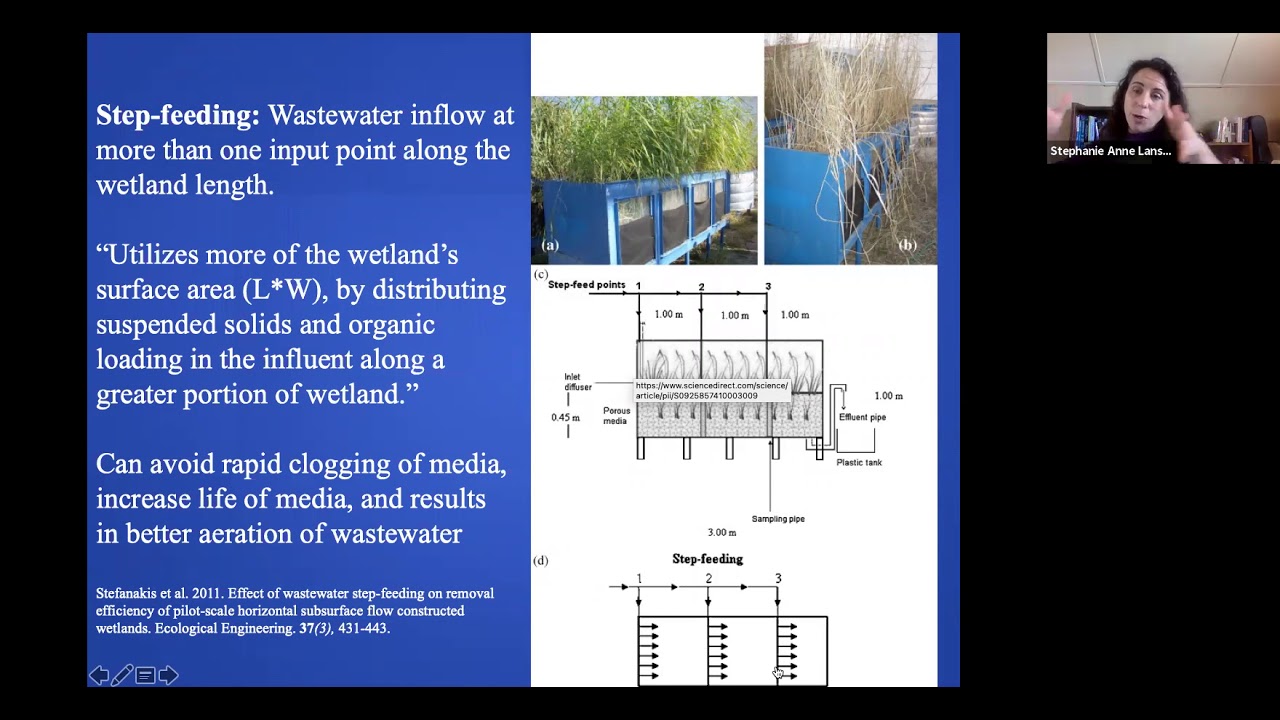
- Why this video: This video introduces a critical limitation in engineered wetland design: conventional loading vs. oxygen availability. It challenges the assumption that wetlands always eliminate 100% of nitrogen, noting that poor oxygenation can limit nitrogen removal capacity to just ~20%.
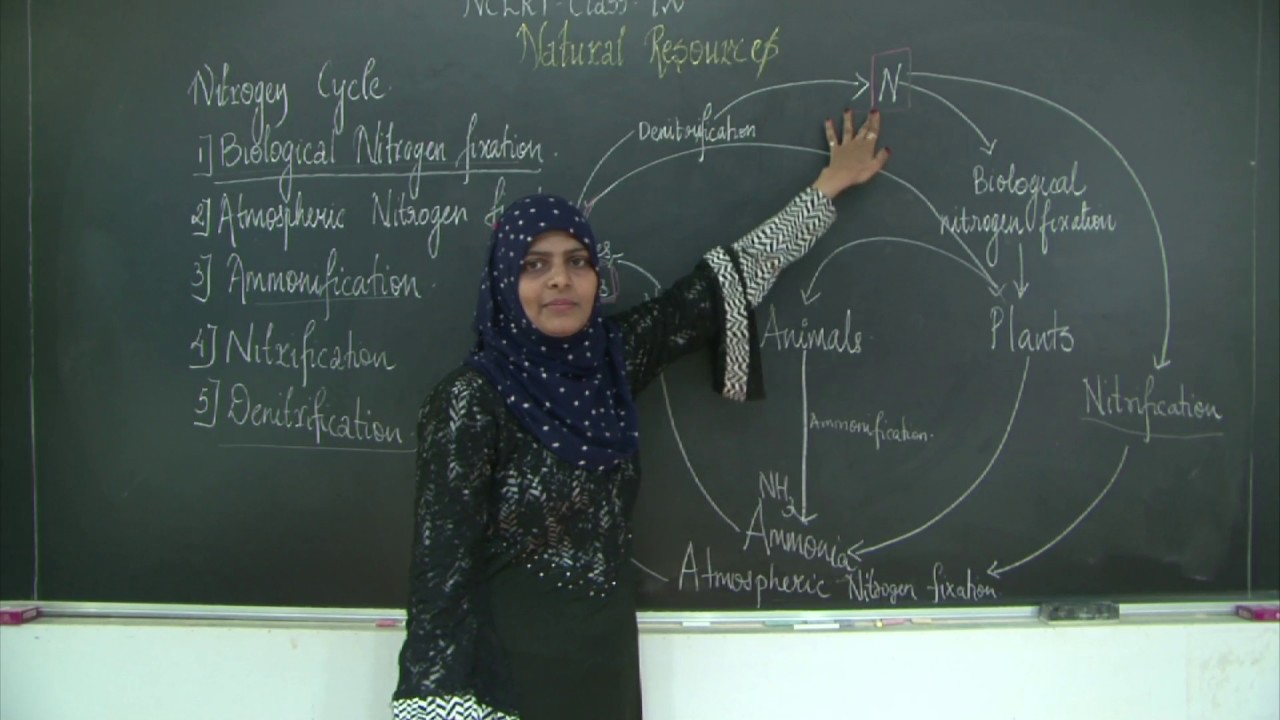
- Why this video: To understand how wetlands process nitrogen, one must first master the biochemical transformation of nitrogen compounds. This academic video details the two-stage biological conversion of toxic ammonia (/) into nitrites () and then nitrates ().
Academic Note on Video Gaps: YouTube content frequently conflates wetland denitrification with home aquarium filtration. For deep, specialized research on agricultural remediation, search independently for:
- Query: "Wetland denitrification pathways agricultural runoff lecture"
- Key Concept to study: The role of anaerobic (hypoxic) organic sediments as electron donors for facultative anaerobic bacteria during denitrification ().
Knowledge Checkpoint
- Diagram the step-by-step chemical transformations of ammonia () into nitrate () and finally into nitrogen gas ().
- Explain why hypoxic (oxygen-depleted) sediments are biochemically required for denitrification to occur.
- Describe the ecological consequences (e.g., eutrophication, algae blooms) when agricultural runoff bypasses natural wetland buffers.
Module 4: Riparian Zones and Ecosystem Degradation
This module explores the ecology of riparian buffers—the strips of vegetation immediately adjacent to flowing waterbodies. You will identify how anthropogenic factors such as agricultural encroachment, channelization, and uncontrolled livestock access disrupt the natural structure of these zones, triggering bank erosion and ecosystem degradation.
Recommended Videos

- Why this video: This video offers an excellent scientific overview of the riparian zone. It details how root systems hold soil particles together, how the canopy regulates stream temperature via shade, and how these zones act as critical terrestrial-aquatic corridors.
- Why this video: This video systematically lists the four primary environmental risk factors that drive riparian degradation: channelization, stream incision (headcuts), bank collapse, and lack of woody vegetation. It details how these factors feed into an erosion loop.
- Why this video: A brief but highly practical look at the impact of heavy livestock (cattle, bison, horses) on riparian banks. It shows how animal hoof shear directly compromises structural bank integrity, leading to channel widening, shallow stream depths, and loss of native vegetation.
Knowledge Checkpoint
- Define the term "riparian zone" and explain why it acts as a unique ecological ecotone.
- List the four key physical risk factors driving riparian degradation and explain the concept of stream incision (channel headcutting).
- Explain how canopy loss in a degraded riparian zone impacts aquatic life through temperature shifts and dissolved oxygen levels.
Module 5: Temperate Riparian Zone Restoration
This final module focuses on active restoration methods. You will learn the practical steps of soil bioengineering, with an emphasis on live staking—the process of using dormant woody cuttings to stabilize eroding streambanks. You will also look at how managing livestock can assist in natural forest regeneration.
Recommended Videos

- Why this video: This video is a comprehensive, highly technical guide to the selection, collection, and installation of live stakes. It covers critical details including identifying dormant wood, cutting angles (angled base, flat top), planting depth, and species selection (willow vs. dogwood).

- Why this video: This video demonstrates field bioengineering techniques using larger wood poles and stinger bars. It provides practical instructions on how to harvest willow and cottonwood poles, explaining the physiological need to reach the summer water table to ensure stake survival.
- Why this video: This video explains soil bioengineering by comparing biological structures (living plant tissue) to hard armoring (rock riprap). It explains how bioengineering designs change over time, growing stronger and more resilient as the plants develop roots.
Academic Note on Video Gaps: While live staking guides are excellent, designing a complete, multi-tiered riparian buffer requires detailed landscape zoning. To bridge this technical gap, search independently for:
- Query: "Temperate riparian buffer zone restoration design plan"
- Key Concept to study: The Three-Zone Riparian Buffer System (Zone 1: Undisturbed Forest, Zone 2: Managed Forest, Zone 3: Runoff Control Grass/Herbaceous strip).
Knowledge Checkpoint
- Describe the complete, step-by-step process of preparing and installing a live stake, including tool selection and insertion depth.
- Explain why biological engineering (using live stakes and vegetation) can offer superior long-term bank stabilization compared to hard structural solutions like concrete or rock riprap.
- Detail how the depth of the water table impacts the required length and planting depth of willow or cottonwood cuttings.
Course Map
This flowchart outlines the recommended sequence of modules and key concepts to guide you through the curriculum.
Key People Index
- Dr. Emily Fairfax (Featured in Beaver Wetlands, Flooding, and Drought): A prominent hydrologist and researcher specializing in the role of beavers in climate-resilience and watershed management. Her work demonstrates how beaver-engineered wetlands mitigate both floods and wildfire damage.
- Mark Shepard (Featured in Water in Abundance): An author and restoration agriculture specialist who champions broadscale permaculture and agroforestry. His work focuses on establishing multifunctional riparian buffers that produce food while protecting local water quality.
Final Self-Assessment
Test your mastery of the curriculum by completing this comprehensive assessment checklist.
- I can define a wetland and classify any temperate wetland into one of the four main types based on its hydrology, water chemistry, and plant life.
- I can explain the physical mechanisms (e.g., surface roughness, microtopography) that allow a wetland to delay peak flood flows.
- I can read, analyze, and construct a storm hydrograph, including calculating the "lag time" between peak precipitation and peak discharge.
- I can write out the chemical equations for both biological nitrification (aerobic) and denitrification (anaerobic) occurring within wetland soils.
- I can describe the biochemical conditions (such as dissolved oxygen levels and organic carbon availability) required for microbes to convert nitrate () to nitrogen gas ().
- I can explain the physical and biological functions of a riparian buffer zone, including stream shading, bank stabilization, and sediment trapping.
- I can list and detail the four primary human-caused drivers of riparian zone degradation.
- I can design a three-tiered riparian buffer zone plan, choosing appropriate vegetation (grasses, shrubs, trees) for each zone.
- I can explain the complete step-by-step process of selecting, harvesting, storing, and planting live willow stakes to stabilize a vertical, eroding bank.
- I can evaluate a degraded streambank site and determine whether biological soil bioengineering or hard armoring is the most appropriate restoration approach.