Fair Use: Copyright Law for Creators
Learning Goal: Mastering the doctrine of Fair Use in US Copyright Law to legally use third-party media in digital content creation.
- Prerequisites: None (No prior legal knowledge required, though basic familiarity with online publishing or content creation is helpful).
- Estimated Total Study Time: 12 Hours
Module 1: Foundations of Copyright Law
This module introduces the conceptual foundations of intellectual property law. You will explore what copyright is, how it is acquired, and the baseline exclusive rights granted to a creator before examining any exceptions or limitations.
Why this video
This video provides an excellent high-level overview of the distinctions between intellectual property types (copyrights, patents, and trademarks). It establishes the fundamental economic and philosophical reasons why governments grant creators exclusive rights over nonphysical works.
Knowledge Checkpoint
- Understand the core difference between a copyright, a patent, and a trademark.
- Identify the limits of copyright protection (e.g., idea vs. expression dichotomy).
- Understand the basic historical and utilitarian incentives behind IP law.

Why this video
This comprehensive, academic lecture from MIT OpenCourseWare grounds your understanding in the legal frameworks of copyright law. It traces the U.S. constitutional basis (Article I, Section 8, Clause 8) and explains the state-enforced, limited exclusive monopolies granted to copyright owners.
Knowledge Checkpoint
- Recall the constitutional clause that empowers Congress to establish copyright.
- Understand how copyright promotes the "progress of science and useful arts."
- Distinguish between biological authors, corporate authors, and work-for-hire frameworks.
![Copyright Law for Artists [Scribble Kibble #11]](https://i.ytimg.com/vi_webp/s_rQsiwQOMw/maxresdefault.webp)
Why this video
This video explains the immediate, practical legal reality for creators: copyright protection is automatic. Thanks to the Berne Convention, creators do not need to register paperwork to secure basic protection over their original art, music, videos, or writing.
Knowledge Checkpoint
- Explain how and when a copyright is legally acquired (creation and fixation in a tangible medium).
- Define the scope of international protection governed by the Berne Convention.
- Identify why registration, while not required for basic ownership, remains crucial for filing infringement lawsuits in federal court.
Module 2: The Four Factors of Fair Use
This module breaks down the fair use defense under 17 U.S.C. § 107. You will learn to perform a balanced, multi-factor analysis to evaluate whether a specific use of copyrighted material qualifies as fair or constitutes infringement.
Correction Note: To ensure rigorous academic standards, search queries targeting "Tom Scott" were refined to filter out parody "YouTube Poop" and meme videos (such as Video 32, 35, and 68). Instead, we utilize direct educational legal sources.
Why this video
This video from the United States Copyright Office provides the definitive introduction to the legal exceptions of copyright. It details the case-by-case nature of fair use and introduces the four statutory factors.
Knowledge Checkpoint
- List the four statutory factors of fair use in order.
- Understand that fair use is a defense evaluated on a case-by-case basis rather than an absolute rule.
- Distinguish between the basic legal definitions of the first two factors: purpose of the use and nature of the work.

Why this video
Legal experts from Stanford's Center for Internet and Society explain the interrelationship of the four factors. They discuss how courts weigh the factors holistically rather than treating them as a simple mechanical checklist.
Knowledge Checkpoint
- Explain how Factor 1 (purpose and character of use) balances commercial vs. non-commercial and transformative intents.
- Describe how Factor 3 (amount and substantiality) examines not just the quantity used, but whether the user took the "heart of the work."
- Evaluate Factor 4 (effect on the market) to see if the new work acts as a market substitute for the original.
Why this video
Produced by YouTube, this video bridges the gap between academic copyright law and the realities of digital publishing. It provides an essential guide to the platform's standard for analyzing fair use claims in everyday media creation.
Knowledge Checkpoint
- Define what a "transformative" use means within the context of video and audio editing.
- Explain why adding commentary or criticism dramatically improves the likelihood of a successful fair use defense.
- Identify common creator myths about fair use (e.g., "crediting the owner prevents copyright claims").
Module 3: Transformative Use & Landmark Court Cases
This module explores the development of "transformative use" through key judicial precedents. You will analyze how courts have evaluated parodies and commercial art to define the boundaries of transformative expression.

Why this video
This video bridges a critical pedagogical gap identified in the review feedback: the foundational landmark Supreme Court case Campbell v. Acuff-Rose (1994). It details how the rap group 2 Live Crew's parody of Roy Orbison’s "Oh, Pretty Woman" established that a commercial parody can be fair use, rejecting the lower court's presumption that commercial intent automatically defeats a fair use defense.
Knowledge Checkpoint
- Explain how Campbell v. Acuff-Rose defined the legal distinction between "parody" (which targets the original work for critique) and "satire" (which uses the original to critique something else).
- Describe how the Supreme Court analyzed Factor 3 (amount and substantiality) regarding the "heart of the work" in parody contexts.
- Summarize how this case solidified "transformative use" as a central component of Factor 1.
![What is Fair Use After the Warhol Case? [RTP Explainer]](https://i.ytimg.com/vi/WD36B2uHUQU/maxresdefault.jpg)
Why this video
This explainer breaks down the recent, highly influential Supreme Court case Andy Warhol Foundation for the Visual Arts, Inc. v. Goldsmith (2023). It examines how Warhol’s unauthorized prints of Lynn Goldsmith's photograph of Prince failed the fair use test, focusing on the commercial licensing market for the derivative work.
Knowledge Checkpoint
- Explain the court's reasoning behind finding Warhol's commercial licensing of the work to be non-transformative.
- Identify how the Warhol decision shifts the legal landscape regarding commercial secondary licensing markets.
- Contrast the Warhol case with the Campbell parody standard.

Why this video
This case-study analysis explores the legal victory of Carl Benjamin (Sargon of Akkad) over Akilah Hughes. It is a critical modern precedent demonstrating how US federal courts apply fair use specifically to internet "reaction" and political commentary videos.
Knowledge Checkpoint
- Define how editing and restructuring original clips to create critical commentary qualifies as transformative.
- Explain why the court ruled that the critique did not serve as a market substitute for the original video.
- Identify the elements of video essay structure that help secure legal protection in court.
Module 4: Platform Mechanics: DMCA, Content ID & Disputes
This module transitions from theoretical court precedents to practical digital publishing environments. You will learn the mechanics of automated rights detection and how to handle formal legal notices.

Why this video
This video explains how YouTube's automated Content ID system scans uploaded media against a massive database of audio and video reference files to flag potential copyright matches.
Knowledge Checkpoint
- Explain the difference between an automated Content ID claim (managed by the platform) and a formal DMCA takedown notice (governed by federal law).
- Describe the three default actions a copyright holder can set when Content ID flags a match (block, monetize, or track).
- Understand that Content ID matches do not automatically result in account "strikes."

Why this video
Host Devin Stone, a practicing attorney, breaks down the requirements for a legally valid Digital Millennium Copyright Act (DMCA) takedown notice. He details the step-by-step process of disputing illegitimate or erroneous claims on platform interfaces.
Knowledge Checkpoint
- Identify the statutory elements required in a valid DMCA takedown notice under Section 512.
- Map the timeline of a DMCA dispute: claim, dispute, appeal, counter-notification, and federal lawsuit.
- Explain the legal and financial risks associated with submitting bad-faith counter-notices.

Why this video
Using a real-world dispute between YouTube channel MxR Plays and Jukin Media, attorney Richard Hoeg examines how licensing companies monetize and enforce copyrights. The video highlights how the landmark Lenz v. Universal Music Corp. (the "dancing baby" case) requires rights holders to consider fair use before issuing a takedown.
Knowledge Checkpoint
- Understand the holding of Lenz v. Universal Music Corp. regarding the mandatory consideration of fair use prior to issuing a DMCA notice.
- Describe how licensing aggregators acquire viral clips and enforce their ownership online.
- Identify negotiation and legal strategies for independent creators facing potential copyright litigation.
Module 5: Safe Sourcing: Public Domain & Licensing Alternatives
This final module focuses on defensive content creation. You will learn to use Creative Commons structures, source public domain assets, and evaluate the copyright status of historical materials to eliminate risk.

Why this video
This animated guide explains the modular structure of Creative Commons (CC) licensing. It details how creators can use CC-licensed media to safely construct new works while complying with specific, standardized licensing conditions.
Knowledge Checkpoint
- Decode and define the CC licensing conditions: Attribution (BY), ShareAlike (SA), NonCommercial (NC), and NoDerivatives (ND).
- Explain why a NoDerivatives (ND) license generally prevents the use of a work within a video edit or remix.
- Locate and identify Creative Commons licensing tags on platform databases.
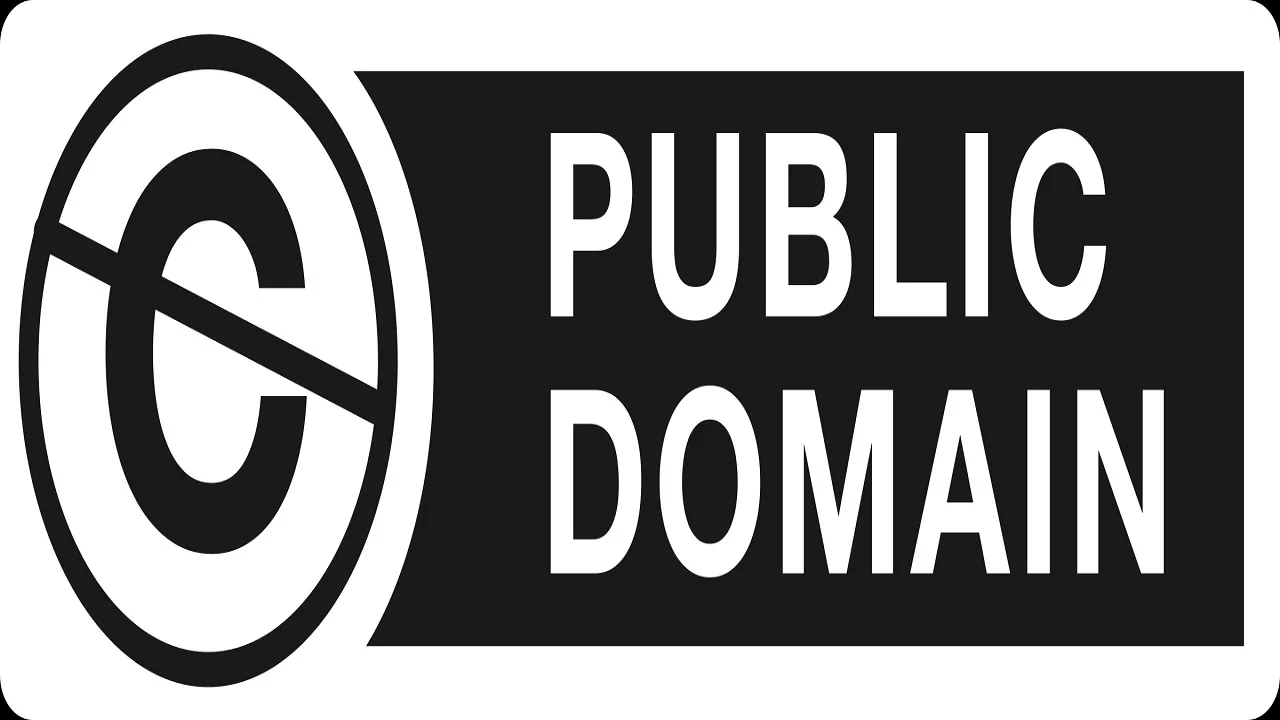
Why this video
This introductory lecture defines the "Public Domain" — the body of creative work that is free of copyright restrictions. It explains the major routes through which media enters the public domain, such as expiration or deliberate waiver.
Knowledge Checkpoint
- Define the term "Public Domain" and explain why these works do not require royalty payments or licensing permissions.
- List the primary reasons a work enters the public domain (expiration of copyright term, failure to renew under historical laws, or government creation).
- Differentiate between a CC0 waiver and standard Creative Commons licenses.
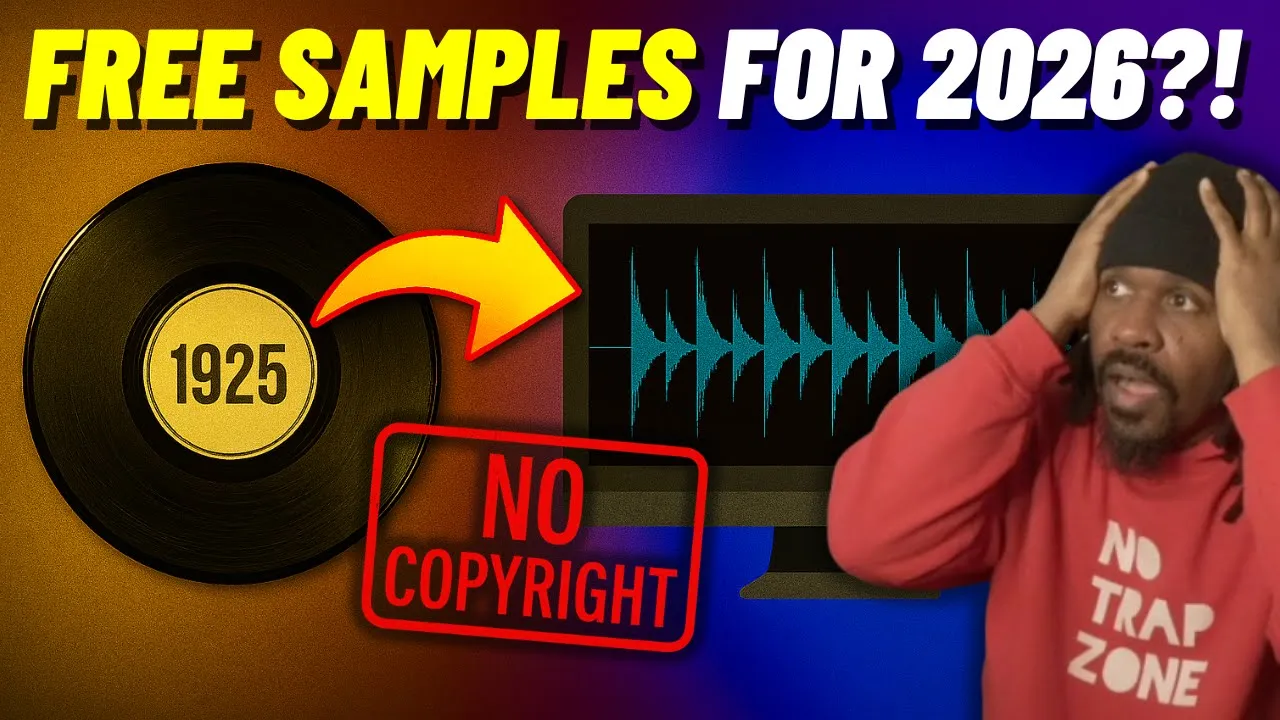
Why this video
This practical demonstration shows how to search the Internet Archive to find public domain musical assets and recordings. It models safe sourcing techniques for digital creators.
Knowledge Checkpoint
- Navigate the Internet Archive using advanced search filters (date, media type, and licensing tags).
- Safely verify the release metadata of historical media assets before utilizing them in video productions.
- Distinguish between the copyright of a musical composition (the sheet music) and the sound recording (the performance) when sourcing historical tracks.
⚠️ Pedagogical Gap Warning: Verifying 20th-Century Works
While the recommended videos cover basic rules, they do not explain how to verify the public domain status of complex 20th-century works (e.g., works published between 1928 and 1978).
To legally verify if a 20th-century work has entered the public domain, you must evaluate three variables:
- Publication without notice: Before 1989, publishing a work without a proper copyright notice (
© [Year] [Author]) could invalidate copyright. - Failure to renew: Works published before 1964 required a renewal filing with the US Copyright Office in their 28th year. If not renewed, they entered the public domain.
- The 95-Year Rule: Under current US law, works published with proper notice and renewal between 1928 and 1978 remain copyrighted for 95 years from their publication date.
To master this complex verification process, search independently for the "Cornell Public Domain Chart" or look up "How to determine if work is in the public domain flowchart."
Course Map
This map outlines the ideal learning path and module dependencies for this curriculum:
Key People Index
- Aaron Swartz (1986–2013): A computer programmer, writer, and political activist who helped build the technical architecture for the Creative Commons licensing system, working alongside legal scholar Lawrence Lessig.
- Andy Warhol (1928–1987): Pop artist whose estate was at the center of the landmark Supreme Court case Andy Warhol Foundation v. Goldsmith (2023), which narrowed the legal definition of transformative use for commercial licensing.
- Lynn Goldsmith (b. 1948): Pioneering rock photographer who successfully challenged the Andy Warhol Foundation in the Supreme Court to protect her original photographic portraits from unauthorized commercial derivative licensing.
- Justice David Souter (b. 1939): Associate Justice of the U.S. Supreme Court who authored the unanimous opinion in Campbell v. Acuff-Rose Music, Inc. (1994), establishing that commercial parodies can qualify as fair use.
Final Self-Assessment
Complete this comprehensive self-assessment checklist before using third-party media in your commercial digital productions:
- Fixation Verification: Can I explain how copyright attaches to my own work automatically, and do I understand the benefits of registering it with the US Copyright Office?
- First Factor Analysis: Is the purpose of my use highly transformative (adding criticism, parody, or commentary) rather than simply decorative or a direct re-upload?
- Second Factor Analysis: Am I using factual/published source material (which favors fair use) rather than highly creative/unpublished works?
- Third Factor Analysis: Have I limited my use of third-party clips to only the duration necessary to make my point, avoiding the "heart of the work"?
- Fourth Factor Analysis: Does my video avoid competing in the same market or acting as a direct replacement for the original work?
- Transformative Legal Precedents: Can I distinguish how the Supreme Court ruled differently in Campbell v. Acuff-Rose (protecting transformative parody) compared to Warhol v. Goldsmith (restricting unauthorized commercial derivative licensing)?
- DMCA Dispute Readiness: Do I know how to file a formal counter-notice on YouTube under DMCA Section 512, and am I prepared for the legal liability of doing so?
- Content ID Mechanics: Can I explain why a Content ID claim is not a copyright strike, and do I know how to use YouTube's built-in tools to resolve automated claims?
- Creative Commons Evaluation: Can I identify the meaning of BY, NC, SA, and ND icons and verify that my editing process complies with those licensing terms?
- Public Domain Verification: Can I apply the 95-year rule, notice requirements, and renewal laws to verify if a historical 20th-century media asset is safely in the public domain?