Digital Epistemology: Truth, Trust & Deepfakes
Learning Goal: Analyze the epistemic challenges of the digital information ecosystem, focusing on the distinction between echo chambers and epistemic bubbles, the impact of deepfakes on testimonial trust, and the application of virtue epistemology to online discourse.
- Prerequisites: None (An open mind and a willing engagement with critical thinking are highly recommended).
- Estimated Total Study Time: 12 Hours
Module 1: Foundations of Epistemology and the Digital Age
This module introduces you to the classic study of epistemology—the philosophical branch investigating the nature, origins, and limits of knowledge. Before diving into the dysfunctions of the internet, we must build a baseline understanding of how human beings process belief, validation, and testimonial trust. You will learn the classic "Justified True Belief" framework and explore how the digital age has democratized media but destroyed the institutional gatekeepers of facts, throwing society into a systemic epistemic crisis.
Recommended Videos
![PHILOSOPHY - Epistemology: Introduction to Theory of Knowledge [HD]](https://i.ytimg.com/vi_webp/r_Y3utIeTPg/maxresdefault.webp)
Why this video: This highly visual and accessible introductory animation establishes why humans naturally crave knowledge and spend massive efforts attempting to acquire it. It defines the core questions of epistemology and explains why defining "what is real" is far more complex than it initially appears.
Knowledge Checkpoint:
- Understand the linguistic origin and philosophical definition of the term epistemology.
- Distinguish between merely possessing a belief and holding actual, verifiable knowledge.

Why this video: This lecture dives deep into foundational definitions. It introduces the three fundamental questions of epistemology (What is knowledge? How do we acquire it? How do we justify it?) and walks you through the classical Justified True Belief (JTB) framework.
Knowledge Checkpoint:
- Define the three conditions of the JTB (Justified True Belief) model of knowledge.
- Explain how justification acts as the critical bridge separating lucky guesses from genuine knowledge.
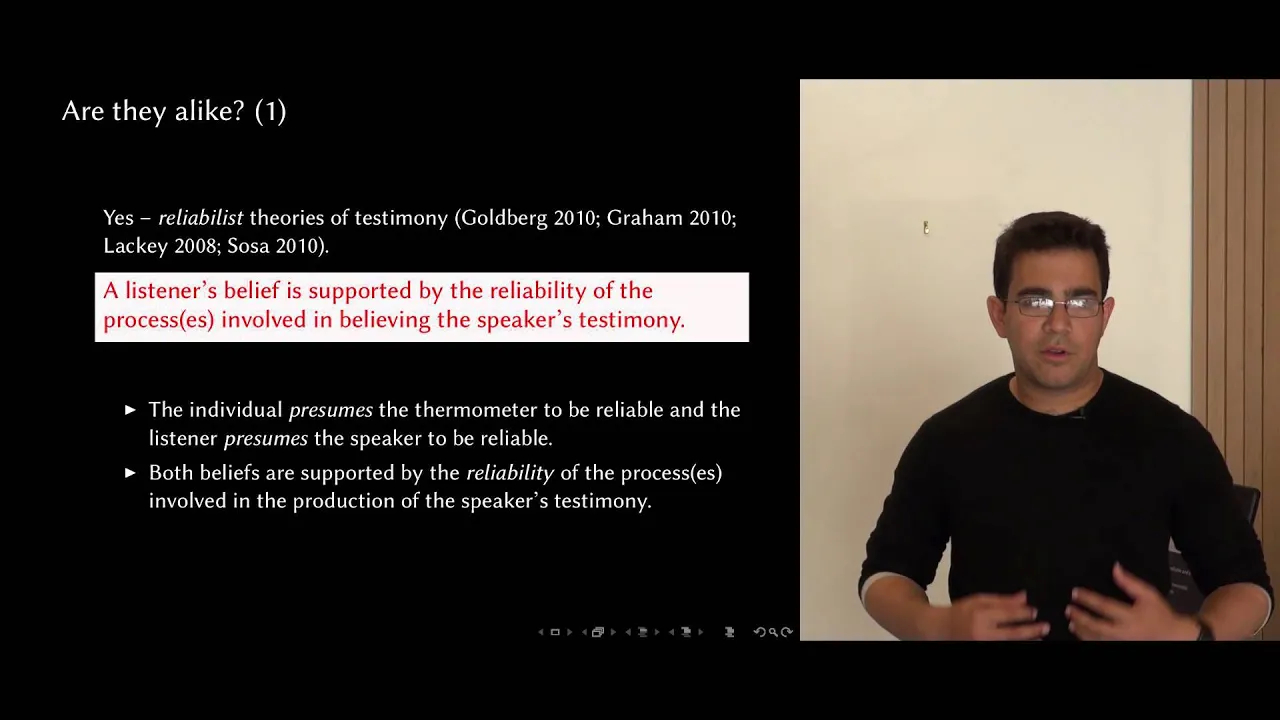
Why this video: The vast majority of what you know is based on what other people have told you. This rigorous university lecture explains the epistemology of testimony—how we evaluate claims from others, the theoretical clash between reductionists and non-reductionists, and why digital spaces stretch testimonial trust to its breaking point.
Knowledge Checkpoint:
- Articulate the core difference between the Reductionist and Non-Reductionist approaches to testimonial knowledge.
- Identify how social positioning and systemic credibility assessments impact whether we accept testimony.

Why this video: This short discussion frames the actual "epistemic crisis" of our modern era. It highlights how the erosion of institutional gatekeepers—such as centralized newspapers and academic journals—has left individuals to filter the immense deluge of digital information entirely on their own, often with polarizing results.
Knowledge Checkpoint:
- Explain the structural changes in the media landscape that led to the collapse of traditional gatekeeping.
- Analyze why a collapse in shared authoritative sources triggers a systemic crisis of truth.
Module 2: Epistemic Bubbles vs. Echo Chambers
While the terms "epistemic bubble" and "echo chamber" are frequently used interchangeably in mainstream media, they represent fundamentally different structural hazards. Using the philosophical work of C. Thi Nguyen, this module untangles these two concepts. You will learn how algorithmic filter bubbles omit opposing views accidentally (an informational challenge), whereas echo chambers systematically discredit outside voices intentionally (a trust challenge).
Recommended Videos
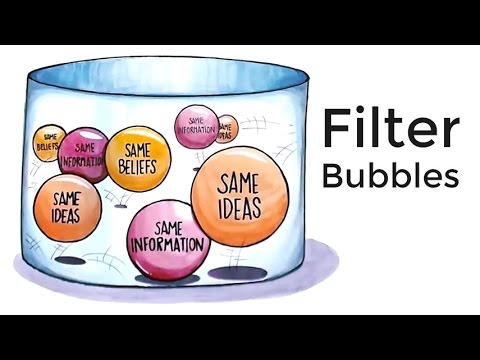
Why this video: This fast-paced animated explainer introduces how algorithms dynamically alter your search results and social media feeds. It serves as an accessible entry point to understanding how personalized digital curation builds artificial cognitive environments without your explicit consent.
Knowledge Checkpoint:
- Describe how algorithmic sorting (based on likes, clicks, and dwell time) automates the creation of a "filter bubble."
- Identify the consequences of only being fed information that aligns with your pre-existing behavior.

Why this video: This is the core philosophical pillar of the module. Academic philosopher Victor Gijsbers unpacks C. Thi Nguyen's groundbreaking paper. He carefully explains why an epistemic bubble is merely a bubble of exclusion, while an echo chamber is a fortress of discredit—rendering its members immune to outside evidence.
Knowledge Checkpoint:
- Contrast an "epistemic bubble" (omission of information) with an "echo chamber" (systemic manipulation of credibility and trust).
- Explain why popping an epistemic bubble is easy (expose them to the missing facts), while escaping an echo chamber requires rebuilding trust from the ground up.
- Define the mechanism of "discrediting outsiders" and how it turns opposing evidence into confirmation bias.
Why this video: This video provides a concise overview of the sociological and cognitive consequences of echo chambers. It details how echo chambers paralyze public discourse and make constructive debate functionally impossible by segregating moral and empirical realities.
Knowledge Checkpoint:
- Understand why exposing someone in an echo chamber to contradictory facts often causes them to double down on their original belief (the backfire effect).
- Articulate how modern digital discourse fails when individuals exist in incompatible truth ecosystems.
Module 3: Deepfakes and the Erosion of Testimonial Trust
As artificial intelligence advances, the line between authentic visual capture and synthetic manipulation blurs. Historically, video and photography held strong "testimonial weight" (we trusted them as direct reflections of reality). This module analyzes how deepfakes threaten our fundamental reliance on visual testimony, leading to the devastating "Liar's Dividend"—a phenomenon where real events can be easily denied by claiming they are merely deepfakes.
Recommended Videos

Why this video: This investigative video demonstrates the actual creation of a high-quality deepfake. Journalist Johnny Harris visually explains the technology (Generative Adversarial Networks) and highlights how easily facial mapping and voice cloning can hijack an individual's identity.
Knowledge Checkpoint:
- Explain how Generative Adversarial Networks (GANs) function using a generator and a discriminator.
- Detail the existential shift in digital evidence when authentic voice and facial movements can be synthesized cheaply at scale.
Why this video: This short New York Times opinion piece introduces the most significant sociological threat of synthetic media: the Liar's Dividend. It demonstrates why the ultimate danger of deepfakes is not that we believe lies, but that we stop believing the truth.
Knowledge Checkpoint:
- Define the term Liar's Dividend.
- Analyze how corrupt figures can exploit the widespread public awareness of deepfakes to discredit genuine photographic or video evidence of their wrongdoing.

Why this video: Featuring policy experts on prime-time news, this clip outlines the real-world political dangers of the Liar's Dividend. When the general public cannot reliably distinguish synthesized videos from actual footage, public confidence in elections, journalism, and basic democracy rapidly decays.
Knowledge Checkpoint:
- Identify the threat that synthetic media poses to election security and political campaigning.
- Describe how the democratization of manipulation software changes the burden of proof in the public sphere.
Module 4: Virtue Epistemology and Online Discourse
Structural fixes and media literacy algorithms are insufficient on their own to salvage our digital ecosystem. We must cultivate personal intellectual character. This module introduces virtue epistemology—a normative branch of philosophy that evaluates knowledge based on the intellectual character traits of the thinker. You will explore how cultivating virtues such as intellectual humility, epistemic open-mindedness, and curiosity is our best individual defense against online manipulation and polarization.
Recommended Videos
![PHILOSOPHY - Epistemology: Virtue Epistemology [HD]](https://i.ytimg.com/vi_webp/x2kLOisfkPw/maxresdefault.webp)
Why this video: An outstanding, comprehensive lecture explaining the transition from traditional epistemology to virtue epistemology. It shifts the analytical lens from "how a single belief is justified" to "evaluating the character, habits, and motivations of the person seeking the truth."
Knowledge Checkpoint:
- Distinguish between traditional epistemology (focusing on propositional analysis) and virtue epistemology (focusing on agent evaluation).
- Define an intellectual virtue (e.g., thoroughness, intellectual humility) and contrast it with an intellectual vice (e.g., closed-mindedness, cognitive laziness).
- Explain how virtue responsibilism argues that we are morally and intellectually accountable for our cognitive habits.

Why this video: This highly personal reflection on leaving dogmatic religious structures serves as an outstanding, down-to-earth example of intellectual humility. It details how embracing the phrase "I don't know" serves as a foundational step toward genuine intellectual growth and improved empathy.
Knowledge Checkpoint:
- Define intellectual humility as a deliberate recognition of the limits of your own knowledge.
- Explain why letting go of the cognitive drive for absolute certainty can dramatically improve personal interactions and online dialogue.
Why this video: This video introduces the practical application of epistemic humility in internet debates. It explores how we can avoid weaponizing synthesis or cherry-picking perspectives by consciously realizing that "our maps of the world are not the actual territory."
Knowledge Checkpoint:
- Explain the philosophical concept "the map is not the territory."
- Describe a practical cognitive strategy for avoiding bad-faith online arguments and cultivating open-minded curiosity instead.
Course Map
This flowchart outlines the progression of concepts within this curriculum. Foundations must be established before tackling structural and technical anomalies, which ultimately culminate in the personal development of intellectual virtues.
Key People Index
- C. Thi Nguyen: Associate Professor of Philosophy at the University of Utah. He specializes in the philosophy of games, aesthetics, and digital network trust dynamics. He established the critical modern definitions separating echo chambers from epistemic bubbles.
- Tristan Harris: Co-founder of the Center for Humane Technology. Formerly a design ethicist at Google, he works to reform the attention economy and highlight the epistemic dangers of algorithmic personalization.
- Stephanie Lepp: Producer and media artist specializing in "deep reconstructions" and constructive discourse. She designs digital interactions that encourage cognitive flexibility, intellectual accountability, and epistemic humility.
- Robert Audi / Linda Zagzebski: Notable pioneers of contemporary Virtue Epistemology. They helped transition the study of epistemology from proposition-based evaluation to the examination of intellectual character traits (virtues and vices).
Final Self-Assessment
Complete this final checklist after finishing all modules, readings, and recommended videos to verify your conceptual command of digital epistemology.
- 1. Can you define epistemology and identify the three traditional requirements for a belief to qualify as knowledge (JTB)?
- 2. Can you explain why the digital age's destruction of gatekeepers has created an epistemic crisis of authority?
- 3. Can you clearly articulate the difference between an epistemic bubble (exclusion) and an echo chamber (discrediting)?
- 4. Do you understand why merely showing verified facts to someone inside an echo chamber often fails to change their mind?
- 5. Can you outline the basic mechanism of Generative Adversarial Networks (GANs) used to create deepfakes?
- 6. Can you define the "Liar's Dividend" and explain how a public figure can use it to escape accountability?
- 7. Do you understand the difference between standard epistemology and virtue epistemology?
- 8. Can you name at least three intellectual virtues (e.g., intellectual humility, courage, fair-mindedness) and explain how they apply to your daily online social media consumption?
- 9. Can you identify at least two intellectual vices (e.g., dogmatism, epistemic laziness) that make people highly vulnerable to fake news?
- 10. Have you developed a concrete mental check to practice epistemic humility (such as asking "what evidence would actually change my mind?") during online debates?