









![МАТЕМАТИКА МОЖЕ ВРЯТУВАТИ ВАМ ЖИТТЯ 🤯 [VERITASIUM]](https://i.ytimg.com/vi/c6zxT14L-G8/maxresdefault.jpg)







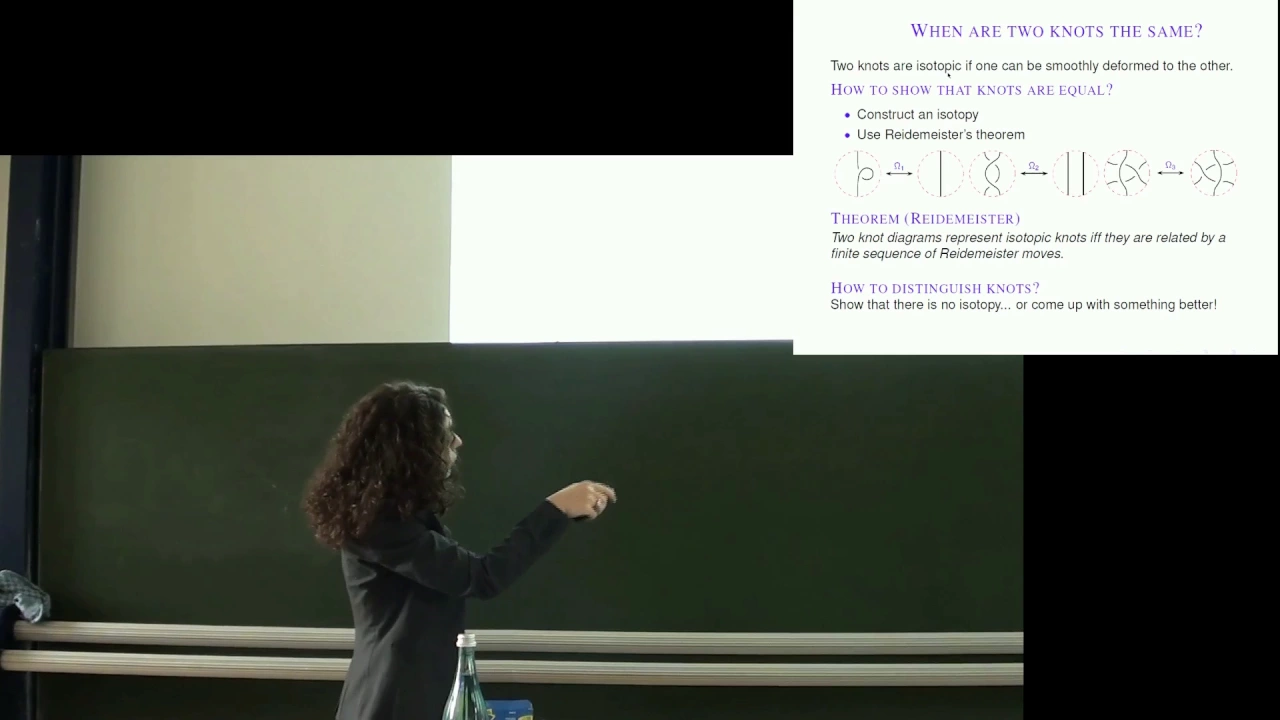
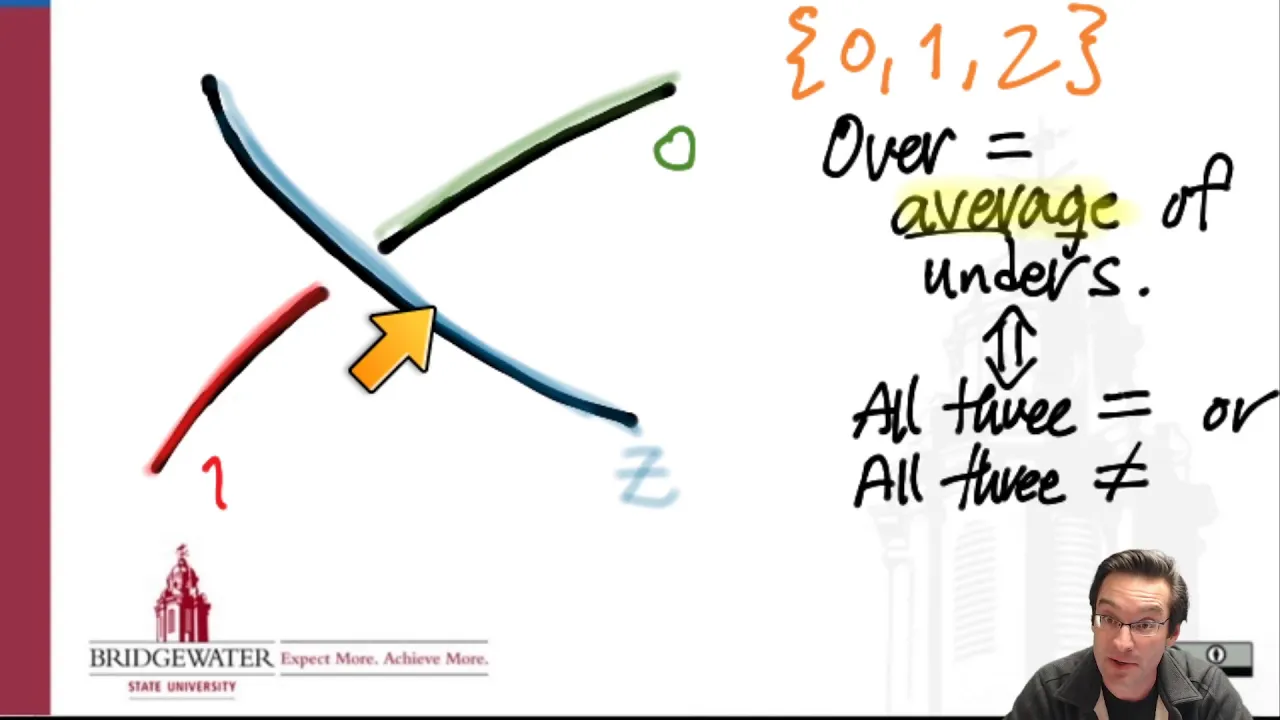
A knot is K-colorable if its arcs can be assigned colors from 0 to K-1 such that at every crossing, either all three arcs have the same color or all three have different colors; this property is invariant under Reidemeister moves (Type I, II, and III), making it an intrinsic characteristic of the knot rather than a diagram-dependent feature.
K-Colorability as a Knot Invariant: A Proof
Added:Basic concepts of Knot Theory, including knot diagrams, crossings, arcs, and the definition of a knot as an embedding in 3D space.
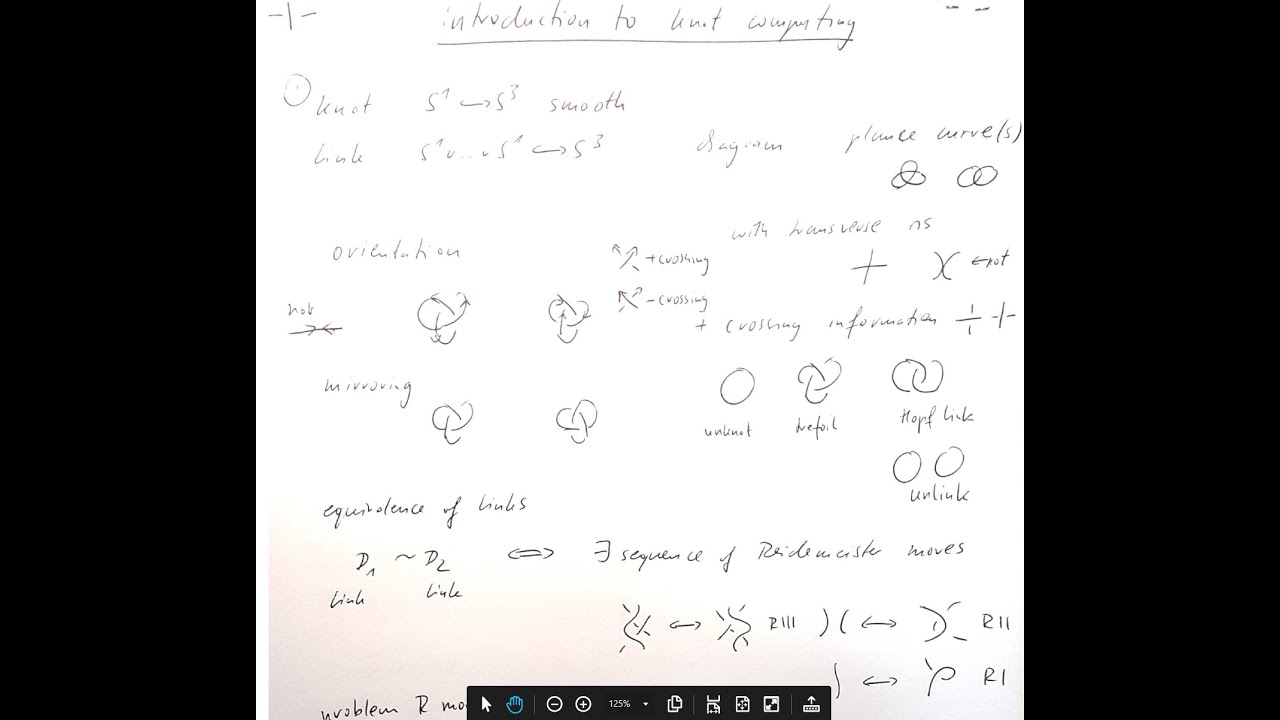
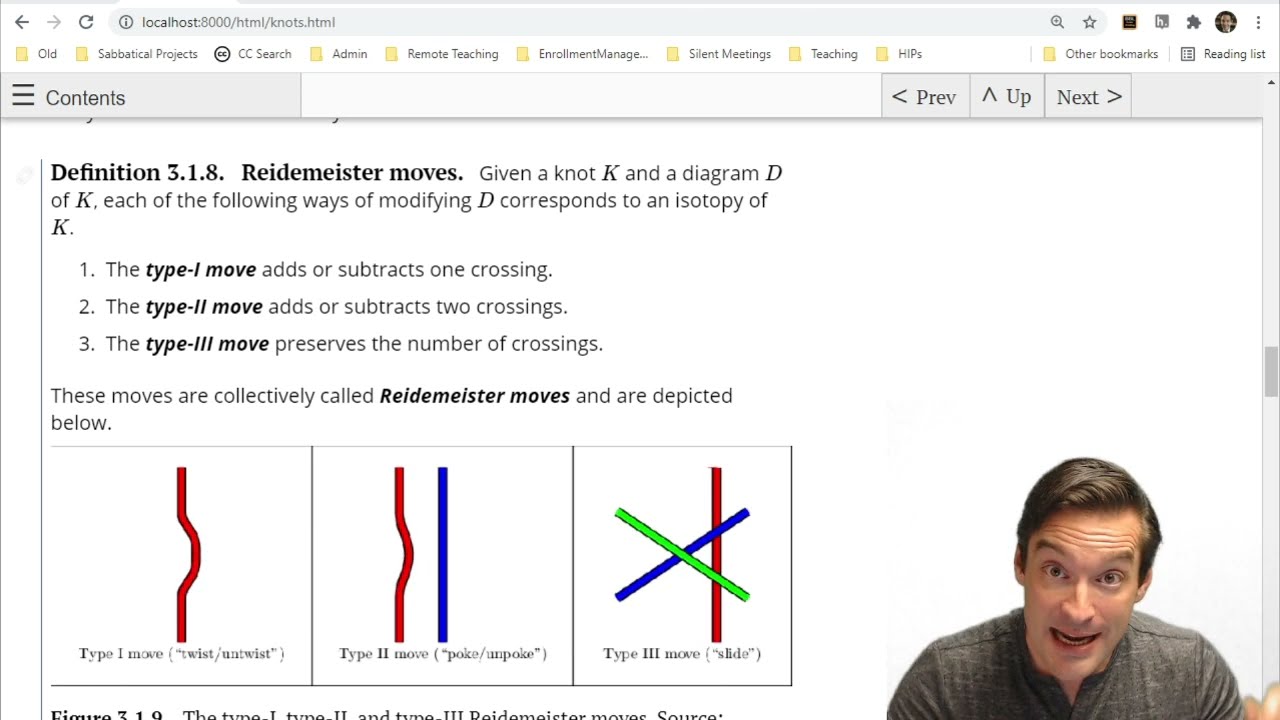
The three Reidemeister moves (Type I, II, and III) and how they diagrammatically represent ambient isotopy.
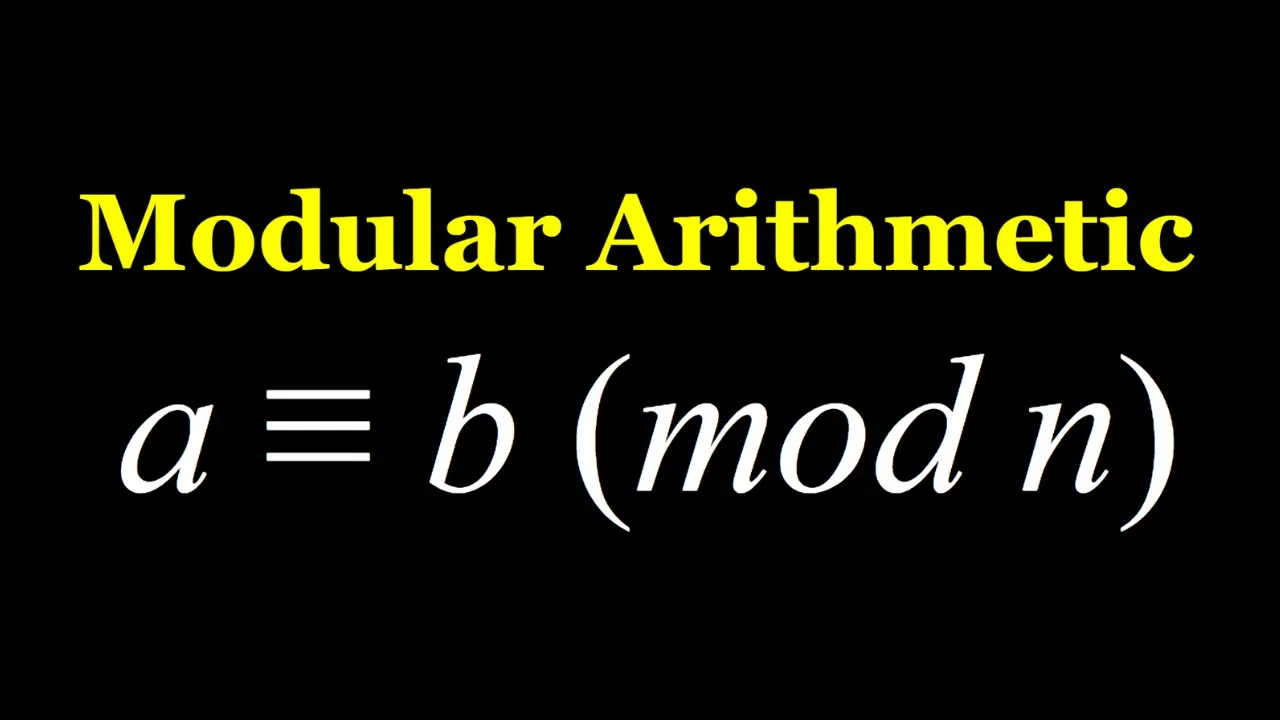
Fundamental modular arithmetic, as the algebraic rules for k-colorability require solving systems of congruences modulo k.
The general mathematical definition of an 'invariant' and the methodology used to prove invariance under equivalence relations.
Applying tricolorability (3-colorability) to formally distinguish the Trefoil knot from the Unknot.
Using linear algebra and matrices to represent crossing equations, leading to the definition of the Knot Determinant.
Exploring the Wirtinger presentation of the knot group (fundamental group of the knot complement) and its relation to Fox n-colorings.
Studying more sophisticated polynomial invariants, such as the Alexander Polynomial and the Jones Polynomial.
1.2K views18likes12:51Original Release: 2018-03-08
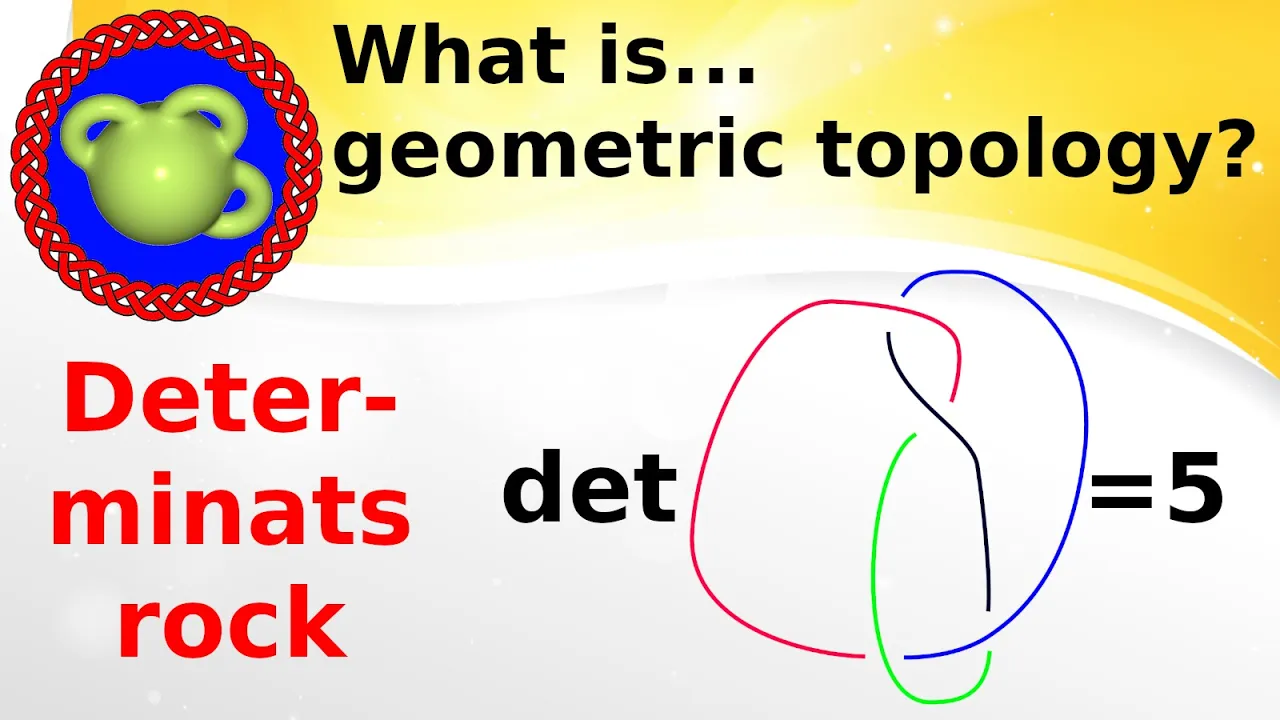
so get out your Crayola because it's time to start coloring knots in this video we're gonna look at what the definition is of K coloration how do I color or not using K colors and we're going to take that definition and realize it as an arithmetic and then as an algebra problem and that's going to give us the hook into thinking about how colorations lead to higher algebraic structures that we hope will be completed variants for knots so a K coloring of a knot diagram is nothing more than a function from the set of Arc's in that knot diagram into the integers from 0 up to K minus 1 that's just a fancy way of saying for each of the arcs in the diagram we're going to assign it one of these numbers from 0 through K minus 1 so we have a total of K different colors that we can work with so I'm thinking of each of these integers as representing some color or another and we require that at every crossing of the knot diagram one of two things needs to be true either the colors that we assign to all of the three arcs that meet at that crossing are all the same or the other option is that the three colors of arcs that meet at that crossing need to all be different so at every crossing we need to either have all the colors the same or we need to have all the colors differ and we can mix and match at different crossings in the diagram but every crossing has to satisfy one of the other of these two things so let's take a quick look at what that looks like so here's a diagram of the knot v 1 and if I'm going to ask a question about color ability what I want to know is whether it's going to be possible at each of the crossings in this diagram for either all three of the colors that I assign to the arcs that meet at that crossing are all the same so in this example here I've colored all three of them with the same integer 0 or the same color red if you like so this kind of crossing will be okay all three of the colors the same or the other possibility is that at a crossing I might assign one arc 0 another arc one another ARCA 2 for example so all three of them are different at a crossing that's fine too and again we can mix and match so at maybe at one crossing I have all the colors are the same at a different crossing I might have all the colors are different but at every crossing one or the other of these two has to hold if we are to have a K coloration of this knot so I can ask a question like is the not five one that I've diagrammed here on the screen is it 3 colorable so if you give me 3 crayons can I color in the arcs on this diagram in such a way that at every one of the crossings one of the other of these is true either all the colors are the same or all the colors are different well let's explore let's pick one arc out of my diagram maybe I'll pick this one right here and I'm just going to assign it some color let's say I color it the color 0 or red in this case color this one arc and then ask at this next crossing do I want this to be a crossing where all my colors are the same or all the colors are different well if I'm gonna try to use all three of my crayons let's suppose as I say let's make all three colors at this crossing distinct from one another so to do that I'll color the next under arc over here green and then that's gonna force me to color the other arc the third arc that meets at this crossing the other color so that means that I have to have red green and blue all meeting at that one crossing okay now we have to chase down the consequences of that decision in the rest of the diagram so at the next crossing right here I've got a blue arc coming in at number two I've got a green arc and number one and I have another arc that I haven't colored yet well cuz two of these colors are different that must mean in order to satisfy one of these conditions that the third color must also be different from those two so that forces me to color that next arc red so that I have red green and blue all meeting at this crossing now again I have red and green meeting at this crossing so that forces me to color the next dark blue but then I also have two Reds coming into this crossing which forces me to color this strand red and so you can see that that creates a problem because whether I color this strand blue and get a conflict over here where I have two blue but not three meeting at this one place or if I color this red so that I have all three of these the same now I have two Reds meeting at this crossing up here whichever way we do it we end up with a problem because the one thing that we cannot do is we cannot have two arcs of one color and another arc of the third of a different color right that across it that's the one thing we can't do if we're gonna three color or not so okay that coloration plan didn't work so I doesn't seem like I can color this not in a way where I have distinct colors at this crossing so let's try again just making the other choice I'm gonna start the same way color this one art here red the color zero and now I'm gonna choose to make all of the colors at this crossing the same instead of different so that forces me to color those arcs red and red all right so now we're in pretty good shape if I look at this crossing now I have two arcs that are both red coming into this crossing which is gonna force me to color the next arc also red the same color because as soon as I have two of a given color at a crossing I must then also have the third of that same color so that I can satisfy this first of the two conditions but if that arc is red that means that I again have two Reds coming into this crossing and so I need to color this arc red and what I end up doing is coloring the entire diagram red which is okay that's that follows my rules right but it's boring somehow right because we had three crayons but we only ended up using one of them so if we're not actually using all K of our colors and our coloration we'll call that a trivial coloring or an uninteresting coloring right so we can always trivially use a single color to color in an entire knot and just satisfy this condition at every one of the crossings so that's always in there in the universe of possibilities but it's not a very interesting possibility so most of the time we end up throwing away trivial colorings and really trying to focus on the ones that actually do use all of the colors that are at our disposal so for asking whether or not this not 5:1 can be three colored using all three of the colors it doesn't seem like that's possible the only way to do it is to throw away a couple of our colors and just use a single one so that's what coloration problems tend to look like in knot theory you give me a knot I try to color it in and if I can color it in in such a way that uses all of my colors and it follows this scheme up here then that's great maybe there's more than one way to do that maybe there's a ton of ways to do that but the key observation is that the number of different ways to color in a knot we hope is going to be something that can help us distinguish between two knots that are different and which will always be the same when two knots are the same for which values of K will a K coloration exist the first observation that we just saw on the previous slide is that we can always always color in any knot we can satisfy K coloration by just using a single color color the whole not the same red for example because in this case every single crossing is gonna meet the first criterion right which is that all at every crossing the colors are all the same we also can always choose to color every arc of minot a different color so that if i have d arcs and my knot i could grab d different crayons and color every arc a different color if I do that then this is also going to be a valid coloration because now at every single crossing all of the three colors that meet at that crossing are going to be guaranteed to be distinct so these colorations are always possible the real interesting question is what about in the in betweens can I use more than one but fewer than D number of colors to color a knot diagram and that's where the interesting parts happen and the smallest value of K for which this is an interesting question because you can convince yourself the two colorations are actually not possible the smallest value for which it is an interesting question is K equals three and so we can get a lot of mileage and use out of thinking about three colorations of knots and then we're gonna do that over the next couple of slides but the question that you might ask is does whether or not a knot is K colorable depend on how we diagram that knot if you give me a different diagram for the same knot and I guaranteed to come to the same conclusions about color ability if you change the diagram without changing the knot fortunately for us the answer is no in other words the color ability that we defined on the previous slide is not a property of the diagram of a knot but it's actually an intrinsic property of the knot itself regardless of which diagram is used to represent that knot in other words it's an invariant colorability is not invariant and how we know that is that we can apply the three right of myster moves and ask the question if a knot was colorable before or itemised to move will it guaranteed still be colorable afterwards we can check that just by looking at each of the rear itemize two moves in turn for a type one move where I have this loop happening here because there's a loop here that means that this entire arc is all going to be colored the same color so I'm gonna get two arcs incident on my crossing that are guaranteed to have the same color when a type 1 right and Meister move as possible that then guarantees for a colorable not that that third arc has to have the same color as the first two and therefore if I then apply the right of Meister type one untwisting maneuver to that I'm gonna get a single arc that all has that same color and so if this was colorable before the right of Meister move it remains colorable after that right a Meister move so that right and Meister type one move is is fine color ability is an invariant of the type one right in my stew both for type two we're talking about these little loops and again in these diagrams we end up with two crossings but those two crossings share an arc in common for the type to set up and that must mean that if this over strand here has a color then both of these strands incident on that are gonna have to have the same color because they're parts the same arc so if I color that lets say I color it the same color let's say I call her all red well that's kind of boring because if it's all the same color just like with the type 1 move when I apply the type to move to slide that loop out I'm still I can still just color everything the same color and we have a valid coloration still and so these are really only interesting questions when we start with arcs of different colors so maybe I have a blue strand over on this side and it has to be the same blue coming in to both because again it's the same arc and then on the other side of my over strand I've got a different color let's say that it's yellow so is there a way to do the type to write a master move to preserve color ability in this next diagram and the good news is that we don't have any crossings afterwards so it doesn't really matter what we do but we can keep the same yellow coloration down here in this other strand and we have still a valid coloration for this so type 2 right oh my sir moves also preserve the feature of color ability for a knot and the type 3 move most interesting one I think is the one in which we have a crossing and then we have another strand that passes underneath two strands of that crossing and the question is what's gonna happen to colorability here if we color everything the same color it's again a trivial question so we're gonna start by coloring in this crossing over here with three different colors red for the over and then green and blue for the unders the question is if this is all going to be part of a colorable knot how do I color in these three arcs over here I'm forced to color the one that's in between the red and the green here that one's got to be blue because I can't color it red and I can't color it green and then I'm also forced into coloring the one on the top red because it has a green and a blue that are incident and them on the bottom has got to be green because it has a red and a blue that are already incident so I'm forced into this coloration now after I apply the type 3 write a message move it's gonna slide this under strand from the left side of the crossing to the right side of crossing will it still be 3 colorable according to our rules and the answer is sure all I have to do is show that I can color in these three arcs in a convenient way sure enough I can between the red and the blue I have to have a green north of the red I have to have a blue because we already have a red and a green and south of the blue we have to have a red because we already have a blue and a green and so color ability of a nod is also an invariant of the type 3 writer Meister move so so far we're in great shape we've defined what it means for a knot to be K colorable and we've shown that this is not a property that depends on how we draw the diagram this is legitimately a property intrinsic property of the underlying knot and so we don't have to worry about not having the right diagram to determine whether or not is colorable so the next question is how do we turn color ability from a sort of a crayons geometry kind of problem how do we turn it into an algebra problem so that we can begin to build algebraic structure on top of it that's where we're going to go next
Up Next

104:54
Knot Theory Lecture 4: Quandle Coloring & Fundamental Groups
@laboratoryoftopologyanddyn2651
299 views•2020-10-10
4:43
Elliptic Curve Cryptography Explained: ECC, ECDSA, ECDH
@PracticalNetworking
28.5K views•2024-10-21

9:41
Tower Law in Field Extensions | Degree Multiplication Theorem
@MatthewSalomone
5.7K views•2014-04-10
6:00
The Mathematical Impossibility of Accurate World Maps
@Vox
23.3M views•2016-12-02
Related Study Plans & Knowledge Roadmaps
Structured learning paths in Mathematics
mathematics
Tensor Calculus: Vectors to Riemann Curvature
01Mathematical Foundations: Linear Algebra & Calculus
02Covectors, Dual Spaces, and Tensor Basics
03The Metric Tensor and Index Gymnastics
+ 2 more learning modules
40h5 modules
Explore Roadmap
mathematics
Gödel's Incompleteness: Logic, Proofs & Limits
01Introduction to Formal Systems & Hilbert's Dream
02Set Theory, Cardinality, and Cantor's Diagonal Argument
03Arithmetization and Gödel Numbering
+ 2 more learning modules
14h5 modules
Explore Roadmap
mathematics
Galois Theory: Fields, Groups & Solvability
01Foundations of Abstract Algebra: Groups & Fields
02Polynomials & Field Extensions
03Splitting Fields & Symmetries
+ 2 more learning modules
24h5 modules
Explore Roadmap
mathematics
Non-Euclidean Geometry: Models & Geodesics
01Euclid's Fifth Postulate and the Birth of New Geometries
02Hyperbolic Space and the Poincaré Disk Model
03Geodesics: Defining Straight Lines in Curved Spaces
+ 2 more learning modules
15h5 modules
Explore Roadmap