Human Microbiome: Gut-Brain Axis & Immunity
Learning Goal: Analyze the role of the human microbiome in regulating systemic health, immune function, and the gut-brain axis.
- Prerequisites: Basic cellular biology and introductory human physiology.
- Estimated Total Study Time: 10 Hours
Module 1: Foundations of the Human Microbiome
This module establishes the foundational principles of host-microbe symbiosis. You will explore the scale of the human microbiome, its distribution across the body's mucosal and cutaneous niches, and the transition in biological theory from seeing microbes purely as pathogenic "germs" to understanding them as co-evolved, metabolic, and immunological partners.
Recommended Videos
Why this video: This video provides an engaging conceptual entry point into the absolute scale of the human microbiome. It breaks down the cell-to-cell ratio of microbial cells to human cells and outlines the early colonization event occurring at birth, which is essential to establishing a stable ecosystem.
Knowledge Checkpoint:
- Recall the approximate historical vs. modern scientific consensus on the ratio of human cells to microbial cells in the body.
- Identify the primary biological mechanisms through which initial microbial colonization occurs during and immediately after birth.
- Define the terms microbiota (the physical organisms) vs. microbiome (the collective genome).
Why this video: Delivered by pioneering genomic researcher Dr. Claire Fraser, this academic presentation explains how genetic high-throughput sequencing revolutionized our understanding of the human microbiome as a dynamic organ system carrying vastly more functional genes than our own eukaryotic genome.
Knowledge Checkpoint:
- Explain why standard culture-based microbiology failed to capture the diversity of the obligate anaerobes dominant in the human colon.
- Describe how metagenomics allows researchers to analyze microbial function and composition without culturing individual organisms.
- Articulate the biological concept of host-microbiome co-evolution.
Module 2: Diet, Metabolism, and Microbial Metabolites
In this module, you will analyze the metabolic pathways of the gut microbiota. You will study how dietary intake dictates taxonomic and functional selection in the gut, with a specific focus on the biochemistry of anaerobic fermentation of complex dietary fibers into key short-chain fatty acids (SCFAs) like acetate, propionate, and butyrate.
Recommended Videos
Why this video: This advanced lecture addresses a key biochemical gap in introductory microbiome courses. Dr. Thomas Gurry explains the molecular pathways of microbial carbohydrate fermentation and details how the resulting short-chain fatty acids (SCFAs) impact host health through G-protein-coupled receptor (GPCR) binding and epigenetic histone deacetylase (HDAC) inhibition.
Knowledge Checkpoint:
- Map the metabolic conversion of non-digestible dietary carbohydrates (macronutrient input) to the production of acetate, propionate, and butyrate.
- Explain the physiological role of butyrate as the primary energy source for colonic epithelial cells (colonocytes).
- Describe the molecular mechanism by which SCFAs exert systemic anti-inflammatory actions through HDAC inhibition.
Why this video: A rigorous scientific discussion featuring GI clinician-scientist Dr. Gary Wu. This video covers the critical dual impact of diet: modifying taxonomic profiles over time and acting as a precursor substrate for bioactive metabolites that are systematically absorbed by the human host.
Knowledge Checkpoint:
- Differentiate between a taxonomic shift (who is there) and a metabolic shift (what they are producing) in response to dietary interventions.
- Contrast how high-fiber, plant-based diets and high-protein, meat-based diets generate distinct metabolic profiles (e.g., SCFAs vs. branched-chain fatty acids or putrefactive compounds).
- Explain the concept of metabolic cross-feeding among gut bacterial species.
Why this video: This video provides a practical but highly physiological breakdown of fiber chemistry. It moves beyond the classic "soluble vs. insoluble" dichotomy to analyze prebiotic fermentability, helping you understand which physical structures are accessible to microbial enzymes.
Knowledge Checkpoint:
- Differentiate between soluble, insoluble, fermentable, and non-fermentable dietary fibers.
- Explain why synthetic or highly processed fibers often fail to act as effective prebiotics compared to complex, naturally occurring plant polysaccharides.
Module 3: Mucosal Immunity and Gut Barrier Function
This module focuses on the complex immunological landscape of the gastrointestinal tract. You will examine mucosal immunology, exploring how the gut microbiota actively trains and calibrates host immunity. The course materials detail how dendritic cells sample antigen, how regulatory T (Treg) cells are induced to maintain tolerance, and how tight junctions prevent systemic inflammation.
⚠️ Curatorial Note on Video Selection & Gaps: The general public media surrounding "leaky gut" is highly susceptible to non-scientific, commercially driven wellness claims. To maintain rigorous scientific standards, we have bypassed alternative-medicine content and curated academic-grade, high-quality lessons from verified biological publishers. Because precise molecular details of specific bacterial strains are still being uncovered, we highly recommend pursuing the independent gap queries listed below.
Recommended Videos

Why this video: Produced by Nature, this video is the gold standard for visualizing mucosal immunology. It clearly demonstrates gut-associated lymphoid tissue (GALT), antigen sampling through specialized M cells, dendritic cell extensions, and the production of secretory IgA to maintain localized host-microbe homeostasis.
Knowledge Checkpoint:
- Describe the structural architecture of the gut barrier, including the mucin layers, tight junction proteins (e.g., zonulin, occludin), and the epithelial monolayer.
- Map the cellular pathway of antigen sampling by M cells in the follicle-associated epithelium of Peyer's patches.
- Explain how dendritic cells promote the differentiation of naive T cells into immunosuppressive Regulatory T (Treg) cells rather than inflammatory Th17 cells under homeostatic conditions.
Why this video: This academic lecture provides the necessary historical and theoretical framework for cellular immunology. Understanding the transition from simple humoral (antibody) theories to modern cellular and molecular networks is vital to grasping how commensal organisms can systematically calibrate our immune response.
Knowledge Checkpoint:
- Contrast the roles of the innate mucosal immune system with the adaptive immune network located in the lamina propria.
- Detail how pattern recognition receptors (PRRs), like Toll-like receptors (TLRs), on epithelial and dendritic cells recognize pathogen-associated molecular patterns (PAMPs) vs. commensal signals.
Suggested Independent Gap Queries
To supplement your study of mucosal immunology, search for the following queries on academic engines or professional medical lecture channels:
- "How gut bacteria regulate immune tolerance mucosal immunology" — focuses on the precise molecular pathways of Bacteroides fragilis (PSA) and Clostridia-mediated Treg induction.
- "Intestinal epithelial barrier tight junctions and immunity lecture" — focuses on the biochemistry of zonulin regulation, myosin light-chain kinase (MLCK) activation, and the exact pathology of paracellular antigen transport.
Module 4: The Gut-Brain Axis: Communication Pathways
This module explores the bidirectional communication network linking the gastrointestinal tract and the central nervous system. You will analyze the three primary communication highways: the neural network (via the vagus nerve), the endocrine system (via gut hormone signaling), and biochemical pathways (via microbe-derived neurotransmitters and neuroactive metabolites).
Recommended Videos

Why this video: An outstanding, comprehensive scientific masterclass on the gut-brain axis. This video explains how gut microbes synthesize major neurotransmitters (such as GABA and serotonin) or their metabolic precursors (such as tryptophan) to directly modulate brain biochemistry, behavior, and stress responses.
Knowledge Checkpoint:
- Map the physical pathway of the vagus nerve and explain how bidirectional signals travel between the enteric nervous system (ENS) and the central nervous system (CNS).
- Detail the contribution of the gut microbiota to serotonin synthesis, highlighting the role of enterochromaffin cells.
- Explain how microbe-derived neurotransmitters like GABA can influence brain function even if they do not directly cross the blood-brain barrier.
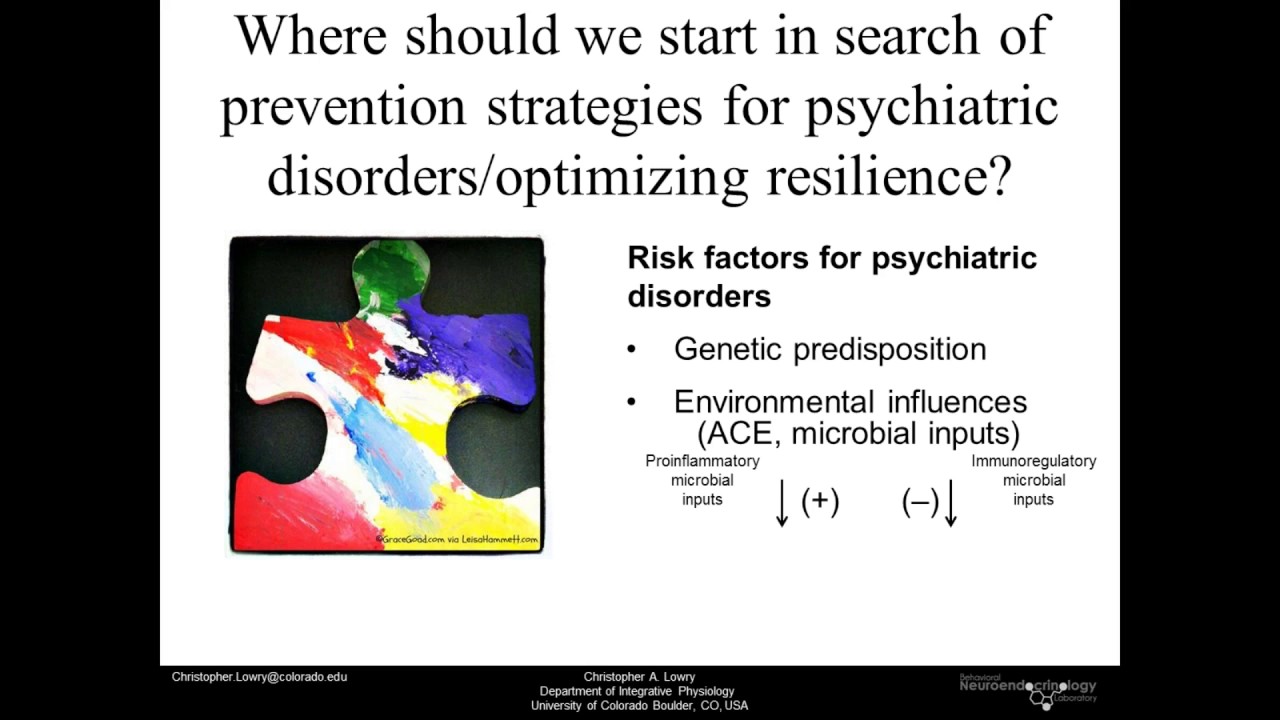
Why this video: This academic video links the gut-brain connection to clinical psychiatry. It details how the absence of our evolutionary "old friends" (commensal microbes) triggers chronic, low-grade systemic inflammation, which can compromise the blood-brain barrier and contribute to neuroinflammation, depression, and anxiety.
Knowledge Checkpoint:
- Explain the evolutionary "Old Friends" hypothesis and its relation to modern neuropsychiatric disorders.
- Describe how high systemic inflammatory markers (e.g., TNF-alpha, IL-6) caused by gut barrier failure cross into the CNS to trigger microglial activation and neuroinflammation.

Why this video: A powerful, conceptual introduction to the developmental link between early-life microbial ecosystems, birth mode (vaginal delivery vs. C-section), and subsequent cognitive, structural, and behavioral development of the brain.
Knowledge Checkpoint:
- Describe how early-life microbial disruption (e.g., early exposure to broad-spectrum antibiotics) can alter the development of the hypothalamic-pituitary-adrenal (HPA) axis.
- List two key developmental differences observed in the brains of germ-free animals compared to conventionally colonized controls.
Module 5: Systemic Health, Pathology, and Therapeutic Interventions
This capstone module explores the clinical and systemic consequences of gut dysbiosis. You will analyze metabolic endotoxemia and the role of the microbiome in systemic pathologies such as obesity, diabetes, and mood disorders. Finally, you will evaluate therapeutic strategies, moving from diet to Fecal Microbiota Transplantation (FMT).
Recommended Videos

Why this video: A world-class, academic-level lecture by Dr. Fredrik Bäckhed, a pioneer in gut metabolism. This video details landmark germ-free mouse studies demonstrating that obesity and insulin resistance are transmissible phenotypes that can be transferred via the microbiota.
Knowledge Checkpoint:
- Outline the design and physiological outcomes of the classic "obese microbiome transplant" experiment in germ-free mice.
- Explain the concept of metabolic endotoxemia: how lipopolysaccharide (LPS) from Gram-negative bacteria leaks into circulation to trigger TLR-4-dependent insulin resistance.
- Contrast the metabolic consequences of a microbiome characterized by a high Firmicutes-to-Bacteroidetes ratio in terms of energy harvest efficiency.

Why this video: Presented by the Mayo Clinic, this video offers a clean, clinical overview of the procedural mechanics, indications, and safety protocols for FMT in modern medical practice.
Knowledge Checkpoint:
- Explain why FMT is the gold-standard treatment for recurrent, antibiotic-resistant Clostridium difficile infections.
- Describe the ecological mechanism of competitive exclusion by which a complex, healthy donor microbiota suppresses pathogenic overgrowth.

Why this video: This deep-dive clinical documentary bridges current laboratory research and human trials. It investigates the therapeutic applications of FMT for severe neuropsychiatric disorders (such as treatment-resistant bipolar disorder), while addressing the safety risks and regulatory challenges of non-standardized therapies.
Knowledge Checkpoint:
- Critically evaluate the risks associated with non-regulated, home-administered (DIY) fecal transplants compared to standardized, clinical-grade stool banks (e.g., OpenBiome).
- Explain the theoretical physiological mechanism through which a complete microbial ecosystem reset could resolve chronic central neuroinflammation and shift neurotransmitter dynamics in psychiatric disease.
Course Map
Key People Index
- Dr. Claire Fraser: Metagenomics pioneer and Director of the Institute for Genome Sciences at the University of Maryland. She was among the first to sequence key human pathogens and apply genomics to analyze host-microbiota dynamics in health and disease.
- Dr. Thomas Gurry: Computational biologist and biochemist specializing in metabolic modeling of gut microbial fermentation, whose work focuses on target-specific dietary fiber structures to optimize host SCFA generation.
- Dr. Gary Wu: Gastroenterologist and Co-Director of the Penn Center for Nutritional Science and Medicine, known for leading clinical trials on how dietary patterns influence the therapeutic potential of the gut microbiome.
- Dr. Ruairi Robertson: Postdoctoral neuroscientist and gastrointestinal researcher specializing in how maternal-infant gut microbes shape central nervous system development in early life.
- Dr. Fredrik Bäckhed: Professor at the University of Gothenburg and leading metabolic health researcher, famous for conducting the early, definitive germ-free mice experiments showing that metabolic syndrome and fat accumulation are transmissible microbial phenotypes.
Final Self-Assessment
Complete this comprehensive self-assessment after completing all five modules to test your mastery of the learning goal:
- Explain the biological and genetic difference between the terms "human genome" and "human microbiome."
- Detail the complete biochemical pathway of dietary carbohydrate fermentation into acetate, propionate, and butyrate, naming at least two main bacterial genera involved.
- Describe how short-chain fatty acids (SCFAs) function as direct signaling molecules in mucosal and systemic tissues via GPCR and HDAC pathways.
- Illustrate how an intact intestinal epithelial barrier regulates tight junction proteins (occludin, claudin) to prevent "leaky gut" or systemic entry of bacterial antigens.
- Detail the cellular mechanism by which commensal gut bacteria induce naive CD4+ T-helper cells to differentiate into immunosuppressive regulatory T (Treg) cells.
- Trace the neural pathways of the gut-brain axis, highlighting how signals are transmitted along the vagus nerve and how enterochromaffin cells contribute to peripheral serotonin synthesis.
- Explain "metabolic endotoxemia," detailing how lipopolysaccharides (LPS) from Gram-negative bacteria cross a compromised intestinal barrier to trigger chronic, low-grade insulin resistance.
- Analyze the clinical evidence supporting FMT as a primary therapeutic intervention, distinguishing its validated success in C. difficile treatment from its experimental status in psychiatric and autoimmune conditions.